This post may contains affiliate links. Read our full disclosure here.
What wine goes with pasta? It’s one of the most Googled food and wine pairing questions out there — and honestly, once you understand the logic behind it, you’ll never have to guess again. The short answer: match the wine to the sauce, not the pasta shape. Tomato-based sauces want acidic, medium-bodied reds. Creamy sauces want crisp or round whites. Light oil and herb sauces want anything fresh and mineral. Meat ragù wants something bold and tannic. That’s it. Everything else is just finding your favorite within those guardrails.
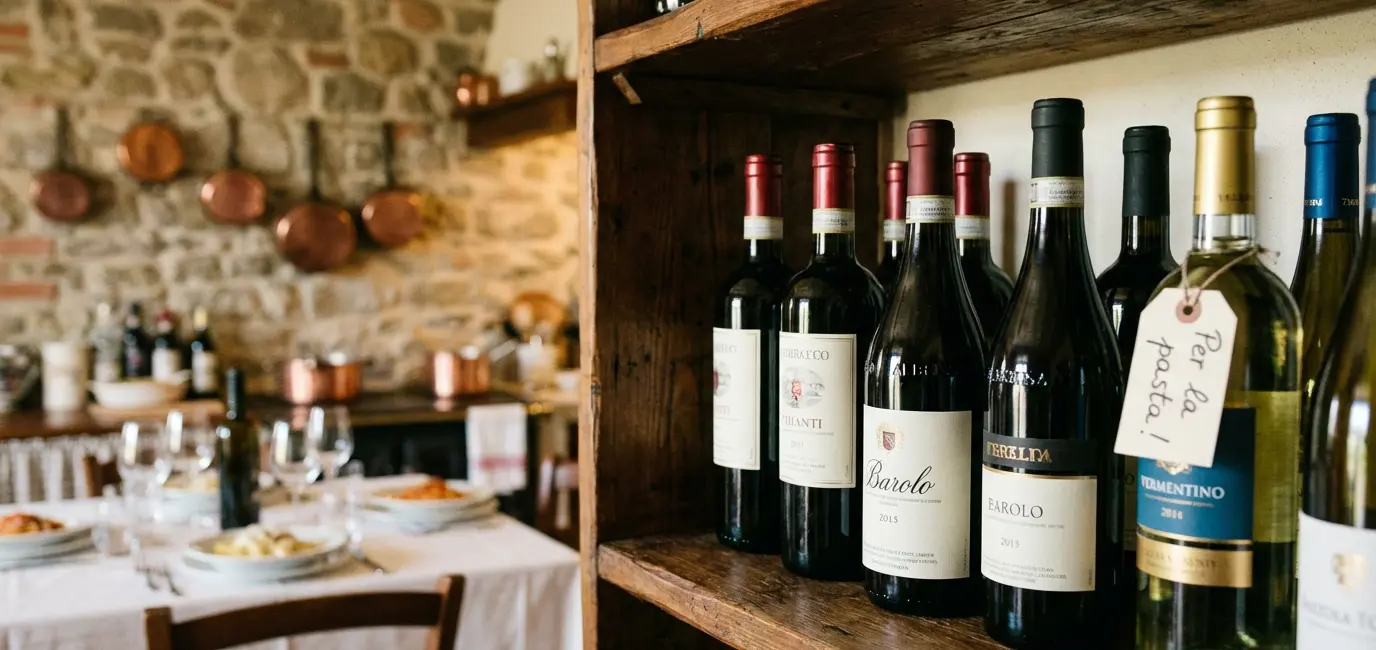
Why Pairing Wine with Pasta Is Simpler Than You Think
Before we get into specifics for what wine goes with pasta, let’s talk about why this question feels more complicated than it is. The issue is that most wine pairing advice either oversimplifies (“red with red, white with white”) or overwhelms with specificity (“a 2019 Nebbiolo from the Langhe appellation”). Neither is actually useful when you’re standing in a wine shop on a Tuesday night trying to figure out what to bring home for a pasta dinner.
“The best wine for pasta is the one that doesn’t compete with the sauce — it should feel like part of the same meal, not a separate experience running alongside it.”
The rule that actually works: pair the wine to the sauce, not the pasta shape. Spaghetti with tomato is a completely different pairing challenge from spaghetti with clams, even though it’s the same pasta. The shape is a red herring. The sauce is the flavor anchor that drives the decision every time.
There’s also one chemical principle worth knowing: acidity matches acidity. Tomato sauces are high in acid, which is exactly why Italian wines — which are typically high in acidity — pair so beautifully with Italian pasta dishes. The wine doesn’t taste sharp next to the food; it tastes balanced. That’s the magic at work. If you want to understand more about how wine structure works in general, my guide on what dry wine actually means covers the key components (acidity, tannin, sweetness) in an accessible way.
One more thing before we dig in: you don’t need to spend a lot to get this right. The price of a wine bottle matters a lot less than whether the style fits the sauce. A $15 Chianti with a bowl of spaghetti marinara will absolutely outperform a $60 Napa Cabernet in the same pairing — the structure is just wrong for that sauce, regardless of quality. Get the style right first, then spend as much or as little as you like within that category.
What Wine Goes with Tomato Sauce Pasta
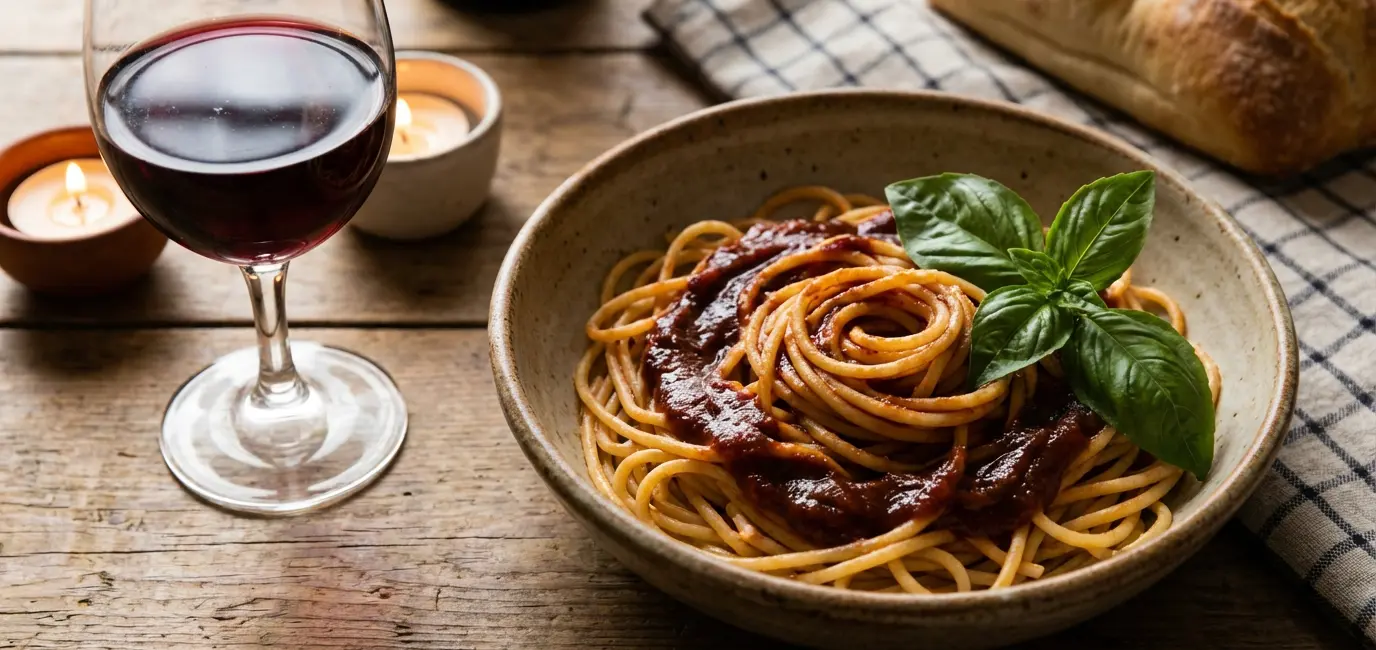
This is the pairing most people ask about first, and it has the clearest answer. What wine goes with pasta in a tomato sauce? You want a medium-bodied red with good acidity and enough fruit to complement the brightness of the tomatoes without being overwhelmed. Tannic heavyweights (Cabernet Sauvignon, Shiraz) will clash with the acidity and make the food taste bitter. Low-acid reds (Grenache, Merlot) will taste flat next to the sauce.
Best wine with tomato sauce pasta:
- Chianti Classico (Sangiovese) — the absolute benchmark pairing. Sangiovese grapes have naturally high acidity that mirrors the tomato, and Chianti’s earthy, cherry-forward character plays beautifully against marinara, arrabbiata, or a simple pomodoro. Browse Chianti on Wine.com for well-rated bottles across every budget.
- Barbera d’Asti or Barbera d’Alba — slightly fruitier than Chianti, very juicy, high acid, low tannin. Pairs beautifully with tomato and is one of the most food-friendly grapes in Italy.
- Montepulciano d’Abruzzo — medium-bodied, plummy, great value. More approachable than Chianti for people who find that profile too earthy.
- Nero d’Avola (Sicily) — ripe and warm-spiced, good acidity, great with spicy tomato sauces like arrabbiata.
- Primitivo (Puglia) — bold and fruity, sometimes compared to Zinfandel, excellent with hearty tomato-based dishes like lasagna or baked ziti.
What to avoid: Heavy oaked Cabernet Sauvignon, Malbec, and high-tannin reds generally overwhelm tomato sauces rather than complement them. They’re not terrible — the meal won’t be ruined — but you’ll notice the clash. If you only have something bold on hand, choose one that’s fruit-forward rather than aggressively tannic.
What about rosé? A dry Provençal rosé or a Cerasuolo d’Abruzzo (Italian rosé from Montepulciano) actually works surprisingly well with lighter tomato sauces. It’s a summer dinner option that’s underrated for pasta wine pairing. For broader rosé recommendations, my wine and cheese pairing guide also touches on how rosé functions in food pairings.
What Wine Goes with Creamy Pasta
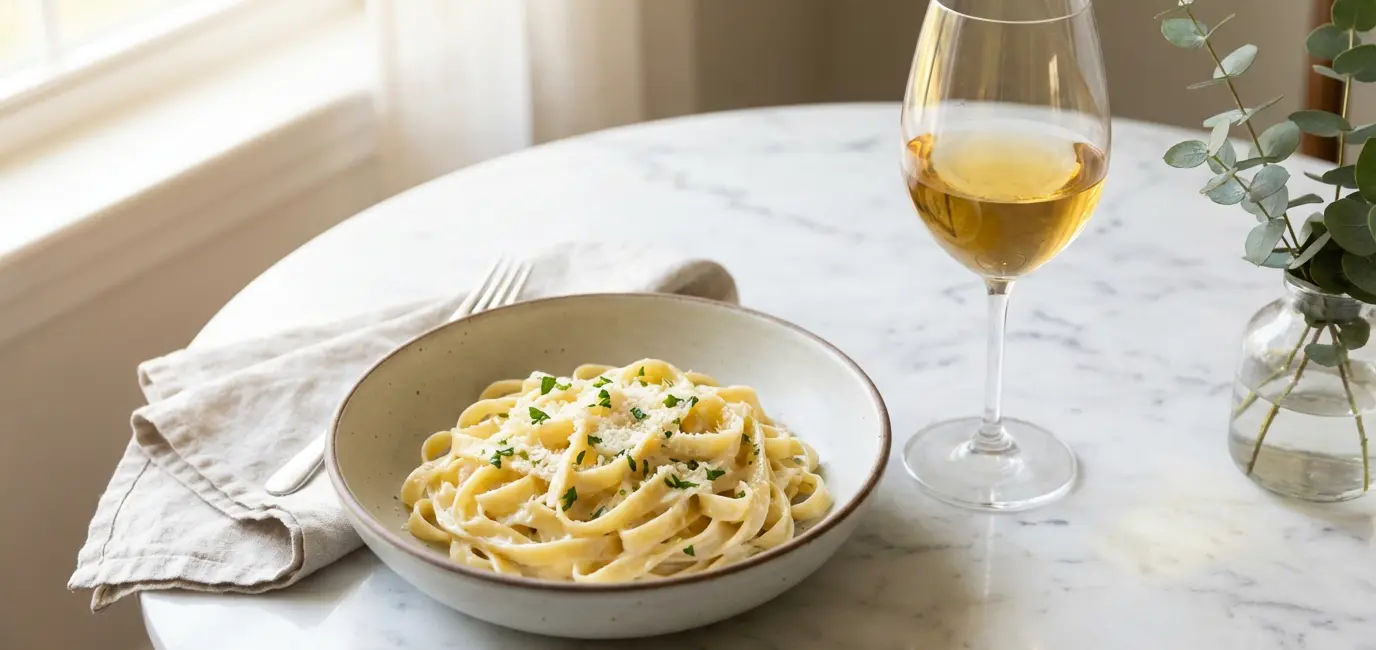
Creamy pasta is trickier to pair than tomato because it covers a wider range — carbonara (egg-based, technically not cream), Alfredo (pure butter and cream), mushroom cream sauce, truffle cream, crab bisque pasta. They all read as “creamy,” but the underlying flavors vary significantly. Still, the category answer holds: what wine goes with pasta in a cream sauce is almost always a white with structure — not sweet, not flabby, but either crisp and fresh, or rich and round.
Best wine with creamy pasta:
- Chardonnay (oaked, Burgundy-style) — a full-bodied white with a buttery texture is a natural match for Alfredo or cream sauce pasta. The wine’s richness mirrors the dish rather than fighting it. Shop Chardonnay on Wine.com — look for Burgundy (white Burgundy = Chardonnay) or California single-vineyard expressions.
- Pinot Grigio (Italian, particularly Alto Adige) — fresh, crisp, mineral, with just enough body. Works beautifully with lighter cream sauces and especially well with seafood cream pasta.
- Pinot Blanc (Alsace) — underrated for this pairing. Slightly richer than Pinot Grigio, very food-friendly, great with mushroom cream pasta.
- Grüner Veltliner (Austria) — mineral, peppery, fresh. Excellent with cream sauces, especially those with herbs like tarragon or chervil.
- White Burgundy (Meursault, Pouilly-Fuissé) — for a special dinner, this is the pinnacle pairing with cream-sauced pasta. The nutty, creamy texture of aged Chardonnay from Burgundy is extraordinary with Alfredo.
Carbonara specifically: Carbonara is made with eggs, Pecorino (or Parmigiano), guanciale, and black pepper — no cream, despite what many recipes suggest. Its flavor profile is richer and more savory than a straight cream sauce. For genuine carbonara, a medium-bodied Italian white (Verdicchio, Falanghina, or Greco di Tufo) actually works better than an oaked Chardonnay, which can overwhelm the egg richness.
Truffle pasta specifically: Truffle — whether fresh, shaved, or oil — is one of the most aromatic and complex flavors in Italian cooking. A light oak Burgundy Chardonnay, a white Bordeaux (Sauvignon Blanc + Sémillon blend), or even a medium-bodied white like Viognier can work. The wine should have depth and complexity but not be so fruity that it drowns the truffles. This is one of the cases where spending a little more on the wine is genuinely worth it — truffle pasta is a luxury ingredient, and the wine should match its weight.
What Wine Goes with Pesto and Light Oil-Based Pasta
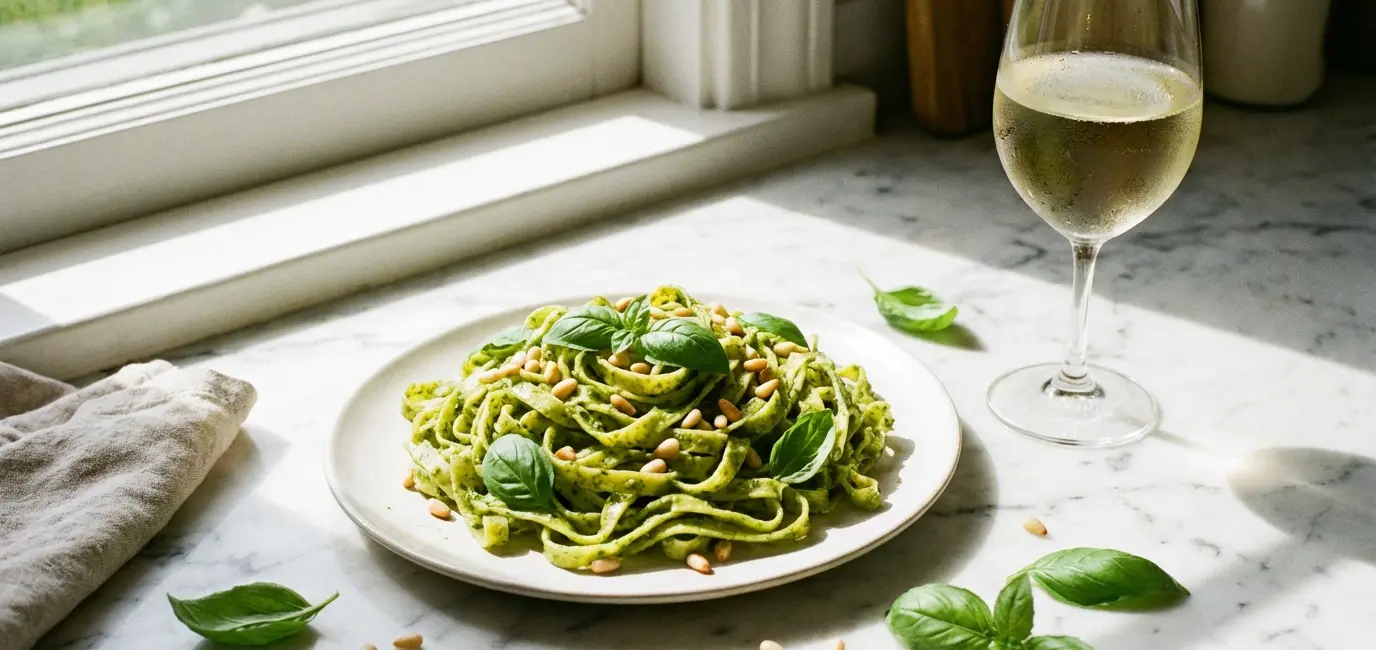
Pesto and aglio e olio (garlic and olive oil) represent the lightest end of the pasta sauce spectrum — herb-forward, fresh, and bright. What wine goes with pasta in these styles? Crisp, mineral, aromatic whites with good freshness. Nothing too heavy, nothing oaked, nothing sweet. The wine should feel like a companion to the freshness of the herbs rather than competing with or dulling them.
Best wine with pesto pasta:
- Pinot Grigio (Italian) — the easiest, most accessible answer. Light, crisp, mineral, herbal notes. Perfect match for basil-forward pesto. Browse Pinot Grigio on Wine.com for reliable, affordable bottles.
- Vermentino (Sardinia, Liguria) — Ligurian Vermentino is the regional pairing for Ligurian pesto (which is the original). The wine has herbal and saline mineral notes that are beautiful next to fresh basil pesto.
- Fiano di Avellino (Campania) — slightly more body than Pinot Grigio, with hazelnut and herb notes. Excellent with pesto and especially well-matched to pasta al pesto with green beans and potatoes (the traditional Ligurian version).
- Sauvignon Blanc (Loire Valley, New Zealand) — the grassy, herbaceous character of Sauvignon Blanc aligns perfectly with basil pesto. Sancerre or Pouilly-Fumé from Loire are particularly elegant matches.
- Unoaked Chardonnay — for people who prefer Chardonnay but not the butter and oak. A clean, unoaked version (Chablis, or “Naked Chardonnay” styles) works well with lighter herb sauces.
Aglio e olio specifically: Garlic and olive oil pasta has heat from red pepper flakes and a savory depth that benefits from a wine with a little more mineral intensity. Vermentino, Verdicchio, or even a lighter Greco di Tufo all work well. Avoid anything too fruity or flabby — the heat in the dish will make sweet or low-acid wines taste even flatter.
Cacio e pepe specifically: This Roman classic (just Pecorino, pasta water, and black pepper) is deceptively rich and savory. While it looks simple, the sharp, funky sharpness of Pecorino needs a wine with good acid and minerality. A dry Trebbiano Abruzzese, Verdicchio dei Castelli di Jesi, or even a white Burgundy can be stunning here. Avoid heavy reds — they overwhelm the delicate peppery richness.
What Wine Goes with Meat Ragù and Hearty Pasta
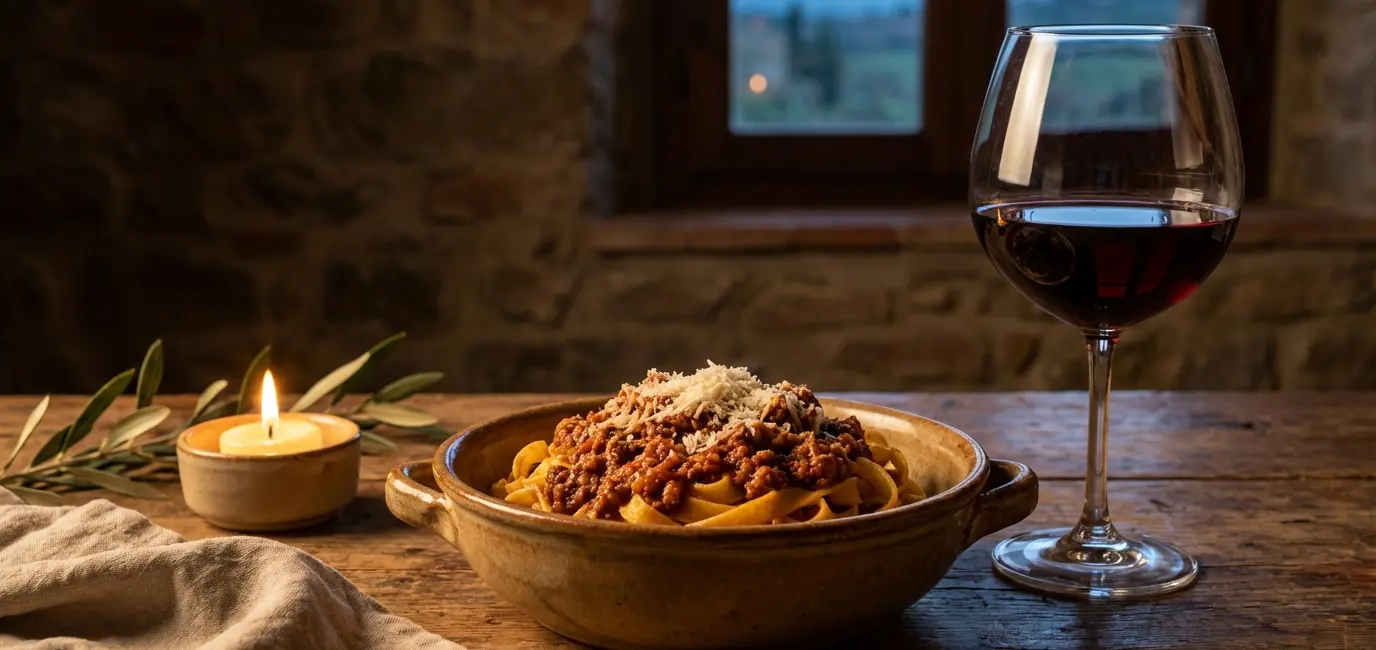
Hearty meat-based pasta — Bolognese, wild boar ragù, lamb ragù, Neapolitan Sunday gravy, baked lasagna — calls for the boldest reds in the wine with pasta pairing canon. These dishes are rich, fatty, deeply savory, and benefit from tannin (which cuts through fat) and fruit concentration (which matches the deep meaty flavors).
Best wine with Bolognese and meat ragù pasta:
- Chianti Riserva or Chianti Classico Gran Selezione — a step up from the basic Chianti, with more structure and depth for richer Bolognese. The extended oak aging adds complexity that complements slow-cooked meat sauce.
- Brunello di Montalcino — for a truly special occasion. This is one of Italy’s greatest wines — Sangiovese from Montalcino — and a slow-cooked Bolognese is exactly the dish it was born to accompany.
- Barolo (Nebbiolo, Piedmont) — the “King of Italian wines” is powerful, tannic, and acidic, with rose, tar, and cherry notes. Perfect for rich lamb ragù or wild boar pasta. Browse Barolo on Wine.com for producer options across budget ranges.
- Rosso di Montalcino or Morellino di Scansano — more accessible (less expensive) Sangiovese-based wines with enough body for meat ragù without the price point of Brunello.
- Aglianico (Campania, Basilicata) — one of Italy’s most underrated grapes. Dark, tannic, deeply earthy. Beautiful with slow-cooked meat sauces, especially those with tomato.
- Montepulciano d’Abruzzo Riserva — excellent value for meat-based pasta. The Riserva version has more complexity and oak than the standard and handles Bolognese beautifully.
What about Bolognese specifically? Traditional Bolognese is made with pork, beef, and sometimes veal — slow-cooked in milk, wine, and tomato over hours. The result is deeply savory but not as acidic as a straight tomato sauce. For Bolognese, I like a Chianti Riserva slightly more than a basic Chianti because the additional complexity matches the long cooking. A good Barbera d’Asti is also an excellent everyday choice — approachable and versatile.
Baked pasta (lasagna, ziti, cannelloni): The same rules apply — match to the dominant sauce — but note that baked pasta with lots of melted cheese shifts the profile slightly. The richness of baked cheese absorbs tannin, so you can go even bolder here. A young Barolo or a Montepulciano d’Abruzzo Riserva both stand up beautifully to a classic lasagna Bolognese.
More Wine Pairing Guides
Once you’ve figured out what wine goes with pasta, the same principles extend naturally to other cuisines. My guide to the best wines for Mexican food applies the same sauce-matching logic to a completely different cuisine. Wine and cheese pairing is the next most-asked pairing question after pasta, and there’s a lot of overlap in the wines that work well for both. For a special dinner at home, how to host a wine tasting at home gives you the tools to turn any pasta night into a proper wine exploration. If you’re building a home cellar to make sure you always have the right bottle on hand for any sauce, how to store wine at home covers everything from temperature to positioning. And for people still building their foundational wine vocabulary, what dry wine actually means and the best organic wine brands are both useful reads to explore before your next bottle purchase.
FAQ
What is the best wine to drink with pasta?
The best wine with pasta depends on the sauce. For tomato sauce: Chianti or Barbera d’Asti. For cream sauce: oaked Chardonnay or Italian Pinot Grigio. For pesto: Vermentino or Sauvignon Blanc. For meat ragù: Chianti Riserva, Barolo, or Aglianico. The sauce determines everything — pick the wine to match the sauce, not the pasta shape.
Can you drink white wine with pasta?
Absolutely. White wine is excellent with pasta depending on the sauce. Cream sauce pasta, pesto, seafood pasta, aglio e olio, and cacio e pepe all pair beautifully with white wines like Chardonnay, Pinot Grigio, Vermentino, or Sauvignon Blanc. The idea that pasta automatically calls for red wine is a myth — it depends entirely on the sauce.
What wine goes with spaghetti bolognese?
Bolognese pairs best with medium-to-full-bodied Italian reds. Chianti Riserva is the classic choice — its acidity and cherry fruit cut through the richness of the meat sauce. Montepulciano d’Abruzzo is an excellent budget option. For a special occasion, a Brunello di Montalcino or Barolo is extraordinary with a slow-cooked Bolognese.
What wine goes with pasta with red sauce?
Italian red wines with natural acidity work best. The top picks are Chianti (Sangiovese), Barbera d’Asti, Montepulciano d’Abruzzo, and Nero d’Avola. The acidity in these wines mirrors the acidity of the tomatoes, creating balance. Avoid heavy, tannic reds like Cabernet Sauvignon or Malbec, which clash with tomato sauce.
Does Pinot Noir go with pasta?
Yes, Pinot Noir works well with several pasta dishes. It’s best with mushroom-based pasta (cream or broth), light meat ragù, duck ragù, and even tomato sauces where you want something lighter and more elegant than Chianti. Oregon and Burgundy Pinot Noirs work particularly well for delicate pasta dishes where you don’t want a heavy red.
What non-Italian wine goes with pasta?
Many non-Italian wines pair beautifully with pasta. For tomato sauces: Spanish Garnacha, French Côtes du Rhône, or California Zinfandel all work. For cream sauces: California or Oregon Chardonnay, Alsatian Pinot Blanc. For pesto or light sauces: New Zealand Sauvignon Blanc, French Muscadet, Austrian Grüner Veltliner. Italian varieties are the traditional match, but good wine with pasta is about sauce style, not national origin.
What wine goes with seafood pasta?
Seafood pasta — clam linguine, shrimp scampi, crab pasta, vongole — calls for crisp, mineral white wines. The classics are Vermentino, Verdicchio, Muscadet (sur lie), Chablis, or a dry Pinot Grigio. The wine should be clean and bright to complement the delicate brininess of the seafood without overpowering it. For tomato-based seafood pasta (like a spicy fra diavolo), a light Sicilian red like Nerello Mascalese can also work beautifully.
Figuring out what wine goes with pasta is one of those skills that pays dividends every time you cook — once you understand the sauce-matching principle, you’re set for life. Tomato wants acid and medium fruit. Cream wants richness or crispness. Herbs and oil want freshness and minerality. Meat wants structure and depth. Keep a few bottles in each category on hand and you’re almost always covered. For making sure those bottles are stored correctly until dinner, my guide on how to store wine at home is the natural next read. And if you’re curious about choosing between organic and conventional wines as you build those category collections, the organic wine guide is worth a look too.