This post may contains affiliate links. Read our full disclosure here.
If you’ve ever wondered how to store wine at home without a fancy cellar or a dedicated room, you’re not alone. Most of us are working with a kitchen counter, a spare cabinet, or maybe a corner of the dining room — and honestly? That’s completely fine. I’ve been collecting wine for years without anything close to a purpose-built cellar, and the bottles I care about are doing just fine. The key is understanding a few core rules and matching your storage approach to the wines you actually drink. Here’s everything I’ve learned about how to store wine at home so it tastes the way it should when you finally open it.
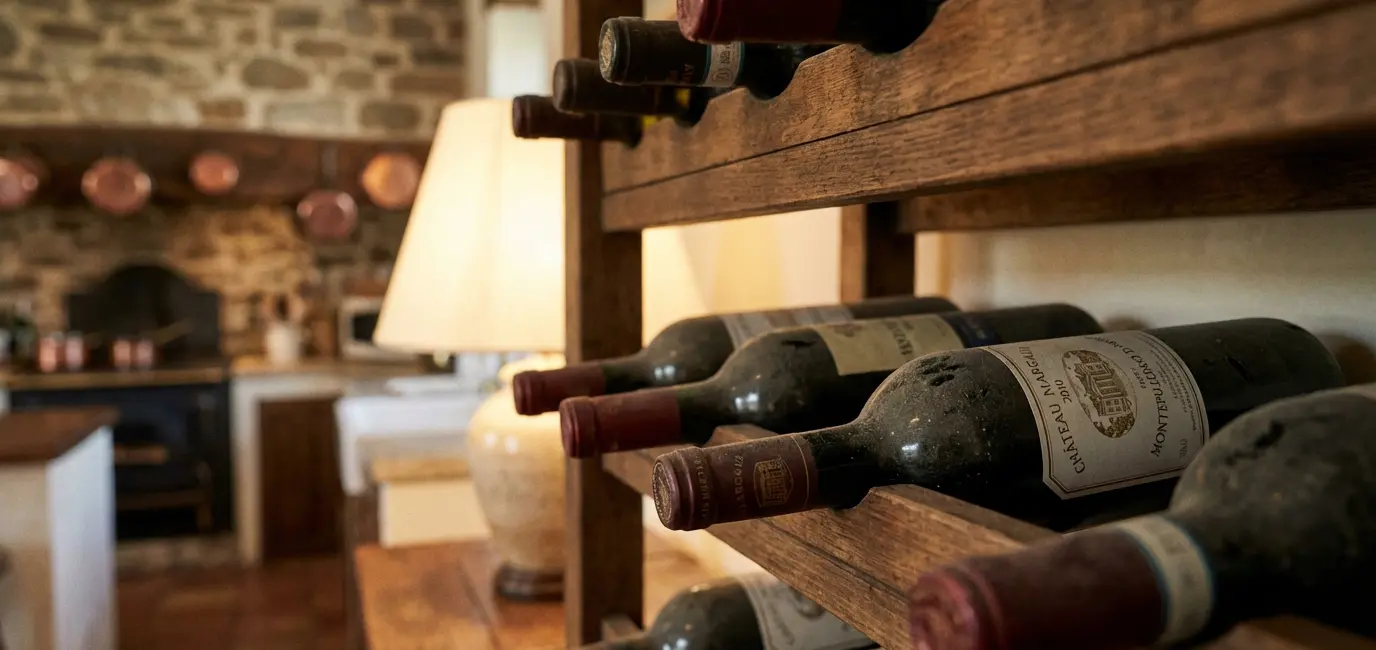
Why Proper Wine Storage Actually Matters
Here’s the thing about wine: it’s alive. The liquid in that bottle is still evolving — slowly reacting with trace amounts of oxygen, developing complexity, softening tannins. When you store wine at home properly, you’re creating conditions that let that evolution happen gracefully. When you don’t, you’re speeding up oxidation, flattening flavors, and — in the worst cases — turning a $40 bottle into something that tastes like vinegar.
The good news is that most wines don’t need years of careful storage. The average bottle of wine sold in the U.S. is meant to be drunk within one to three years of its vintage date. So if you’re buying wine to enjoy over the next few months, your storage requirements are relatively forgiving. It’s only when you’re aging wines intentionally — good Cabernets, Barolos, white Burgundies — that precision really matters. Even then, you don’t need a cellar. You need consistency.
I always tell people that the worst enemy of wine isn’t time — it’s instability. A bottle sitting at a steady 68°F will almost always outperform a bottle that’s been between 55°F and 80°F a dozen times. Stability is everything when it comes to how to store wine at home, and it’s something even a small apartment can offer if you choose the right spot.
Temperature, Humidity, and Light: The Rules That Work
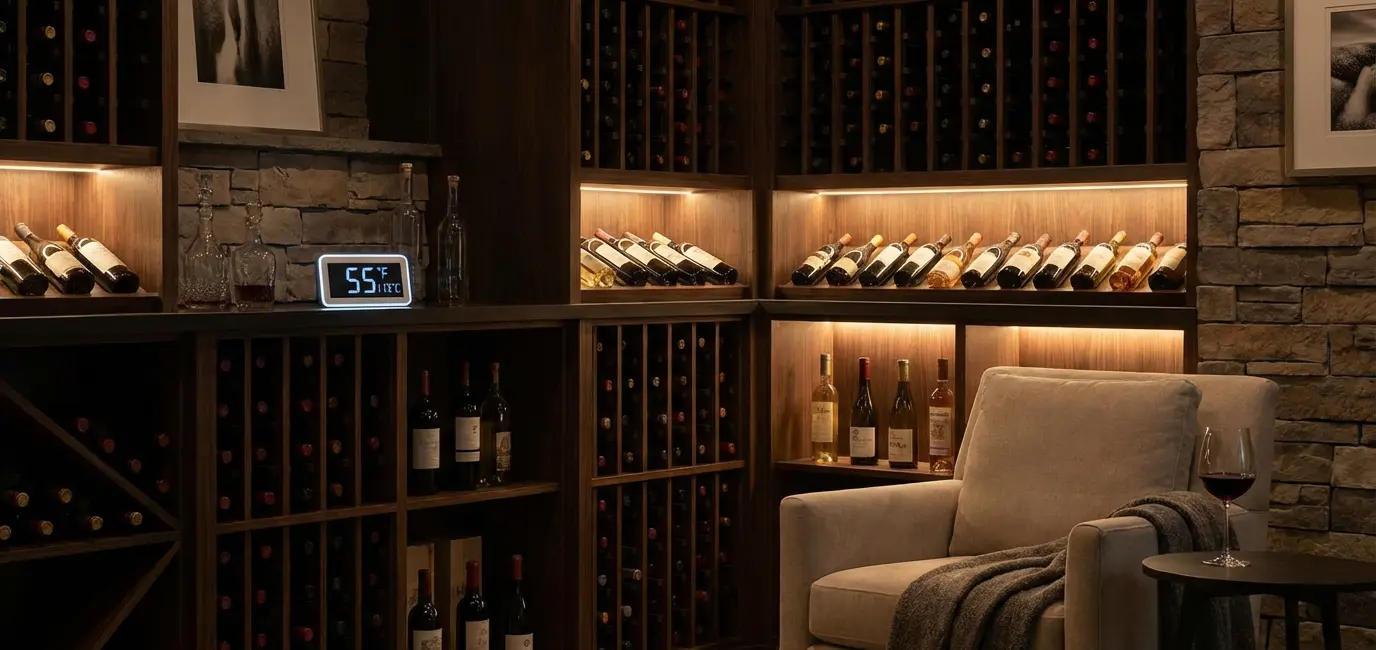
When people ask me about how to store wine at home, these three factors come up immediately: temperature, humidity, and light. They’re not complicated once you know what you’re aiming for.
“The ideal wine storage temperature is between 55°F and 65°F — but consistency matters far more than hitting the exact number.”
Temperature: The sweet spot for long-term wine storage is 55°F–65°F (13°C–18°C). For everyday bottles you’ll drink within a year, anywhere between 60°F and 70°F is perfectly fine as long as it doesn’t fluctuate wildly. Avoid storing wine near the oven, on top of the refrigerator (vibration + heat), or anywhere that gets warm in summer. The biggest mistake I see is people putting wine in a south-facing kitchen window “because it looks pretty.” Gorgeous display, terrible for the wine.
Humidity: The ideal relative humidity for wine storage is 50–70%. This keeps the cork from drying out, which would allow air to sneak in. In most homes, normal indoor humidity is sufficient. If you’re in a very dry climate, a small humidifier near your wine area or a slightly damp sponge in an enclosed wine cabinet can help. You’ll know there’s a problem if your corks start to look shrunken or cracked.
Light: UV light degrades wine quickly — it’s why most fine wines come in dark green or amber glass. Keep your wine away from direct sunlight and harsh fluorescent lighting. A dark closet or cabinet beats a bright kitchen shelf, even if the temperature is the same. LED lighting near your wine rack is fine; it doesn’t emit UV.
Vibration: One often-overlooked factor. Constant vibration — from a washing machine, a subwoofer, heavy foot traffic — can disrupt the sediment in aging wines and interfere with the slow chemical reactions happening inside the bottle. For short-term storage, it’s not a major concern. For wines you’re aging three or more years, minimize vibration where possible.
How to Store Wine at Home Without a Wine Cellar
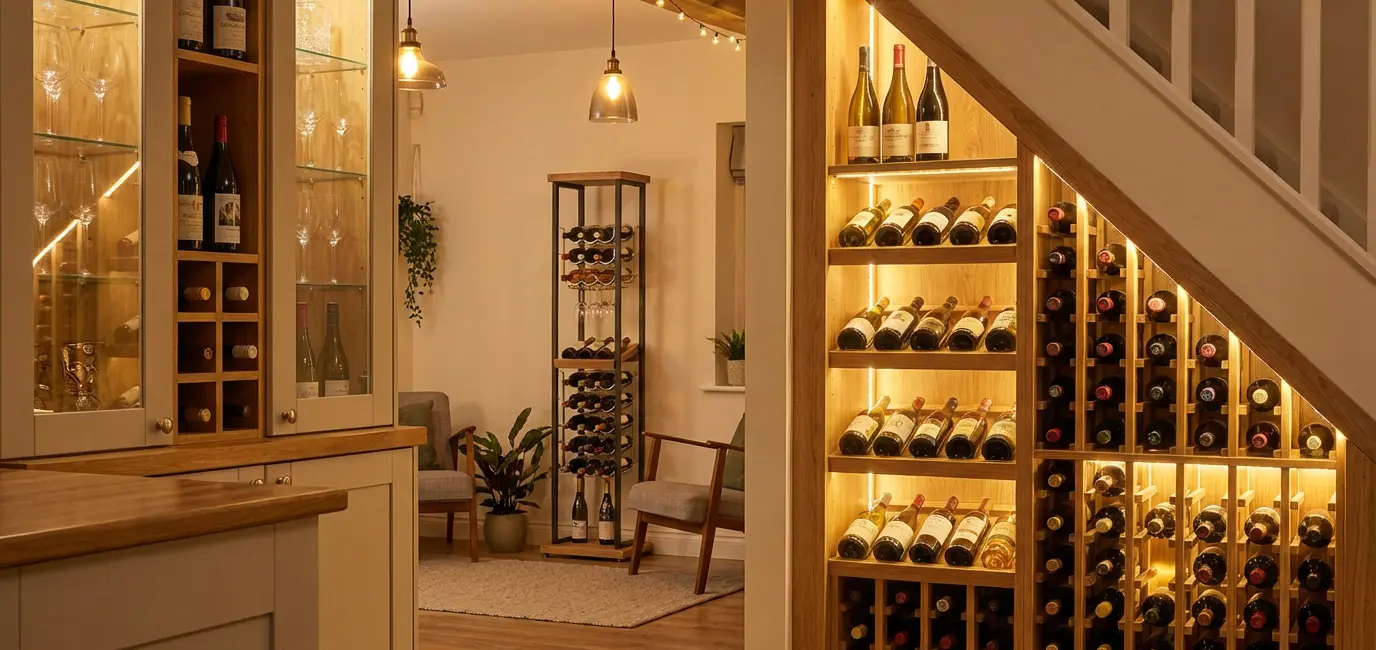
You don’t need a cellar, a basement, or a dedicated wine room to store wine properly. Most homes have at least one spot that works well — you just have to think about it differently than most people do. When I moved into my current apartment, I spent about twenty minutes identifying the coolest, darkest, least-vibrated corner and that’s where my wine lives.
Best spots in a typical home for how to store wine at home:
- Interior closets — away from exterior walls, protected from temperature swings. A coat closet or linen closet often stays at a steady 65°F year-round.
- Under the stairs — cool, dark, and structurally perfect for a wine rack. One of my favorite setups I’ve ever seen.
- A cool corner of a dining room or kitchen — as long as it’s away from heat sources and direct light.
- A basement (if you have one) — even a finished basement with slightly variable temps is usually fine for everyday drinking wines.
- A dedicated wine fridge — by far the most reliable option if you want precision without a cellar. More on this below.
Spots to avoid: Above the refrigerator (too warm), near the oven or stove, in a garage that heats up in summer, on a windowsill, or anywhere near a heating vent. I’ve seen people store their wine collection in a beautifully organized kitchen rack right next to the oven and wonder why their whites taste flat. Location really does matter.
One thing I do in my home: I keep my everyday drinking wines — the bottles I’ll open within the next week — in a countertop wine rack in the kitchen. Anything I want to hold for longer goes in a small wine fridge or in the coolest interior closet. This two-tier approach is simple, practical, and covers both everyday drinking and intentional aging without a dedicated space.
If you’re building your collection and need affordable storage as part of a broader wine collection strategy, combining a quality rack with a temperature-monitored closet corner can take you a long way before you ever need to invest in a full wine fridge.
Choosing a Wine Rack, Fridge, or Cabinet That Fits Your Space
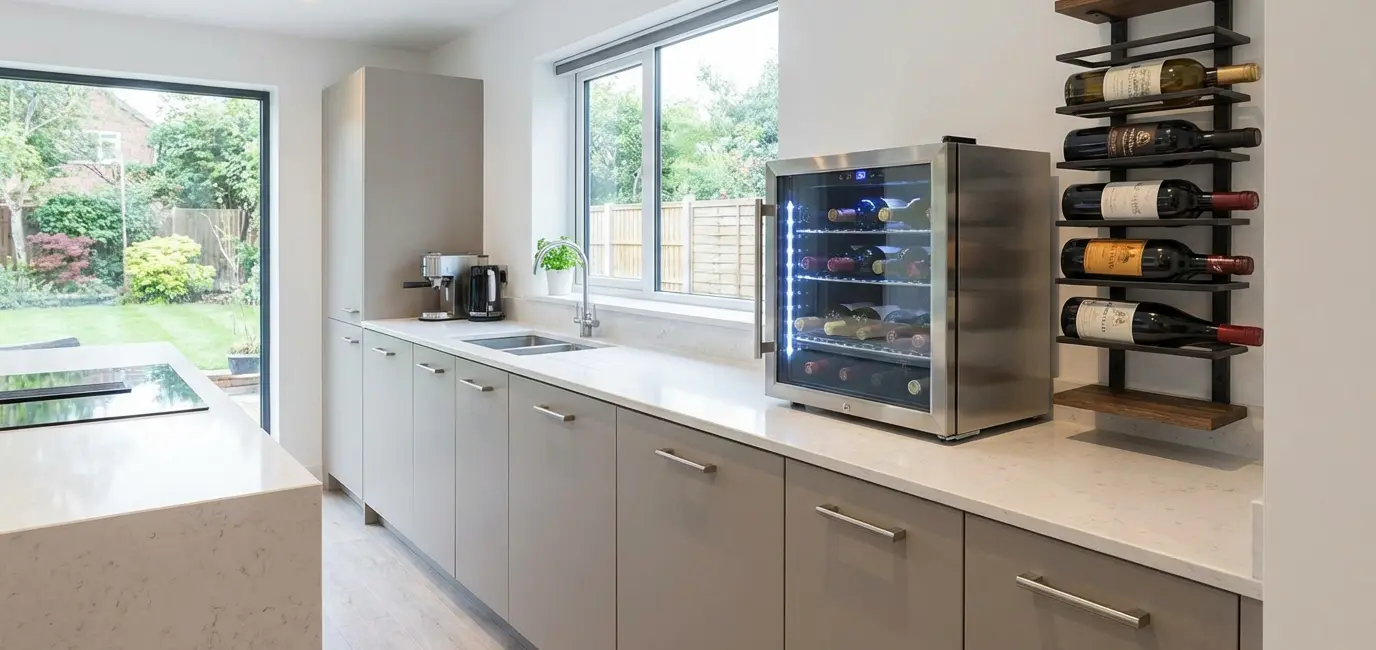
Once you’ve found the right spot, you need the right storage vessel. Here’s how I think about it:
Wine Racks — The most affordable and versatile option for how to store wine at home. A good countertop rack holds 6–12 bottles and keeps them on their side (essential for cork integrity). Wall-mounted racks look gorgeous in a dining room or kitchen nook and can hold dozens of bottles. The trade-off: no temperature control. If your room stays consistently cool and dark, a rack is completely sufficient. Browse wine racks on Amazon — there’s a style for every space and budget.
Wine Fridges — My top recommendation for anyone serious about their collection. A small countertop wine fridge (6–12 bottles) starts at under $100 and provides consistent temperature and humidity. A freestanding unit (40–100 bottles) is the most practical upgrade you can make if you buy wine regularly. Dual-zone fridges let you store reds and whites at different temperatures — genuinely useful if you drink both regularly. Shop wine fridges on Amazon for a wide range of sizes and price points.
Wine Cabinets — The premium option. A quality wine storage cabinet combines the aesthetics of furniture with the function of a temperature-controlled environment. These are worth the investment if you’re storing 50+ bottles or aging collectible wines. They’re also gorgeous in a dining room or home bar setup. If you’re building a home wine bar, a wine cabinet is one of the most impactful pieces you can add. Browse wine storage cabinets on Amazon for inspiration across styles and budgets.
A note on position: Bottles should almost always be stored on their side (horizontally). This keeps the wine in contact with the cork, preventing it from drying out. The only exception: wines with screw caps or synthetic corks can be stored upright without issue. Sparkling wines and Champagne should be horizontal and handled gently — the pressure inside the bottle makes them more sensitive to vibration.
How Long You Can Actually Keep Wine
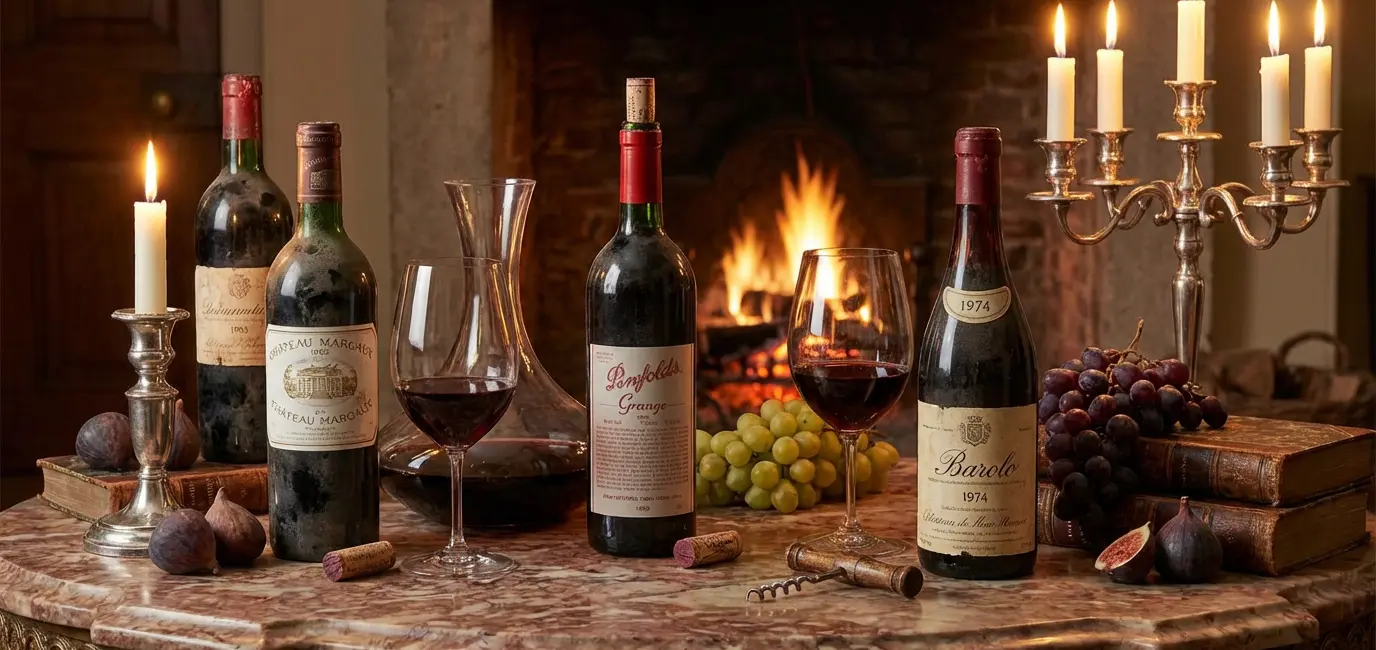
This is the question I get more than any other when people ask about how to store wine at home: how long is too long? The honest answer is: it depends on the wine. Most wines are not built for long aging. In fact, the majority of wines on the market — especially bottles under $30 — are made to be enjoyed within 1–3 years of their vintage date. Holding them longer won’t make them better; it’ll just make them older.
- Light reds (Pinot Noir, Beaujolais, everyday Sangiovese): 1–3 years from vintage
- Medium reds (Merlot, Zinfandel, Chianti Classico): 2–5 years
- Full reds (Cabernet Sauvignon, Barolo, Brunello, Syrah): 5–15+ years for quality bottles
- Crisp whites (Sauvignon Blanc, Pinot Grigio, unoaked Chardonnay): 1–3 years — drink young
- Full whites (white Burgundy, Viognier, oaked Chardonnay): 3–7 years for good producers
- Sparkling / Champagne: Non-vintage: 1–3 years; Vintage: 5–10+ years
- Fortified wines (Port, Madeira, Sherry): Often 10–30+ years for quality bottles
The honest rule of thumb: if you can’t find specific aging information for a bottle, assume it’s meant to be drunk now. The wines that reward extended cellaring are usually the ones where the producer makes it obvious — through the label, the price, or the reputation of the appellation. If you’re reading wine labels and want to understand what a bottle is telling you about its drinking window, a little label literacy goes a long way.
I also always recommend tasting wines you’re aging periodically — maybe once a year for anything you’re holding more than three years. Open one bottle from the case, enjoy it, and note whether it’s improving or starting to decline. There’s no point holding onto a wine that’s already peaked. Wine is meant to be drunk. The goal of proper storage is simply to make sure it arrives at the table at its best.
More Wine Guides Worth Reading
Once your storage situation is sorted, these are the guides I’d read next. Hosting a wine tasting at home is one of the best ways to explore your collection with friends. If you’re shopping for the bottles worth storing, Wine.com’s red wine collection is a great starting point for quality picks across every price range. And if you’re into reds, their white wine selection is equally well-curated. For the aesthetic side of building a wine space, setting up a home wine bar is a surprisingly achievable project. And if you’re curious about what makes a bottle worth aging, reading a wine label is where I’d start. If you’re exploring natural wines or want to fill your rack with clean options, the best organic wine brands is a solid shortlist.
FAQ
Can I store wine at room temperature?
For short-term storage (a few weeks), room temperature is fine as long as your home stays reasonably cool and consistent. For anything you’re holding more than a month, try to find a spot below 70°F. Above 75°F, wine starts to age faster than intended and can lose freshness quickly.
Should wine be stored on its side?
Yes — for wines with natural corks, storing on the side keeps the cork moist and prevents it from drying out, which would allow air into the bottle. Wines with screw caps or synthetic corks can be stored upright with no issues.
Can I store wine in the refrigerator long-term?
Your regular kitchen fridge is too cold (around 38°F) and too dry for long-term wine storage. It’s fine for a few weeks, especially for whites and sparkling wines. For anything longer, a dedicated wine fridge or a cool interior closet is better.
How do I know if wine has gone bad?
Signs include a vinegar or nail polish remover smell (acetic acid), a flat or ‘cooked’ taste, a brown or orange color in a red that should be deep ruby, or a moldy or wet cardboard smell (the classic ‘corked’ wine from TCA contamination). Some of these are storage failures; others are production issues. Either way, you’ll know after the first sniff.
Does white wine need to be stored differently from red?
The basic rules are the same — cool, dark, on its side. White wines generally have a shorter drinking window than reds and are more sensitive to oxidation once open. For unopened bottles, store whites at the cooler end of the acceptable range (around 55°F) if possible. Sparkling wines and Champagne should be stored at the coolest temperature you can manage and handled gently.
What is the best temperature to store wine at home?
Between 55°F and 65°F is ideal for most wines. If you don’t have a wine fridge, aim for a cool interior space that stays under 70°F year-round. Consistency matters more than hitting the exact number — a steady 65°F beats a spot that swings between 60°F and 75°F.
Learning how to store wine at home isn’t complicated once you know what the wine actually needs. Find the coolest, darkest, most stable spot you have. Lay the bottles on their sides. Don’t overthink it. A $40 bottle stored thoughtfully will almost always beat a $100 bottle stored carelessly — and your collection will thank you for it. If you’re building a collection worth protecting, take a look at building a wine collection on a budget for a full guide to choosing wines that are both enjoyable now and worth holding.