This post may contains affiliate links. Read our full disclosure here.
The best sustainable home decor ideas are the ones that feel beautiful first and eco-conscious second — because a home you love is a home you keep, and keeping things is the most sustainable choice you can make. After years of styling rooms for myself and friends, I’ve landed on a clear framework: choose natural materials, shop secondhand before buying new, bring in live plants, and build a home that has genuine soul rather than trend-chasing flash.
Why Sustainable Home Decor Is Having Its Moment (And Staying)
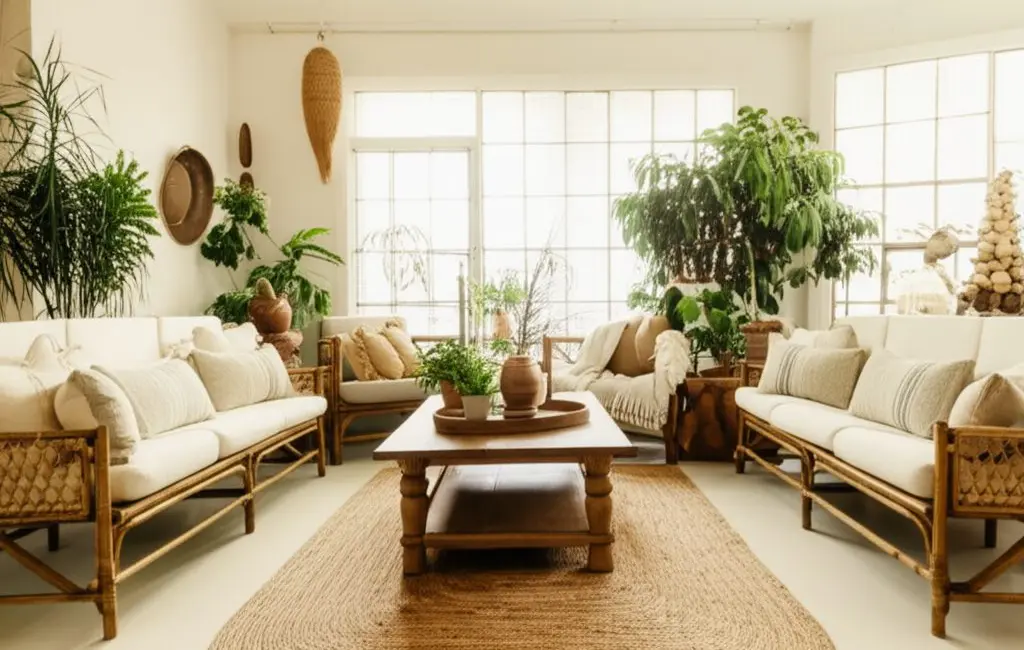
Sustainable home decor has moved firmly from niche to mainstream — and unlike some design trends, I think it’s here to stay. The shift isn’t ideological for most people; it’s aesthetic. The look of sustainable decor — raw linen, warm rattan, aged wood, terracotta, handmade ceramics — simply looks and feels more beautiful than the fast-furniture aesthetic it’s replacing. It feels warm where flat-pack feels cold. It has character where engineered wood has none.
There’s also the economics. Fast furniture — the $99 flatpack bookshelf, the $249 sofa that lasts three years — is not actually cheaper over time. A solid oak sideboard bought secondhand for $200 will outlast four particle-board versions and look better while doing it. Sustainable home decor is frequently the more intelligent financial decision, which is why it appeals to so many people who aren’t particularly focused on environmentalism per se.
If you’re starting to think about quiet luxury home decor on a budget, sustainable principles overlap almost entirely. The quiet luxury aesthetic — neutral tones, high-quality natural materials, restrained eclecticism — is sustainable by default, because it prioritizes longevity over novelty.
“The most sustainable piece of furniture is the one you already own, or the one that lasts long enough to become something you pass down.”
Buy Less, Choose Better: The Secondhand Furniture Revolution
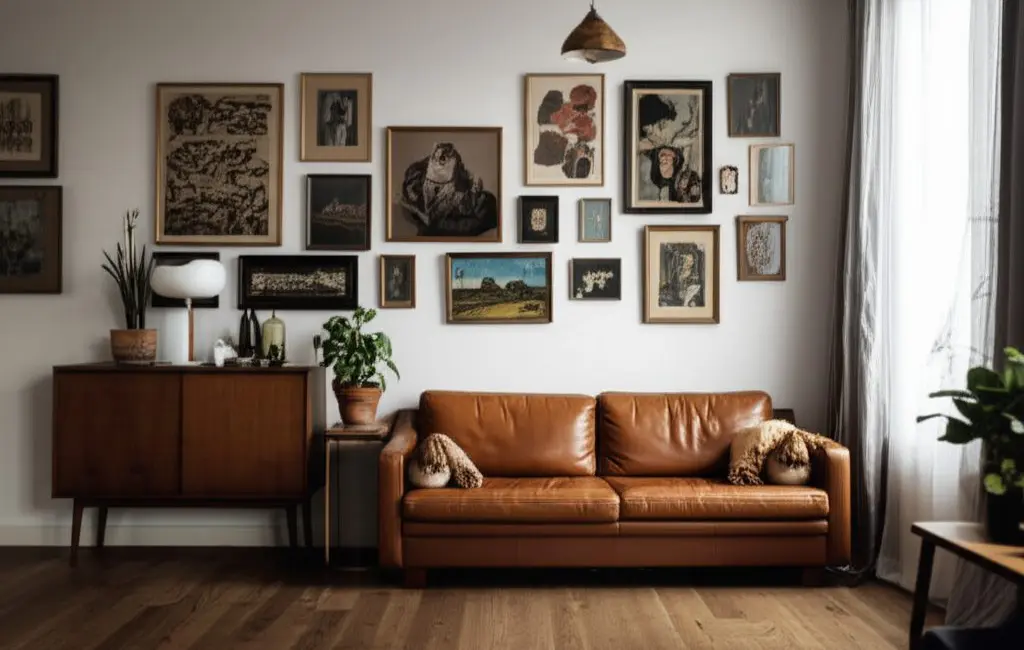
The single highest-impact sustainable home decor decision you can make is buying secondhand furniture — and I say this as someone who once walked past a $40 Craigslist teak coffee table in perfect condition because I had a specific new one in mind. That was a mistake I don’t make anymore.
Secondhand and vintage furniture is better on almost every dimension that matters for beautiful, lasting interiors. Older furniture was made with solid wood and real joinery. The proportions are often better — more generous, more architectural — because older furniture was designed for rooms with higher ceilings and longer lifespans. And the patina is something money can’t buy new.
Where to actually find it: Facebook Marketplace is the best source for everyday furniture — I’ve found a $1,600 Crate & Barrel sofa for $175 and a Belgian linen slipper chair for $60. Chairish is where you’ll find better-quality vintage with a bit of curation. Estate sales (EstateSales.net) are gold mines for ceramics, artwork, and occasional furniture. Habitat for Humanity ReStores often have architectural salvage, lighting, and solid wood pieces.
For new sustainable furniture when secondhand isn’t right for the piece, Denver Modern sources solid wood and sustainable materials across their furniture collections — and their quality-to-price ratio is genuinely strong. For artwork, I love Art.com’s botanical print collection for bringing sustainable, nature-inspired art into gallery walls and mantel vignettes.
The spring mantel styling principles I wrote about earlier this year apply perfectly here: anchor with something with age or provenance, then build around it with texture and organic shapes. A secondhand ceramic vase does that work better than any new one.
Natural Materials That Make a Room Feel Alive
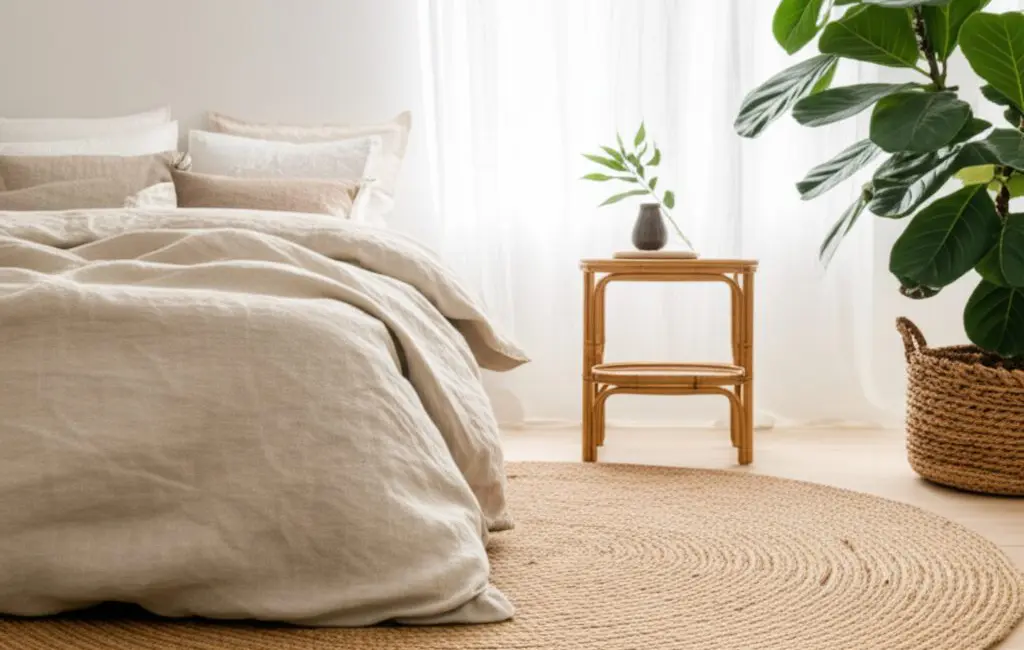
If I had to name the single most transformative sustainable home decor swap, it’s replacing synthetic textiles with natural ones. The difference a linen sofa cover, a jute rug, or a set of cotton percale throw pillows makes to how a room looks and feels is disproportionate to the cost. Natural fibers breathe differently. They take light differently. They soften with use in a way that synthetics never do.
Here are the natural materials worth investing in for sustainable home decor, room by room:
- Linen — the most versatile sustainable textile. Slipcovers, curtains, throw pillows, bedding. Wrinkles naturally and looks better for it. Gets softer with every wash.
- Jute and sisal rugs — beautiful natural fiber floor coverings that ground a space. Best in low-moisture rooms (not bathrooms). Incredible texture at a fraction of the cost of wool.
- Rattan and wicker — for accent chairs, baskets, pendant lights, side tables. The warmth they bring to a room is immediate. Also very durable.
- Solid wood — cherry, walnut, oak, teak. Look for FSC-certified for new purchases, or simply buy vintage. The grain is the art.
- Terracotta and natural clay ceramics — for vessels, pots, tableware, and decorative objects. Hand-thrown pieces from small makers are sustainable and support craftspeople.
- Cotton and beeswax candles — a small swap with a real sensory difference. Beeswax burns cleaner, lasts longer, and smells faintly of honey.
For textiles with a truly personal touch, my Spoonflower shop carries custom-designed fabric and wallpaper patterns — including botanical prints and warm earthy tones that work beautifully in a sustainable interior. Custom fabric is inherently less wasteful than mass-produced fast textile: you order what you need, in the design you actually want.
The Japandi living room guide I put together is an excellent reference if you want a complete room around natural materials — that Japanese-Scandinavian aesthetic is essentially a masterclass in making natural materials the star of a room.
Sustainable Home Decor in the Kitchen and Dining Room
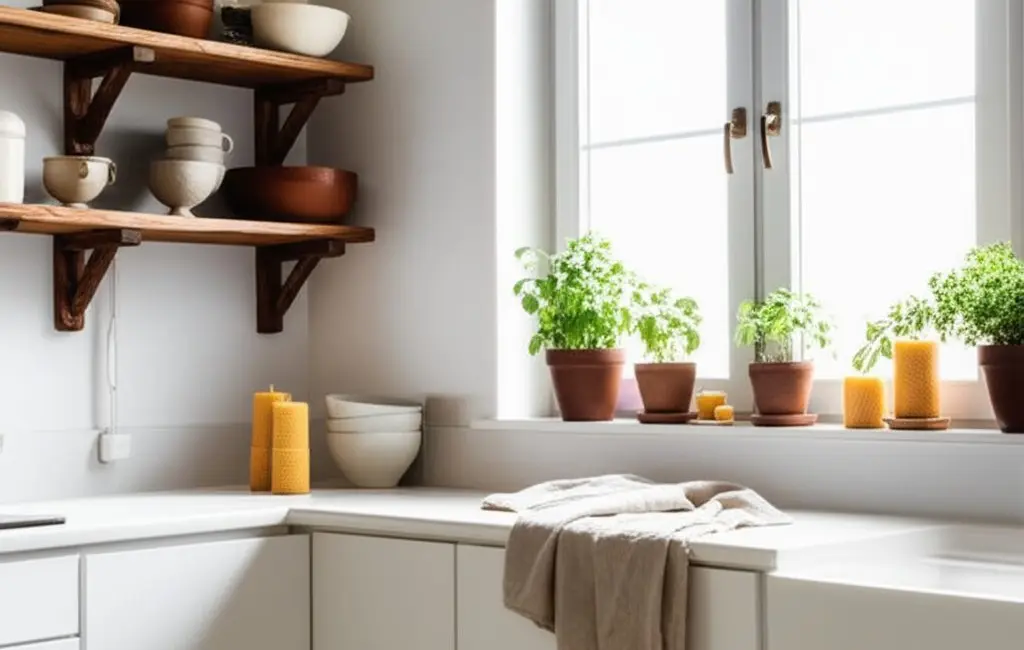
The kitchen and dining room are where sustainable home decor choices compound most quickly — because these are high-use rooms where material quality translates directly into durability, and where you’re literally surrounded by your choices every single day.
Start with open shelving. If your kitchen has or can have open shelves, styling them with real ceramic dishes, wooden bowls, glass jars, and potted herbs transforms the kitchen instantly — and keeps everything visible enough that you actually use it and don’t duplicate purchases. The open kitchen shelving guide I wrote covers exactly how to style shelves that always look good without becoming cluttered.
Key sustainable kitchen and dining room swaps:
- Linen napkins over paper towels — a set of 8 linen napkins costs $30 and lasts a decade. Paper towels are $300/year and landfill.
- Beeswax wrap instead of plastic wrap — these actually work and look beautiful folded in a drawer.
- Ceramic over non-stick — cast iron and carbon steel pans are infinitely more durable and don’t shed PTFE coating.
- Reusable glass storage — French canning jars (Le Parfait or Ball) for dry goods, soups, leftovers. Visual, practical, endlessly reusable.
- Natural wood cutting boards — end-grain boards are self-healing and will last 20+ years with minimal care.
For the dining table itself: a tablecloth made from natural linen or cotton is a transformative sustainable home decor addition. Check the Spoonflower collection for custom tablecloth fabric in botanical and earthy designs — a made-to-measure tablecloth is far more sustainable than fast-textile options and becomes an heirloom piece.
Biophilic Design: Bringing the Outside In
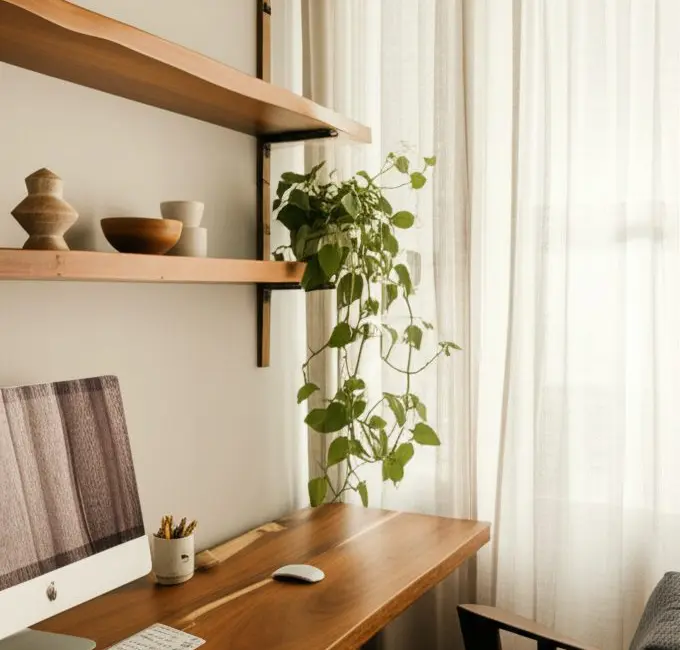
Biophilic design — the practice of incorporating natural elements into interior spaces — is one of the most well-researched sustainable home decor approaches, and one of the most transformative. Numerous studies have shown that the presence of living plants reduces stress, lowers blood pressure, improves air quality, and increases measured feelings of well-being.
But beyond the research, living plants simply make a room feel better. A trailing pothos on a high shelf, a large fiddle-leaf fig in a corner, a cluster of terracotta pots on a windowsill — these things have the singular quality of making a room feel inhabited and alive in a way that no purchased object can replicate.
Best plants for sustainable home decor by room:
- Living room — fiddle-leaf fig (architectural, dramatic), rubber plant (deep burgundy or dark green, very forgiving), snake plant (sculptural, needs almost no light or water)
- Bedroom — pothos (trails beautifully from shelves), peace lily (air-purifying, thrives in low light), lavender on a sunny windowsill
- Kitchen — herbs (basil, rosemary, thyme, mint in a south-facing window — functional and beautiful)
- Bathroom — air plants (need only humidity and indirect light), ferns, pothos
- Home office — ZZ plant (near-indestructible in low light), trailing string of hearts
Beyond plants: natural stone, driftwood, branches in vases, shells, pinecones. The sustainable home decor principle of bringing outside materials inside extends beyond living things — and these free or foraged objects have an authenticity that no purchased decorative object can quite match.
If you’re redoing a bedroom with biophilic principles in mind, the spring bedroom refresh guide covers exactly how to layer natural materials, plants, and soft textiles for a room that feels like a proper sanctuary.
How to Shop for Sustainable Home Decor Without the Greenwash
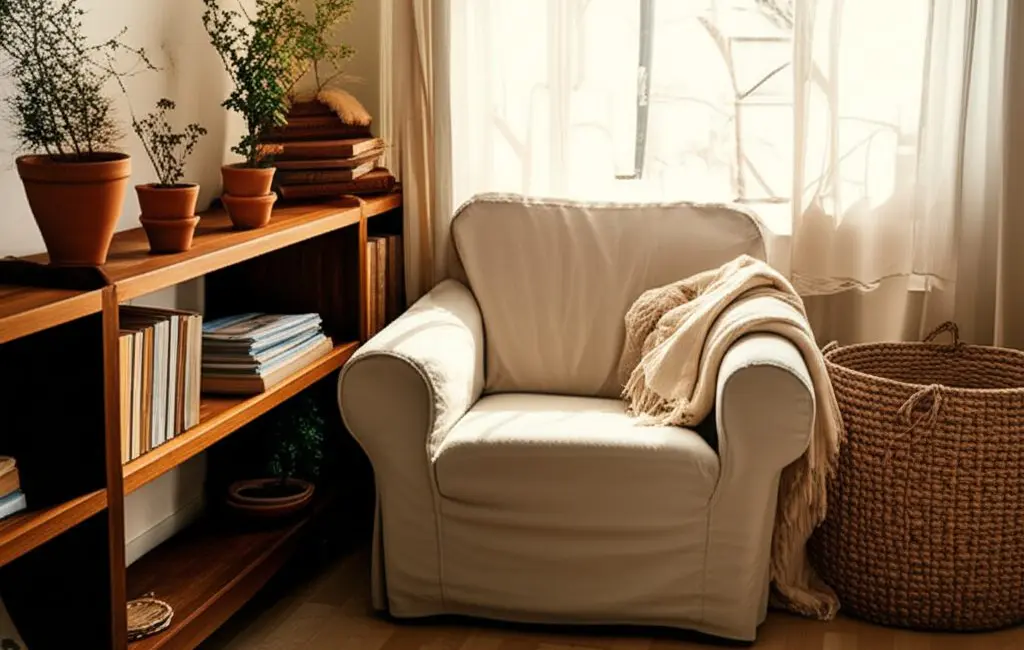
Here’s the uncomfortable truth about sustainable home decor shopping: most of what’s marketed as sustainable is not. “Natural linen” pillows made with synthetic batting. “Eco-friendly” furniture made with particleboard and melamine. “Organic cotton” items that are 30% polyester.
The only greenwash-proof approach is to focus on materials you can evaluate yourself, rather than marketing claims you can’t. Here’s my working framework:
- Touch it — linen has a characteristic texture (slightly rough when new, softens with washing). Jute is stiff and has a distinctive smell. Solid wood is heavy and shows grain variation. If something feels or looks uniform and plasticky, it probably is.
- Check the label for fill content — “down alternative” means polyester. Look for real down, wool, or organic cotton fill.
- Ask about the supply chain — for furniture, FSC certification matters for wood. For textiles, GOTS (Global Organic Textile Standard) is the credible certification for organic cotton and linen.
- Buy from makers over brands — small potters, woodworkers, and weavers on Etsy or local markets are inherently more sustainable than mass-market brands. The supply chain is short, the materials are visible, and the pieces are one-of-a-kind.
- Secondhand beats “eco” every time — a pre-owned sofa made with conventional materials has a lower environmental footprint than a brand-new sofa made with certified-sustainable materials. The most sustainable thing is to keep existing objects out of landfill.
The guide to making your home feel like a luxury hotel and the small living room decorating guide both touch on buying with intention rather than impulse — which is the practical foundation of sustainable home decor shopping.
“Sustainable home decor isn’t about buying the right things. It’s about buying far fewer things, and making sure each one earns its place permanently.”
One last thought: sustainable home decor is ultimately about a relationship with your home rather than a checklist of eco credentials. When you buy something beautiful and lasting, care for it, and arrange it with intention, you’re already living the principle. The aesthetics and the ethics are completely aligned here — which is why this movement has real staying power.
Frequently Asked Questions
What are the best sustainable home decor materials?
The best sustainable home decor materials are linen, organic cotton, jute, sisal, solid wood (especially FSC-certified or reclaimed), rattan, natural clay ceramics, terracotta, beeswax, and stone. These materials are durable, biodegradable or recyclable, and they look beautiful. Avoid anything with a high synthetic content — polyester, melamine, MDF — even when marketed as eco-friendly.
Is secondhand furniture actually sustainable?
Yes — buying secondhand furniture is the most sustainable home decor choice you can make. Furniture production has a high carbon footprint and generates significant waste; keeping existing furniture in circulation avoids all of that. Secondhand also tends to mean better quality, since older furniture was made with solid wood and proper joinery rather than the particle-board construction common in modern affordable furniture.
How do I make my home more sustainable without a big budget?
Start with free and low-cost swaps: add plants (cuttings from friends cost nothing), switch to beeswax candles, swap paper towels for linen napkins, and repurpose what you already own before buying anything new. The highest-impact sustainable home decor changes are behavioral — buying less, keeping things longer, choosing secondhand first — rather than purchasing specific eco-certified products.
What is biophilic design in home decor?
Biophilic design is an interior design approach that incorporates natural elements — living plants, natural materials, natural light, views of nature, and organic forms — into living spaces. The principle is that humans have an innate need for connection to the natural world, and that homes incorporating natural elements produce measurable wellbeing benefits. In practice, it means more plants, more wood and stone, more natural textiles, and more exposure to natural light.