This post may contains affiliate links. Read our full disclosure here.
If there is one interior design style I keep coming back to, it is Japandi living room design. The moment I first walked into a home styled with Japandi living room ideas — low-profile furniture, natural wood tones, not a thing out of place — I felt an immediate sense of calm I had never experienced from a room before. A Japandi living room blends Japanese minimalism with Scandinavian warmth to create a space that is serene, functional, and quietly beautiful. In this guide I am breaking down everything you need to know to create your own Japandi living room: the right color palette, furniture choices, textures, wall decor, and the small styling details that make all the difference.
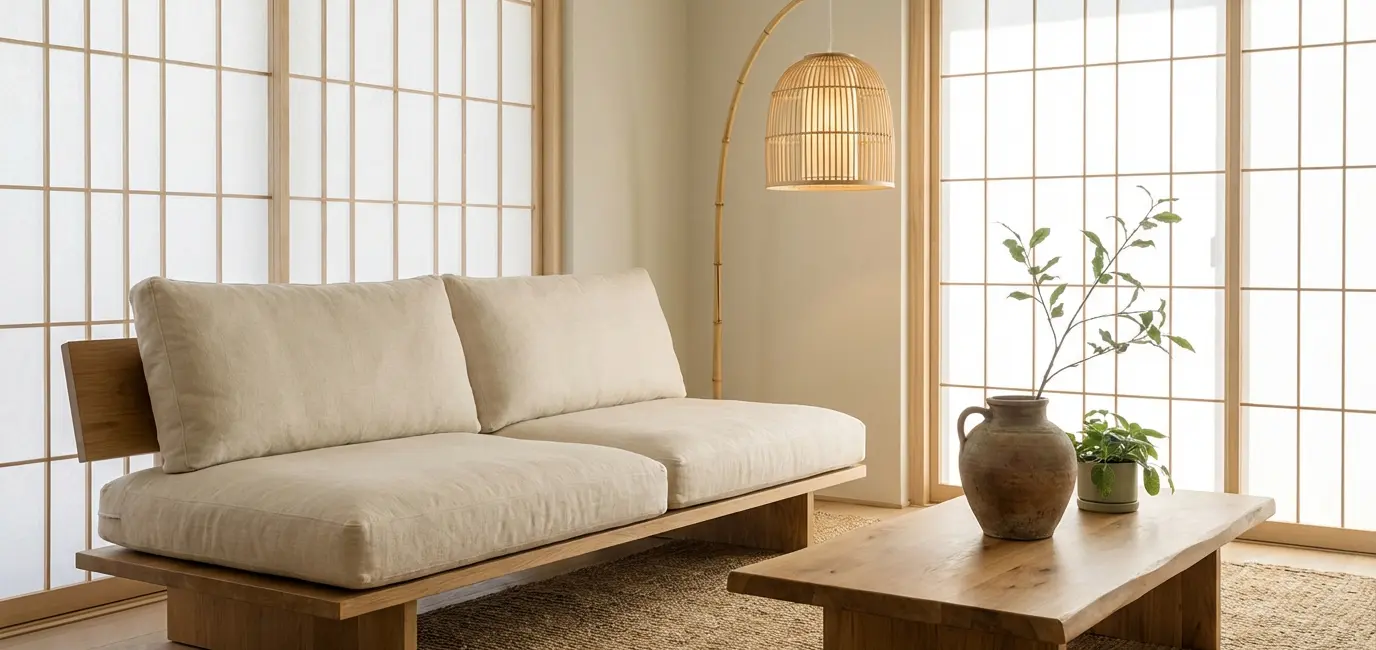
What Is Japandi Style?
Japandi is a portmanteau of Japan and Scandinavia — and it is exactly what it sounds like: a design philosophy that marries the best of both worlds. Japanese interior design brings wabi-sabi (the beauty of imperfection), a deep respect for negative space, and an almost meditative quality to every room. Scandinavian hygge brings warmth, coziness, and a commitment to functional simplicity. Put them together in a Japandi living room and you get something magical: a space that feels both refined and lived-in, minimal but never cold.
What separates a true Japandi living room from generic minimalism is intentionality. Every object earns its place. The throw blanket folded on the sofa is there because it is beautiful and because you actually use it. The ceramic vase on the coffee table holds a single stem — not because you ran out of flowers, but because that restraint is the point. A Japandi living room asks: what would this room look like if I removed everything that does not bring me peace?
“Japandi is not about having less. It is about having exactly what you need — nothing more, nothing less.” — The Japandi design philosophy in one sentence
The style is also deeply connected to nature. Natural materials — wood, linen, wool, bamboo, rattan, stone — are the building blocks of any well-designed Japandi living room. Synthetic materials are minimized, and anything that looks too “perfect” or mass-market can undermine the wabi-sabi soul of the space. This is a style that celebrates the grain of the wood, the slight irregularity of a handmade ceramic, the organic drape of an unstarched linen cushion cover.
One thing worth noting: a Japandi living room does not have to be expensive. The aesthetic actually favors quality over quantity, which means you can invest in one or two really good pieces — a beautiful low sofa, a hand-thrown ceramic lamp — and let those anchor the room. For furniture that walks this minimalist-yet-warm line beautifully, I have been loving the collections at TOV Furniture — their clean silhouettes and natural finishes translate perfectly into a Japandi living room aesthetic.
The Japandi Color Palette
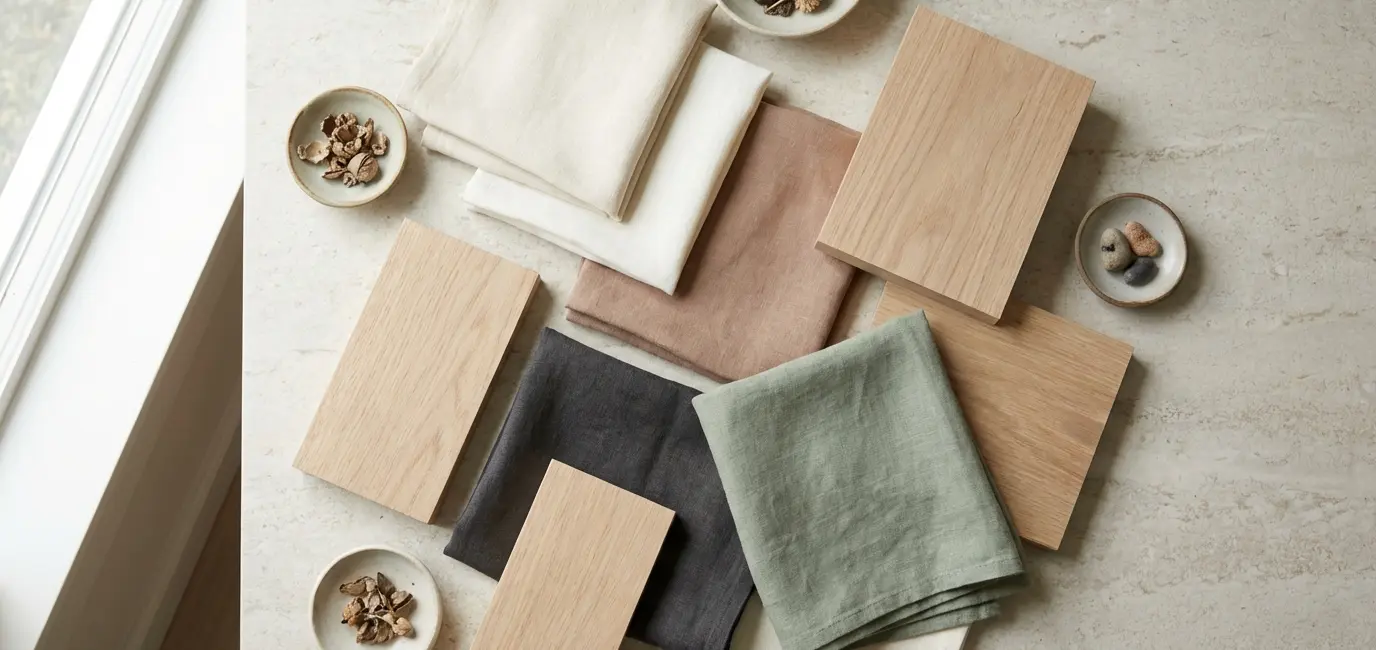
Color is where a Japandi living room starts. Get the palette wrong and even the best furniture will feel off. Get it right and the room will feel cohesive and calming before you add a single decorative object.
The core Japandi living room color palette is built on warm neutrals: creamy off-whites, sandy beiges, warm greiges, and soft taupe. These are layered with natural wood tones (oak, walnut, ash) and grounded by muted accents in charcoal, slate grey, or deep forest green. Black appears occasionally — a thin metal frame on a shelf, the glaze on a ceramic bowl — but sparingly.
Colors that work beautifully in a Japandi living room
- Warm white and off-white: Think linen white, warm chalk, or creamy ivory — never stark, blue-toned white
- Sandy beige and warm greige: The foundational mid-tone that bridges wood and upholstery
- Sage green: Nature’s neutral — works beautifully against oak wood tones and cream walls
- Charcoal and warm grey: Used for depth without drama — throw pillows, rugs, accent walls
- Clay and terracotta: Small doses only — a terracotta ceramic, a dusty orange throw
- Natural wood tones: Oak, walnut, and ash are the true “colors” of a Japandi space
What to avoid in a Japandi living room: cool-toned whites, bright accent colors, high-gloss finishes, anything that reads as “trendy” rather than timeless. The palette should feel like it has always been there, like the room grew organically rather than being decorated.
I am personally obsessed with sage green as an accent in Japandi living room design right now. For a deep dive into sage green styling, see my guide to sage green living room ideas — many of the principles translate seamlessly into Japandi spaces.
Japandi Living Room Furniture Ideas
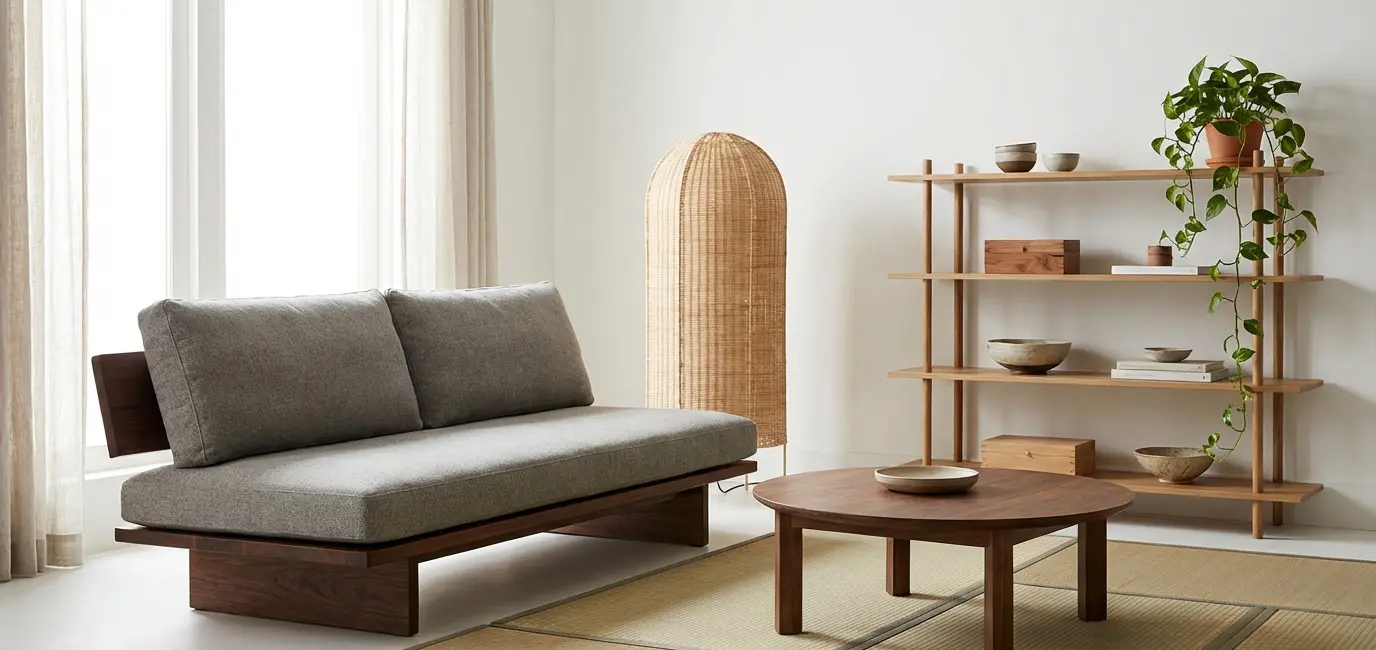
Furniture is the backbone of a Japandi living room, and the rules here are both simple and strict: low, natural, functional. Every piece should feel grounded — literally and figuratively.
Seating
The defining furniture choice in any Japandi living room is a low-profile sofa. Floor-level or very low-leg sofas create a sense of calm and spaciousness. Look for clean, straight lines with no frills — no tufting, no rolled arms, no decorative nailheads. Upholstery in natural linen, cotton, or boucle in cream, stone, or oatmeal is ideal. A single sofa and one or two low armchairs is usually enough; Japandi living room design resists the urge to fill every corner.
Coffee Tables
The coffee table in a Japandi living room should be low (to match the sofa’s proportions), made of natural wood, and styled with extreme restraint. A single ceramic tray, one small plant, and a stack of two books. That is it. For coffee table styling inspiration, my guide to coffee table styling ideas covers the exact approach that works in a Japandi living room.
Storage and Shelving
Visible clutter is the enemy of a Japandi living room. Built-in or freestanding low shelving (never towering bookcases) keeps things organized without dominating the room. What goes on those shelves is just as important: a few ceramics, one or two books, a trailing plant. No knick-knacks, no collections, no “just in case I need it” objects.
For great low-profile furniture at accessible price points, I always check RC Willey — they carry a solid selection of clean-lined pieces that work well in a Japandi living room without requiring designer-level investment. For something a little more curated and design-forward, Denver Modern has pieces with the kind of considered craftsmanship that Japandi living room design really rewards.
For more small-space furniture arrangement ideas that complement the Japandi living room aesthetic, see my guide to small living room decorating ideas.
Textures, Materials, and Layering
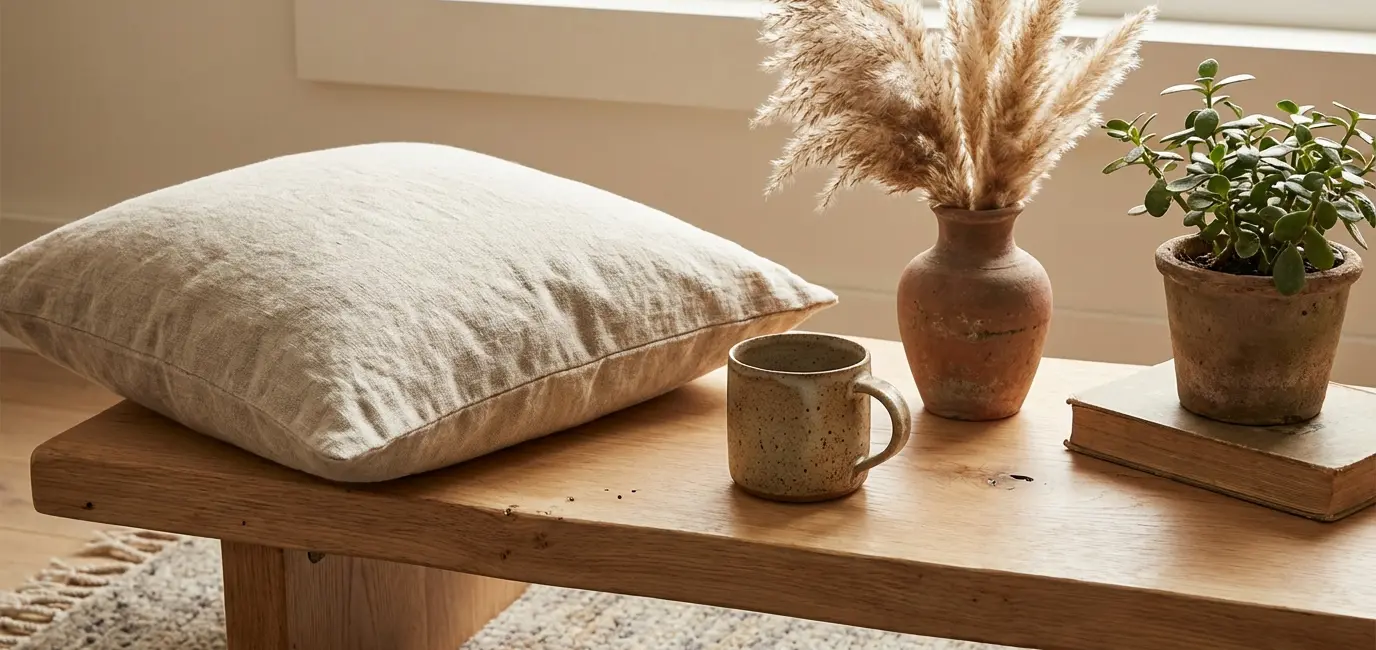
Here is where a Japandi living room gets its soul. Without texture and material variation, the minimal color palette can tip into sterile. With the right layers, it becomes deeply inviting.
The must-have materials for a Japandi living room
- Linen: The quintessential Japandi textile — cushion covers, throws, curtains. Never crisp, always slightly rumpled
- Natural wood: Oak, walnut, or ash for furniture and floors — visible grain, matte finish, no high-gloss lacquer
- Rattan and wicker: A single rattan floor lamp or side table adds organic warmth without visual weight
- Ceramics: Handmade, slightly imperfect bowls, vases, and mugs — wabi-sabi in object form
- Wool and boucle: Textured throw blanket, a boucle pillow, or a wool area rug grounds the room
- Stone and marble: Used as an accent — a stone candle holder, a marble tray — never overdone
- Bamboo: Blinds, a tray, or a plant pot — natural, sustainable, quietly beautiful
One layer I love adding to a Japandi living room that people often overlook: custom textile pieces. A table runner in a botanical or minimal pattern, linen curtains in a hand-drawn stripe, or even a set of placemats in an earthy block print can add exactly the right amount of visual texture without disrupting the calm. I actually design my own fabric and wallpaper patterns inspired by nature and the Japandi aesthetic — you can browse the minimal designs and botanical prints in my Spoonflower collection if you want to bring some of this look into your own home through fabric.
The layering principle in a Japandi living room is: one texture leads, others support. If the sofa is smooth linen, add a chunky-knit throw. If the rug is flat-weave wool, add a rattan floor lamp. Never two of the same texture competing for attention. The goal is a room that rewards a slow, close look — where every surface has something quiet and beautiful happening on it.
Japandi Wall Decor and Art
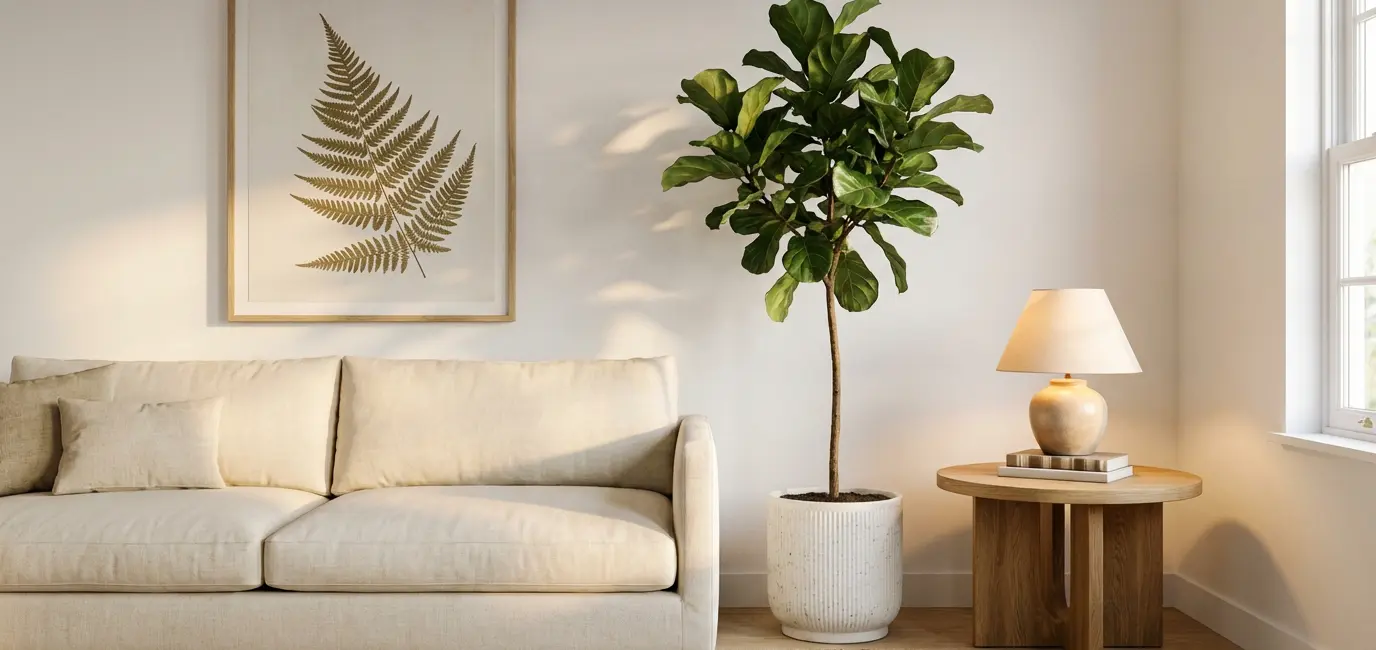
Wall decor in a Japandi living room follows the same rule as everything else: less is more, and what you choose to put up matters enormously. A single large-scale piece almost always works better than a gallery wall — though a very restrained, carefully spaced gallery can work if each piece is botanically or abstractly themed.
Wall art that works in a Japandi living room
- Single large botanical print: A framed botanical illustration, oversized and simply matted in a thin black or natural wood frame
- Abstract ink or brush art: Japanese sumi-e style brush paintings or simple abstract line art in black on white
- Minimalist landscape photography: A misty forest, a quiet coastline, an empty field — nature without drama
- Ceramic wall hangings: A small cluster of hand-thrown ceramic discs or a single sculptural wall piece
- Woven wall textile: A simple macramé or linen-wrapped wall piece — one, never three
What to avoid: bright colorful prints, crowded gallery walls, anything with text or motivational quotes, or anything that looks mass-produced. The art in a Japandi living room should feel like it was chosen slowly and kept permanently.
For wall art sourcing, I regularly browse Art.com for botanical and minimalist prints — their range is enormous and the print quality holds up well in a Japandi living room setting. For one-of-a-kind pieces, local ceramics studios and independent artists on Etsy are worth exploring. The slight imperfection of a handmade piece is exactly what wabi-sabi asks for.
Mirrors also work beautifully in a Japandi living room — but choose a simple round or rectangular frame in natural wood or thin matte black metal. No ornate frames, no starburst shapes, no Venetian glass. A well-placed mirror catches natural light and makes the room feel larger without introducing any visual noise.
For more inspiration on creating a calm, considered living space, my guides to making your home feel like a luxury hotel and quiet luxury home decor ideas share many of the same principles as Japandi living room design — it is a nice philosophical through-line if you are deep in a home refresh.
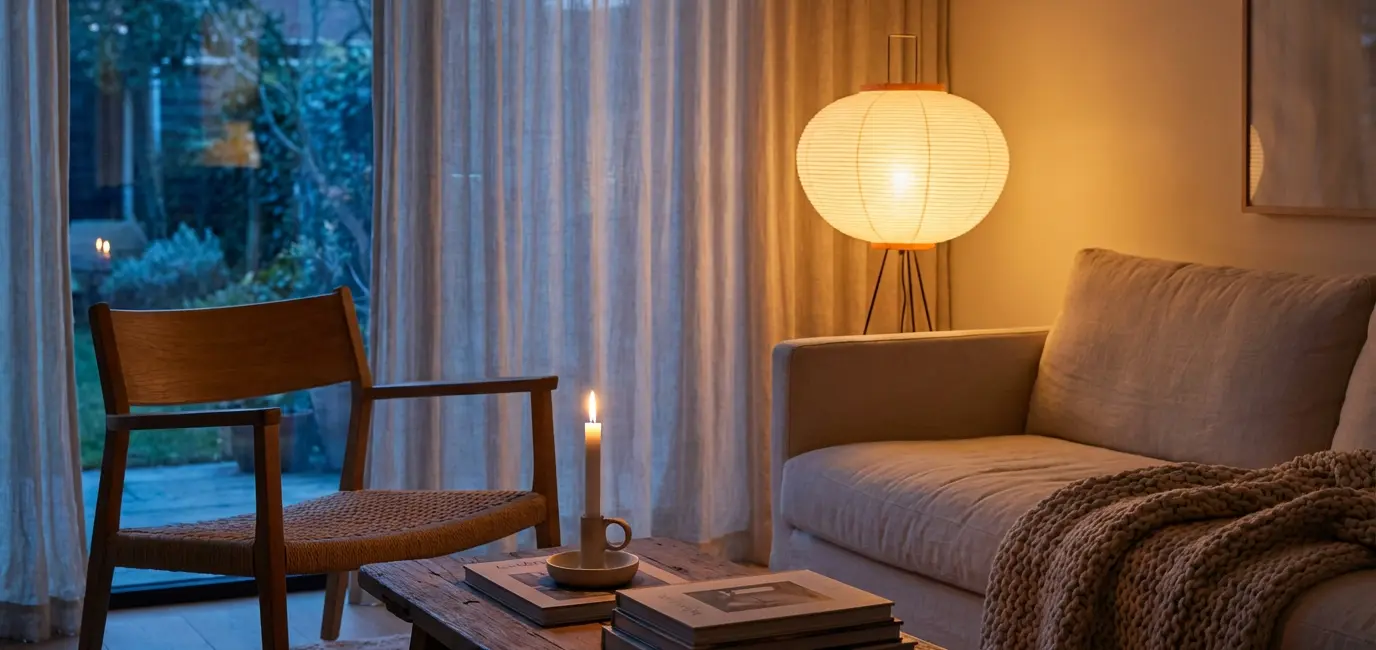
One final thought on bringing a Japandi living room to life: start by removing rather than adding. Walk through your living room and ask what you would genuinely miss if it were gone. Anything you hesitate on — that is your answer. A Japandi living room is not something you build in a weekend shopping trip. It is something you curate over time, piece by piece, until the room finally exhales.
If you are building out a styled entertaining corner alongside your Japandi living room refresh, my guide to styling a bar cart uses the same minimalist-meets-warm philosophy — it is a natural companion piece.
FAQ
What is the difference between Japandi and minimalism?
Minimalism is a design principle focused on reduction. Japandi is a design aesthetic that uses minimalism as a starting point but adds warmth, texture, and an appreciation for natural materials. A purely minimalist Japandi living room might feel cold; a true Japandi space always feels cozy despite its restraint.
What colors are used in a Japandi living room?
The core Japandi living room palette is warm neutrals: off-white, sandy beige, warm grey, and charcoal, layered with natural wood tones and occasional muted accents in sage green, terracotta, or dusty blue. Bold or bright colors are avoided.
Is Japandi still a trend in 2026?
Yes — and it is more of a timeless aesthetic than a trend. A Japandi living room is built on principles (simplicity, natural materials, functionality, beauty) that do not go out of style. Unlike trend-driven decorating, Japandi ages gracefully.
How do I start designing a Japandi living room on a budget?
Start with what you have: declutter aggressively, rearrange furniture so there is more breathing room, add one natural element (a plant, a linen throw, a ceramic vase). You do not need to buy everything at once. A Japandi living room is built slowly and intentionally — that IS the philosophy. When you are ready to invest in key pieces, check Japandi-style furniture on Amazon for accessible starting points.
What plants work best in a Japandi living room?
The best plants for a Japandi living room are those with clean, architectural shapes: fiddle leaf figs, snake plants, peace lilies, and trailing pothos. Avoid overly fluffy or brightly colored flowering plants — a single sculptural plant in a simple ceramic or terracotta pot is all you need.