This post may contains affiliate links. Read our full disclosure here.
A beautiful table changes everything. It signals to your guests before they sit down that someone put thought into this — that the evening is going to be worth showing up for. And yet for all the aspirational spring tablescaping ideas that flood Pinterest every March, most of them skip the practical part: how do you actually build a tablescape that looks intentional rather than just cluttered, without spending a fortune or owning a warehouse full of seasonal decorations? That’s what this guide is for. These are the spring tablescaping ideas for 2026 that I use myself — built around principles that work, not just trends that photograph well.
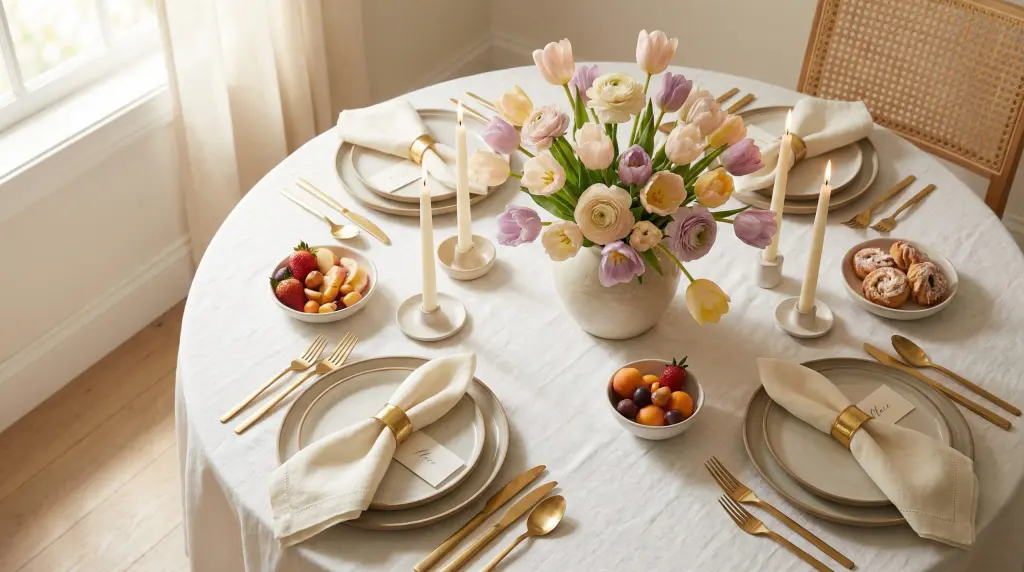
The Foundation: Linens, Layers, and Texture
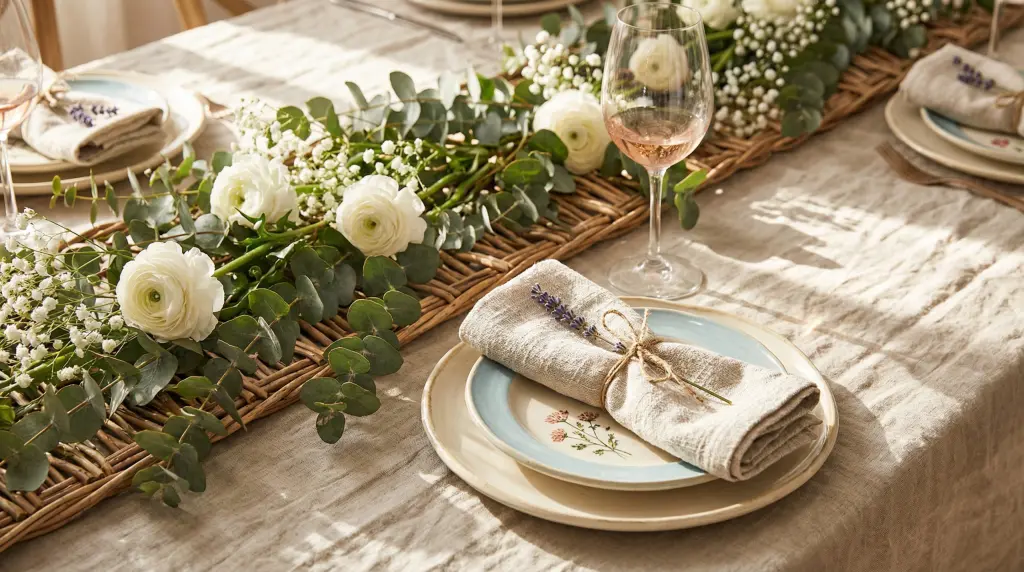
Every great spring tablescape starts with the same thing: the foundation layer. This is your tablecloth or table runner, and it sets the tone for everything that goes on top of it. Get the foundation right, and even simple elements placed on it will look considered. Get it wrong, and no amount of beautiful flowers or candles will save the overall effect.
Tablecloth vs. Table Runner vs. Both
For a formal or semi-formal spring dinner, a full tablecloth in a natural linen or washed cotton is almost always the right choice. It softens the table, adds warmth, and provides a clean canvas for your layers. For a more casual spring tablescaping setup — a weeknight dinner, a brunch, a backyard gathering — a table runner down the center of a bare wooden table is all you need. The exposed wood on either side reads as intentionally casual and lets the runner become the focal point. A combination (tablecloth plus a contrasting runner down the center) is the most layered and styled look, and it works especially well for Easter or a formal spring dinner party.
The Linen Rule
If you take one thing from this entire guide, let it be this: linen changes everything. A wrinkled linen tablecloth looks more beautiful and considered than a perfectly ironed polyester one. The natural texture, the soft sheen, the way it drapes — linen reads as high-quality and intentional even when it’s deeply casual. For spring tablescaping, I reach for undyed or warm ivory linen almost every time. It works with every color palette, photographs beautifully, and washes endlessly. A good linen table runner is one of the most versatile pieces in a home entertainer’s kit.
Spring Color Palette for Tablescaping
The most reliable spring tablescaping color palette for 2026 builds on a neutral base (ivory, warm white, natural linen, or light greige) and adds one or two accent tones through florals, napkins, or small decorative elements. The accent tones that are working particularly well this spring: sage green, dusty blush, soft terracotta, and warm butter yellow. What you want to avoid is mixing too many pastels — an all-pastel tablescape tends to look like an Easter basket rather than an elegant spring tablescape. One or two accent tones against a neutral base is the formula.
The same principle I use when approaching a spring mantel applies here: restraint is what separates a styled tablescape from a cluttered one. Pick your palette and commit to it.
Spring Tablescaping Centerpieces That Actually Work
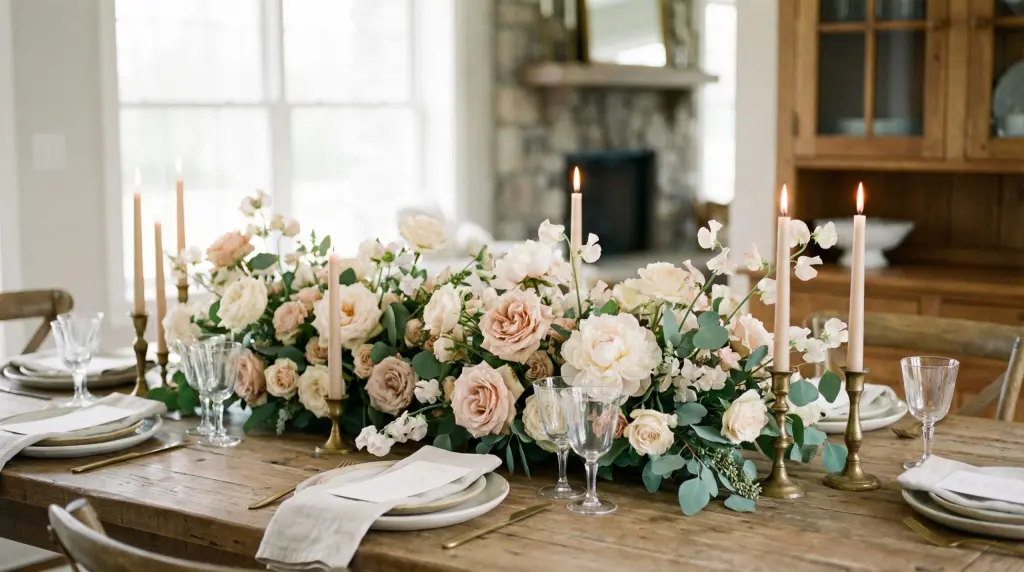
The centerpiece is the heart of any spring tablescape, and also the element most people overthink. A few principles cut through all the noise.
Keep It Low
The cardinal rule of spring tablescaping: your centerpiece should never be taller than eye level when seated. A tall centerpiece blocks conversation and makes guests lean around it all evening. Low and horizontal is almost always the better choice. A long, low floral arrangement running down the center of the table — what florists call a garland or a runner centerpiece — creates visual presence and depth without interrupting the sightlines.
Fresh Flowers Are Worth It
I know dried flowers and faux botanicals have had a major moment, and I understand the practicality argument. But for a spring tablescape, fresh flowers genuinely cannot be beaten. The scent, the slightly imperfect natural forms, the way they respond to light — fresh flowers elevate a table in a way that nothing artificial fully replicates. For spring, my favorite blooms for tablescaping: ranunculus (delicate, many-petaled, available in every spring tone), tulips (architectural and bold), sweet peas (airy and fragrant), and garden roses or peonies when you want something lush and romantic. Even a few supermarket bunches arranged simply in low vessels look beautiful.
The Bud Vase Cluster
If a full floral arrangement feels like too much effort or expense, a cluster of mismatched bud vases is one of the easiest and most effective spring tablescaping ideas. Group 5–7 small vases of different heights and shapes down the center of the table, each with a single stem or a small bunch. The intentional mismatch looks collected and personal rather than generic. Thrift stores are wonderful for bud vases — look for small glass vases, ceramic bud vases, and vintage medicine bottles in different shapes and heights.
Candles: The Non-Negotiable Layer
No spring tablescape is complete without candles. They add warmth, movement, and the kind of ambient light that makes everyone look better and feel more relaxed. For spring, taper candles in brass or simple iron candlestick holders are my preference — they’re elegant without being heavy. Choose candle colors that work with your palette: ivory, dusty blush, sage green, or pale yellow are all beautiful spring taper colors. Avoid pure white (too stark) and deep jewel tones (too autumn) for a spring table. A set of pastel spring taper candles goes a long way and costs very little.
The best spring tablescape isn’t the most elaborate one — it’s the one where every element feels like it belongs, and the table as a whole feels like a place someone genuinely wants to sit down at.
Place Settings That Make Guests Feel Special
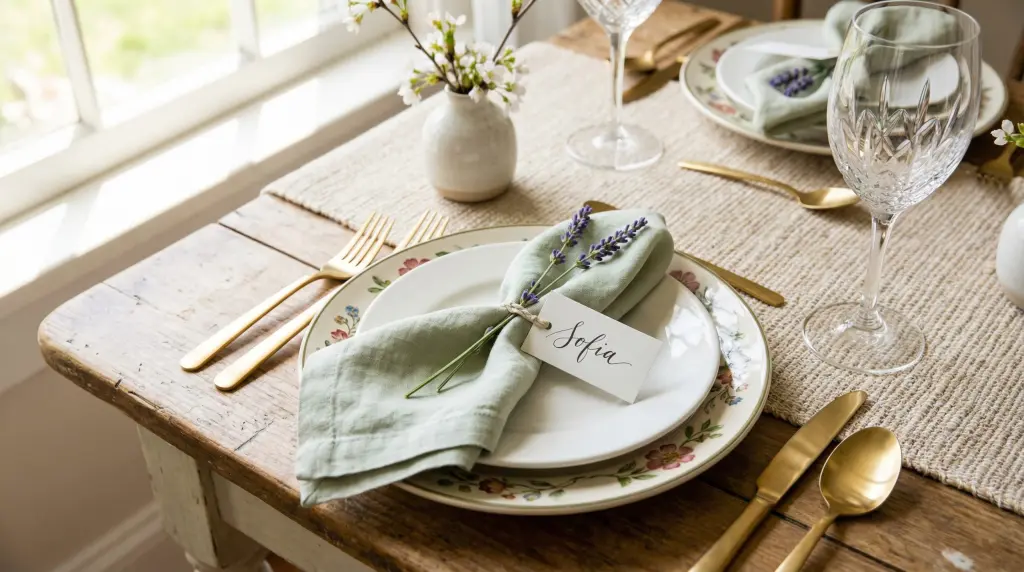
The individual place setting is where a spring tablescape becomes personal. It’s the square foot of table real estate each guest experiences most closely, and getting it right makes a real difference in how welcome and considered they feel.
Layer Your Place Settings
A single plate on a bare table looks like a cafeteria. Layering is what creates the sense of occasion. The classic layered place setting for a spring tablescape: charger plate on the bottom, dinner plate on top, soup bowl or salad plate on top of that if needed. A charger plate in a complementary material — rattan, woven seagrass, simple gold or silver metal — adds visual weight and texture without requiring you to buy a whole new dinnerware set. A set of charger plates is one of the highest-impact, lowest-cost investments in your tablescaping kit.
The Napkin Moment
A folded or artfully placed napkin with a small personal detail is one of my favorite spring tablescaping ideas because it costs almost nothing and feels incredibly considered. Options I love: a simple half-fold with a sprig of fresh lavender, rosemary, or a small flower tucked through a napkin ring; a loose roll secured with a piece of twine and a small herb sprig; or a hand-written place card tucked into the fold. You don’t need to master the swan fold. Loose and natural actually looks better on a spring table — it suggests ease rather than formality.
Glassware
Crystal or glass stemware catches candlelight beautifully and adds a level of sparkle to a spring tablescape that nothing else replicates. You don’t need to own matching sets of everything — intentionally mismatched vintage glassware (clear glass, different shapes and heights) is a popular and genuinely beautiful spring tablescaping approach right now. Whatever you use, make sure the glass is spotlessly clean. A water glass and a wine glass at each place setting is the baseline for a dinner party setup. If you’re serving wine, my guide to hosting a wine tasting at home has notes on glass selection that apply here too.
Spring Tablescaping Ideas by Occasion
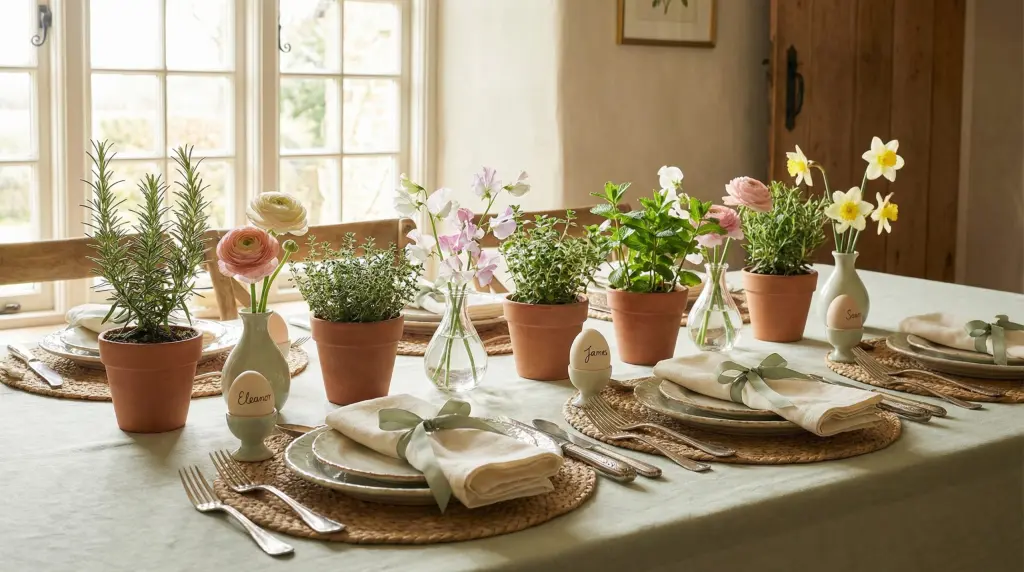
The most useful spring tablescaping ideas are adaptable ones — a core approach that can shift slightly for different occasions without requiring a complete redesign. Here’s how I think about spring tablescaping for the main occasions of the season.
Easter Tablescape
Easter is the peak spring tablescaping moment of the year, and the key is elevating it beyond the Easter basket aesthetic without losing the seasonal warmth. My approach: build on a sage green or warm cream base (tablecloth or runner), use fresh spring flowers as the centerpiece rather than plastic eggs, and introduce Easter-specific elements subtly — ceramic egg place card holders, small terracotta pots of fresh herbs or grass at each place setting, or a single robin’s egg blue accent piece. The result is a table that reads as unmistakably Easter without looking like a kindergarten classroom. For menu ideas to go with this setup, my spring dinner party menu has everything you need.
Spring Dinner Party Tablescape
A spring dinner party calls for a tablescape that feels considered but not fussy. The formula: white or ivory linen tablecloth, a low garland centerpiece of garden roses and eucalyptus with taper candles in brass holders, layered place settings with charger plates and loose-folded linen napkins, and crystal stemware. Keep the color palette tight — blush and ivory, or sage and warm white. This is a table that looks like you spent hours on it even if you put it together in forty-five minutes. The same energy I bring to all my hosting prep — see my broader hosting tips for anxious hosts guide for the full picture.
Spring Brunch Tablescape
A spring brunch tablescape should feel lighter and more casual than a dinner setup. Swap the full tablecloth for a linen runner on a wooden table, replace taper candles with a cluster of bud vases, and lean into the casual charm of mismatched vintage dishes. Fresh-cut garden flowers or a few stems from a supermarket bunch in a simple ceramic jug work beautifully. Place settings can be simpler — a single plate, a loosely placed napkin, the flatware rolled in the napkin rather than set formally. The whole effect should say “casual Sunday” with a little beauty, not “formal occasion.”
Outdoor Spring Tablescaping
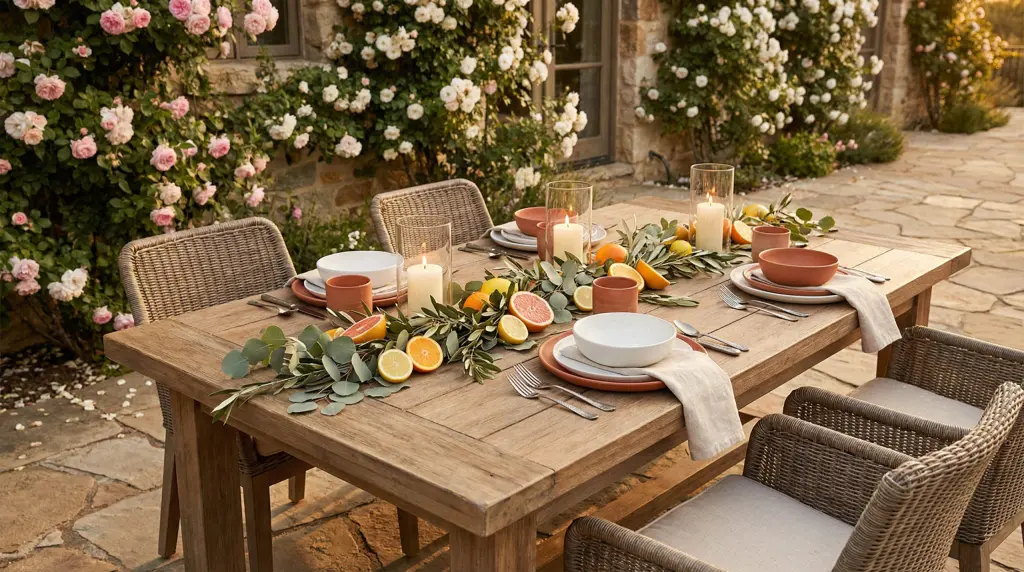
When the weather finally cooperates, taking the table outside is one of the best things about spring. Outdoor spring tablescaping has its own set of considerations — practicality matters more when you’re dealing with wind, uneven surfaces, and the potential for a sudden breeze to scatter your place cards.
What Works Outside
- Weighted elements: Use heavier ceramics and thicker glassware outdoors. Thin stemware on a garden table is a disaster waiting to happen.
- Hurricane vases for candles: Open taper candles outdoors are a losing battle. Hurricane vases — glass cylinders that enclose the flame — are the solution. They look beautiful and actually stay lit.
- Natural textures: Rattan chargers, jute runners, and woven placemats all look even better outdoors than in. They belong in a garden setting in a way that fine linen doesn’t always.
- Low, anchored centerpieces: A low terracotta pot of herbs or a simple bowl of lemons and flowers is sturdier and more practical for an outdoor table than a tall floral arrangement.
- Skip the tablecloth on windy days: A table runner secured with heavy objects at each end is safer than a full tablecloth, which can become a sail. Or skip the linens entirely and let a beautiful wooden or stone table surface do the work.
Outdoor Spring Tablescaping Color Palette
For outdoor spring tablescaping, I lean into the garden setting rather than trying to fight it. Terracotta, warm cream, sage green, and natural wood all work beautifully in outdoor light. The bright midday sun will bleach out any delicate pastels, so either go bolder with your accent tones or wait for the golden hour magic of late afternoon — which is, honestly, the best time to have an outdoor spring dinner anyway. The same thinking applies to my spring entryway and spring bedroom refresh approaches: work with the natural light, not against it.
FAQ
What is tablescaping?
Tablescaping is the art of decorating and styling a dining table as a whole visual composition — not just setting the table with plates and glasses, but building a layered, intentional arrangement of linens, centerpieces, candles, place settings, and decorative elements that creates a specific mood or aesthetic. A great tablescape makes the table itself feel like part of the occasion.
How do I make a spring tablescape on a budget?
Focus on the elements with the highest visual impact per dollar spent: a linen table runner (~$15–25), a cluster of supermarket flowers in bud vases (a few bunches split across 5–7 small vases), taper candles in simple candlestick holders, and linen napkins with a small herb sprig. You don’t need to buy everything new — thrift stores are excellent for bud vases, vintage glassware, and ceramic pieces at a fraction of retail.
What flowers work best for a spring tablescape?
The best flowers for a spring tablescape are low and open-headed varieties that work well in arrangements close to the table surface: ranunculus, tulips, sweet peas, anemones, and garden roses. For a simple budget approach, a few supermarket bunches of tulips and eucalyptus arranged in low vases look beautiful and cost very little. Avoid tall gladioli or sunflowers for a seated dinner — they block sightlines.
How tall should a spring tablescape centerpiece be?
A spring tablescape centerpiece should be low enough that seated guests can see each other over it without difficulty — generally no taller than 12–14 inches at a seated eye level. This usually means keeping flower arrangements, candles, and decorative elements below the chin line when seated. The exception is very tall, narrow taper candles, which you can see through easily and don’t block the view.
What colors work for a spring tablescape?
The most reliable spring tablescape color palette builds on a neutral base (ivory, warm white, natural linen) and adds one or two seasonal accent tones: sage green, dusty blush, soft terracotta, warm butter yellow, or dusty blue. Avoid mixing more than two accent tones against the neutral base — it starts to read as cluttered rather than curated. All-pastel tablescapes can look charming but tend toward the Easter-basket aesthetic rather than something more elevated.
Do I need a tablecloth for a spring tablescape?
Not necessarily. A linen table runner on a bare wooden table can look just as beautiful — and more casual and approachable — than a full tablecloth. The tablecloth is better for formal occasions (Easter dinner, a dinner party) and the runner-on-bare-table approach works better for brunch or a casual outdoor gathering. If your table is scratched or unattractive, a full tablecloth is the practical choice. If your table is beautiful, letting it show is often the better design decision.
A great spring tablescape doesn’t require a Pinterest board full of shopping links or a flower budget that rivals the centerpieces at a hotel gala. It requires a foundation layer you love, a centerpiece that’s low enough to talk over, candles, and a little thought put into how each place setting makes a guest feel. That’s it. Start there, and the rest — the seasonal flowers, the color palette, the personal details — falls naturally into place. The table is set. Now all you need is the dinner.