This post may contains affiliate links. Read our full disclosure here.
People ask me this all the time: white wine vs red wine — which one should I drink? And my honest answer is that the question matters less than most people think, but understanding the difference changes how you experience both. The short version: white wine is lighter, brighter, and best served cold; red wine is fuller, more tannic, and best served slightly below room temperature. But the interesting part — why they taste so different, when each one shines, which foods they love, and whether any of the health claims are actually real — that’s what this guide is for. Whether you’re new to wine or just trying to feel more confident at the dinner table, here’s everything you actually need to know about white wine versus red wine.
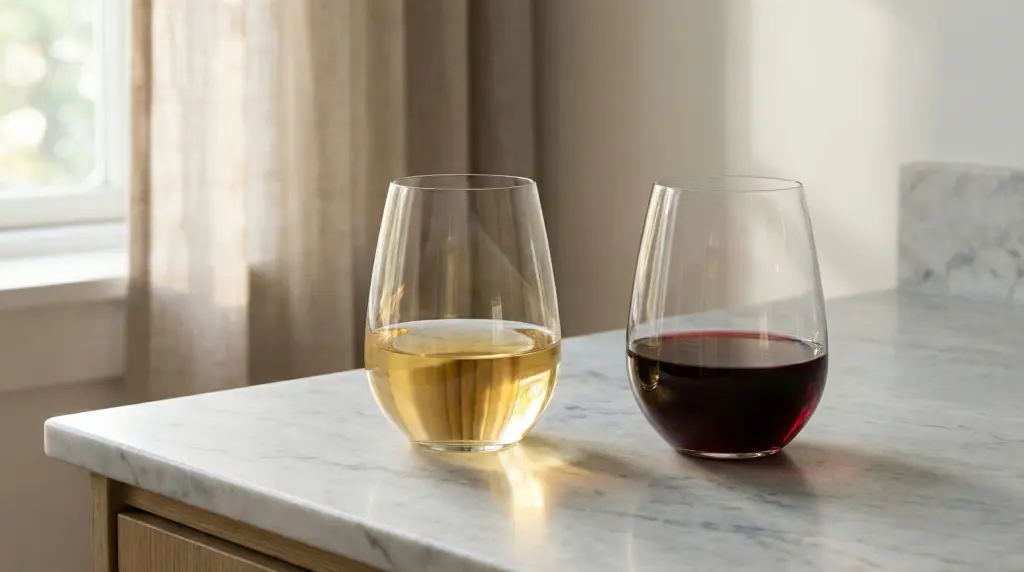
What Actually Makes White Wine White and Red Wine Red
The color difference between white wine and red wine isn’t just about the grape variety — it’s about the winemaking process. Specifically, whether the grape skins stay in contact with the juice during fermentation.
How White Wine Is Made
White wine is made by pressing the grapes and fermenting just the juice, with the skins removed almost immediately. This is why white wine is pale — most of the color in a grape lives in its skin, not the flesh. The result is a wine that’s lighter, with high acidity and relatively little tannin. Most white wines are made from green or yellow-skinned grapes (Chardonnay, Sauvignon Blanc, Riesling, Pinot Grigio), though you can technically make a white wine from red-skinned grapes if you remove the skins fast enough — which is exactly how Champagne blanc de noirs works.
How Red Wine Is Made
Red wine is made by fermenting the grape juice together with the skins (and often the seeds and stems). This extended skin contact is what gives red wine its color — the pigments in the grape skins (called anthocyanins) leach into the juice during fermentation. It also gives red wine its tannins: the grippy, drying compounds that give red wine its structure and that you feel on the sides of your tongue and in the back of your mouth. The longer the skin contact, the deeper the color and the more tannic the wine. This is why a light-bodied red wine like Pinot Noir feels almost silky, while a full-bodied Cabernet Sauvignon can feel quite firm and structured when young.
What About Rosé?
Rosé is the in-between: red wine grapes fermented with brief skin contact (anywhere from a few hours to a day or two), which gives it that pink color without the full tannin structure of a red wine. If you’re curious about rosé specifically, my guide to the best rosé wines for spring covers the major styles and regions.
One other note worth knowing: orange wine is white wine grapes made with extended skin contact, essentially treating white grapes the way red wine is usually made. The result is amber-colored, tannic, and quite unlike conventional white wine — an interesting middle ground for adventurous drinkers.
How White Wine and Red Wine Taste Different
Understanding how white wine and red wine taste differently is really about three things: acidity, tannins, and body. These three dimensions shape almost everything about how a wine feels in your mouth and what you want to eat with it.
White Wine: Bright, Crisp, Refreshing
White wine tends to lead with acidity. That bright, mouth-watering quality you get from a good Sauvignon Blanc or a crisp Chablis — the way it makes your mouth water and your palate feel refreshed — that’s acidity doing its job. White wines typically have very low tannins (sometimes virtually none), which is why they feel light and easy to drink. The flavor profiles of white wine tend toward citrus, stone fruit, green apple, pear, floral notes, and — in oaked styles like Chardonnay — butter, vanilla, and toast.
The body of white wine ranges from very light and lean (Pinot Grigio, dry Riesling, Muscadet) to full and creamy (oaked Chardonnay, Viognier, white Burgundy). Body in wine refers to how heavy or full it feels in your mouth — think of skim milk vs whole milk as an analogy. A lighter-bodied white wine feels almost water-thin; a full-bodied white wine feels richer and more viscous.
Red Wine: Structured, Complex, Warming
Red wine brings tannins to the table, and that changes everything about how it feels to drink. Tannins are the compounds that create that drying, grippy sensation in your mouth — the way a strong black tea dries out your tongue. In red wine, tannins provide structure and allow the wine to age, but they also mean that red wine pairs differently with food than white wine does (more on that in a moment). The flavor profiles of red wine range from red fruits (cherry, raspberry, strawberry in lighter styles) to dark fruits (blackberry, plum, cassis in fuller-bodied styles) to earthy, spice, leather, tobacco, and chocolate notes in older or more complex wines.
Red wine body also spans a wide range. Pinot Noir and Gamay are light-bodied red wines that feel almost transparent on the palate. Merlot and Sangiovese are medium-bodied. Cabernet Sauvignon, Syrah, and Malbec are full-bodied, with more alcohol, more tannin, and more weight. If you want to understand this range better before your next dinner party, it’s worth spending an evening doing a side-by-side tasting — my guide to host a wine tasting at home walks through exactly how to set one up.
The simplest way I’ve ever heard it explained: white wine is what you want when you want to feel refreshed. Red wine is what you want when you want to feel warm.
White Wine vs Red Wine: Food Pairings
The classic rule — white wine with fish, red wine with meat — exists for a reason. But understanding why it works means you can break the rule intelligently when the situation calls for it.
Why White Wine Works with Lighter Foods
The high acidity in most white wines acts like a squeeze of lemon — it cuts through richness, brightens delicate flavors, and cleanses the palate between bites. This is why white wine pairs so well with seafood, chicken, salads, vegetable dishes, cream sauces, and fresh cheeses. A glass of crisp Sauvignon Blanc with oysters or grilled fish is one of the best pairings in wine, and it’s purely a question of the acidity lifting the brininess of the seafood. White wine also pairs beautifully with spicy food (the acidity cools the heat) and with lighter pasta dishes or risotto.
Why Red Wine Works with Richer Foods
Tannins in red wine bond with proteins and fats — which is why red wine feels astringent on its own but velvety and smooth when you’re eating a steak. The fat and protein in red meat literally soften the tannins, creating a balance that makes both the food and the wine taste better together. This is the core logic of red wine with red meat: the tannins need the fat, and the fat needs the tannins to cut its richness. Red wine also pairs well with aged hard cheeses, mushrooms, tomato-based dishes, stews, and grilled or braised meats.
When to Break the Rule
Some dishes sit in the middle, and that’s where the interesting pairing decisions happen. A rich, buttery, oaked Chardonnay can handle roasted chicken or even a veal chop in ways that lighter white wines can’t. A light-bodied red wine like Pinot Noir pairs beautifully with salmon, tuna, duck, and mushroom risotto — foods that are too rich for most white wines but don’t need the full tannin structure of a bigger red. My spring dinner party menu ideas goes into this in more depth with specific menu suggestions.
For a quick reference, here are the pairings I come back to most often:
- Sauvignon Blanc — seafood, salads, goat cheese, asparagus, light vegetable dishes
- Chardonnay (unoaked) — light fish, shellfish, delicate chicken
- Chardonnay (oaked) — roasted chicken, lobster, creamy pasta, veal
- Riesling (dry) — spicy cuisine, Thai food, pork
- Pinot Noir — salmon, tuna, duck, mushroom dishes, soft cheeses
- Merlot — beef, lamb, pasta bolognese, hard cheeses
- Cabernet Sauvignon — ribeye, aged cheddar, lamb chops, dark chocolate
- Syrah/Shiraz — grilled meats, BBQ, spiced dishes
If you’re building a wine collection at home, having a few bottles of quality white wines and a few red wines covering these styles gives you flexibility for almost any meal.
White Wine vs Red Wine: Temperature, Serving, and Storage
One of the most common wine mistakes — and one of the easiest to fix — is serving red wine too warm and white wine too cold. Both errors flatten the wine’s flavors and make it less enjoyable than it should be.
Serving Temperature
The widely repeated advice is to serve white wine cold and red wine at room temperature. The second part of that is where most people go wrong. “Room temperature” was a guideline set in cooler European homes, roughly 60–65°F (15–18°C). In a modern American home at 70–72°F, that guideline sends you in the wrong direction. Red wine served too warm loses its freshness and structure; the alcohol becomes more prominent and the fruit flavors flatten.
- Full-bodied red wine (Cabernet, Syrah, Malbec): 60–65°F — slightly cool, not room temp
- Light to medium red wine (Pinot Noir, Gamay, Barbera): 55–60°F — even slightly cooler; Beaujolais is often best with a brief chill
- Full-bodied white wine (oaked Chardonnay, Viognier): 50–55°F — not ice cold; let it warm slightly in the glass
- Light-bodied white wine (Sauvignon Blanc, Pinot Grigio, Riesling): 45–50°F — cold but not freezing
- Sparkling wine: 40–45°F — properly cold
In practice: if your red wine has been sitting in a room-temperature cabinet, put it in the fridge for 20–30 minutes before serving. If your white wine has been in the fridge for hours, let it sit out for 10–15 minutes before pouring. These small adjustments make a noticeable difference.
Glassware
Red wine glasses are typically larger and rounder, with a wider bowl, to allow more oxygen contact and let the wine open up. White wine glasses are narrower and smaller, preserving the cooler temperature and directing the aromas to the nose. These aren’t just aesthetic choices — they genuinely affect how the wine tastes. If you only own one type, a medium-sized all-purpose glass works reasonably well for both.
Storage
Both white wine and red wine should be stored on their sides (to keep the cork moist), away from light, and in a place with a consistent cool temperature — ideally around 55°F if you have the option. White wine is generally more fragile than red wine and is best drunk relatively young unless you’re buying wines specifically designed to age. Most red wines are also best drunk within a few years of release, though good Cabernet Sauvignon, Barolo, and Bordeaux can age for decades when stored properly. If you’re curious about building a home wine collection, I share my approach in my hosting tips for anxious hosts guide.
Health, Hangovers, and the Practical Stuff

You’ve probably heard that red wine is good for your heart, or that white wine gives you worse hangovers, or that tannins cause headaches. Let me give you the honest, evidence-based version of all of this.
Red Wine and Health: What’s Actually True
Red wine contains higher levels of resveratrol and other polyphenols (antioxidant compounds) than white wine, largely because of the extended skin contact during fermentation. There is some research on polyphenols and cardiovascular health suggesting that moderate consumption of polyphenol-rich beverages may have cardiovascular benefits — but the key word is moderate, and the benefits appear to be from the polyphenols themselves, not from the alcohol. Drinking more wine to get more resveratrol is not a health strategy; the alcohol content works against any potential benefit at higher doses. If you drink wine, drink it because you enjoy it. Any health benefits at moderate consumption levels are a bonus, not a reason.
White Wine vs Red Wine: Which Gives Worse Hangovers?
Red wine generally has more congeners — byproducts of fermentation like tannins, histamines, and other compounds that are thought to contribute to hangover severity. This is why many people report worse hangovers from red wine than white wine. However, the primary driver of any hangover is alcohol volume and total intake. Both red and white wine typically range from about 11% to 15% ABV. The lightest white wines (some Mosel Rieslings, certain Italian whites) can be as low as 8–9% ABV, which makes a real practical difference if you’re watching your intake.
Do Tannins Cause Headaches?
This is a persistent myth worth addressing. Tannins are often blamed for red wine headaches, but the evidence doesn’t strongly support tannins as the culprit. Tannin-rich teas don’t cause headaches. Histamines (also present in higher levels in red wine) are a more plausible contributor for people who are sensitive to them. Sulfites — which are present in both red and white wine, and actually in higher concentrations in most white wine — are frequently blamed but are generally well-tolerated by people without specific sulfite sensitivity. If you consistently get headaches from wine, try keeping a note of which specific wines caused the issue — it’s often more about the individual wine than simply whether it’s red or white. And to understand more about wine terminology that affects how a wine is made and how it tastes, my guide on what dry wine actually means is a good companion read.
My practical advice: drink the style you enjoy, drink water alongside, and don’t drink more than you want to just because the glass was there. For wine recommendations across both styles, I always point people toward wine bars in Pasadena for trying new things in a relaxed setting, or toward Wine.com when buying for home — the selection and filtering tools make it easy to find what you’re looking for in any style or price point.
FAQ
Is white wine or red wine healthier?
Red wine contains higher levels of resveratrol and polyphenols than white wine, due to extended skin contact during fermentation. Some research associates moderate consumption of polyphenol-rich beverages with cardiovascular benefits, though the benefits are modest and the evidence is not a reason to increase wine consumption. At moderate intake, neither white wine nor red wine is significantly ‘healthier’ than the other — the most important health variable is total alcohol intake.
Which has more calories: white wine or red wine?
They’re similar. A standard 5oz glass of dry white wine or dry red wine typically contains 120–130 calories. Sweeter wines (dessert wines, off-dry Rieslings, sweet rosé) have more calories due to residual sugar. Full-bodied red wines with higher alcohol content may have slightly more calories per glass than lighter-bodied whites. In practice, for everyday drinking the calorie difference between white wine and red wine is negligible.
Does white wine go with steak?
Technically yes, practically less ideal. A full-bodied oaked Chardonnay can handle a lighter cut of beef, and some wine drinkers genuinely prefer white wine with food across the board. But the classic red wine with steak pairing exists because the tannins in red wine bond with the protein and fat in the meat, making both the wine and the food taste better together. A big Cabernet or Malbec with a ribeye is one of the best food and wine pairings for a reason.
Is red wine always more expensive than white wine?
No. Price in wine is driven by production costs, aging requirements, grape variety, vineyard location, and brand — not by color. Some of the world’s most expensive wines are white (Grand Cru white Burgundy, Grands Crus Alsace, top German Rieslings). And some very affordable red wines are genuinely excellent. Color is not a reliable guide to price or quality.
Can you cook with both white wine and red wine?
Yes, and both add significant flavor to cooking. White wine is used in pan sauces, risotto, cream sauces, seafood dishes, and anything where you want brightness and acidity without color. Red wine is used in braises, red sauces, reductions, and beef or lamb dishes where its color and tannin structure enrich the final result. The rule of thumb: cook with a wine you’d actually drink, and match the color of the wine to the color of the sauce or protein.
Should I start with white wine or red wine if I’m new to wine?
Either is fine, but white wine is often more approachable for new drinkers because tannins — the dry, grippy sensation in red wine — can feel unfamiliar at first. A crisp Sauvignon Blanc, a dry Italian Pinot Grigio, or a slightly off-dry Riesling are all easy entry points that taste clean and refreshing without demanding much of you. For red wine, a light-bodied Pinot Noir or a soft Merlot is gentler on the palate than a full-bodied Cabernet Sauvignon or Syrah. Start where you feel comfortable and explore from there.
The white wine vs red wine question is one of those things that feels more complicated than it is when you’re starting out, and less interesting than it actually is once you know a little more. They’re not opposites — they’re two entirely different ways of experiencing what grapes can do when someone pays attention. Try them both, try them with different foods, note what you love and what you don’t. That’s the whole practice of wine. Everything else is detail.