This post may contains affiliate links. Read our full disclosure here.
A sage green living room is one of the most consistently beautiful interior design choices you can make — and it is genuinely easier to pull off than it looks. Sage green is a muted, grey-toned green that sits perfectly at the intersection of calming and sophisticated, which is exactly why a sage green living room keeps appearing on every interior design mood board, every Pinterest top-ten list, and in the homes of people who want their space to feel intentional without being cold. Whether you are thinking about painting your walls sage green, adding a sage green sofa, or working in a few key accessories in this colour, this guide walks you through every element of the look — from paint selection to furniture, textures, colour combinations, and how to get the whole thing done on a budget.
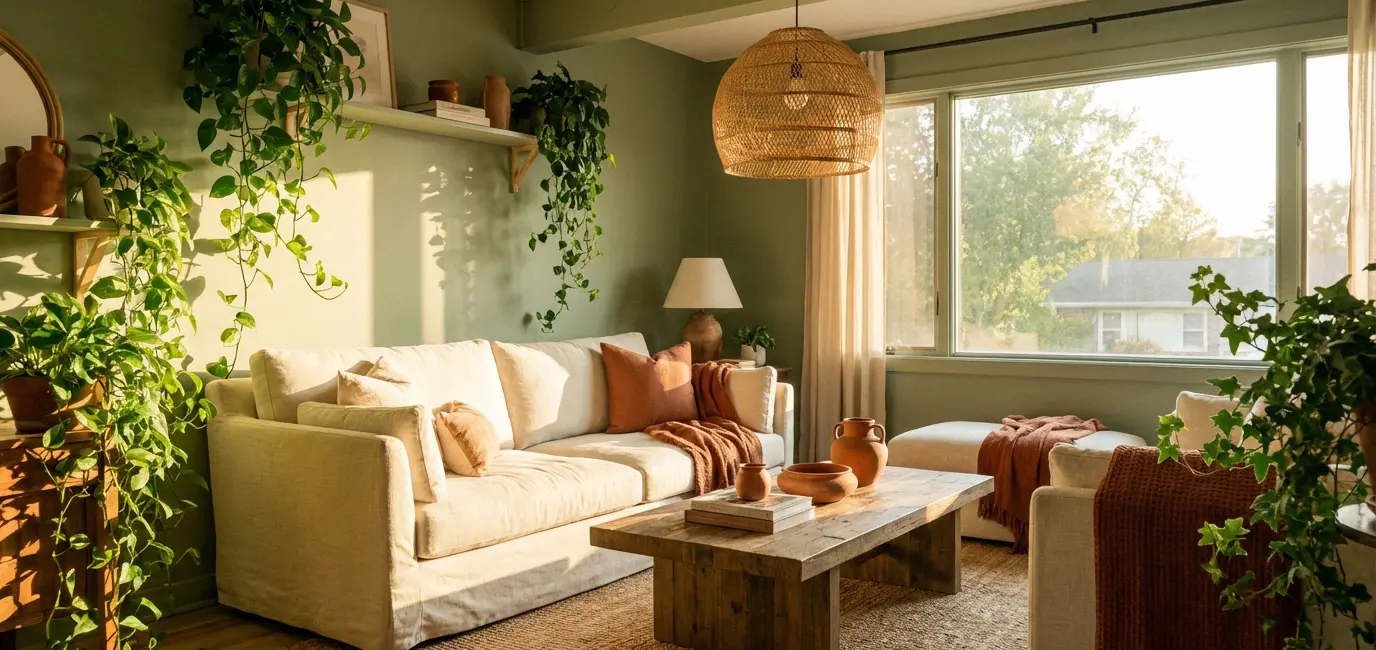
Why Sage Green Works So Well in a Living Room
Sage green works in living rooms because of what it is, not just what it looks like. It is a deeply unsaturated green — more grey than green in most light — which means it reads as a neutral while still bringing the grounding, restorative quality that green hues are known for. In a living room, where you want a space that feels both alive and relaxing, sage green delivers something that pure neutrals (white, greige, grey) cannot: a sense of being somewhere natural, somewhere unhurried.
The reason the sage green living room trend has lasted so long — unlike some of the more trend-driven colour moments in interior design — is that it ages beautifully. A room painted sage green five years ago looks just as current today as it did then, which is not something you can say about every colour choice. It pairs easily with the textures and tones that have dominated interior design for the past decade: warm wood, cream linen, terracotta, brass, rattan, and natural stone. All of those elements look better in a sage green living room than they do in a purely white or grey space.
“Sage green is the interior design choice that feels considered without being difficult — it works with almost everything and fights with almost nothing.”
There is also the psychological dimension. Green — even in its most muted, grey-toned form — has well-documented associations with calm, focus, and restoration. If your living room is the space where you decompress at the end of the day, where you read, where you have people over for conversation and wine, a sage green living room supports all of those activities in a way that high-contrast or overstimulating colour schemes do not. It is a colour that works whether the light is warm and golden at evening or cool and clear in the morning.
How to Use Sage Green Paint in Your Living Room
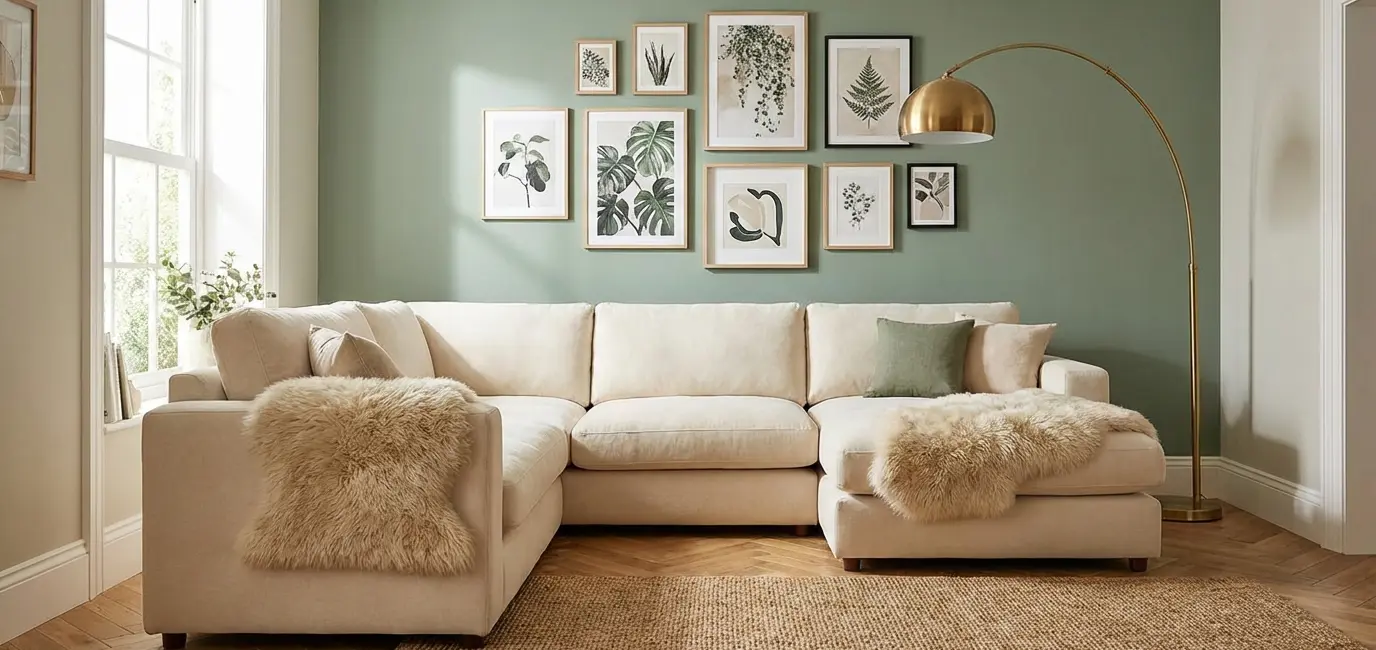
Paint is the most transformative way to bring a sage green living room to life, but the choice between all-four-walls, a single accent wall, or trim-only will depend on your light conditions, room size, and how committed you want to be to the look.
All-Four-Walls Sage Green
Painting all four walls sage green is the approach that gives you the fullest version of the look: enveloping, calm, and immediately coherent. It works best in rooms with good natural light, because sage green can read darker and cooler in rooms that lack natural brightness. The trick to making all-four-walls work is keeping your other elements light: cream or white ceiling, natural wood floors or a light-toned area rug, and furniture in cream, oatmeal, or warm white. You can browse sage green interior paint options to find shades that read consistently across different light conditions — looking for undertones is critical here, as some sage greens lean blue and some lean brown.
Single Accent Wall
An accent wall in sage green is the lower-commitment route that still delivers most of the visual payoff. The wall behind a sofa or the wall opposite the entry is typically the strongest choice — it frames the room’s focal point and creates depth without committing the whole space. An accent wall approach works especially well in sage green living rooms that have a mix of existing furniture you are working around, as it gives you a colour anchor without requiring you to rethink everything else.
Sage Green Trim and Architectural Details
Using sage green on trim, built-in shelving, or a fireplace surround against white or cream walls is a sophisticated, more contemporary take on the sage green living room look. This approach is inspired by the English country house tradition of painting woodwork in deep, botanical tones, and it reads as both elevated and eclectic — exactly the combination that defines the current quiet luxury aesthetic. If you have built-in bookshelves, consider painting the interior panels in sage green while keeping the shelving white — the contrast makes any objects displayed on them look considered and curated. See the quiet luxury home decor guide for more ideas on how architectural colour works within this aesthetic.
The Best Furniture and Decor for a Sage Green Living Room
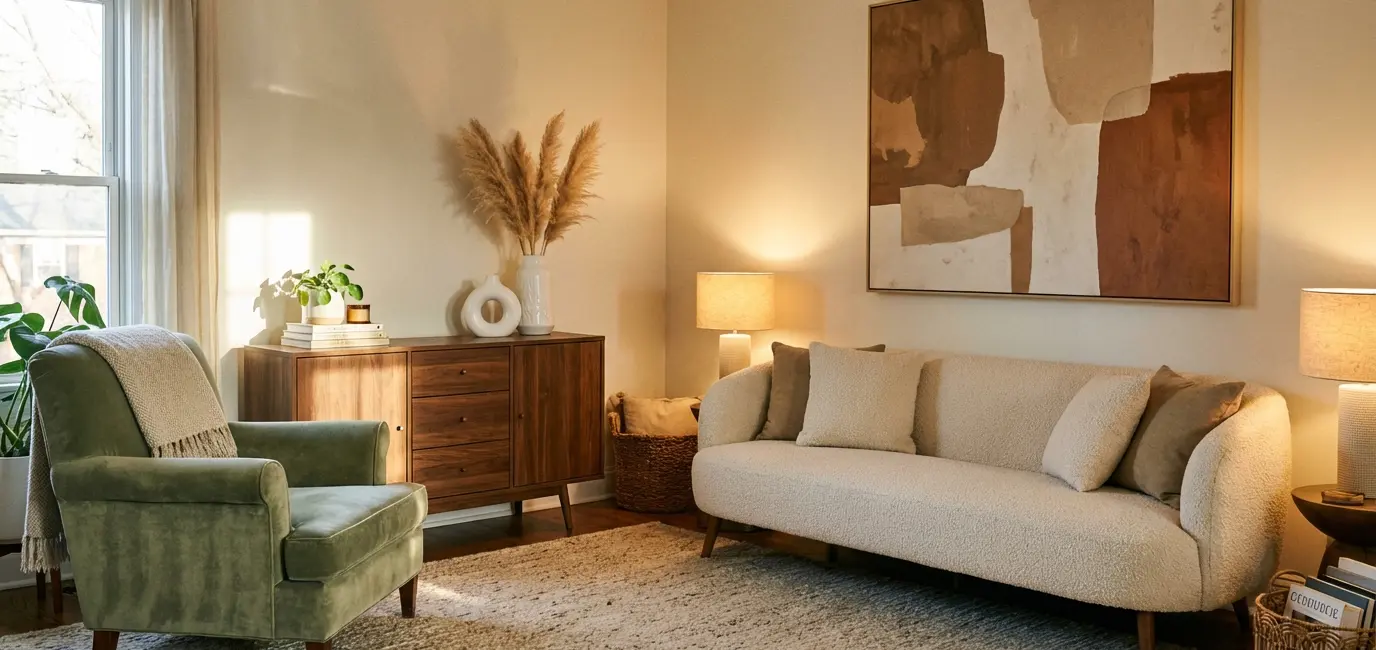
The furniture and decor you choose determines whether your sage green living room feels pulled-together or accidental. The good news is that sage green is genuinely one of the most forgiving background colours in interior design — it harmonises naturally with a wide range of tones and materials.
Sofas and Seating
In a sage green living room, the sofa is your most important decision. The two directions that work consistently well are: cream or oatmeal linen (for a soft, natural look that feels effortless) or a deeper sage green velvet (for a more moody, tonal approach). A sage green velvet sofa in a room with cream walls creates a sophisticated jewel-box effect that photographs beautifully and holds up well aesthetically over time. If you prefer a lighter room, a cream boucle or linen sofa against sage green walls is the look that drives the most Pinterest saves in this category. Avoid cool greys and stark whites — they fight with the warmth that makes a sage green living room work.
Accent Chairs
A rattan or cane accent chair is the single piece of furniture that most elevates a sage green living room from pleasant to considered. The natural, slightly rough texture of rattan sits in perfect contrast to the muted softness of sage green, and it brings a casual, organic quality that prevents the room from feeling too decorated. Position it in a corner near a window for the most editorial effect. Alternatively, a terracotta linen armchair adds warmth and colour contrast in a way that feels sophisticated rather than trendy.
Coffee Tables and Side Tables
Warm wood in any tone — from pale Scandinavian oak to deeper walnut — is the automatic pairing for a sage green living room. The organic warmth of wood grain makes sage green look richer and more grounded. A walnut coffee table, a light oak side table, or a vintage rattan piece all work well. Marble in a warm cream or beige tone is the elevated option — cool white marble fights the warmth, but a travertine or warm Calacatta piece reinforces it. For coffee table styling inspiration in a sage green space, the coffee table styling guide has practical approaches that work across colour palettes.
Decor and Accessories
Cream ceramic vases in varying heights, dried pampas grass or eucalyptus stems, and terracotta pots are the accessory palette that most consistently enhances a sage green living room. Wall art is where you have the most creative freedom — sage green works as a backdrop for botanical prints, abstract art in earthy tones, vintage landscape photography, and architectural line art. Art.com has an extensive range of prints that photograph well in sage green spaces. A bar cart in brass or aged gold placed in the corner of a sage green living room is one of those styling details that makes the whole room look intentional.
Natural Textures That Elevate a Sage Green Living Room
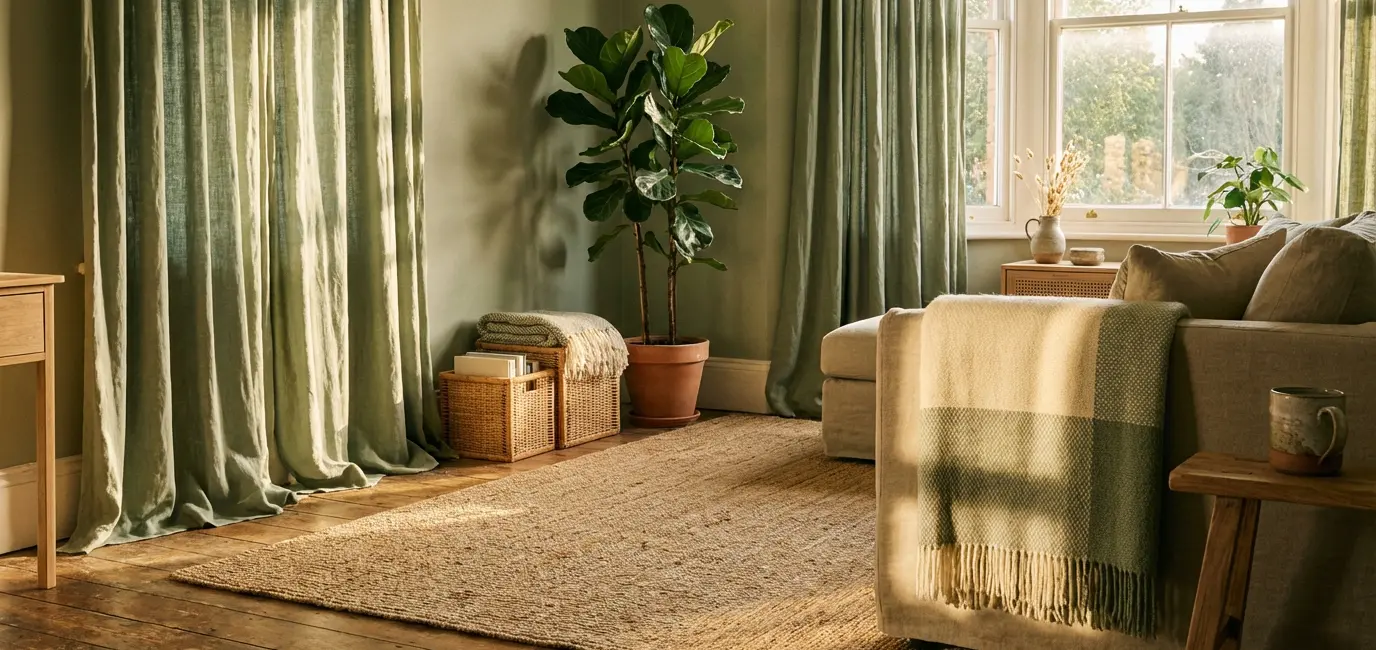
Texture is what separates a flat, magazine-ready sage green living room from a space that actually feels like a home. The textural palette that works best with sage green is rooted in organic, natural materials — the kind that feel like they belong outside, brought inside with intention.
Rugs
A jute or sisal rug is the foundation of the sage green living room look for good reason: the rough, warm natural fibre grounds the space and adds textural contrast without competing with the colour on the walls or furniture. Layer a smaller cream wool rug over a larger jute piece for the high-end layered look. If you want more softness, a boucle or shaggy wool rug in cream or oatmeal works equally well — the key is staying warm and natural rather than cool and synthetic.
Curtains and Window Treatments
Sage green linen curtains pooling on a wood or stone floor are the most quintessentially editorial element of the sage green living room look. Linen is the ideal fabric for this colour palette because its inherent texture and slight irregularity reads as natural and unfussy. Floor-to-ceiling panels make the room feel taller; letting them puddle slightly on the floor makes the space feel luxurious. If your walls are already sage green, white or cream linen curtains create a beautiful tonal layering that is soft rather than matchy. See the warm minimalism decor guide for how linen curtains work within a restrained, material-focused approach.
Plants
Plants in a sage green living room do something interesting: they reinforce the nature-inside quality of the colour without doubling down on it, because living green and sage green are different enough in tone to feel complementary rather than redundant. A large fiddle leaf fig in a terracotta pot is the anchor plant for this aesthetic. Trailing pothos on a shelf, a cluster of smaller succulents on a coffee table, or a dramatic areca palm in a wicker basket all work at different scales. Plants are also the most affordable way to bring the sage green living room look to life if you are working with limited budget for furniture or paint.
The Best Color Combinations for a Sage Green Living Room
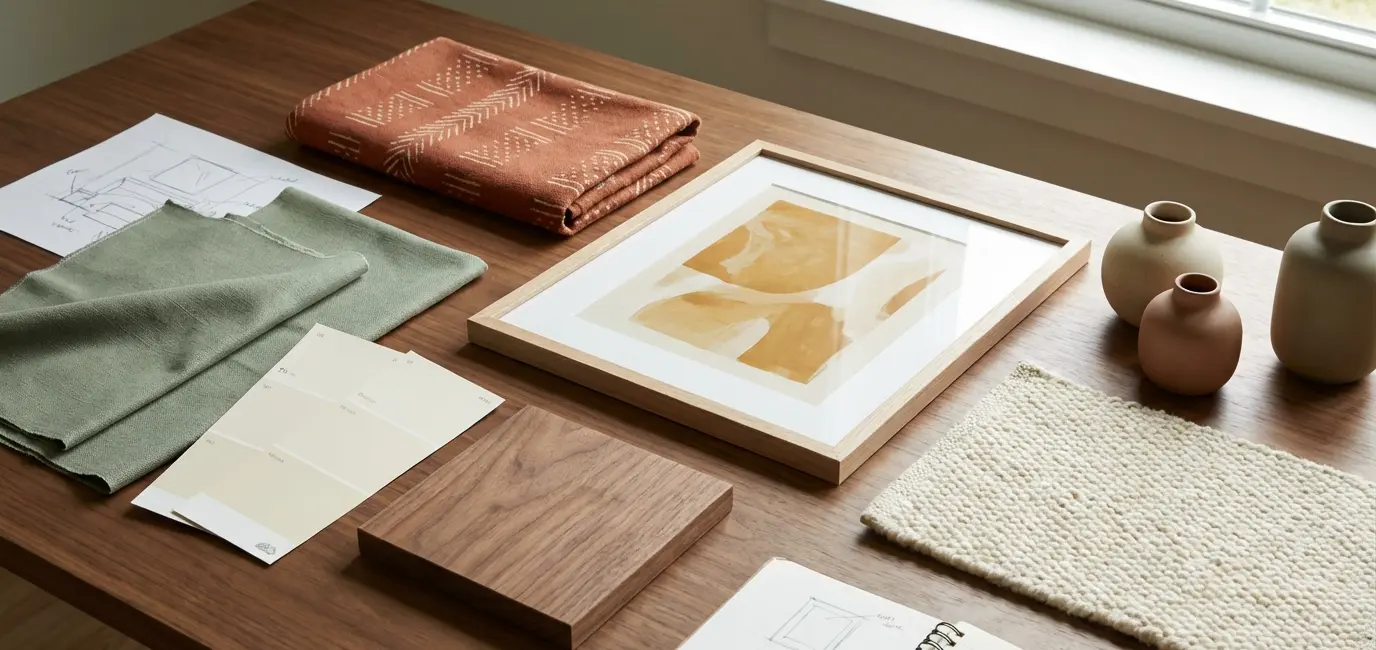
The colour combinations that work in a sage green living room fall into a few clear categories. Understanding how these pairings work gives you the flexibility to adapt the look to your existing space without starting from zero.
Sage Green and Terracotta
This is the most popular and most visually successful colour pairing for a sage green living room. Terracotta — warm, clay-toned, earthy — sits opposite sage green on the colour wheel in a way that creates natural contrast without tension. Terracotta cushions on a sage green sofa, a terracotta-painted pot beside a sage green accent wall, or terracotta floor tiles in a light-filled sage green living room all work effortlessly. This combination reads as Mediterranean-influenced, earthy, and warm.
Sage Green and Cream
The softest and most universally wearable combination: sage green walls or furniture paired with cream upholstery, cream ceramics, cream curtains, and cream rug. This is the palette of the classic English country house, the French farmhouse, and the Scandinavian-influenced natural interior, and it works because sage green and cream are equally muted, equally warm, and equally rooted in natural sources. This combination also photographs and films exceptionally well, which is part of why the sage green and cream living room is so heavily represented on Instagram and Pinterest.
Sage Green, Cream, and Warm Wood
Adding a warm wood tone to the sage green and cream palette creates the third dimension that makes the space feel complete. Oak, walnut, bamboo, rattan — any warm wood tone grounds the softer palette and prevents it from feeling too sweet. This three-way combination is the foundation of the old money aesthetic living room look: calm, natural, accumulated over time, and completely unpretentious about its own elegance.
Sage Green and Dusty Pink
A more unexpected but genuinely beautiful combination: sage green paired with dusty blush or mauve pink. Both colours are deeply desaturated, both carry warmth, and they reference the palette of dried botanicals — dried roses, dried lavender, dried pampas — in a way that feels entirely contemporary. This combination works especially well in sage green living rooms with a lot of natural light, where both colours have room to read their warmth rather than going flat.
Sage Green and Brass
Brass hardware, lighting, and accessories in a sage green living room deliver an elevated, slightly Art Deco quality that reads as genuinely luxurious. A brass pendant over a walnut coffee table, brass cabinet pulls on a sage green painted sideboard, or a brass floor lamp beside a cream sofa in a sage green room — all of these details add warmth and formality in equal measure. The guide to making your home feel like a luxury hotel covers the role of hardware and lighting in achieving that layered, considered quality.
How to Get the Sage Green Living Room Look on a Budget
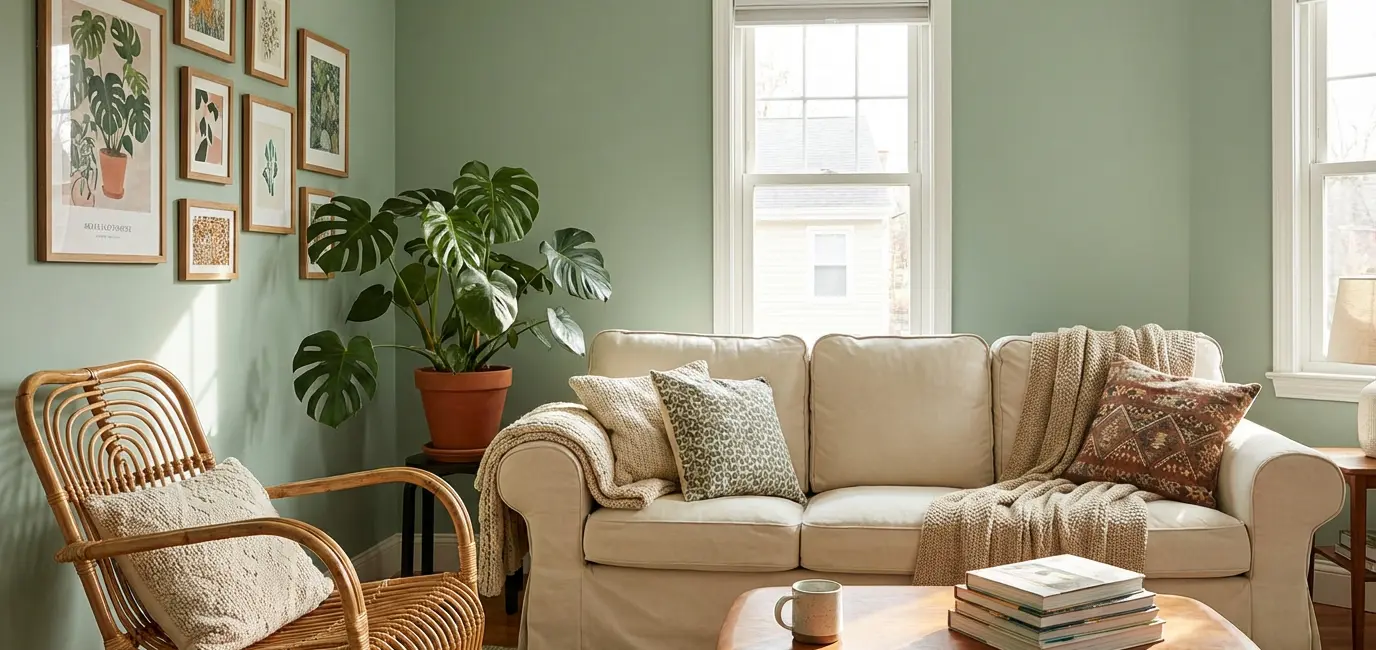
The sage green living room is one of the most budget-accessible aesthetic goals in interior design, partly because paint is cheap relative to furniture, and partly because the natural textures and organic accessories that complete the look — plants, dried botanicals, jute rugs, linen cushion covers — are among the most affordable categories in home decor.
Start with Paint
If you have a neutral room that you want to transform into a sage green living room, paint one wall first. A single accent wall in sage green will dramatically shift the feeling of the whole room at a cost of $30–60 in paint and a Saturday afternoon. Once you have lived with the colour and confirmed it is right for your light, you can expand to additional walls or architectural details. This is the lowest-risk, highest-impact move available for creating a sage green living room look.
Accessorise with Plants and Organic Decor
A cluster of plants in terracotta pots, a bunch of dried pampas stems in a simple vase, and a jute rug from a discount homeware retailer can shift an ordinary neutral living room toward the sage green living room aesthetic without touching any paint or furniture. Organic, earthy accessories read as intentional rather than inexpensive, especially when they are grouped with intention: three terracotta pots in varying sizes, a single statement plant, a basket, a linen throw.
Work with What You Have
If your existing sofa is not in a sage green living room-friendly colour, cover it with a throw blanket or a set of cushion covers in cream, terracotta, or warm ochre. Swap out synthetic cushion covers for linen. Replace cool white lampshades with warm linen or rattan ones. Add a set of gallery wall art prints in botanical or landscape themes. These small changes — each individually affordable — collectively shift the palette and feeling of the room toward the sage green aesthetic without requiring a full renovation. The small living room decorating guide has additional approaches for working within constraints.
The Budget Sage Green Living Room Shopping List
- 1 litre sage green interior paint for an accent wall or fireplace: $30–60
- Jute area rug (5×8 or 6×9): $60–120
- Sage green or cream linen curtains (2 panels): $40–80
- Set of ceramic vases in cream or terracotta: $25–40
- Dried pampas grass stems: $15–25
- Rattan accent chair: $150–300
- Gallery wall art prints set: $30–60
Total for a complete aesthetic transformation of a neutral living room: $350–$685. The sage green living room look is genuinely one of the most achievable aspirational aesthetics in interior design — its beauty comes from colour and material combinations, not price points.
Frequently Asked Questions
What color goes with sage green in a living room?
The best colours with sage green in a living room are: cream and oatmeal (for a soft, natural look), terracotta (for warm earthy contrast), warm wood tones like oak and walnut (for grounding), dusty pink or mauve (for a romantic, botanical feel), and brass and gold accents (for a touch of warmth and formality). Cool greys and bright whites tend to fight the warmth of sage green and are better avoided.
Is sage green a good color for a living room?
Yes — sage green is one of the most consistently successful living room colour choices available. It reads as a sophisticated neutral, pairs easily with warm wood, cream, and terracotta tones, and has well-documented calming effects that make it particularly well-suited to living spaces. Unlike trend-driven colours, sage green ages well and looks as current today as it did five years ago.
What style of furniture works best in a sage green living room?
Organic modern, Japandi, quiet luxury, and English country styles all work beautifully with sage green. Practically, this means natural materials (wood, rattan, linen, wool), furniture in warm neutrals (cream, oatmeal, warm white), and organic accessories (plants, ceramics, dried botanicals). Avoid sleek chrome, stark white lacquer, or very industrial styles — they fight the warmth and naturalness of sage green.
What shade of sage green is best for a living room?
The best sage green shades for a living room have warm, grey undertones rather than cool blue-green undertones. Look for shades described as ‘muted,’ ‘warm,’ or ‘dusty’ sage. Popular choices from major paint brands include Farrow and Ball Mizzle, Benjamin Moore Rosemary, Sherwin-Williams Softened Green, and Behr Dusty Miller. Always test in your specific room, as sage green can read noticeably different under warm incandescent light versus cool daylight.
How do I make a sage green living room feel cozy?
Layer textures: jute rug, linen throw, boucle cushions, knit blanket. Add warmth through lighting: choose warm-toned bulbs (2700K), add table and floor lamps rather than relying on overhead lighting alone. Incorporate wood elements: a wooden coffee table, wooden frames, wooden accessories. Add plants. Keep the palette warm — cream rather than white, warm brass rather than chrome. A sage green living room naturally lends itself to cosiness because the colour itself is calming and grounding.
What color sofa goes best in a sage green living room?
Cream, oatmeal, and warm white sofas in linen or boucle fabric are the most universally successful choice for a sage green living room — they create a soft, tonal combination that feels natural and effortless. A sage green velvet sofa against cream or white walls creates a more dramatic, jewel-toned effect. Warm terracotta, dusty pink, or camel-toned sofas also work beautifully. Avoid cool grey sofas, which tend to flatten the warmth of sage green, and bright white, which creates too much contrast.
A sage green living room is the kind of design decision that compounds over time — the more you add to it, the more considered it looks. Unlike trend-dependent colour choices, sage green provides a stable, sophisticated foundation that welcomes new furniture, new art, and new accessories without losing its coherence. Whether you go all-in with painted walls and a velvet sofa, or ease in with a single accent wall and a cluster of plants, the sage green living room delivers a quality of space that is immediately calming, immediately beautiful, and immediately yours.