This post may contains affiliate links. Read our full disclosure here.
The old money aesthetic is having a cultural moment — and honestly, I understand why. In a world of fast fashion, disposable decor, and constant visual noise, there is something deeply appealing about the idea of living with restraint, intention, and inherited-feeling elegance. But the old money lifestyle aesthetic is not actually about money. It is about a set of values that express themselves through the way you dress, decorate, speak, and spend your time. This is my complete guide to understanding what the old money aesthetic actually means, which pieces and principles are worth adopting, and how to build an old money lifestyle that feels genuine rather than performative — regardless of your actual bank balance.
What the Old Money Aesthetic Actually Is (and Isn’t)
The old money aesthetic is frequently misunderstood as simply expensive-looking. It is not. The genuine old money look is specifically anti-flashy: it prizes quality over logos, subtlety over statement, and longevity over trend. The term itself refers to multi-generational wealth — families whose money predates the age of mass marketing, who never needed to signal status through brand names because their status was simply understood. That history is what gives the old money aesthetic its particular energy: quiet confidence, effortless polish, and a sense that things were chosen for permanence rather than season.
What separates the old money aesthetic from adjacent trends like quiet luxury or Coastal Grandmother is the degree to which it is specifically about restraint applied with education. Old money style assumes that you know the difference between Aubusson and Axminster, that you understand why a navy blazer in heavy British wool outlasts three in fast-fashion poly-blend, and that you would never over-decorate a room that already has good bones. It is the aesthetic of people who have stopped proving things.
“The most old money thing you can do is buy less, buy better, and take such good care of what you own that it outlasts you.”
Crucially, the old money aesthetic is also not performative poverty or deliberate shabbiness. The prep school trope of intentionally worn-out clothing is a specific American boarding school cultural signal, not a universal rule. True old money style is immaculate. Items are well-maintained, properly tailored, and chosen with consideration. The appearance of effortlessness is itself a form of effort — it just does not announce itself.
If you are drawn to the old money lifestyle aesthetic because you love the look of quiet luxury home decor, the two overlap significantly in their core values: quality materials, neutral palette, considered purchasing, and the belief that a well-furnished room should feel settled rather than newly decorated.
Old Money Aesthetic Home Decor: The Definitive Room Guide
The old money aesthetic home is built on a handful of principles that apply across every room: quality materials that improve with age, a neutral and warm color palette, genuine antiques or antique-adjacent pieces mixed with quality contemporary furniture, and an absence of anything purely decorative with no function or history. Here is how to apply those principles room by room:
Living Room
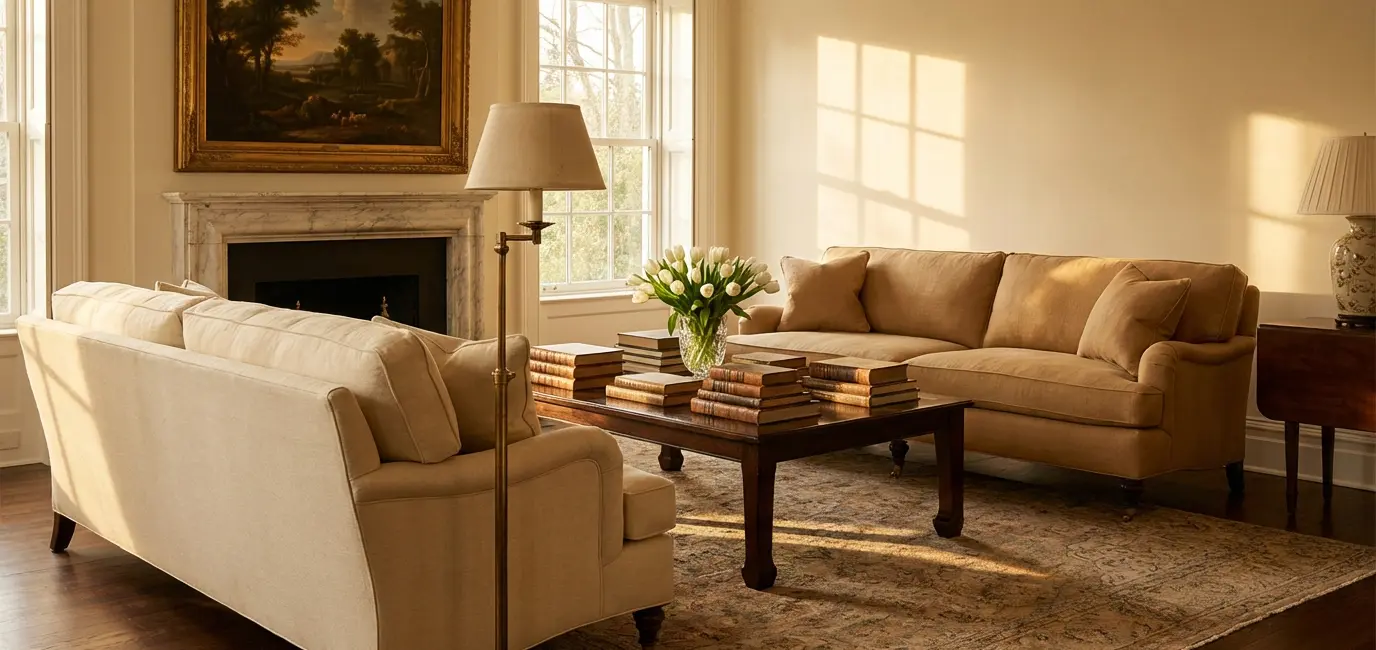
The old money living room is the room most people imagine when they think of the aesthetic: cream or camel linen sofas with clean tailored lines, a Persian or Oriental rug as the anchor, dark wood or aged brass accents, and walls hung with oil paintings or framed botanical prints rather than mass-produced canvas art. The color palette runs warm neutral: ivory, cream, warm white, tobacco, camel, and deep navy or hunter green as accent. Nothing is too bright, too matching, or too new-looking.
- Seating: Invest in one excellent sofa in a natural fabric — linen, cotton velvet, or a linen-cotton blend. TOV Furniture has beautifully proportioned pieces in this register. Avoid microfiber, ultra-modern profiles, and anything with visible branding.
- Rugs: A Persian or Turkish rug — even a vintage one with some wear — is the single highest-impact purchase for an old money aesthetic living room. The wear actually reads as more authentic, not less.
- Art: Classical oil painting reproductions, framed botanical or architectural prints, and genuinely old maps or engravings are the old money aesthetic art vocabulary. Art.com’s classical paintings collection is a good starting point for affordable prints in this style.
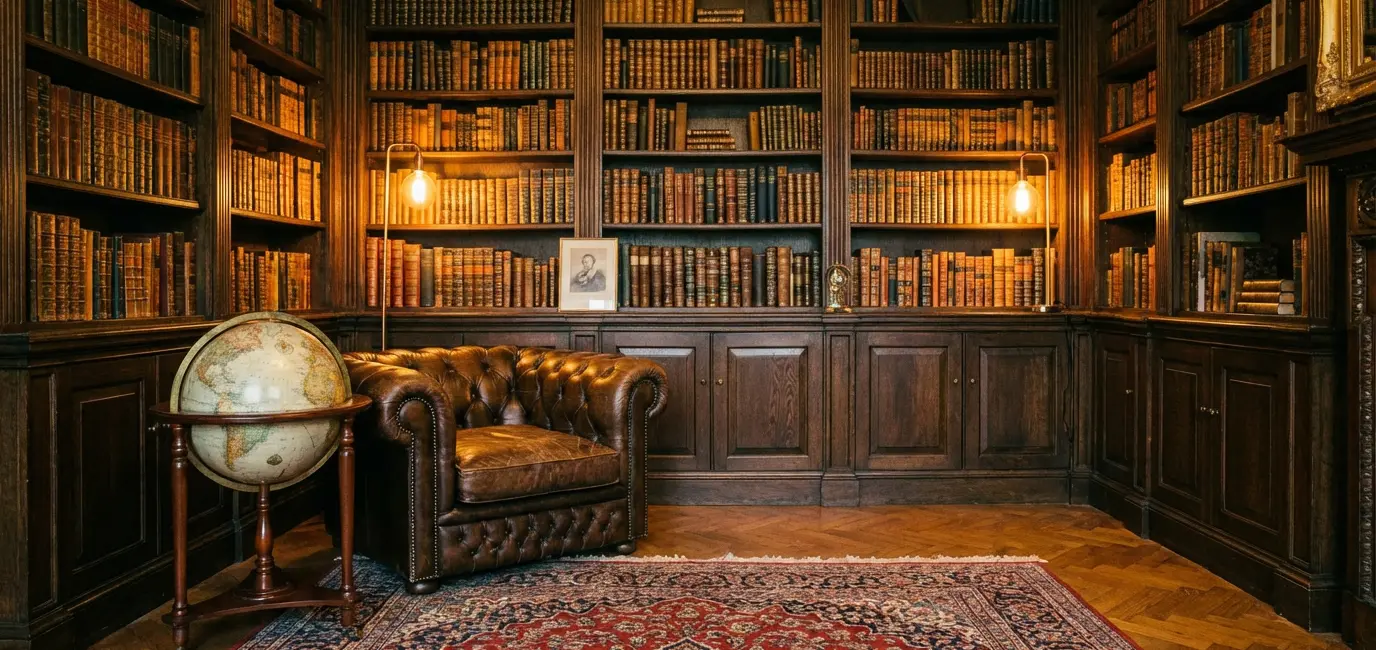
- Books: Leather-bound books displayed (and read) are a genuine old money home signal. Antique brass bookends, a reading chair with a good lamp, and a side table with a current book and a folded newspaper telegraph intellectual life without effort.
- Flowers: Fresh flowers in season — white tulips, hydrangeas, garden roses — in a simple crystal or ceramic vase. No dried pampas grass. No overly styled arrangements. Just a single generous bunch that looks like it came from the garden or the market that morning.
Bedroom
The old money bedroom prioritizes linen and cotton over synthetics, a neutral palette, and quality over quantity in every choice. A simple upholstered headboard in cream or warm linen, white or cream duvet and pillow covers in high-thread-count cotton, and a single piece of art above the headboard. No clutter on the bedside table — a book, a small lamp, perhaps a glass of water. An ivory or camel cashmere throw folded at the foot of the bed is both practical and visually perfect. The old money aesthetic bedroom is the room you would not be embarrassed to be seen in first thing in the morning.
Dining Room
The old money dining room is where the aesthetic becomes most theatrical in the best possible way. A dark wood or pedestal table, upholstered dining chairs in a neutral fabric, a chandelier or simple pendant light, and a sideboard or credenza for serving. The table itself — when set for entertaining — is the signal: white or ivory linen tablecloth, good bone china with a simple pattern or gold rim, crystal glassware, and fresh white flowers. If you are building an old money aesthetic dining room from scratch, prioritize the table and lighting first. Everything else can be layered in over time.
The art of an impeccably set table is something I cover in more detail in the tablescaping guide — the overlap with the old money aesthetic there is almost complete.
The Old Money Wardrobe: Pieces That Define the Look
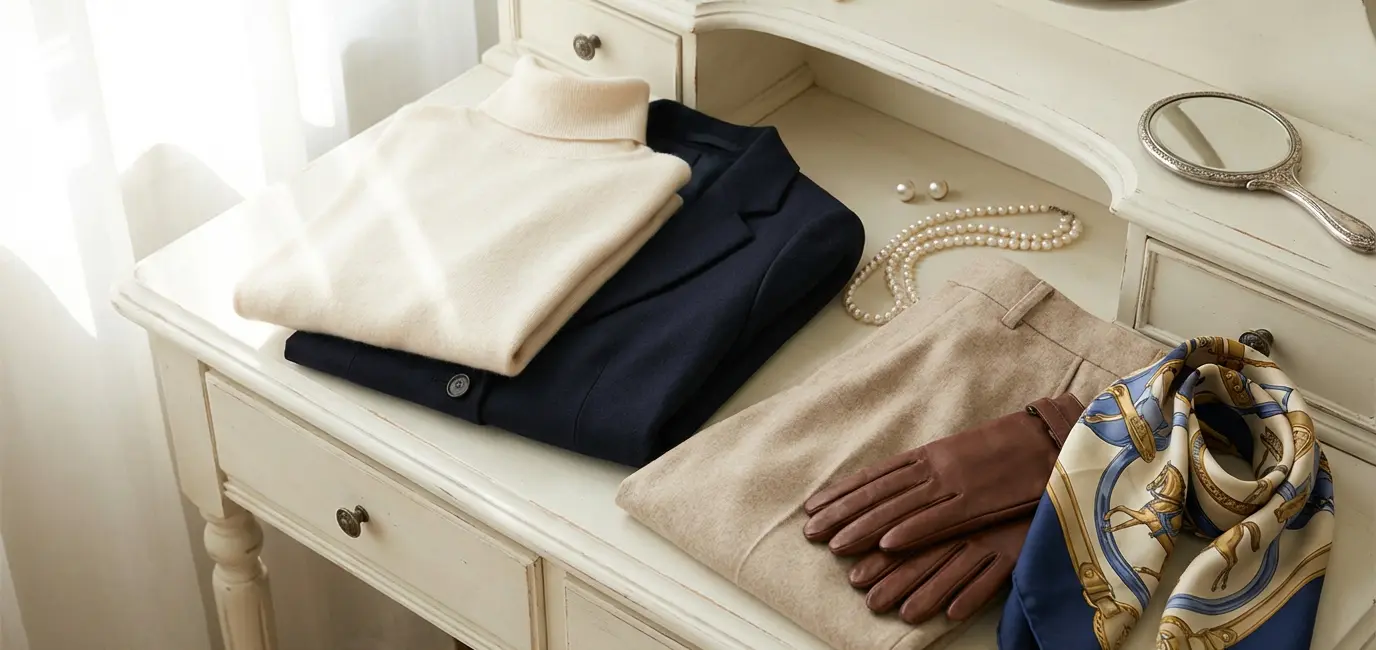
The old money wardrobe is a capsule wardrobe taken to its philosophical conclusion: fewer pieces of significantly higher quality, maintained and worn for years or decades rather than seasons. The old money aesthetic fashion vocabulary is narrow but deep. Here are the defining pieces:
- Cashmere. The old money wardrobe runs on cashmere: turtlenecks, crew necks, V-necks, cardigans. In ivory, camel, navy, oatmeal, forest green. A classic cashmere sweater in a neutral colorway is the single highest-return investment in the old money aesthetic wardrobe. Buy one grade better than you think you can justify, take care of it, and wear it for fifteen years.
- The navy blazer. Preferably in a medium-weight British or Italian wool, with natural shoulder construction and minimal padding. This is the piece that elevates everything: over a crisp white shirt, over a cashmere turtleneck, over a linen dress on a cool evening.
- Tailored trousers. In camel, cream, navy, or charcoal. Straight or slightly tapered leg, proper waistband. The old money style does not do athleisure or elasticated waistbands in public. Trousers are where fit matters most.
- Pearls. A classic pearl necklace — single strand, good quality, sized to your proportions. The old money aesthetic jewelry philosophy: one or two genuinely good pieces worn consistently is infinitely more powerful than a rotating jewelry wardrobe of trendy pieces.
- The silk scarf. Worn in the hair, around the neck, tied to a bag handle. The silk scarf is the old money aesthetic’s most versatile signal: it adds pattern and color without committing to a statement, and it has the particular quality of looking better as it gets older.
- Loafers and simple leather flats. The old money shoe wardrobe is simple: a pair of penny loafers in a warm tan or burgundy, a pair of simple leather ballet flats, and leather boots in autumn and winter. No athletic white sneakers with formal-adjacent clothing.
- Quality outerwear. A camel wool coat — long, properly lined, with clean lapels — is the exterior signal of the entire old money aesthetic. It is the last layer people see and the one that makes or breaks the overall impression.
The wardrobe philosophy maps directly onto the home philosophy: buy less, buy better, maintain everything. The capsule wardrobe guide I wrote goes deeper on the building and editing process if you are starting from scratch.
Old Money Lifestyle Habits Worth Adopting
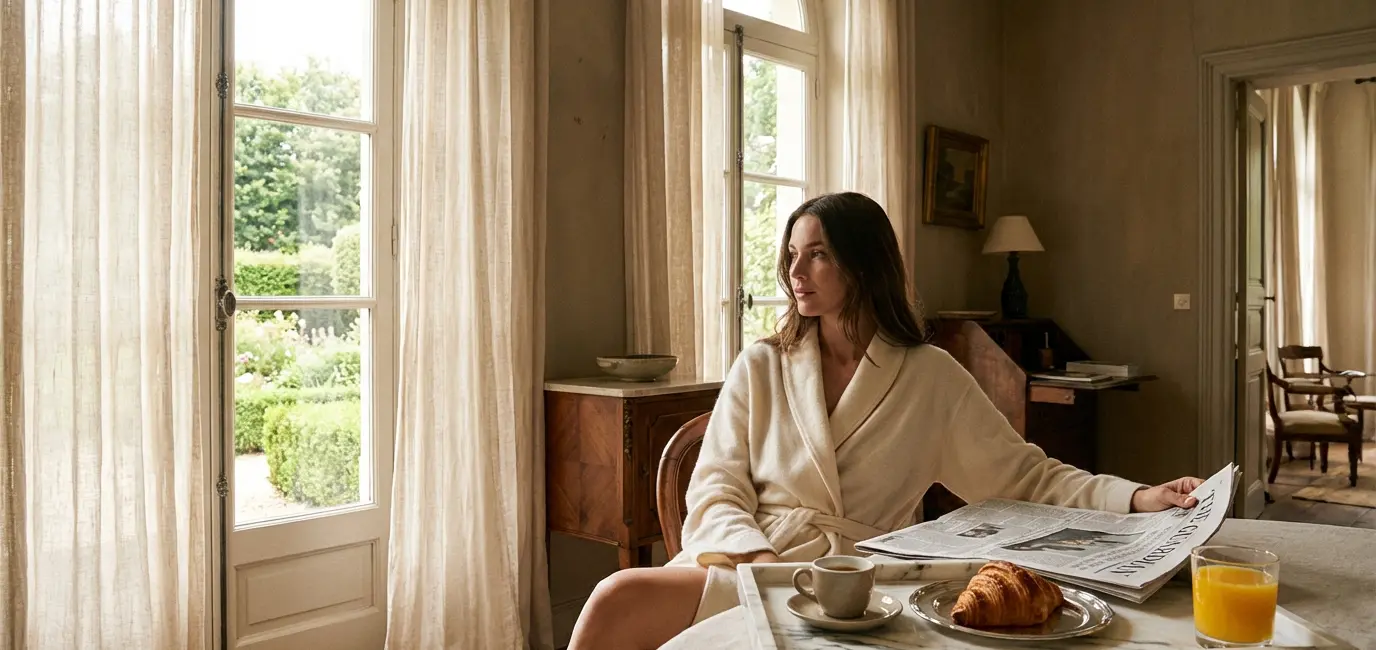
The old money lifestyle is not just a visual identity — it is a set of daily habits and values that happen to produce that visual identity as a byproduct. Many of these habits are genuinely worth adopting on their own merits, entirely independent of the aesthetic.
- Reading as a daily practice. Not scrolling, not listening to podcasts while doing something else — sitting down with a book and reading it with attention. The old money lifestyle assumes a life of intellectual engagement. A well-curated home library and the habit of finishing books you start are two of the most genuinely valuable things you can take from the old money aesthetic.
- The unhurried morning. Rising before obligations begin, having a proper breakfast at a table rather than standing over a counter, reading the actual news. The old money morning routine is slow on purpose: it signals that you control your time rather than your time controlling you. This is perhaps the most aspirational and most achievable part of the entire old money lifestyle.
- Buying once. The financial philosophy underlying the old money aesthetic is genuinely counter-cultural: spend significantly more on things you buy once and own for decades rather than buying cheaply and replacing constantly. A wool blazer that costs four times as much as a fast-fashion version but lasts twenty years is both better economics and better aesthetics.
- Understanding wine properly. The old money lifestyle has always had a specific relationship with wine: not as status performance, but as genuine knowledge and pleasure. Knowing the difference between regions, understanding what you like and why, hosting a proper wine tasting at home — these are intellectual pleasures with a long history in the old money tradition. A well-stocked and thoughtfully styled bar cart is the physical expression of this value.
- Spending time in the home you have created. The old money lifestyle is home-centered in a specific way: the home is a retreat, a place of genuine pleasure and comfort, not just a staging area for the rest of life. This means actually using the good china, lighting candles on a Tuesday, treating your home like the luxury space you have made it. The old money aesthetic only delivers its full value when you actually inhabit it.
- Maintaining things. Polishing shoes. Dry-cleaning the camel coat before storing it for the season. Having the antique clock serviced. Reupholstering a chair rather than replacing it. The old money lifestyle habit of maintenance is both practical and philosophical: it reflects the belief that good things are worth caring for and that the act of caring for them is itself a form of respect for quality.
Lunya’s cashmere and silk loungewear is the modern expression of the old money at-home aesthetic — the idea that what you wear in your own home should be as considered as what you wear out of it. A quality robe and proper loungewear are investments in the quality of your daily life at home.
How to Entertain the Old Money Way
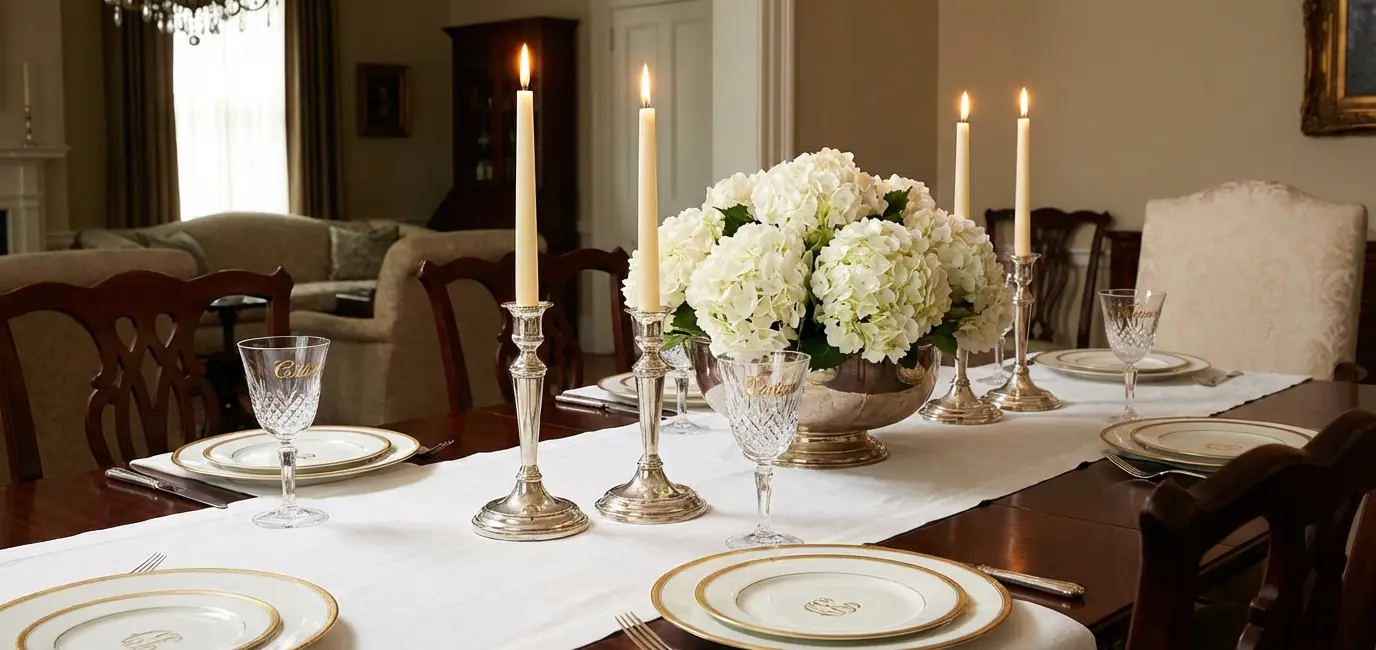
Entertaining is where the old money lifestyle aesthetic becomes most fully realized as a social practice. The old money approach to hosting is specific: it is formal without being stiff, generous without being showy, and immaculate without feeling like a stage set. Here are the principles:
- The properly set table. White or ivory linen, good china, crystal glasses, real silverware or quality silver-plate. Fresh flowers in white or cream. Candles that are lit before guests arrive. The old money table communicates that the guest is worth this level of preparation. It does not need to be expensive — vintage china and crystal from estate sales achieves exactly this effect for a fraction of the cost of new.
- Drinks before dinner. The classic old money entertaining structure includes a drinks and conversation period before sitting down to dinner — aperitifs, wine, or champagne with one or two small bites. This is not just a practical pacing device; it is an acknowledgment that conversation is the actual point of the evening, and you want to begin it before people are seated at assigned places.
- Wine with intention. Choose wines that go with what you are serving and that you have actually tasted yourself. The old money approach to wine is knowledge-based, not budget-based: an $18 bottle you know well and love is far more appropriate than a $60 bottle you chose to impress. If you want to develop this particular fluency, hosting a wine tasting at home is the fastest way to build genuine knowledge.
- One genuinely excellent dish. Old money entertaining is not about a five-course restaurant-quality meal. It is about one thing done beautifully: a roast chicken that is perfectly timed, a pasta that uses exceptional ingredients, a dessert that took real skill. Simplicity executed with excellence is the goal, not complexity for its own sake.
- Conversation as the evening’s entertainment. No excessive entertainment programming, no background television, no themed activities. Good conversation, well-chosen guests, and a table that encourages it — this is the old money hosting formula. The home itself — its books, its art, its objects with stories — is the natural conversation material.
The gallery wall guide and the self-care routine both connect to the broader old money lifestyle aesthetic philosophy: that the spaces and rituals you build for yourself are worth the investment of time and intention.
Frequently Asked Questions
What is the old money aesthetic?
The old money aesthetic is a style sensibility rooted in multi-generational wealth traditions: quality over quantity, subtlety over branding, longevity over trend. In fashion it means cashmere, tailored blazers, pearls, and classic leather shoes. In home decor it means warm neutral palettes, antique and natural-material pieces, Persian rugs, oil paintings, and fresh flowers. The defining characteristic is restraint applied with knowledge.
How do you get the old money aesthetic on a budget?
The old money aesthetic is actually more budget-compatible than it initially appears, because it is anti-trend and anti-logo. Key strategies: buy secondhand (estate sales, vintage shops, and thrift stores are the best sources for real antique pieces, quality wool coats, and crystal glassware); invest in one genuinely good piece at a time rather than a full look at once; prioritize fit and tailoring over brand; and build a neutral wardrobe that does not need seasonal updating.
What colors are in the old money aesthetic?
The old money color palette is warm neutrals: ivory, cream, camel, warm white, oatmeal, and natural linen. Accent colors are deep navy, hunter or forest green, burgundy, and warm tobacco. The palette avoids bright whites, cool grays, and any colors that read as trendy or high-contrast. The overall effect is warm, layered, and settled.
What is the difference between old money aesthetic and quiet luxury?
Old money aesthetic and quiet luxury share the same core DNA — quality, subtlety, restraint, anti-branding — but the old money aesthetic has more specificity around traditional codes: the specific role of antiques, books, and inherited objects; the particular clothing vocabulary of prep and classic European dress; and the lifestyle habits that accompany it. Quiet luxury is a broader, more contemporary version of the same values, without the historical and cultural specificity.
What wine fits the old money aesthetic?
Classic French and Italian wines are the natural companions to the old money aesthetic: Burgundy, Bordeaux, Barolo, Brunello, white Burgundy, and Champagne for celebrations. The emphasis is on terroir-driven wines with history and tradition — not necessarily the most expensive bottles, but wines that reward knowledge and attention. A well-chosen regional French wine at $20 fits the old money philosophy far better than a flashy Californian cult wine at $200.
How do I build an old money aesthetic home without spending a lot?
Start with what you already have: edit ruthlessly and remove anything that reads as trendy, overly bright, or purely decorative with no history or function. Then layer in: a good area rug (vintage Persian rugs can be found affordably at estate sales), fresh white flowers in a simple vase, a few framed botanical or classical prints, and a throw in a natural fiber. The old money aesthetic is built slowly and does not reward speed. One genuinely good piece added every few months is the correct pace.
What I love most about the old money aesthetic — and the reason it has staying power as a cultural moment — is that it is fundamentally a critique of consumption culture. It says: stop buying more, buy better. Stop updating seasonally, build something that lasts. Stop decorating for Instagram, create a home you actually want to live in. Those are not just aesthetic principles; they are genuinely useful ones. The old money lifestyle aesthetic at its best is not about pretending to be something you are not — it is about applying inherited wisdom about quality, maintenance, and restraint to the very modern problem of having too many options and not enough time. Choose less. Choose better. Take care of what you choose. That is the whole thing.