This post may contains affiliate links. Read our full disclosure here.
I’ll be honest – when I first heard about the cluttercore aesthetic, I thought it was just an excuse for messy people to justify their habits. As someone who’d spent years in the home decor industry watching the minimalist trend dominate every Pinterest board and Instagram feed, the idea of intentionally embracing organized chaos seemed counterintuitive. But after living through the sterile perfection of stark white walls and three carefully placed objects per room, I started craving something more authentic and lived-in.
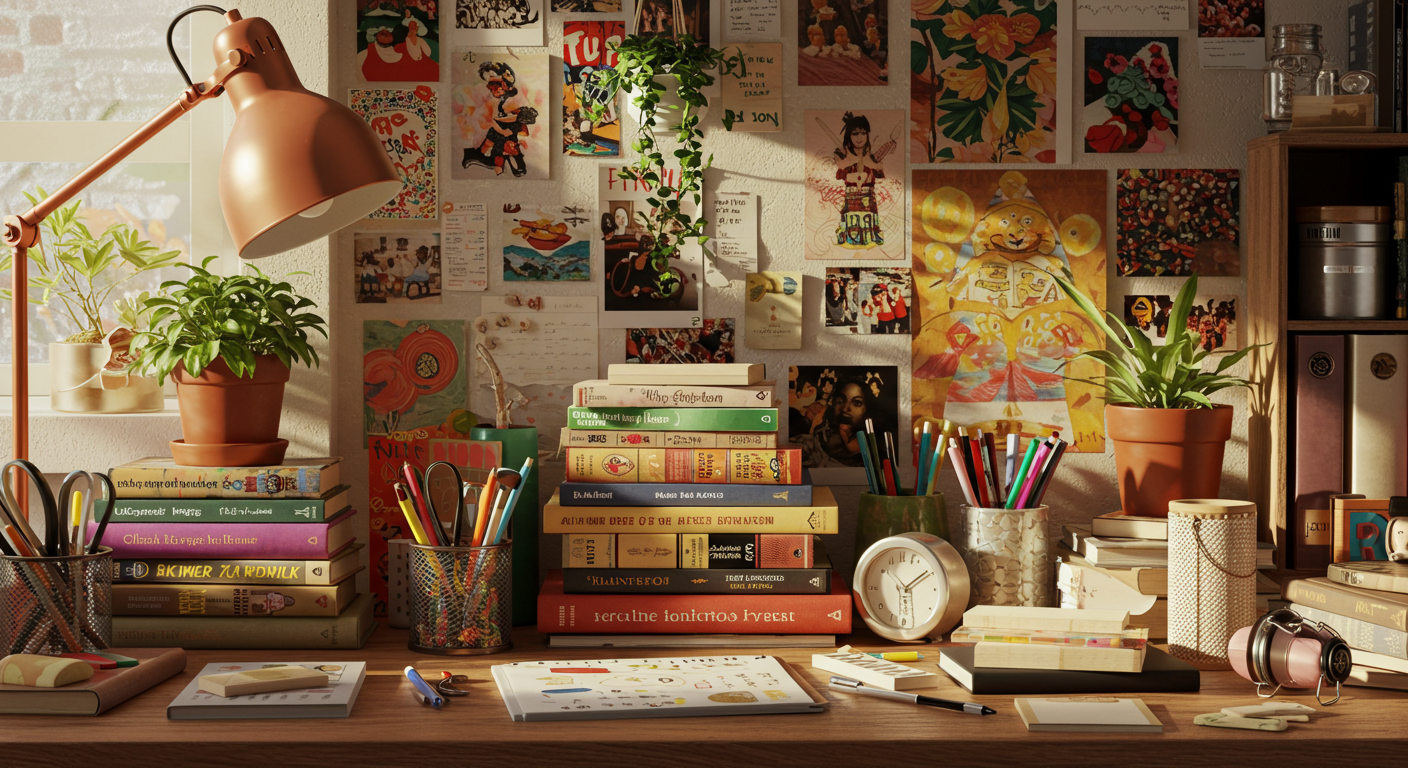
The cluttercore aesthetic isn’t about being messy or disorganized – it’s about creating spaces that feel genuinely personal and reflect how we actually live. Unlike the impossible standards of minimalism where every surface must remain pristine, organized chaos celebrates the beauty of accumulated treasures, layered textures, and spaces that tell stories. After transitioning my own home from a minimalist approach to embracing more maximalist principles, I’ve discovered that cluttercore aesthetic can actually be more functional and emotionally satisfying than its stripped-down counterpart.
Understanding the Cluttercore Aesthetic Movement
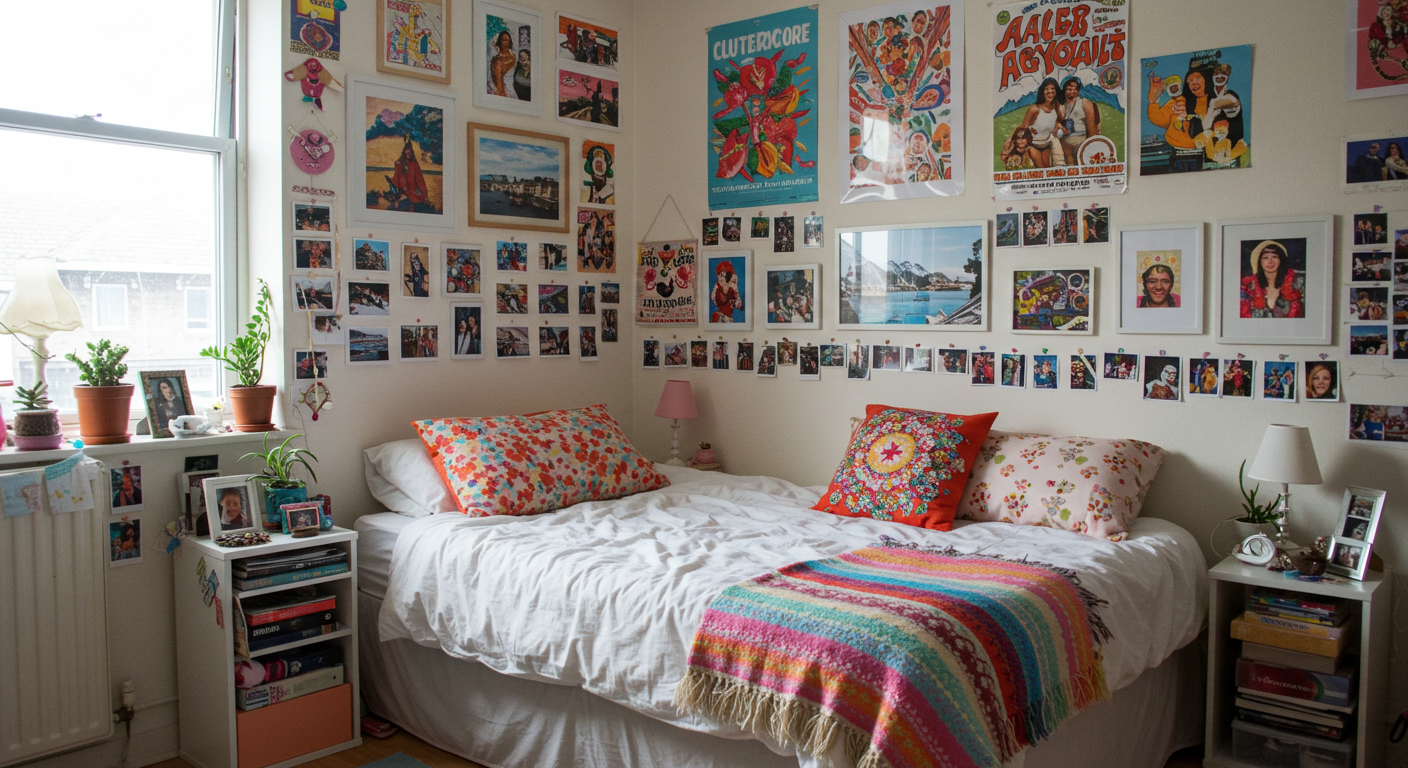
The cluttercore aesthetic represents a rebellion against the sanitized perfection that’s dominated interior design for the past decade. With more than 83 million views on TikTok and growing social media presence, this organized chaos approach celebrates abundance, personality, and the beautiful mess of actually living in your space. When I worked at a boutique home decor store, I watched countless customers struggle to maintain those magazine-perfect rooms that looked stunning but felt completely disconnected from their real lives.

Artistic Stretched Canvas Print – Vibrant Wine Glass Design for Home Decor
This movement embraces the idea that homes should reflect the people who inhabit them – complete with book collections that actually get read, plants in various stages of growth, and surfaces that hold the daily artifacts of a life well-lived. The key distinction between cluttercore aesthetic and actual clutter lies in intentionality. Every item in an organized chaos space serves a purpose, whether functional or emotional, and the overall composition creates visual interest rather than overwhelming mess.
The approach to home styling and interior design acknowledges that most of us don’t live in showrooms. We have hobbies that require supplies, collections we’ve built over years, and sentimental objects that bring us joy. The cluttercore aesthetic gives us permission to display these treasures proudly rather than hiding them away in the name of minimalism.
According to research from the University of Minnesota published in Psychological Science, people working in messy environments demonstrated significantly more creative thinking than those in tidy spaces. The study found that while neat rooms encouraged conventional behavior, messy rooms sparked innovation and openness to trying new ideas – a perfect scientific backing for the organized chaos philosophy.
Key principles of cluttercore aesthetic include:
- Intentional display of meaningful objects
- Layered textures and mixed materials
- Personal collections as focal points
- Functional organization systems hidden within apparent chaos
- Emphasis on comfort over perfection
The Psychology Behind Organized Chaos That Works
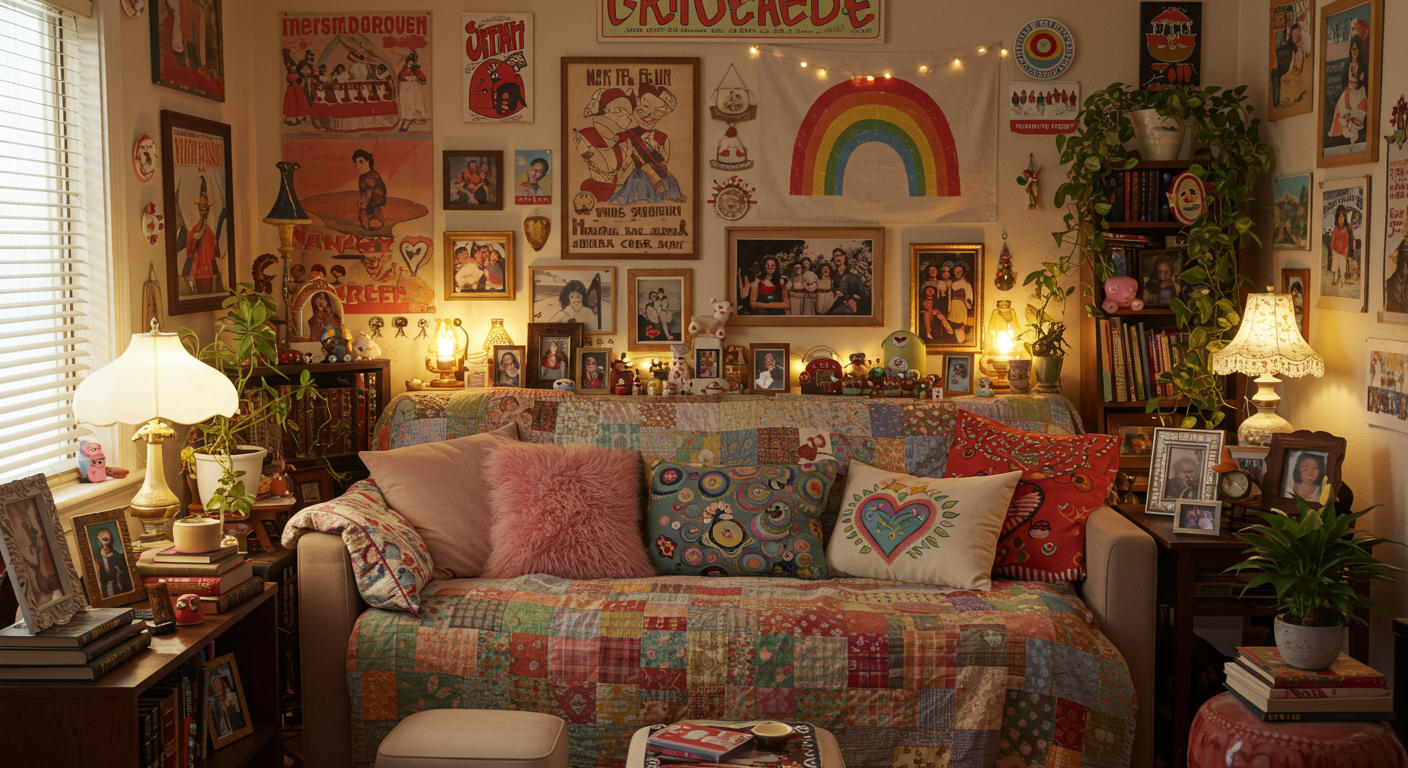
There’s fascinating psychology behind why organized chaos can actually work better for many people than stark minimalism. When I transitioned my apartment from a minimalist aesthetic to something more layered and personal, I noticed an immediate improvement in my mood and comfort level. The space finally felt like mine rather than a generic showroom.
Research consistently shows that our environments significantly impact our cognitive function and creativity. As someone who’s helped clients struggling with the pressure to maintain picture-perfect spaces, I’ve seen firsthand how forcing an incompatible aesthetic can create stress rather than serenity.
The concept also aligns perfectly with dopamine decor principles. This approach suggests that homes should celebrate what brings us joy, even if that means displaying collections, artwork, or objects that don’t fit traditional design rules. Design psychologist research indicates that surrounding ourselves with special objects that have meaning can bring a large sense of comfort, especially during uncertain times.
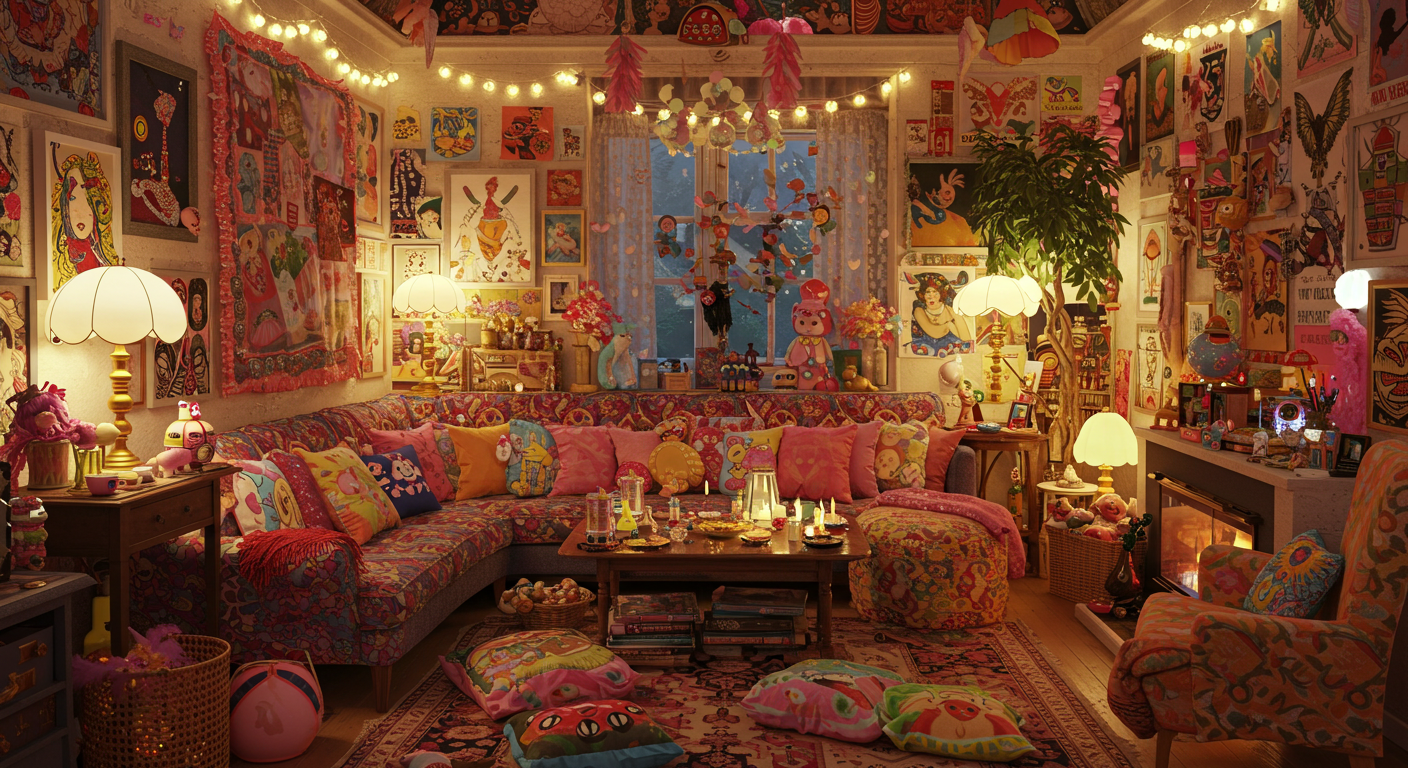
For people who struggle with traditional organization systems, the cluttercore aesthetic can actually be more maintainable. Instead of fighting against your natural tendencies to accumulate and display meaningful objects, you’re working with them to create intentionally curated organized chaos.
Psychological benefits of cluttercore aesthetic:
- Reduced stress from impossible perfection standards
- Increased creativity through visual stimulation
- Greater emotional comfort from meaningful objects
- Enhanced sense of personal identity in living spaces
- More sustainable organization approach for collectors
This YouTube video perfectly explains whether cluttercore might be right for your personality: https://www.youtube.com/watch?v=kB_0Uhzwfok
Cluttercore Aesthetic vs. Minimalism: Finding Your Balance
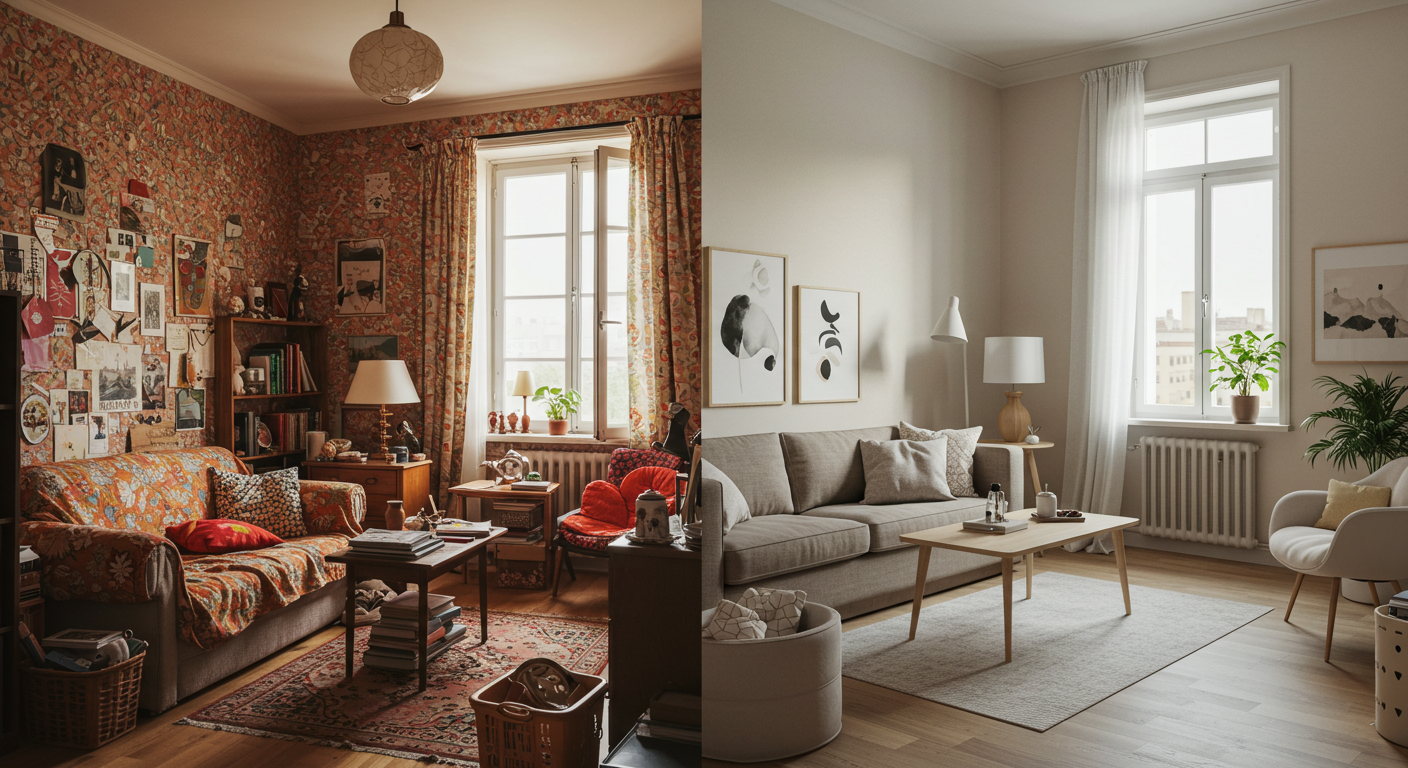
The ongoing debate between cluttercore aesthetic and minimalism isn’t really about which approach is objectively better – it’s about understanding which style serves your lifestyle and personality more effectively. After working with clients who struggled to maintain minimalist home decor, I’ve seen how the wrong aesthetic choice can create daily frustration.
According to Architectural Digest, cluttercore emerged as a direct response to years of minimalism and the less-is-more design aesthetic, particularly gaining momentum during the pandemic when people’s relationships with their homes fundamentally changed. The desire for spaces that feel cozy and highly personal became more prevalent as we spent unprecedented time in our living spaces.


Minimalism works beautifully for people who genuinely prefer clean lines, empty surfaces, and carefully curated possessions. These individuals often find peace in simplicity and feel overwhelmed by too much visual stimulation. However, for people who are naturally collectors, creative types, or those who find comfort in being surrounded by meaningful objects, minimalism can feel restrictive and emotionally unsatisfying.
The cluttercore aesthetic offers an alternative that celebrates abundance while still maintaining functionality. This approach allows you to display and organize the things that bring you joy in visually appealing ways, creating what interior design experts call “a neat delineation between hoarding and collecting.”
Key differences between cluttercore aesthetic and minimalism:
- Cluttercore celebrates collections; minimalism limits possessions
- Organized chaos embraces visual abundance; minimalism prioritizes empty space
- Cluttercore tells personal stories; minimalism focuses on universal appeal
- Organized chaos accommodates natural accumulation; minimalism requires constant editing
- Cluttercore works with your habits; minimalism demands lifestyle changes
Some people find success in hybrid approaches that incorporate elements of both styles. You might maintain minimalist principles in bedrooms and bathrooms while embracing cluttercore aesthetic in living areas and creative spaces. The key is being honest about your natural tendencies and lifestyle needs rather than forcing yourself into an aesthetic that doesn’t fit.
Key Elements of Successful Cluttercore Aesthetic Design
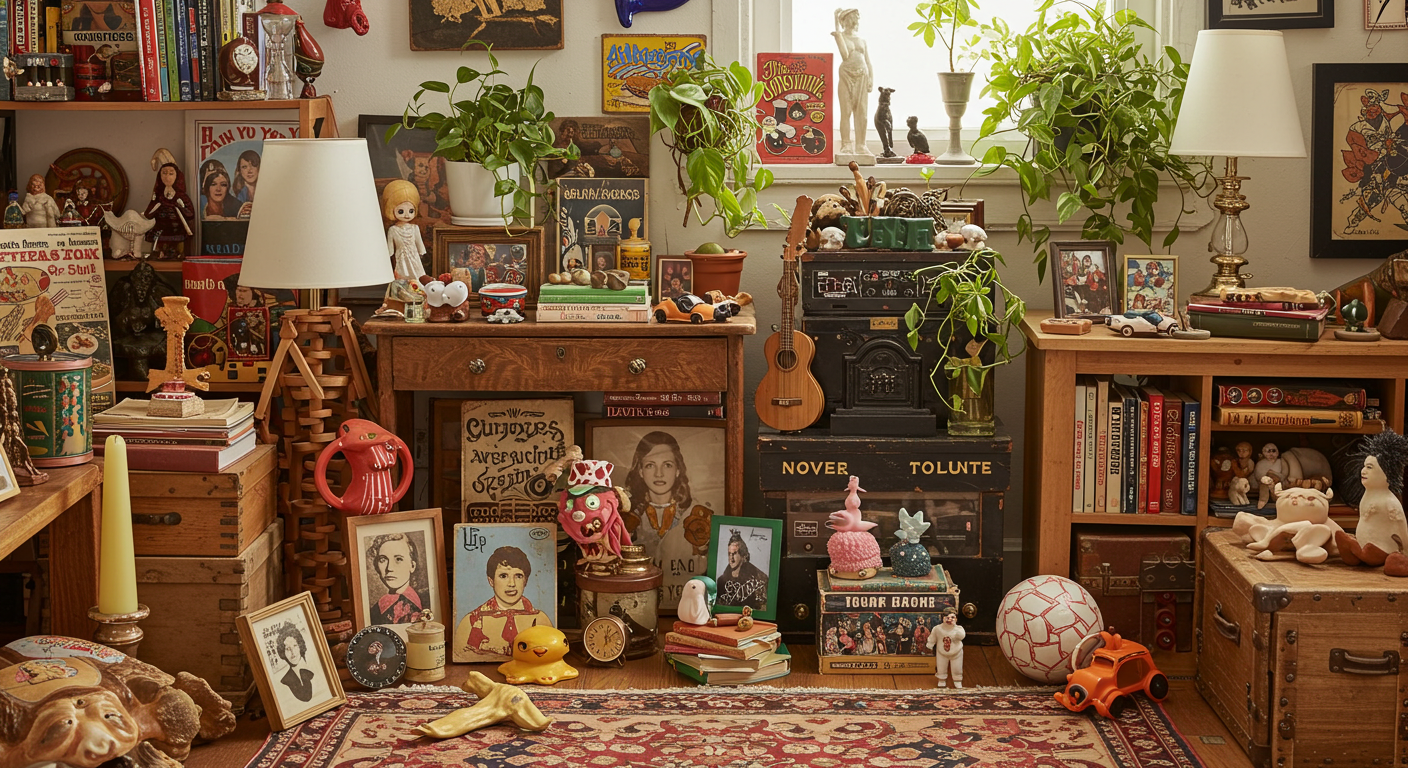
Creating effective cluttercore aesthetic requires understanding the difference between thoughtful organized chaos and overwhelming mess. The most successful cluttercore spaces share several key characteristics that prevent them from crossing the line into actual disorganization.
Layered textures and materials form the foundation of any good cluttercore space. How texture impacts the feel of a room becomes especially important in organized chaos design, where multiple materials need to coexist harmoniously. During my years in home decor retail, I learned that successful cluttercore spaces might combine vintage wood furniture, woven baskets, ceramic pottery, metal accents, and soft textiles all within the same view.
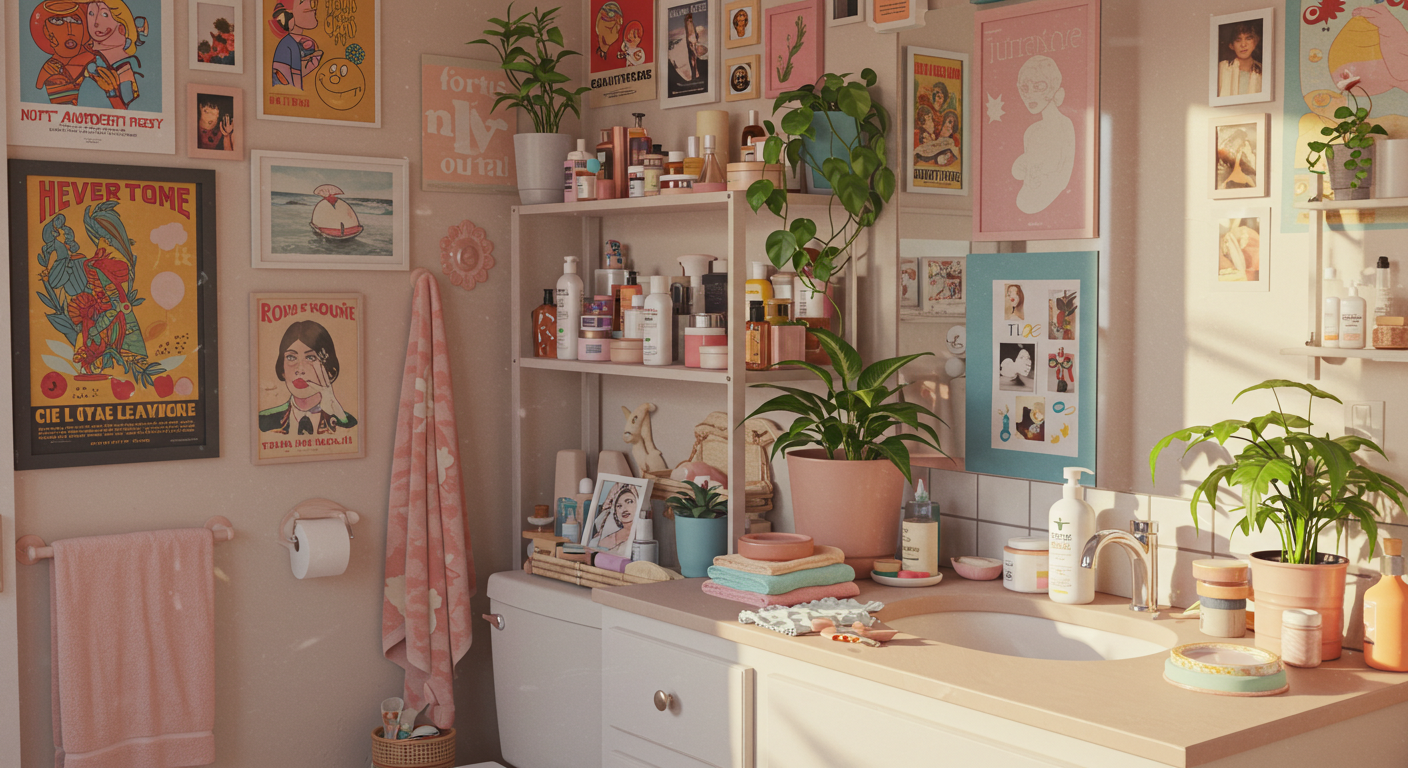
Strategic color coordination helps maintain cohesion despite the visual abundance. While cluttercore aesthetic embraces variety, successful spaces maintain some level of color harmony. This doesn’t mean everything must match perfectly, but there should be recurring colors or tones that tie the organized chaos together.
Essential elements for cluttercore aesthetic success:
- Layered textures creating visual depth
- Strategic color coordination throughout collections
- Purposeful display areas for meaningful objects
- Functional organization systems hidden within apparent chaos
- Proper scale relationships between different sized items
- Areas of visual rest to prevent overwhelming the eye
Purposeful display areas are essential for showcasing collections and meaningful objects. These might include floating shelves lined with books and small treasures, coffee tables that hold stacks of magazines alongside plants and candles, or gallery walls that mix artwork with photographs and small hanging objects. Every surface becomes an opportunity for curation rather than storage.
Functional organization systems provide the backbone that keeps cluttercore aesthetic from becoming actual chaos. Beautiful baskets, vintage boxes, and attractive storage solutions help maintain the organized aspect of organized chaos while keeping essential items accessible. Even though cluttercore is about putting your life on display, everything should still have its place.
Scale consideration remains crucial throughout the design process. When decorating shelves, layering prints, and arranging objects, maintaining awareness of proportional relationships prevents visual confusion and creates pleasing compositions that draw the eye naturally through the space.
This comprehensive video shows maximalist styling techniques perfect for cluttercore aesthetic:
Room-by-Room Cluttercore Aesthetic Implementation
Living rooms and common areas offer the perfect canvas for cluttercore aesthetic because they’re naturally spaces where life happens. Successful organized chaos in living areas includes layered furniture arrangements, multiple seating options with varied textures, and plenty of surfaces for displaying books, plants, and personal collections.
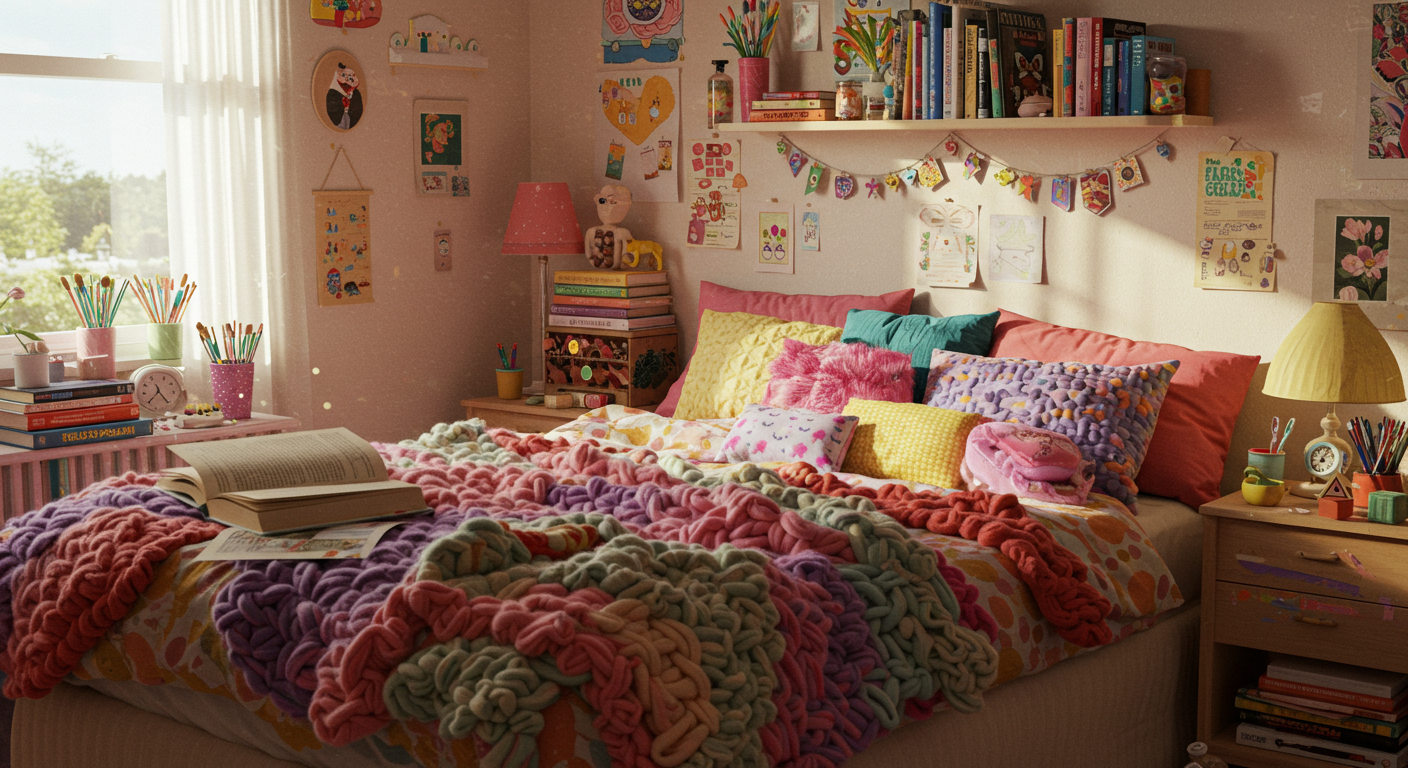
Creating vignettes throughout the room becomes essential – small groupings of objects that tell stories or serve related functions. A side table might hold a stack of art books, a small plant, a vintage lamp, and a beautiful coaster, creating an organized chaos composition that’s both functional and visually interesting. These arrangements should feel natural and evolved rather than forced or overly styled.
From my experience helping clients design their living spaces, I’ve learned that the most successful cluttercore aesthetic rooms balance abundance with functionality. You need to be able to actually use your coffee table for your morning cup, even if it’s also home to carefully arranged magazines, small plants, and decorative objects.
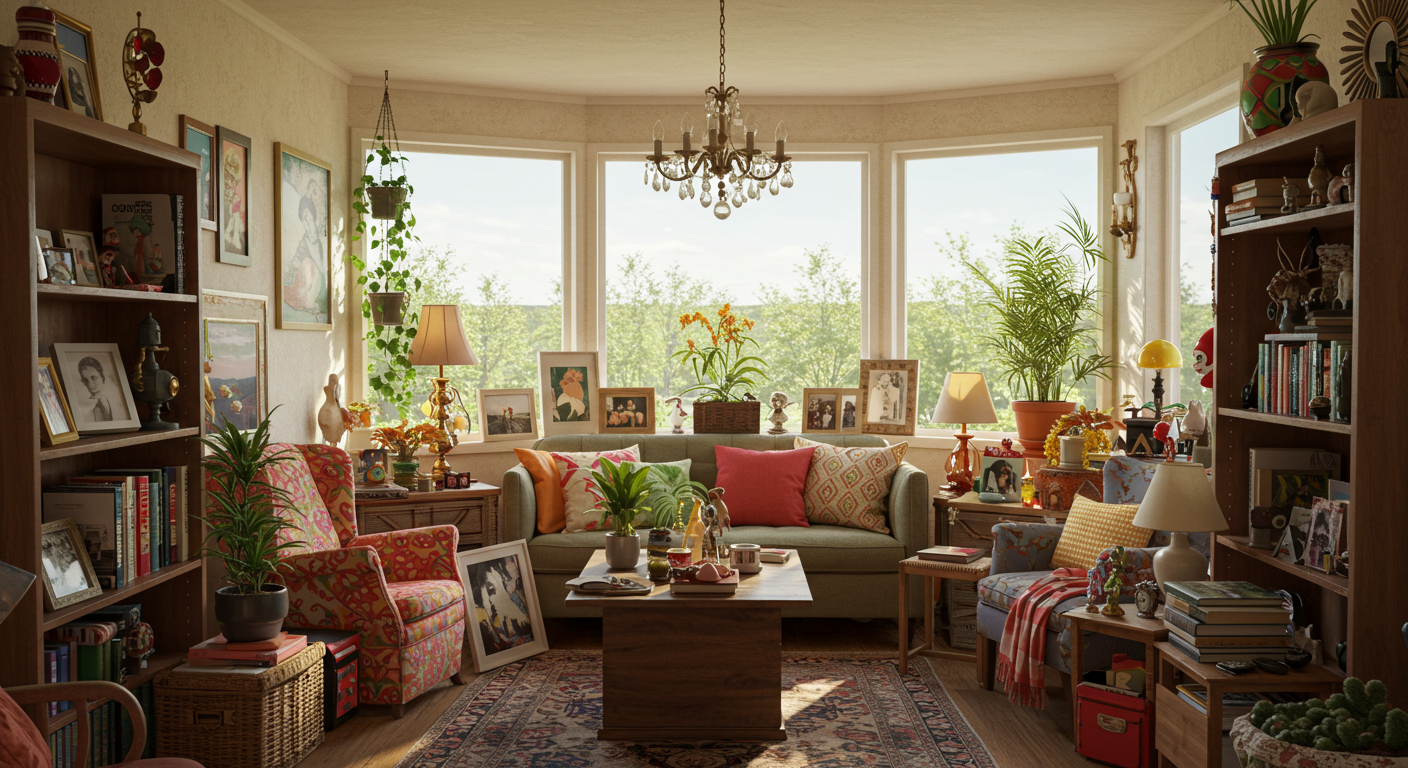
Living room cluttercore aesthetic essentials:
- Multiple seating areas with varied textures
- Layered lighting from different sources
- Display surfaces at varying heights
- Mix of functional and decorative objects
- Personal collections as conversation starters
- Comfortable pathways for daily movement
Kitchens and dining areas present unique opportunities for cluttercore aesthetic through the display of beautiful and functional items rather than hiding everything behind closed doors. Open shelving becomes essential for showcasing attractive dishware, glassware, and cooking tools. Countertops can hold frequently used appliances, herb gardens, and decorative objects that serve daily functions.
The key to kitchen organized chaos lies in ensuring that displayed items are things you actually use regularly. A collection of vintage mixing bowls looks beautiful on open shelves and remains easily accessible for cooking. Spice racks, utensil holders, and attractive storage containers contribute to the cluttercore aesthetic while maintaining kitchen functionality.
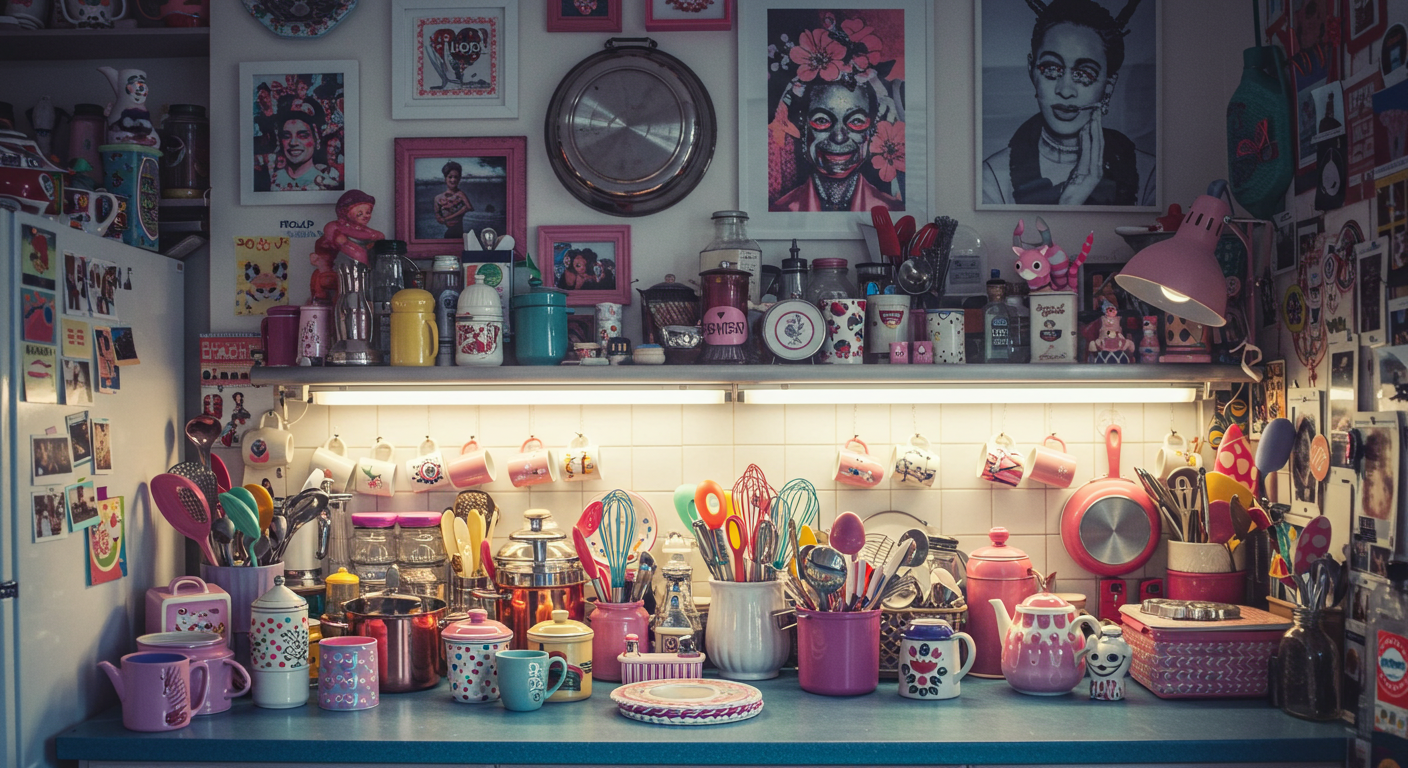
Kitchen organized chaos tips:
- Display frequently used items on open shelving
- Group similar objects for visual cohesion
- Mix functional appliances with decorative elements
- Use attractive containers for daily ingredients
- Incorporate plants and natural elements
- Maintain clear workspace areas for cooking
Bedrooms and personal spaces require more restraint since these areas need to remain restful and functional for sleep. Focus on creating organized chaos through textiles, artwork, and personal collections rather than overwhelming the space with too many objects. The cluttercore aesthetic in bedrooms should support relaxation while reflecting your personality.
Nightstands in cluttercore aesthetic bedrooms might hold stacks of current reading, small plants, attractive lamps, and personal treasures. Dressers can display jewelry, perfumes, and decorative objects. The goal is creating personality and visual interest while maintaining the room’s primary function as a peaceful retreat.
The Art of Curating Your Organized Chaos
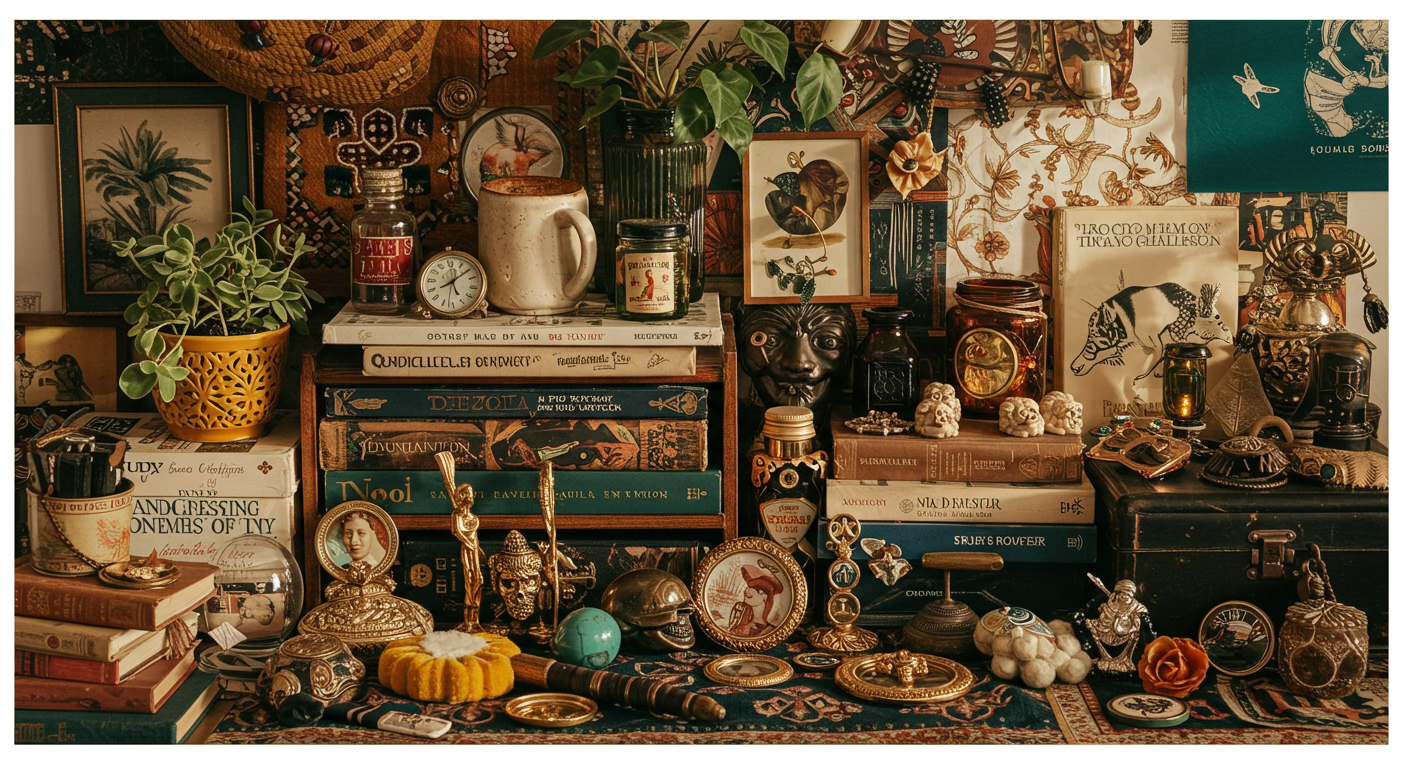
The difference between successful cluttercore aesthetic and overwhelming mess lies in curation. Curating your space with intentional clutter style requires developing an eye for what works together and what serves your space’s overall function and emotional purpose.
Start by gathering items you love and use regularly, then experiment with groupings and arrangements. The organized chaos approach celebrates trial and error – you might move objects around frequently until you find combinations that feel right. Unlike minimalist spaces where every item has a designated spot, cluttercore aesthetic encourages more fluid arrangements that can evolve with your mood and needs.

From my experience in wine retail, I learned that the best displays tell stories and create emotional connections. The same principle applies to cluttercore aesthetic – your arrangements should reflect your interests, experiences, and personality rather than following prescribed design formulas.
Consider the concept of breathing room even within organized chaos. While cluttercore spaces embrace abundance, successful implementations still include empty spaces that allow the eye to rest. This might mean leaving some wall space undecorated or maintaining clear pathways through furniture arrangements.
Curation principles for organized chaos:
- Group objects by color, material, or theme
- Vary heights and textures within displays
- Include negative space for visual rest
- Rotate seasonal or mood-based elements
- Tell personal stories through object combinations
- Edit regularly to prevent actual clutter accumulation
The curation process also involves regular editing. Cluttercore aesthetic doesn’t mean keeping everything forever – it means being intentional about what you choose to display and live with. Regular reassessment helps prevent organized chaos from becoming actual clutter. Items should earn their place through function, beauty, or emotional significance.
Sentimentality remains at the heart of successful cluttercore aesthetic. Avoid filling your space with items just for the sake of achieving the style. Instead, display items that are meaningful and bring joy and comfort to your space. Childhood mementos, thrifted finds, meaningful souvenirs from travels, and collectible figurines or trinkets all work well for creating authentic organized chaos.
Common Cluttercore Aesthetic Mistakes to Avoid
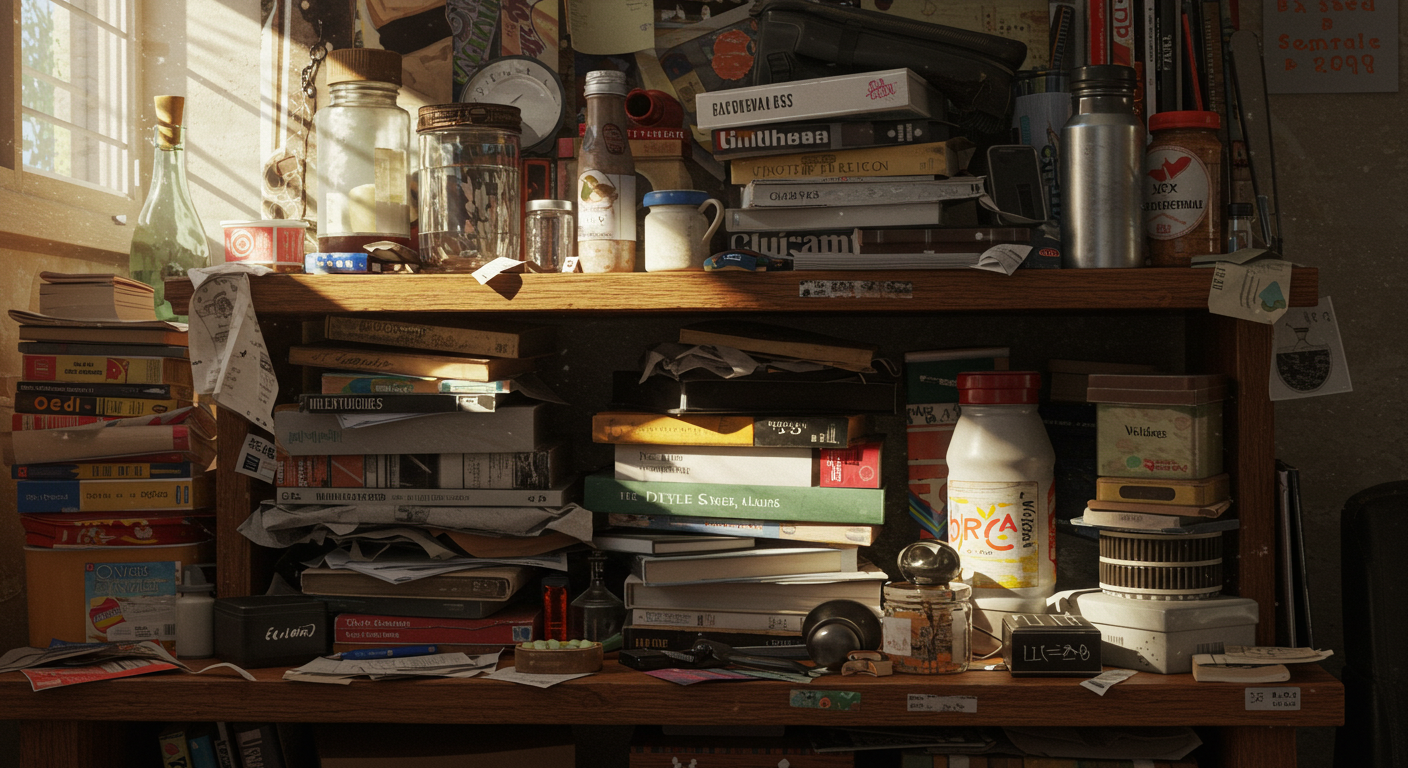
The biggest mistake people make when attempting cluttercore aesthetic is thinking it means anything goes. True organized chaos requires intentionality and purpose behind every displayed item. Random piles of stuff don’t constitute cluttercore aesthetic – they’re just mess. The key lies in understanding that everything must have a home and belong in its particular place.
During my years working in home decor, I’ve seen countless clients struggle with this distinction. They’d see beautiful cluttercore aesthetic spaces on social media and try to recreate the look by simply adding more stuff to their rooms, without understanding the careful curation and organization systems that make organized chaos actually work.

Ignoring functionality represents another critical error. Successful cluttercore spaces must still function for daily life. If you can’t find important items, use surfaces for their intended purposes, or move comfortably through your space, you’ve crossed the line from organized chaos into dysfunction. The aesthetic should support your lifestyle, not hinder it.
Common cluttercore aesthetic mistakes:
- Adding items without considering their purpose or placement
- Ignoring cleaning and maintenance requirements
- Overwhelming every surface without creating visual rest areas
- Mixing too many small objects without larger anchoring pieces
- Forgetting about functionality in favor of appearance
- Copying others’ collections instead of displaying your own meaningful items
Lack of cleaning and maintenance quickly transforms organized chaos into actual chaos. Cluttercore aesthetic requires more cleaning and maintenance than minimalist spaces simply because there are more surfaces and objects to dust and organize. Neglecting regular upkeep undermines the carefully curated nature that makes the style successful.
Overwhelming every surface creates visual chaos rather than the comfortable abundance that defines successful organized chaos. Even cluttercore spaces need breathing room and areas where the eye can rest. The goal is creating visual interest and personality, not sensory overload.
Scale issues can make even well-intentioned cluttercore aesthetic feel chaotic rather than curated. Mixing too many small objects without larger anchoring pieces, or failing to create visual hierarchy through varied heights and proportions, results in spaces that feel scattered rather than thoughtfully composed.
Making Cluttercore Aesthetic Work for Your Lifestyle
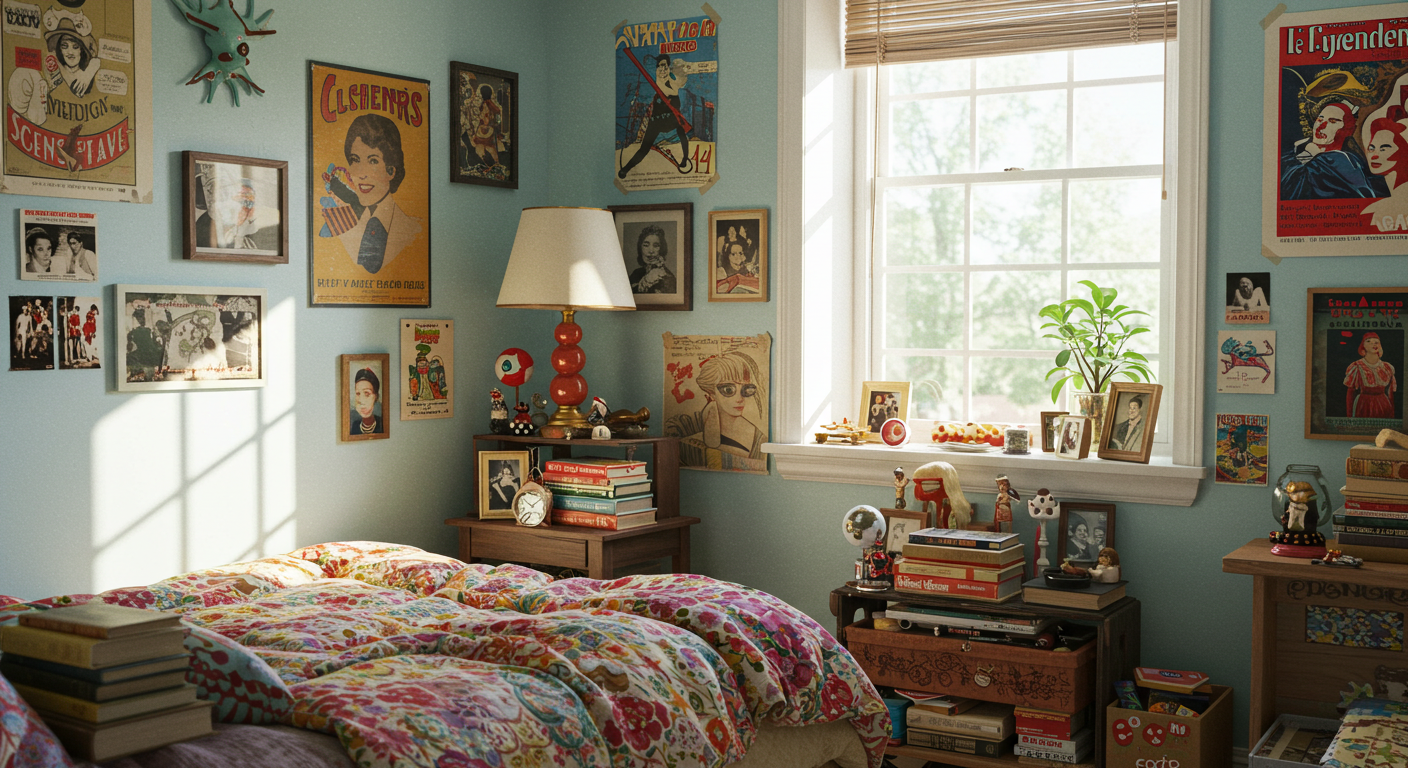
The cluttercore aesthetic works best when it aligns with your natural living patterns and personality. If you’re someone who enjoys collecting, creating, or being surrounded by meaningful objects, organized chaos might feel more authentic and comfortable than forced minimalism. Consider your daily routines when implementing cluttercore design – the objects you display should be things you actually interact with or enjoy seeing regularly.
A collection of vintage wine accessories makes sense if you’re passionate about wine culture, but displaying random objects just for the sake of visual abundance defeats the purpose. From my background in both wine and home decor industries, I’ve learned that the most successful spaces reflect genuine interests rather than Instagram trends.
Think about maintenance requirements honestly. Cluttercore spaces require more dusting, organizing, and general upkeep than minimalist alternatives. If you don’t enjoy or have time for regular maintenance, you might prefer a modified approach that incorporates some cluttercore elements without going full organized chaos.
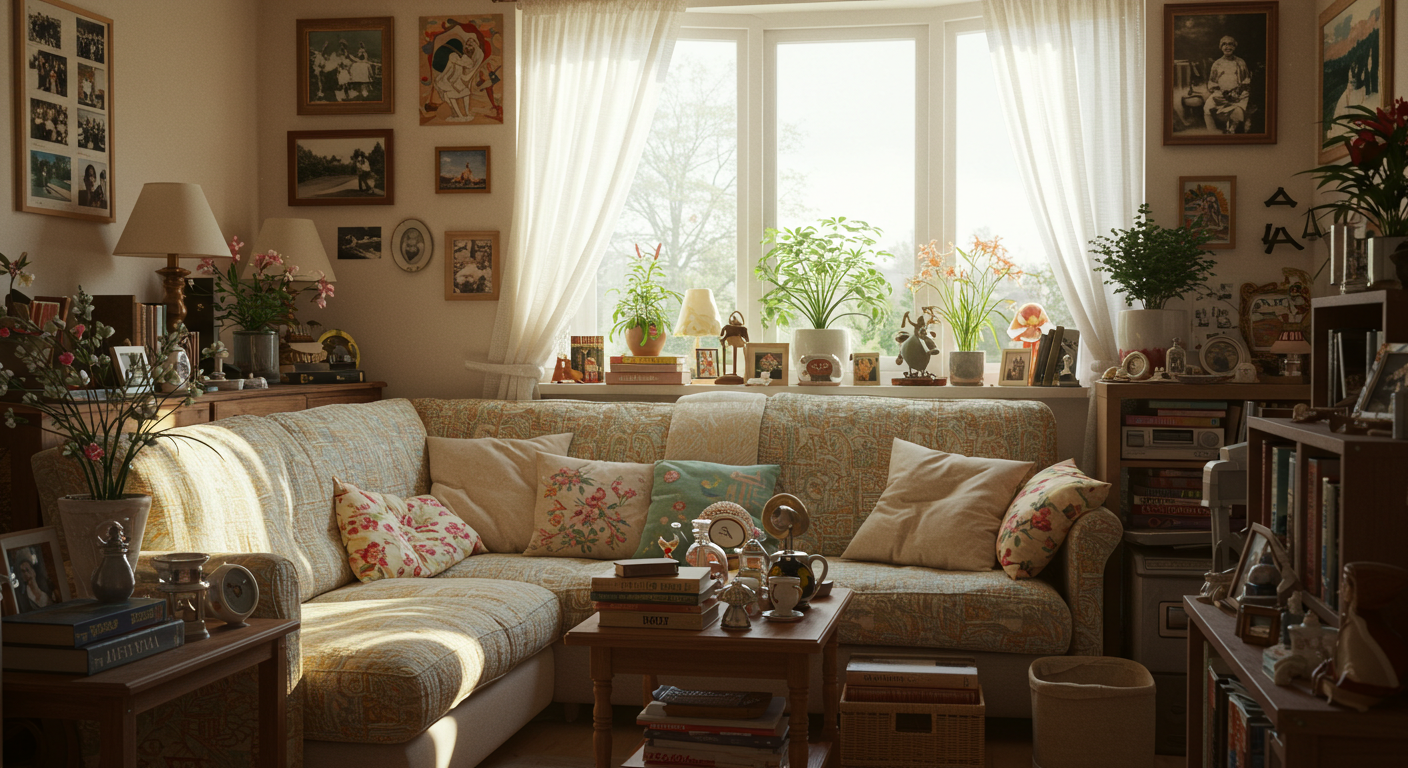
Lifestyle considerations for cluttercore aesthetic:
- Assess your natural collecting tendencies
- Consider available time for maintenance and upkeep
- Evaluate your comfort level with visual stimulation
- Think about how you actually use your spaces daily
- Plan for seasonal changes and interest evolution
- Budget for storage solutions and organization systems
The beauty of cluttercore aesthetic lies in its flexibility. Unlike rigid interior design styles that require specific furniture or color schemes, organized chaos can incorporate pieces from any era, style, or price point as long as they serve your space’s function and bring you joy.
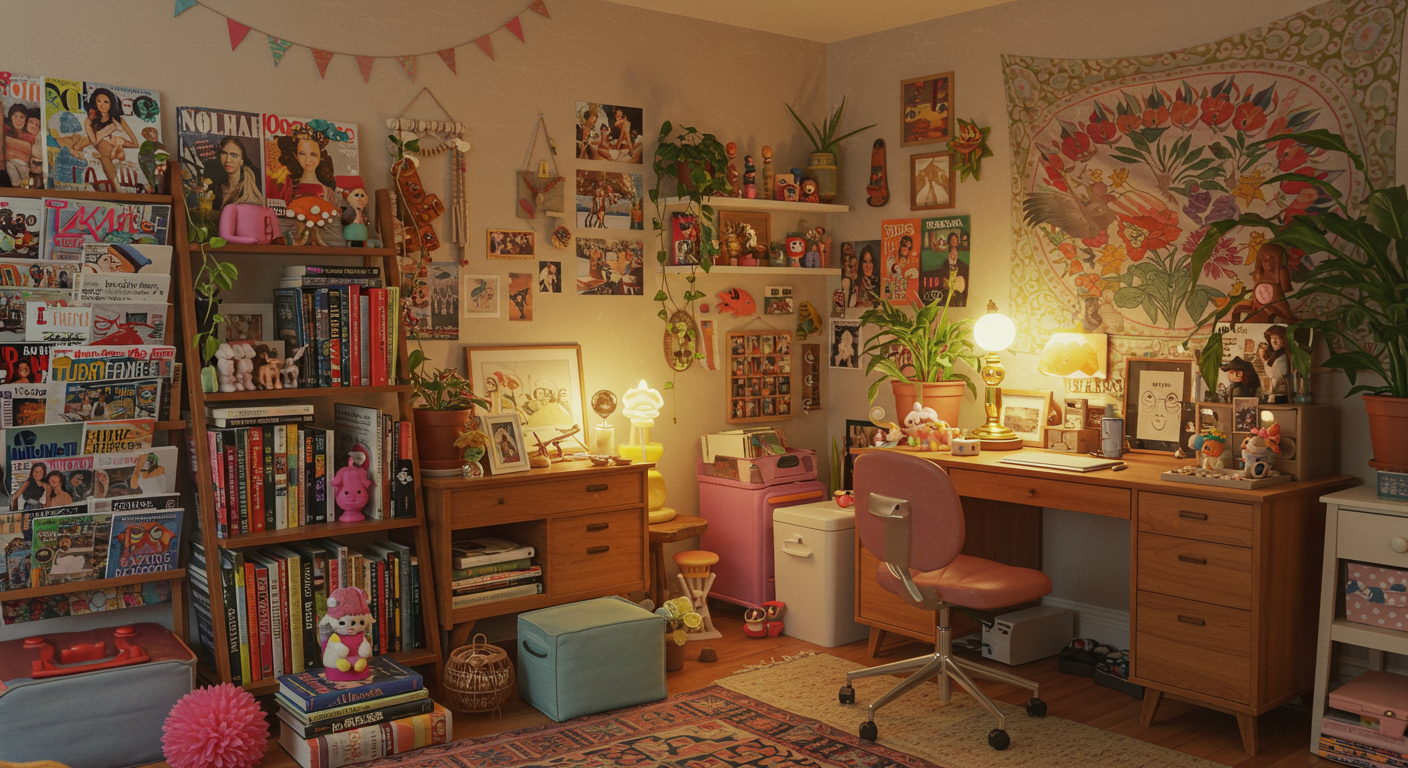
Consider starting small before fully committing to cluttercore aesthetic. Create isolated spaces in your home that embrace organized chaos – like a large bookcase or gallery wall – to experiment with the style and see if it suits your lifestyle. This approach allows you to experience the benefits and challenges before making larger commitments.
The approach also works well with seasonal decorating since cluttercore aesthetic naturally accommodates additional elements without looking forced or temporary. Holiday decorations become part of the organized chaos rather than awkward additions to pristine minimalist spaces.
Seasonal Evolution of Your Organized Chaos Space
One of the most enjoyable aspects of cluttercore aesthetic is how easily these spaces can evolve with seasons, holidays, and changing interests. Unlike minimalist spaces where adding seasonal elements can disrupt carefully maintained balance, organized chaos naturally accommodates new additions and rotations.
During autumn, you might add warm-toned textiles, seasonal botanicals, and cozy lighting elements to your existing cluttercore foundation. Winter could bring in additional layers, holiday decorations integrated naturally with existing collections, and items that enhance the hygge feeling of organized chaos.
From my experience helping friends decorate for various seasons and celebrations, I’ve found that cluttercore aesthetic spaces handle these transitions much more gracefully than minimalist rooms. The existing abundance provides a natural backdrop for seasonal additions, making everything feel intentional rather than temporary.
Spring and summer allow for lighter textiles, fresh plants, and brighter accent pieces. The key is viewing these seasonal changes as natural evolution rather than complete overhauls. Cluttercore spaces should feel organic and responsive to your changing needs and interests throughout the year.
Seasonal cluttercore aesthetic ideas:
- Rotate textiles and throws with changing weather
- Incorporate seasonal plants and natural elements
- Adjust lighting to match seasonal moods
- Display holiday collections as part of ongoing organized chaos
- Change out artwork or photographs seasonally
- Add seasonal scents through candles or diffusers
This seasonal flexibility makes cluttercore aesthetic particularly appealing for people who enjoy refreshing their spaces regularly. Instead of requiring expensive furniture changes or major renovations, organized chaos spaces can feel completely different with simple additions, subtractions, and rearrangements.
The approach also works beautifully for entertaining, which is especially relevant for wine lovers and lifestyle enthusiasts. Cluttercore aesthetic spaces naturally feel welcoming and conversation-starting, providing plenty of interesting objects and collections for guests to discover and discuss.
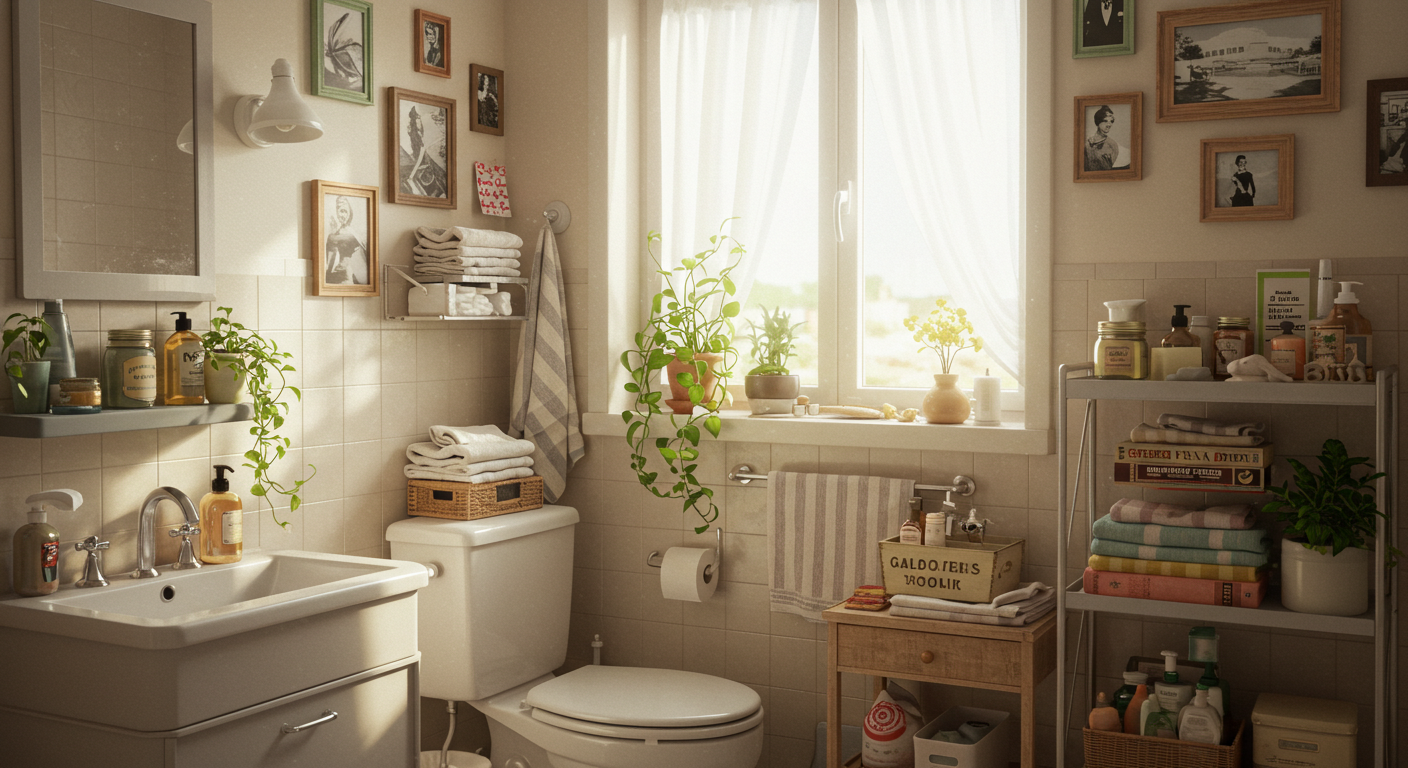
The cluttercore aesthetic offers a refreshing alternative to the sterile perfection that’s dominated home design trends for years. By embracing organized chaos, we can create spaces that truly reflect our personalities, interests, and the beautiful reality of actually living in our homes. Whether you fully commit to cluttercore or simply incorporate some of its principles into your existing style, the key is creating spaces that serve your life rather than forcing your life to serve an impossible aesthetic standard.
Remember that successful cluttercore aesthetic is about intentionality, not carelessness. Every object should earn its place through function, beauty, or emotional significance. When done thoughtfully, organized chaos creates homes that feel warm, personal, and genuinely livable – something that’s increasingly rare in our social media-perfect world.
For those ready to embrace their collections and create spaces that tell their personal stories, the cluttercore aesthetic provides both permission and framework for celebrating the beautiful abundance of a life well-lived.