This post may contains affiliate links. Read our full disclosure here.
If I could go back and give my younger self one piece of style advice, it would be this: stop buying things and start building a capsule home wardrobe of basics. A capsule home wardrobe is a small, intentional collection of versatile, timeless pieces that work together in almost infinite combinations. The result is a closet that feels effortless, a getting-dressed routine that takes minutes instead of half an hour, and — perhaps most satisfying — a feeling of calm every time you open those closet doors.
The concept of a capsule wardrobe was originally developed by London boutique owner Susie Faux in the 1970s, but it has never felt more relevant than it does right now, when most of us have too many clothes and nothing to wear. Building a true capsule home wardrobe of basics isn’t about having less — it’s about having exactly the right things. Here’s everything I know about how to do it.
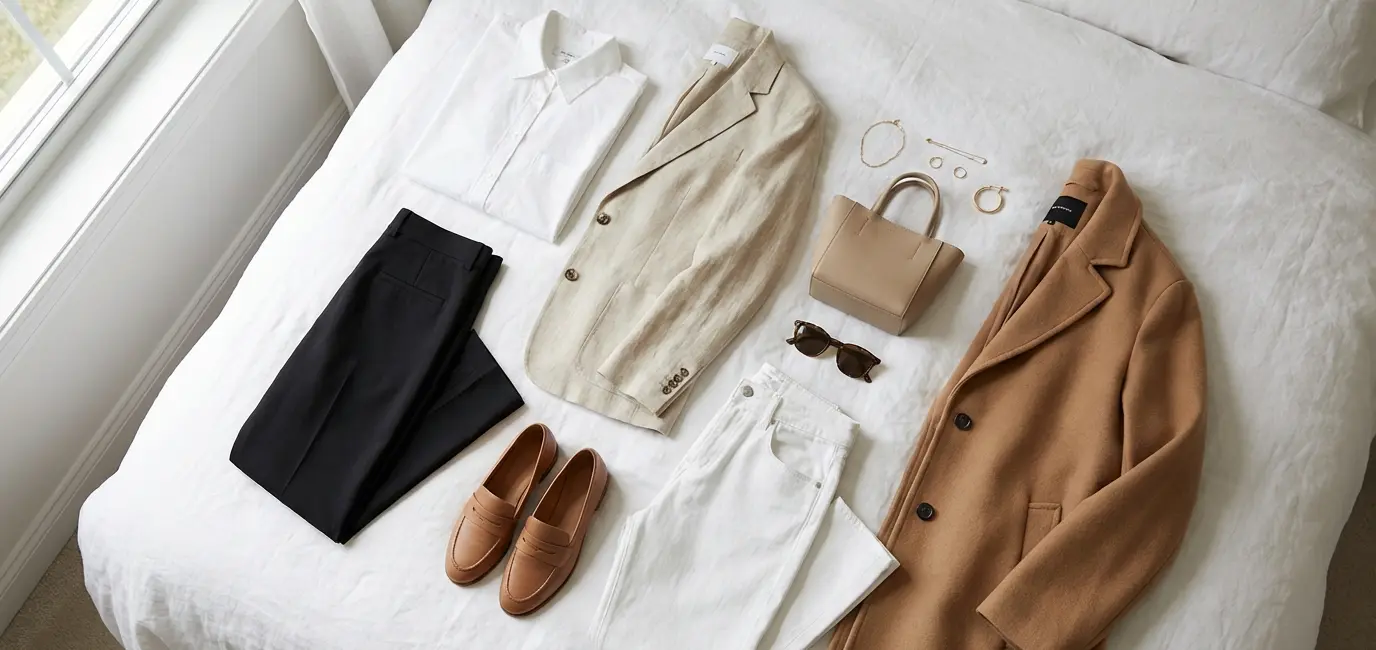
“A capsule wardrobe isn’t a uniform. It’s a foundation — and what you build on top of it is entirely your own.”
What Is a Capsule Home Wardrobe?
A capsule home wardrobe is a curated collection of wardrobe basics — typically somewhere between 25 and 50 pieces — that are all high-quality, versatile, and mostly neutral in color. Every item works with every other item. Nothing is a one-use piece. Nothing requires a specific occasion that never actually comes.
The word “home” here is key. A capsule home wardrobe centers on the pieces you actually live in: the clothes you wear when you’re working from home, going out for coffee, running errands, heading to a casual dinner, or meeting friends. It’s not a red-carpet wardrobe or a strictly formal one. It’s the backbone of your everyday life.
The capsule wardrobe philosophy rests on three principles. First, quality over quantity: you buy fewer things but better things. A $150 cashmere sweater you wear 80 times costs less per wear than a $30 fast-fashion one that pills after three washes. Second, intentionality: every piece you add has a reason to be there. Third, versatility: one piece should be able to do at least three or four different outfit jobs.
What a capsule home wardrobe of basics is not: boring, restrictive, or identical for everyone. Your capsule will look different from mine because we have different lives, different body types, and different personal styles. The principles are universal; the execution is yours.
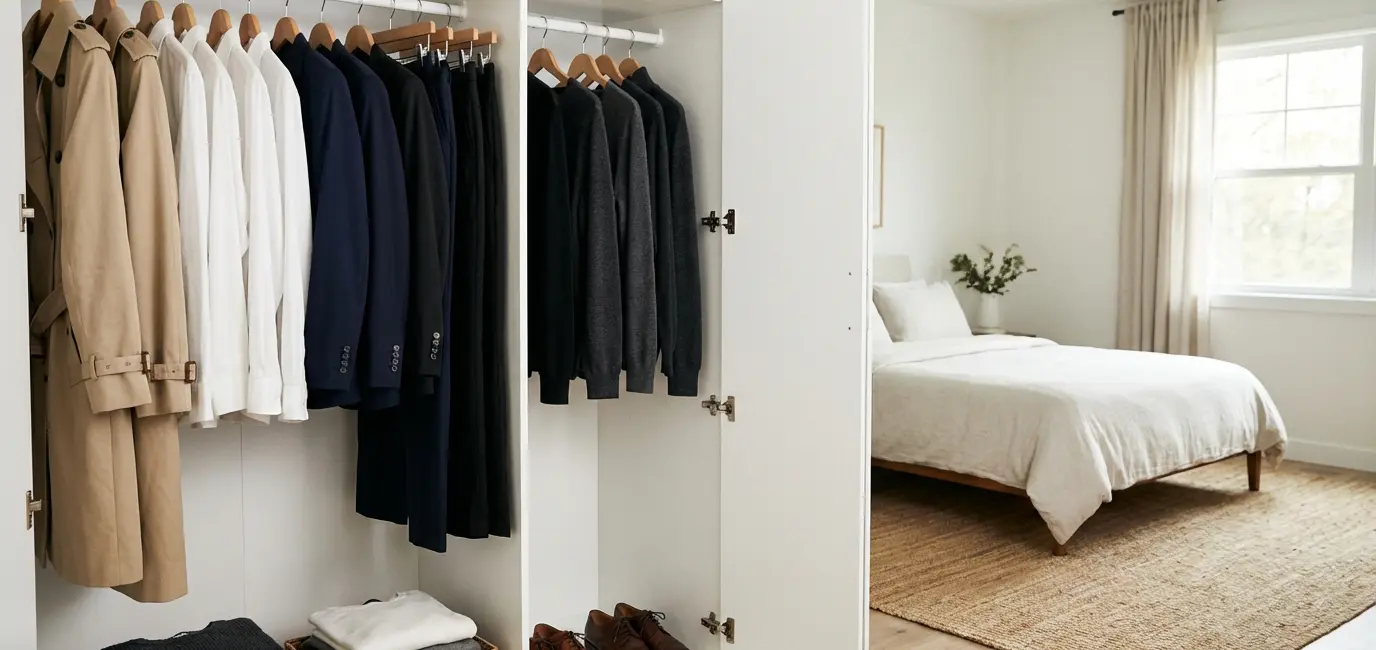
The 10 Absolute Basics Every Capsule Wardrobe Needs
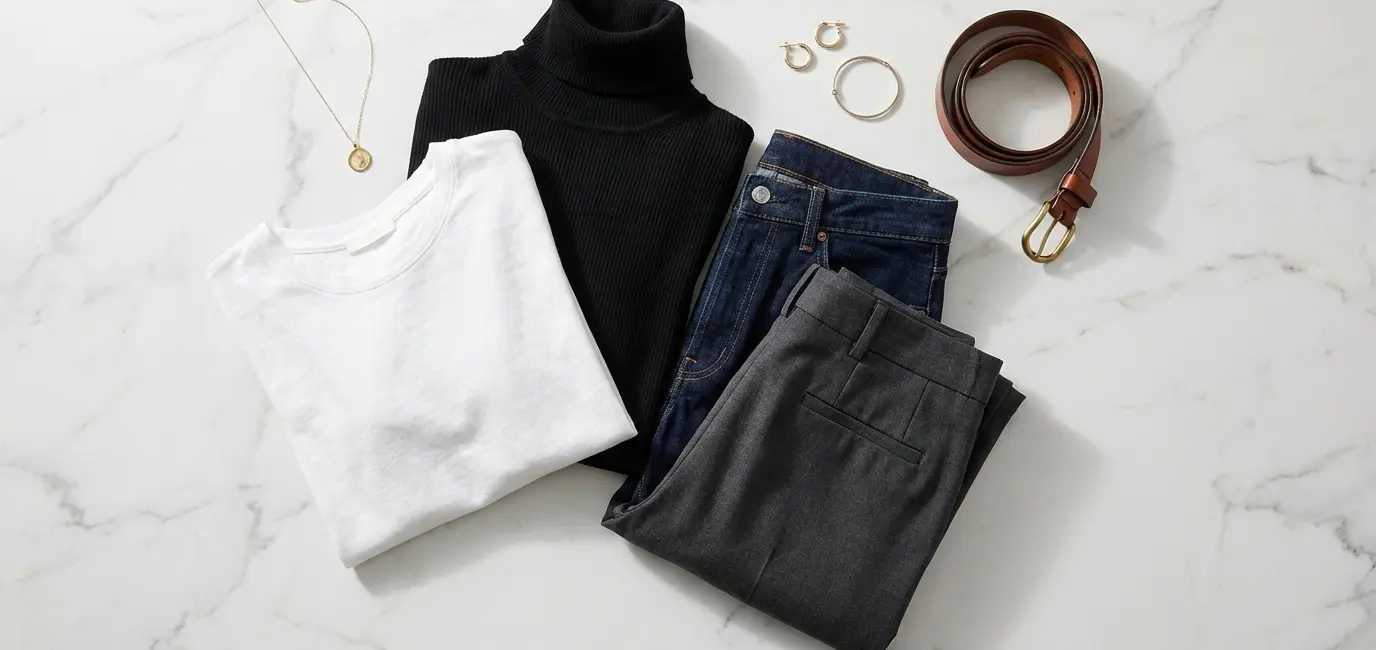
Before you add anything personal or trend-driven, your capsule wardrobe needs these ten essentials. Think of them as the load-bearing walls of your style house. Everything else leans on them.
1. The White Button-Down Shirt
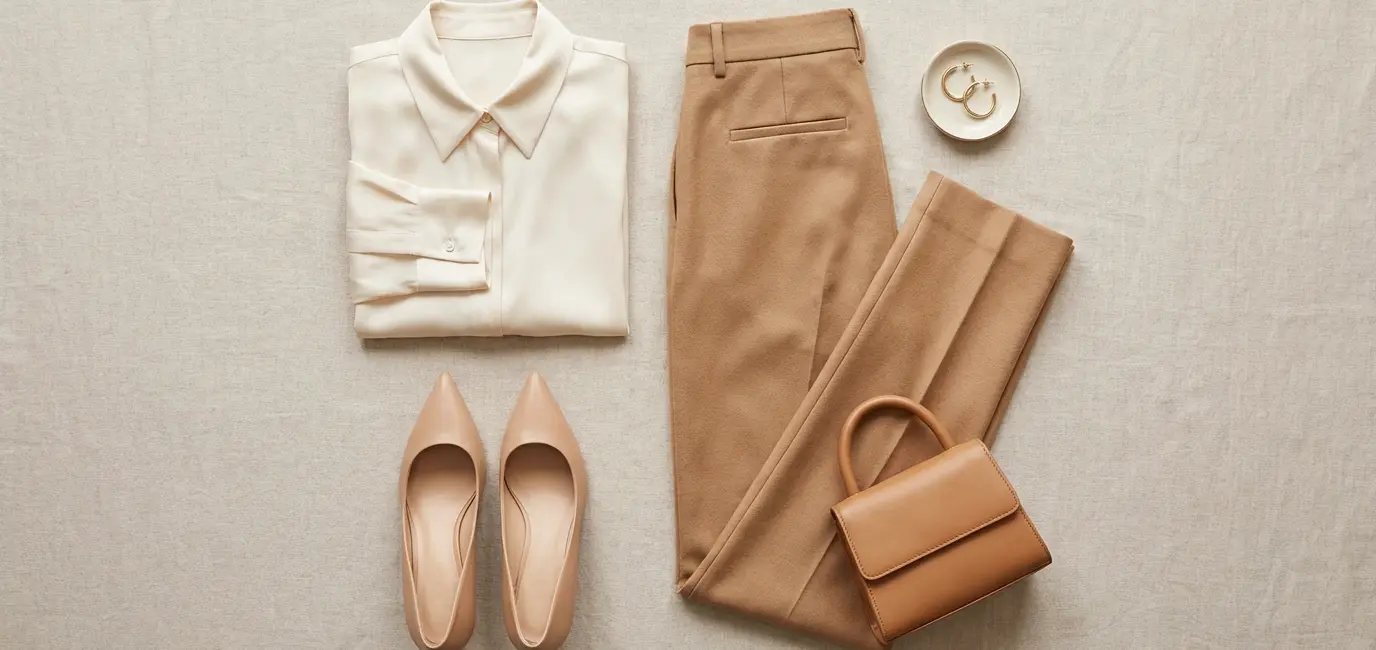
The most versatile piece of clothing that exists. It works tucked into tailored trousers for a sharp office look, half-tucked with jeans for weekend casual, knotted at the waist over a slip dress for summer, or worn fully open as a layer over a tee. Every capsule wardrobe of basics starts here. Look for a slightly oversized fit in crisp cotton or a cotton-linen blend. Avoid anything too sheer.
2. Dark Wash Straight-Leg Jeans
Not skinny, not wide-leg — straight. Straight-leg dark jeans are the most enduringly flattering cut and they work with almost everything: trainers, heeled boots, loafers, ballet flats. A dark wash reads dressier than mid or light wash, which means your capsule wardrobe gets more mileage from a single pair. Buy the best quality you can afford.
3. A Tailored Blazer in Camel or Cream
A well-cut blazer instantly elevates everything it touches. Over a white tee and jeans, it looks pulled-together and polished. Over a slip dress, it looks intentional and chic. As a layer on a cold morning, it’s infinitely better than a cardigan. Camel and cream are the two best neutral tones for maximum wearability in a capsule home wardrobe.
4. A Black Turtleneck
The black turtleneck is possibly the most quietly useful item in any capsule wardrobe of basics. It works under blazers, under slip dresses as a layer, tucked into wide-leg trousers, with jeans and a statement belt, under dungarees. It’s endlessly adaptable and never looks out of place. A fine-knit merino version is the ideal choice — it won’t bulk under layers.
5. Tailored Trousers in a Neutral
Wide-leg, straight, or tapered — whatever silhouette flatters you most — in camel, cream, charcoal, or navy. Tailored trousers are the non-denim bottom that makes your capsule home wardrobe feel grown-up and intentional. Pair with the white button-down for office wear, with a fine-knit top for evenings, with a blazer for the kind of effortless French look everyone’s always trying to achieve.
6. A Simple White or Cream Knit
Not a logo sweatshirt, not a graphic tee — a clean, simple knit top or lightweight sweater in white or cream. This is your go-to layer for most of the year. It works with every bottom you own. The plainer and more quality-made, the better. This piece does its best work as a background to the rest of your capsule wardrobe.
7. A Camel or Neutral Coat
One excellent coat is worth ten mediocre ones. A tailored camel coat — knee-length, clean silhouette — works over literally every outfit in your capsule home wardrobe of basics. It elevates jeans and a tee. It pairs with a dress. It looks as good with trainers as it does with heeled boots. This is the single item worth splurging on most.
8. The Perfect Black Dress
Not the “little” black dress in the party sense — a mid-length, classic black dress with a simple silhouette that can be dressed up or down. In a capsule wardrobe, the black dress earns its place by functioning as a base: style it with a blazer for dinners, with trainers and a denim jacket for daytime, with a belt to create a waist, with a turtleneck underneath in winter.
9. A Good Pair of Loafers
Shoes technically fall outside the clothing capsule wardrobe, but loafers are the one footwear choice that bridges every outfit type. With trousers, with jeans, with dresses, with socks and without. Black or tan leather, classic style. These are the shoes you can put on without thinking and always look right.
10. Quality Loungewear Basics
A capsule home wardrobe of basics must include what you wear at home. Quality loungewear — not ratty old sweats, but thoughtfully designed pieces — makes every morning and evening feel more intentional. A soft robe, a well-fitting lounge set, or a cozy knit cardigan in a neutral: these pieces belong in the capsule just as much as your blazer does. Lunya makes some of the best quality loungewear basics I’ve found.
How to Choose Your Neutral Color Palette
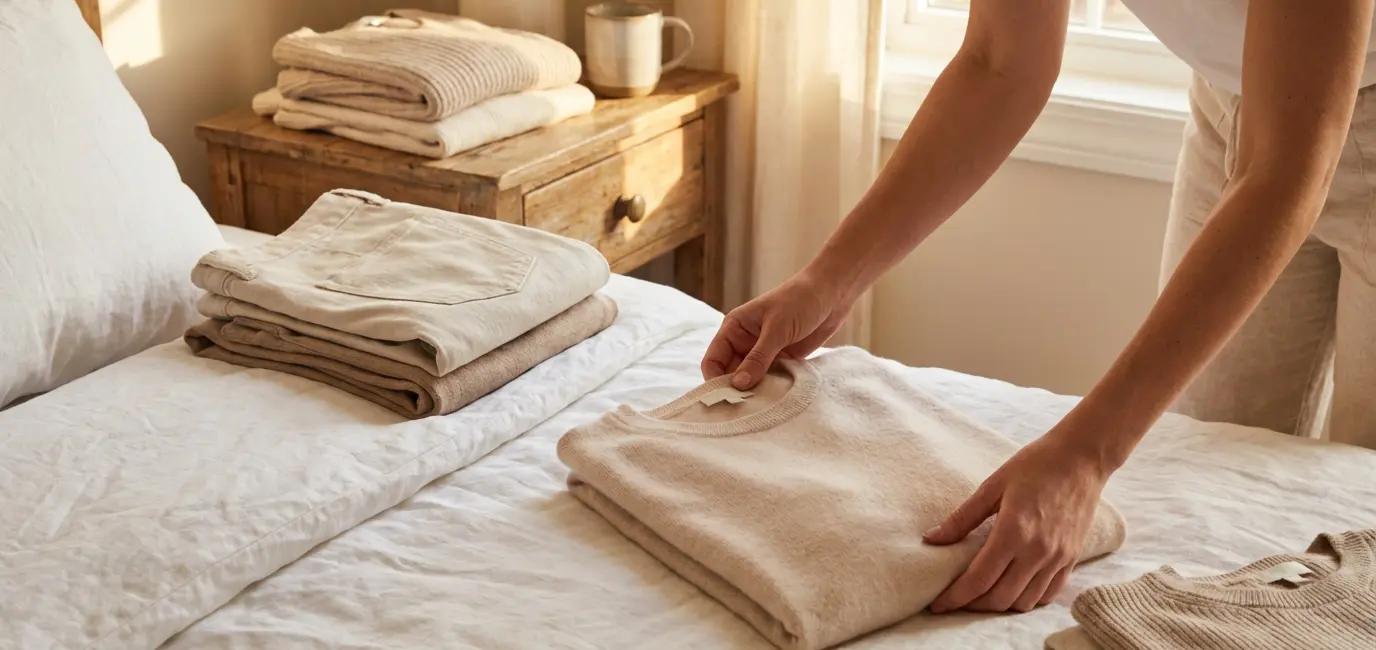
The color palette is the thing that makes a capsule home wardrobe actually function. If every piece works in the same palette, every piece works with every other piece. That’s the whole point.
The classic capsule wardrobe palette is built around three to four core neutrals. Most people work well with a combination of: white or cream, one mid-tone (camel, tan, or grey), one dark (black or navy), and one optional “warm neutral” (chocolate brown, burgundy, forest green). These four tones cover all the contrast and depth you need without introducing pieces that only work with specific other pieces.
Before you pick your palette, spend ten minutes looking at what colors you actually reach for in your closet right now. Most people have a clear preference they’re not aware of. If everything you love is cool-toned (grey, black, white, navy), build a cool neutral palette. If you find yourself drawn to warm tones (camel, tan, cream, brown), build warm. The goal is a palette that feels natural to you, not one that looks good on a mood board but feels foreign to wear.
Accent color belongs in your capsule wardrobe too — but selectively. One or two pieces in a signature color you genuinely love (a rust-red coat, a cobalt bag, a forest-green blazer) add personality without disrupting the functionality of the whole. The rule is that accent pieces must still work with the core neutral palette.
How to Edit Down What You Already Own
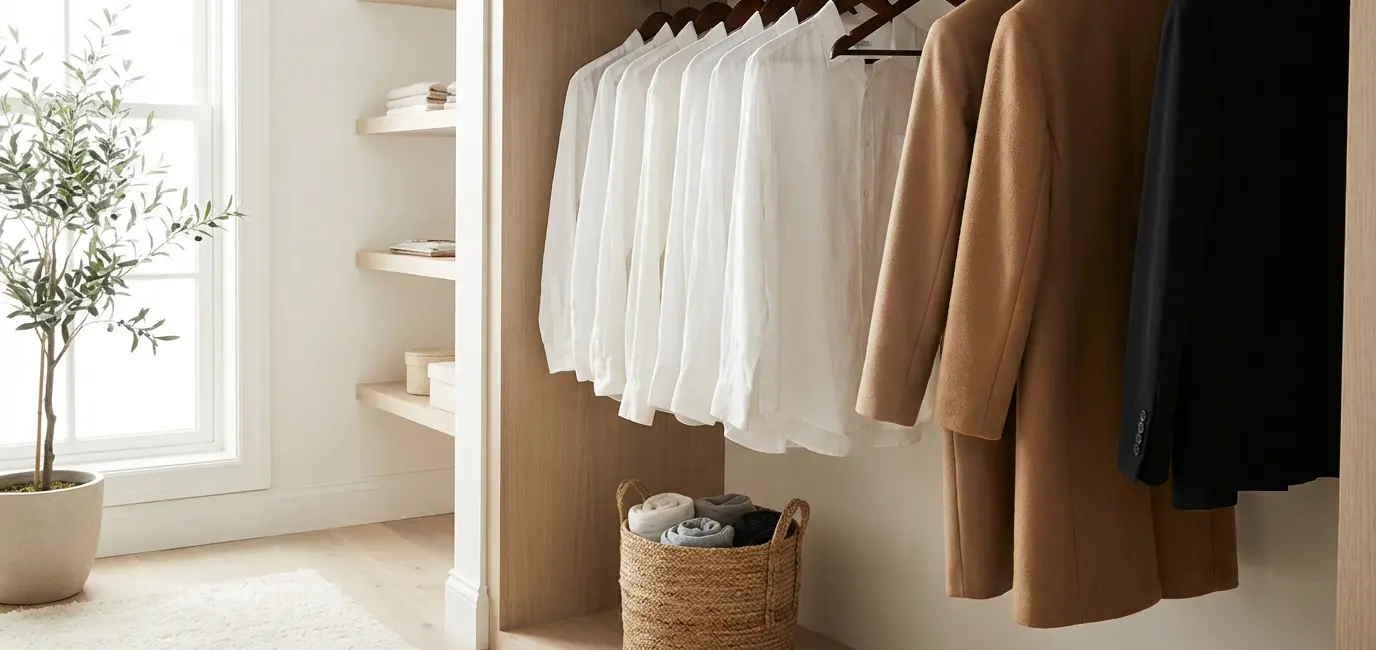
Before you buy a single thing for your capsule home wardrobe of basics, you need to ruthlessly edit what you already have. Most people discover they already own 60-70% of their ideal capsule wardrobe once they clear out the noise.
Start by pulling everything out of your closet — every single item. This is non-negotiable. You cannot accurately assess what you own while it’s all jammed onto a rail. Lay everything on your bed, organized loosely by type. Now go through each item and ask three questions: Have I worn this in the last 12 months? Does it fit well right now, not eventually? Does it work with at least three other things I own?
If the answer to all three is yes, it stays. If it fails any one question, it goes into the “reconsider” pile. Work through the reconsider pile last and be honest. The items that survive that second pass are genuinely useful. The rest can be donated, sold, or stored if they’re truly seasonal items.
What you’re left with is the skeleton of your capsule wardrobe. Now you can see the gaps clearly: maybe you have three blazers but no basic white tee. Maybe you have ten dresses but no tailored trousers. Shopping for a capsule home wardrobe of basics from this position is completely different from shopping while overwhelmed by a full closet. You’re filling specific gaps, not buying speculatively.
For a good system to tackle the organization side, my how to declutter your home room by room guide has the method I use for every space, not just closets. The process translates directly.
How to Shop for Capsule Wardrobe Pieces (Without Overspending)
Shopping for a capsule home wardrobe requires a completely different mindset than regular shopping. You’re not browsing for what catches your eye. You have a list. You’re filling gaps. And you’re making considered decisions about quality and cost-per-wear.
The single most useful framework for capsule wardrobe shopping is the cost-per-wear calculation. Take the price of the item and divide it by how many times you estimate you’ll wear it in a year, multiplied by how many years it will last. A $200 cashmere turtleneck you wear 40 times per year for 10 years costs $0.50 per wear. A $40 synthetic turtleneck you wear 10 times before it loses its shape costs $4 per wear. The more expensive item is genuinely cheaper over time.
That said, you don’t need to spend a fortune on every single piece in your capsule wardrobe of basics. There are tiers. Invest in: outerwear, blazers, knitwear, leather goods (shoes, bags, belts). Save on: basic tees, layering pieces, casual trousers. The investment pieces are the ones that are always visible, take wear and wash stress, and define the silhouette. The save pieces are supporting cast.
When shopping, always check the fabric content. For a capsule wardrobe intended to last, look for natural fibers wherever possible: cotton, linen, wool, cashmere, silk. Avoid high-percentage polyester in anything you want to look and feel good in beyond two seasons. Natural fibers breathe, wear better, and develop a better patina over time.
Finally: buy slowly. A capsule home wardrobe of basics is built over months, not assembled in a weekend shopping spree. Add one gap piece at a time, wearing each new addition with everything already in your closet before buying the next. This is how you avoid the trap of building a beautiful capsule on paper that doesn’t work in real life.
More Style and Home Living Guides
Building a capsule home wardrobe of basics is the foundation, but how you live in those pieces matters just as much. For building out the rest of your home’s aesthetic foundation, my small living room decorating ideas guide applies the same less-but-better philosophy to your space. The spring capsule wardrobe 2026 piece is a good companion read if you want a seasonal spin on these basics. If your closet edit reveals you need a full declutter pass first, how to declutter your home room by room is the method I rely on every season. For a cozy home vibe that complements a pared-back wardrobe, my warm minimalism interior design guide explores how the same principles apply to interiors. And if you’re thinking about your wardrobe in the context of a bigger lifestyle refresh, spring self-care routine 2026 is a good place to start.
Frequently Asked Questions
Here are the questions I hear most when people are starting to build their capsule home wardrobe of basics.
How many pieces should a capsule wardrobe have?
Most capsule wardrobe experts recommend somewhere between 25 and 50 pieces, not including underwear, socks, and workout clothes. I find 30-37 pieces is a practical sweet spot for most people: enough variety to feel fresh, limited enough that everything sees regular wear. Start small and add only when you feel a genuine gap.
What is the difference between a capsule wardrobe and a minimalist wardrobe?
A capsule wardrobe focuses on versatility and coordination: every piece works with every other piece. A minimalist wardrobe focuses on owning less overall. They often overlap, but they’re not the same. You can have a minimalist wardrobe that doesn’t function as a capsule (pieces that don’t work together) or a capsule wardrobe that’s not particularly minimal (40+ pieces that all coordinate). The capsule wardrobe of basics concept is about intentionality, not just low numbers.
What colors work best for a capsule home wardrobe?
Neutral tones are the foundation: white, cream, camel, tan, grey, black, and navy are the building blocks of almost every functional capsule wardrobe. Once your neutrals are established, you can add one or two personal accent colors. The key is that your accent colors must work with your neutral base, not clash with it.
How do I build a capsule wardrobe on a budget?
Start with editing what you already own. Most people discover they already have a solid foundation once they remove everything that doesn’t work. Then fill gaps one piece at a time, prioritizing quality on investment pieces (coat, blazer, knitwear) and saving on basics (tees, casual trousers). Second-hand shopping is one of the best ways to build a quality capsule wardrobe at a fraction of retail price.
Does a capsule wardrobe include loungewear and sleepwear?
Absolutely. A capsule home wardrobe of basics is incomplete without quality loungewear. The pieces you wear at home deserve the same intentionality as what you wear outside. A cozy robe, a soft lounge set, and a quality knit cardigan are as essential to the home capsule as your blazer. They just serve a different context.
How often should I update my capsule wardrobe?
The beauty of a capsule wardrobe is that it doesn’t need frequent updating. The core basics — the white button-down, the dark jeans, the camel coat — are timeless. You might replace worn pieces every few years as they reach end of life. Seasonal accents can be refreshed lightly each year if you want to. But the foundation? It should hold for a decade if you buy well the first time.
A capsule home wardrobe of basics is one of those investments that pays dividends every single day. Not in money — although it saves you money too — but in the quiet satisfaction of opening your closet and knowing exactly what you’re looking at. Every piece is there on purpose. Everything works. The getting-dressed decision is simple. That kind of calm is worth more than any new trend.