This post may contains affiliate links. Read our full disclosure here.
The first time I heard about a japanese head spa at home, I assumed it was one of those TikTok trends that looks incredible in a video and disappoints in real life. I was wrong. After spending a weekend properly recreating the experience — warm oil, scalp massage, steam, and all — my hair was genuinely transformed. It felt cleaner, shinier, and somehow lighter. My stress levels dropped two hours into a Sunday afternoon I had basically written off. If you have been curious about the japanese head spa trend but wondered whether you could actually do it at home without a $200 salon appointment, the answer is yes — and this is exactly how.
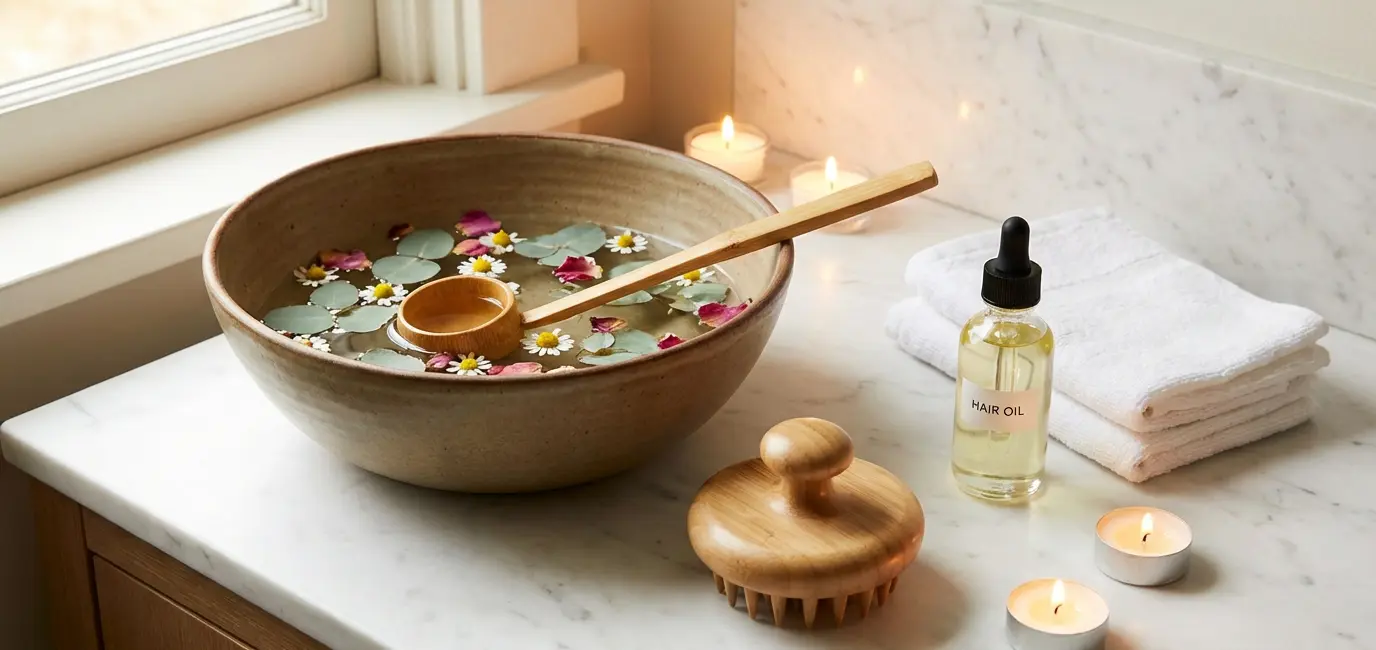
What Is the Japanese Head Spa (And Why Is Everyone Obsessed)?
A japanese head spa is a deeply relaxing scalp treatment rooted in Japanese beauty culture. Unlike a standard shampoo or conditioning treatment, a japanese head spa combines warm oil, precise scalp massage techniques, steam, and often a medicated or botanical cleanse to address scalp health at a cellular level. In Japan, head spa salons have been popular for decades — they are considered both a beauty treatment and a form of stress relief, much the way a massage or facial is viewed in Western wellness culture.
The trend exploded globally around 2023 when ASMR-style japanese head spa videos started racking up tens of millions of views. Watching someone’s scalp being massaged with warm oil while they visibly melt into the chair is — apparently — deeply soothing content. But beyond the viral videos, the actual benefits are real: improved scalp circulation, reduced dandruff, stronger hair growth, and a noticeable improvement in shine and softness. That is why the japanese head spa at home trend has legs. People are trying it and noticing actual results.
The key difference between a japanese head spa and a regular deep conditioning treatment is the scalp focus. Most of us apply products to our hair lengths and ends — a japanese head spa works from the root, treating the scalp as the foundation of hair health. Think of it as skincare for your scalp. When your scalp is healthy, everything that grows from it is healthier too.
“Your scalp is skin. Treat it with the same attention you give your face and watch what happens to your hair.”
The Products You Actually Need
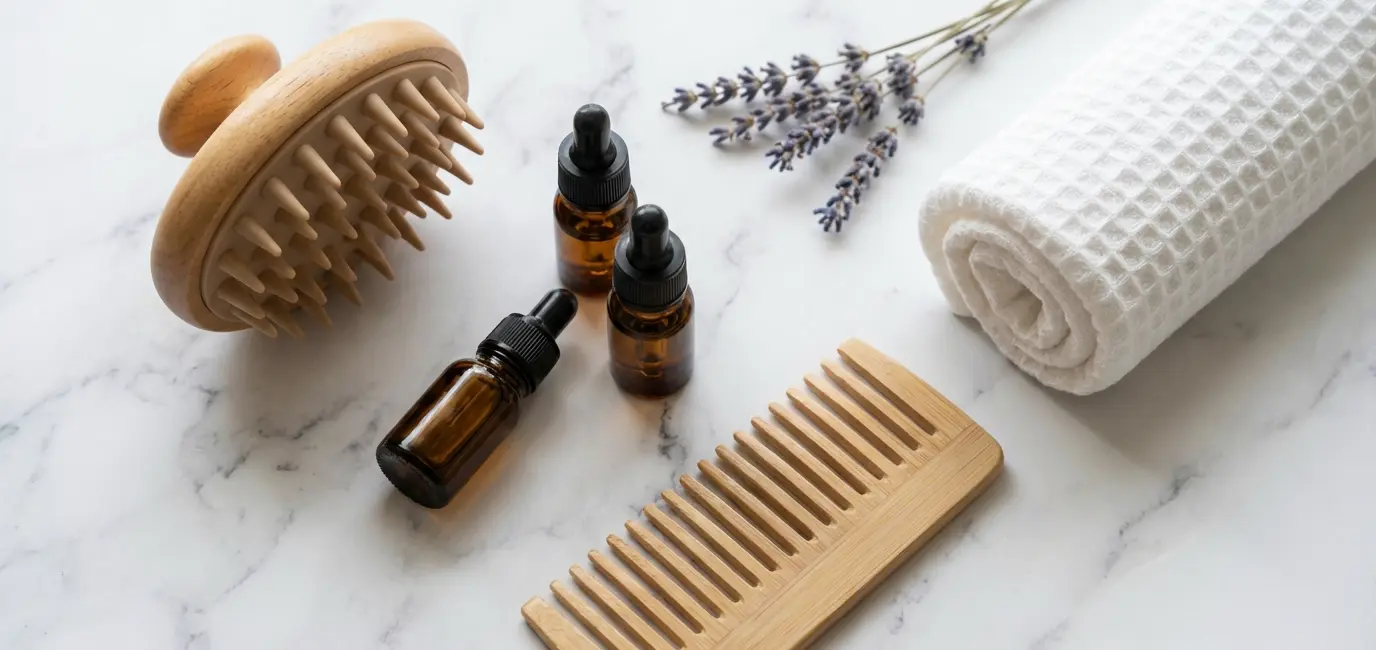
One of the best things about doing a japanese head spa at home is that you do not need an overwhelming number of products. The core lineup is simple and most of it is available on Amazon. Here is what I use and what I recommend starting with.
Scalp Massager or Shampoo Brush
This is the non-negotiable. A good scalp massager or shampoo brush does the heavy lifting of stimulating blood flow to the scalp, loosening buildup, and working oil or product deep into the roots. Look for one with soft silicone bristles — the cheap plastic ones can be too harsh. I use mine both with oil before washing and again during the shampoo phase to work up a foam. It makes a noticeable difference in how clean and refreshed the scalp feels.
A Nourishing Scalp or Hair Treatment Oil
Traditional japanese head spas use oils like camellia oil, argan oil, or proprietary scalp serums. For your japanese head spa at home, a lightweight hair treatment oil that suits your scalp type works beautifully. If you have a dry or flaky scalp, lean toward camellia or jojoba. If your scalp tends to be oily, a smaller amount of a lighter oil like grapeseed or a dedicated scalp serum is the better call.
A Deep Conditioning Hair Mask
After the scalp massage and oil treatment, the lengths of your hair need attention too. A rich japanese hair mask or deep conditioning treatment applied from mid-lengths to ends completes the experience. Look for masks with rice water, keratin, or bond-building ingredients — these align most closely with what professional japanese head spa treatments actually use.
A Shower Cap or Warm Towel
Heat helps any oil or mask treatment penetrate the hair shaft and scalp more deeply. A shower cap worn over your oiled hair, or a warm towel wrapped around your head (microwave it for 30 seconds), adds the steam element that makes the japanese head spa experience feel genuinely luxurious and actually works better than product alone.
Optional: A Complete Japanese Head Spa Kit
If you want to start with everything in one place, a japanese head spa kit is a great entry point. Many kits come with a scalp brush, an oil, and a conditioning treatment — everything you need to do your first session without piecing it together yourself.
How to Do a Japanese Head Spa at Home Step by Step
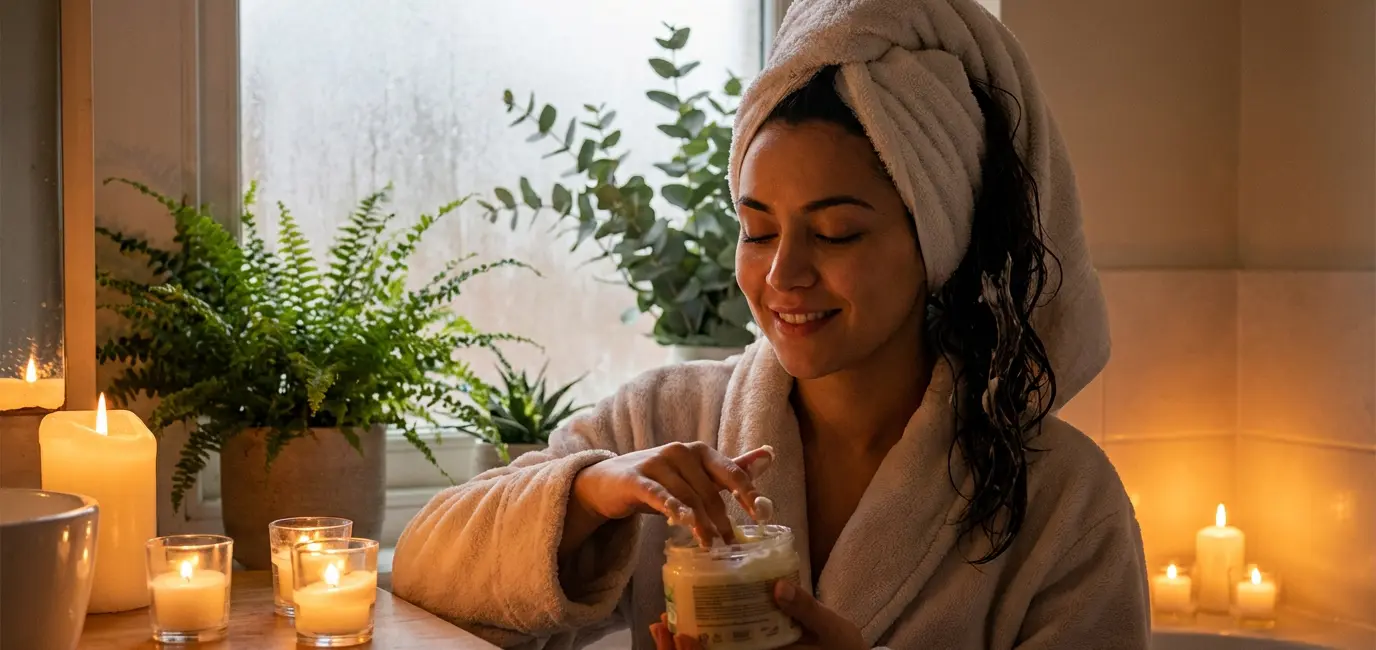
Here is the exact routine I follow for my japanese head spa at home. The whole thing takes about 45 minutes to an hour — I usually do it on a Sunday evening while listening to a playlist or a podcast. It feels like genuine self-care, not a chore.
- Step 1 — Dry brush your scalp. Before getting your hair wet, use your scalp massager on dry hair. Work in small circular motions from the front hairline back to the nape of the neck. This loosens any dry product buildup or flakes before you add any water or oil. Do this for about three to five minutes.
- Step 2 — Apply treatment oil to the scalp. Section your hair into four parts. Using your fingertips or a dropper, apply a small amount of your chosen hair treatment oil directly to the scalp along each part. Then use the scalp massager again in circular motions for a full five to ten minutes. This is the heart of the japanese head spa experience — take your time here.
- Step 3 — Apply hair mask to lengths and ends. While the oil is sitting on your scalp, apply your deep conditioning mask from mid-lengths to the ends of your hair. This gives everything equal treatment time and prevents your ends from being neglected.
- Step 4 — Apply heat. Put on a shower cap or wrap your head in a warm towel. Leave this on for at least fifteen to twenty minutes. This is your rest time — lie down, close your eyes, let the heat work.
- Step 5 — Double cleanse with shampoo. Rinse out the mask and then shampoo twice. The first shampoo removes the oil and product; the second gives you a clean, fresh scalp. Use the scalp massager again during the shampoo phase for an even deeper cleanse.
- Step 6 — Cool rinse and air dry. A final cool rinse seals the hair cuticle and adds shine — this is a traditional step in japanese head spa treatments. Then air dry or use a low-heat diffuser for the healthiest finish.
The Scalp Massage Technique That Changes Everything
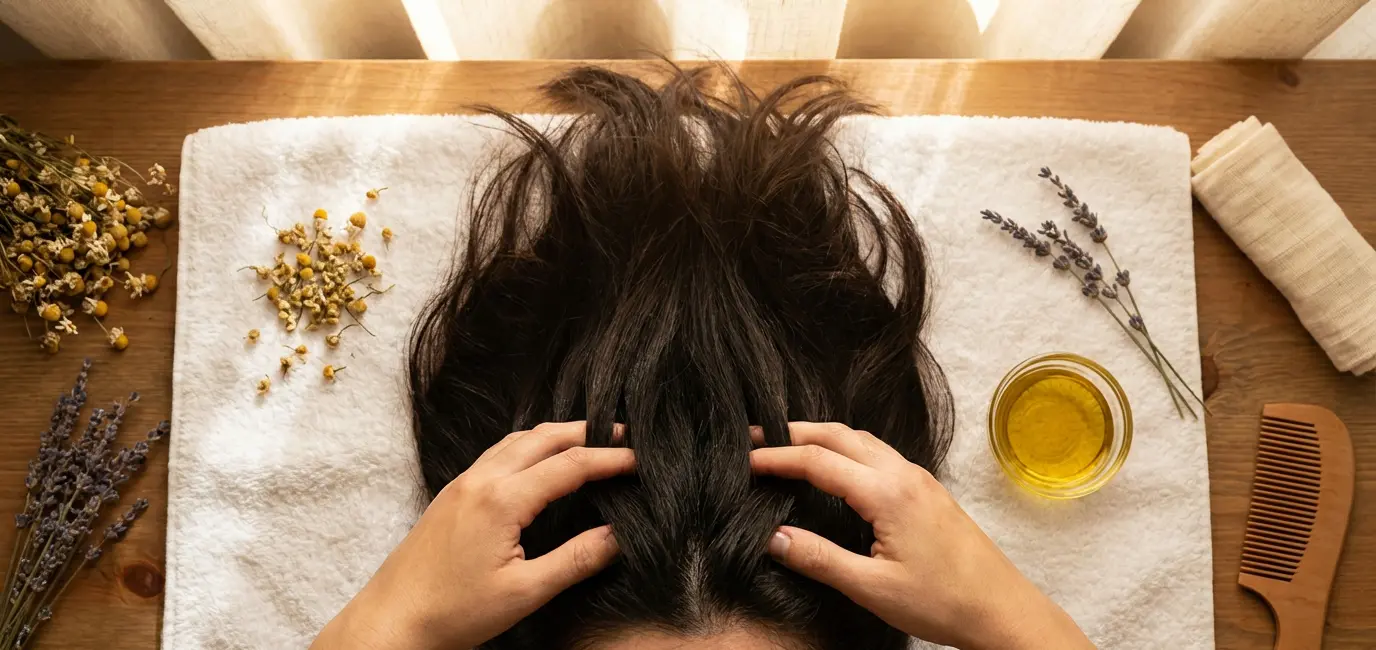
You can do a japanese head spa at home with great products and still miss most of the benefit if you rush through the scalp massage. The technique is what separates a professional result from a basic wash. Here is what actually matters.
Use Pressure, Not Speed
Move slowly and press firmly — you should feel your scalp moving slightly against your skull, not just your fingertips sliding along the surface. That slight skin movement is what stimulates blood circulation and loosens buildup. Fast, frantic rubbing does almost nothing.
Work in Zones
Divide your head into five zones: the front hairline, the crown, the sides (left and right temples), and the nape. Spend about two minutes in each zone rather than working randomly. Most people neglect the nape and temples, which are often where tension lives — if you have ever had a headache that starts at the back of your neck, you know the area.
The Pinching Technique
Japanese head spa professionals often use a gentle pinching motion — lifting small sections of scalp between the fingertips and releasing them slowly. This feels almost otherworldly when done correctly and dramatically increases circulation. It looks odd if you watch yourself in the mirror but feels incredible. Add a few minutes of this after your circular massage work.
Don’t Forget the Neck and Shoulders
Real japanese head spa treatments always include neck and shoulder work because scalp tension and neck tension feed each other. Spend a minute or two pressing into the base of your skull and the tops of your shoulders before you rinse. Your whole body will thank you.
“I used to rush through every hair wash. After my first proper japanese head spa at home, I stopped — the difference in how I felt afterwards was impossible to ignore.”
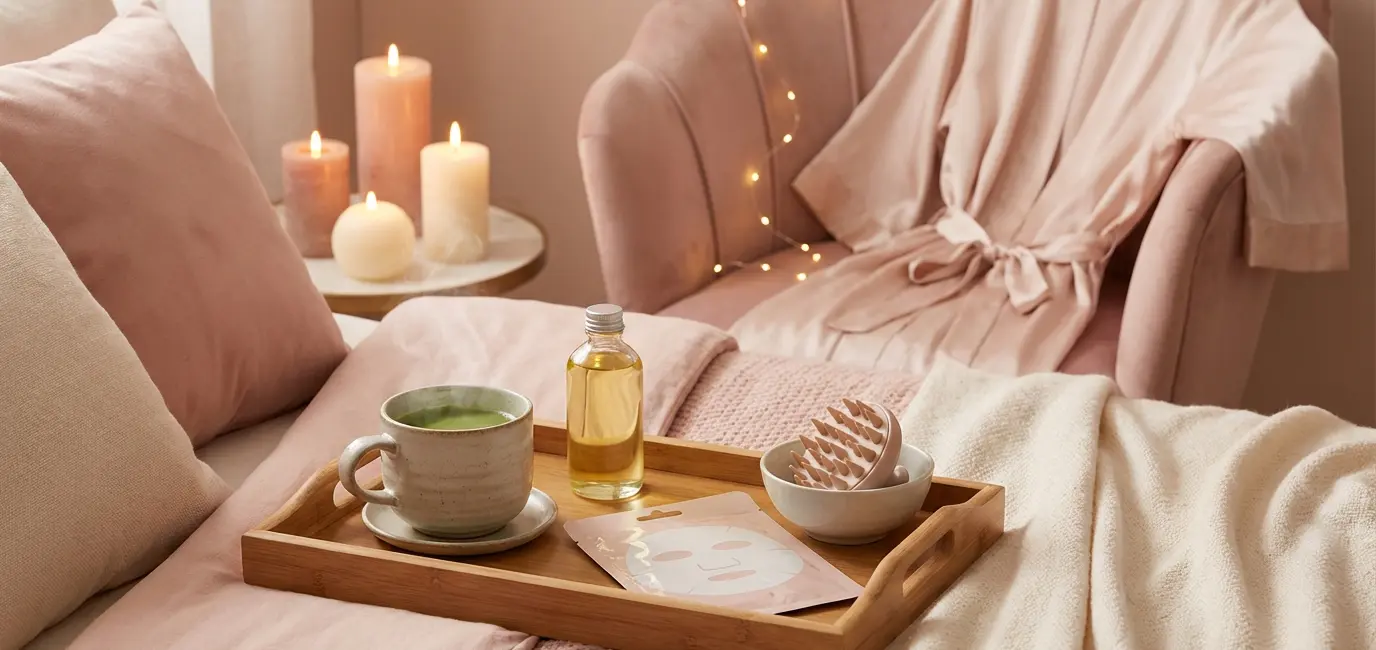
How to Set the Mood for Your At-Home Head Spa
Half of the magic of a japanese head spa is the environment. A professional head spa feels like a sanctuary precisely because everything is designed to pull you away from the noise of daily life. You can create that at home without spending a fortune.
Start with lighting. Candles or a dimmer switch transform a bathroom from a functional room into something that feels genuinely calm. A few pillar candles on a tray or a set of tea lights on the windowsill is all you need. I pair mine with a good candle — if you are looking for recommendations, I wrote a whole guide to the best scented candles for the home that covers the specific scents that work best for relaxation.
Music or ASMR audio makes an enormous difference. A low-volume playlist of ambient sounds — rain, Japanese koto music, or just a good binaural beats track — reinforces the sensory slowdown. Many people who do japanese head spas at home use the ASMR head spa videos on YouTube as background audio even when they are doing their own treatment.
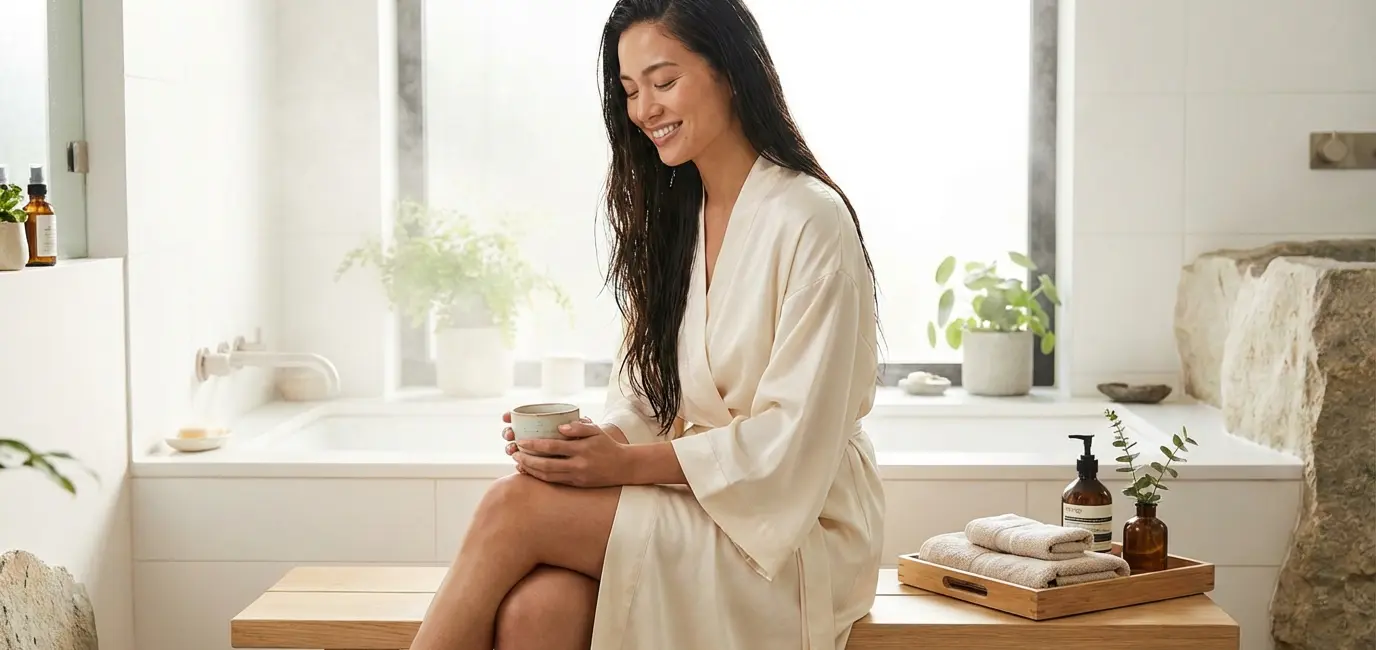
Wear something comfortable and indulgent during the treatment. A silk or bamboo robe from Lunya is genuinely worth it for moments like this — the texture against your skin while your scalp treatment is working is a small luxury that makes the whole experience feel more intentional. If you want to build out a full self-care evening, I love pairing the japanese head spa with the ideas in my evening routine for better sleep guide — they complement each other perfectly.
Consider gifting a japanese head spa experience to someone who needs a reset. A curated self-care gift box from BoxFox can include all the essentials — a scalp massager, hair oils, a mask — wrapped beautifully and ready to give. It is one of those gifts that is genuinely useful and feels thoughtful rather than generic.
While the treatment is working, I often pour myself a glass of wine and read something that has nothing to do with work. It sounds almost absurdly luxurious but honestly, a sunday afternoon japanese head spa at home followed by a slow evening is one of my favorite rituals. If you are planning a proper self-care evening around it, the ideas in my spa day at home guide and my notes on a really good girls night in both pair well.
If you enjoyed this guide, you might also love my take on a morning routine for women that actually works, my guide to the old money aesthetic at home, and my list of gifts for wine lovers for the next time someone in your life needs a truly good present.
Frequently Asked Questions
How often should I do a japanese head spa at home?
Once a week is ideal for most hair types. If your scalp is very dry or you have significant buildup, you could do it twice a week for the first month and then scale back to weekly maintenance. If your scalp tends to be oily, once every ten to fourteen days may work better.
Do I need special japanese head spa products or can I use what I already have?
You can absolutely start with what you have. Any light oil (argan, jojoba, coconut), a deep conditioning mask, and something to use as a scalp massager will give you a meaningful result. The specialized japanese head spa products are nice but not required to get the core benefits from the technique.
How long should I leave the oil on during a japanese head spa at home?
At minimum fifteen minutes, ideally twenty to thirty. The longer the oil sits under heat, the deeper it can penetrate the scalp and hair shaft. Some people do overnight oil treatments on their scalp and wash it out in the morning — this is an advanced version that delivers even more intense results.
Will a japanese head spa make my hair greasy?
Not if you double cleanse properly. The key is two rounds of shampoo after the treatment. The first shampoo emulsifies and lifts the oil; the second gives you a genuinely clean scalp. Skipping the second shampoo is the most common reason people end up with heavy-feeling hair after an oil treatment.
Can I do a japanese head spa at home if I have color-treated hair?
Yes. The scalp massage and treatment process is color-safe as long as you choose oil and mask products that are labeled safe for color-treated hair. The technique itself — massage, heat, cleanse — will not affect your color. In fact, a nourished scalp and well-conditioned hair holds color better and longer.
What is the difference between a japanese head spa and a regular scalp massage?
A regular scalp massage is typically dry or done with a small amount of oil and is primarily about relaxation or circulation. A japanese head spa is a full treatment protocol — oil application, heat, mask, double cleanse — that addresses scalp health, hair health, and relaxation together. It takes longer and delivers more measurable results for hair quality.
How much does a professional japanese head spa cost compared to doing it at home?
Professional japanese head spa sessions typically run between $80 and $200 depending on the salon and location. Doing a japanese head spa at home, once you have the products, costs roughly $5 to $10 per session. The experience is different — a professional session is more immersive — but the results from a well-done at-home version are genuinely comparable.
The japanese head spa at home trend caught on because it works — and because it fills a real gap in how most of us take care of ourselves. We invest in face serums and body oils and evening routines, but we tend to treat our scalp as an afterthought. Changing that one habit, even just once a week, creates a noticeable shift in hair health and a genuine reset for the nervous system. Set aside an hour. Gather your products. Make it a ritual rather than a task. Your hair — and honestly, your whole mood — will be different on the other side.