This post may contains affiliate links. Read our full disclosure here.
I’ll be honest with you: my first attempt at a home bar on a budget involved a floating shelf, a bottle of midrange gin, and exactly two mismatched glasses. It didn’t exactly look like something out of a design magazine. But a few years and some hard-won lessons later, I’ve figured out the system that actually works — what to buy first, what to skip, how to organize it, and most importantly, how to make the whole thing look intentional and beautiful without spending more than you have to. Whether you’re working with a corner of your living room, a spare shelf in the dining room, or an actual dedicated bar cabinet, this guide will walk you through exactly how to set up a home bar on a budget that looks put-together, functions well, and makes hosting feel genuinely effortless.
What You Actually Need for a Home Bar on a Budget (and What You Don’t)
The first thing I want to say about building a home bar on a budget is that the internet will try to convince you that you need approximately 47 different tools, 12 spirits, 6 types of bitters, and a vintage shaker set to have a functional home bar. You don’t. I’ve hosted everything from casual weeknight wine nights to full dinner parties out of a setup that started with under $100 in equipment, and it served us beautifully. The key is knowing what actually matters versus what’s aspirational noise.
The Short List: What You Actually Need
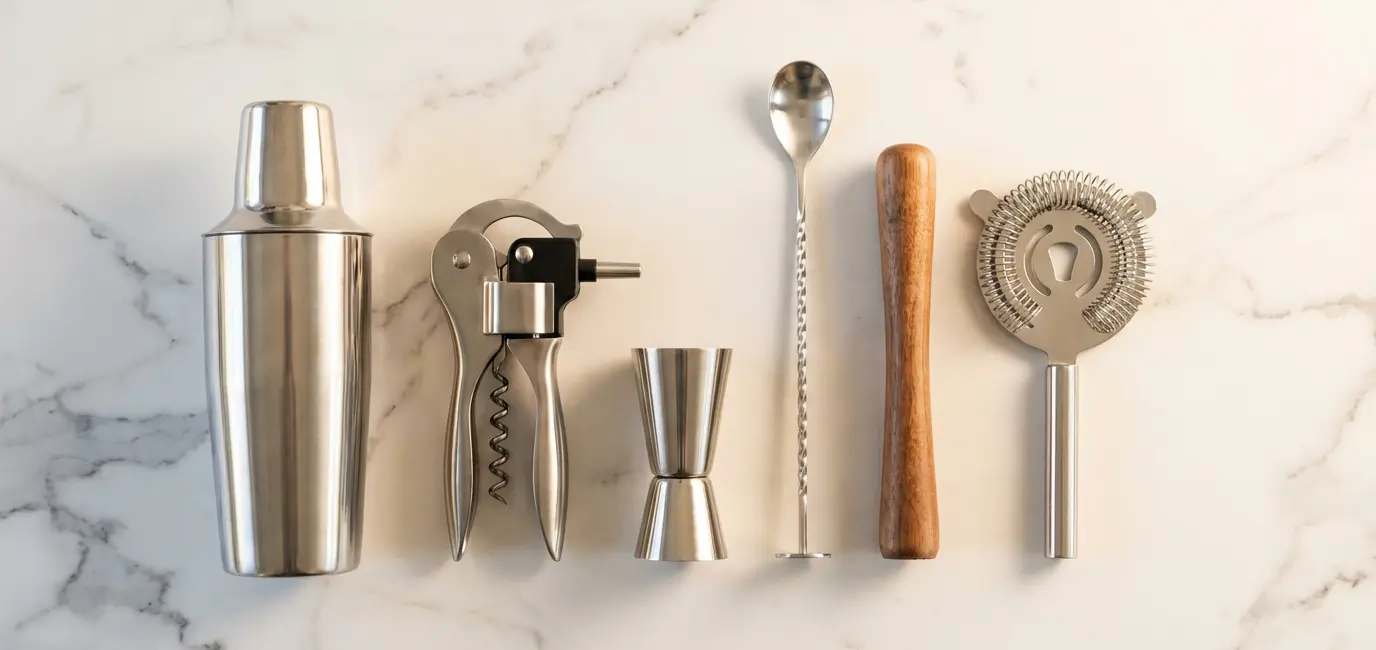
- A cocktail shaker — a basic cobbler shaker (the three-piece set with a built-in strainer) is around $15–25 and covers 90% of everything you’ll make. You don’t need a Boston shaker set to start. Get the cobbler, learn it, upgrade later if you want.
- A wine opener — if you’re anything like me, wine is the heart of the home bar. A good lever-style wine opener ($15–20) is fast, reliable, and removes the faff of foil-cutting and cork-wrestling that slower openers create.
- A jigger — these are $8–12 and non-negotiable if you want your cocktails to actually taste right. Eyeballing spirits is how you make expensive and inconsistent drinks.
- A bar spoon — for stirring, layering, and the occasional garnish adjustment. Usually under $10 and it looks beautiful in a glass container on your bar.
- A citrus juicer — a simple handheld press for $10–15 transforms your cocktails. Fresh juice is the single biggest quality upgrade you can make without changing a single bottle.
- A cutting board and knife — for citrus, herbs, and garnishes. You probably already have these in your kitchen.
What You Can Skip (For Now)
- Muddler — a wooden spoon handle works fine until you’re making mojitos regularly
- Hawthorne strainer — your cobbler shaker’s built-in strainer is enough to start
- Bitters collection — Angostura covers most needs; specialized bitters can wait
- Ice molds — regular ice cubes work. Large format cubes are beautiful but not essential
- Cocktail picks, garnish containers, separate rinse glass — all lovely, none required
A starter bar tools set on Amazon typically runs $20–35 and includes everything in that first list in a neat bundle. I started with one of these and used it for two full years before upgrading individual pieces. It’s genuinely the most cost-effective way to begin a home bar on a budget.
“The best home bar isn’t the one with the most equipment. It’s the one you actually use.”
The Best Bar Furniture and Carts on a Budget
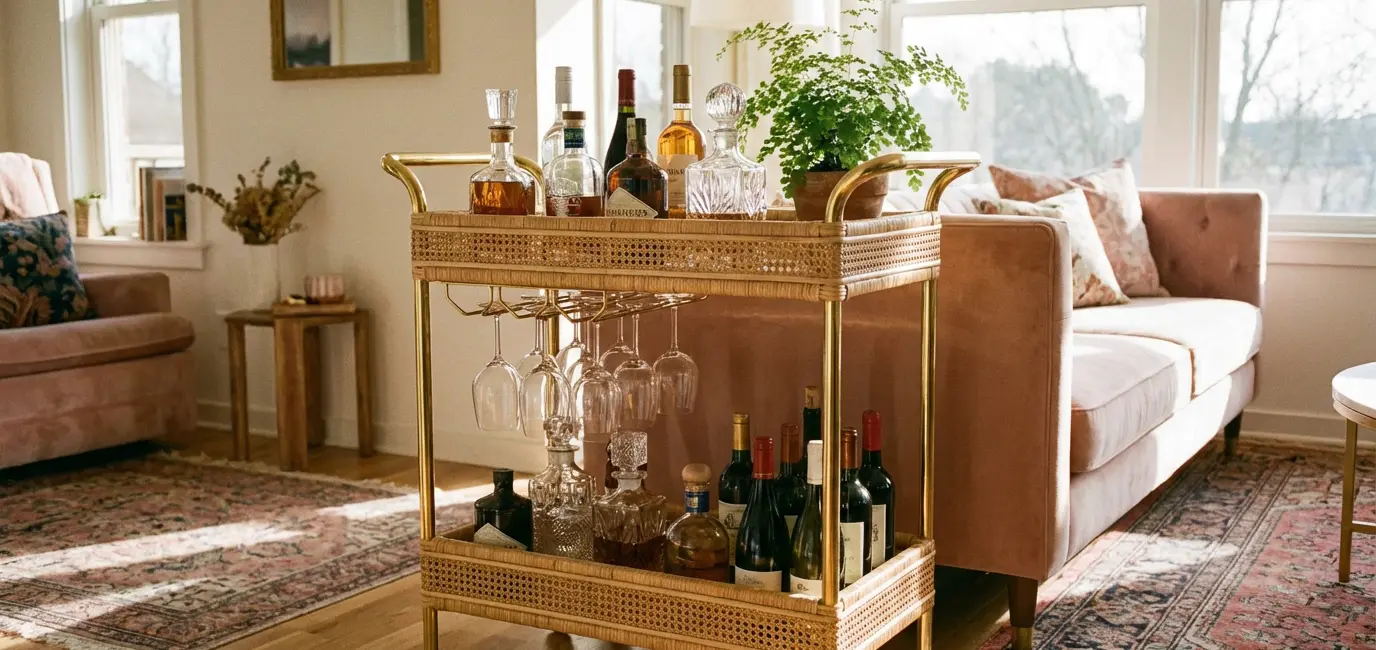
The piece of furniture that holds your bar setup matters more than people give it credit for — not because it needs to be expensive, but because the right format makes everything more functional and more visually cohesive. A home bar on a budget works best when the storage is actually working for you: bottles within reach, glassware accessible, tools visible without being cluttered.
Bar Carts: The Most Versatile Budget Option
A bar cart is still the most practical and stylish home bar on a budget option for most homes. They’re mobile (huge for small spaces or renters), they look intentional from across the room, and the price range is excellent — you can find genuinely beautiful rattan, gold-tone, or industrial-style bar carts for $60–$150. Amazon has a solid selection of bar carts in the $80–$130 range that consistently get high marks for stability and style. The gold bar cart trend in particular has stuck around because it reads warm and expensive at a fraction of the price.
Open Shelving: The DIY-Friendly Alternative
If you don’t want a dedicated cart, a floating shelf or open shelving unit transforms almost any wall into a home bar. I used a simple set of two floating shelves from a home store — total cost around $40 — styled with a small tray to corral bottles, a few glasses, and some greenery for texture. It looked completely intentional and fit perfectly in our dining room corner. For dining room inspiration that incorporates a home bar setup, these dining room decor ideas cover how to blend functional storage with the kind of aspirational aesthetic that actually works in real homes.
Bar Cabinets: Worth It If You Have the Space
If you have the floor space and want something that can be closed up when not in use, a small bar cabinet ($120–$250 range) gives you the organizational capacity of a proper bar with the aesthetic of a piece of furniture. Look for anything with a pull-down or fold-out serving surface — that detail alone elevates the feel considerably. The key to keeping this option in the home bar on a budget category is buying during seasonal sales (Labor Day, Black Friday, end-of-year clearance) rather than full price.
Glassware for a Home Bar on a Budget: What to Buy First
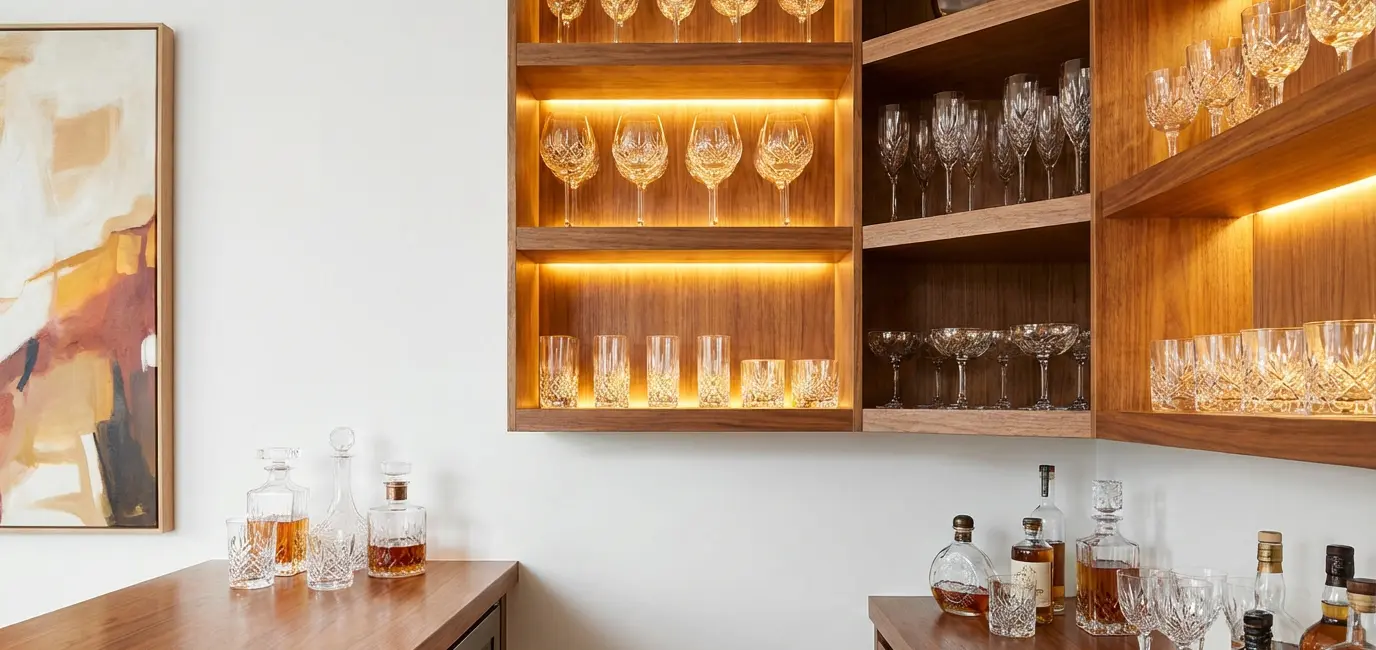
Glassware is the element of a home bar on a budget that most people either overspend on (buying 10 different specialized glasses before they’ve used any of them) or underspend on (using whatever mismatched glasses are already in the cabinet). The right approach is somewhere in the middle: a few good, versatile pieces that cover most occasions, bought thoughtfully.
Start With These Four Types
- Wine glasses (set of 4–6) — a good tulip-shaped universal wine glass works for both red and white, which keeps your investment lower and your storage simpler. A set of 4 from a reputable brand (Libbey, Schott Zwiesel, or similar) runs $20–40 and will outlast cheaper alternatives. These are the workhorses of the home bar for anyone who serves wine regularly.
- Highball glasses (set of 4) — for anything with a mixer: gin and tonic, vodka soda, a simple whiskey ginger. Versatile enough to double as water glasses. $15–25 for a decent set.
- Rocks glasses / lowball (set of 4) — for spirits served neat or on the rocks, Old Fashioneds, Negronis. Also work as elegant vessels for non-alcoholic options. $15–25 for a set.
- Coupe or Nick and Nora glasses (set of 4) — the one “specialty” glass worth buying early. They make every cocktail look intentional and are ideal for anything shaken and served up (Manhattans, martinis, French 75s). A set of 4 runs $20–35.
A set of cocktail glasses on Amazon in the $25–40 range gives you the highball + rocks combination in a matching set, which immediately makes your bar look more put-together than a mix of different styles. Once you have these four types covered, you have the foundation to serve 95% of what any guest would order at a well-stocked home bar on a budget.
A Note on Wine Glass Quality
If you love wine (and if you’re reading this site, I’m going to assume you do), wine glasses are worth a small upgrade even in a budget bar setup. A proper wine glass with a thin rim and a narrower bowl concentrates the aroma and directs the wine to the right place on your palate — it makes a real difference. For more on how glassware affects the wine experience, the guide to hosting a wine tasting at home covers this in depth, including specific glass recommendations at different price points.
How to Stock Your Home Bar Without Spending a Fortune
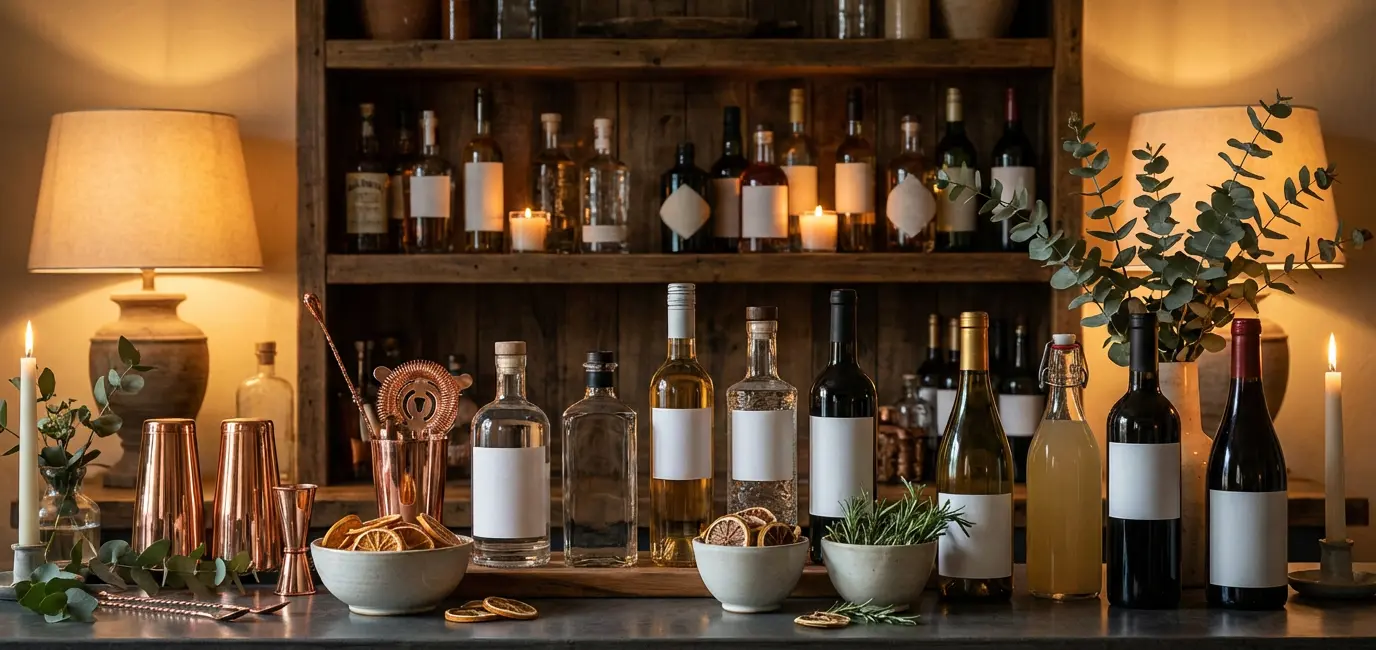
Stocking a home bar on a budget is where most people make the mistake of trying to have everything at once. The better approach is what I think of as the “expandable core”: a small set of high-utility bottles that cover a wide range of cocktails and preferences, which you can add to over time rather than acquiring all at once.
The Core Four Spirits for a Budget Home Bar
- Vodka — the most versatile base spirit in a home bar. Pairs with almost every mixer, used in the widest range of cocktails, and the most reliably crowd-pleasing choice for guests who aren’t sure what they want. Budget buy: Tito’s, Smirnoff, or whatever your local store has on sale. You don’t need Grey Goose for mixed drinks.
- Gin — the second essential for a well-rounded home bar on a budget. Covers gin and tonics, negronis, martinis, and a dozen other cocktail staples. Tanqueray and Beefeater are reliable mid-range options that over-deliver for their price.
- Bourbon or Rye Whiskey — for Old Fashioneds, Manhattans, whiskey gingers, and straight sipping. Evan Williams, Elijah Craig Small Batch, or Bulleit give you serious quality at the $20–30 range.
- Rum (white and/or dark) — white rum for mojitos, daiquiris, and tropical cocktails; dark rum for richer drinks and punches. Bacardi white and Mount Gay dark are reliable budget choices.
Wine: The Heart of a Home Bar for Wine Lovers
For a home bar on a budget that leans wine-first (which is very much my setup), I keep 2–3 bottles ready at any time: a Chardonnay or white Burgundy for lighter nights, a versatile red (a good Malbec or Italian Sangiovese covers most dinner pairings), and a bottle of Prosecco or affordable Champagne for spontaneous celebration moments. Wine.com is my go-to for stocking up — they have great pricing on everyday bottles and regular promotions. For storing your wine collection properly once you’ve built it up, this guide on how to store wine at home covers temperature, position, and light exposure in detail. And if you want to do something genuinely fun with your home bar, a wine and cheese pairing spread is one of the most crowd-pleasing things you can do with minimal effort.
Mixers, Garnishes, and the Pantry Bar
- Tonic water and club soda — the non-negotiables. Individual cans keep better than large bottles.
- Simple syrup — make your own (equal parts sugar and water, heated until dissolved, stored in a jar in the fridge). It’s free if you have sugar.
- Fresh citrus — lemons and limes, always. Nothing transforms a cocktail like fresh juice.
- Bitters (Angostura) — one bottle is all you need to start. It lasts forever and shows up in a surprising number of recipes.
- Soda water and a sweet mixer — cranberry juice or ginger beer covers most non-spirit-specific requests.
One of the most overlooked parts of a home bar setup is having something for non-drinkers or light drinkers. A simple sparkling mocktail station — flavored sparkling water, fresh citrus, a few garnishes — costs almost nothing and means every guest feels genuinely catered to. The same mindset applies when you’re planning food to go with the bar: a great pasta dish pairs beautifully with a simple wine offering and almost zero extra effort.
How to Style Your Home Bar So It Looks Like It Cost More
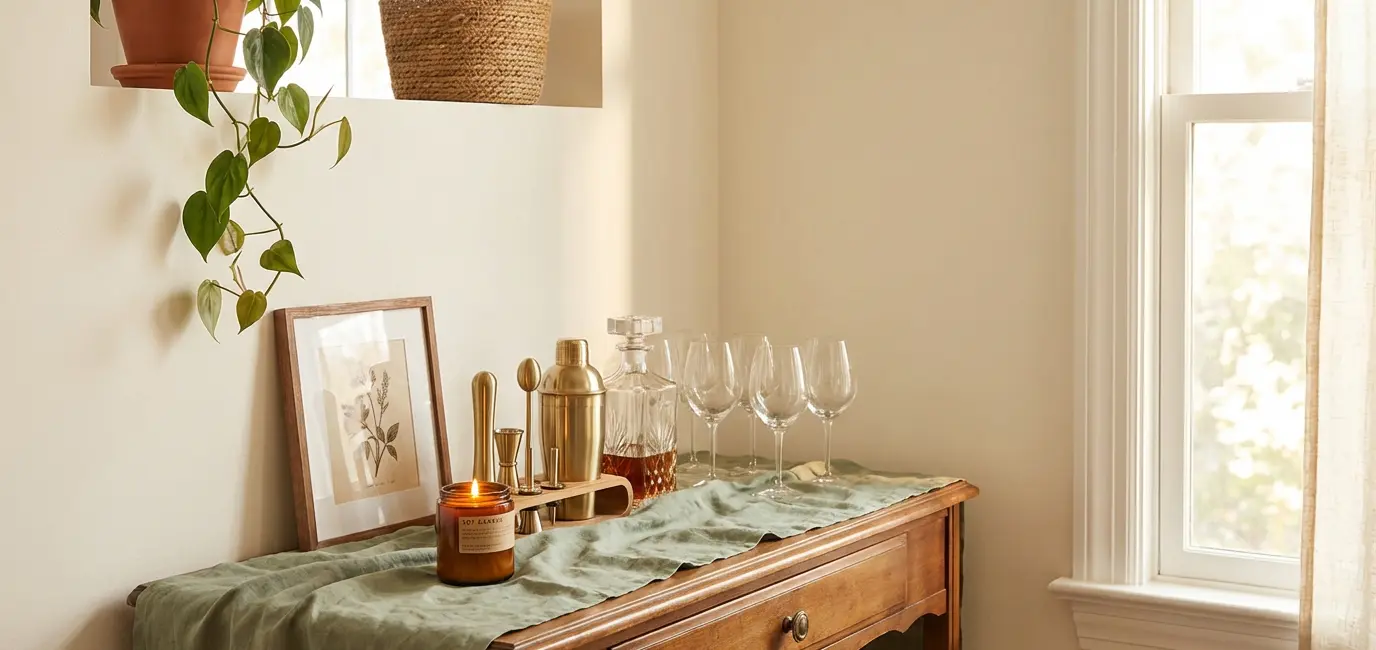
This is honestly my favorite part — because styling a home bar on a budget to look intentional and elevated is genuinely one of the most satisfying styling projects in the home. The key is restraint, texture, and layering — the same principles that work for any well-styled shelf or surface.
The Styling Formula That Works Every Time
- Group bottles by height — tallest at the back, shorter items toward the front. This simple step makes any collection look curated rather than random.
- Add something living — a small plant, fresh herbs (rosemary works beautifully and doubles as a cocktail garnish), or a simple flower stem in a bud vase. Organic texture makes the whole setup feel alive.
- Include a tray — a small marble, rattan, or lacquered tray corrals your everyday tools (jigger, bar spoon, opener) and creates a visual anchor point. A $15–25 tray from a home goods store is one of the highest-value styling purchases you can make for a home bar on a budget.
- Layer in a textile — a linen bar runner or cocktail napkins in a coordinated color immediately elevates the whole thing. This is where I always link my own shop: the winefulliving Spoonflower collection has bar decor fabric and table runners with wine, botanical, and farmhouse patterns — if you want a bar runner that actually matches your aesthetic rather than a generic option from a big box store.
- One piece of art or a framed print — a small print propped on the shelf behind the bar, or a single framed piece on the wall above it, gives the setup a finished, intentional feel that no amount of organizing can replicate by itself.
- Strategic lighting — a small LED puck light inside a cabinet, a candle, or a plug-in wall sconce nearby makes everything look 10x more atmospheric in the evening. Lighting is the most underrated element in home bar styling.
For more decor inspiration that works beautifully alongside a home bar setup, moody home decor ideas cover how to lean into a rich, atmospheric aesthetic that makes a home bar feel genuinely special. And if you’re setting up a seasonal or event-specific bar — like a cocktail station for a spring gathering — Kentucky Derby 2026 party ideas has a full bar setup section that applies these same principles to a themed event context. For a specialized seasonal spin, how to set up a mint julep bar is a fun read if you’re planning a Derby party or just want to lean into that classic Southern entertaining moment.
The goal with a home bar on a budget is to style it the way you’d style any other focal point in the room: with intention, a clear aesthetic direction, and a few genuinely beautiful pieces rather than a lot of middling ones. The evening routines that follow a well-styled home bar — a quiet glass of wine, a cocktail with a friend, a moment of intentional winding down — are exactly the kind of moments I describe in the evening routine guide. There’s something about a well-set bar that makes the ritual of the evening drink feel genuinely special rather than just habitual.
FAQ
How much does it cost to set up a home bar on a budget?
You can set up a functional home bar on a budget for $100-200 for a first-phase setup: $20-35 for a starter bar tools kit, $40-80 for your first spirits, $20-40 for a basic glassware set, and $0-30 for a styling tray or bar runner. The furniture (cart or shelving) is the variable — bar carts run $60-150, floating shelves are $20-50. Total realistic first setup: $150-300. Most people then add to it gradually over months rather than spending it all at once.
What is the best bar cart for a small space budget?
For a small space home bar on a budget, a two-tier bar cart in the $80-130 range is ideal. Look for carts with a lower shelf that can hold bottles and a top tier with a glass rack or rim that keeps stemware secure. Gold-tone and rattan options are particularly versatile for most home aesthetics. Amazon and Target have the widest range in this price bracket.
What spirits should I buy first for a home bar?
Start with vodka and one other spirit that matches what you actually drink. If you love wine-based cocktails, add a bottle of dry vermouth (for spritzes and martinis). If you prefer spirit-forward drinks, add bourbon or gin as your second bottle. The most important thing is buying what you’ll actually use rather than stocking every category at once. A home bar on a budget works best when it starts small and grows with your hosting habits.
How do I make a home bar look expensive on a budget?
Three things make the biggest difference: (1) A matching set of glassware, even a simple one, looks infinitely more pulled-together than a mix of random glasses. (2) A tray to corral your tools and bottles creates a visual anchor that reads as intentional. (3) One textile — a bar runner or set of cocktail napkins in a coordinated color — gives the whole setup a finished look. None of these need to cost more than $30.
Do I need a bar cart or can I use a shelf?
Either works perfectly for a home bar on a budget. Bar carts are better if you want to move your setup around, have limited dedicated wall space, or want something that reads as a dedicated piece of furniture. Open shelving is better if you want a more integrated look, have wall space to use, or prefer a setup that can disappear into the background when not in use. Both can look equally polished at similar price points.
What wine should I keep stocked in a home bar?
For a home bar on a budget, I recommend keeping 2-3 wine styles ready: one white (a Chardonnay or Sauvignon Blanc covers most preferences), one red (a Malbec or Pinot Noir that works across food pairings), and an occasional bottle of Prosecco or sparkling for celebrations. These three styles cover almost every occasion and allow you to offer meaningful choices without needing a dedicated wine rack.
Is a home bar on a budget worth it?
Absolutely. The initial investment in a functional home bar on a budget is typically recouped within a few gatherings compared to buying drinks out. But beyond the financial case, there’s the hosting confidence that comes from knowing you can offer a proper drink to any guest who walks through your door. That ease — the ability to make someone feel genuinely welcomed — is worth more than the price of the setup.
Building a home bar on a budget is one of the most satisfying home projects I’ve ever done, precisely because the results are so immediately visible and enjoyable. You don’t have to renovate a room, install anything permanent, or spend a lot to have a bar setup that makes your home feel genuinely hospitable. Start with the tools, add a few bottles, find a surface (a cart, a shelf, a corner of the dining room), and then style it like you’d style anything else you love — with intention and a few beautiful details. The rest builds naturally from there.