This post may contains affiliate links. Read our full disclosure here.
I have a theory about dining rooms: they’re either the most underutilized room in the house or the most magnetic one, and the difference is almost entirely decorating intention. The best dining room decor ideas don’t just make a space look pretty — they make the room feel like somewhere you actually want to linger, where dinner stretches into conversation that lasts another hour because no one wants to leave the table. If your dining room currently functions mostly as a place to set your mail, this guide is for you. And if it’s already a beautiful space, there’s almost certainly one layer here that will make it even better.
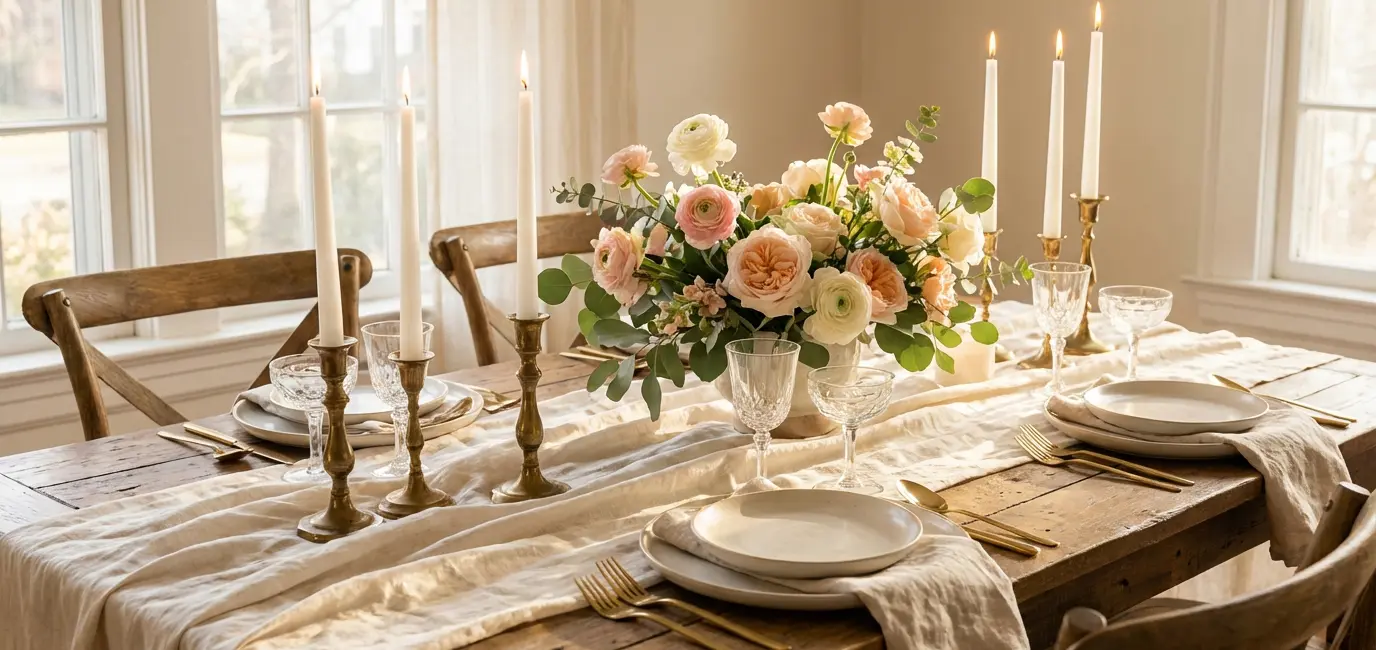
Start With the Table — It Anchors Everything
When thinking through dining room decor ideas, the table is the non-negotiable starting point. Everything else in the room — the lighting, the chairs, the art on the walls — exists in relationship to the table. Getting the table right means asking two questions before aesthetics: What size do you actually need, and what shape works for your space?
Size and scale: The most common mistake in dining rooms is a table that’s too small for the room. Designers generally recommend a minimum of 36 inches of clear walkway space around all sides of a dining table. If you have to squeeze past chairs sideways to get to the kitchen, the table is too big; if the room feels like it’s swallowing the table, it’s too small. A rough guideline: measure your room, subtract 6 feet from each dimension, and that’s your maximum table footprint.
Shape for the space: Round tables are brilliant for small dining rooms — they remove corners, improve flow, and make conversation feel more intimate since everyone is equidistant. Rectangular tables suit longer, narrower rooms and seat more people for the footprint. Oval tables are the compromise: the softness of a round table with the length of a rectangle. For open-plan spaces where the dining area connects to a living room, a round table anchors a zone without hard edges that interrupt the sight line.
Table styling as a decor layer: A beautiful table doesn’t need to be formally set to look good. Even on an average Tuesday, a simple centerpiece changes the room’s entire character: a ceramic bowl with seasonal fruit, a low arrangement of dried botanicals, a cluster of candles at different heights. The texture of the table surface matters too — raw wood, marble, painted lacquer, and linen-covered all create completely different room personalities. If you want to change the look seasonally without buying a new table, a quality linen tablecloth is one of the highest-ROI investments in dining room decor ideas. Linen tablecloths on Amazon come in a wide range of weights and colors — I’ve found the stonewashed and pre-washed versions feel most natural and less stiff right out of the package. I also design my own fabric and table linen patterns through my Spoonflower shop — if you want a truly custom look, browse the winefulliving collection for table runners and fabric by the yard that you can have made into napkins or a tablecloth in exactly the print you want.
Centerpiece principles: Keep centerpieces low enough that people can see each other across the table — a general rule is under 12 inches tall, or go very tall (think taper candles or tall branches) so sight lines pass underneath. The mid-height range (think a chunky vase at 18 inches) visually blocks the table. For a consistently beautiful table, I keep a rotation of three centerpiece options: one with flowers for occasions, one with candles for everyday evenings, and one dried or permanent arrangement that looks good without any upkeep.
Dining Room Lighting That Actually Sets the Mood
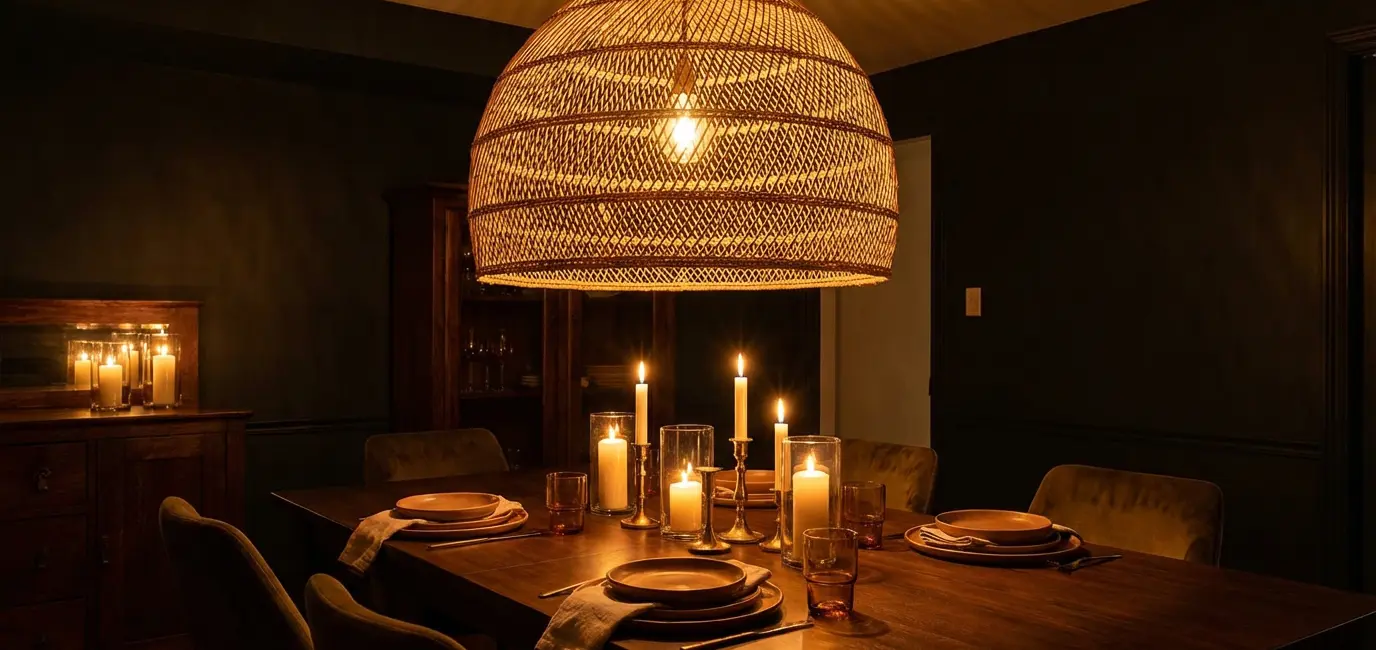
Lighting is the single biggest lever in dining room decor ideas, and it’s criminally underused in most homes. The overhead fixture that came with your house is almost certainly the wrong one — not because it’s ugly (though it might be) but because it’s probably a flat flush mount or basic ceiling fan that spreads light evenly and brightly, which is the opposite of what a dining room wants.
“A dining room doesn’t want to be bright. It wants to be warm. The difference between a beautiful, atmospheric dinner and a meal that feels like a break room is almost entirely the lighting.”
The pendant light: A pendant or chandelier hung directly above the dining table is the defining architectural element of most great dining rooms. The ideal hang height is 30–36 inches above the table surface — close enough to create an intimate pool of light over the table without obstructing views. For a standard 8-foot ceiling, this means the bottom of the fixture is roughly at 5.5–6 feet from the floor. For every additional foot of ceiling height, raise the fixture 3 inches.
Style matching: The pendant should feel like a natural continuation of the room’s design language. A woven rattan or linen shade works for organic, natural, and coastal-inspired dining rooms. A sculptural matte black or bronze metal fixture reads modern and sophisticated. A crystal or glass chandelier brings Old World glamour. What you’re avoiding is a fixture that’s fighting the room — a shiny chrome modern pendant in a rustic farmhouse dining room, for instance. Dining room pendant lights on Amazon have a strong range at every price point, and I’d always suggest buying the one that’s slightly larger than you think you need — oversized pendants almost always look better in photos and in person than the “safe” small option.
Dimmers are non-negotiable: If your dining room fixture is on a standard on/off switch, adding a dimmer is the single cheapest upgrade that makes the most difference. A $20–$30 dimmer switch changes the room from “utilitarian” to “atmospheric” in 20 minutes of installation. Pair it with warm (2700K) bulbs in the fixture — never daylight or cool white in a dining room.
Layered lighting: The best dining room decor ideas for lighting don’t stop at the overhead fixture. Candles on the table, a buffet lamp on a sideboard, wall sconces flanking a mirror — these secondary sources create depth and warmth that a single overhead fixture never can. On evenings when I want the dining room to feel especially beautiful, I dim the pendant to 30% and light the table candles, and the space transforms completely.
Wall Decor That Works in a Dining Room
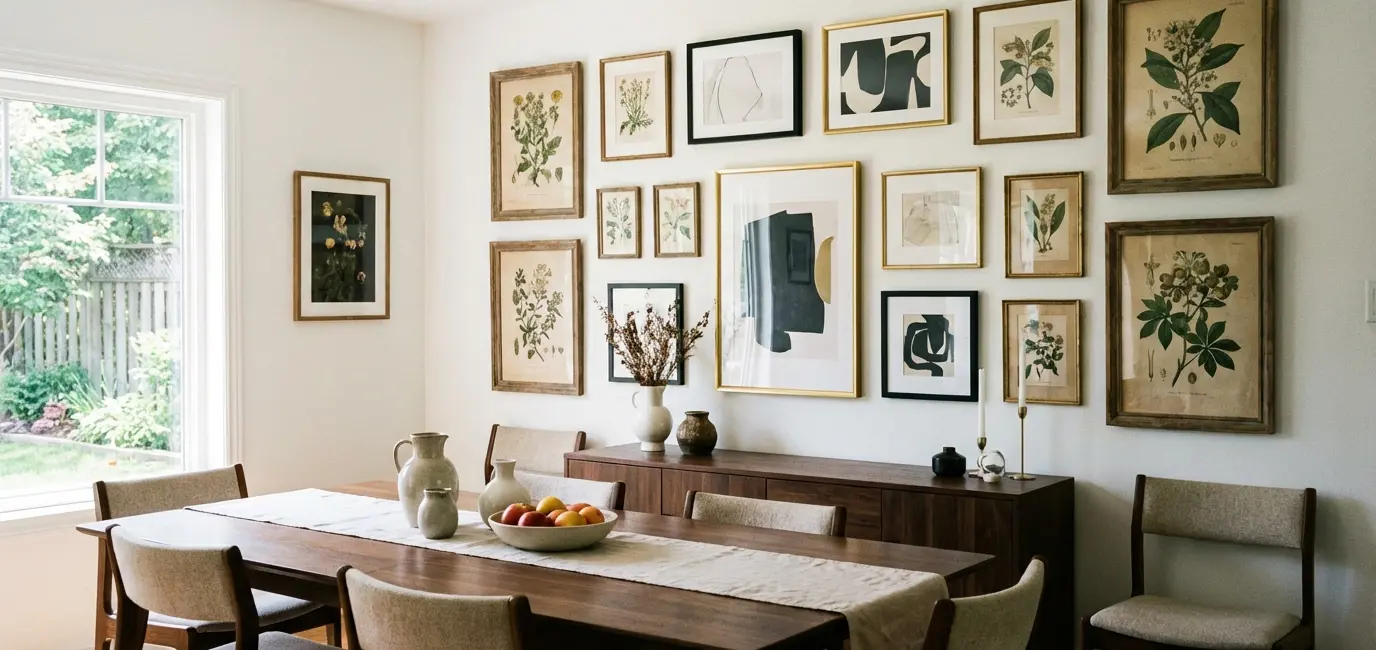
Wall decor in a dining room is one of those dining room decor ideas categories that people overthink in the wrong direction — either leaving walls completely bare (“I just haven’t found the right piece yet”) or filling them with whatever fits. The goal is something in between: intentional wall decor that reinforces the room’s character without competing with the visual complexity of the table and the people around it.
The focal wall: Most dining rooms benefit from a single strong visual moment on the wall that gets the most sight time — typically the wall you see when entering the room, or the one at the end of the table. A large-format single piece of art, a statement mirror, or a curated gallery wall all work here. What doesn’t work: too many competing focal points, or art that’s too small for the wall (the “postage stamp on a billboard” problem that makes even expensive art look cheap).
Art choices for dining rooms: Still life art — wine, food, botanicals, fruit — has a centuries-long tradition in dining spaces because it creates a visual echo of what’s happening at the table. Abstract art in warm earth tones or moody jewel tones works beautifully in more modern dining rooms. Landscape prints bring a sense of expansiveness to smaller rooms. The one guideline I’d follow: choose art that makes you feel calm or content, since you’ll be looking at it during every meal for years. Art.com has a dedicated dining room art section with filters by style, color, and medium — I’ve found their botanical and still life prints in particular to be excellent quality for the price, and they offer framing so it’s ready to hang when it arrives.
Gallery walls in dining rooms: A gallery wall works especially well in dining rooms if you follow two rules: give it a frame (meaning, keep the overall arrangement in a clear rectangle rather than spreading randomly), and give it a unifying element (consistent frame color or finish, a consistent mat color, or a consistent subject matter like all botanical or all black-and-white photography). Mixing frame styles and colors works only when done with extreme intention — otherwise it reads as “I hung things randomly on the wall,” which undermines the rest of your decor effort.
Mirrors: A large mirror in a dining room serves double duty — it creates a focal point like art does, AND it visually expands the space by reflecting light and depth. In a smaller dining room or one without much natural light, a well-placed mirror is often a better investment than any painting. Position it to reflect natural light from a window or the glow of the pendant light above the table for maximum effect. If you want to reference the Japandi aesthetic or a quiet luxury finish, check out Japandi living room ideas — many of those principles (minimal art, intentional negative space, natural materials) translate beautifully to dining room decor ideas.
Chairs, Sideboards, and Furniture That Pull It Together
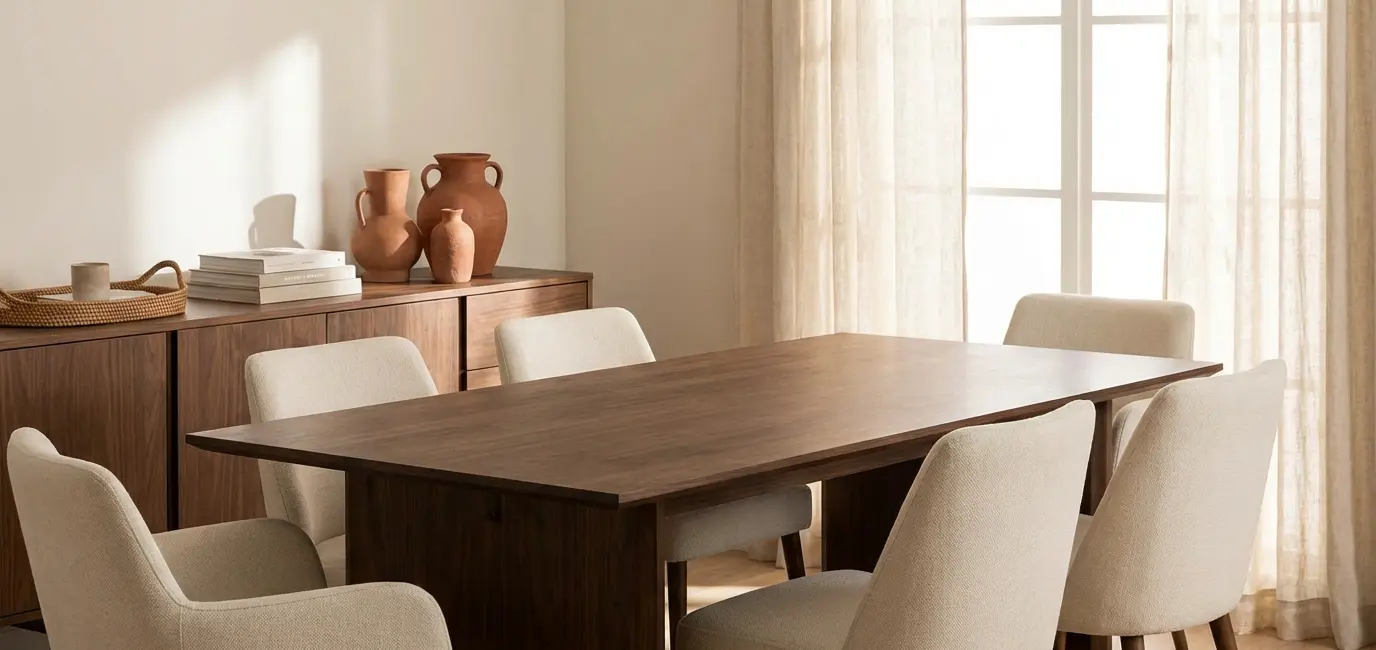
Beyond the table, two other furniture pieces define most great dining rooms: the chairs and a storage/display piece (typically a sideboard, credenza, or buffet). These are where dining room decor ideas often get interesting — mixing materials, playing with upholstery, and adding storage without losing style.
Dining chairs — the comfort and style balance: Dining chairs are sat in for long periods, so comfort matters more than it does for accent chairs. The best chairs for a dining room have a seat height of 17–19 inches (to work with a standard 30-inch table), enough seat depth to sit comfortably for an hour, and ideally some give in the seat. Upholstered seats and backs are the most comfortable; fully upholstered dining chairs feel genuinely luxurious and are worth the cleaning trade-off if you don’t have young children or pets. Wood seats look clean and minimal but get uncomfortable after about 45 minutes.
The mixing chairs approach: One of the most popular dining room decor ideas right now is mixing chair styles — typically matching chairs on the sides of the table with two slightly different “host” chairs at each end. This adds visual interest and a collected, intentional feel that all-matching chairs don’t have. The mixing rule: keep at least one element consistent (all chairs have natural wood legs, or all chairs share the same fabric color, or all chairs are the same material family). Random mixing without a connecting thread looks like mismatched rentals, not intentional design.
The sideboard: A sideboard against the wall opposite or perpendicular to the table is one of the most functional and beautiful additions to a dining room. It provides serving space for dinner parties (dishes, wine, serving platters), storage for linens and tableware, and a surface for a table lamp, art, or seasonal decor. Even in a smaller dining room, a shallow console table fulfills the same function. The sideboard’s top should be styled with intention: not cluttered, not bare. A lamp + a small stack of coffee table books + one organic object (a small plant, a sculptural vessel, a piece of art) is a reliable formula that reads immediately as composed and beautiful. Browse dining room decor on Amazon for sideboards, credenzas, and display accessories at a range of price points — the solid wood options especially tend to hold up well long-term.
Textiles, Color, and the Final Touches
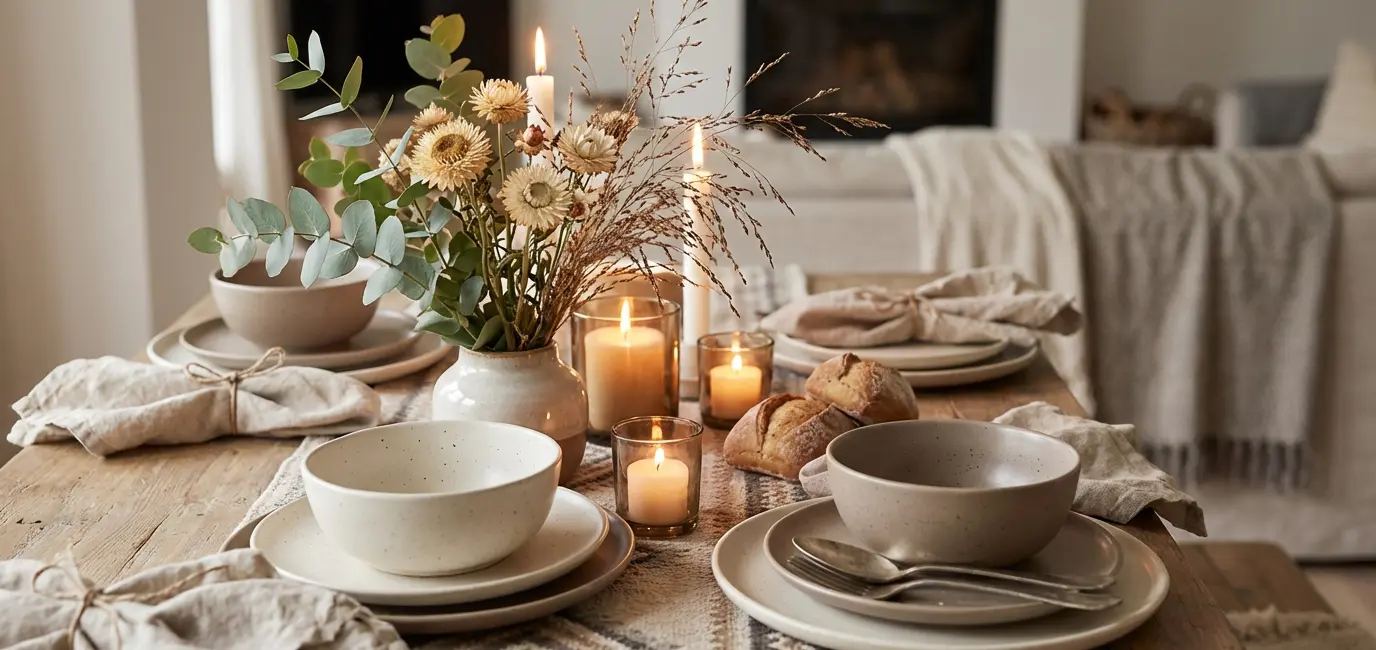
The final layer of dining room decor ideas is also the most changeable and lowest commitment: textiles, color, and the small finishing touches that make a room feel personally curated rather than decorated-by-catalog. This is also where you can shift a room’s season and character most easily without buying new furniture.
Table linens as a design tool: A linen tablecloth, a table runner, and cloth napkins are the textile trinity of a great dining room. They’re functional, they’re visually important, and they’re completely interchangeable with the seasons or your mood. I keep a rotation of three tablecloth colorways: a warm white/ivory for year-round use, a sage green for spring and summer, and a deep burgundy or rust for fall and winter. Cloth napkins are worth investing in over paper — they feel better at the table, look far more intentional, and after a few washes the linen ones develop a softness that paper will never match. I design fabric and table linen patterns through my own Spoonflower shop — if you want something truly unique that you won’t find in any home goods store, custom fabric by the yard means your table linens can be one-of-a-kind. The wine, botanical, and floral pattern collections are particularly suited to dining room settings.
Color strategy: Dining rooms handle dark and saturated colors better than almost any room in the house — you’re in there primarily in the evening, by warm light, and dark walls (forest green, deep navy, charcoal, dusty burgundy) create an intimacy that feels completely different from the same color used in a bedroom. If you’re nervous about committing to dark walls, paint a single accent wall behind the sideboard or behind the head of the table. The transformation is often dramatic enough that you’ll want to paint the whole room within a year.
Plants: A dining room with a living plant in it always feels more alive and hospitable than one without. You don’t need a lot — a single pothos or trailing vine in a ceramic pot on the sideboard, or a small herb arrangement on the window sill, adds organic texture that decor objects alone can’t replicate. Olive trees in large floor pots have become the statement plant of the moment for dining rooms — they work in everything from Mediterranean to modern to rustic spaces, and their silvery-grey leaves look beautiful against almost any wall color.
Rugs: A rug under the dining table grounds the space and adds warmth, but it has to be large enough — the most common rug mistake in dining rooms is a rug that’s too small, leaving the chairs off the rug when pulled out. The general rule: the rug should extend at least 24 inches past the table edge on all sides, so that chairs remain on the rug when occupied. For a 60-inch round table, that means an 8-foot or larger round rug. Flatweave or low-pile rugs are more practical for dining rooms than thick pile, since they’re easier to clean and don’t catch chair legs.
More Room-by-Room Decorating Guides
If these dining room decor ideas have you thinking about the rest of your home, here are the guides I’d read next. Spring tablescaping ideas goes deep on the table-setting layer of dining room design — great for occasions and entertaining. How to style a bar cart is the natural partner to dining room decorating — a bar cart in or near the dining room is both functional and one of the most beautiful decor objects in a home. How to make your home feel like a luxury hotel covers many of the same principles of atmospheric design applied to the whole home. For living room ideas that extend the same aesthetic across open-plan spaces, sage green living room ideas and Japandi living room ideas are both worth exploring. Quiet luxury home decor on a budget is the philosophy I’d recommend applying to the dining room if you’re working with a tight budget but want an elevated result — the core principle (fewer, better pieces with rich materials) works especially well in this room. And if you’re building toward a dining room that’s genuinely ready for entertaining, Easter tablescape ideas has some of my favorite practical styling tutorials that apply year-round, not just at Easter.
FAQ
How do I decorate a dining room on a budget?
Start with the changes that make the biggest visual impact for the least money: a new light fixture (or just a dimmer switch on your existing one), a linen tablecloth in a color you love, and one well-chosen piece of art. These three dining room decor ideas cost under $200 combined and transform the room more than expensive furniture. Thrift stores and estate sales are excellent for dining chairs — mismatched chairs that share a finish or a fabric color can look intentionally curated rather than budget-driven.
What are the current dining room decor trends for 2025 and 2026?
The dominant dining room decor ideas in 2025-2026 are: dark, saturated wall colors (especially forest green, navy, and deep terracotta), organic and natural materials (rattan, cane, raw wood, linen, ceramic), oversized statement pendant lights, mixed dining chair styles, and gallery walls over sideboards. The maximalist-natural hybrid — mixing lots of plants, interesting textures, and curated objects — continues to dominate aspirational dining rooms. The clinical all-white dining room has mostly given way to warmer, more layered aesthetics.
What color should I paint my dining room?
For dining rooms, darker and more saturated colors consistently outperform lighter ones because you’re primarily in the room at night, and warm light against a rich wall color is one of the most beautiful effects in interior design. Deep green (particularly olive and forest tones), navy, charcoal, and warm terracotta are all excellent dining room choices. If you want something lighter, a warm off-white with subtle yellow or peach undertones feels much more inviting than a stark cool white.
How do I style a sideboard or buffet in a dining room?
The reliable formula: anchor the sideboard with something vertical (a lamp, a tall vase, a piece of leaning art), add something horizontal (a low bowl, a stack of books, a tray), and include at least one organic or living element (a plant, a flower, a dried botanical). Leave some breathing room between objects — the arrangement should feel composed, not crowded. Seasonal styling (swapping objects for spring, fall, holidays) keeps the room feeling fresh without any structural changes.
What size pendant light do I need for my dining room?
For pendant sizing over a dining room table, the general rule is: add the room’s length and width in feet, and the result in inches gives you an approximate pendant diameter. For a 12×14 foot room, you’d look at a 26-inch pendant. For a table specifically, the pendant diameter should be roughly half to two-thirds the width of the table. When in doubt, go slightly larger — undersized pendants over dining tables are far more common and look more awkward than slightly oversized ones. Hang the bottom of the pendant 30–36 inches above the table surface.
Do I need a rug in a dining room?
A rug isn’t mandatory, but it does three things that are genuinely valuable: it defines the dining zone in an open-plan space, it adds warmth and softness that hard floors alone can’t provide, and it reduces chair noise (which matters more than you’d expect over years of daily use). If you use a rug, it must be large enough that chairs remain on it when pulled out to sit — the minimum rule is 24 inches of rug past the table edge on all sides. A rug that’s too small looks worse than no rug at all.
The dining room, when it’s done well, becomes one of the most loved rooms in a home precisely because it’s where the most human things happen: meals, celebrations, long conversations, the ordinary ritual of gathering. The best dining room decor ideas aren’t about following trends or spending a lot — they’re about creating an environment where people feel comfortable enough to relax and connected enough to stay. Start with the table, get the lighting right, and build the rest of the room slowly and intentionally. The result is worth every decision.