This post may contains affiliate links. Read our full disclosure here.
The best wine for beginners is one that tastes good right now, without requiring you to have studied viticulture or spent years developing a palate. I did not grow up around wine. The first glass I ever actually enjoyed was a Pinot Noir someone pressed into my hand at a dinner party, and I remember thinking: oh, so this is what all the fuss is about. If you are just starting out, you do not need a course, a guide to terroir, or an expensive bottle to have that moment. You just need to start with the right varieties — ones that are approachable, versatile, and genuinely enjoyable before your palate has a chance to evolve. This is exactly where to start.
Why the Right Starting Point Actually Matters
People give up on wine all the time because their first few experiences were with the wrong bottles. They tried a deeply tannic Cabernet Sauvignon before their palate was ready for it, or they had a heavily oaked Chardonnay and decided white wine was not for them, or they drank something cheap and sour and wrote the whole category off. None of that had to happen if someone had simply pointed them toward a more approachable starting place.
The best wine for beginners tends to share a few common traits: moderate tannins (the drying sensation in red wine), refreshing acidity, fruit-forward flavors, and a price point that does not make the learning curve feel expensive. As your palate develops, you will naturally start seeking out more complex, structured, or unusual wines. But at the start, accessible and enjoyable is the goal, and that is not a compromise. It is strategy.
Before you explore any individual variety, it helps to understand the basic landscape. Red wines get their color and tannin from grape skins; white wines are fermented without skins and tend to be fresher and lighter. Rosé sits in between, usually made by brief skin contact. Sparkling wines are anything carbonated. None of these categories is better than another. Knowing which one appeals to you on a given day is the real skill you are building. For a deeper look at the big-picture question, my guide to white wine versus red wine covers everything you need to know without getting too technical.
“Wine is not about being right. It is about finding what you love and working backwards from there.”
The Best Red Wines for Beginners
Red wine has a reputation for being intimidating, mostly because big reds like Barolo or aged Bordeaux can genuinely taste harsh if you are not used to high tannin and acidity. The trick is starting with reds that are low in tannin, high in fruit, and generally crowd-pleasing. Here are the ones I always recommend first when someone asks what the best wine for beginners is on the red side.
Pinot Noir
Pinot Noir is probably the single best starting point for red wine. It has low tannins, bright cherry and raspberry flavors, and a silky texture that is genuinely approachable. Because it is lighter-bodied, it does not feel heavy or overwhelming in the way that a Cabernet or Syrah might. Good Pinot Noir from California, Oregon, or New Zealand tends to be fruit-forward and easy to enjoy without any particular expertise. This is the variety I recommend first for almost everyone. You can find excellent Pinot Noir options on Wine.com at every price point.
Merlot
Merlot went through a rough patch in reputation, largely because of an infamous scene in a movie, but it has always been one of the most beginner-friendly reds. Soft tannins, plum and chocolate flavors, and a rounded finish make it an easy and genuinely pleasurable drink. Washington State Merlot in particular tends to be approachable and well-priced, which makes it an excellent everyday choice for anyone getting started with red wine.
Garnacha (Grenache)
Garnacha, especially from Spain, is one of the most underrated wines for beginners. It is typically fruity, low in tannin, and has a slight spice that makes it interesting without being challenging. Spanish Garnacha from regions like Calatayud or Campo de Borja is usually well-priced and offers a lot of flavor for the money. If you want to explore something slightly off the beaten path without taking a big risk, this is the pick.
Zinfandel
California Zinfandel is jammy, fruit-forward, and approachable in a way that tends to win over people who are convinced they do not like red wine. It is fuller-bodied than Pinot Noir but its ripe fruit flavors (think blackberry, cherry, and a hint of vanilla) make it feel generous rather than austere. Do not confuse it with White Zinfandel, which is a rosé-style product. Red Zinfandel is a real, serious wine that simply happens to be easy to love.
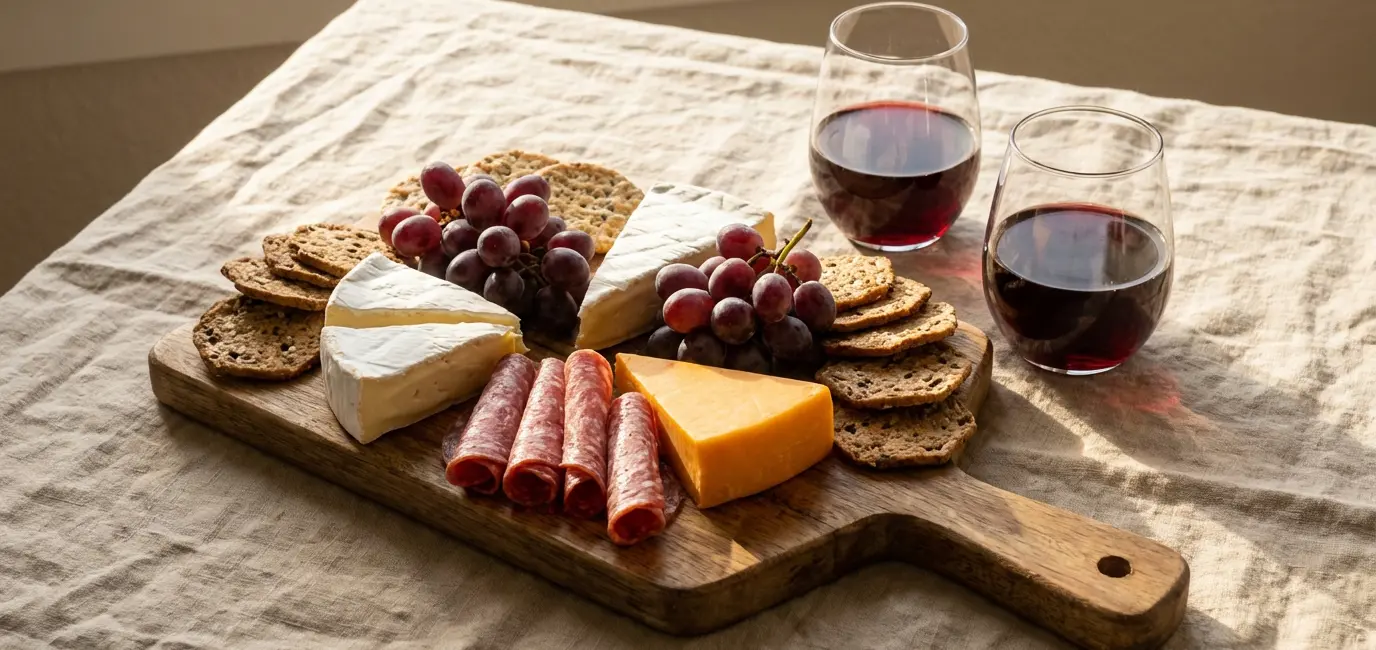
When you are ready to start building a small collection of everyday drinking reds, my guide to how to pair wine and cheese will help you get more enjoyment out of every bottle.
The Best White Wines for Beginners
White wines tend to be easier entry points for many new drinkers, because they are typically lighter, fresher, and less tannic. The challenge on the white side is that the category ranges from very dry and mineral (Chablis, Muscadet) to very rich and buttery (heavily oaked California Chardonnay) — and the wrong choice can put someone off the entire category. Here are the best white wines for beginners.
Pinot Grigio / Pinot Gris
Italian Pinot Grigio is the quintessential beginner white wine — light, crisp, dry, and easy. It does not ask much of you. You pour it cold, it tastes clean and refreshing, and it pairs with basically everything. If you are very new to white wine, start here. Once you have a feel for what a light, dry white tastes like, you can start branching out. French Pinot Gris from Alsace is a fuller, more aromatic expression of the same grape — worth trying once you have your bearings.
Sauvignon Blanc
Sauvignon Blanc from New Zealand (Marlborough region specifically) is one of the most distinctive and reliably enjoyable white wines in the world. It has bright tropical fruit, crisp acidity, and a freshness that makes it immediately likeable. If you have ever had a Cloudy Bay or Kim Crawford and enjoyed it, this is the variety you loved. New Zealand Sauvignon Blanc is an excellent anchor bottle for anyone building their palate on the white wine side. Browse white wines on Wine.com to explore the range.
Unoaked or Lightly Oaked Chardonnay
Chardonnay is one of the most planted grapes in the world, which means it comes in a huge range of styles. The key for beginners is choosing unoaked or lightly oaked bottles rather than heavily oaked California-style Chardonnay. Unoaked Chardonnay (look for French Chablis, or bottles labeled “unoaked”) has a clean apple and citrus flavor that is completely different from the big, buttery, vanilla-forward style that puts many people off. My guide to the best Chardonnay under $20 has specific bottle recommendations at a price that makes exploration easy.
Riesling (Off-Dry)
Dry Riesling is one of the most complex and food-friendly whites in the world, but for beginners, an off-dry Riesling from Germany or Alsace is a great bridge. It has a hint of sweetness balanced by bright acidity and stone fruit flavors, which makes it genuinely delicious without requiring any acquired taste. German Rieslings are usually clearly labeled on the sweetness scale (Kabinett is the lightest and driest; Spatlese is slightly richer). If you think you do not like dry wines, off-dry Riesling might change your mind.
Rosé and Sparkling Wine: The Perfect Gateway Bottles
These two categories deserve a dedicated section because they are often the entry point for people who have not yet found their footing with red or white. Both tend to be approachable, food-friendly, and satisfying to drink in almost any setting. If you are trying to find the best wine for beginners to bring to a dinner party or to pour for a group with mixed tastes, rosé or sparkling is almost always the right answer.
Provence Rosé
Dry rosé from Provence in the south of France is the gold standard for the category. It is pale, delicate, dry, and has a subtle strawberry and mineral quality that is genuinely distinctive. Brands like Miraval, Whispering Angel, and Minuty are widely available and reliably good. Provence rosé is the wine that made the whole category fashionable again, and for good reason — it is beautiful to look at, easy to drink, and works with almost any food. Browse rosé selections on Wine.com to find your bottle.
Prosecco
For sparkling wine beginners, Prosecco is the obvious starting point. It is lighter and fruitier than Champagne, less expensive, and genuinely enjoyable as an aperitif or with light food. Italian Prosecco DOC and DOCG (the higher quality designation) are widely available and usually cost between $12 and $25, making them ideal for casual exploration. If you find that you love Prosecco, the next step up is Cava from Spain (which has a creamier texture) and eventually Champagne itself.
Cava
Spanish Cava is one of the best value sparkling wines available. Made using the same method as Champagne (secondary fermentation in the bottle), it has a complexity and texture that Prosecco does not — at a much lower price point. Freixenet and Codorniu are the most recognizable names; either makes a great introduction to traditional-method sparkling wine. Browse sparkling wine on Wine.com for more options.
If you are interested in wines made with less intervention, the natural wine guide for beginners is a great companion read — many natural winemakers produce excellent sparkling and rosé styles that are approachable and made from the same kinds of grapes discussed here.
How to Actually Taste Wine When You’re New to It
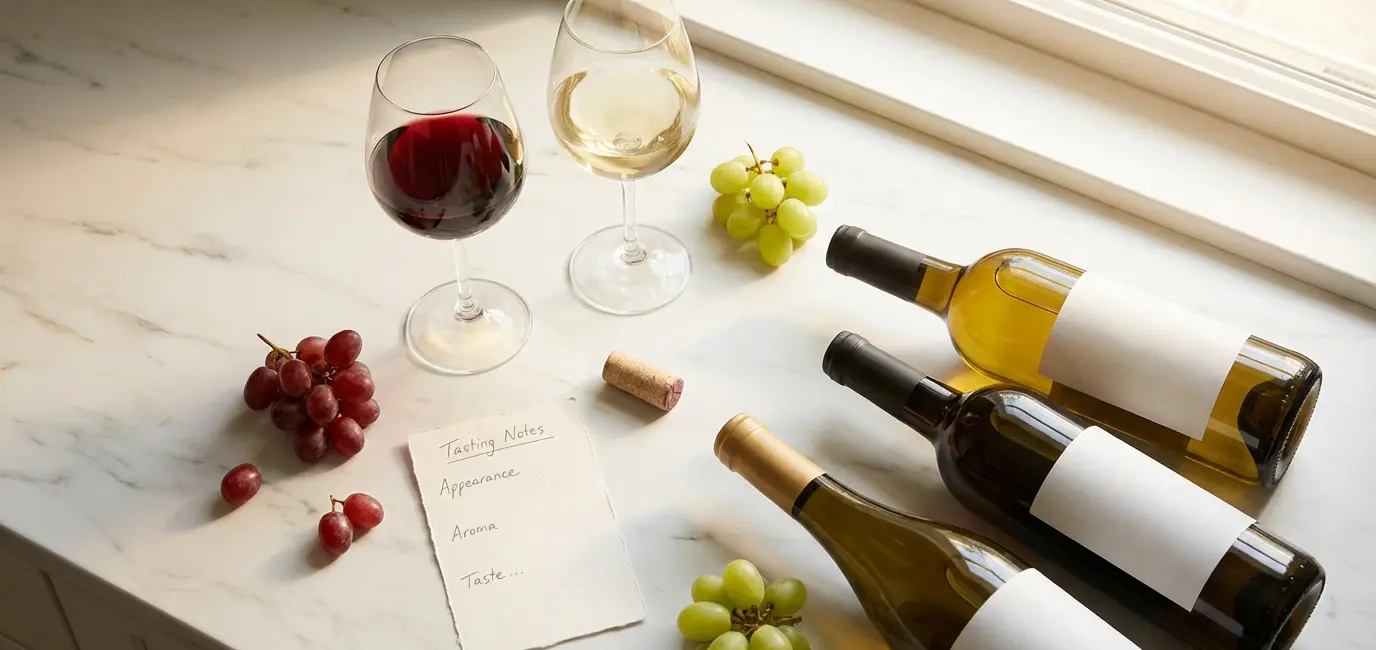
The intimidating part of wine is not the taste — it is the language around it. When someone says a wine has a “long finish” or “mineral notes,” it can feel like a code you have not been given. The good news is that tasting wine does not require special vocabulary or training. It requires paying attention, and a few simple questions to ask yourself.
Step 1: Look at It
Color tells you a lot before you even smell the wine. A pale ruby red suggests a lighter, lower-tannin red like Pinot Noir. A deep garnet or purple suggests something fuller-bodied. A golden or amber white has often spent time in oak. This is not a test — it is just a moment to orient yourself.
Step 2: Smell It
Swirl the glass (this helps release aromas) and then smell it. Do not overthink this. You do not need to identify specific notes — just notice whether it smells fruity, floral, earthy, spicy, or like something else entirely. Your nose is actually better than you think. If you have ever smelled a wine and immediately thought “I am going to like this” or “I am not sure about this,” that instinct is valid and useful data.
Step 3: Taste It
Take a sip and let it sit on your palate for a moment. Notice: Is it sweet or dry? Does it feel light or rich? Is there a drying sensation (that is tannin, from the grape skins in red wine)? Is there a bright, mouth-watering quality (that is acidity)? Does the flavor linger after you swallow (the “finish”)? None of these require expertise — they are just observations. Over time, you will start connecting these sensations to specific varieties and styles, and that is when wine really starts to get interesting.
When you are ready to go deeper, my guide to how to host a wine tasting at home gives you a full structured framework for exploring wines side by side. It is one of the best ways to accelerate your palate development without spending much money.
For a visual guide to exactly this, the Wine Folly video below covers the best red wine options for beginners in an easy, entertaining format:
A good first investment is a set of proper beginner wine glasses. You do not need expensive crystal, but a proper tulip-shaped glass makes every wine taste meaningfully better than a tumbler or a cheap, straight-sided glass. It is the single most impactful upgrade you can make to your at-home wine experience.

As you explore further, you might enjoy my guides to how to read a wine label, orange wine explained, pairing wine with pasta, and the best gifts for wine lovers when someone in your life is also getting started. The more you explore, the more your own preferences become clear — and that is really the whole point.
Frequently Asked Questions
What is the easiest wine to drink for a beginner?
The easiest wines for beginners tend to be Pinot Grigio (light, dry, crisp), Prosecco (sparkling, fruity, approachable), Provence rosé (dry, delicate, versatile), and Pinot Noir (the most approachable red). All four are widely available, reliably enjoyable, and do not require any particular palate development to appreciate.
Should beginners start with red or white wine?
There is no universal answer. If you typically like rich, warming flavors, start with a light red like Pinot Noir or Merlot. If you prefer fresh, bright, refreshing drinks, start with a crisp white like Pinot Grigio or Sauvignon Blanc. If you are truly undecided, start with rosé or sparkling — both work for almost everyone.
How much should a beginner spend on wine?
You do not need to spend a lot to drink well as a beginner. Excellent entry-level bottles exist in the $12–25 range for most varieties. Spending more than $30 before your palate is developed is largely wasted money — you will not yet have the reference points to fully appreciate the difference. Once you have a feel for the basic categories, mid-range bottles ($25–50) will start making more sense.
What is the best wine for beginners who prefer sweet drinks?
If you prefer sweeter flavors, off-dry Riesling from Germany is an excellent starting point — it has just enough sweetness balanced by acidity to feel genuinely delicious. Moscato d’Asti is another great option — it is lightly sparkling, low in alcohol, and sweetly peach-and-apricot flavored. White Zinfandel and many California rosés also land on the slightly sweet side.
Is Pinot Noir a good wine for beginners?
Pinot Noir is widely considered the best red wine for beginners. It has naturally low tannins, bright fruit flavors, a light to medium body, and a finish that is approachable rather than drying or astringent. It is also enormously versatile with food. If you are starting with red wine and want a variety that will rarely disappoint, Pinot Noir is the place to start.
How do I know if I like dry or sweet wine?
A simple test: if you enjoy dry sparkling water, dry teas, or prefer savory to sweet food overall, you likely lean toward dry wine. If you gravitate toward fruit juice, sweet cocktails, or desserts, off-dry or semi-sweet wines will suit you better to start. These preferences often shift as your palate develops — many people start with sweet wines and move toward drier styles over time as they build comfort with the category.
What is the best organic wine for beginners?
Organic wines are a great choice for beginners because they tend to be made with less manipulation, which often means cleaner, more fruit-forward flavors. Organic Pinot Grigio, Sauvignon Blanc, and Pinot Noir are all widely available. Organic Wine Exchange has an excellent curated selection — you can explore their range at Organic Wine Exchange. Many of their entry-level bottles are specifically chosen for accessibility and clean flavor profiles.
How many wines should I try before I know what I like?
Give yourself at least five to ten different bottles across different varieties before forming strong opinions. Early experiences with wine can be heavily influenced by temperature (wine served too warm or too cold), glassware, food pairing, and even your mood. Try each wine with different foods, in different settings, and keep loose notes about what you liked. After ten bottles, you will have a clearer sense of your own preferences than any guide can give you.
There is no single best wine for beginners that works for everyone, but starting with the varieties in this guide gives you the widest range of enjoyable options with the lowest risk of disappointment. Pinot Noir for red, Sauvignon Blanc or Pinot Grigio for white, Provence rosé for those in between, and Prosecco when you want something celebratory. From any of those starting points, the rest of the wine world becomes easier to explore. The goal is not to know everything — it is to enjoy the next glass a little more than the last one.