This post may contains affiliate links. Read our full disclosure here.
The best wine to serve at Easter dinner depends on what you’re cooking — and Easter is one of those holidays where the menu varies wildly from table to table. Roast lamb, glazed ham, spring salads, deviled eggs, asparagus, and a dessert table loaded with chocolate: it’s a feast of contrasts, and the wine needs to hold its own across all of it. After years of hosting Easter dinner and obsessing over exactly this question, I’ve landed on a clear framework that works no matter what’s on your menu.
The short answer: a dry rosé is the single most versatile Easter dinner wine choice that works across every dish on the table. But that’s not the whole picture. Here’s the full guide — by wine color, by dish, and by what actually works in a real dining room with real guests.
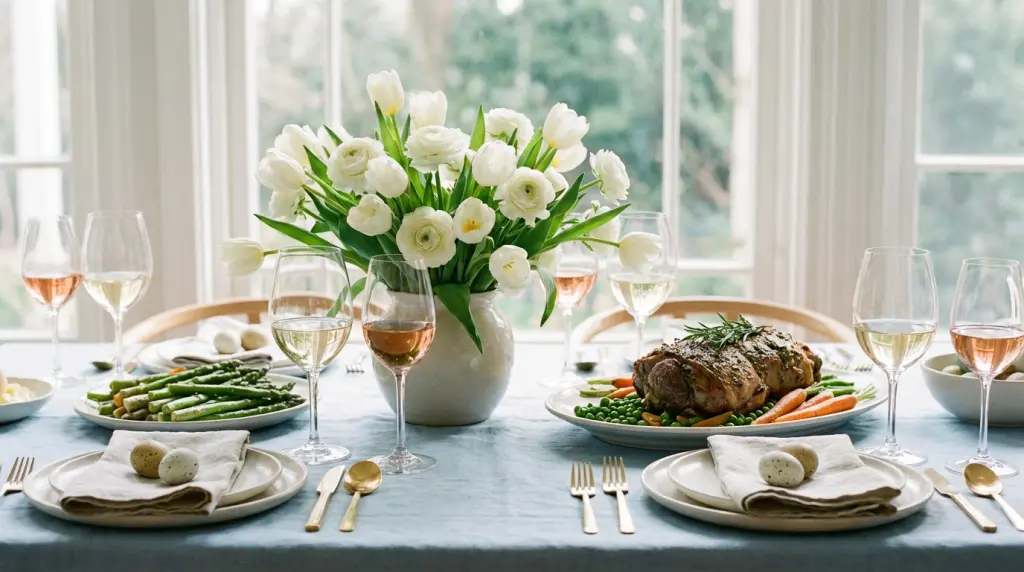
“Easter is the one holiday where the table genuinely calls for all three colors of wine. Lean into it — a white, a rosé, and a light red is the move.”
The Easter Dinner Wine Challenge (and How to Solve It)
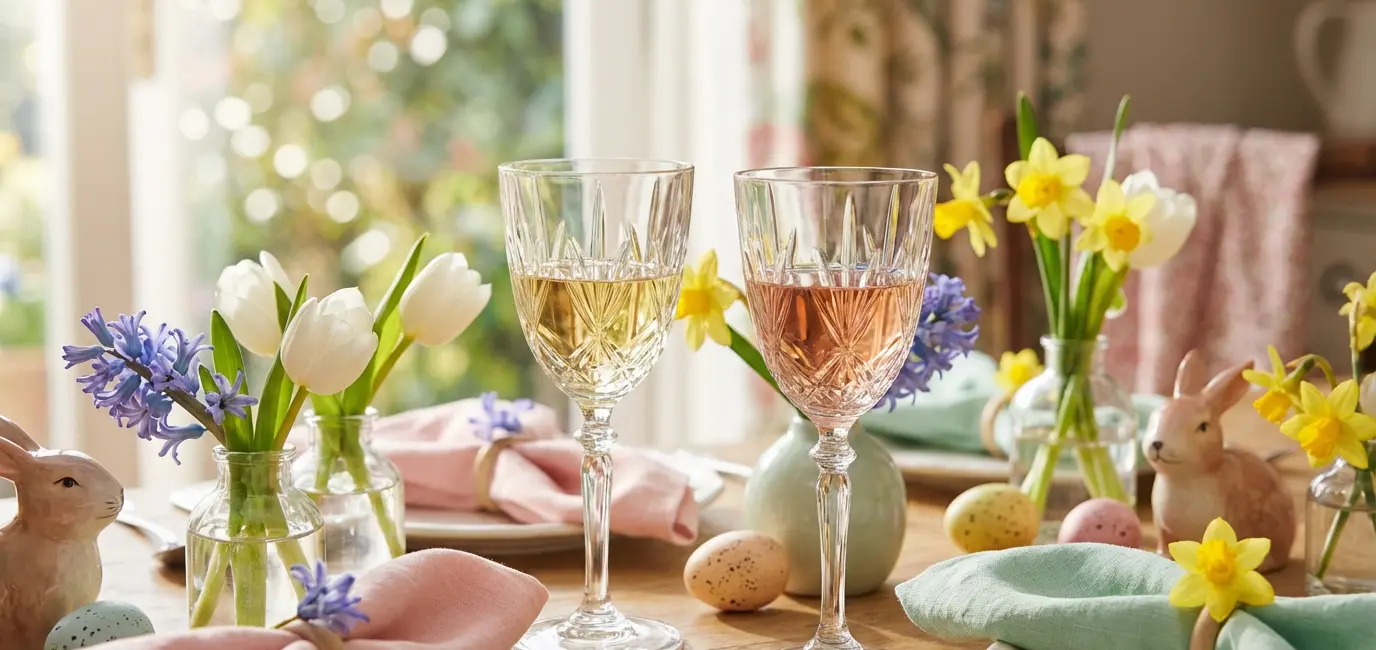
Most holiday wine decisions are easy: Thanksgiving gets a Pinot Noir or a Beaujolais, Christmas gets a Cab or a Burgundy. But Easter dinner wine is genuinely tricky because Easter menus are so eclectic. You might be serving roast lamb (a bold red situation) alongside glazed ham (a white or rosé situation), with spring asparagus (a Sauvignon Blanc situation) and a rich potato gratin (a Chardonnay situation). No single bottle solves all of that.
My solution, which I’ve landed on after testing this for years: bring three bottles. One white, one rosé, one light red. Set them all on the table and let guests pour what works for them at each course. This sounds extravagant but it’s actually economical — you need maybe one bottle of each for a table of 8, and covering all three colors means everyone is happy regardless of what they’ve plated.
The other thing that makes Easter wine pairing complicated is that Easter falls at the cusp of spring. You want wines that feel seasonal — lighter, fresher, more floral and aromatic than what you’d pour in December. Heavy tannic reds and rich, buttery whites feel slightly out of step with an Easter table. Lean toward elegance over power for every bottle you choose.
Best White Wines for Easter Dinner
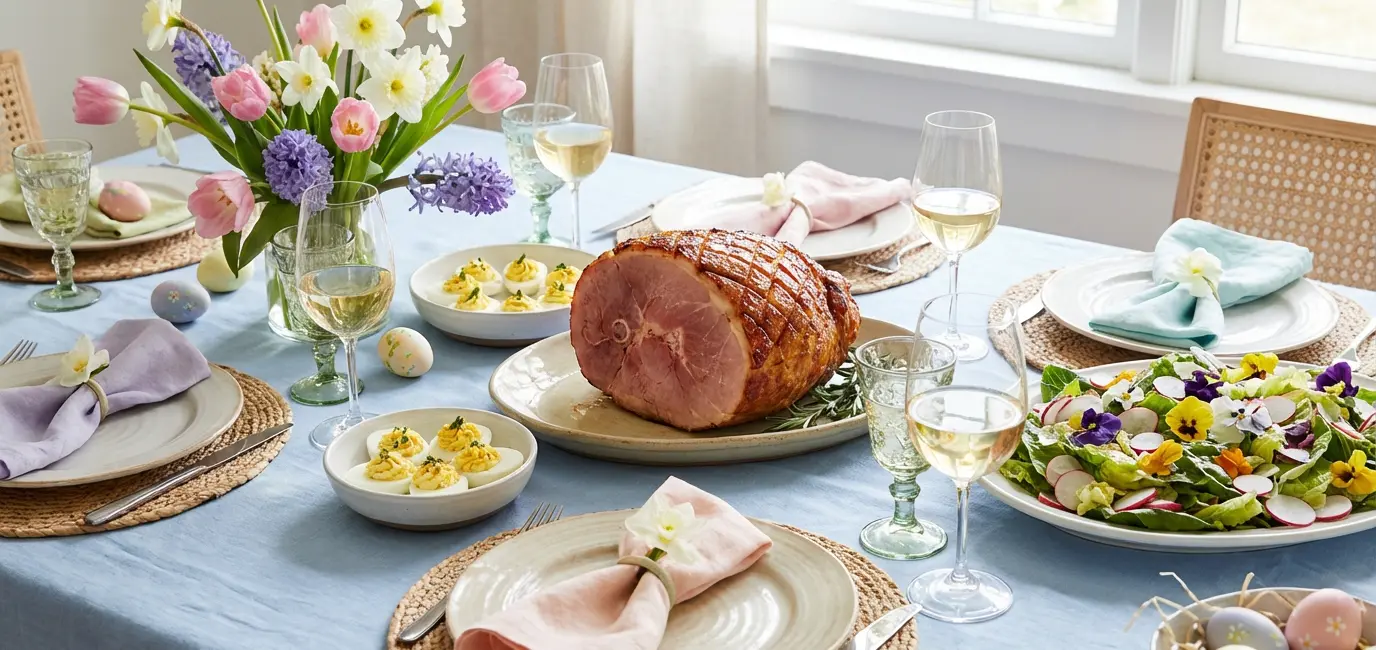
White wine is the natural starting point for an Easter dinner wine selection, especially if your menu includes ham, fish, spring vegetables, or an Easter brunch spread. The key is choosing whites that have enough body to stand up to richer dishes but enough freshness to not feel heavy.
Chardonnay (Unoaked or Lightly Oaked)
Unoaked or lightly oaked Chardonnay is my top white wine for Easter dinner. The minerality and apple-driven fruit work beautifully with glazed ham, roast chicken, spring potato dishes, and cream-based sides. Avoid heavily oaked Chardonnay — the buttery vanilla notes fight with the sweetness of glazed ham and overwhelm lighter spring vegetables. Look for Chablis, White Burgundy, or Napa Chardonnay from a producer with a lighter hand.
What to pour: a Chablis Premier Cru for a more elegant choice, or an unoaked Chardonnay from the Central Coast for an approachable crowd-pleaser. Both work for Easter brunch just as well as Easter dinner.
Pinot Gris / Pinot Grigio (Alsatian Style)
Alsatian Pinot Gris is one of the most underrated Easter dinner wine choices available. It has enough body to pair with ham, enough stone fruit richness to complement roasted vegetables, and enough aromatic complexity to feel special. This is the bottle that guests who “don’t know wine” will sip and say “wait, what is this?” — which is exactly the reaction you want at a holiday table.
Italian Pinot Grigio (the light, crisp style) also works well as a pre-dinner pour or alongside a lighter Easter brunch spread, but for the main meal the fuller Alsatian version is worth reaching for.
Sauvignon Blanc
If your Easter menu leans heavily on spring vegetables — asparagus, peas, green beans, spring salads — Sauvignon Blanc is the most natural pairing. The herbal notes in a good Sancerre or Marlborough Sauvignon Blanc echo the green, grassy character of spring produce in a way that feels almost designed. It’s also a wonderful aperitif wine for the pre-dinner hour while guests are grazing on the starter spread.
Best Rosé Wines for Easter Dinner
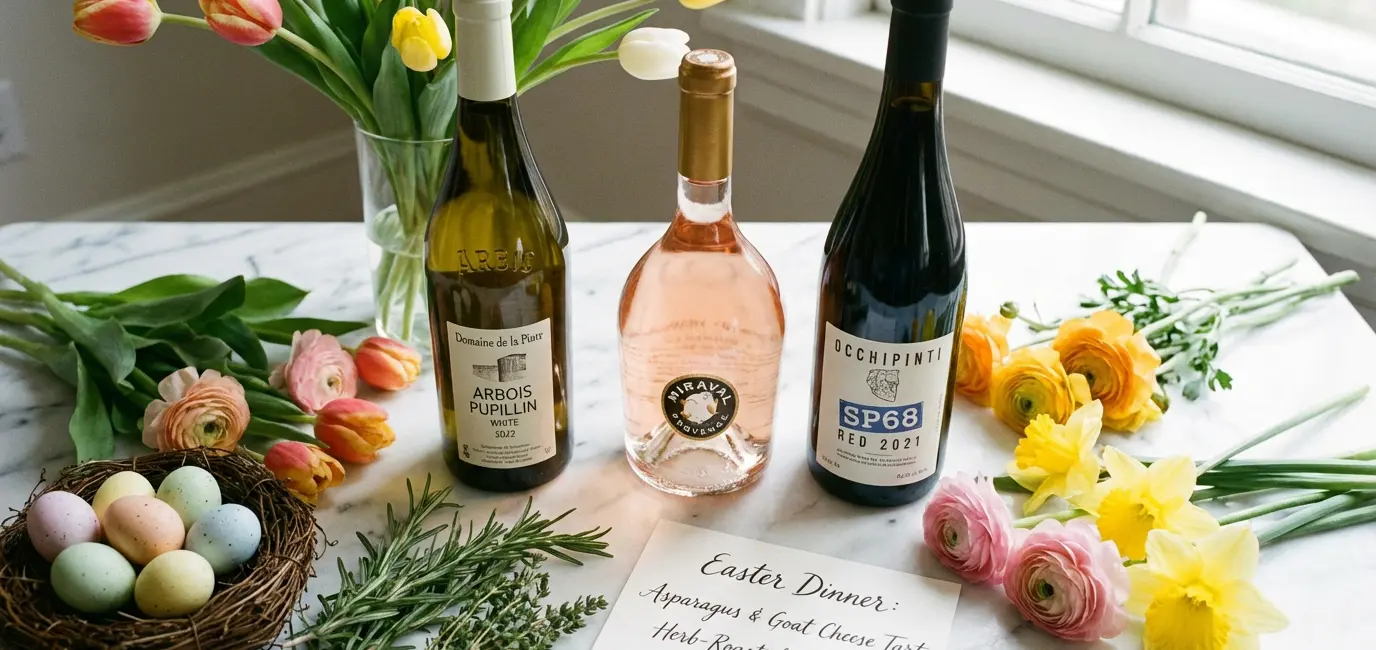
If I had to pick one single wine for Easter dinner, it would be a dry Provençal rosé every single time. This is not a compromise choice — rosé is genuinely the most versatile pairing for the variety of dishes that appear on an Easter table. It bridges the gap between white and red, handles ham and lamb with equal grace, complements spring salads and deviled eggs, and feels exactly right for the season.
The key word is dry. Sweet or off-dry rosé clashes with savory dishes and makes everything taste sugary. You want a bone-dry, pale Provençal rosé — the kind that tastes of strawberry, citrus, and mineral with absolutely no residual sweetness. Provence is the gold standard, but excellent dry rosés also come from the Loire Valley, Tavel, and increasingly from California and Oregon.
Why Rosé Works So Well for Easter
The structural versatility of dry rosé comes from its position between white and red. It has the acidity of a white wine — which makes it food-friendly and refreshing alongside vegetable dishes and lighter fare — combined with just enough red fruit character to complement meat. For an Easter dinner that moves from ham to lamb to spring sides, rosé is the thread that runs through all of it.
It also just looks beautiful on an Easter table. That pale blush color in a crystal glass against pastel linens and spring flowers is genuinely one of my favorite springtime visuals. Presentation matters at holiday dinners, and rosé delivers on that front effortlessly.
Best Rosé Styles for Easter
- Provençal rosé (Côtes de Provence, Bandol) — the classic. Pale, dry, mineral, perfect.
- Tavel — a fuller-bodied, slightly deeper rosé from the Rhône. Excellent with lamb.
- Loire Valley rosé (Rosé d’Anjou, Cab Franc rosé) — floral and delicate, ideal for brunch.
- Oregon Pinot Noir rosé — elegant and aromatic, works beautifully for the whole meal.
- California rosé of Syrah or Grenache — slightly richer, excellent with ham and roasted meats.
Best Red Wines for Easter Dinner
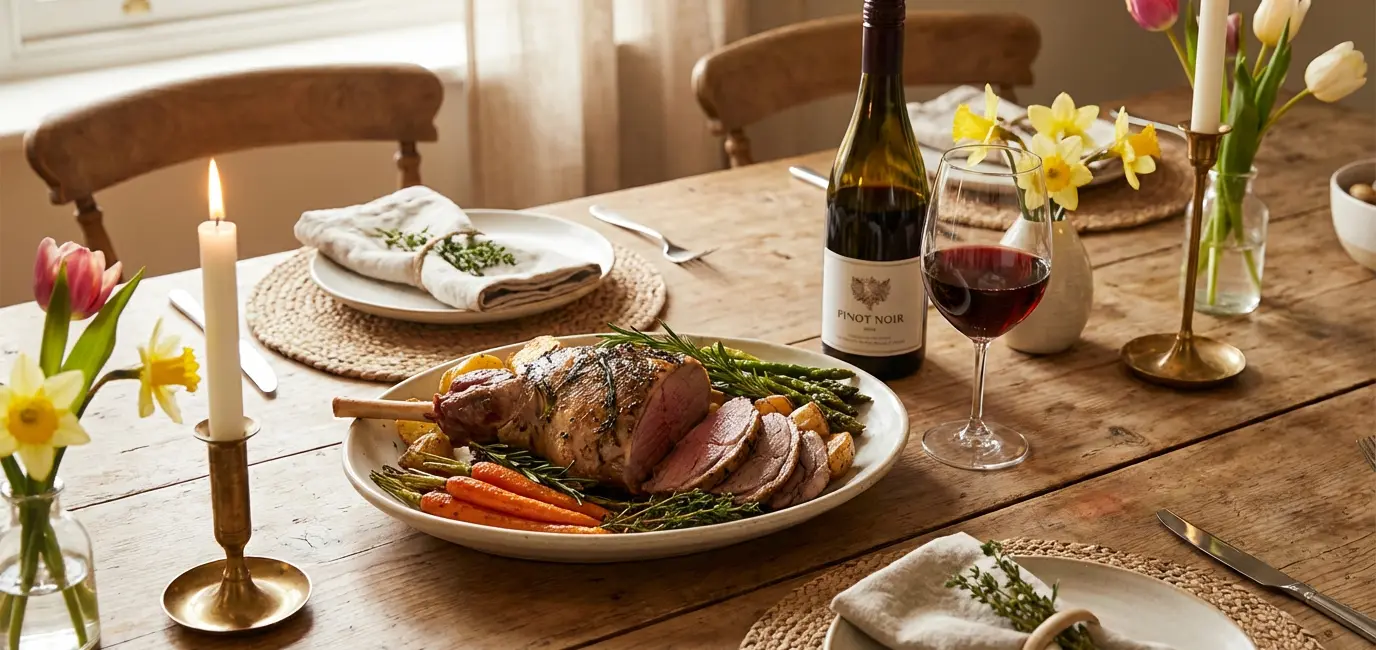
If your Easter dinner centers on roast lamb — and for many families it does — a red wine is not optional, it’s essential. The earthy, herbaceous, slightly gamey character of lamb is one of the great classic pairings in all of wine. The question is which red to choose, and the answer is almost always: go lighter and more elegant than you think you need to.
Pinot Noir — The Easter Red
Pinot Noir is my first recommendation for Easter dinner wine when lamb is on the menu. Its earthy cherry fruit, silky texture, and bright acidity complement lamb without overwhelming it, and it’s light enough to also work alongside spring vegetables and lighter sides. A good Burgundy is the classic choice, but Oregon Pinot Noir and quality California Pinot (Sonoma Coast, Santa Barbara) are excellent and more accessible.
The key with Pinot for Easter is to avoid heavy, extracted, high-alcohol versions. You want a Pinot that feels like spring — elegant, a little earthy, with freshness and lift. That’s the Pinot that makes roast lamb taste like the best meal you’ve ever had.
Grenache and Grenache Blends
A lighter-style Grenache — or a Grenache-based blend like a Côtes du Rhône — is a wonderful Easter dinner red wine that doesn’t get enough credit. Grenache brings red fruit, a gentle herbal quality, and soft tannins that work beautifully with lamb, ham, and spring herbs. It’s also generally very crowd-friendly — approachable enough for guests who don’t typically drink red wine.
Beaujolais Cru
For a lighter red that works across the whole table, don’t overlook a Beaujolais Cru — particularly Morgon or Moulin-à-Vent. These are serious, complex wines that happen to have the bright acidity and red fruit character that makes them work with nearly everything. They’re also often a great value, which is a bonus when you’re buying multiple bottles for a holiday dinner.
What to Avoid
For Easter, I’d steer clear of heavily tannic reds — big Cabernet Sauvignon, Barolo, Aglianico. These wines need food that can stand up to them, and an Easter spread with spring vegetables, delicate sides, and lighter preparations isn’t that meal. Save the power reds for winter. Easter calls for elegance.
How to Match Wine to Your Specific Easter Menu

The easiest way to choose Easter dinner wine is to start with your main protein and build from there. Here’s the quick reference guide I use every year.
Easter Menu: Roast Lamb
Lamb is the most wine-friendly protein on the Easter table. It loves earthy reds with enough acidity to cut through the richness. First choice: Pinot Noir (Burgundy or Oregon). Second choice: a Grenache-based Rhône blend. If your lamb is served with fresh herbs and spring garlic, a Provence rosé also works beautifully as the table wine alongside a red.
Easter Menu: Glazed Ham
Ham is where whites and rosés shine. The sweetness of the glaze calls for a wine with good acidity to provide contrast — an unoaked Chardonnay, an Alsatian Pinot Gris, or a dry Provençal rosé all work perfectly. If guests insist on red with ham, a Beaujolais Cru is the least wrong choice.
Easter Brunch (Eggs, Pastries, Lighter Fare)
Easter brunch wine is a Champagne or sparkling wine moment, full stop. A dry Brut Champagne or a quality Cava or Prosecco handles eggs, pastries, fruit, and lighter fare with effortless versatility. If you want to add a still wine that transitions into lunch, a Sauvignon Blanc or a light rosé is the call.
Mixed Menu (Lamb + Ham + Lots of Sides)
This is the most common Easter dinner scenario, and the answer is: don’t try to find one wine that does everything. Set out three bottles — one white, one rosé, one light red — and let guests pour what works for their plate. The white handles brunch and lighter sides, the rosé bridges everything, the red handles the lamb. Everyone wins.
More Wine and Entertaining Guides
If this guide got you thinking about wine beyond Easter, there’s a lot more on the site. For pairing wine with game day food, my best wines for game day guide covers every food type and occasion. If rosé is calling your name for the season, my best rosé wines for spring 2026 guide has a full region-by-region breakdown of what to buy right now. For the full context on red versus white decisions, white wine vs red wine covers when each makes sense and why. If you want to turn Easter dinner into a proper wine event, my guide on how to host a wine tasting at home has everything you need. And for the table itself, my spring tablescaping ideas 2026 will help you set a table that looks as good as the wine tastes.
Frequently Asked Questions
Still deciding on the best wine for Easter dinner? Here are the questions I get most often.
What is the most versatile wine for Easter dinner?
A dry Provençal rosé is the single most versatile Easter dinner wine choice. It bridges white and red, pairs with ham, lamb, spring vegetables, and deviled eggs equally well, and feels perfectly seasonal. If you can only bring one bottle to an Easter dinner, make it a dry rosé.
What wine goes best with roast lamb at Easter?
Pinot Noir is the classic pairing for roast lamb at Easter dinner. Its earthy red fruit, silky tannins, and bright acidity complement the richness of lamb without overpowering it. A Burgundy or Oregon Pinot Noir is ideal; a Grenache-based Rhône blend is an excellent alternative.
What wine goes with glazed ham at Easter?
Ham calls for wines with good acidity to cut through the sweetness of the glaze. Unoaked Chardonnay, Alsatian Pinot Gris, and dry rosé are all excellent choices. Avoid sweet wines — they clash with the savory-sweet balance of glazed ham.
Is red or white wine better for Easter?
Neither — and both. The best approach for a full Easter dinner is to serve all three colors: a white for brunch and lighter dishes, a rosé as the versatile table wine, and a light red alongside the lamb. This covers every dish and every guest’s preference.
What wine should I serve at an Easter brunch?
Champagne or sparkling wine (Cava, Prosecco, Crémant) is the natural choice for Easter brunch. Dry Brut handles eggs, pastries, fruit, and light fare with ease. For a still wine, a Sauvignon Blanc or light rosé both feel fresh and appropriately spring-like.
How many bottles of wine do I need for Easter dinner?
For a dinner of 8 guests, plan on 2 bottles per wine style if you’re pouring multiple colors. A practical Easter wine plan: 2 bottles white + 2 bottles rosé + 2 bottles red = 6 bottles total. This leaves a comfortable buffer. If you’re also doing Easter brunch, add a bottle of sparkling wine.
Can you serve sparkling wine at Easter dinner?
Absolutely — and a dry Champagne, Cava, or Crémant is excellent as an aperitif and works through the whole brunch spread. For the main dinner, still wines are more traditional, but there’s nothing wrong with keeping bubbles on the table if your guests love them.
Whatever your Easter dinner menu looks like this year, the wine decision is simpler than it seems once you have a framework. Start with your main protein, add a rosé as your versatile table wine, and don’t be afraid to set out all three colors. The best wine to serve at Easter dinner is the one that makes everyone at the table happy — and with the right selection, that’s completely achievable.