This post may contains affiliate links. Read our full disclosure here.
So, what does dry wine actually mean? what does dry wine actually mean? A what does dry wine actually mean? A dry wine is simply a wine with little to no residual sugar — typically less than 4 grams per liter. During fermentation, yeast converts natural grape sugars into alcohol, and when nearly all the sugar is consumed, the result is a dry wine. It has nothing to do with how the wine feels in your mouth or how bold it tastes — “dry” refers only to the absence of sweetness.
If I had a glass of wine for every time someone asked me “what does dry wine actually mean?” — I’d be very, very happy. It’s one of those wine terms that everyone uses, few people truly understand, and almost nobody wants to admit they’re confused about. So let’s clear this up once and for all, because once you understand what dry wine really is, the way you shop for, order, and enjoy wine will completely change.
What Does Dry Wine Actually Mean? It’s About Sugar
Here’s the thing that trips most people up: when we say a wine is “dry,” we’re talking about sugar — not texture, not boldness, and definitely not that puckery feeling you get from a big Cabernet Sauvignon. A dry wine is simply a wine where most or all of the natural grape sugars have been converted into alcohol during fermentation. That’s it. No leftover sweetness. The opposite of a dry wine is a sweet wine — not a “wet” wine (though wouldn’t that be fun?).
If you want to geek out on the numbers: dry wine typically contains less than 4 grams of residual sugar per liter (g/L). For context, a noticeably sweet wine starts around 35 g/L, and dessert wines can climb well above 100 g/L. So when you’re sipping a bone-dry Sauvignon Blanc, there’s practically zero sugar left in your glass — the yeast ate it all and turned it into alcohol. Pretty cool, right?
If you’re curious about how this sugar-to-alcohol transformation actually works, I wrote a whole piece on the fermentation process of winemaking that breaks it down beautifully.
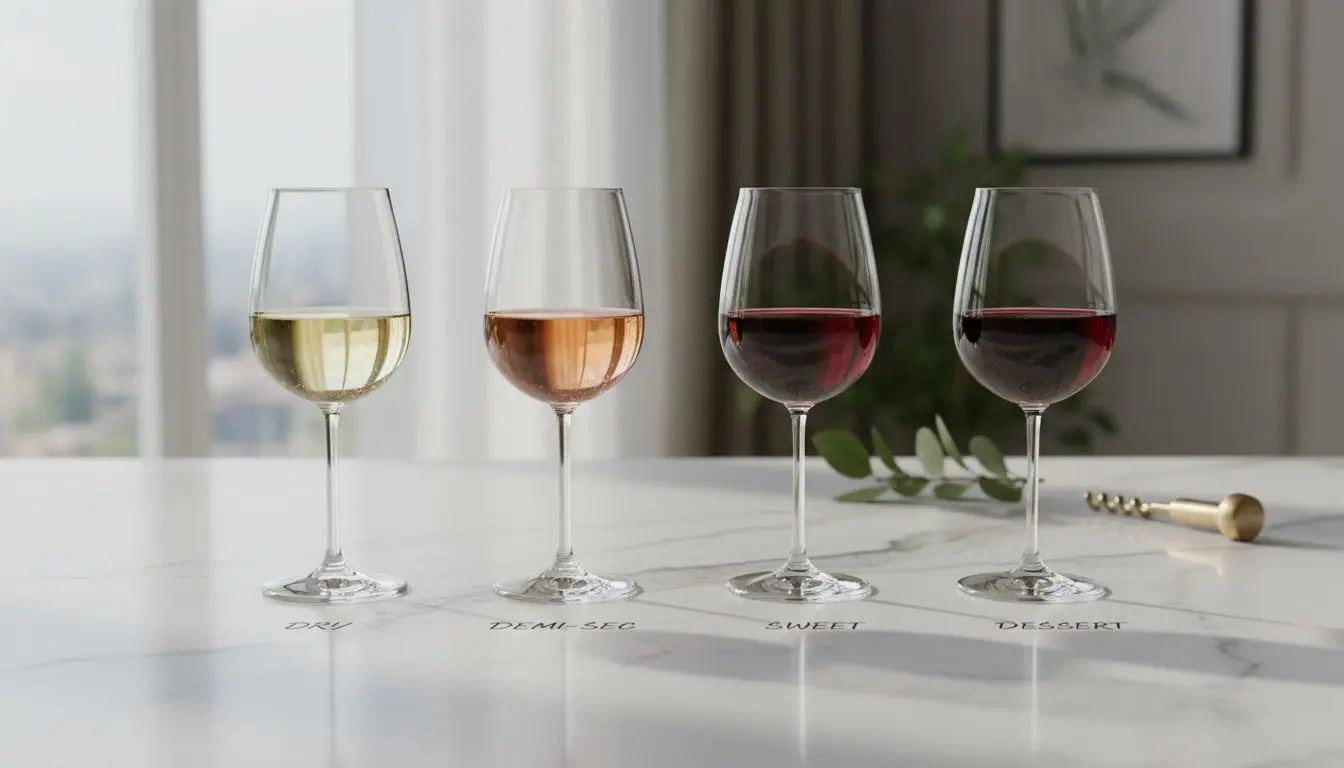
What Does Dry Wine Actually Mean on the Sweetness Spectrum?
Dry wine sweetness isn’t just “dry or sweet” — there’s a whole spectrum, and knowing where your favorite bottles land can be a game-changer when you’re browsing the wine aisle or ordering at a restaurant.
Here’s a quick breakdown:
- Dry (Sec): 0–4 g/L of residual sugar — this is your Cabernet Sauvignon, Pinot Grigio, Sauvignon Blanc, and most red wines
- Off-Dry (Demi-Sec): 4–12 g/L — a whisper of sweetness, think many Rieslings and Gewürztraminers
- Medium Sweet: 12–45 g/L — noticeably sweet, like some Rosés and White Zinfandels
- Sweet (Doux): 45+ g/L — dessert wines, Ports, late-harvest wines, Sauternes
Here’s a fun twist though: the EU regulations actually allow wines with up to 9 g/L of residual sugar to be labeled as dry wine — as long as the wine’s acidity is high enough to balance it out. That’s because acidity masks sweetness on your palate. So a Riesling with 8 g/L of sugar can still technically be called dry wine if it has bright, zing-y acidity. Wine is sneaky like that.
“Understanding dry wine is the single most useful thing you can learn about wine. Once you know it’s about sugar — not mouthfeel — everything else starts to make sense.”

What Does Dry Wine Actually Mean vs. Tannic Wine?
Okay, this is the part where I see the lightbulb go on for people. That chalky, mouth-drying, grippy sensation you get from certain red wines? That’s not dryness. That’s tannins.
Tannins are natural compounds found in grape skins, seeds, and stems (and also in oak barrels). When you take a sip of a young, bold Cabernet or Nebbiolo, tannins bind with the proteins in your saliva — literally pulling moisture from your mouth. It feels dry, but it has absolutely nothing to do with the sugar content that defines a dry wine.
Think of it this way:
- Dry wine = a taste (the absence of sweetness)
- Tannins = a texture (astringency, that puckery grip)
A wine can be dry AND tannic (like a bold Barolo), dry and NOT tannic (like a crisp Pinot Grigio), or even sweet and tannic (rare, but some fortified wines pull this off). They’re two completely separate things happening in your glass at the same time.
So the next time someone at a dinner party says, “I love dry reds” while pointing to a tannic Malbec — now you know what’s really going on. They probably love tannins. And that’s totally fine. But at least you know the difference between a dry wine and a tannic wine.
What Does Dry Wine Actually Mean When It Tastes Sweet?
Dry wine is a master of illusion. Here are two sneaky things that can fool your taste buds:
Fruity ≠ Sweet. A dry wine bursting with ripe cherry, blackberry, or tropical fruit aromas can smell and taste “sweet” even when it’s technically bone-dry. Your brain associates those rich fruit flavors with sweetness, even though there’s barely any sugar. This is why people often describe certain white wines like oaked Chardonnay as “rich” or “sweet” when they’re actually dry wine through and through.
Acidity masks sugar. On the flip side, a wine with residual sugar but sky-high acidity can taste completely dry. Many German Rieslings are the perfect example — they might have 8–10 g/L of sugar, but the razor-sharp acidity cuts right through it, leaving your palate feeling refreshed rather than sweet. It’s like adding lemon to sweet tea — the sugar is still there, but you barely notice it.
What Does Dry Wine Actually Mean? Popular Varieties to Try
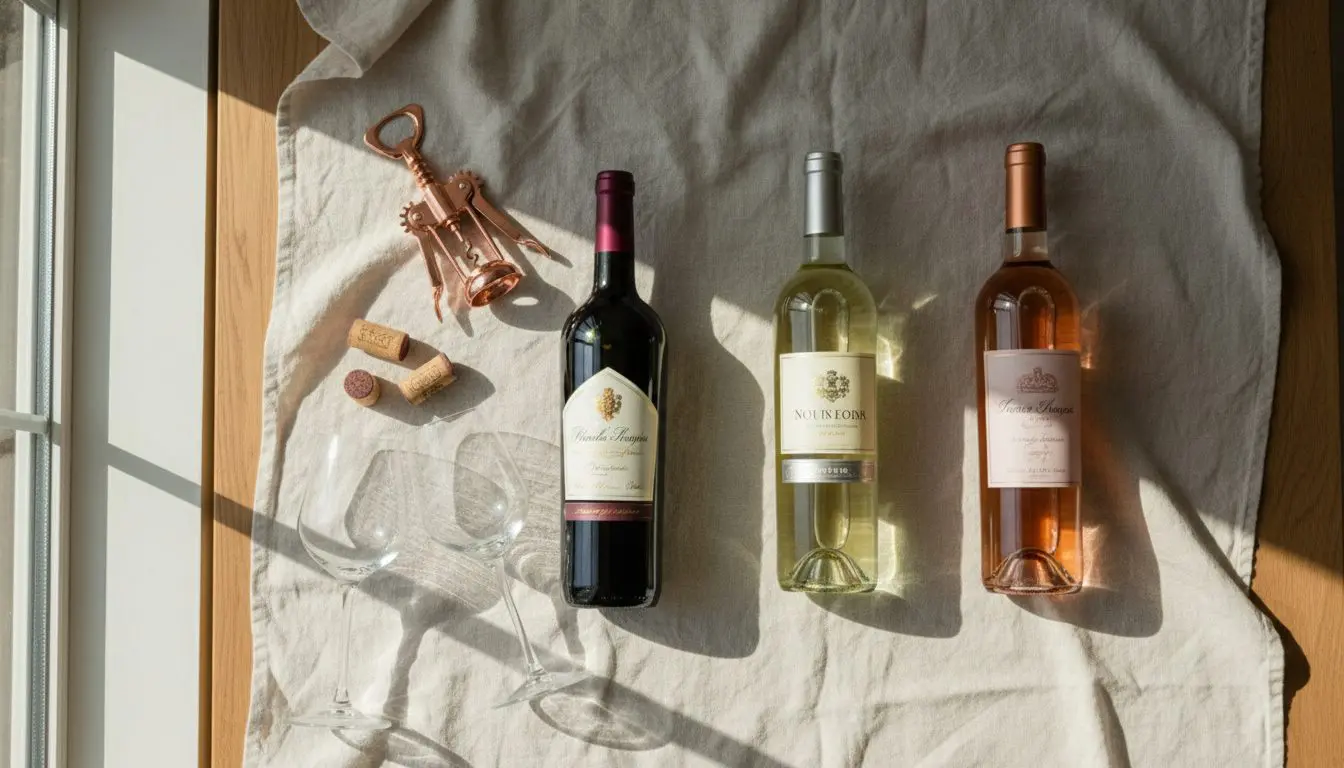
If you’re looking to explore the world of dry wine, here are some of the most popular varieties to start with. I’ve split them into reds and whites so you can find your groove:
Best Dry Wine Picks: Red Wines for Beginners
- Cabernet Sauvignon — the classic. Full-bodied, tannic, and dry as they come. Perfect with a steak night.
- Pinot Noir — lighter, elegant, and silky. A beautiful dry red with red fruit notes. Great for beginners who want something gentle.
- Merlot — soft and approachable. Dry with plush, velvety texture that makes it crowd-friendly.
- Malbec — bold and juicy with dark fruit. A gorgeous dry red with a smoky edge — incredible with BBQ pairings.
- Tempranillo — Spain’s pride. Dry and earthy, with leather and tobacco notes for the adventurous.
- Nebbiolo — Italy’s heavyweight. Bone-dry with high tannins and high acidity. For when you want drama in your glass.
Best Dry Wine Picks: White Wines Worth Sipping
- Sauvignon Blanc — crisp, zesty, and bone-dry. Think citrus, green apple, and fresh-cut grass. The ultimate patio wine.
- Chardonnay — ranges from lean and mineral (unoaked) to rich and buttery (oaked), but almost always dry.
- Pinot Grigio / Pinot Gris — light, refreshing, and dry. Easy-drinking and perfect for weeknight dinners.
- Albariño — Spain’s coastal gem. A beautiful dry white with stone fruit and saline notes — amazing with seafood.
- Grüner Veltliner — Austria’s signature grape. Dry and peppery and surprisingly versatile with food.
Want to explore how these dry wines pair with food? My guide on stone fruit and wine pairings and snack and wine pairings are great places to start experimenting.
What Does Dry Wine Actually Mean on the Label?
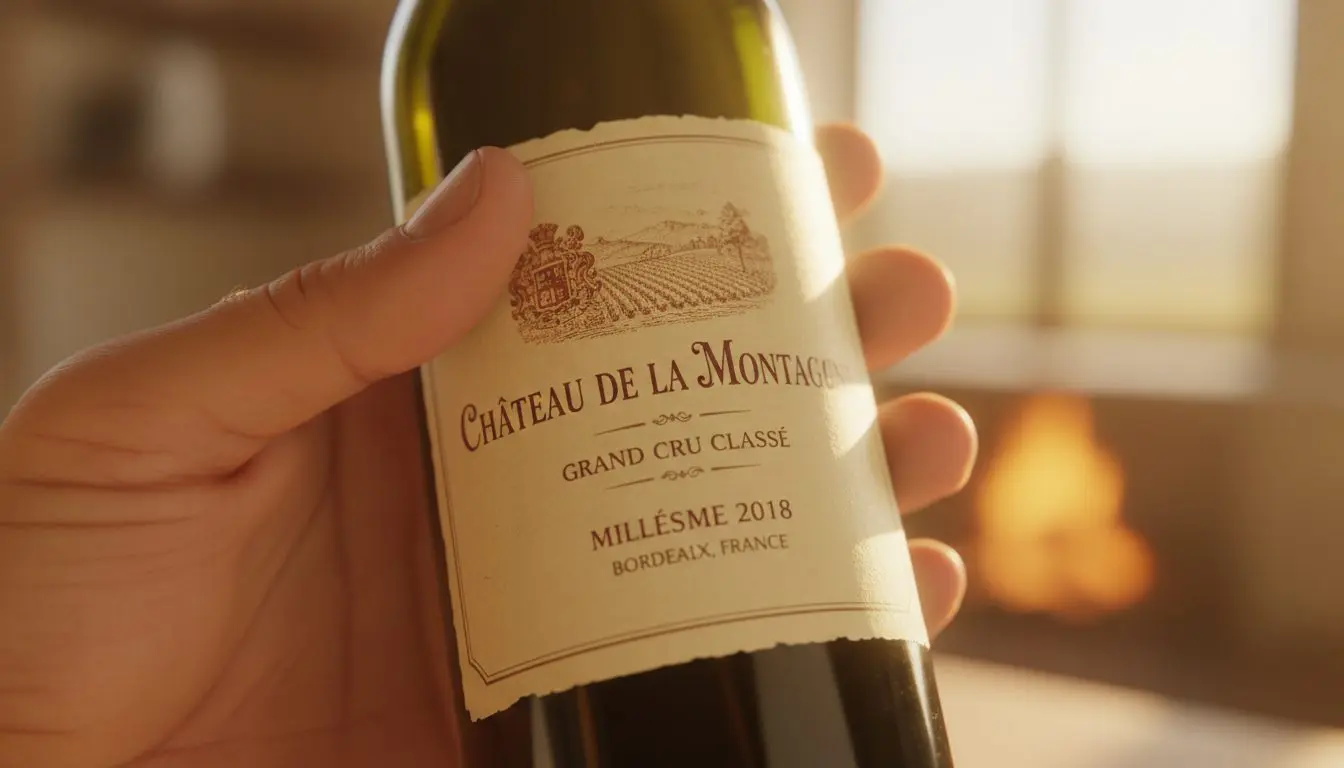
This is where things get a little tricky, because most dry wine labels don’t actually tell you the residual sugar level. But here are some insider tricks I use:
Check the alcohol level. Dry wines with higher alcohol (13%+ ABV) tend to be fully dry, because more sugar was converted into alcohol. Wines below 11% ABV often have some residual sweetness — the yeast stopped fermenting before all the sugar was gone.
Look for label clues. European dry wine labels are better about this. Look for “Sec” (French for dry), “Secco” (Italian), “Seco” (Spanish/Portuguese), or “Trocken” (German). If you see “Demi-Sec,” “Amabile,” or “Halbtrocken,” that’s off-dry — a step sweeter than dry wine.
Check the tech sheet. Many wineries publish technical data sheets online that list residual sugar. It takes 30 seconds of Googling and it’s the most reliable way to confirm you’re getting a true dry wine.
Trust your palate (but verify). If a wine seems sweet to you, it might be — regardless of what the label says. Some mass-market wines labeled as “dry wine” can have up to 10 g/L of sugar, which is technically allowed but definitely noticeable to sensitive palates.
“The best way to learn about dry wine is to taste it side by side with an off-dry wine. Pour a Sauvignon Blanc next to a Riesling. The difference is unmistakable — and once you feel it, you’ll never confuse the two again.”

What Does Dry Wine Actually Mean in Sparkling Form?
I have to mention this because it trips up everyone: sparkling dry wine sweetness levels are labeled differently than still wines, and some of the terms are straight-up misleading.
- Brut Nature: 0–3 g/L — the driest of the dry, no added sugar
- Extra Brut: 0–6 g/L — extremely dry
- Brut: 0–12 g/L — dry (this is what most Champagnes and Proseccos are)
- Extra Dry: 12–17 g/L — wait, this is actually sweeter than Brut! Yes, really.
- Dry (Sec): 17–32 g/L — not actually dry by still wine standards
- Demi-Sec: 32–50 g/L — dessert territory
So if you’re at a store and you pick up a bottle of “Extra Dry” Prosecco thinking it’ll be super dry… surprise. It’s sweeter than Brut. Wine labeling is a wild ride, my friends.
What Does Dry Wine Actually Mean for Your Wine Journey?
Now that you know what does dry wine actually mean what does dry wine actually mean, knowing the difference between dry, off-dry, and sweet completely changes how you pair wine with food, how you order at restaurants, and how you discover wines you actually love.
If you’ve ever ordered a “dry red” and been disappointed by something too fruity, you might actually want a more tannic wine — not necessarily a drier one. If you’ve been avoiding Riesling because you think it’s “too sweet,” you might be missing out on some of the most beautifully bone-dry wines in the world. Understanding dry wine opens all of those doors.
And honestly? There’s no shame in preferring off-dry or sweet wines. Wine is about pleasure, not rules. But knowing the vocabulary helps you find what you love faster — and impress your friends at dinner. Win-win.
Frequently Asked Questions: What Does Dry Wine Actually Mean?
Is dry wine healthier than sweet wine?
Dry wine generally has less sugar and slightly fewer calories per glass than sweet wine, but the difference isn’t dramatic. A glass of dry red wine has roughly 120–130 calories versus 160+ for a sweet wine. If you’re watching sugar intake, dry wine is the better choice, but moderation matters more than the style.
Does dry wine give you less of a hangover?
Not necessarily. Hangovers are primarily caused by alcohol content, dehydration, and congeners (compounds formed during fermentation). Since dry wine often has higher alcohol than sweet wine, it might actually be worse in that department. The best hangover prevention is always water between glasses — trust me on this one.
What’s the driest dry wine you can buy?
Muscadet, Chablis (unoaked Chardonnay from Burgundy), and Brut Nature Champagne are among the driest wines available, often containing less than 1–2 g/L of residual sugar. For reds, Italian Barolo and Brunello di Montalcino are famously bone-dry varieties.
Can I make sweet wine taste more like dry wine?
Serving wine colder will make it taste less sweet — cold temperatures suppress our perception of sweetness. So if you have an off-dry white that’s a touch sweeter than you’d like, chill it down. Pairing it with salty or acidic food can also balance out the sweetness on your palate, making it taste closer to a dry wine.
Is Rosé a dry wine?
It depends on the bottle. Many high-quality Rosés from Provence, Spain, and Italy are bone-dry. However, some mass-market Rosés (especially White Zinfandel) are off-dry to sweet. Check the label or look up the residual sugar to be sure. When in doubt, Provence Rosé is almost always a safe bet for dry wine fans.

What Does Dry Wine Actually Mean? The Bottom Line
Dry wine means one thing: low sugar. Not bold. Not tannic. Not bitter. Just wine where the yeast did its job thoroughly and converted most of the grape sugar into alcohol. It’s the foundation of wine vocabulary, and now that you understand it, you’ll notice it everywhere — on labels, in reviews, on restaurant wine lists.
So the next time someone asks you, “What does dry wine actually mean?” — you’ll have the best answer at the table. And if you want to keep building your wine knowledge, explore our unexpected food and wine combinations or browse Wine.com’s collection of dry wines to start your tasting journey. Cheers, friends! 🥂