This post may contains affiliate links. Read our full disclosure here.
The moment I set up my first home wine bar, everything about entertaining at home changed. Suddenly I was not scrambling through a cabinet for a corkscrew or apologizing because I only had one style of glass. A home wine bar does not have to be elaborate or expensive — it just has to be intentional. Whether you have a dedicated corner of your living room, a section of your kitchen counter, or a rolling bar cart, learning how to set up a home wine bar that actually works will transform the way you host, the way you relax, and honestly the way you enjoy wine every single day.
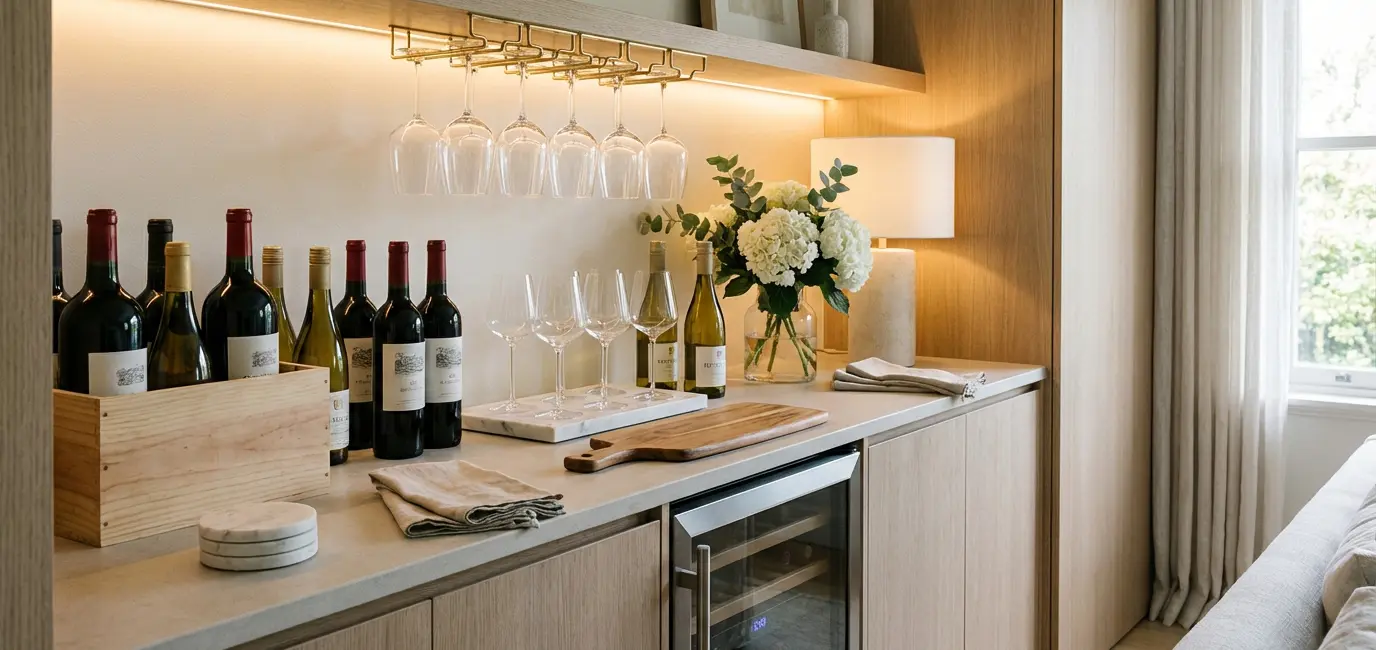
Why Every Home Needs a Wine Bar (Even a Small One)
I used to think a home wine bar was something you needed a big house and a dedicated room for. Then I saw a friend’s apartment in New York — a studio, barely 500 square feet — with the most gorgeous little wine setup on a two-shelf console table, and I completely changed my mind. The truth is, a home wine bar is really just a dedicated, intentional space for your wine and the tools to enjoy it.
The practical case is strong: when everything has a place, you actually use it. Your wine opener is always where you left it. Your glasses are clean and ready. You stop buying duplicate wine accessories because you can see what you already have. And when guests come over, you look like someone who has their life together — because in at least this one area, you genuinely do.
“A home wine bar is not about having more — it is about having what you love, where you can find it, presented in a way that makes every evening feel like a small celebration.”
There is also the sensory argument. A beautiful home wine bar elevates every glass. When you pour from a well-lit, well-organized, thoughtfully styled space, the wine tastes better — or at least it feels that way, which amounts to the same thing.
Choosing the Right Spot for Your Home Wine Bar
The most important rule when setting up a home wine bar: pick a spot you will actually use. Function beats aesthetics every time — though with a little planning, you can have both. Here are the best spots for a home wine bar setup:
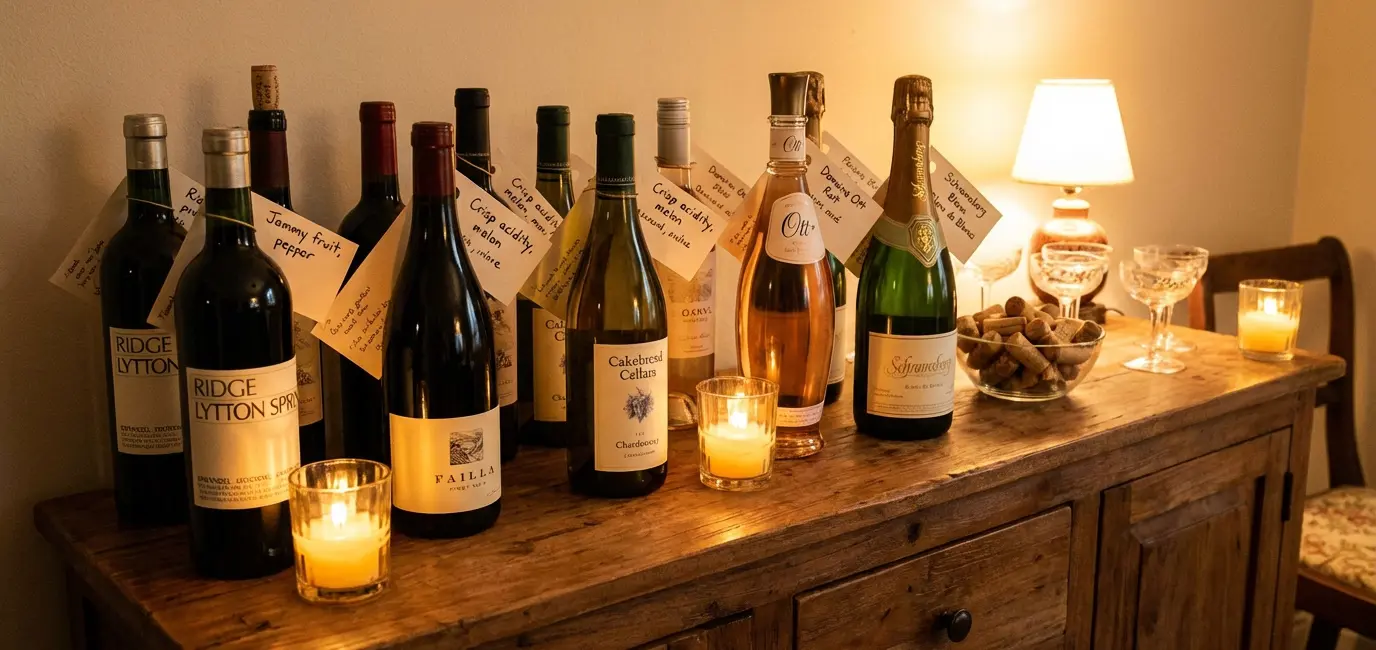
- A console table or sideboard in the living room — the classic choice. Open top for glassware, shelf below for bottles and a small wine cooler. Looks intentional and is always visible.
- A section of your kitchen counter — practical, close to the action. Dedicate one section to wine, keep it clear of everyday clutter, add a tray to define the space.
- A bar cart — the most flexible option. A rolling cart can move from room to room and works beautifully in small spaces or rentals where you cannot install anything permanent.
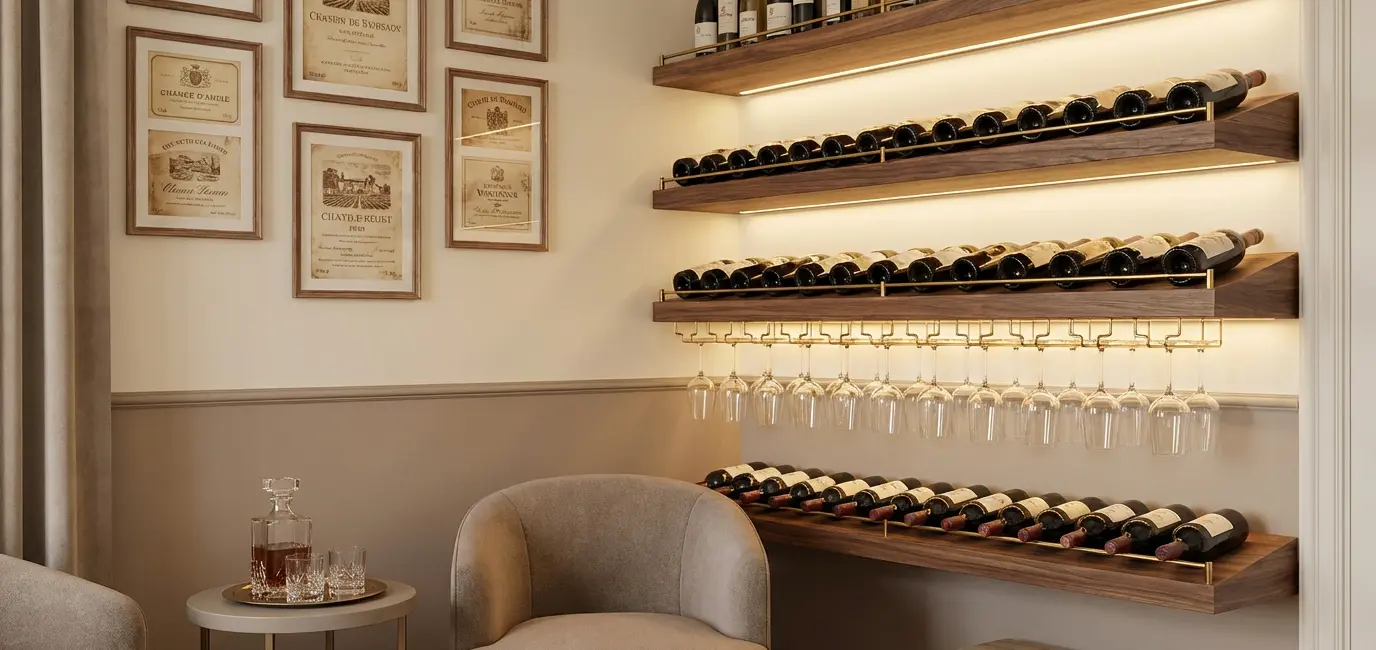
- A built-in nook or alcove — if you have it, use it. Recessed wall space with a few floating shelves becomes a stunning home wine bar with almost no footprint.
- A dedicated cabinet or hutch — great for hiding the less-glamorous elements (extra bottles, tools, napkins) while showing off glasses and a few key bottles.
One important note: wherever you land, keep your home wine bar away from direct sunlight and heat sources. Sunlight degrades wine quickly, even through the bottle. A cool, slightly shaded wall or interior corner is ideal.
Essential Tools and Accessories for a Home Wine Bar
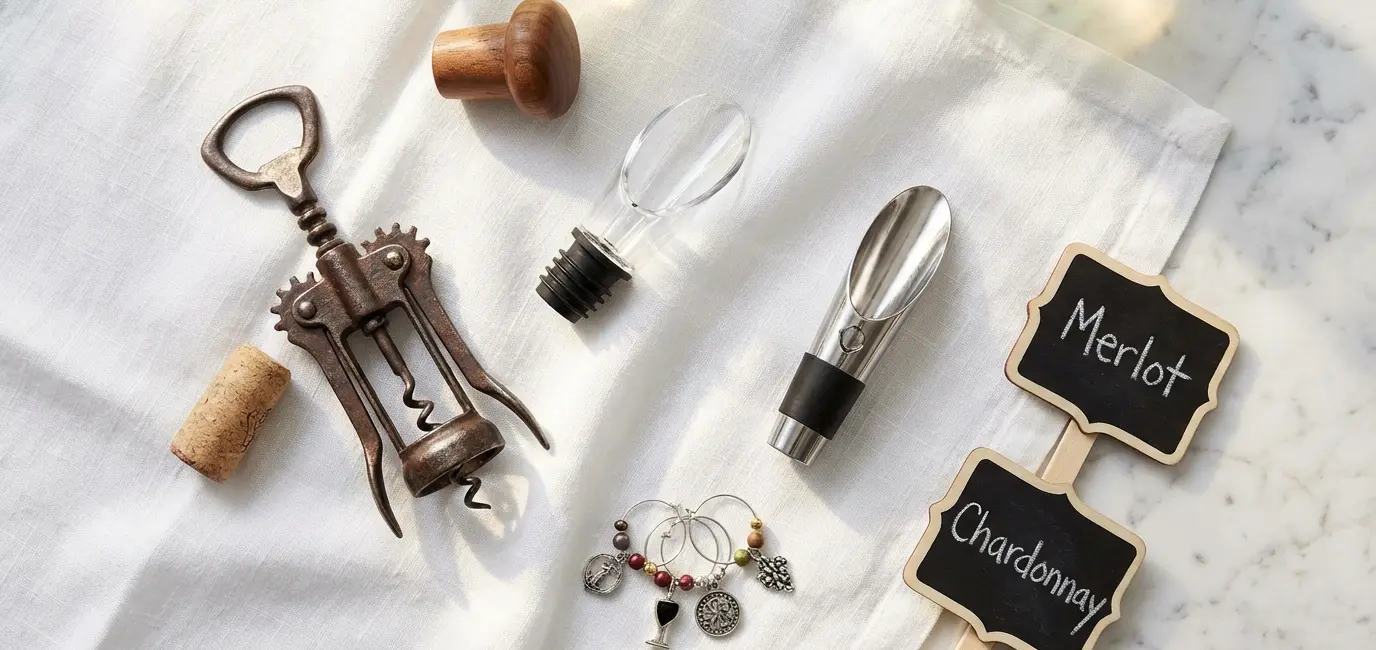
A home wine bar is only as good as its tools. You do not need every gadget — most of them are a waste of money — but there are a handful of essentials that make every glass better:
- A quality wine opener — skip the cheap ones. A waiter’s corkscrew or a lever-style opener will serve you for years.
- A wine aerator or decanter — particularly for big reds. Aerating opens up the wine and softens tannins in minutes.
- Wine stoppers — vacuum stoppers extend the life of an open bottle significantly.
- A wine pouring spout — reduces drips on your beautiful sideboard or tablecloth.
- Wine thermometer — optional but genuinely useful. Whites are best at 45–55°F, reds at 60–65°F.
- A wine ring or drip collar — small, inexpensive, prevents bottle drips on your styled surface.
- Cocktail napkins — always. A linen napkin or a stack of beautiful cocktail napkins makes the whole setup feel more considered.
I keep all the small tools corralled on a small tray on my home wine bar — opener, stopper, aerator, pourer. Tidy and always ready. You can find beautifully designed wine bar accessory sets on Amazon that keep everything coordinated without a lot of effort.
The Right Glassware for Your Home Wine Bar
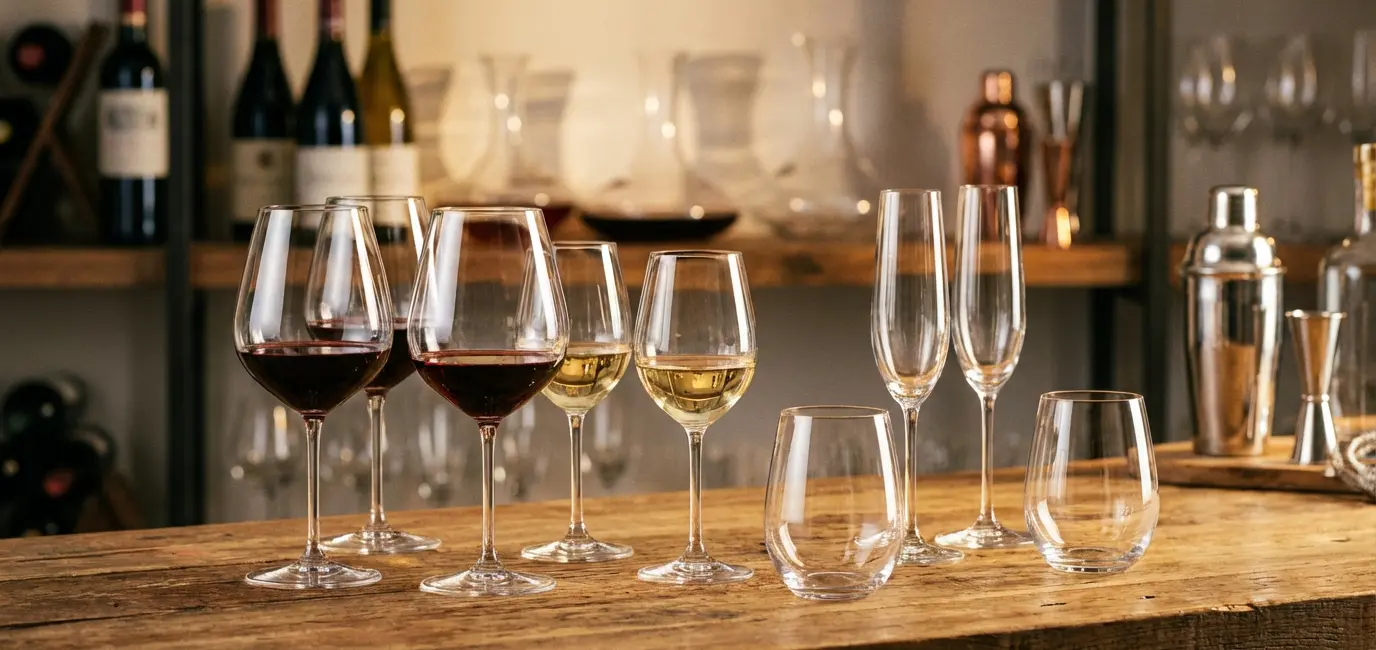
Glassware is the element of a home wine bar that people either overthink or completely under-invest in. You do not need a separate glass for every grape variety, but you do need a few distinct styles to genuinely enhance different wines:
- Red wine glasses (6 minimum) — a larger bowl allows the wine to breathe and releases aromatics. Bordeaux-style for Cabernet; a Burgundy balloon for Pinot Noir.
- White wine glasses (6 minimum) — a narrower bowl keeps white wines cooler and concentrates crisp aromas.
- Champagne flutes or tulip glasses (4–6) — flutes show off the bubbles; tulip-shaped glasses concentrate aroma better for quality sparkling wine.
- Stemless glasses (optional set of 6) — perfect for casual evenings and outdoor entertaining where stem breakage is a real risk.
Display your glasses on the home wine bar rather than storing them away — hanging from a stemware rack, standing in a glass organizer, or lined up in a row all look intentional and beautiful. For everyday entertaining, a set of clear crystal-style wine glasses from Amazon gives you the quality look without a large investment.
How to Stock Your Home Wine Bar
Stocking a home wine bar well does not mean buying every bottle in the wine shop. It means having a thoughtful, varied selection that works for a range of occasions. My personal formula is the 2-2-2 rule: two whites, two reds, two wildcards.
- Two whites — one light and crisp (Pinot Grigio, Sauvignon Blanc, Albariño) and one richer (Chardonnay or Viognier). These two cover almost every white wine occasion.
- Two reds — one approachable and food-friendly (Pinot Noir, Grenache, lighter Merlot) and one with structure (Cabernet Sauvignon, Malbec, Sangiovese).
- Two wildcards — keep a rosé almost always, and rotate the second slot seasonally: sparkling in winter and spring, an orange wine in summer, a port or dessert wine in cooler months.
Beyond bottles, think about temperature. A small countertop wine cooler is a game-changer for a home wine bar — even a single-zone cooler keeps your whites and rosé perfectly chilled without crowding your kitchen fridge. Find excellent compact wine coolers on Amazon that fit neatly under a console table. For bottle storage and a beautiful visual element, a wall-mounted or countertop wine rack adds both function and style to your home wine bar setup.
Styling and Decorating Your Home Wine Bar
Once the function is sorted, the styling is the genuinely fun part. The best home wine bar spaces feel like they grew organically out of the home rather than looking assembled in an afternoon. Here are the styling principles I use every time:
- The rule of three — group items in threes. Three bottles, a stack of napkins, a small vase. Odd-number groupings feel balanced and intentional.
- Vary the heights — tall wine bottles, medium glasses, low accessories. Playing with height adds visual interest.
- Add one organic element — fresh flowers, a eucalyptus sprig, a bowl of lemons. Something from nature grounds the styled space.
- Choose a color story — natural wood, black accents, white linens. Brass hardware, warm neutrals, green bottle glass. Marble surfaces, clear crystal, white flowers. Pick a direction and edit everything that fights it.
- Use art intentionally — a vintage wine print above your home wine bar ties the whole thing to the room. I love browsing wine-themed prints on Art.com — vintage French wine label posters work particularly beautifully.
- Light it well — a small table lamp, a wall sconce, or even tea lights makes the home wine bar area glow in the evenings. Good lighting is the secret ingredient every styled space depends on.
For more styling ideas to carry through the rest of your home, our coffee table styling ideas guide has tons of transferable principles, and our small living room decorating ideas round-up is full of ways to make any space feel intentional.
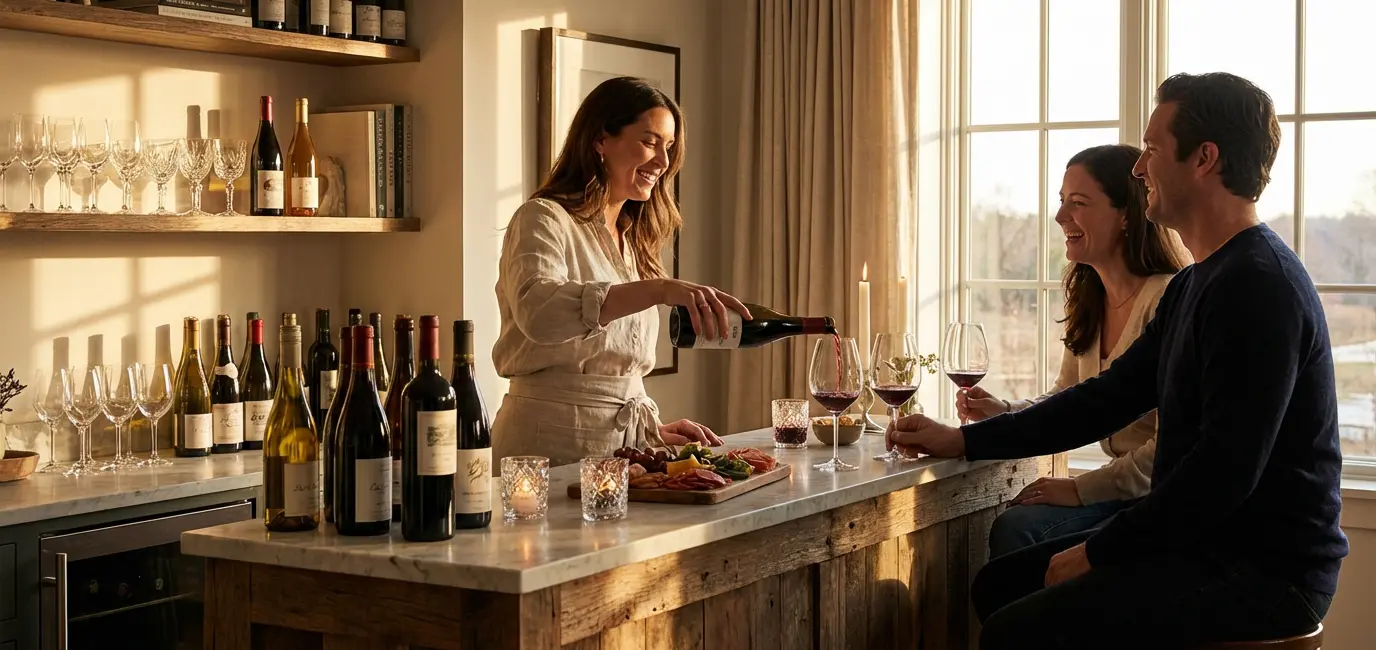
Ready to build out the entertaining side of your home wine bar? Our complete guide to how to host a wine tasting at home walks through exactly how to plan a proper tasting for friends using your new setup. For table inspiration when hosting dinner, our spring tablescaping ideas will give you a beautiful visual pairing to the bar. If you love cozy home entertaining, our girls night in ideas post is full of ways to turn a regular evening into something memorable. For a full sit-down dinner, our spring dinner party guide covers everything from menu to timeline. And for wine to pour at your new bar, our guide to the best rosé wines for spring is always a great starting point.
Frequently Asked Questions
How much does it cost to set up a home wine bar?
A basic home wine bar setup — a wine rack, a set of glasses, and a few essential tools — can come together for as little as $150 to $300. A more styled setup with a dedicated piece of furniture, a small wine cooler, and quality glassware typically runs $400 to $800. Start with the essentials and add pieces over time.
Do I need a wine cooler for a home wine bar?
Not necessarily. If you drink wine regularly and go through bottles within a few weeks, a cool, dark storage spot works fine for reds. For whites and rosé, a kitchen fridge works for short-term chilling. If you love serving wine at the perfect temperature or are building a larger collection, a dedicated wine cooler is genuinely worth it.
What is the minimum amount of wine to keep stocked at a home wine bar?
I recommend keeping at least six bottles on hand at any time — two whites, two reds, and two wildcards. This covers nearly every occasion without requiring a store run every time you want a glass.
How do I set up a home wine bar in a small space?
In small spaces, verticality is your friend. Use wall-mounted wine racks, hanging stemware holders, and tiered shelving to maximize limited surface area. A rolling bar cart is also excellent for small spaces because it takes up very little floor space and can tuck into a corner when not in use.
What home wine bar accessories do I actually need?
Essentials: a quality corkscrew, wine stoppers, and a way to display or store your glasses cleanly. Nice to have: an aerator or decanter, a wine thermometer, and drip rings. Skip: electric corkscrews and most single-purpose gadgets.
Setting up a home wine bar is one of those home investments that keeps paying dividends long after you make it. Every glass tastes a little better when it is poured from a space you love. Every guest feels a little more welcome when you can offer them a perfectly chilled white or a beautifully aerated red without any fuss. Take it one piece at a time — start with the right spot, get the essentials in place, and then style it into something that feels like yours. That is the whole secret to a home wine bar that actually gets used and actually brings joy.