This post may contains affiliate links. Read our full disclosure here.
The best Easter brunch wine pairings balance the light, fresh flavors of spring cooking — asparagus, smoked salmon, eggs, glazed ham, and lemon desserts — with wines that feel celebratory without being heavy. The standout choices for Easter brunch wine pairings are dry sparkling wine (including Champagne and Prosecco), dry rosé, and crisp whites like Sauvignon Blanc or Pinot Grigio. If your crowd insists on a red, a chilled light Pinot Noir or Beaujolais can work beautifully alongside the richer dishes on a spring brunch table. This guide walks you through every pairing decision you need for a wine-forward Easter brunch that feels effortless and genuinely impressive.
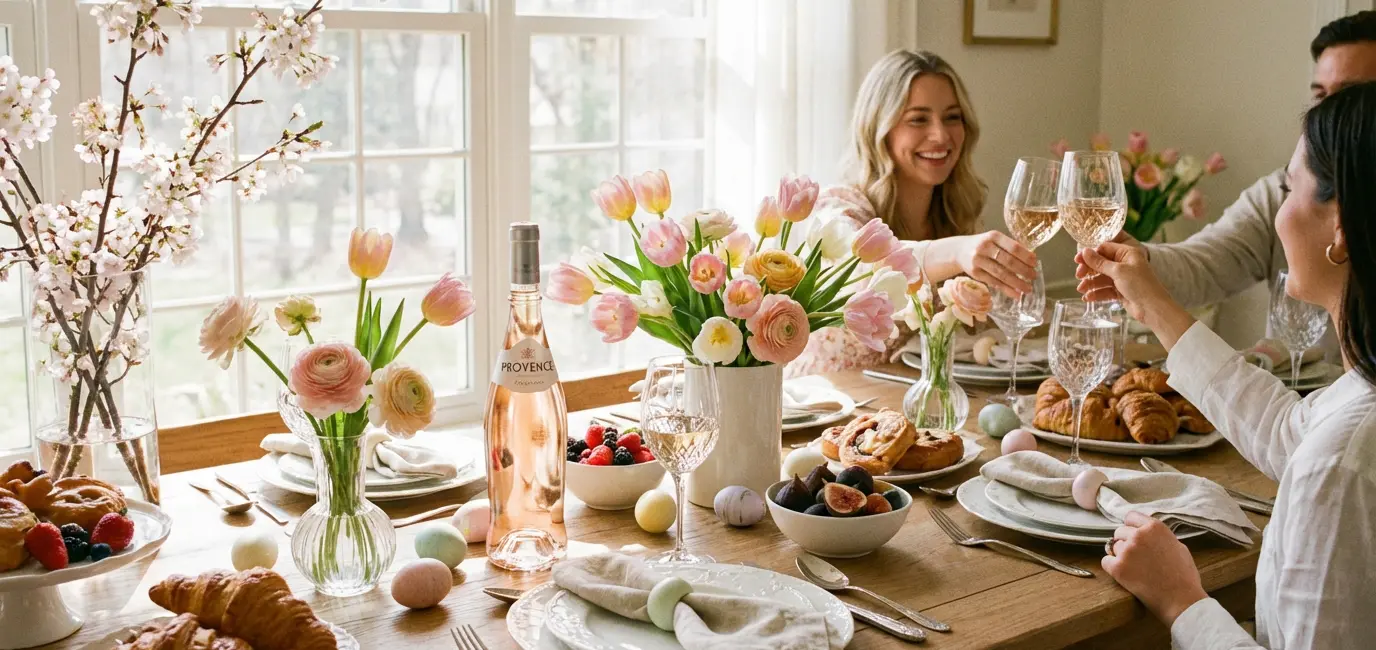
Why Wine Belongs at Every Easter Brunch Table
Easter brunch occupies a special category in the entertaining calendar — it is celebratory and festive like Christmas or Thanksgiving, but the food is lighter, the mood is airier, and the whole event is bathed in spring light. That combination calls for wine. A well-chosen bottle transforms an Easter brunch from a nice family meal into an event, and the good news is that the food served at most Easter brunch tables is genuinely wine-friendly.
Classic Easter brunch dishes — eggs Benedict, deviled eggs, smoked salmon, asparagus tarts, glazed ham, quiche, fruit salads, and spring vegetable frittata — all have high acidity, fresh herb notes, or delicate protein flavors that respond beautifully to the right glass. The core principle of great Easter brunch wine pairings is simple: match the lightness and freshness of spring food with wines that share those qualities. Heavy, tannic reds are for autumn dinners, not Easter mornings.
“Easter brunch is one of those rare occasions where you can open a bottle of Champagne at 11am and it feels not just acceptable but genuinely perfect.”
One more practical note before we dive into the pairings: for an Easter brunch, I always recommend having at least two wine styles on the table — a sparkling and a still white or rosé. Different guests want different things at brunch, and covering both sparkling and still means everyone finds their version of the ideal Easter brunch wine pairing. If you are also serving an Easter dinner later in the day, our separate guide to wines for Easter dinner covers the fuller, richer pairing territory.
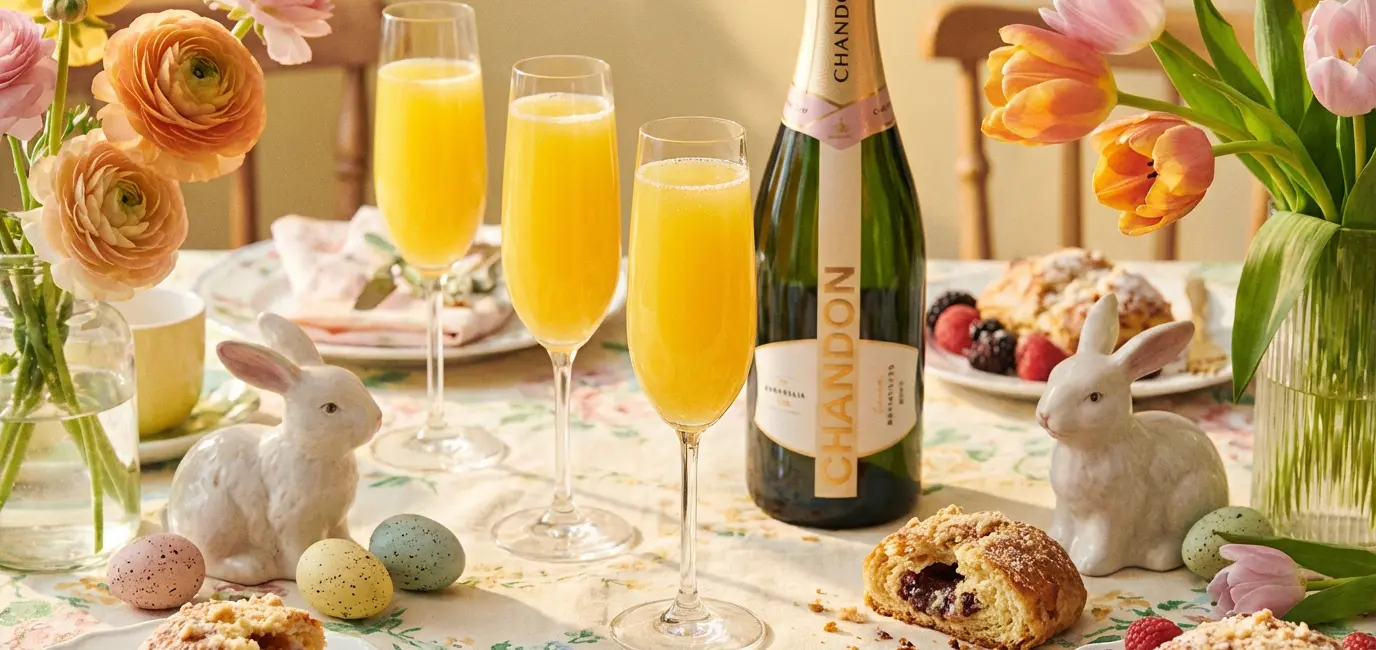
Easter Brunch Wine Pairings: Sparkling and Champagne
Sparkling wine is the single most versatile choice for Easter brunch wine pairings, and it is my personal first pour every year. The effervescence cuts through the richness of egg dishes, complements smoked salmon and cream cheese beautifully, and feels inherently festive in a way that nothing else quite matches at a morning celebration.
- Champagne (Brut Non-Vintage) — The gold standard for any celebratory brunch. A dry Brut NV from a reputable house pairs with virtually everything on an Easter brunch table: eggs Benedict, smoked salmon blinis, deviled eggs, fruit, and pastries. The brioche and yeast notes in Champagne echo the pastry and egg flavors in a way that feels genuinely synergistic. You can find a well-priced selection on Wine.com’s sparkling collection.
- Crémant d’Alsace or Crémant de Bourgogne — French sparkling wines made outside the Champagne region using the same method, typically at 30–50% of the price. The Crémant d’Alsace (often Pinot Blanc-based) is particularly brilliant alongside asparagus dishes and quiche. Consistently one of the best-value Easter brunch wine pairing choices.
- Prosecco (Extra Brut or Brut) — lighter and fruitier than Champagne, with gentle apple and pear notes that work beautifully for mimosas. If you are making a signature mimosa station at your Easter brunch, Prosecco is the ideal base. Go for Extra Brut to keep sweetness in check when mixing with juice.
- Cava — Spanish Champagne-method sparkling wine at an accessible price point. Nutty and biscuity like Champagne but with a Mediterranean citrus freshness. Pairs especially well with the salty, savory components of an Easter brunch table — cured meats, olives, and smoked fish.
- Blanc de Blancs (100% Chardonnay sparkling) — for a more mineral, linear sparkling style. The pure Chardonnay expression gives a chalky minerality and green apple brightness that is exceptional alongside asparagus and seafood Easter brunch dishes.
Hosting tip: for a group of 8 to 10 at Easter brunch, plan on 2 to 3 bottles of sparkling wine for the welcome pour and mimosa making, plus additional still wine for the main meal. Sparkling disappears faster than you expect at a celebratory morning gathering.
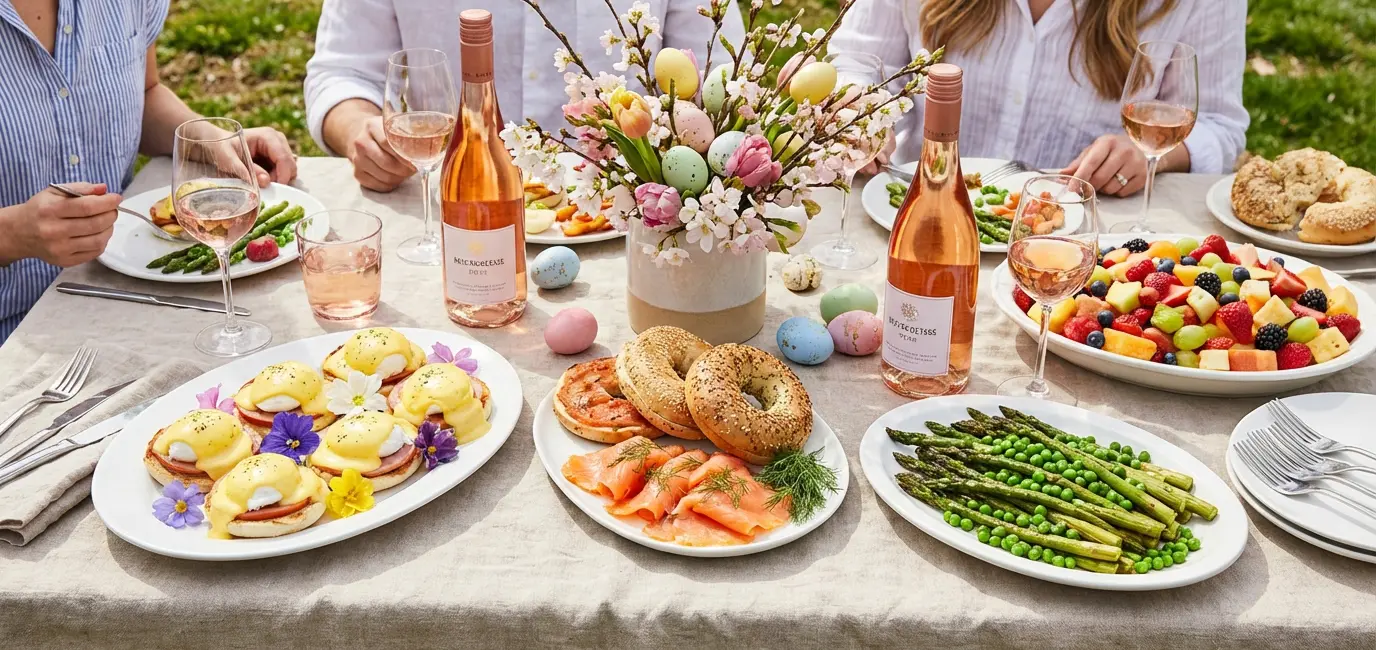
The Best Rosé Wine for Easter Brunch
Dry rosé is my absolute favorite Easter brunch wine pairing for the main meal portion of the gathering. It sits perfectly between a white and a sparkling — it has the freshness and acidity to cut through egg and cheese dishes, but it also has enough fruit and body to hold up to glazed ham or a charcuterie board. And visually, a pale Provençal rosé in a wine glass on an Easter table just looks exactly right — that delicate blush pink against spring florals is genuinely beautiful.
For Easter brunch rosé wine pairings, I look for wines with these characteristics:
- Dry, not sweet — off-dry or sweet rosé clashes with savory egg dishes. Look for “dry” on the label or choose Provence rosé, which is almost always bone dry.
- High acidity — acidity is what makes a rosé food-friendly at brunch. Look for wines described as “crisp” or “fresh.”
- Light-to-medium body — heavier, more extracted rosés can overwhelm delicate brunch food. The pale, elegant style from Provence is perfect.
- Strawberry and watermelon fruit notes — these fresher fruit profiles complement spring food better than the darker berry notes in a bolder rosé.
For specific bottle recommendations across every price point and region, our full guide to the best rosé wines for spring has everything you need. The rosé collection on Wine.com is also a great place to browse options with reviews and ratings.
White Wine Pairings for Easter Brunch
Still white wines are the workhorse of great Easter brunch wine pairings. They handle the widest range of brunch dishes — eggs, fish, vegetables, and cheese — and they tend to be accessible to the widest range of guests. Here are the whites that perform best:
- Sauvignon Blanc — the single most food-versatile white for an Easter brunch table. The bright acidity and herbal, citrus notes of a good Sauvignon Blanc are exceptional with asparagus dishes, smoked salmon, goat cheese, and green herb-heavy recipes. New Zealand Marlborough or Loire Valley Sancerre/Pouilly-Fumé are classic choices.
- Pinot Grigio (Italian) — lighter-bodied and lower in alcohol than many whites, Pinot Grigio is the ideal brunch white for guests who want something refreshing without complexity. Works beautifully with eggs, fruit, and lighter salads at an Easter brunch.
- Albariño — the Spanish white grape from Galicia brings a saline, peachy, high-acid character that is exceptional with seafood-based Easter brunch dishes. If you are serving smoked salmon, crab cakes, or a seafood frittata, reach for an Albariño.
- White Burgundy (Chardonnay) — for the richer elements of the brunch table — a creamy quiche Lorraine, eggs Benedict with hollandaise, or a cheese board — an unoaked or lightly oaked white Burgundy or a good Chablis gives Chardonnay’s natural richness without heavy oak that would clash with the spring food.
- Grüner Veltliner — Austria’s signature white grape is one of the great food wines of the world and completely under-used at Easter gatherings. The white pepper, green herb, and citrus notes make it a natural match for asparagus, spring vegetables, and egg dishes. If you can find one, serve it at your next Easter brunch and watch it become the conversation piece of the table.
Browse Wine.com’s white wine selection for a wide range of these varieties at every price point, with user reviews to guide your final bottle choice.
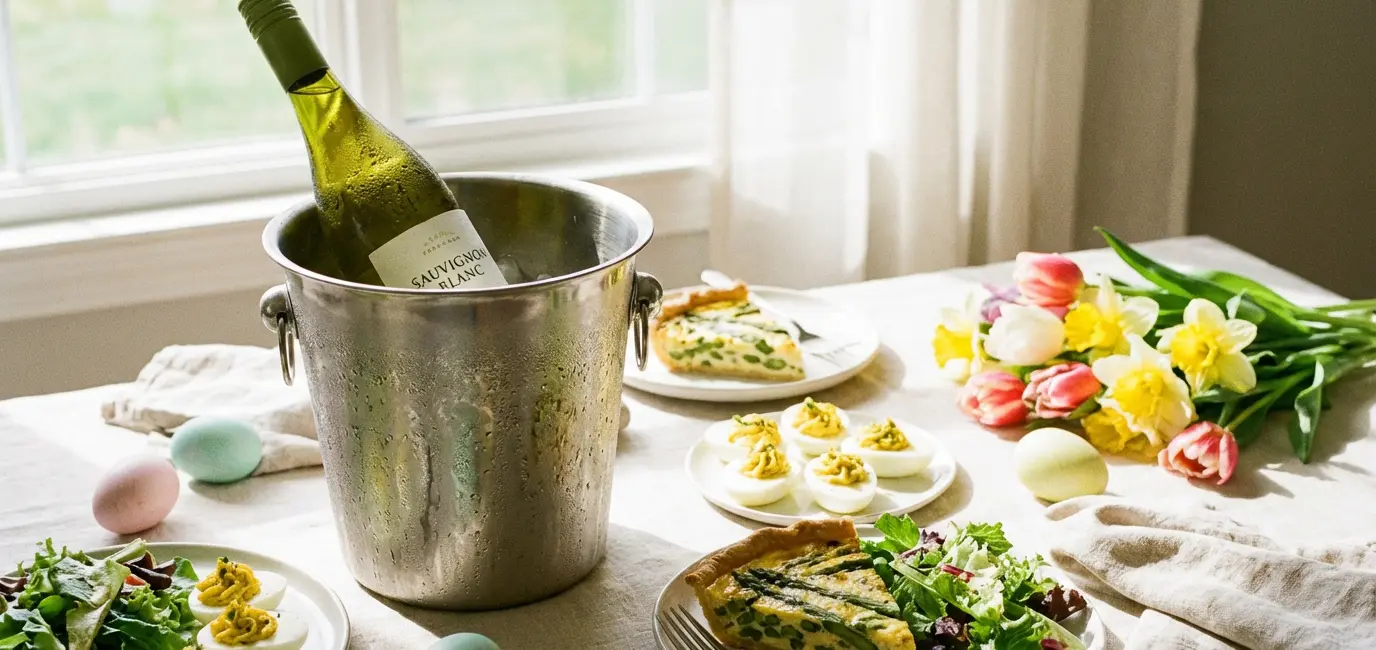
Red Wine Options for Easter Brunch (Yes, Really)
Red wine at Easter brunch raises eyebrows, but there is absolutely a place for it — you just need to pick the right style. The key is light-bodied, low-tannin reds that can be served slightly chilled (around 55–60°F). These reds work particularly well if your Easter brunch menu includes glazed ham, charcuterie, or lamb-based dishes.
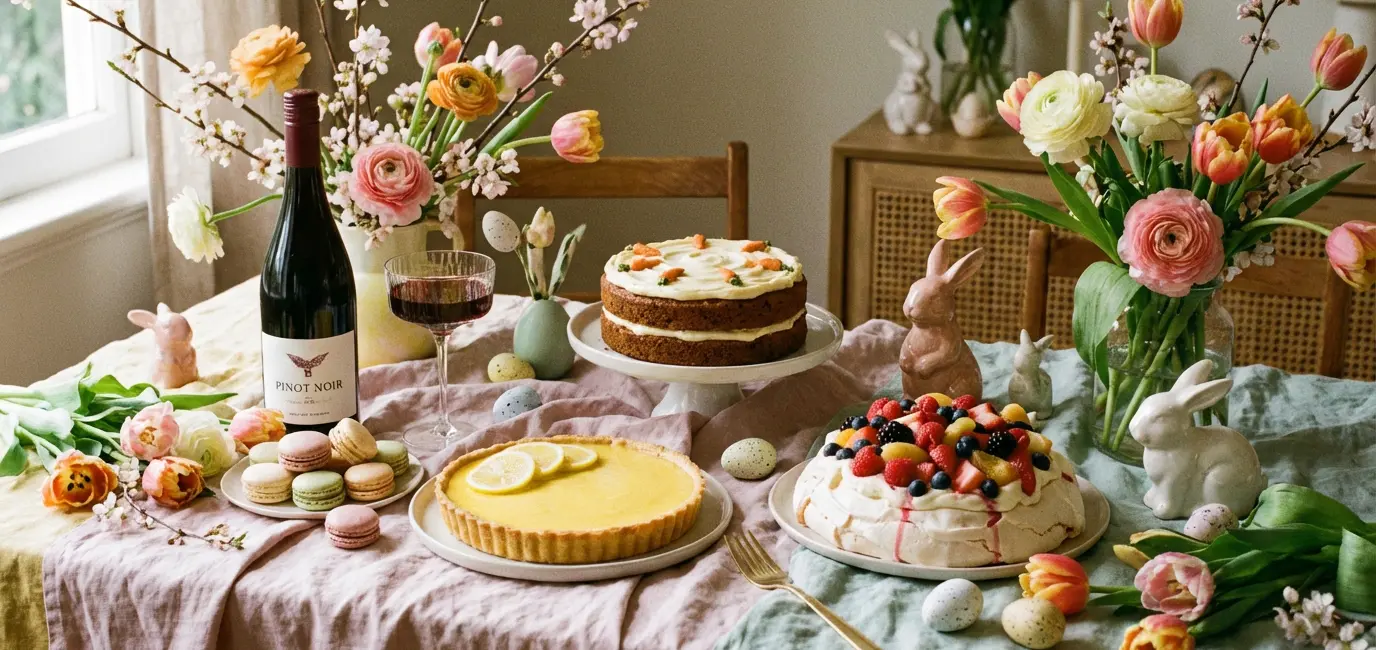
- Pinot Noir (chilled slightly) — the classic Easter brunch red wine pairing. Pinot Noir’s high acidity, low tannins, and red berry fruit work with both the savory and sweet elements of a spring brunch. Serve it at cellar temperature rather than room temperature for brunch. Our guide to Pinot Noir on Wine.com has some beautiful options.
- Beaujolais (particularly Cru Beaujolais) — Gamay-based wines from the Beaujolais crus — Fleurie, Morgon, Chiroubles — are the most brunch-friendly reds in the world. Serve them chilled, and they bring a bright, juicy, almost rosé-like freshness that pairs beautifully with ham and charcuterie.
- Lambrusco (Secco, not sweet) — a sparkling red from Emilia-Romagna that is genuinely fun at a brunch table. The dry (Secco) style has enough acidity to cut through rich egg and cheese dishes and a festive effervescence that makes it appropriate for a morning celebration. It is also inexpensive and reliably crowd-pleasing.
- Schiava (Vernatsch) — an under-the-radar light red from Alto Adige in northern Italy. Barely more tannic than a full-bodied rosé, with strawberry and almond notes and very low alcohol. Perfect for guests who want a red but not a heavy one at an Easter brunch gathering.
If you are planning an Easter brunch that flows into an afternoon gathering and you want one table wine that works all day, a light Pinot Noir is the single most flexible choice. It handles both the brunch dishes and the lighter afternoon nibbles without asking guests to switch glasses.
How Much Wine to Buy for Easter Brunch
Calculating wine quantity for an Easter brunch is slightly different from a dinner party because the event spans a shorter window and guests often drink more slowly in the morning. Here is my practical formula for Easter brunch wine pairings quantities:
- Sparkling wine: 1 bottle per 3 guests for the arrival pour and mimosas. For a group of 12, plan 4 bottles of sparkling.
- Still white or rosé: 1 bottle per 3–4 guests for the meal. For a group of 12, plan 3 to 4 bottles.
- Red wine (optional): 1 bottle per 6–8 guests. Most brunch guests will gravitate toward sparkling and white; red is for the 20–30% who prefer it.
- Total guideline: For 12 guests at a 2–3 hour Easter brunch, plan approximately 7–8 bottles across all styles. Better to have one extra than run short mid-celebration.
- Non-alcoholic options: Always have sparkling water, fresh juice for mimosas, and an elderflower cordial with sparkling water as a proper non-alcoholic option that feels as special as the wine.
For a beautiful Easter brunch table that showcases your wine selections well, our spring tablescaping guide has the layering and styling techniques that make a spread look genuinely editorial. And if you want to turn the wine element of your Easter brunch into a tasting experience, our guide to hosting a wine tasting at home has a simple format that works perfectly in a brunch setting.
If you are planning a full spring hosting season, our spring garden party guide and spring dinner party menu ideas pair naturally with everything in this article to give you a complete warm-weather entertaining toolkit. And for the planning and table setup side of things, our full spring dinner party hosting guide covers the timeline, prep, and logistics in detail.

Frequently Asked Questions
What is the best wine for Easter brunch?
Dry sparkling wine — Champagne, Cava, Crémant, or Prosecco — is the most versatile and festive choice for Easter brunch. If you want a still wine, a dry Provençal rosé or a crisp Sauvignon Blanc pairs beautifully with the full range of spring brunch food.
What wine goes with eggs Benedict at Easter brunch?
Champagne or Crémant is the classic pairing for eggs Benedict — the acidity cuts through the hollandaise and complements the egg beautifully. A crisp Chablis or unoaked Chardonnay is the best still wine option if you prefer to avoid sparkling.
Can you serve red wine at Easter brunch?
Yes, but choose light-bodied, low-tannin reds that can be served slightly chilled. Pinot Noir, Beaujolais (Fleurie or Morgon), or a sparkling Lambrusco Secco all work well at an Easter brunch, particularly alongside glazed ham or charcuterie.
What wine pairs with Easter ham?
Glazed ham is one of the more wine-friendly Easter dishes. The sweetness of the glaze and salty pork flavor pair beautifully with dry rosé, off-dry Riesling, Pinot Noir, or a slightly chilled Beaujolais. Avoid very tannic reds, which clash with the sweetness.
How many bottles of wine do I need for Easter brunch?
For a group of 12 guests at a 2 to 3 hour Easter brunch, plan approximately 7 to 8 bottles total across sparkling, still white or rosé, and optionally one red. The general rule is 1 bottle of sparkling per 3 guests for mimosas, plus 1 bottle of still wine per 3 to 4 guests for the meal.
Is Champagne appropriate for a morning brunch?
Absolutely — Easter brunch is one of the few occasions where opening Champagne in the morning feels not just acceptable but genuinely perfect. The effervescence is refreshing, it pairs with everything on the table, and the celebratory nature of Easter morning is exactly what Champagne was made for.
The best Easter brunch wine pairings are the ones that make your guests feel like the morning was planned with genuine care. You do not need a sommelier or an expensive cellar — a bottle of good dry sparkling wine, a chilled rosé, and a crisp Sauvignon Blanc cover virtually every dish and every guest preference at an Easter brunch table. Buy one more bottle than you think you need, chill everything properly the night before, and remember: the host who is relaxed and enjoying their own wine is always the secret ingredient that makes a gathering feel truly special.