This post may contains affiliate links. Read our full disclosure here.
If you’ve been scrolling through Pinterest lately and noticed a sudden surge of gold geometric accents, black lacquer furniture, and glamorous sunburst mirrors, you’re not imagining things — art deco home decor ideas are absolutely having a moment in 2026, and I am fully here for it. After years of minimalist everything, there’s something deeply satisfying about bringing back a little drama, a little richness, a little Gatsby into our homes. I recently did a small art deco refresh in my own entryway, and I’m not exaggerating when I say it completely changed how the whole house feels when I walk in the door.
“Art deco is the rare design movement that manages to be both incredibly glamorous and incredibly livable. It’s not a museum aesthetic — it’s a how-you-deserve-to-live aesthetic.”
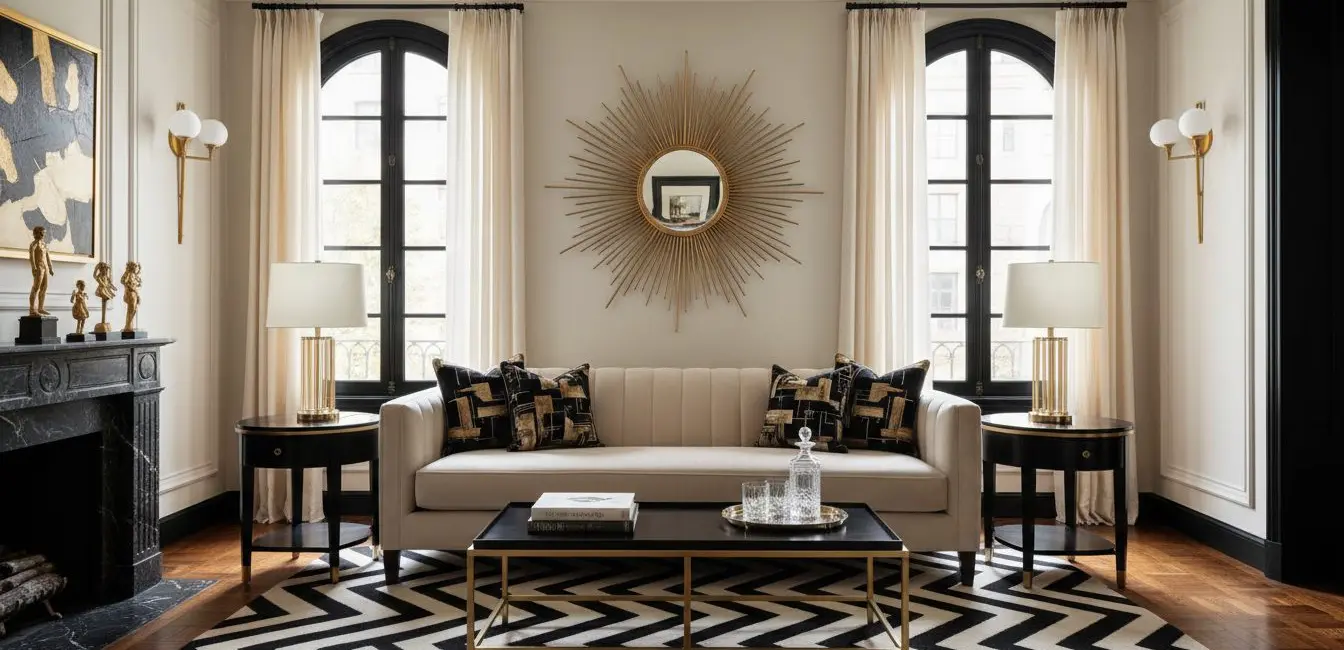
What Is Art Deco Style (and Why It’s Back)?
Art deco emerged in France in the 1920s and swept through architecture, interior design, fashion, and fine arts throughout the late 1920s and 1930s. If you’ve ever been to the Chrysler Building in New York, the Palais de Chaillot in Paris, or even just stayed in a well-preserved old hotel, you’ve experienced art deco — those clean geometric lines, the bold color contrasts, the unapologetic luxury of it all.
The core principles of art deco home decor are: bold geometry, rich materials, strong contrasts, and a commitment to glamour that doesn’t apologize for itself. Think stepped forms, fan shapes, sunburst motifs, chevron patterns, and the holy trinity of art deco color: black, gold, and cream (with jewel-tone accents like emerald, sapphire, and deep ruby).
Why is it back in 2026? I think we’re collectively exhausted by beige. The past decade of greige walls, open shelving, and “minimalist” everything has produced beautiful homes that somehow feel emotionally cold. Art deco offers the antidote: warmth through richness, personality through pattern, and a confident sense of “I chose this deliberately.” It also pairs beautifully with the quiet luxury aesthetic that’s been dominating Pinterest — both movements share an appreciation for quality materials and understated-but-expensive-looking spaces.
The 2026 iteration of art deco also benefits from a crucial update: it’s lighter and more livable than the original. You don’t need to paint every wall black or fill your living room with dark walnut paneling. Modern art deco — sometimes called “Neo Deco,” which I wrote about recently in my Neo Deco interior design guide — takes the best elements of the movement and applies them selectively, so your home feels glamorous rather than overwhelming.
Art Deco Living Room Ideas
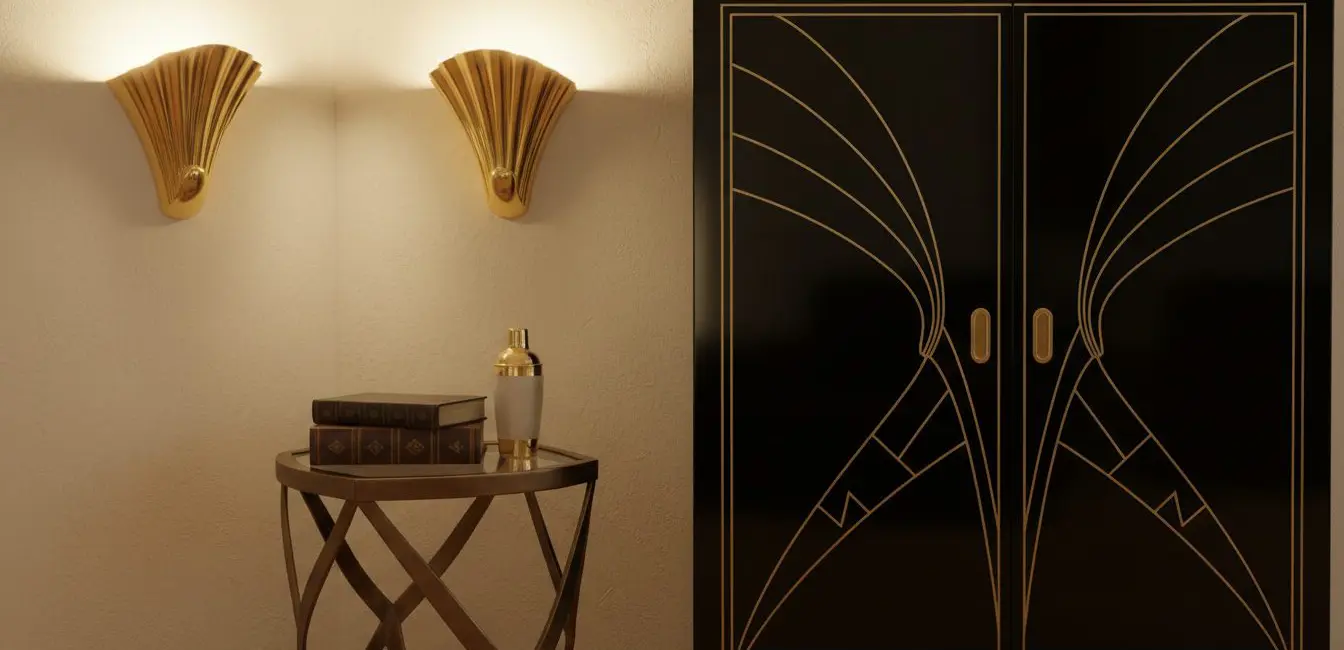
The living room is where art deco home decor ideas shine brightest, because this is the space where you can go bold without commitment (no permanent paint decisions required). Here are the elements I’d start with:
- A sunburst or starburst mirror. This is the single most impactful art deco addition you can make. A large gold sunburst mirror above a fireplace or sofa instantly reads “art deco” and photographs beautifully. Look for versions with graduated rays — they’re more authentic to the period than uniform spokes. Amazon has a solid selection of art deco mirrors at every price point.
- Geometric throw pillows and rugs. Chevron, herringbone, stepped arches, and diamond patterns are all period-correct and easy to swap in. A bold geometric rug in black and cream anchors the room without requiring you to change any furniture.
- Velvet upholstery. The Roaring Twenties loved texture, and velvet was the ultimate luxury fabric. A velvet sofa or a pair of velvet accent chairs in a jewel tone — emerald, navy, or deep plum — gives you that art deco richness instantly.
- Art deco wall art. Original art deco prints — the travel posters, the Tamara de Lempicka-style figurative works, the bold geometric abstracts — are widely reproduced and available through Art.com, which has an excellent collection of vintage and reproduction deco prints.
- Gold and black accent pieces. Side tables with geometric bases, brass candleholders, black lacquer boxes, and stepped bookends are all period-appropriate accessories that you can find easily and affordably.
One thing I’ve learned about doing art deco home decor ideas in a modern space: restraint in the furniture, boldness in the accents. If you have a neutral sofa and a clean-lined coffee table, you can go much more dramatic with the accessories without the room feeling busy. If you’re starting fresh with furniture, I love what Denver Modern has for art deco-adjacent pieces — their velvet seating and geometric accent furniture hit the right notes. For something slightly more editorial, TOV Furniture has some genuinely stunning art deco-inspired upholstered pieces.
Don’t forget: art deco living rooms are also well-lit living rooms. Dramatic pendant lights, art deco floor lamps with stepped bases and frosted glass shades, and the strategic use of uplighting on architectural elements are all part of the look. If your living room lighting is currently just a ceiling fixture and a lamp you’ve had since college, this is the moment to upgrade.
Art Deco Bedroom Ideas
The bedroom is where art deco home decor becomes genuinely indulgent — in the best possible way. This is the room where you can fully lean into the “I live in a 1920s Parisian apartment” fantasy, and honestly, why wouldn’t you?
The foundation of an art deco bedroom is the headboard. A tall, upholstered headboard in a rich fabric — emerald velvet is the quintessential choice, but deep navy, ruby, or even a bold black lacquer are all period-correct — immediately transforms the room. Pair it with art deco bedside tables: look for geometric shapes, mirrored surfaces, or stepped silhouettes with gold hardware.
- Color palette. Classic art deco bedroom palettes work in opposites: deep jewel tones against cream or white, black against gold, navy against champagne. Pick two or three colors and commit.
- Stepped crown molding. If you’re doing any sort of renovation or have the ability to add architectural detail, stepped crown molding is the single most authentic art deco architectural element you can incorporate. Even a simple two-step profile makes a dramatic difference.
- Geometric bedding. Chevron, herringbone, and stepped arch patterns in your bedding carry the deco motif without requiring any furniture changes.
- Art deco vanity or dressing table. A mirrored vanity with a trifold mirror is deeply on-period and extraordinarily practical. Look for ones with gold or chrome hardware and clean geometric lines.
- Window treatments. Floor-to-ceiling drapes in a solid jewel tone or a subtle geometric jacquard ground the room and add that touch of old-money luxury that art deco does so well.
I’m also a big advocate for adding a gallery wall with art deco prints in the bedroom — something intimate and personal, not the large-scale installation you might do in a living room. A cluster of three to five framed deco prints above a bedside table, or a single large figurative print above a reading chair, adds layers of personality that make the room feel genuinely curated rather than Pinterest-assembled.
Art Deco Entryway and Hallway Ideas
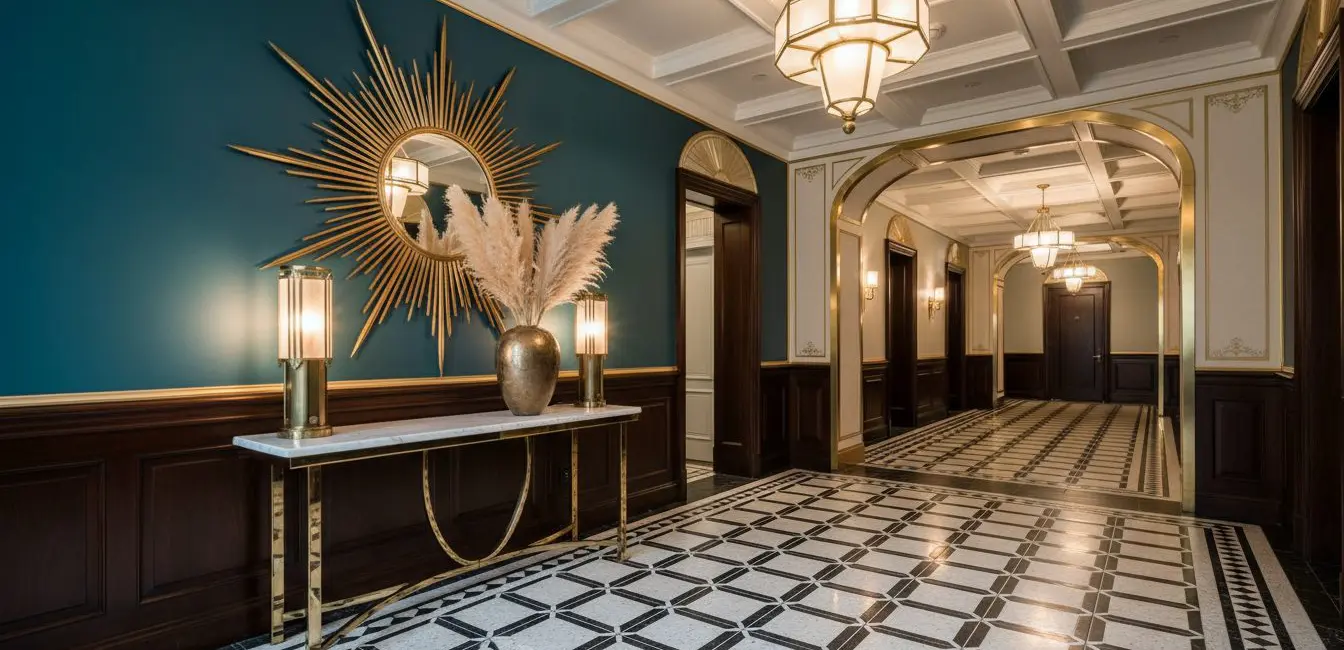
I saved my own art deco experiment for the entryway, and it was the perfect place to start: enough impact to transform how the whole house feels when you walk in, small enough that the investment wasn’t overwhelming.
The art deco entryway has a clear visual vocabulary: geometric floor tiles (black and white is the classic; herringbone hardwood in a dark stain also works), a statement mirror, a slim console table with architectural lines, and a pendant light that makes a statement.
Here’s exactly what I did in my own entryway, and what I’d recommend as a starting point:
- Starburst mirror. Mine is about 36 inches and hangs over the console. It makes the entryway feel twice as large and immediately reads “deliberate design decision.”
- Marble console table. Or a faux-marble finish — the real thing is obviously gorgeous but the look-alike options have gotten very convincing. The key is clean geometric lines and gold or black legs.
- Geometric tile runner or rug. If you can’t do permanent tile (renters, I see you), a geometric runner rug achieves 80% of the visual impact.
- Statement pendant light. An art deco pendant — frosted glass, geometric metal cage, or a tiered drum shade in black and gold — makes the entryway feel finished in a way that a flush-mount ceiling light never can.
- A single tall lamp or sculpture. Art deco loved vertical elements. A tall ceramic lamp, a sculptural vase, or even a small bronze figurine on the console adds height and period character.
One tip from personal experience: in a small entryway, keep the color palette simple — black, white, and gold — and let the shapes do the work. Pattern overwhelms small spaces. Shape, by contrast, commands them.
Art Deco Dining Room Ideas
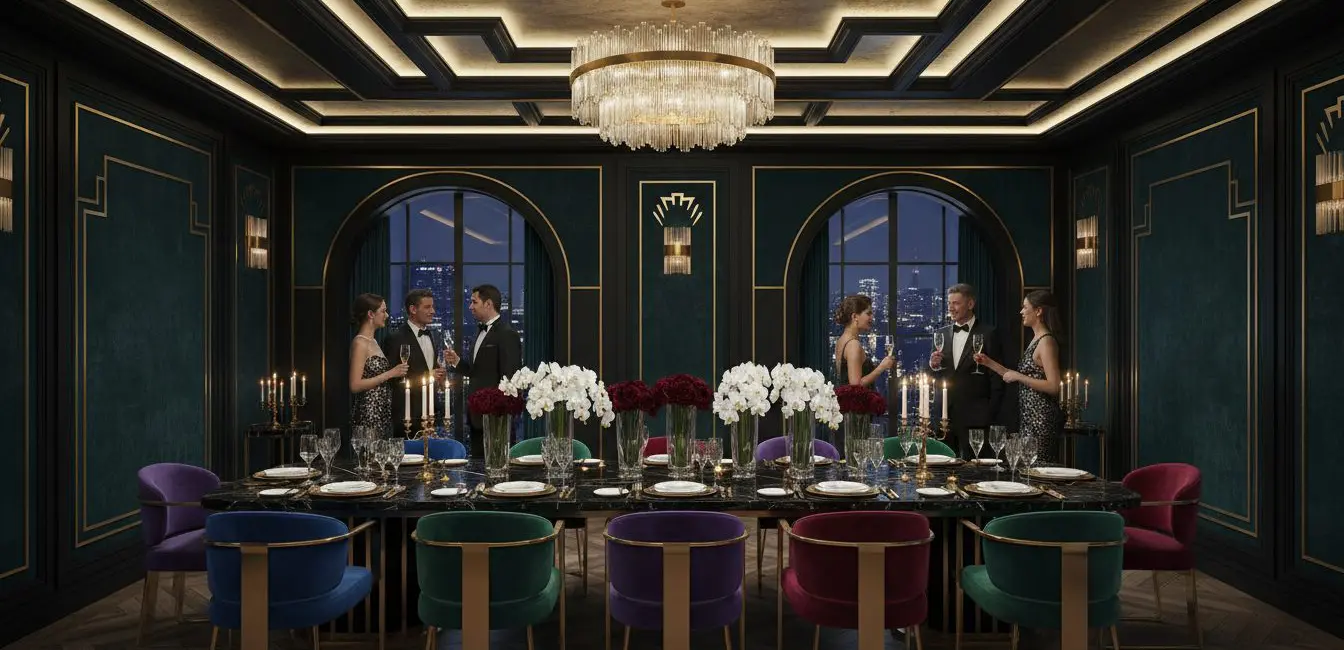
The dining room was designed for art deco. Think about it: this is a room that’s literally meant to create an experience, to make the act of eating feel special. Art deco’s love of drama, rich color, and deliberately theatrical atmosphere is a perfect match.
The centerpiece of an art deco dining room is the light fixture. A statement chandelier — tiered, with geometric metalwork, ideally in gold or bronze, with frosted or amber glass — sets the tone for everything else. This is the piece worth spending on; the rest of the room can be assembled more affordably.
- Dark, dramatic wall color. Deep navy, forest green, or charcoal creates that “dining in a speakeasy” atmosphere that makes art deco dining rooms so memorable. If committing to four dark walls feels like too much, consider doing a single feature wall behind the sideboard.
- Jewel-toned upholstered dining chairs. Velvet chairs in emerald, sapphire, or deep ruby against a dark wall are the quintessential art deco dining room look. Mix metals — gold-legged chairs with a dark wood table — for that deliberately eclectic deco sensibility.
- Geometric wallpaper accent. An art deco geometric wallpaper on one wall, or a wallpaper mural with a deco-inspired pattern, can transform a dining room in a weekend. Speaking of which: I design my own fabric and wallpaper patterns, and my Spoonflower shop has a collection of art deco-inspired wallpaper and table linen patterns that would work beautifully in a deco dining room.
- A long, low sideboard. Art deco furniture loved horizontal lines balanced with vertical accents. A long, low sideboard in dark wood or lacquer with geometric hardware provides both storage and a display surface for candles, art objects, and your bar setup.
- Table linens with geometric patterns. Herringbone napkins, a chevron table runner, or bold geometric placemats carry the art deco motif to the table without any permanent commitment.
Art Deco Home Bar and Kitchen Ideas
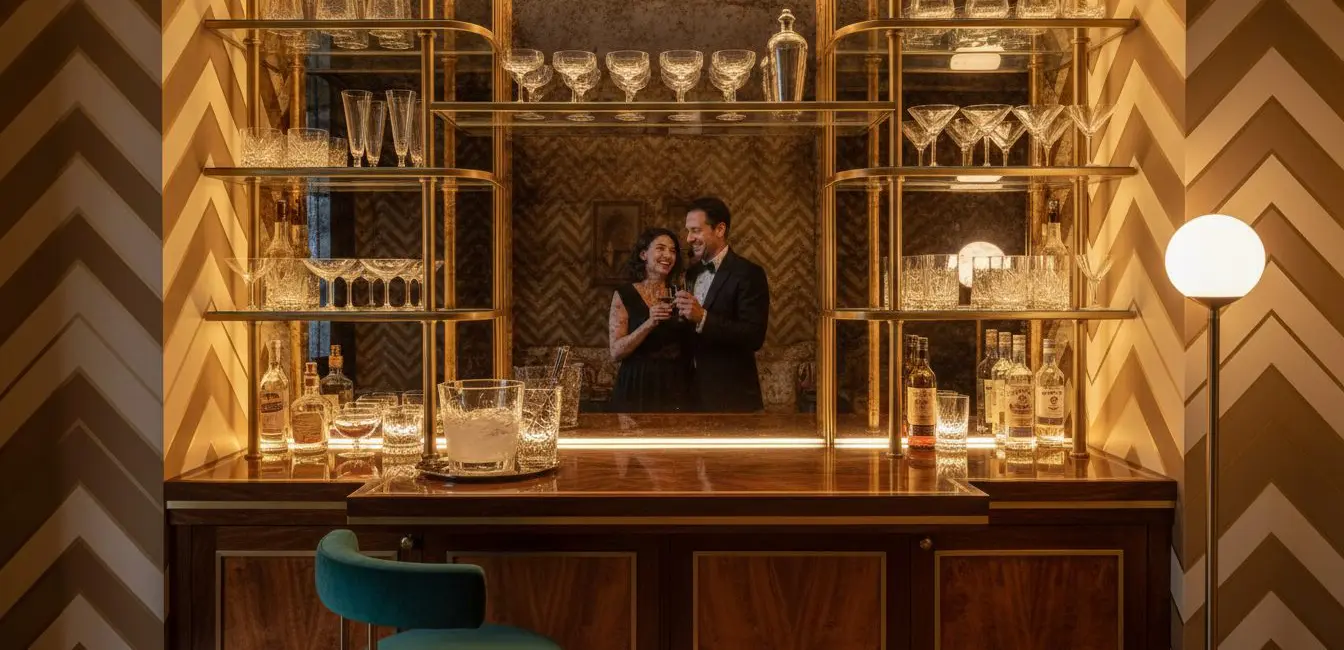
This one is near and dear to my heart, obviously. The intersection of art deco home decor and home bar styling is so natural that it barely needs explaining — the era that perfected the aesthetic also invented the cocktail culture that made bars into art. If you’re going to put a bar cart or a bar cabinet in your home, art deco is the right frame for it.
The art deco home bar gets its drama from a few key elements: a mirrored or metallized backsplash, geometric wallpaper or a bold graphic tile, glassware with stepped or etched geometric patterns, and the right lighting (think art deco sconces flanking the bar area, or an amber pendant above). For a full guide to styling a home bar cart in any aesthetic, my bar cart styling guide covers everything.
In the kitchen, art deco ideas are most effectively applied through hardware, lighting, and small accessories rather than structural changes. Black hexagonal tile floors are a period-correct choice if you’re renovating. Gold hardware on white or dark green cabinets reads as art deco without requiring any permanent architectural commitment. Geometric pendant lights over an island or breakfast bar instantly elevate the kitchen’s aesthetic temperature.
How to Mix Art Deco With Modern Decor
The question I get asked most often when people start exploring art deco home decor ideas: how do I do this without my home looking like a theme park or a movie set? The answer is: restraint in the bones of the room, boldness in the accessories.
Here’s my framework for mixing art deco with modern living:
- Keep large furniture modern and clean-lined. A contemporary sofa, a simple dining table, clean-lined storage — these give the art deco accents something to contrast against. If everything is ornate, nothing reads as special.
- Use art deco for the “jewelry” of the room. Mirrors, lighting, art, throw pillows, rugs, hardware — these are where you bring in the geometric shapes and the gold accents. They can be changed, swapped, and updated without committing to a full renovation.
- Choose one feature wall or one statement piece. In a living room, that might be a bold geometric wallpaper on the fireplace wall. In a bedroom, it’s the velvet headboard. In a dining room, it’s the chandelier. One hero piece anchors the room’s identity without overwhelming it.
- Let materials do the talking. Velvet, lacquer, brass, mirrored glass, marble — these are art deco materials. Introducing them, even in small quantities, moves a room’s aesthetic register without requiring any structural changes.
- Balance with organic elements. A few plants, linen throw blankets, natural wood — these prevent the room from feeling cold or theatrical and help the art deco elements look intentional rather than costumed.
For more inspiration on how this kind of layering works, I’d point you toward my japandi living room guide — ironically, japandi’s principles of deliberate restraint actually create the perfect canvas for art deco accent pieces. And if you’re interested in the broader shift toward aesthetic specificity in interior design right now, my sage green living room guide walks through how to build a room around a strong color or design direction.
Shopping the Art Deco Look: What to Buy and Where
Let me break down the art deco shopping list by category and budget:
Wall Art: Art.com is my first stop for art deco prints — they have an excellent collection of original-period travel posters, fashion illustrations, and geometric abstracts, plus a wide range of framing options. Prices range from $20 for a small unframed print to $200+ for large framed pieces.
Furniture: For statement art deco furniture pieces, I’d look at TOV Furniture for upholstered pieces (their velvet chairs and sofas are genuinely beautiful and reasonably priced for what they are) and Denver Modern for geometric accent tables and case pieces. Both ship nationally and have pieces that hit the art deco aesthetic without requiring you to invest in antiques.
Smaller Accessories: Amazon has a surprisingly strong art deco accessories selection — sunburst mirrors, geometric gold candle holders, stepped vases, and art deco-inspired throw pillows at every price point. The key is to look for pieces with clean geometry and quality-looking finishes; cheap art deco accessories can look tawdry, so spend a little more on a few statement pieces rather than covering every surface with budget finds.
Textiles and Wallpaper: For tablecloths, napkins, and fabric in art deco-inspired geometric patterns, my own Spoonflower collection has some designs I’m particularly proud of — including a gold and black geometric pattern that looks stunning as a table runner or as drapery fabric. Custom-printed fabric from Spoonflower means you can get exactly the pattern you want, in the colorway that works for your space.
One final thought: the beauty of art deco as a design direction in 2026 is that it rewards specificity. This isn’t a “buy a bundle from a big-box store” aesthetic. It’s one where the individual pieces you choose tell a story, where the starburst mirror and the velvet chair and the geometric rug each carry their own history and personality. That’s exactly the kind of home I want to live in — one that looks like it was assembled by someone with actual taste, not curated by an algorithm.
Frequently Asked Questions
What are the key characteristics of art deco home decor?
Art deco home decor is defined by bold geometric shapes (chevrons, stepped forms, fan shapes, sunbursts), rich materials (velvet, lacquer, brass, mirrored glass, marble), strong color contrasts (black and gold being the classic pairing), and an overall commitment to glamour and deliberate luxury. The style originated in 1920s France and peaked in the 1930s before being revived repeatedly — and again strongly in 2026.
How do I add art deco to my home without it looking overdone?
The key to modern art deco is restraint in the large pieces and boldness in the accents. Keep your sofa, dining table, and major furniture in a clean, modern style. Then bring in the art deco aesthetic through the “jewelry” of the room: mirrors, lighting, throw pillows, rugs, wall art, and hardware. One hero art deco piece per room — a sunburst mirror, a statement chandelier, a velvet headboard — is usually enough.
What colors are most associated with art deco home decor?
The classic art deco palette centers on black, gold, and cream — think the interior of a 1920s cinema or a jazz-age hotel lobby. Jewel tones are also deeply art deco: emerald green, sapphire blue, deep ruby, and champagne are all period-correct and work beautifully in modern interiors. Art deco also made bold use of metallics: gold, bronze, silver, and chrome are all appropriate.
Where can I find art deco home decor on a budget?
For art deco wall art, Art.com offers excellent reproduction prints starting around $20. For accessories, Amazon has a strong selection of sunburst mirrors, geometric gold accessories, and art deco-inspired lighting. For larger statement pieces, TOV Furniture and Denver Modern both offer quality art deco-influenced furniture at accessible price points. For unique textiles and wallpaper in art deco patterns, check out the winefulliving Spoonflower collection for custom-printed options.