This post may contains affiliate links. Read our full disclosure here.
There is a reason every good dinner party ends up with a wine and cheese board — and a reason people stand in the cheese aisle for ten minutes trying to remember what goes with what. Learning how to pair wine and cheese is actually simpler than most people think. The golden rule: match intensity with intensity. Light wines with mild cheeses, bold reds with sharp aged cheeses. And when in doubt? Regional pairings almost never fail.
I have been hosting wine nights and building boards at home for years, and these are the rules I actually use — no sommelier credentials required. This guide covers everything from classic wine and cheese pairings to how to build a board that looks like it was catered. Pour yourself a glass and let’s get into it.
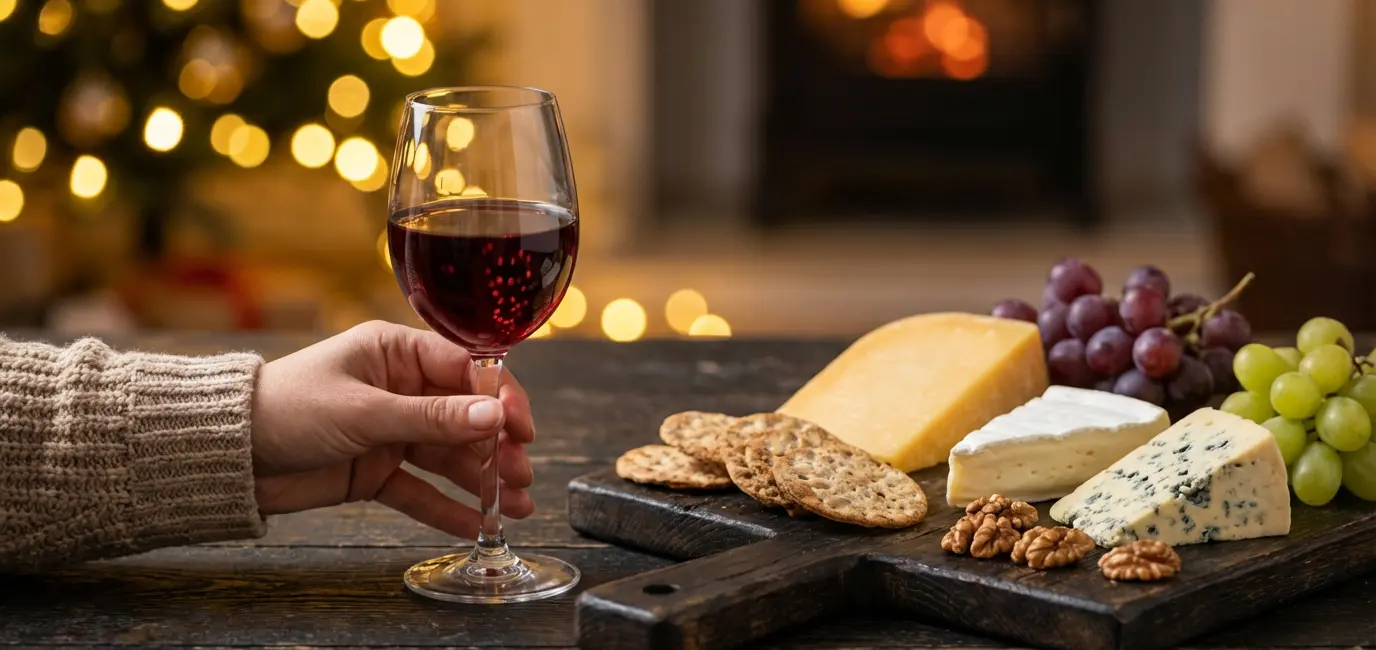
Why Wine and Cheese Are a Perfect Pairing
The magic behind pairing wine and cheese is partly chemistry and partly history. Both are products of fermentation, which means they share overlapping flavor compounds at a molecular level. The fat in cheese also binds to the tannins in red wine, softening the wine’s astringency and making both taste better together than apart.
Acidity plays an equally important role. Wine’s natural acidity cuts through the richness of creamy or fatty cheeses, cleansing your palate between bites. That is why sparkling wine is so incredibly versatile on a cheese board — high acid and effervescence make it a near-universal companion for almost any cheese you put in front of it.
Then there is the regional principle, sometimes called “what grows together, goes together.” Manchego and Tempranillo are both Spanish. Brie and Champagne are both French. Pecorino and Chianti are both Italian. These pairings were not engineered by sommeliers — they evolved over centuries because the local wines and cheeses naturally complemented each other. When you are stuck, go regional and you will rarely be wrong.
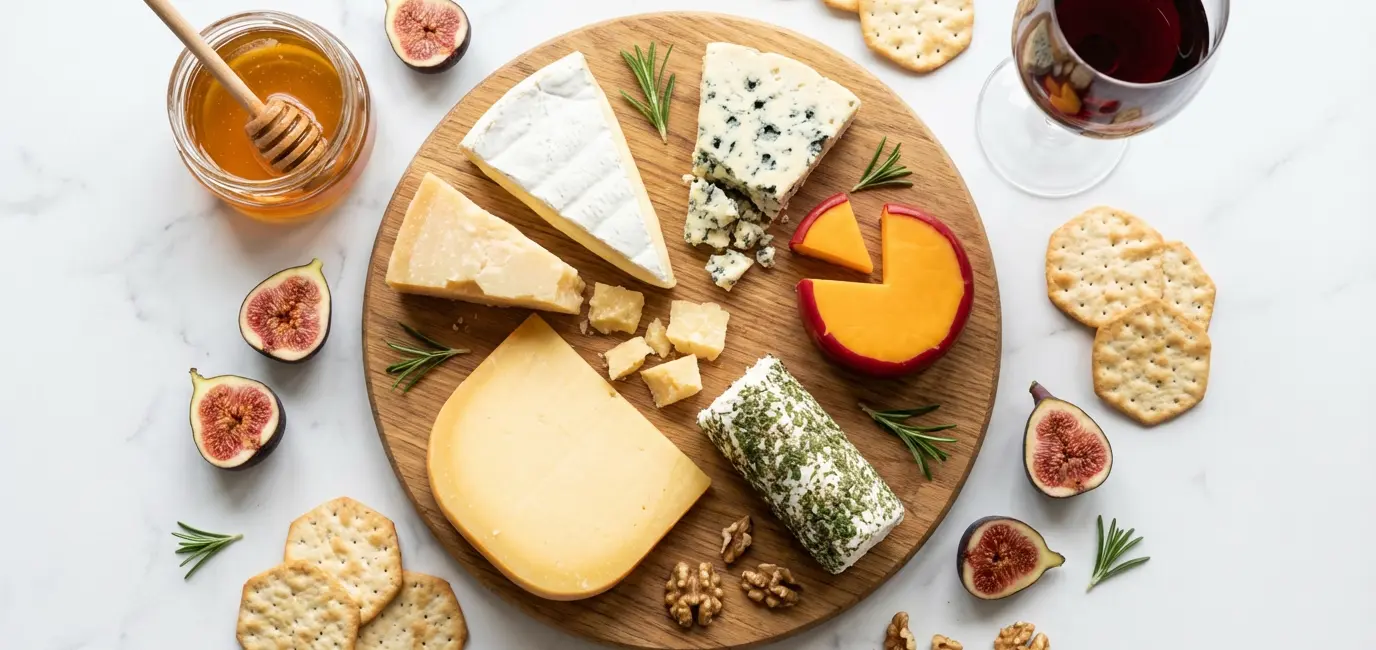
The Simple Rules of How to Pair Wine with Cheese
Before diving into specific wine and cheese pairings, here are the five rules I rely on every time I put together a board. These are not rigid laws — think of them as guidelines that take the stress out of the process.
1. Match Intensity to Intensity
This is the most important rule. A delicate Pinot Grigio will be completely overwhelmed by sharp aged blue cheese. A heavily tannic Cabernet Sauvignon will bulldoze fresh mozzarella. Ask yourself: are these two things in the same flavor league? If yes, you are probably in good shape.
2. Use Regional Pairings as Your Fallback
Wines and cheeses from the same country or region are a reliable default. French wines with French cheeses, Italian wines with Italian cheeses. The local culinary tradition already did the work for you.
3. Soft, Fresh Cheeses Belong with High-Acid Whites
Goat cheese, mozzarella, ricotta, and burrata are all high-moisture, lightly flavored cheeses. They pair beautifully with crisp, high-acid whites like Sauvignon Blanc, Pinot Grigio, and Albariño. The acidity in the wine mirrors and amplifies the cheese’s tang.
4. Blue Cheese Needs Sweet Wine
Blue cheese is the outlier in most pairing guides. Its sharp, salty, funky intensity clashes with almost all dry red wines. The exception: sweet wines. Sauternes with Roquefort is one of the most celebrated pairings in French cuisine. Port with Stilton is a British classic. The sweetness balances the salt and intensity in a way nothing else can.
5. Hard, Aged Cheeses Love Bold Reds
Aged Parmesan, aged Cheddar, Manchego, and Pecorino all have deep, concentrated flavors that can stand up to — and actually soften — the tannins in bold red wines. This is where your Cabernets, Malbecs, and Tempranillos shine.
“When in doubt, drink what you love — the rules are just a starting point. The best pairing is always the one you enjoy most.”
Sophia Gibson, Wineful Living
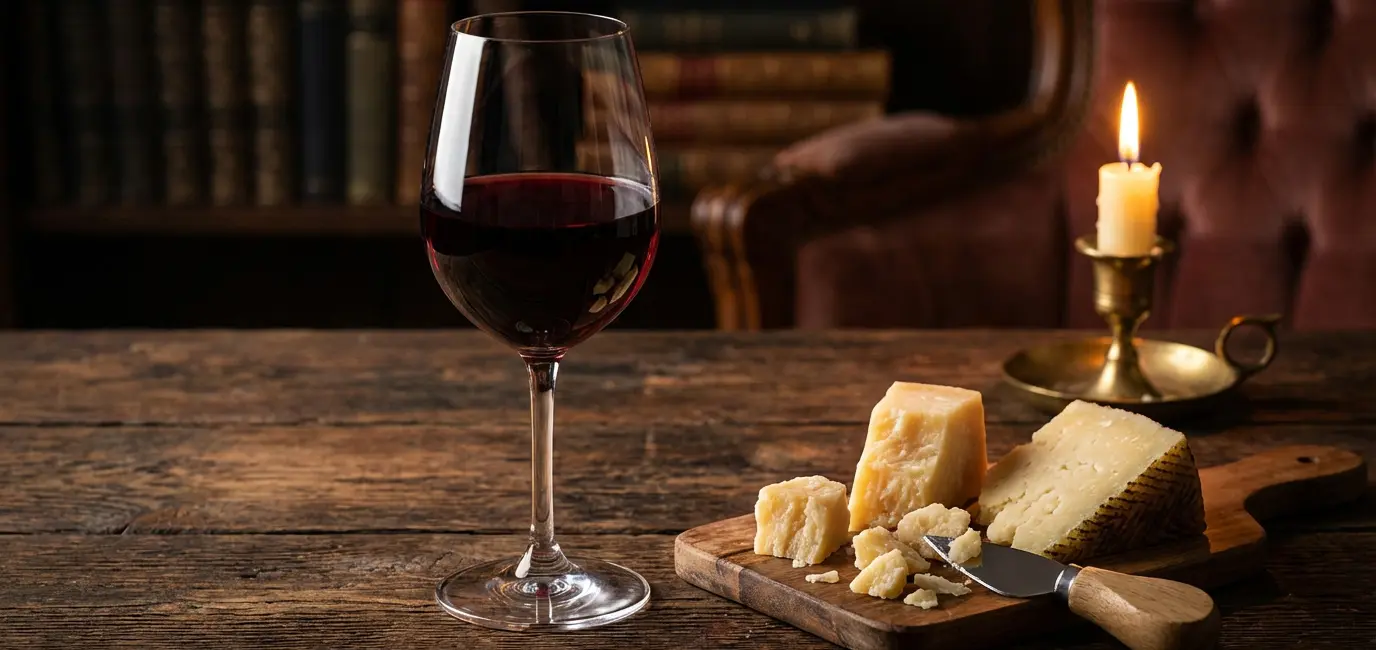
Red Wine and Cheese Pairings (The Classics That Always Work)
Here is the truth about red wine and cheese pairing that surprises most people: white wine pairs better with more types of cheese than red wine does. Red wine’s tannins and fruit-forward flavors can clash with creamy, fresh, or blue cheeses. But with the right aged or hard cheese? A well-chosen red is absolutely perfect. Browse red wines on Wine.com to find your next pairing bottle.
Cabernet Sauvignon + Aged Cheddar or Manchego
Cabernet Sauvignon is bold, tannic, and full-bodied — it needs a cheese with enough intensity to match it. Extra-sharp aged cheddar and Manchego both have the depth, salt, and richness to balance Cab’s tannins. This is the classic steakhouse pairing for a reason, and it translates beautifully to a home cheese board.
Pinot Noir + Gruyère or Brie
Pinot Noir is the softer side of red wine — lower in tannins, with earthy, red fruit notes that make it one of the few reds that works with softer cheeses. It pairs exceptionally well with nutty Gruyère and holds up to a ripe, room-temperature Brie without overpowering it. If you are hosting a wine tasting at home, Pinot Noir is the crowd-pleasing red to anchor your board.
Malbec + Gouda or Smoked Gouda
Malbec’s dark fruit and subtle smokiness are a natural fit for semi-hard Gouda, especially the smoked variety. The caramel notes in aged Gouda echo Malbec’s ripe, jammy fruit — this pairing tastes more deliberate than it actually is.
Zinfandel + Pepper Jack or Aged Gouda
Zinfandel is bold, spicy, and high in alcohol — it needs a cheese with some personality. Pepper Jack brings the heat to meet Zin’s spice, while aged Gouda’s sweetness provides a pleasant counterpoint.
Chianti + Pecorino or Parmesan
This is regional pairing at its finest. Chianti and Pecorino are both Tuscan staples that have been paired together for generations. The wine’s high acid cuts through the saltiness of the cheese, while Pecorino’s sharpness amplifies Chianti’s savory, earthy notes. Parmesan works equally well if Pecorino is hard to find.
What to avoid with red wine: Fresh goat cheese, ricotta, burrata, and any blue cheese. These are all far better matched to white wine or a sweet dessert wine.
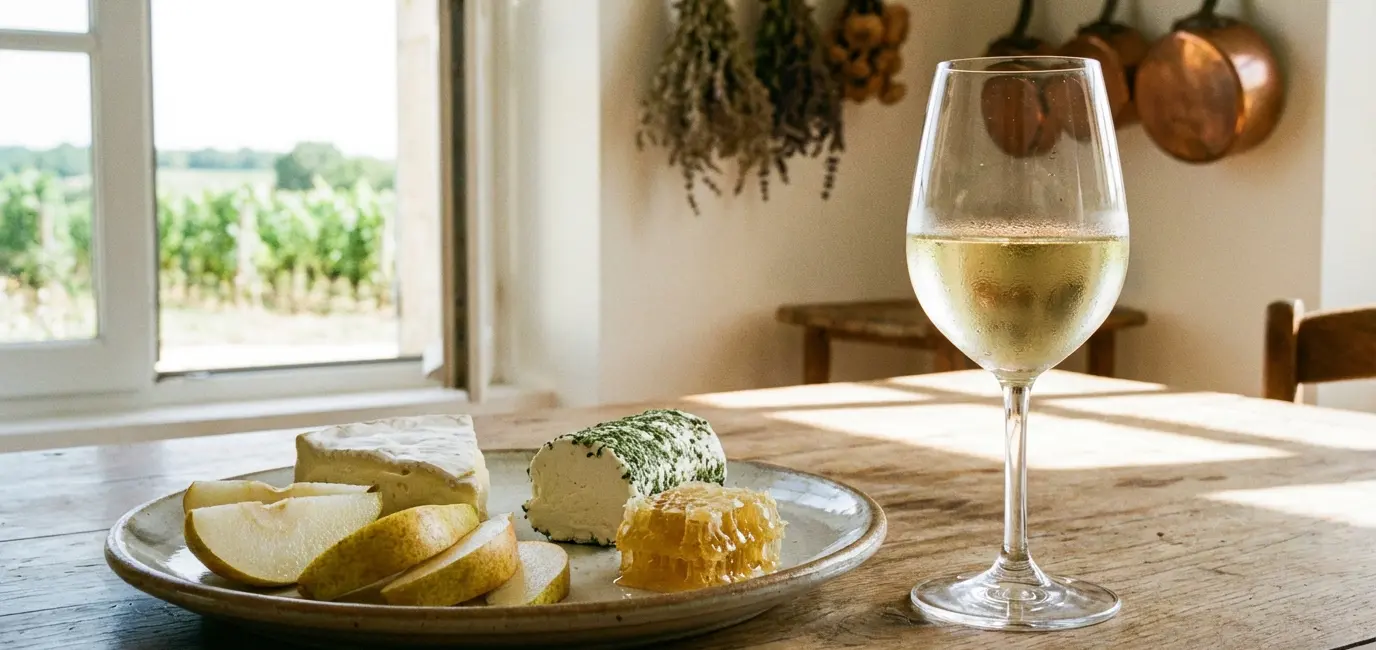
White Wine, Sparkling, and Rosé Pairings with Cheese
If you remember nothing else from this guide, remember this: white wine pairs well with nearly every cheese. Lower tannin content and higher acidity make most whites naturally versatile — from fresh goat cheese to aged Parmesan. Shop white wines on Wine.com for everything from a crisp Sauv Blanc to a rich, oaked Chardonnay. You can also explore natural and organic wines for something with a bit more character.
Sauvignon Blanc + Goat Cheese (The Greatest Single Pairing)
This is widely considered the best single wine and cheese pairing in the world, and it genuinely earns the title. Sauvignon Blanc’s grassy, citrusy, herbaceous profile mirrors the tang of fresh goat cheese almost perfectly. The wine’s high acid cuts through the creaminess, and the shared herbaceousness makes the whole thing taste like spring. If you only remember one pairing from this entire guide, make it this one.
Chardonnay + Brie, Triple Crème, or Gruyère
An oaked Chardonnay — with its buttery, vanilla, and toasty notes — is made for creamy, rich cheeses. Brie and triple crème cheeses like Brillat-Savarin echo the wine’s richness in the best possible way. If you prefer unoaked Chardonnay, which is crisper and more mineral, lean toward Gruyère for its savory depth instead.
Riesling + Washed-Rind or Muenster Cheese
Riesling — especially a slightly off-dry German Riesling — is one of the most underrated pairing wines available. Its sweetness and stone fruit notes make it a perfect counterpoint to the funky, pungent flavors of washed-rind cheeses like Taleggio, Limburger, or Muenster. The sweetness essentially tames the cheese’s intensity without masking its character.
Champagne and Sparkling Wine + Almost Everything
Sparkling wine is the ultimate cheese board companion. High acidity cuts through fat, bubbles cleanse the palate, and yeasty complexity adds depth to every bite. Brie is the classic, but Champagne also works with aged Cheddar, Parmesan, goat cheese, and even a mild blue. Explore sparkling wines on Wine.com — a good Prosecco or Cava works just as beautifully as Champagne at a fraction of the price.
Rosé + Havarti, Goat Cheese, or Fresh Mozzarella
A dry, crisp rosé sits beautifully between white and red, which makes it flexible on a mixed cheese board. It pairs especially well with mild, semi-soft cheeses like Havarti or fresh mozzarella, and matches goat cheese almost as well as Sauvignon Blanc does. For spring entertaining, a great rosé wine is the easiest all-purpose bottle you can open.
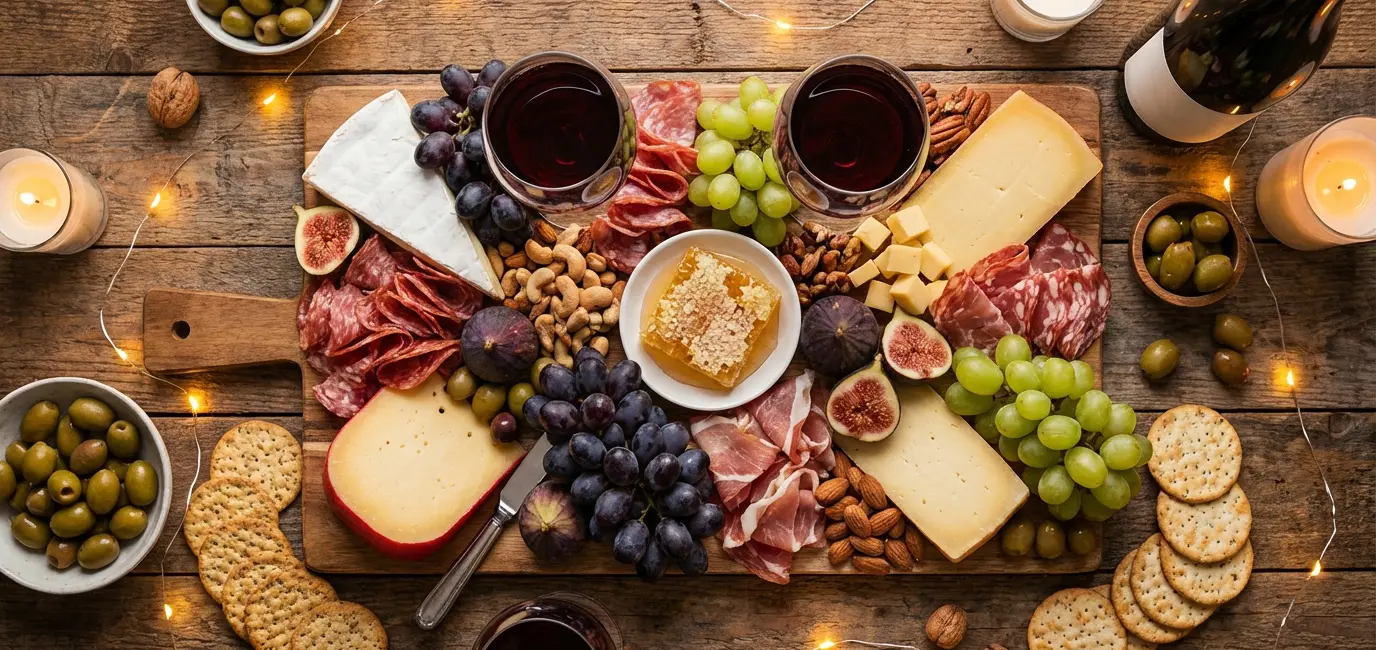
How to Build a Wine and Cheese Board at Home
Once you know how to pair wine and cheese, putting the board together is the fun part. I use a simple framework that works whether I’m serving two people on a Tuesday night or twenty at a dinner party.
The 3-3-3 Rule
Choose three types of cheese: one soft (Brie or Camembert), one semi-hard (Gruyère, Gouda, or Havarti), and one hard (aged Cheddar, Manchego, or Parmesan). Add three accompaniments: something sweet (honey or jam), something savory (nuts, olives, or charcuterie), and something crunchy (crackers or crostini). Pour at least two wines to let guests find their own favorites. The contrast is part of the experience.
Wine and Cheese Board Ideas by Season
- Spring and Summer: Rosé + goat cheese, Sauvignon Blanc + fresh mozzarella, sparkling wine + Brie
- Fall and Winter: Cabernet Sauvignon + aged Cheddar, Pinot Noir + Gruyère, Port + blue cheese
- All-occasion classic: Champagne + Brie, Pinot Noir + Manchego, Riesling + washed-rind cheese
Serving Tips for a Better Board
- Bring cheese to room temperature 30–60 minutes before serving — cold mutes the flavor significantly
- Serve white wine at 45–50°F; serve reds at 60–65°F (slightly cool, not room temperature)
- Label each cheese with a small card so guests know what they are tasting
- Use one knife per cheese to keep flavors from mixing on the board
- Plan 2–3 oz of cheese per person per wine for a tasting; 4–5 oz if the board is the main event
For the board itself, a large slate or marble surface looks beautiful and keeps everything cool. Find a gorgeous wine and cheese board on Amazon, or pair it with a set of quality wine glasses for a complete entertaining setup. A wine accessories gift set also makes a genuinely great hostess gift.
If you are building out your home entertaining game, I have a full guide on white wine vs. red wine and what actually sets them apart, plus how to set up a home wine bar that works for any occasion. For book club night, the wine pairings for book club guide is a crowd favorite. And for spring hosting, the mint julep bar setup guide is the move.
Frequently Asked Questions
Does red or white wine pair better with cheese?
White wine pairs better with a broader range of cheeses than red wine does. Red wine’s tannins can clash with fresh, creamy, or blue cheeses. White wine’s acidity and lower tannin content make it more universally compatible. For a mixed cheese board, white or sparkling wine is the safer, more versatile choice.
What is the best cheese for a wine and cheese pairing board?
A well-rounded board includes at least one soft cheese (Brie, Camembert, or goat cheese), one semi-hard cheese (Gruyère, Gouda, or Havarti), and one hard cheese (aged Cheddar, Manchego, or Parmesan). This combination covers all three wine types — red, white, and sparkling — and gives guests plenty of variety.
What cheese goes best with Champagne?
Brie is the most classic Champagne pairing, but Champagne is also excellent with triple crème cheeses like Brillat-Savarin, aged Parmesan, or a mild goat cheese. Champagne’s acidity and bubbles cleanse the palate and complement both soft and hard cheeses beautifully.
Can you pair red wine with Brie?
Yes, with care. Lighter reds like Pinot Noir work reasonably well with Brie because lower tannins won’t overwhelm the cheese. Avoid heavily tannic reds like Cabernet Sauvignon or Syrah with Brie — the tannins will clash with the creaminess and leave a chalky, bitter finish.
How much wine and cheese do I need for a party?
Plan on 2–3 oz of cheese per person per wine variety, and one bottle of wine for every 4–5 guests. For a board where cheese is the main event, increase to 4–5 oz of cheese per person. Three cheese varieties and two to three wines is the sweet spot for most gatherings.
The beauty of learning to pair wine and cheese is that the more you do it, the more intuitive it becomes. Start with the classics — Sauvignon Blanc and goat cheese, Champagne and Brie, Chianti and Pecorino — and let your palate guide the rest. The rules are training wheels. Once you have tasted enough combinations, your instincts take over. And even a so-called wrong pairing is still wine and cheese, so it is very hard to go too far wrong.
What is your favorite wine and cheese pairing? Drop it in the comments below — I am always looking for new combinations to try at my next board night.