This post may contains affiliate links. Read our full disclosure here.
If you have been seeing orange wine everywhere lately and wondering what exactly you are supposed to do with it, you are not alone. Orange wine is genuinely one of the most exciting and misunderstood categories in the wine world right now — and once you understand what it is and why it tastes the way it does, you will never look at it the same way again. In this guide I am breaking down everything: what orange wine actually is, where it comes from, what it tastes like, how to pick a good bottle, and exactly what to eat with it. Consider this your complete orange wine starter kit.
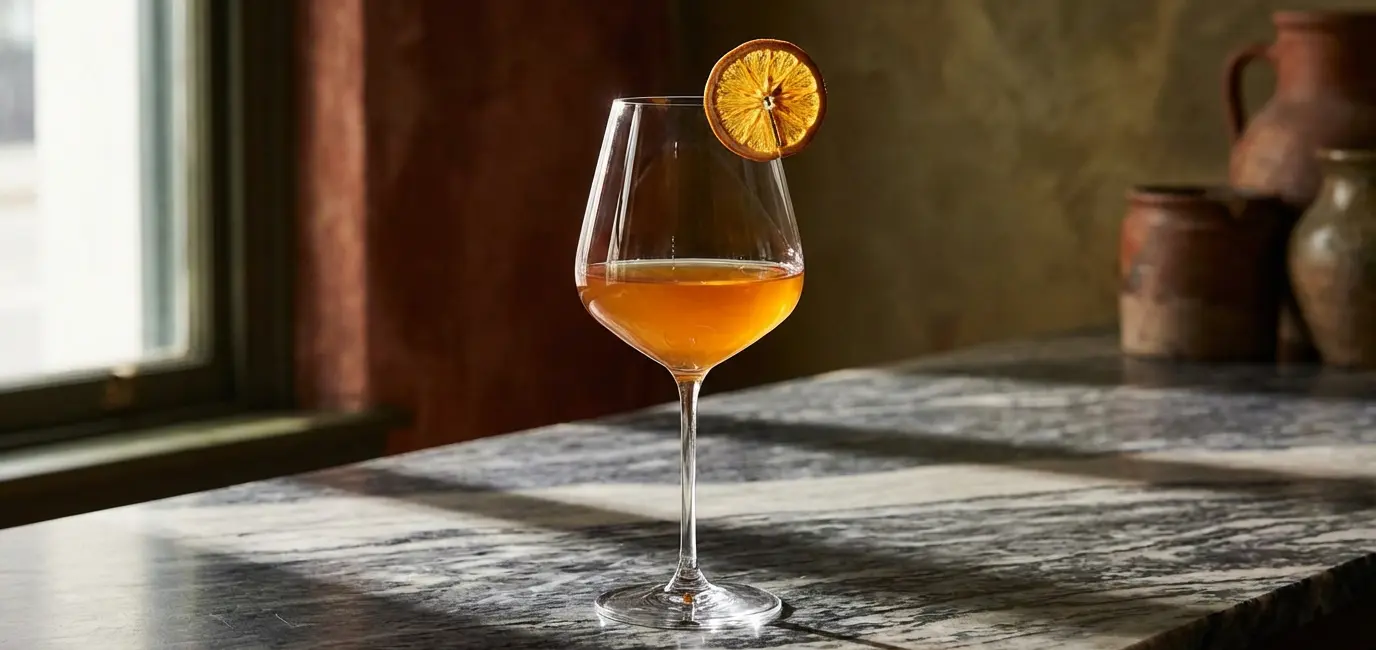
What Is Orange Wine?
Here is the thing that trips everyone up: orange wine is not made from oranges. It is white wine — made from white grapes — that has been produced using a red wine method. Specifically, orange wine is made by leaving the grape skins in contact with the juice during fermentation. With regular white wine, the skins are removed almost immediately after pressing. With orange wine, they stay in — for anywhere from a few days to several months, sometimes longer.
That extended skin contact is what gives orange wine its distinctive amber, copper, or golden color (the spectrum is wide — some bottles look almost like a pale rosé, others like a deep amber tea). It is also what gives orange wine its signature tannic structure, which you simply do not find in conventional white wine. Think of it this way: if white wine is a sprinter and red wine is a long-distance runner, orange wine is something in between — with the freshness and aromatic complexity of white wine and the grip and depth of red.
“Orange wine is what happens when you make white wine like red wine. The result is something that does not really fit neatly into either box — and that is exactly the point.”
You might also see orange wine called skin-contact wine, amber wine, or ramato (an Italian term specifically for skin-contact Pinot Grigio). They all refer to the same basic principle: extended skin maceration for white grapes. The name “orange wine” was popularized by importer David Harvey in the early 2000s as a handy shorthand — and it stuck, even though it occasionally confuses newcomers who expect citrus flavors.
One other thing worth knowing: orange wine tends to be made with minimal intervention in the cellar. Many orange wine producers are part of the natural wine movement — using wild yeasts, avoiding additives, and often using clay vessels or old wooden barrels instead of stainless steel. This is not universal, but it is a common thread. If you are already interested in natural or organic wines, orange wine is a natural next step — and Organic Wine Exchange is one of my favorite sources for well-curated orange wine and natural wine options.
Where Does Orange Wine Come From?
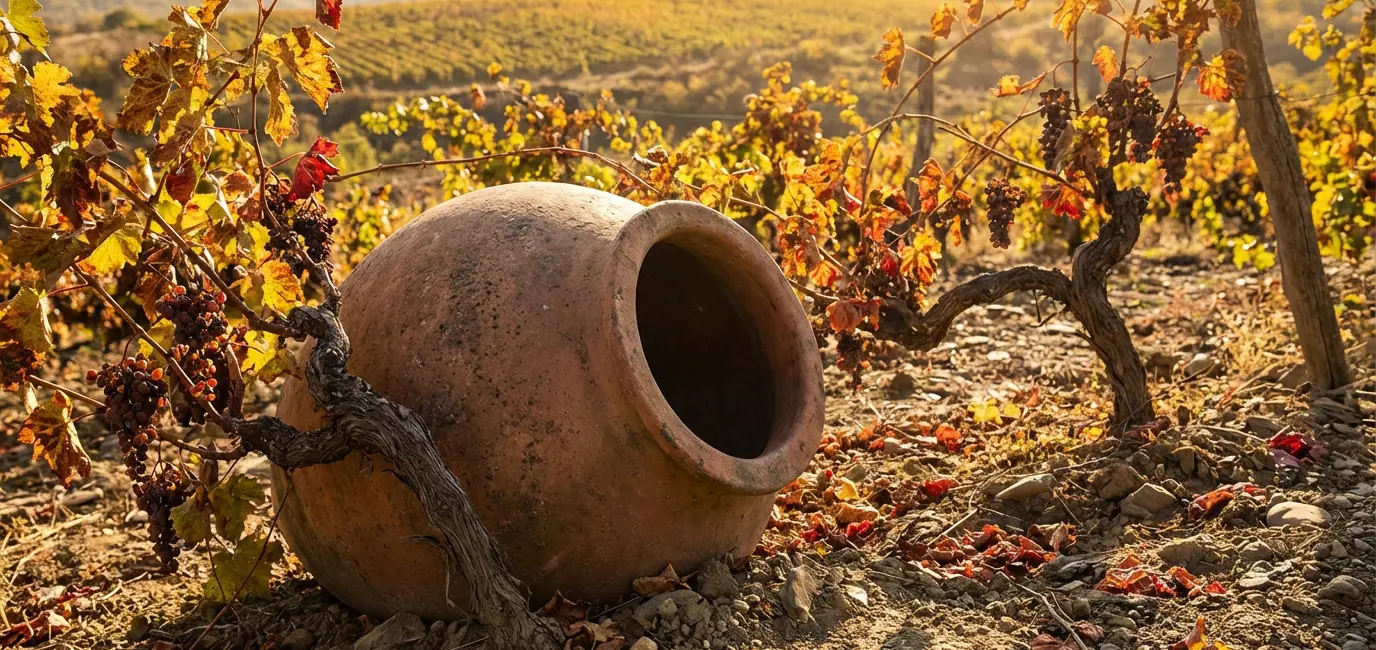
Orange wine is ancient. While it feels like a modern trend, the practice of fermenting white grapes with their skins is one of the oldest winemaking methods on earth. The country of Georgia — in the Caucasus region, considered by many historians to be the birthplace of wine — has been making skin-contact wine in clay amphora called qvevri for at least 8,000 years. Georgian orange wine (known locally as amber wine) is buried in the ground during fermentation and aging, which keeps the temperature naturally stable.
The modern orange wine revival began in the late 1990s in northeastern Italy and Slovenia. Winemakers like Josko Gravner and Stanko Radikon in Friuli-Venezia Giulia were among the first to bring skin-contact white wine back into the contemporary conversation. They were inspired by old Georgian and Friulian traditions and began experimenting with extended maceration and amphora aging at a time when the broader wine industry was moving in the opposite direction — toward cleaner, fresher, faster whites.
Today, orange wine is made all over the world. The best-known regions include:
- Georgia: The spiritual home of orange wine — Rkatsiteli and Mtsvane grapes in qvevri, long maceration, deeply complex amber wines
- Friuli-Venezia Giulia, Italy: Where the modern revival started — Pinot Grigio, Ribolla Gialla, Malvasia in extended skin contact
- Slovenia: Brda and Vipava Valley, often indistinguishable from their Friulian neighbors across the border
- Natural wine producers globally: France (Alsace, Loire, Jura), Spain, Greece, Austria, and California all have excellent orange wine producers
- Australia and New Zealand: A growing natural wine scene producing some genuinely exciting skin-contact whites
The grape varieties that tend to work best as orange wine are aromatic, thick-skinned whites: Gewurztraminer, Pinot Gris, Ribolla Gialla, Malvasia, Muscat, Rkatsiteli, and many indigenous varieties. These grapes have enough phenolic content in their skins to contribute real structure and complexity during maceration without becoming harsh or extracting too much bitterness.
What Does Orange Wine Taste Like?
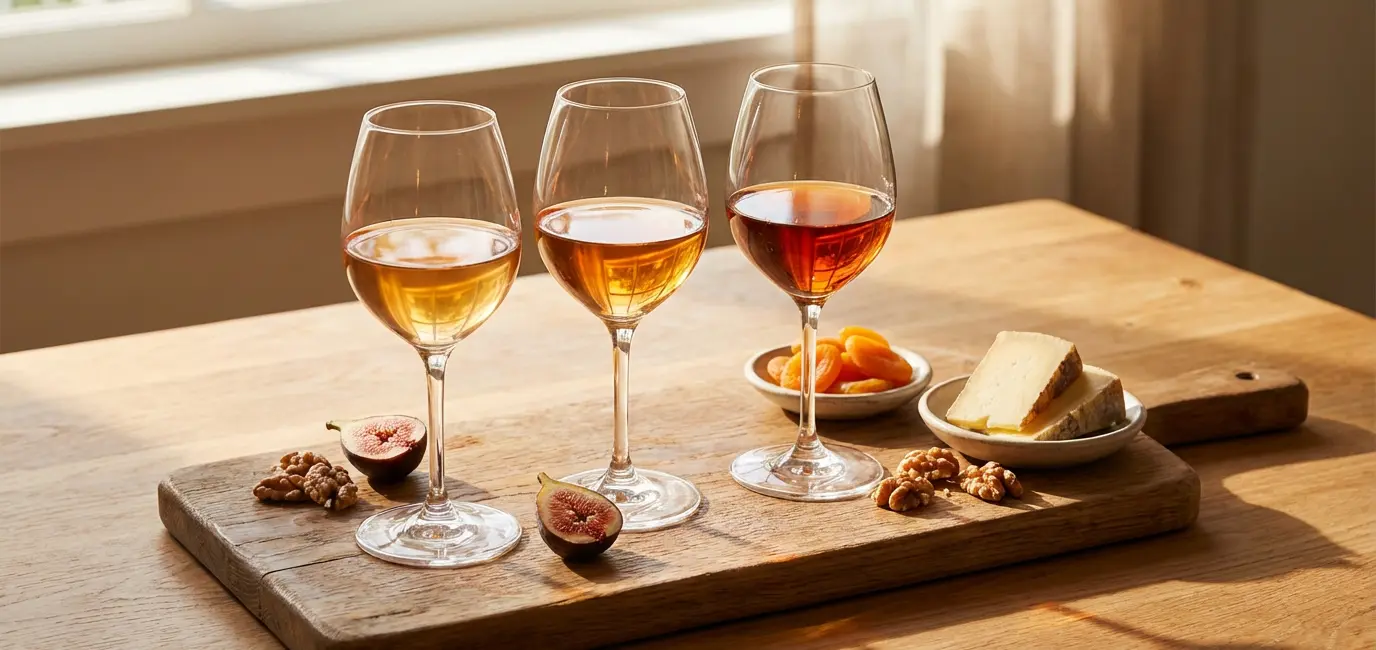
This is the question everyone wants answered before they commit to a bottle — and it is genuinely hard to give a single answer because orange wine spans an enormous range of styles. But I can give you a useful framework for what to expect.
Lighter-style orange wine (short maceration, days to weeks)
At the lighter end of the orange wine spectrum, you will find wines that look like a deep gold or amber — almost like a darker-than-normal white wine. The tannins are soft, the fruit is still present (stone fruit, dried apricot, honeysuckle), and there is a slight grip on the finish that you would not find in a conventional white. These are the most approachable entry point into orange wine — I always recommend starting here if you are new to the style.
Full-style orange wine (long maceration, weeks to months)
At the fuller end, orange wine becomes something genuinely unique. The color can be deep copper or even brownish amber. Tannins are firm and grippy — more like a light red than any white you have had. Flavors lean toward dried fruit (apricot, fig, golden raisin), beeswax, walnut, chamomile, bruised apple, and sometimes a pleasant nuttiness reminiscent of fino Sherry. These wines are complex, food-demanding, and deeply satisfying if you are open to something outside the conventional flavor wheel.
Across both styles, orange wine tends to be savory-leaning with lower perceived sweetness than most white wines. The extended skin contact extracts phenolic compounds that balance out the natural fruit sugars, giving orange wine a drier, more textural character. It also tends to be more oxidative than conventional whites — which some people find alarming at first (especially the slight cloudy appearance, which is totally normal for unfiltered orange wine).
I always say: taste orange wine like you would taste a good craft beer rather than a standard white wine. Let it warm up slightly, swirl it generously, and do not expect fresh citrus and green apple. Expect complexity, texture, and something that rewards attention. To understand the full white wine context that orange wine sits within, my guide to white wine vs red wine is a good companion read.
How to Pick a Good Orange Wine
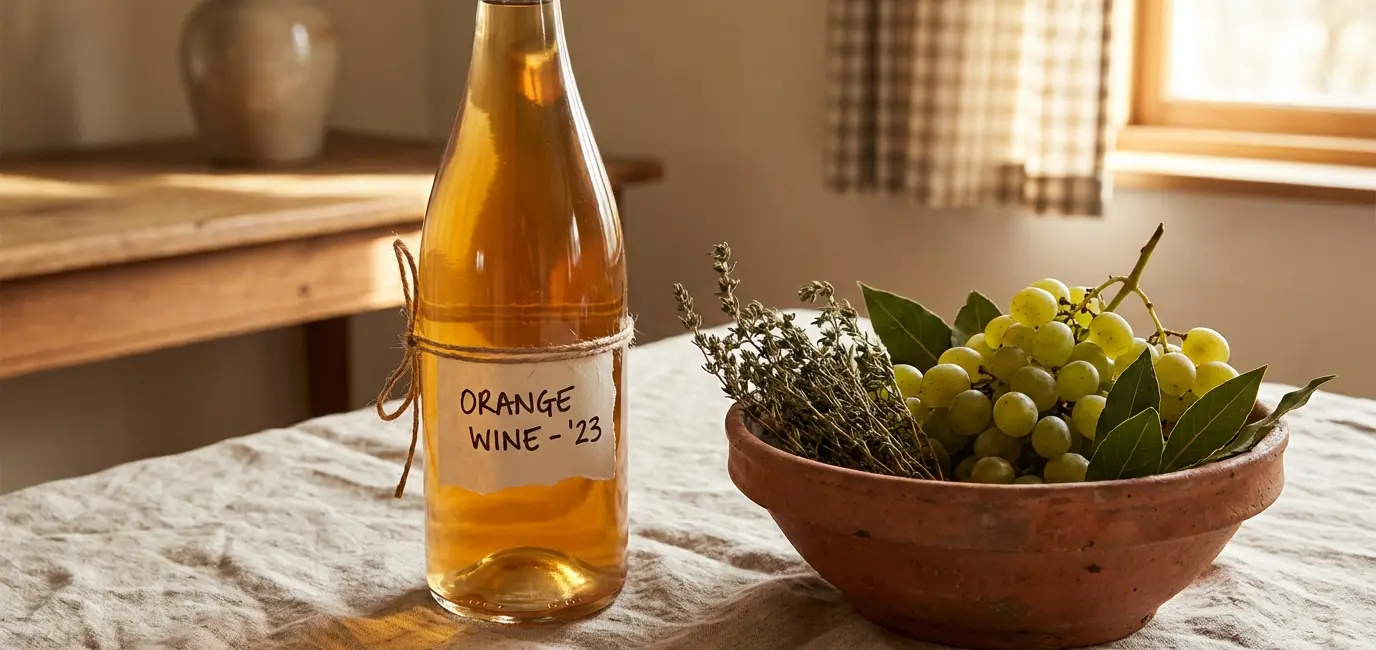
Walking into a wine shop and asking for orange wine will get you very different results depending on where you shop. Here is how to navigate the selection intelligently — whether you are shopping in store, online, or at a restaurant.
At the wine shop
- Ask specifically for “skin-contact white wine” or “amber wine” — this will help staff understand you know what you are looking for
- Ask for the maceration length: short (days-weeks) for lighter entry-level style, long (months) for full-on textured orange wine
- Georgian and Friulian bottles are often the most authentic expression — look for Rkatsiteli, Ribolla Gialla, or Pinot Grigio on the label
- Natural wine shops are your best bet for breadth of selection — mainstream wine shops often carry only one or two orange wine options
Online
For online shopping, Wine.com’s orange wine selection is a great starting point — they have a dedicated amber/orange wine category and you can filter by price and region. For a more curated natural-wine-forward selection, Organic Wine Exchange specializes in exactly the kind of small-producer, minimal-intervention orange wine that represents the style at its best.
Labels and terms to look for
- Skin contact or skin-fermented: clearest indicator on the label
- Ramato: Italian term specifically for skin-contact Pinot Grigio
- Amber wine: Especially used for Georgian-style long-maceration wines
- Sur lie or unfiltered: Not specific to orange wine but common in natural orange wine production
- Qvevri or amphora: Indicates clay vessel aging — a hallmark of Georgian and neo-traditional orange wine
Price-wise, good orange wine typically starts around $18-25 for accessible entry-level bottles and goes up significantly from there for single-vineyard or long-maceration examples. Avoid very cheap orange wine (under $15) — the skin contact technique is labor-intensive and the really interesting bottles reflect that. For choosing the right glassware to show orange wine at its best, large-format tulip glasses are ideal — the wider bowl gives the aromatics room to open up in a way that a standard white wine glass does not.
If you want to understand what you are reading on the label before you buy, my guide to how to read a wine label for beginners covers everything — including how to decode the producer, region, and vintage information that tells you a lot about what is in the bottle.
What Food Pairs with Orange Wine?
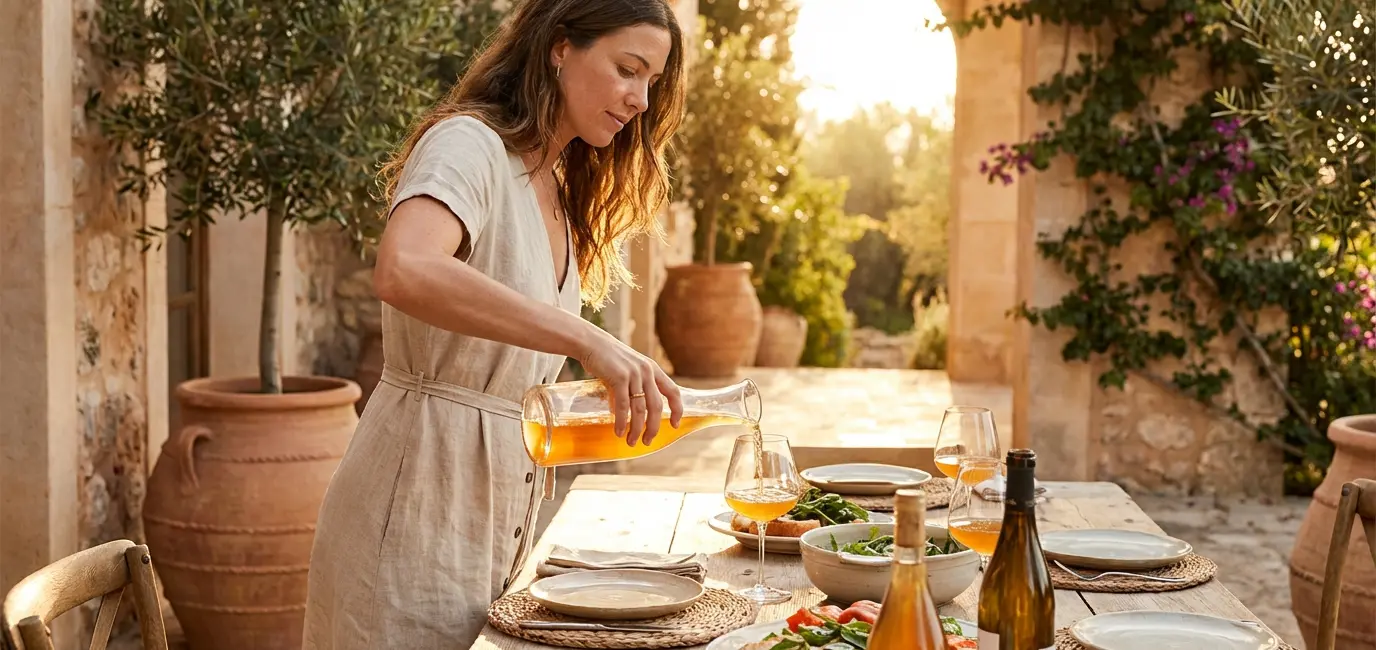
Orange wine is genuinely one of the most food-friendly wines you can pour — and it fills a gap that white wine and red wine both struggle with. The tannins give it enough grip to stand up to richer, more complex dishes, while the natural acidity keeps it fresh enough to cut through fat and salt. This makes orange wine uniquely versatile in ways that conventional white wine is not.
The best food pairings for orange wine
- Aged and funky cheeses: Aged Gruyere, Comté, Manchego, washed-rind cheeses — the tannins in orange wine love the umami and fat in aged cheese
- Charcuterie: Cured meats, pâté, terrine — orange wine handles the saltiness and richness beautifully
- Roasted vegetables: Butternut squash, roasted beets, caramelized onions — earthy sweet notes match the dried fruit character of orange wine
- Spiced dishes: Middle Eastern, North African, and Indian-influenced food — cumin, turmeric, coriander, and warm spices resonate with orange wine flavors
- Fermented foods: Kimchi, miso-based dishes, aged miso soup — the oxidative quality of orange wine pairs surprisingly well with other ferments
- Oily fish: Smoked salmon, sardines, mackerel — the tannins cut through the oil in a way white wine cannot always manage
- Umami-rich vegetarian dishes: Mushroom risotto, lentil-based stews, roasted cauliflower with tahini
What to avoid with orange wine: delicate white fish (sole, halibut) where the tannins will overpower the protein, and very sweet desserts where the savory character of orange wine will clash. Also avoid pairing orange wine with raw oysters — you lose both the wine and the oyster.
One of my favorite ways to enjoy orange wine at home is as the centerpiece of a charcuterie and cheese board evening — it gives you the flexibility to move across different flavors without ever feeling like the wine is out of its depth. For board-styling ideas, my coffee table styling guide covers the exact presentation principles that make a home spread look genuinely beautiful. And for the full home entertaining setup, how to set up a home wine bar is the complete guide — including where to store bottles like this at the right temperature.
Orange wine is also a genuinely great choice for a girls night in — it is different enough to spark conversation but approachable enough that it does not require wine expertise to enjoy. For more girls night inspiration, my guide to girls night in ideas for adults has plenty of pairing ideas that work perfectly with a skin-contact bottle at the center of the table. And if you are running a book club, book club wine pairings by genre has some great orange wine-friendly suggestions depending on what you are reading.
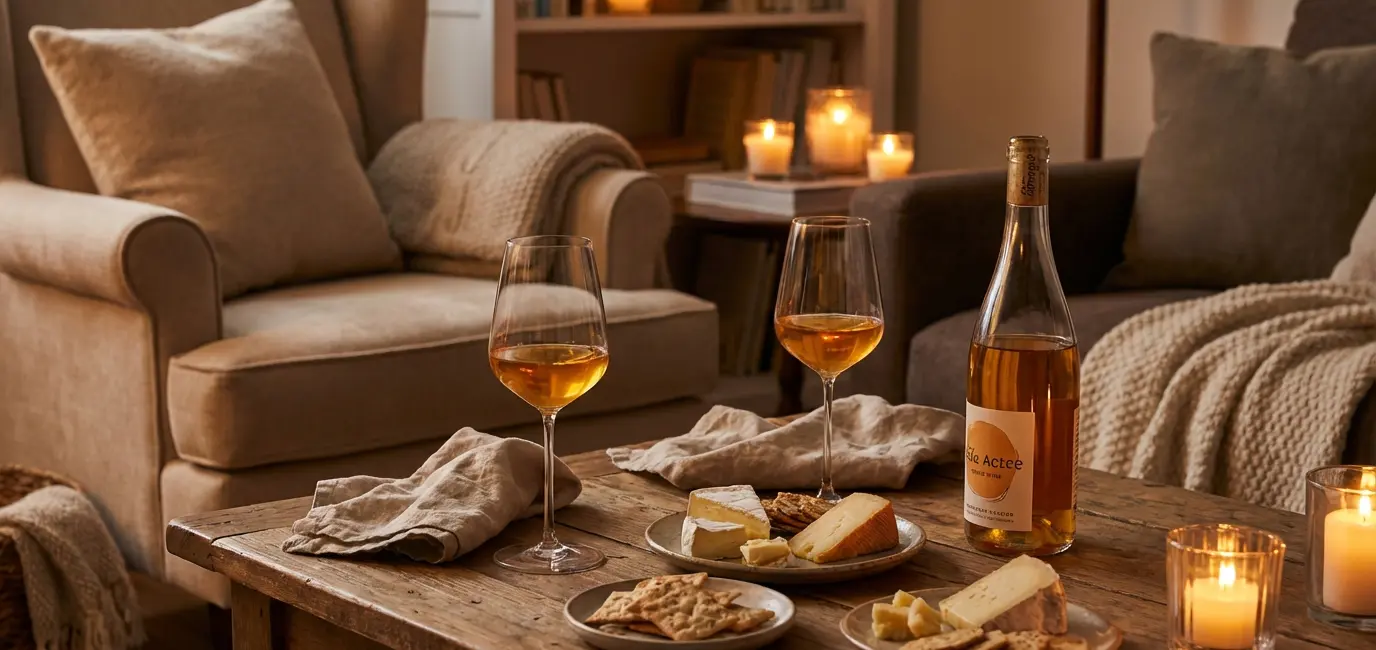
Here is my honest take on orange wine: it is not for everyone, and that is fine. But if you have ever felt like white wine is too simple and red wine is too heavy for the meal you are making — orange wine is the answer. It sits in the middle of the flavor spectrum in a way that no other wine category does, and once you find a bottle and a food moment that click, you will understand exactly why orange wine has gone from ancient Georgian tradition to the hottest thing on natural wine lists around the world. Start with a light-maceration bottle, pair it with an aged cheese, and take your time with it. That is the whole lesson.
FAQ
Is orange wine actually orange?
Orange wine ranges in color from deep golden yellow to amber, copper, and even brownish-orange depending on how long the grape skins were in contact with the juice. It is not the bright citrus-orange color you might expect — more of a warm, rich amber.
Is orange wine a type of white wine or red wine?
Orange wine is technically white wine made from white grapes. But because the grape skins stay in contact with the juice during fermentation (the same method used for red wine), the resulting wine has more tannins and body than conventional white wine. It is often described as a fourth category alongside white, red, and rosé.
Does orange wine taste like oranges?
No — orange wine does not taste like oranges. The name refers to the amber color, not the fruit. Typical flavors include dried apricot, peach, honey, walnut, chamomile, beeswax, and sometimes a pleasant nuttiness. It is savory and complex rather than fruity and bright.
Is orange wine the same as natural wine?
Not exactly, but there is significant overlap. Many orange wine producers follow natural winemaking principles (wild fermentation, no additives, minimal sulfites), but you can technically make skin-contact white wine with conventional winemaking practices. The category intersection is large enough that most natural wine shops have excellent orange wine selections.
How should I serve orange wine?
Serve orange wine slightly cooler than room temperature but warmer than a conventional white — around 55-60°F (13-16°C) is ideal. This is warmer than most people chill their whites, because the tannins and complexity of orange wine need a bit of warmth to fully express themselves. A large tulip glass (wider than a standard white wine glass) also helps the aromatics open up.
Can orange wine age?
Yes — quality orange wine with firm tannin structure and good acidity can age beautifully, often developing greater complexity and integration over 5-10+ years. Georgian amber wines are particularly known for their aging potential. That said, most entry-level orange wine is best enjoyed within 2-4 years of the vintage.