This post may contains affiliate links. Read our full disclosure here.
I used to stand in the wine aisle feeling completely frozen. Row after row of beautiful bottles, each one practically daring me to understand it — and I had absolutely no idea what I was looking at. It wasn’t until I actually learned how to read a wine label that wine shopping went from stressful to genuinely enjoyable. And honestly? It took about twenty minutes to get the basics down. This guide is everything I wish someone had handed me in that aisle — no jargon, no snobbery, just the real information that actually helps you pick a bottle you’ll love.
Knowing how to read a wine label doesn’t require a sommelier certification. It just requires knowing which parts of the label matter and which ones are pure marketing. Once you have that filter, the whole bottle opens up — so to speak.
Why Reading a Wine Label Is Actually Worth Learning
Before I dive in, let me make a case for why this skill matters beyond just sounding knowledgeable at a dinner party. When you understand how to read a wine label, you stop gambling every time you buy a bottle. You start recognizing patterns — which regions tend to produce the style you love, which grape varieties consistently show up in your glass and make you happy, which price points deliver real quality versus just pretty packaging.
Wine labels are a contract between the producer and the buyer. Every piece of information on that label is either legally required or strategically chosen to communicate something about the wine inside. Learning how to read a wine label means learning how to read that contract — and that changes everything about how you shop, how you order at restaurants, and how confidently you bring a bottle to a dinner party.
The good news: there are really only five things you need to understand on most labels. Everything else is either decoration or detail-level information that comes later. Start with the five, and you’ll be ahead of most casual wine drinkers immediately.
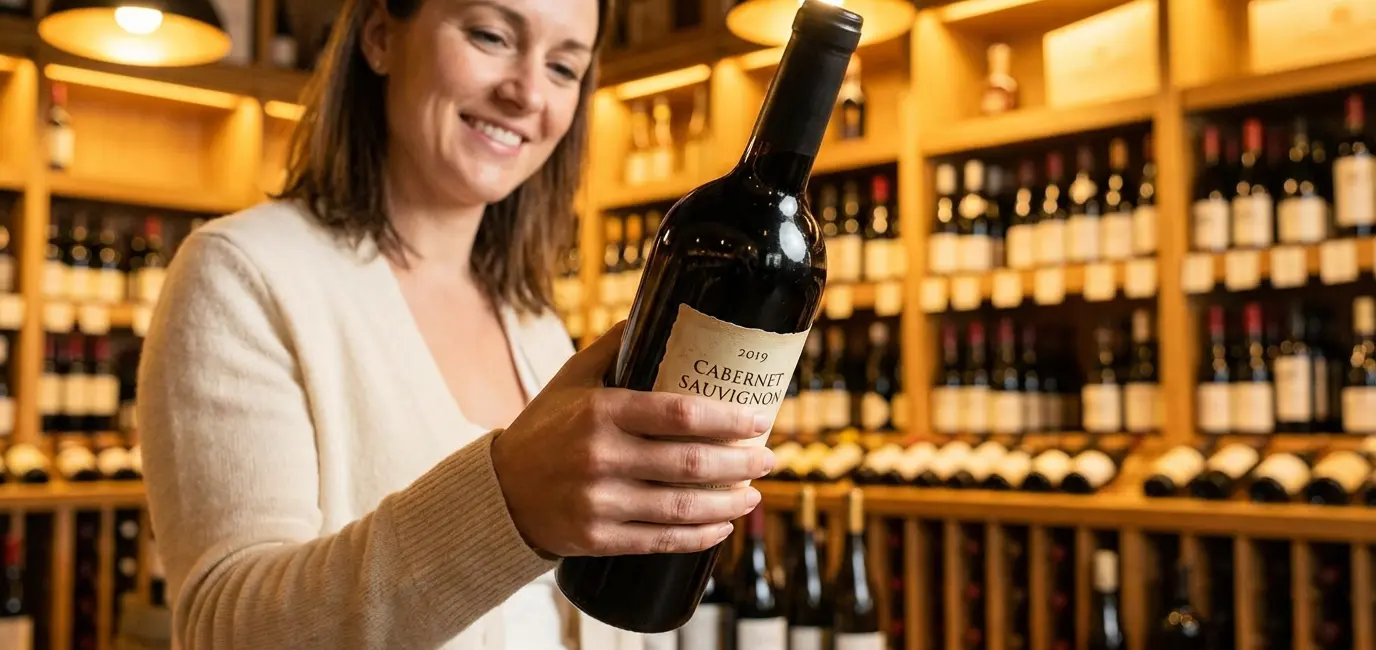
The Five Essentials on Every Wine Label
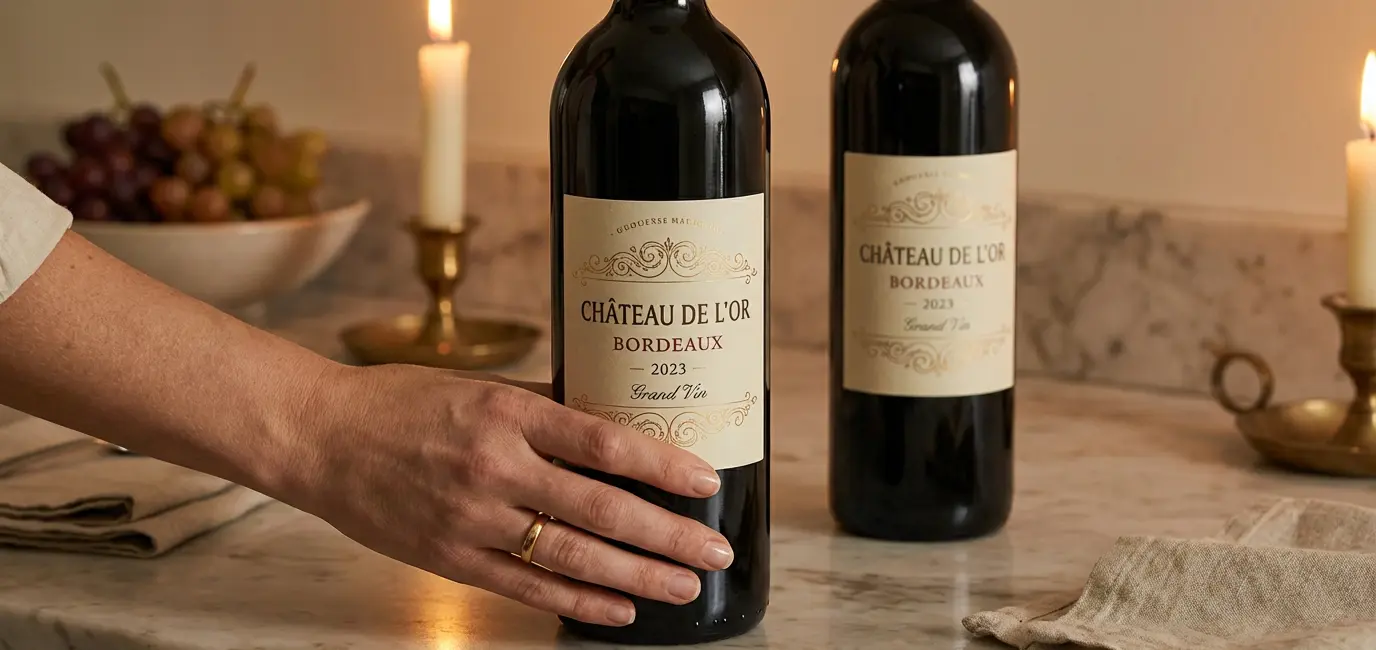
The most important step in learning how to read a wine label is identifying the five core pieces of information that appear on virtually every bottle. Not every label presents them in the same order or with the same visual weight, but they’re almost always there.
1. The Producer or Winery Name
This is usually the most prominent text on the label — the brand, the château name, the estate, or the winemaker’s family name. It’s the “who made this” part of the label. Over time, recognizing producer names becomes one of the fastest shortcuts in wine. When you find a producer you love in one style, they often make other wines worth trying.
2. The Region or Appellation
The region tells you where the grapes were grown — and in wine, place matters enormously. Burgundy, Napa Valley, Tuscany, Mendoza: these names carry meaning because each place produces a distinctive style shaped by climate, soil, and tradition. Part of understanding how to read a wine label is learning to trust regional cues. A bottle from Chablis will taste very different from one labeled “California Chardonnay,” even though both are made from the same grape.
3. The Grape Variety (or Varietal)
On most New World labels (think: California, Australia, Argentina, Chile), the grape variety is front and center — Cabernet Sauvignon, Pinot Grigio, Rosé, Riesling. This is enormously helpful because grape variety is the most reliable predictor of what a wine will taste like. Pinot Noir will be lighter and silkier than a Malbec. Sauvignon Blanc will be crisper and more citrus-forward than a Viognier. If you want to understand how to read a wine label quickly, learning ten key grape varieties and their basic flavor profiles gets you most of the way there.
Old World labels are trickier here — they often list the region but not the grape, because in traditional European wine culture, the place implies the grape. A Chablis is Chardonnay. A red Burgundy is Pinot Noir. A Barolo is Nebbiolo. I’ll cover this more in the Old World vs. New World section, but this is often the biggest stumbling block for beginners learning how to read a wine label from European bottles.
4. The Vintage Year
The vintage year is simply the year the grapes were harvested. It matters because weather varies year to year, and in some regions, a great vintage versus a poor one can dramatically affect the wine’s quality. For everyday wine drinking, vintage year is less critical — most bottles you’ll find in stores are already well-selected for quality. But for fine wine purchases, knowing how to research a specific vintage for a region you love is genuinely valuable. Some bottles are also marked “NV” (non-vintage), which means the wine is blended from multiple years — common in Champagne and some fortified wines.
5. Alcohol by Volume (ABV)
The ABV percentage tells you how much alcohol is in the wine, but it also tells you something about the style. Higher ABV (14%+) often indicates a warmer-climate wine with ripe, fruit-forward flavors — think California Zinfandel or an Australian Shiraz. Lower ABV (11-12%) tends to suggest a cooler-climate, lighter-bodied, more acidic wine — like a German Riesling or a French Muscadet. This one small number on the label is actually a useful style signal once you know how to read it.
“Once I understood those five things, every wine label stopped being a wall of mystery and became a quick conversation. Winery. Region. Grape. Year. Alcohol. That’s the whole story for most bottles.”
Old World vs. New World Labels: Why They Look So Different
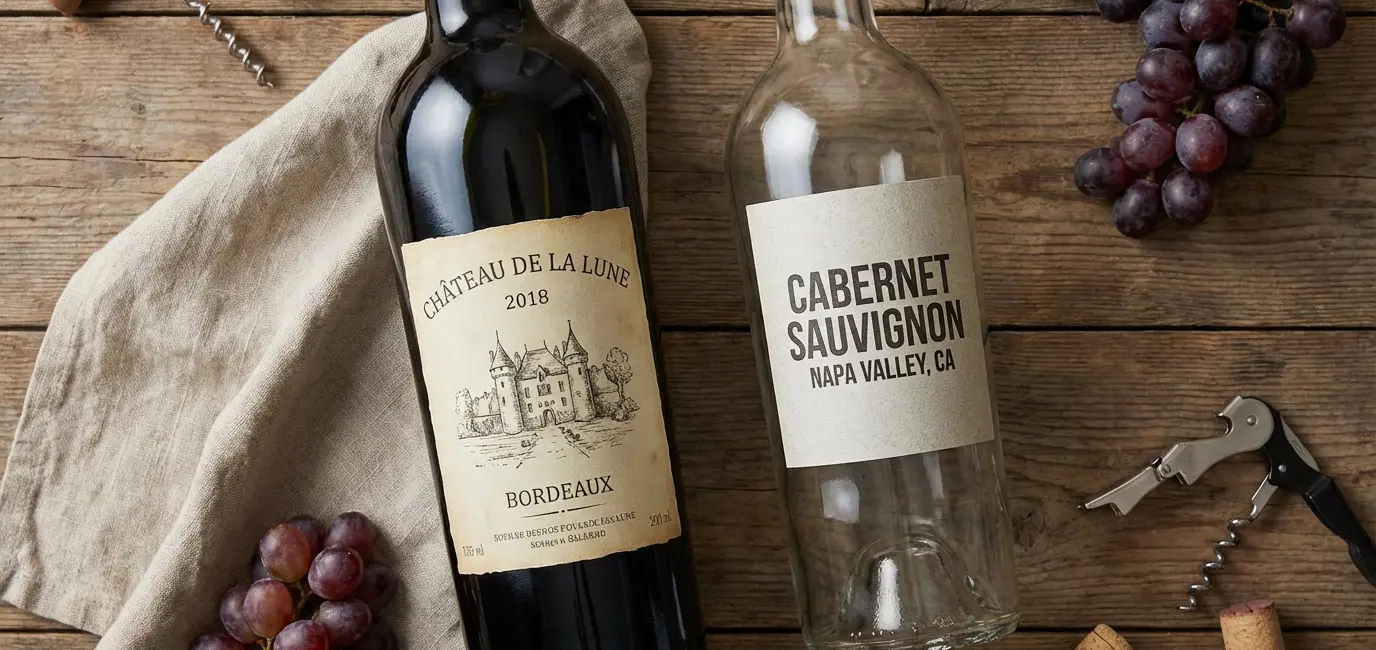
One of the most confusing parts of learning how to read a wine label is the fact that European wine labels play by completely different rules than American, Australian, or South American labels. Understanding the Old World vs. New World distinction unlocks a whole category of wines that used to be completely opaque to me.
New World labels (USA, Australia, New Zealand, Argentina, Chile, South Africa) are built around the grape variety. They tend to be consumer-friendly and direct: “Napa Valley Cabernet Sauvignon 2022.” Everything you need is right there. Producers in these regions assume you don’t know their geography, so they lead with what the wine tastes like (the grape) rather than where it comes from.
Old World labels (France, Italy, Spain, Germany, Portugal) are built around place. In these traditional wine regions, the appellation — the legally defined geographic area — implies the grape, because the rules for each appellation dictate what can be grown there. So a bottle labeled “Sancerre” is always a Sauvignon Blanc from the Loire Valley. A “Barossa Valley Shiraz” tells you both place and grape, but a plain “Châteauneuf-du-Pape” assumes you know that’s mostly Grenache.
The practical tip here: if you’re confronted with an Old World label and you don’t recognize the appellation, don’t guess. Either ask someone at the shop, look it up quickly on your phone, or start with a New World bottle while you build your reference base. Learning how to read a wine label from the Old World is a longer project, but a rewarding one — and the wines are absolutely worth it.
- France: Bordeaux (mostly Cabernet Sauvignon/Merlot), Burgundy (Pinot Noir/Chardonnay), Champagne (Chardonnay/Pinot Noir/Meunier), Chablis (Chardonnay), Sancerre/Pouilly-Fumé (Sauvignon Blanc)
- Italy: Chianti/Brunello (Sangiovese), Barolo/Barbaresco (Nebbiolo), Pinot Grigio (the region name appears on many labels), Soave (Garganega)
- Spain: Rioja (Tempranillo), Rias Baixas (Albaríno), Priorat (Garnacha/Carinyèna)
- Germany: Mosel/Rhine (usually Riesling), quality levels shown as Kabinett, Spätlese, Auslese (from driest to sweetest)
The Back Label: What It Actually Tells You
Flip the bottle around. The back label is where producers get to speak more freely — and it’s often where the most useful practical information lives for everyday wine buying. When I’m in a rush and just need to quickly read a wine label, the back is where I go first.
What to look for on the back:
- Tasting notes: A brief description of the wine’s flavor profile — “notes of blackberry, cedar, and vanilla with a smooth finish.” These are written by the producer, so take them with a pinch of salt, but they give you a reasonable flavor expectation.
- Food pairing suggestions: Practical guidance on what to serve with the wine. If the back label says “perfect with grilled lamb and roasted vegetables,” that’s a useful signal for both flavor profile and occasion.
- Winemaking notes: Sometimes the back includes information on how the wine was made — oak aging, fermentation style, time in bottle. These details are genuinely informative for wine geeks, but optional for casual buyers.
- The legal stuff: Government warnings, sulfite disclosure (“Contains Sulfites” — legally required in the US if sulfite levels exceed a certain threshold), and importer information if it’s an imported bottle. This information is required, not optional.
- Sugar content / residual sugar: Some bottles, especially those from Germany or Alsace, will indicate sweetness level. Look for terms like “Brut,” “Extra Dry,” “Dry,” “Off-Dry,” or the German quality level system.
A note on sulfites: the “Contains Sulfites” warning does NOT mean the wine is heavily processed or unnatural. Sulfites (sulfur dioxide) occur naturally during fermentation and are also added as a preservative — they’re in virtually all wine, and also in dried fruits, processed foods, and many other items. The label is a legal requirement in the US for any wine with more than 10 parts per million of sulfites, which is nearly every wine on the shelf. If you have a genuine sulfite sensitivity, speak with a doctor, but for most people this warning is routine background information.
Label Words That Sound Important But Aren’t (And the Ones That Are)

This is my favorite part of teaching people how to read a wine label: separating the meaningful terms from the marketing fluff. The wine industry has a long history of using impressive-sounding words that are either unregulated, vaguely defined, or simply meaningless for quality prediction. Here’s the breakdown.
Terms That Actually Mean Something
- “Estate Bottled” — The winery grew the grapes AND made and bottled the wine at the same property. This is a meaningful quality and authenticity indicator. In France, you’ll see “Mis en Bouteille au Château” (bottled at the château) or “Domaine.”
- “Appellation of Origin” / “AVA” / “AOC” / “DOC” / “DOCG” — These are legally defined geographic designations with rules governing what grapes can be grown and how wine must be made. The more specific the appellation, the more the winemaker is constrained by terroir and tradition — and generally, the higher the quality floor.
- “Old Vines” / “Vieilles Vignes” — No official legal definition in most countries, but it’s generally used for vines 30+ years old (sometimes 50+). Older vines tend to produce lower yields of more concentrated, complex fruit. It’s not a guarantee of quality, but it’s a meaningful production signal.
- “Cru” (especially in France/Germany) — Translates roughly as “growth” and denotes a specific, classified vineyard site. “Premier Cru” and “Grand Cru” in Burgundy are legally defined quality designations with real meaning.
- German quality levels: Kabinett, Spätlese, Auslese, Beerenauslese, Trockenbeerenauslese — These legally regulated terms indicate harvest ripeness and, indirectly, sweetness level. Kabinett is the lightest and driest; Trockenbeerenauslese is intensely sweet and rare.
Terms That Are Largely Marketing
- “Reserve” — In most countries (including the US), “Reserve” has NO legal definition. Any producer can slap it on any bottle. In Spain and Italy it carries legal meaning tied to aging requirements, but in America, it’s essentially a marketing word. Don’t pay a premium for it without additional research.
- “Limited Edition” / “Small Batch” / “Artisan” — Unregulated marketing language. All three can appear on mass-produced wines.
- “Hand-Crafted” / “Handpicked” — Sounds premium, but mechanical harvesting is common even in quality vineyards. “Hand-harvested” is more meaningful, but still not a strict legal term.
- “Natural Wine” — No regulated definition in most countries. The term implies minimal intervention in the vineyard and cellar, but what that actually means varies enormously by producer.
- Elaborate label design — Beautiful, artistic labels have essentially zero correlation with wine quality. Some of the best bottles I’ve ever opened had utterly plain labels. Some of the worst had stunning artwork. Packaging is branding, not wine content.
The bottom line: when you’re reading a wine label, let the appellation, the grape variety, the producer, and the vintage do the real work. The marketing language is background noise. Once you train yourself to filter it out, you become a much more confident and accurate wine buyer.
Now that you know how to read a wine label like a pro, the fun part is putting it into practice. I’d recommend starting with a few wines you can compare side by side — one Old World and one New World from the same grape variety is a fantastic exercise. You can browse an excellent selection at Wine.com — filter by grape variety, set your price range, and read the labels on each bottle’s product page before you buy. It’s excellent low-stakes label-reading practice, and the selection is genuinely excellent.
If you want to go deeper, I also love using a dedicated wine journal to track the labels, regions, and producers I discover. Writing down what you taste and what the label said accelerates your learning faster than any wine course.
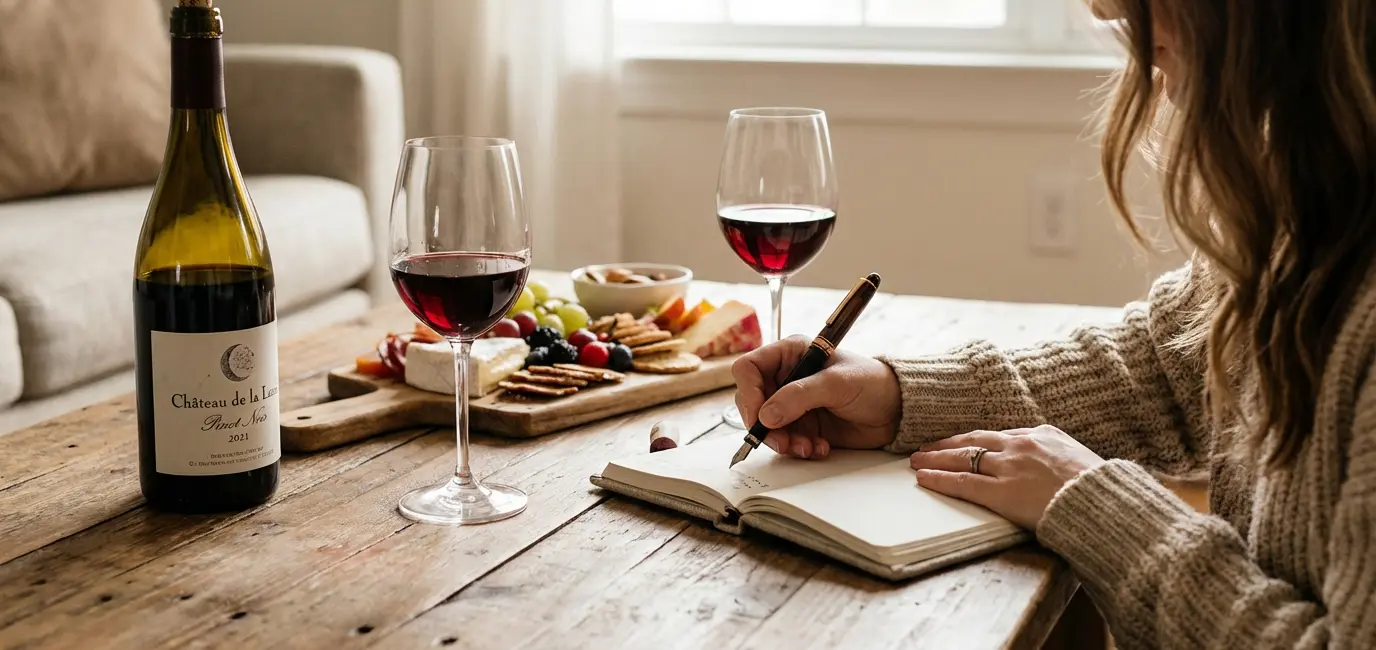
Now that you’ve mastered the label, you’re ready to do so much more with that bottle. If you want to practice your new knowledge in a social setting, my guide to how to host a wine tasting at home walks you through everything you need to set up a memorable evening. For a truly fun group activity, blind wine tasting party ideas for women is one of my favorite entertaining formats — you practice reading the label before the reveal, which makes the whole exercise surprisingly addictive.
Once you’re buying wine with more confidence, you’ll want a proper place to store and display it. I’ve written a full guide to how to set up a home wine bar that covers everything from wine storage basics to bar cart styling. And if you’re gifting a bottle to someone who’s just starting their wine journey, the gifts for wine lovers guide has great ideas for every budget, including some excellent beginner-friendly wine education tools.
For food pairing inspiration now that you’re reading labels with confidence, what wine to serve at Easter dinner is a great practical pairing reference, and my white wine vs. red wine guide covers the fundamental decision most beginners face.
FAQ: How to Read a Wine Label
What is the most important thing to look for when reading a wine label?
For most everyday wine buying, the three most useful pieces of information are the grape variety (what the wine tastes like), the region (where it’s from and what style to expect), and the producer name (who made it, and whether you trust them). Everything else on the label is secondary for casual buyers.
Why do some wine labels not list the grape variety?
Old World European wines (France, Italy, Spain, Germany) traditionally list the appellation (geographic region) rather than the grape variety, because in those regions the appellation rules dictate which grapes can be used. A label that says “Burgundy” implies Pinot Noir or Chardonnay; “Barolo” implies Nebbiolo. Learning the major appellation-to-grape associations is the key to reading European wine labels with confidence.
Does vintage year matter for everyday wines?
For most wines under $30, vintage year is less critical — these wines are made to be consistent and approachable regardless of year-to-year weather variation. Vintage year becomes more important for premium wines from specific regions (like Burgundy, Bordeaux, or Napa Valley), where a single exceptional or poor year can dramatically affect the wine’s character and value.
What does ‘Reserve’ mean on a wine label?
In the US, “Reserve” has no legal definition and can be used freely by any producer as a marketing term. In Spain and Italy, “Reserva” and “Riserva” carry legal meaning tied to minimum aging requirements. The safest approach is not to pay a significant premium for a US wine purely because of a “Reserve” designation without researching the producer.
Is higher ABV always better?
Not at all — it’s just different. Higher ABV wines (14%+) tend to be fuller-bodied and fruit-forward, common in warm-climate regions like California and Australia. Lower ABV wines (11-12%) are often lighter-bodied, higher in acidity, and more food-friendly. Neither is superior; it depends entirely on your preference and what you’re pairing the wine with.
How do I know if a wine will be sweet or dry from the label?
This is genuinely one of the trickier parts of learning how to read a wine label, because sweetness isn’t always explicitly stated. Clues include: grape variety (Moscato and Riesling are often sweet; Cabernet and Pinot Grigio are usually dry), region (German labels use quality levels like Kabinett/Spätlese that signal sweetness), and back-label tasting notes. For sparkling wines, terms like “Brut Nature,” “Brut,” “Extra Dry,” “Dry,” “Demi-Sec,” and “Doux” indicate increasing sweetness levels.
Learning how to read a wine label is genuinely one of the highest-return skills you can develop as a wine lover. A few minutes of label literacy transforms every trip to the wine shop, every restaurant wine list, and every gift-giving occasion. Start with the five essentials, build your regional vocabulary gradually, and trust your own palate to guide you from there. The label is just the beginning — the real education happens in the glass.