This post may contains affiliate links. Read our full disclosure here.
Ever stared at a bottle like it’s written in Klingon? You’re not alone. Those cryptic codes on labels – AOC, DOCG, Vino de Pago – aren’t just alphabet soup. They’re cultural fingerprints, blending centuries-old traditions with razor-sharp quality standards.
Think of Europe’s systems as the Michelin Guides of viticulture. France’s 360+ AOC designations control everything from grape types to alcohol levels like sommelier overlords. Meanwhile, Italy’s DOCG rules turn winemaking into high art – imagine Da Vinci with a barrel press. These aren’t just rules; they’re liquid history in every glass.

Our global map of wine classifications cuts through the jargon jungle. We’ll show how Spain’s single-vineyard Pagos rival Napa’s cult Cabs, and why Germany’s ripeness-based tiers make Riesling lovers swoon. It’s part decoder ring, part cultural compass – no PhD required.
From Champagne’s strict birthplace rules to Australia’s family-owned dynasties, these systems do more than guarantee quality. They preserve terroir stories in every sip. Ready to transform confusing acronyms into your secret tasting weapon? Let’s dive in.
Overview of Wine Classification Systems Around the World
Imagine a secret code etched into every bottle—a Rosetta Stone for discerning drinkers. These systems aren’t just rulebooks; they’re time capsules preserving centuries of craft. From Bordeaux’s châteaux to Tuscany’s sun-drenched hills, labels whisper stories of soil, climate, and human hands.
The Quality Conundrum
Why should you care? Because classification separates mass-produced plonk from liquid legends. The EU’s PGI (Protected Geographical Indication) and PDO (Protected Designation of Origin) act like bouncers at history’s hottest club. France’s AOC (1935) and Italy’s DOCG (1960s) didn’t just define regions—they created flavor passports for generations.
Terroir vs. Technique
Modern vintners walk a tightrope between tradition and innovation. Spain’s Vino de Pago estates prove single vineyards can rival entire regions. Meanwhile, Australia’s Geographical Indications blend Old World rigor with New World creativity. The real magic? Even “basic” table wines carry these DNA markers—your Tuesday night Chardonnay has ancestors.
| EU Term | Global Equivalent | Key Differentiator |
|---|---|---|
| PDO (Protected Designation) | France’s AOC | Strict origin + methods |
| PGI (Protected Indication) | Italy’s IGT | Flexible regional blends |
| Table Wine | US Generic Labels | Minimum quality floor |
These systems aren’t about snobbery—they’re quality insurance. Next time you uncork a bottle, you’re not just drinking. You’re time-traveling.
Deciphering European Wine Classification Methodologies
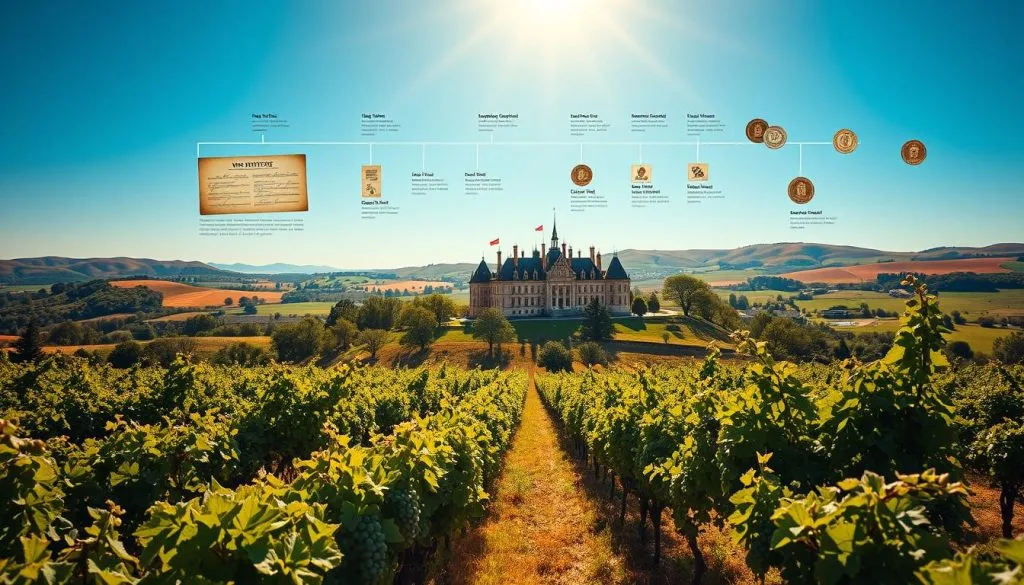
Picture medieval monks debating grape varietals like tech bros arguing algorithms. Europe’s appellation systems aren’t just rulebooks – they’re living history. From Burgundy’s 12th-century vineyard maps to Germany’s 1971 Weinrecht reforms, every regulation tells a story of survival and reinvention.
Historical Context and Regional Influences
France’s AOC system didn’t spring from bureaucracy – it was born from phylloxera devastation. When vineyards rebuilt post-1890s, they codified traditions into law. Baron Pierre Le Roy’s 1935 Châteauneuf-du-Pape decree became the blueprint:
“The land itself dictates the rules.”
Italy took this further with DOCG stamps in the 1960s. Imagine nonnas inspecting Barolo barrels like Michelin inspectors. Germany’s ripeness-based tiers? That’s terroir meets chemistry set – balancing sunshine hours against sugar levels since Roman times.
Three pillars shape these quality frameworks:
- Geographic DNA: Rioja’s 1925 zoning laws predate EU PDO standards by decades
- Craft Enforcement: Tuscan consorzi agents still measure cellar humidity
- Cultural Flex: Spain’s Vino de Pago bypasses regions to crown single estates
While EU labels like PDO/PGI create unity, national quirks persist. A Champagne producer can’t legally call their bubbly “Champagne” if bottled sideways – but Prosecco makers face no such poetry. These aren’t just rules; they’re liquid cartography, mapping taste through time.
The Intricacies of French Wine Labeling
Crack the code on French bottles and you’ll find a liquid real estate market – where vineyard plots carry more clout than zip codes. The system operates like an exclusive club, with INAO (National Institute of Origin and Quality) as its meticulous gatekeeper.
Understanding AOC/AOP and Regional Hierarchies
France’s appellation structure works like Russian nesting dolls. At the base: Vin de France – think of it as the creative wildcard. Move up to IGP (Protected Geographical Indication), where regional character starts emerging. The pinnacle? AOC/AOP designations – the velvet rope of viticulture.
Burgundy’s Grand Cru vineyards exemplify this precision. Of 33 crown-jewel sites, each parcel has unique soil signatures codified since medieval times. Bordeaux takes a château-centric approach – their 1855 classification still dictates prices like a centuries-old stock index.
From Vin de France to Grand Cru
INAO’s rules read like a sommelier’s constitution:
- Yield limits tighter than a corset (often
- Approved grape varieties per region – no Merlot in Burgundy’s Pinot Noir kingdom
- Minimum alcohol levels ensuring only ripe fruit makes the cut
Spot AOC or AOP on labels? They’re twins separated by EU paperwork. Champagne’s strict production rules – hand-harvesting, specific press cycles – show why these terms matter. It’s not just quality control; it’s liquid genealogy in every sip.
Italian Wine Classifications: Tradition and Innovation
Navigating italian wine labels feels like decoding Renaissance art—every brushstroke matters. The country’s four-tier system blends medieval traditions with punk-rock creativity. At the base? Vino da Tavola—Italy’s answer to unfiltered self-expression, where winemakers play fast and loose with grape varieties.
Breaking the Mold: From Table Wine to Revolution
The 1970s saw rebel winemakers ditch DOC/DOCG rules to craft Super Tuscans—Bordeaux blends using outlawed Cabernet. These renegade bottles birthed the IGT tier in 1992, a quality wildcard allowing geographic nods without strict regional formulas. Think of it as “appellation-approved graffiti.”
Climb the pyramid:
- DOC (1963): The sommelier’s sweet spot—think Chianti’s Sangiovese-only mandate
- DOCG (1980): Italy’s Michelin-starred tier, with numbered gov’t seals on every cork
| Tier | Oversight | Flexibility |
|---|---|---|
| Vino da Tavola | Minimal | Experimental blends |
| IGT | Regional | Modern styles |
| DOC/DOCG | Gov’t panels | Heritage recipes |
Today’s italian wine scene thrives on this tension—DOCG traditionalists versus IGT innovators. As one Tuscan producer quipped:
“Our labels aren’t certificates—they’re battle scars.”
German Wine: A System of Ripeness and Quality
Think of German vineyards as meteorologists obsessed with ripeness forecasts. Their classification model treats sugar levels like sacred data points, turning each harvest into a precision game. This isn’t just winemaking—it’s liquid algebra with centuries-old variables.
Navigating Prädikatswein and Qualitätswein
Germany’s quality pyramid starts with Deutscher Wein—basic blends with geographic freedom. Climb to Qualitätswein, where sugar readings (measured in Öchsle) begin at 51° and allow controlled sweetening. The summit? Prädikatswein’s six-tiered crown, where nature dictates sweetness:
| Category | Sugar (°Oe) | Style |
|---|---|---|
| Kabinett | 67–82 | Light, off-dry |
| Spätlese | 76–90 | Richer, nuanced |
| Auslese | 83–100 | Luxury select berries |
| Beerenauslese | 110–128 | Botrytis-affected |
| Trockenbeerenauslese | 150–154 | Nectar-like |
| Eiswein | BA-equivalent | Ice-pressed |
While Qualitätswein lets producers adjust sugar, Prädikatswein bans additives—nature’s recipe only. Regional labels like Landwein (Germany’s answer to IGP) offer terroir-driven flexibility without the strict tiers. As a Rheingau vintner quipped:
“Our grapes don’t ripen—they graduate.”
This system turns labels into flavor roadmaps. That Spätlese? It’s not just sweet—it’s a timestamp of perfect autumn sunshine captured in every sip.
Exploring Other European Systems: Portugal and Austria
Portugal’s Douro Valley runs on two codes: DOC and Vinho Regional. These classification tiers prove strict terroir rules and creative freedom can coexist like yin and yang. While France debates appellations, Iberian vintners blend heritage with hustle.
Portugal’s DOC and Vinho Regional Explained
DOC zones enforce regulations tighter than a fado singer’s vibrato. Douro Valley producers must use native grape varieties like Touriga Nacional and cap yields at 55 hl/ha. Vinho Regional? Think of it as Portugal’s mixology lab—14 zones where winemakers blend international varieties with local stars.
Alentejo’s VR label birthed bold reds that rival Priorat’s cult bottles. As one Alentejano vintner joked:
“Our system isn’t a cage—it’s a trampoline.”
The Austrian Approach to Qualitätswein
Austria merged Germany’s sugar obsession with Burgundian precision. Their Qualitätswein category combines ripeness tiers and DAC (Districtus Austriae Controllatus) zones. Wachau’s steep terraces use three tiers:
- Steinfeder: Feather-light Grüner Veltliner (≤11.5% ABV)
- Federspiel: Structured balance (11.5–12.5%)
- Smaragd: Opulent, sun-drenched powerhouses
Burgenland’s Ausbruch sweet wines showcase botrytis mastery without German-style sugar charts. This region-first philosophy lets Kamptal’s Rieslings shine while allowing 13% Zweigelt blends in Niederösterreich. Proof that quality frameworks can groove like a Vienna waltz—structured, but with flair.
New World Wine Classification Systems: Flexibility and Innovation
New World vintners play jazz to Europe’s classical scores—improvisation meets precision in every bottle. Their approach ditches rigid appellations for grape-first storytelling
Labeling Trends in the United States and Beyond
California’s Cabernet labels don’t whisper—they shout varietal identity. Napa producers lead with grape names like rockstar headliners, a stark contrast to Bordeaux’s château-centric mystique. Australia’s Barossa Valley takes it further: Shiraz bottles flaunt tech specs like Tesla dashboards—pH levels, fermentation temps, even soil conductivity.
This transparency fuels consumer trust. Chilean Carménère bottles now feature QR codes linking to vineyard drone footage. “We’re not hiding behind rules,” says a Sonoma winemaker. “Our terroir isn’t a DOCG zone—it’s this hillside, this vintage, this blend.”
| Old World | New World | Innovation |
|---|---|---|
| Region-first | Grape-forward | Hybrid clones |
| Historical tiers | Tech-driven tiers | Augmented reality labels |
| Yield limits | Experimentation | Climate-adaptive vines |
Market diversity thrives where winemakers treat regulations like playbooks, not bibles. South Africa’s Swartland rebels mix Chenin Blanc with Roussanne—a blend that’d give Burgundians hives. Yet these wines dominate Instagram feeds, proving quality isn’t about pedigree—it’s about personality in a glass.
You Might Also Enjoy
Conclusion
The world’s vineyards speak in dialects – from Burgundy’s Grand Cru commandments to Napa’s grape-forward poetry. These classification frameworks aren’t rulebooks but flavor dictionaries, decoding how altitude in Priorat or oak choices in Barossa shape your glass.
Europe’s systems remain the gold standard – think Italy’s denominazione origine stamps as Vincent van Gogh with a grape press. Yet New World innovators rewrite rules daily, blending Malbec with AR-powered labels. Whether chasing German Riesling’s quality tiers or Chile’s experimental Carménère, every bottle becomes a cultural handshake.
Here’s the twist: strict varieties lists and yield caps coexist with rogue blends. That Super Tuscan breaking DOCG rules? It’s proof that liquid artistry thrives where tradition meets rebellion. Your move? Treat labels as cheat codes – scan QR specs on South African Chenin or decode Rioja’s aging codes like a flavor detective.
Now uncork curiosity. Share that shockingly good wines classified as “table” red. Because in this global sip-and-tell game, the best level up happens when you taste outside the lines.
FAQ
Why do French terms like AOP and Grand Cru dominate wine conversations?
What’s the real deal with Italy’s DOCG vs. DOC labels?
How does Germany’s Prädikatswein turn sugar levels into a quality hierarchy?
Why don’t New World regions like California use Europe’s classification playbook?
What makes Austria’s Qualitätswein stand out in a crowded EU market?
Can a “Vinho Regional” from Portugal compete with DOC bottles?