This post may contains affiliate links. Read our full disclosure here.
Figuring out what wine to serve at Easter dinner is one of those hosting questions that sounds complicated until you understand the logic behind it — then it becomes genuinely simple. Easter is tricky because the menu varies more than almost any other holiday: lamb, ham, brunch spreads, spring salads, deviled eggs, glazed root vegetables. There is no one wine that works for all of it, but there absolutely is a short list of wines that cover every scenario. I’ve hosted Easter enough times to have tested most of the combinations, and what I’ve landed on is a practical framework you can use no matter what you’re serving.
The short answer to what wine to serve at Easter dinner: dry rosé is your best single-bottle answer, Pinot Noir is your best red if you’re serving lamb, and a slightly off-dry Riesling or Chenin Blanc is your best white if you’re serving ham. For brunch, anything sparkling — Prosecco, Cava, Blanc de Blancs — is the right call. Read on for the reasoning and the specific bottles I reach for.
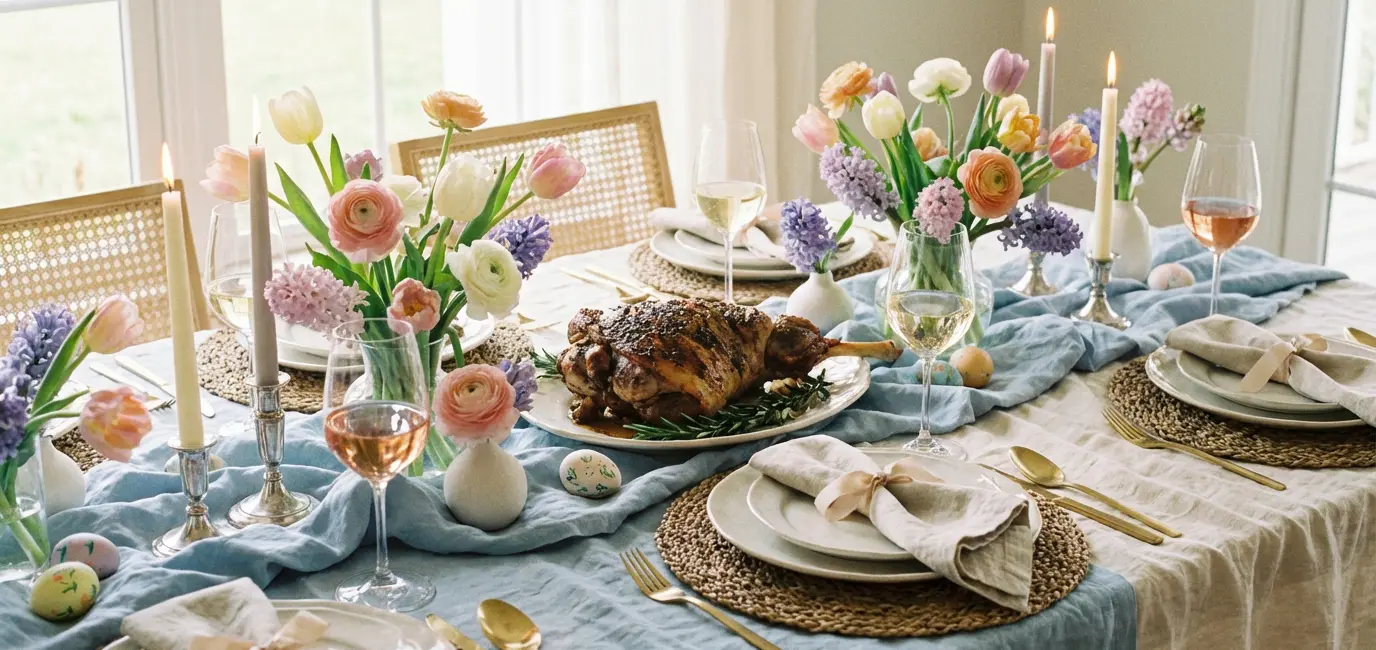
“Easter is one of the few holidays where the wine needs to be as versatile as the host. The table has spring salads and roasted meats and deviled eggs all at once. Rosé was practically invented for this moment.”
The Easter Wine Challenge (and Why It’s Actually Easy)
The reason people feel uncertain about what wine to serve at Easter is that Easter menus don’t follow a single flavor logic the way, say, Thanksgiving does. Thanksgiving is rich and savory and earthy — it almost calls out for Pinot Noir or a Beaujolais. Christmas is all deep flavors and spice — Cabernet and Syrah shine. But Easter is spring, which means fresh and light and sometimes sweet (glazed ham, honey carrots) alongside rich and savory (roasted lamb, au gratin potatoes). That contrast is what makes wine selection feel complicated.
But here’s what I’ve learned: the spring context is actually your friend when it comes to wine. Spring wines — rosé, light reds, aromatic whites, sparkling — are designed to be versatile. They were made to pair with exactly the kind of mixed, fresh-meets-rich menus that Easter brings. The challenge is more perceived than real. Once you know which wines those are and why they work, choosing Easter wine becomes one of the easier hosting decisions you make all year.
The key is to stop thinking about it as “what one wine goes with everything” and start thinking about it as “what two or three wines cover our menu.” For most Easter gatherings, you want one sparkling option for toasting and brunch, one crisp white or rosé as the versatile crowd-pleaser, and one medium-bodied red if you’re serving lamb. That’s your complete Easter wine lineup.
What Wine to Serve at Easter Brunch
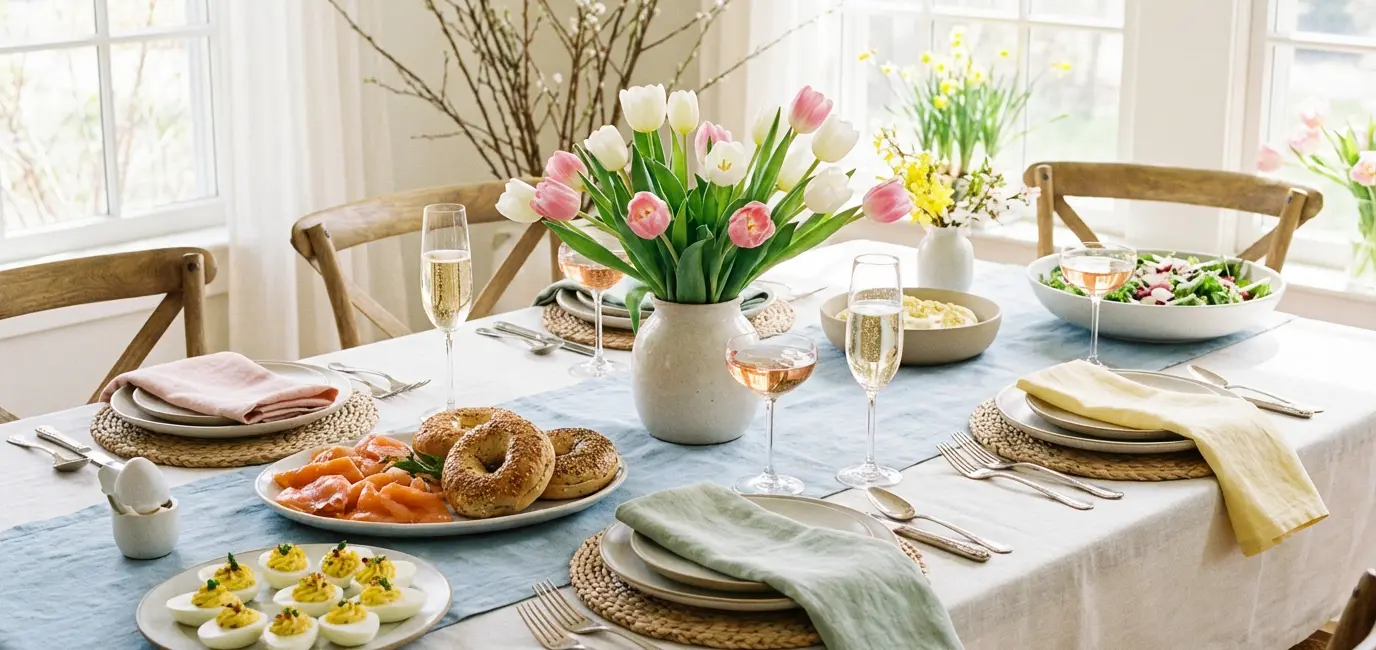
If you’re hosting an Easter brunch rather than (or in addition to) a dinner, sparkling wine is the non-negotiable. It’s the right structure for morning gatherings, it pairs with almost everything on a brunch table, and it signals celebration without feeling heavy.
Prosecco
Prosecco is my go-to for Easter brunch wine because it’s crowd-pleasing, approachable, and not precious. Guests who don’t know much about wine love it. Guests who know a lot about wine still appreciate its ease and freshness at a morning table. It pairs beautifully with smoked salmon, quiche, deviled eggs, spring salads, and fruit. Look for a Brut or Extra Brut style to keep it dry and food-friendly. A good Prosecco at $15–20 punches well above its price point.
Cava
Cava is Spain’s answer to Champagne, made by the traditional method with a toastier, more complex character than Prosecco. It’s an excellent choice if you want something a step up from Prosecco without going all the way to Champagne pricing. Cava works especially well with egg dishes and the kind of herby, vegetable-forward plates that show up on spring brunch tables.
Blanc de Blancs Champagne
If you want to splurge or this is a special Easter, a Blanc de Blancs — Champagne made entirely from Chardonnay — is the most elegant choice for Easter brunch wine. The pure, citrusy, mineral quality of a good Blanc de Blancs cuts through rich brunch dishes beautifully and elevates the table in a way nothing else does. You don’t need the most expensive bottle — there are excellent Blanc de Blancs options in the $30–40 range that feel genuinely luxurious.
What Wine to Serve with Easter Lamb
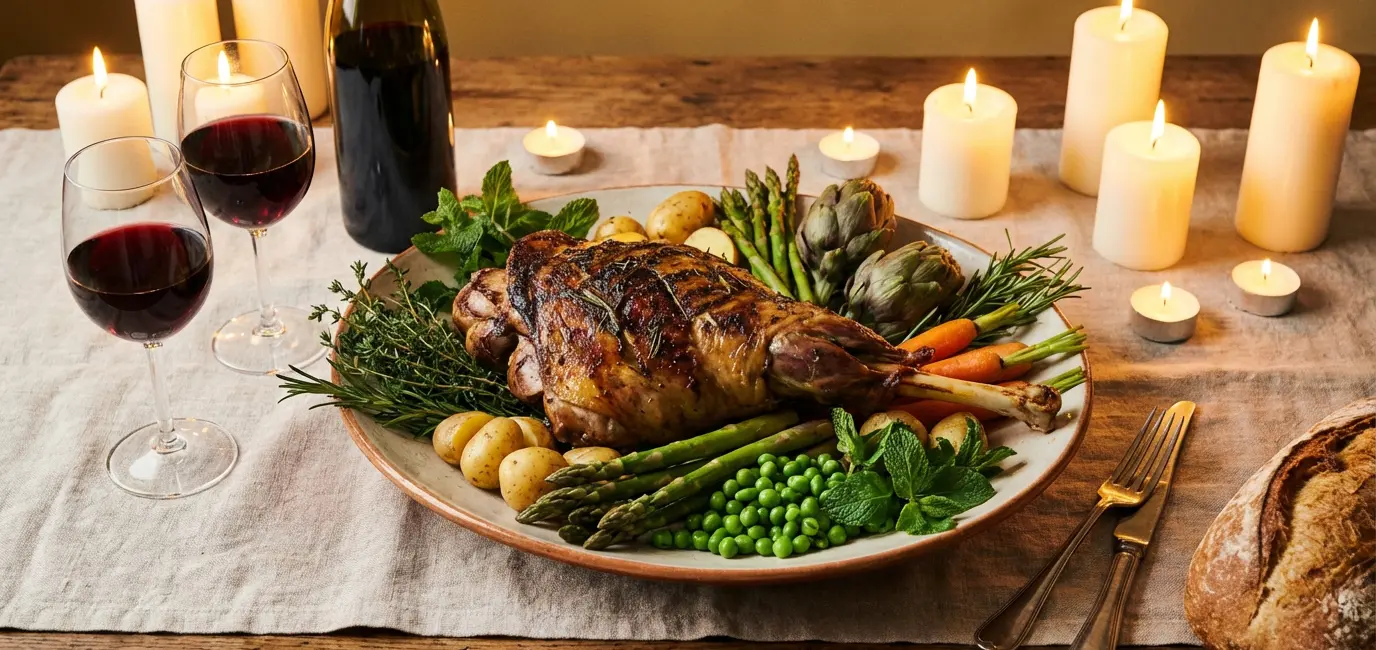
Lamb is the most traditional Easter dinner centerpiece, and it’s also the most wine-friendly. The slightly gamey, savory depth of lamb loves a red wine with good acidity and earthy notes. The classic pairing is Bordeaux or Cabernet Sauvignon, and that works. But my personal preference for Easter is Pinot Noir, and here’s why: Easter lamb is typically roasted with spring herbs — rosemary, thyme, mint — and served alongside vegetables and salads. Pinot Noir has the fruit and earthiness to complement the lamb while staying light enough to work with everything else on the table.
Pinot Noir — The Best Wine with Easter Lamb
A good Pinot Noir from Burgundy, Oregon’s Willamette Valley, or California’s Sonoma Coast brings cherry, earth, and just enough structure to match the lamb without overpowering it. Serve it slightly cooler than room temperature — around 60–62°F — and let it breathe for 20–30 minutes before pouring. The spring herb flavors in a roasted lamb preparation (rosemary, garlic, lemon zest) are almost tailor-made for Pinot Noir’s profile.
Grenache and GSM Blends
If Pinot Noir isn’t your preference, a Southern Rhône-style Grenache or GSM blend (Grenache-Syrah-Mourvèdre) is a wonderful alternative. These wines have a similar weight to Pinot but with more warmth and a red fruit quality that loves lamb. Spanish Garnacha is a budget-friendly version of the same idea. For an Australian Easter, a McLaren Vale Grenache is absolutely the move.
What to Avoid with Lamb
I’d steer away from very tannic, heavy reds — a big Cabernet Sauvignon or a bold Zinfandel can overwhelm the subtler herb and citrus notes in spring lamb preparation and clash with lighter vegetable sides. Save those wines for winter roasts. Easter lamb deserves a wine that’s present without dominating.
What Wine to Serve with Easter Ham
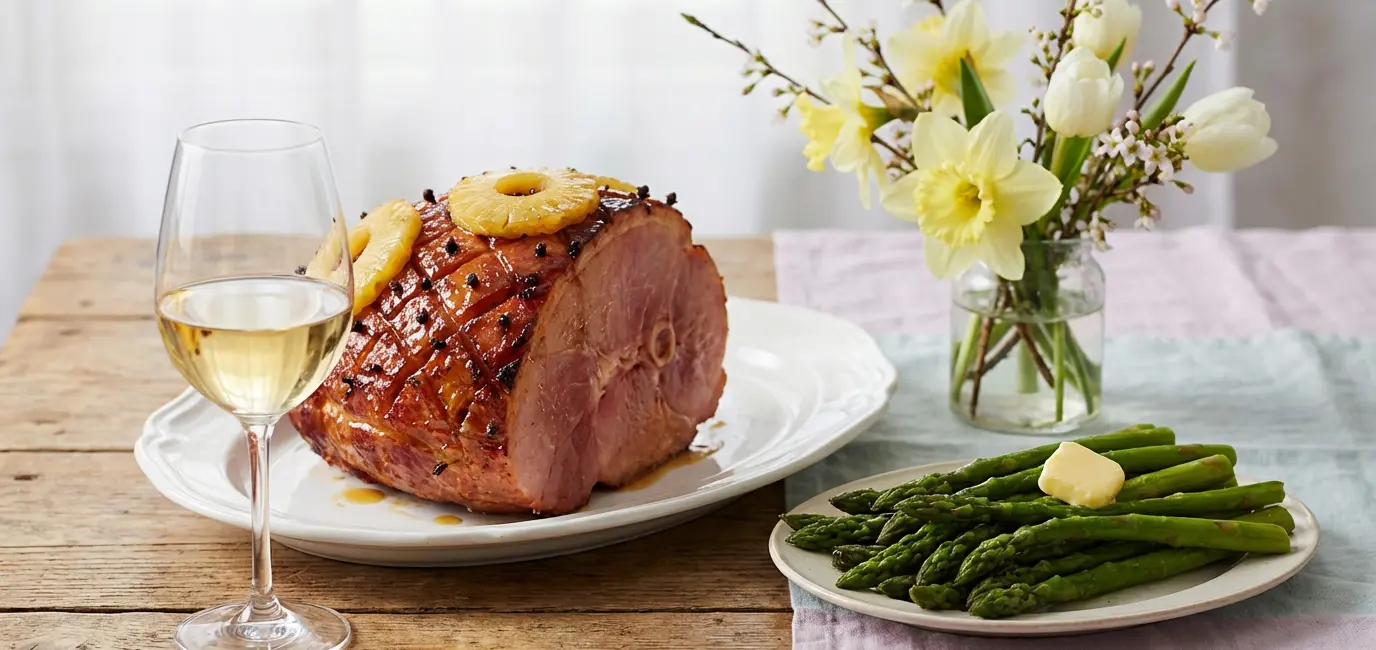
Ham is a different wine puzzle than lamb. Most glazed Easter hams have a sweet-savory quality — brown sugar, honey, pineapple, mustard — that requires a wine with enough sweetness or fruit to complement rather than clash. A dry, high-tannin red wine next to glazed ham often tastes metallic and unpleasant. You want something that works with the sweetness while still feeling like a proper wine choice for Easter dinner.
Riesling — The Classic Ham Pairing
An off-dry German Riesling or an Alsatian Riesling (which tends to be drier but still fruit-forward) is arguably the single best wine to serve with Easter ham. The slight residual sweetness in the wine echoes the glaze, while Riesling’s naturally high acidity cuts through the richness of the meat. It’s one of those pairings that feels almost too obvious once you’ve tried it. A German Spätlese Riesling ($20–25) is a perfect everyday choice here.
Chenin Blanc
Chenin Blanc from the Loire Valley — particularly a Vouvray or Savennieres — brings a honeyed, slightly floral quality that works wonderfully with glazed ham. It has enough body to stand up to the richness of the meat while the residual sugar or fruit-forward style complements the sweetness of the glaze. This is a slightly more adventurous pick that will impress wine-interested guests.
Dry Rosé
If you want a single wine that works for both ham and everything else on the table, a dry Provençal rosé remains your most reliable choice for Easter ham wine. The fruit-forward but dry character handles the glaze gracefully, and its versatility means it works with the whole spread rather than just the main. More on this in the next section.
The One Bottle That Works for Everything

If you’re asked to bring one bottle of wine for Easter dinner and you don’t know the menu, or if you want one wine that works for the entire spread, the answer is dry Provençal rosé. This is not a generic recommendation — it’s specifically the right choice for Easter for several reasons.
First, rosé is a spring wine. It looks like spring, it feels like spring, and serving it signals that the host has thought about seasonality. Second, a good Provençal rosé is dry enough to work as a serious food wine while being fruit-forward enough to complement both ham and lighter lamb dishes. Third, it’s versatile across the entire table — it works with salads, vegetable sides, egg dishes, and the main equally well. And fourth, nearly every guest at an Easter table will be happy with a glass of rosé.
My preferred style is a Provence rosé with good acidity and a pale salmon color — something like a Bandol rosé if you want to splurge, or any number of solid Cotes de Provence bottles in the $18–28 range for everyday entertaining. I’ve written more about the rosé category in my best rosé wines for spring 2026 guide if you want specific label recommendations.
How Much Wine to Buy for Easter
For an Easter dinner of 8–10 guests: plan for 2 bottles of sparkling (for toasting and brunch), 2 bottles of your white or rosé, and 2 bottles of red if you’re serving lamb. That’s 6 bottles for a full table, which is a reasonable amount. Err on the side of more — leftover Easter wine is genuinely not a problem.
More Wine and Entertaining Guides for Spring
If you’re planning a full Easter celebration, I have guides that cover every part of it. For the table itself, my spring tablescaping ideas 2026 has the exact styling principles I use to make a holiday table look intentional without being over-the-top. For the food side of wine pairing beyond Easter, best wines for game day covers how I think about pairing wine with different food occasions. If you want to serve a proper tasting experience alongside dinner, how to host a wine tasting at home walks through the setup from start to finish. For the full Easter hosting picture, my spring dinner party menu ideas covers menus and timing. And if you’re putting together the full Easter table experience, how to host a spring dinner party 2026 is the complete hosting guide.
Frequently Asked Questions
Still sorting out your Easter wine selection? Here are the questions I hear most.
What is the best wine for Easter dinner overall?
Dry Provençal rosé is the single best answer if you want one wine that works across an entire Easter table. It pairs with lamb, ham, salads, vegetable dishes, and appetizers equally well, and it looks and feels like a spring celebration. If you’re serving exclusively lamb, Pinot Noir is the better red. If you’re serving exclusively ham, an off-dry Riesling is the more precise pairing.
What red wine goes with Easter lamb?
Pinot Noir is my top recommendation. Its earthy cherry character and medium body complement the gamey depth of lamb without overpowering the spring herb flavors in the preparation. Grenache and GSM blends are excellent alternatives. Avoid very heavy, tannic reds like big Cabernet Sauvignon or Shiraz — they overpower spring lamb and clash with lighter sides.
What wine pairs with glazed Easter ham?
An off-dry Riesling is the classic and most successful pairing for glazed ham. The slight residual sweetness in the wine complements the sweet glaze while Riesling’s high acidity keeps it from feeling cloying. Chenin Blanc is an elegant alternative. Dry rosé works if you want one wine for the whole table. Avoid high-tannin reds — they taste metallic next to sweet ham glazes.
Should I serve red or white wine at Easter?
Both, ideally. The versatility of Easter menus means a single color doesn’t cover everything. My recommendation is to have a sparkling option for brunch and toasting, a dry rosé or crisp white as the main crowd-pleaser, and a medium-bodied red (Pinot Noir) if you’re serving lamb. That three-wine approach covers every scenario without requiring a different wine for every dish.
What sparkling wine is best for Easter brunch?
Prosecco is the most approachable and crowd-pleasing choice for Easter brunch. Cava is a step up in complexity at a similar price. Blanc de Blancs Champagne is the splurge option that delivers genuine elegance. Any of the three work beautifully with the typical Easter brunch spread of eggs, smoked salmon, spring salads, and pastries.
How many bottles of wine do I need for Easter dinner?
For 8–10 guests at a full Easter dinner: plan for 2 bottles of sparkling, 2 bottles of white or rosé, and 2 bottles of red if serving lamb. Six bottles total is a reasonable baseline. Adjust up if your guests are enthusiastic wine drinkers or if dinner will run long. The rule of thumb is roughly half a bottle per person for a 2–3 hour dinner.
Can I serve rosé at Easter dinner?
Absolutely — and I’d argue rosé is actually the ideal Easter wine. A dry Provençal rosé works with lamb, ham, spring salads, egg dishes, and vegetable sides equally well. It looks beautiful on a spring table, it’s accessible to guests with different wine preferences, and the seasonality feels exactly right. If you can only choose one wine for Easter dinner, make it a quality dry rosé.
Choosing what wine to serve at Easter dinner is less about finding the one perfect answer and more about covering the range of your menu with a thoughtful short list. Sparkling for the start, rosé as your versatile middle ground, Pinot Noir if there’s lamb, and an off-dry Riesling if ham is the centerpiece. That’s the formula. Set those bottles out, let guests self-pour, and enjoy the table you’ve built.