This post may contains affiliate links. Read our full disclosure here.
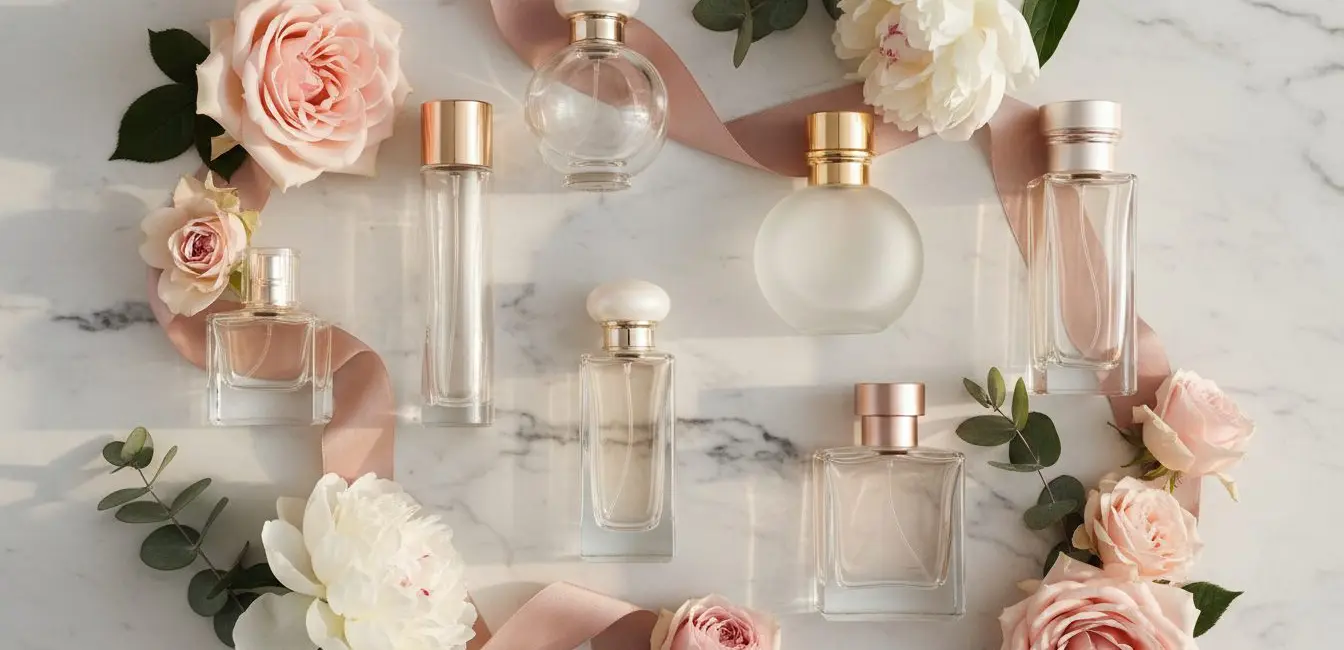
Perfume layering is the art of combining two or more fragrances on your skin to create a completely unique, signature scent that no one else wears. If you’ve ever wished your perfume could feel more personal, more complex, and more “you” — this guide will show you exactly how to do it.
I discovered perfume layering almost by accident a few years ago. I ran out of my favorite floral and sprayed the only thing I had — a warm, woody fragrance — underneath it. The result was so much better than either scent alone that I’ve never gone back to wearing just one perfume at a time. It’s become one of my favorite little rituals, right alongside pouring a glass of Pinot Noir and settling into a quiet evening.
The best part? You don’t need an expensive collection or a professional nose to start. You just need to understand a few basic principles — and I’m going to walk you through all of them.
What Is Perfume Layering (And Why It Works)
At its core, perfume layering means applying two or more fragrances, either simultaneously or one on top of the other, to build a more complex scent than either could create alone. Think of it the way a sommelier might describe a great wine — base notes, heart notes, top notes, each playing off the others.
“The most interesting scents in the world aren’t simple. They’re conversations between ingredients.” — Luca Turin, perfume critic
Why does it work? Because perfume is chemistry. When two fragrance families interact on your warm skin, they create olfactory harmonics — new notes that emerge from the combination that neither scent produces alone. A light, ozonic fresh fragrance becomes sultry when layered over a soft amber base. A heavy oriental becomes wearable and modern when topped with a green citrus note.
The practice has deep roots in Middle Eastern and South Asian perfumery traditions, where layering attars (concentrated oil-based perfumes) is standard practice. Contemporary perfumers at houses like Hermes, Le Labo, and even more accessible lines have started designing fragrances specifically to be layered — but you don’t need a designer budget to get started.
What you need: two to three fragrances you already own, a little knowledge about how they interact, and about five minutes to experiment.
The 5 Fragrance Families You Need to Know
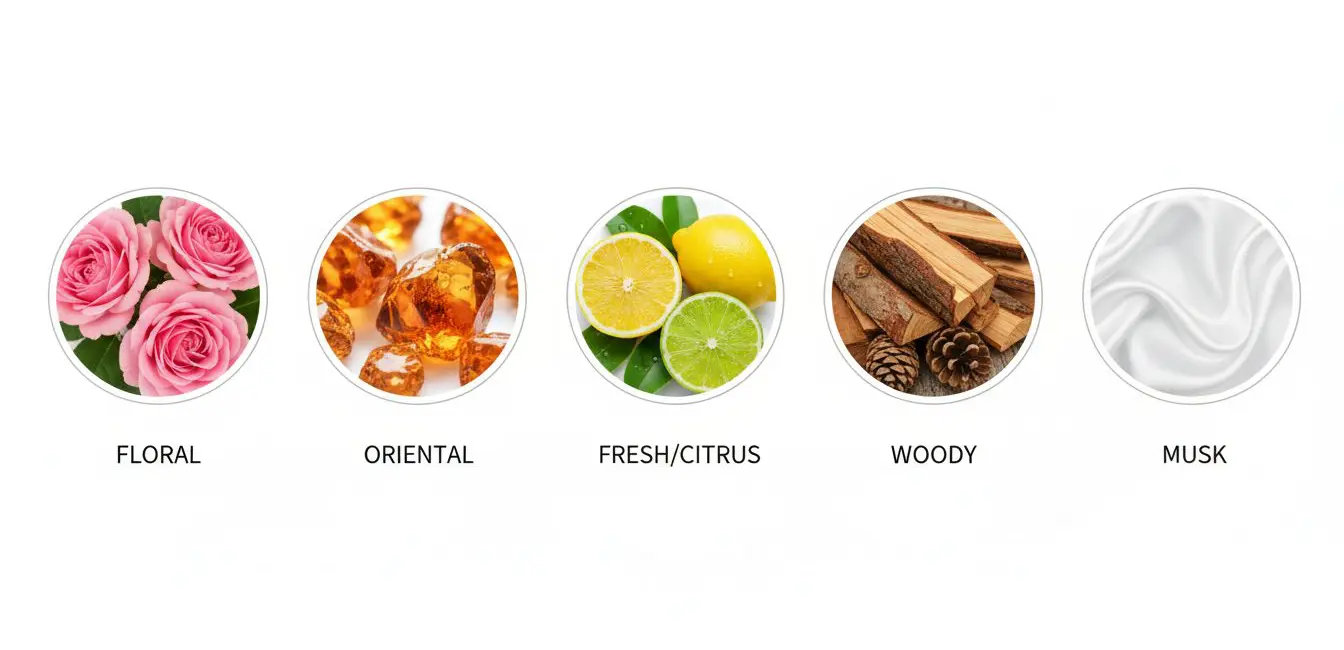
Before you can layer intelligently, it helps to understand the five major fragrance families. Every perfume belongs primarily to one (though most have elements of several). Knowing these helps you predict which combinations will work.
1. Floral
The largest and most popular family. Rose, jasmine, peony, lily of the valley. Florals range from light and powdery to lush and heady. They layer beautifully with: musks (softens and extends them), light woods (adds depth), fresh/citrus notes (brightens them). Browse floral perfumes at FragranceNet — they carry thousands of options at significant discounts off retail.
2. Oriental / Amber
Warm, rich, and sensual. Vanilla, amber, benzoin, incense, exotic spices. Orientals are powerful base notes — they anchor and deepen whatever sits on top. They layer beautifully with: florals (classic and timeless), citrus (modern, unexpected), soft musks. Shop oriental fragrances if you want a layering anchor that makes everything more complex.
3. Fresh / Citrus / Aquatic
Clean, bright, energizing. Bergamot, grapefruit, sea breeze, green tea, cucumber. These are your top-note perfumes — the first thing people smell. They fade fastest but add beautiful lift and modernity to heavier scents. Explore fresh fragrances — perfect for the daytime layer of a day-to-night combination.
4. Woody / Earthy
Grounding, masculine-leaning but incredibly versatile. Sandalwood, cedarwood, vetiver, patchouli, oud. These are powerful base notes that add warmth and longevity to the entire composition. A small amount goes a long way — they’re the foundation, not the star.
5. Musk / Soft Floral Powder
Skin-like, intimate, barely-there. Clean musks, iris, heliotrope, powdery aldehydes. These are the blending notes — the ones that make two separate fragrances feel like they were meant to be together. If a combination feels discordant, adding a musk in the middle often resolves it.
How to Layer Perfumes: The Step-by-Step Method
The mechanics of how to layer perfumes are simpler than most people think. Follow this sequence and you’ll get consistent, beautiful results.
Step 1: Start With the Heaviest Scent
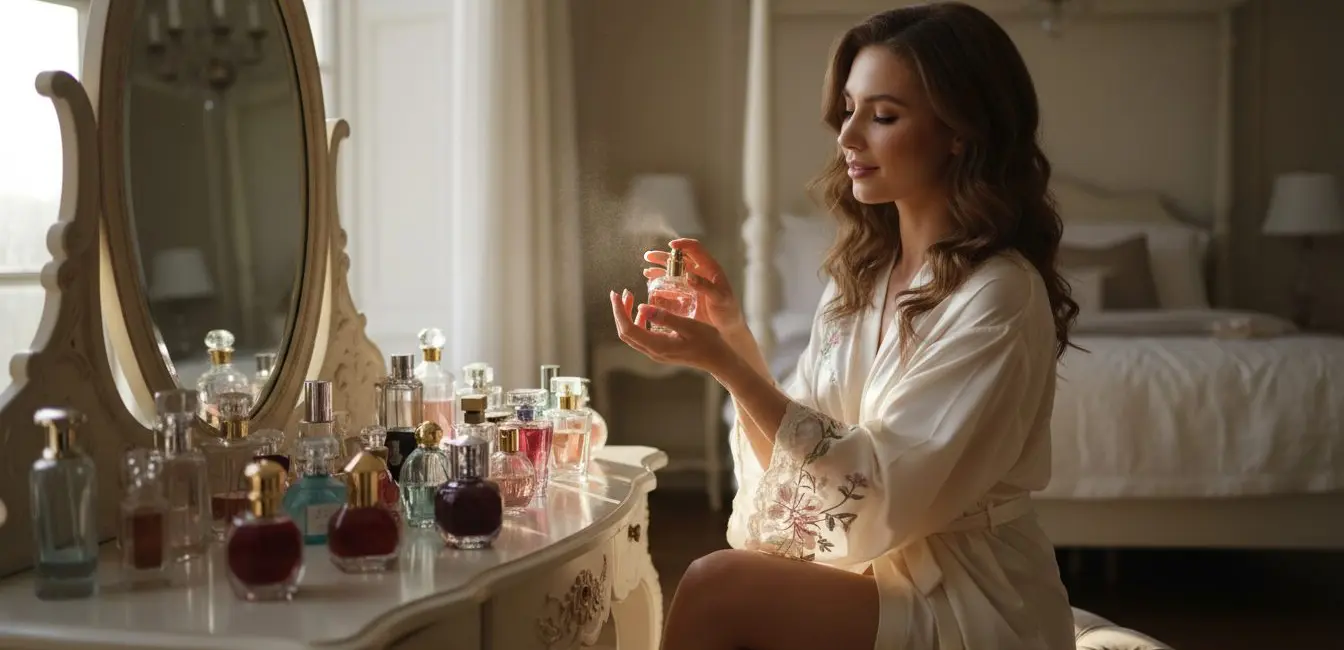
Apply your heaviest, richest fragrance first — typically your oriental, woody, or amber. This goes directly on clean, moisturized skin at your pulse points: wrists, inner elbow, collarbone, behind the knees. The heat at these points will help the fragrance bloom throughout the day.
Tip: Unscented body lotion applied before your fragrance acts as a primer, making the scent last noticeably longer. Try Lunya’s clean formulations if you want a luxury feel without anything that might clash with your fragrance combination.
Step 2: Wait 30-60 Seconds
Let the base scent settle on your skin. This lets the top notes dissipate slightly so the heart of the fragrance is what reacts with your next layer.
Step 3: Apply Your Lighter Scent
Spray your floral, fresh, or citrus on the same pulse points — from about 6 inches away. You want a light mist, not saturation. The goal is for both fragrances to mingle on your skin, not compete.
Step 4: Don’t Rub
The cardinal rule of perfume layering: never rub your wrists together. Rubbing crushes the top notes and disrupts the molecular structure of the fragrance. Let it dry naturally.
Step 5: The Hair and Clothing Option
For longevity, lightly mist one fragrance onto your hair (hold the bottle 12+ inches away) and a different fragrance on your clothes. Fabric absorbs scent differently than skin, creating another dimension to the combination. This is especially effective for evening events where you want the fragrance to last 6+ hours.
“Think of your fragrance wardrobe the way you think about wine: a fresh rose for brunch, a bold Cabernet for dinner. The right combination for every moment exists — you just have to discover it.”
Best Perfume Combinations for Every Mood
The best perfume combinations are the ones that feel right on YOUR skin — because everyone’s chemistry is different. That said, here are some starting points that tend to work beautifully across most skin types.
For each pairing, I’ve indicated the “base first” scent in italics:
- Romantic evening: Warm amber/vanilla + Rose-peony floral. Classic femininity with depth.
- Confident office: Light sandalwood or cedarwood + Fresh bergamot/citrus. Clean, modern, memorable without being overwhelming.
- Weekend casual: Soft white musk + Garden floral (peony or lily). Like clean laundry and fresh flowers.
- Cozy night in: Tonka bean or heliotrope musk + Vanilla and fig. Warm, a little indulgent, perfect for a girls night in with good wine.
- Summer brunch: Aquatic or cucumber fresh + White tea or green floral. Light enough for heat, fresh enough for outdoor dining.
- Fall evenings: Oud or vetiver + Fig-woody floral. Complex, autumnal, unexpected.
Don’t have the exact notes I mentioned? Browse the FragranceNet collection — they carry most major and designer fragrances at 40-70% below retail, which makes experimenting much more affordable.
Seasonal Layering: Spring, Summer, Fall, Winter
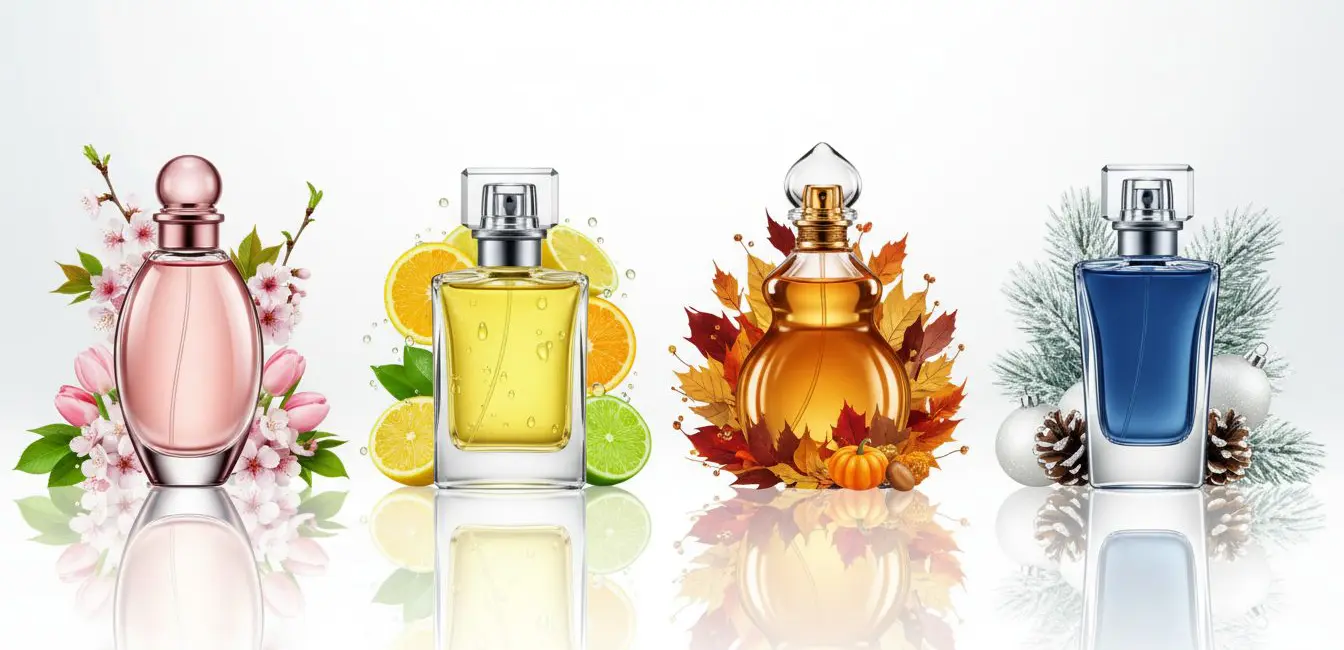
Perfume layering responds to temperature and humidity — warm weather diffuses lighter top notes faster, cold weather mutes sillage. Adjusting your combinations by season makes a real difference.
Spring
Spring is for soft, optimistic combinations. Layer a green floral (lily of the valley, iris, violet leaf) over a light powdery musk. The result is like wearing a sunlit garden. I always find myself reaching for this type of layering when I’m setting a spring tablecloth and opening a crisp Albarino.
Summer
Heat amplifies fragrance significantly. In summer, go lighter on the base and heavier on the fresh/citrus layer. Try: a barely-there musk base + a cool aquatic or solar floral on top. Less is more.
Fall
Autumn is when you can finally bring out the heavy layers. Rich amber or vanilla base + a smoky floral (rose/oud, iris/patchouli). Fall layering can be more adventurous — the cool air holds these combinations beautifully.
Winter
Cold weather mutes projection — so winter is the time to lean into gourmand (edible-smelling) and oriental combinations. Layer: deep oud or frankincense base + warm spiced floral (rose + cinnamon, jasmine + cardamom).
Building Your Fragrance Wardrobe on a Budget
You don’t need a 40-bottle collection to practice perfume layering well. A strategic “starter wardrobe” of five to seven fragrances covers almost any combination you’d want to create.
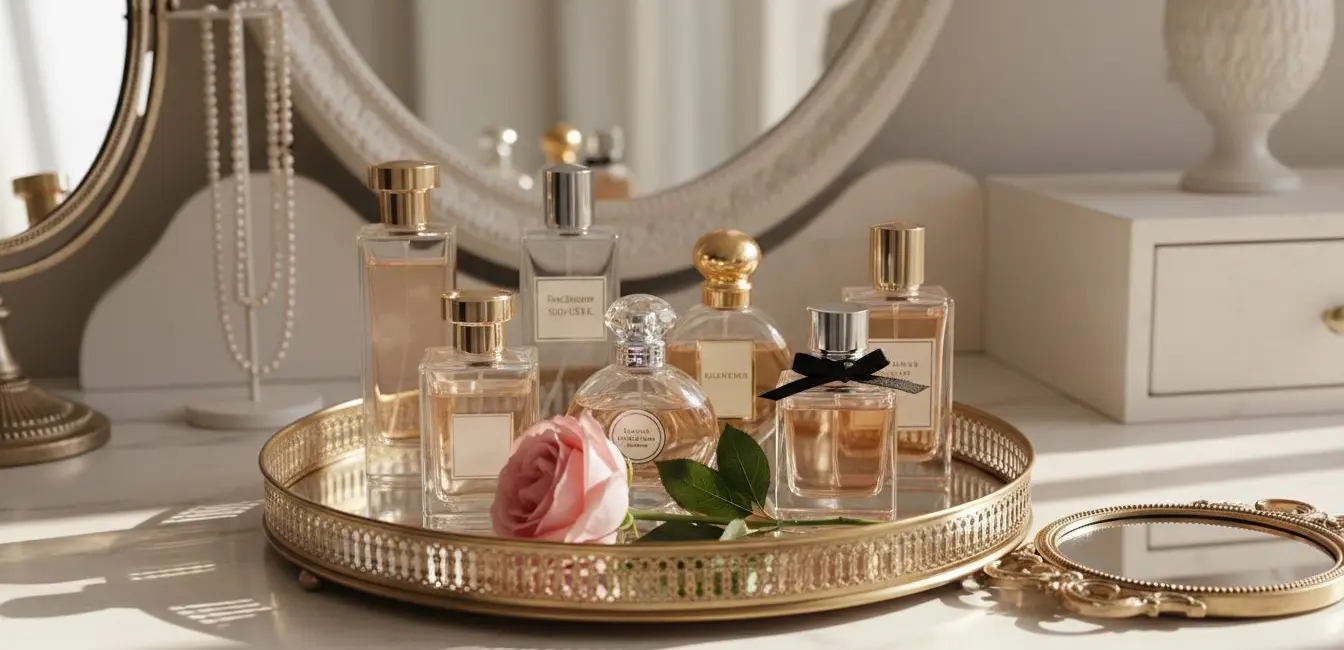
- One fresh/citrus (the brightener): Look for bergamot, grapefruit, or green tea as the top note. This is your morning layer, your summer workhorse.
- One floral heart (the heart): Rose, peony, or jasmine — whichever resonates with you. This is the most versatile category and works with everything else.
- One clean musk (the connector): This is what makes two scents that shouldn’t work together somehow work. Any “clean skin” formula.
- One warm amber/oriental (the depth): Vanilla, amber, tonka bean. This is your evening base and your cold-weather anchor.
- One woody/earthy (the grounding note): Sandalwood, cedarwood, vetiver. A little goes a very long way.
For budget-conscious layering, I highly recommend FragranceNet for designer fragrances at deep discounts. Pair that with a set of small roller bottles from Amazon to decant travel sizes for daily experimenting. Keep your collection organized with a perfume tray or organizer.
If you’re building out a full self-care ritual around this kind of intentional living, you might also love my guides on how to create a luxurious spa day at home, the morning routine ideas that actually hold up, my spring self-care routine for 2026, the what to wear to a wine tasting guide for when your fragrance layers perfectly with your outfit, and the girls night in ideas post for when you want to turn layering perfumes into an evening activity with your best people.
Frequently Asked Questions About Perfume Layering
Can you layer any two perfumes together?
Technically yes, but not every combination will be pleasant. The safest pairings are within the same fragrance family or between adjacent families (floral + musk, citrus + floral). When in doubt, put the lighter scent on top.
How many perfumes can you layer at once?
Two is the sweet spot for beginners. Three is achievable with practice — usually a base, heart, and top note. Beyond three, compositions tend to become muddy rather than complex.
Does perfume layering make it last longer?
Often yes, especially when you start with an oriental or woody base. These heavy base notes anchor and slow the evaporation of lighter notes layered over them. Using an unscented body lotion beneath everything also significantly extends wear.
What’s the difference between perfume layering and mixing perfumes?
Perfume layering applies fragrances directly on your skin in sequence, letting them blend on your body chemistry. Mixing perfumes combines them in a bottle before application. Layering is more flexible; mixing is more consistent.
Is there a rule about which fragrance goes on first?
Yes: heaviest goes first, lightest goes last. Heavy, oily fragrances need skin contact to bloom properly. Lighter fragrances sit on top. Think of it like building a fragrance pyramid on your skin.