This post may contains affiliate links. Read our full disclosure here.
Open kitchen shelving is either the best decision you can make for your kitchen or the one you quietly regret six months later — and the difference usually comes down to one thing: how you style it. Done well, open kitchen shelving makes a kitchen feel airy, personal, and intentional. Done poorly, it becomes the world’s most visible junk storage. This guide covers everything you need to know: the principles behind what to put on open kitchen shelving, how to style it for your aesthetic, how to keep it looking good over time, and specific ideas for small kitchens where every shelf counts double. Whether you are installing new shelves or trying to make the most of what you already have, this is the complete approach.
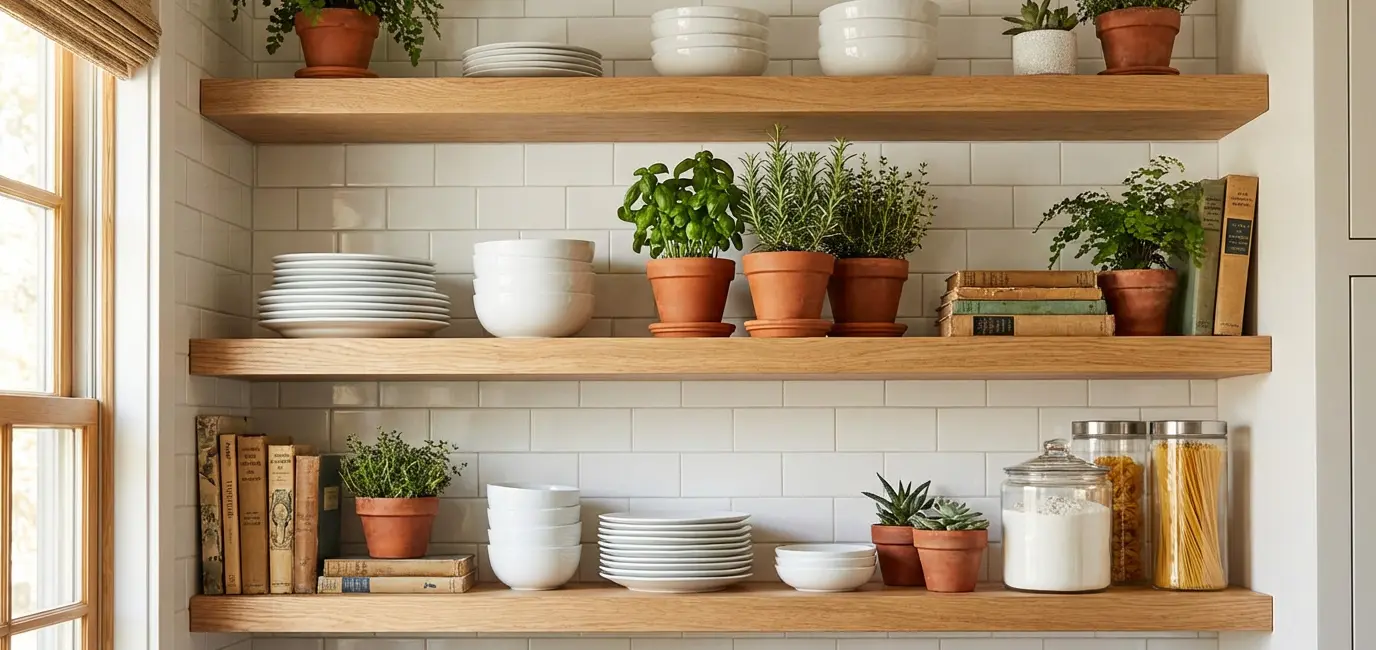
Why Open Kitchen Shelving Works (and When It Doesn’t)
The appeal of open kitchen shelving is visual: it removes visual weight from the kitchen, creates an opportunity to display beautiful objects, and makes everything feel more accessible and lived-in. In the right kitchen, open kitchen shelving does all of that effortlessly. But it is worth being honest about when it works and when it works against you.
When open kitchen shelving thrives
- You have a curated, cohesive set of dishes — mismatched collections are hard to style well on display
- Your kitchen has good natural light — open kitchen shelving photographs and reads beautifully in bright kitchens, and feels heavy in dark ones
- You are genuinely tidy — open kitchen shelving makes the state of your kitchen permanently visible
- You cook regularly with a consistent set of tools — so what is on the shelves gets used and moved, which prevents the static “museum” look
- Your kitchen aesthetic is intentional — open kitchen shelving rewards a defined style direction (minimalist, cottagecore, modern farmhouse, Japandi) better than an eclectic mix
When open kitchen shelving is harder to pull off
- You have a large, varied collection of mismatched kitchen items accumulated over years
- Your kitchen has limited natural light or very dark wall colors
- You travel frequently or have an unpredictable schedule — dust accumulates on open kitchen shelving faster than in cabinets
- You share the kitchen with people who have different tidiness standards — one person’s “put it back anywhere” habit destroys the look instantly
- You cook heavy, oil-intensive food daily — grease settles on open kitchen shelving surfaces and items more than you might expect
None of these are reasons not to do it — they are factors to weigh honestly before committing, especially if you are considering removing existing cabinet doors or making a permanent structural change. For an apartment or rental, removable floating shelves give you all the visual benefit of open kitchen shelving with none of the permanence. Floating kitchen shelves on Amazon include excellent options in natural wood, white-painted, and walnut finishes that install with minimal hardware.
“Open kitchen shelving does not require a perfect kitchen. It requires a considered one. The edit is the work — the styling takes care of itself once you know what earns its spot on the shelf.”
The Foundation: What Goes on Open Kitchen Shelving
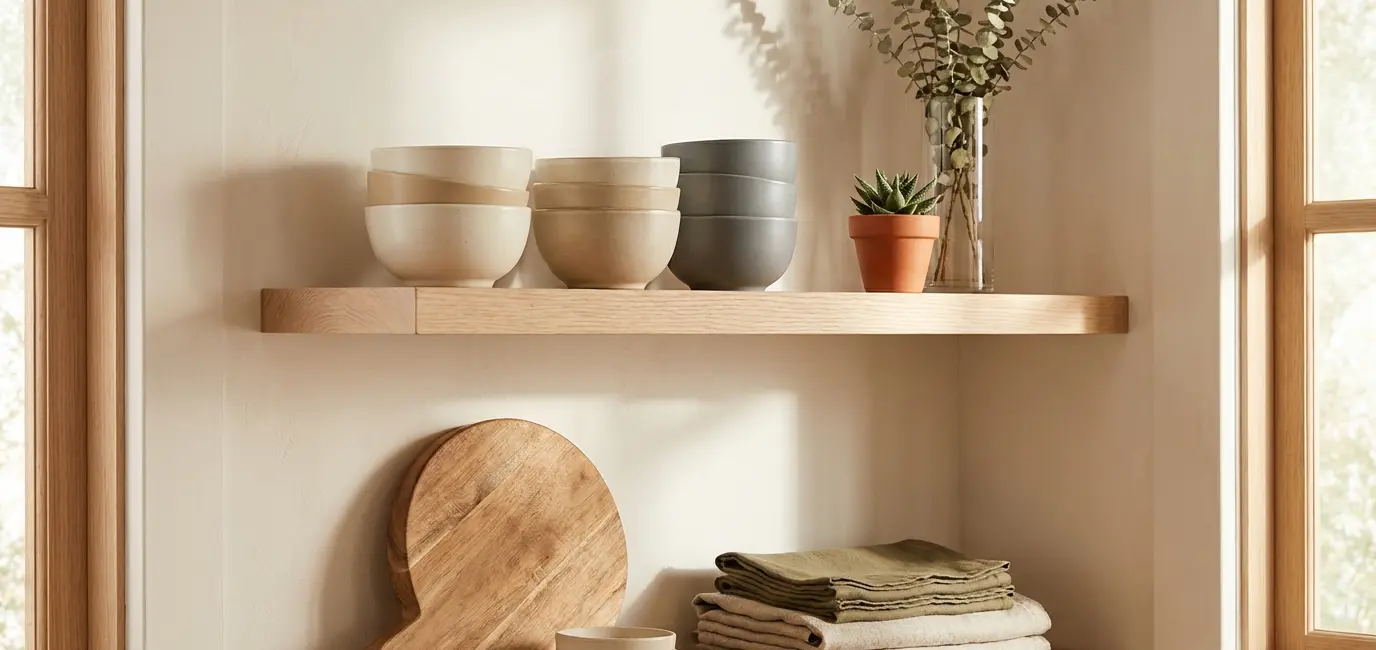
This is the question every open kitchen shelving guide eventually has to answer: what exactly do you put on these shelves? The answer involves two categories — functional items that are beautiful enough to display, and purely decorative objects that add character and warmth without getting in the way.
Functional items that earn shelf space
- Everyday dishes: A uniform or near-uniform stack of plates and bowls in one color family is always the most visually clean approach to open kitchen shelving. White, cream, speckled stoneware, and matte black all work beautifully. Avoid mixing patterns — it reads as visual chaos at shelf scale
- Glassware: Clear glass is inherently beautiful on open kitchen shelving because it catches light. Wine glasses, water glasses, and carafes are ideal shelf candidates — stack them inverted in neat rows
- Glass storage jars: Dry goods (pasta, rice, oats, flours, coffee, tea) decanted into matching glass jars are one of the most popular open kitchen shelving styling moves, and for good reason — they look intentional, they are functional, and the natural tones of the contents create visual warmth
- Cookbooks: One or two beautiful cookbooks standing vertically (or one laid flat as a base for a small object) add an intellectual, personal dimension to open kitchen shelving
- Cast iron and ceramic cookware: If your pots and pans are beautiful — a matte-black cast iron skillet, a Le Creuset dutch oven, a ceramic gratin dish — display them. Cookware is almost always underutilized as a styling element
Decorative objects that add warmth
- A small plant or herb pot: Living plants are essential on open kitchen shelving. A small potted herb (rosemary, thyme, a single basil plant) does double duty as decor and ingredient. A trailing pothos works beautifully on a higher shelf where the vines can drape down naturally
- A single vase with stems: One ceramic or glass vase with fresh eucalyptus, dried flowers, or a branch of something seasonal adds height and organic texture to open kitchen shelving without taking up much space
- A small framed print: Leaning a small botanical print, a kitchen illustration, or even a photograph against the back wall of a shelf adds a layer of personality that pure functional items cannot
- A wooden cutting board leaning vertically: One of the simplest and most effective open kitchen shelving styling moves — a beautiful end-grain or olive wood cutting board standing upright provides texture, warmth, and scale
- A candle or small ceramic object: One beautiful candle, a small ceramic piece, or a salt cellar adds a moment of luxury to the shelf without requiring maintenance
The general rule for open kitchen shelving composition is the same as any shelf styling: vary height, vary texture, include at least one organic element (plant, wood, stone), and leave some breathing room. Do not fill every square inch — negative space is part of the composition. For kitchen textile accents that coordinate with open shelving aesthetics, I design my own kitchen fabric and home textile patterns — the kitchen collection and kitchen decor prints in my Spoonflower shop include tea towel fabric, apron fabric, and shelf liner options that tie a styled open kitchen shelving look together beautifully.
How to Style Open Kitchen Shelving by Aesthetic
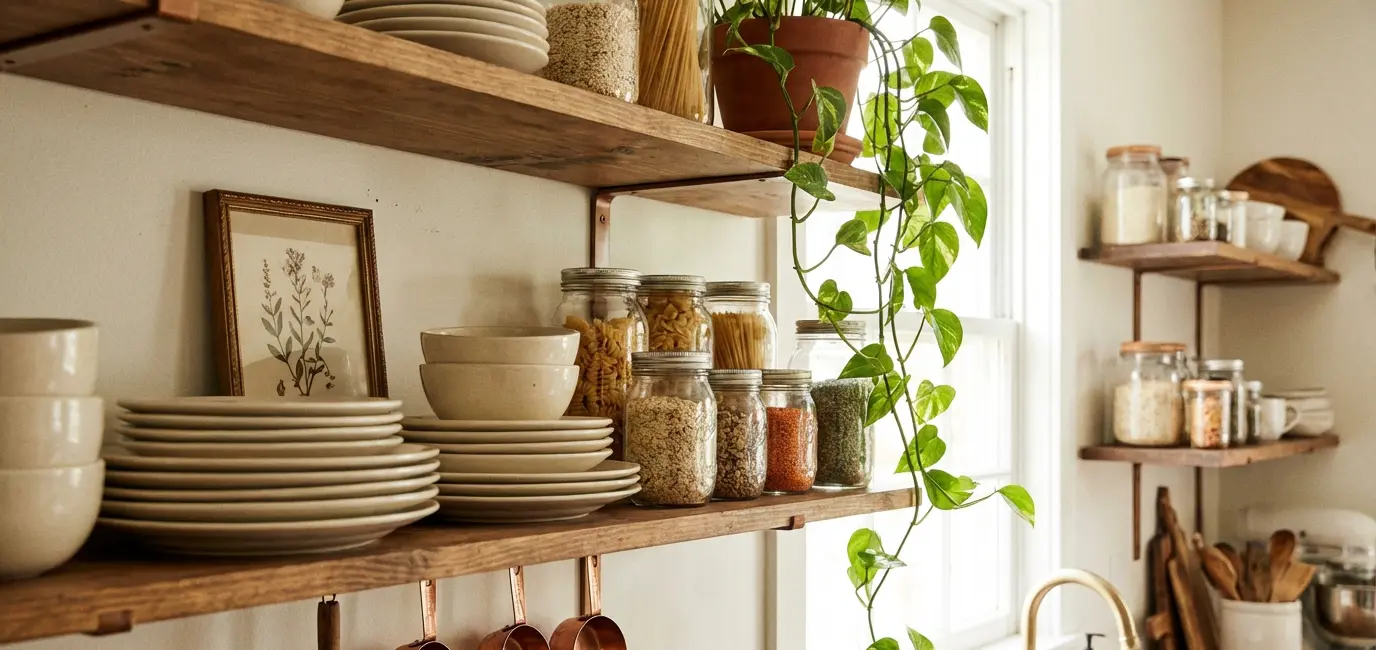
The most common mistake with open kitchen shelving is trying to style it in a vacuum rather than in relation to the rest of the kitchen’s aesthetic direction. Your shelves should look like they belong in your kitchen — not like a separate mood board. Here is how to approach open kitchen shelving styling for the four most popular kitchen aesthetics.
Minimalist / Japandi open kitchen shelving
The Japandi approach to open kitchen shelving is the most disciplined: fewer items, maximum intentionality. Use natural wood shelves (warm walnut or light ash), a muted palette of white, cream, and warm neutral ceramics, and leave significant negative space. Limit decorative objects to one or two: a single dried stem in a thin-necked vase, a small handmade ceramic bowl, or a wooden object. Everything functional is either beautiful or hidden. For a deep dive into the Japandi design philosophy that translates so well to open kitchen shelving, my guide to Japandi living room ideas covers the full aesthetic framework — the same principles apply directly to kitchen shelving.
Modern farmhouse open kitchen shelving
Modern farmhouse open kitchen shelving leans into contrast: dark metal brackets with light wood shelves, white dishes with warm wood accents, glass jars of dry goods alongside terracotta herb pots. This is the style that dominated Pinterest for a decade and it still works because the contrast is inherently photogenic. Key elements: black metal shelf brackets (metal shelf brackets on Amazon cover every finish from matte black to antique brass), white shiplap or subway tile as a backdrop, and a mix of ceramic, glass, and wood in warm neutral tones.
Cottagecore / botanical open kitchen shelving
Cottagecore open kitchen shelving embraces abundance and organic texture: more plants (trailing, potted, dried bundles hung from a hook), vintage-style ceramic canisters, a small collection of different-height bud vases, pressed botanical prints leaning against the back wall, and a cheerful mix of patterns that still maintains a color family (soft sage, cream, dusty rose, and terracotta all coexist beautifully in this aesthetic). Cottagecore open kitchen shelving can handle more visual density than minimalist approaches — the key is organic cohesion rather than strict uniformity.
Modern organic / warm minimalism
This is arguably the most wearable everyday approach to open kitchen shelving: warm wood tones, matte black or brushed brass hardware, textured neutral ceramics in speckled or earthy glazes, and a single strong plant element (a trailing pothos or a sculptural succulent arrangement). The key visual principle is warmth without clutter — every item earns its place either functionally or aesthetically, but the overall mood is relaxed rather than severe. For more on this aesthetic across the home, my guide to warm minimalism interior design gives the full framework.
The Practical Side of Open Kitchen Shelving
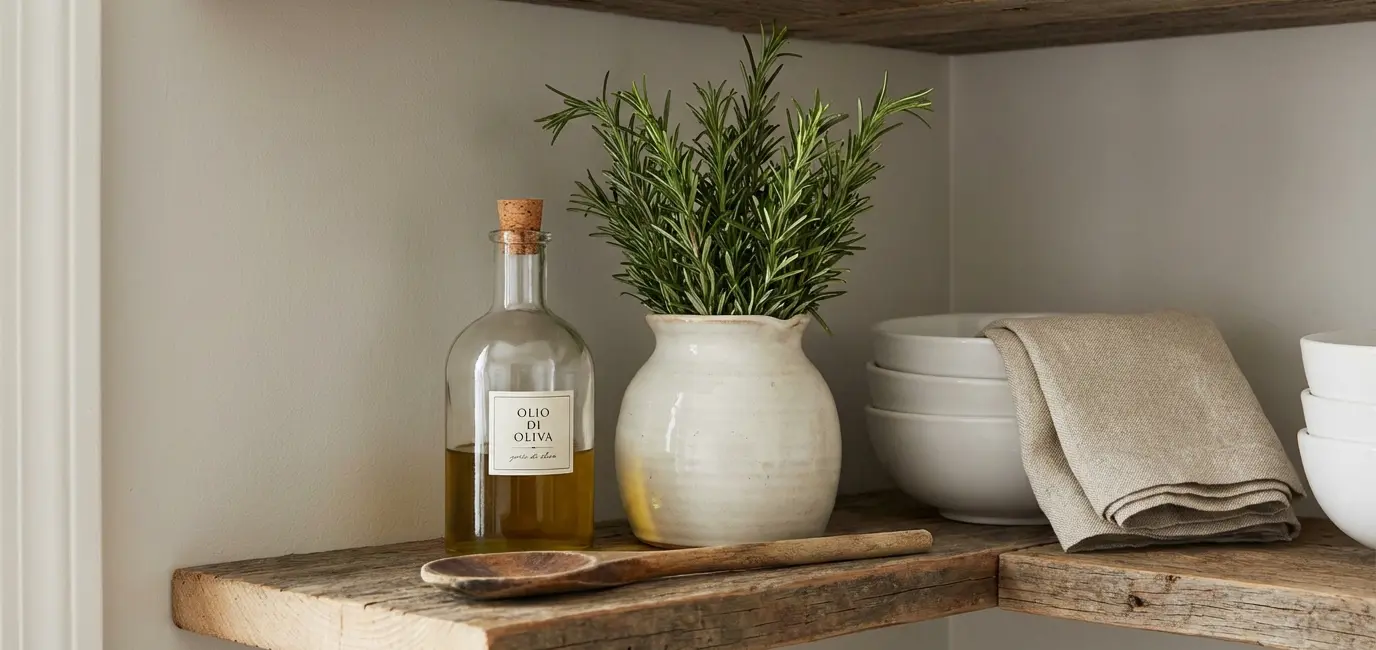
Beautiful open kitchen shelving that takes three hours to style and falls apart within a week is not a solution — it is a source of daily low-level stress. Here is how to make your open kitchen shelving stay looking good with minimal effort.
The ‘one in, one out’ discipline
The most important maintenance habit for open kitchen shelving is simple: nothing new comes onto the shelves without something else leaving. This is not a strict rule for everyday use (of course you will move dishes on and off), but it applies to the decorative layer — every new object displaces something, rather than joining a growing pile. Once you have styled your open kitchen shelving at an intentional density, preserve that density by editing before adding.
Dusting and cleaning frequency
Open kitchen shelving requires more frequent cleaning than closed cabinets — particularly for items near the stove. A realistic schedule: wipe down the shelf surfaces and the bottoms of displayed dishes every two to three weeks, do a full reset (everything off, surface cleaned, everything back) every two to three months. Glass storage jars should be wiped down monthly — grease settles on them invisibly until you pick them up and feel the tackiness. Items closest to the stove need the most attention; display your most beautiful (and most washable) things there.
Seasonal refreshes
One of the underrated pleasures of open kitchen shelving is that it is easy to refresh seasonally. Swap the dried eucalyptus for fresh rosemary in spring, add a small pumpkin in autumn, lean a different print during the holidays. These small changes cost almost nothing and make the kitchen feel alive and considered rather than static. The decorative layer of your open kitchen shelving should evolve with the seasons — keep the functional foundation constant and let the one or two accent pieces do the seasonal work.
What to keep hidden
Not everything belongs on open kitchen shelving — and knowing what to hide is as important as knowing what to display. Keep off the shelves: cleaning products, medicine, anything in plastic packaging, duplicates and backstock (buy in bulk, store elsewhere), rarely-used appliances, and any item you actively find ugly. The discipline of what stays hidden is what makes the displayed items feel intentional rather than random. If your shelves hold both a beautiful handmade ceramic bowl and a half-empty bottle of dish soap, the soap wins the visual argument every time.
For the broader discipline of editing and maintaining a beautiful home, my room-by-room decluttering guide covers the exact method for deciding what stays and what goes — it applies directly to the decisions behind well-curated open kitchen shelving.
Open Kitchen Shelving Ideas for Small Kitchens
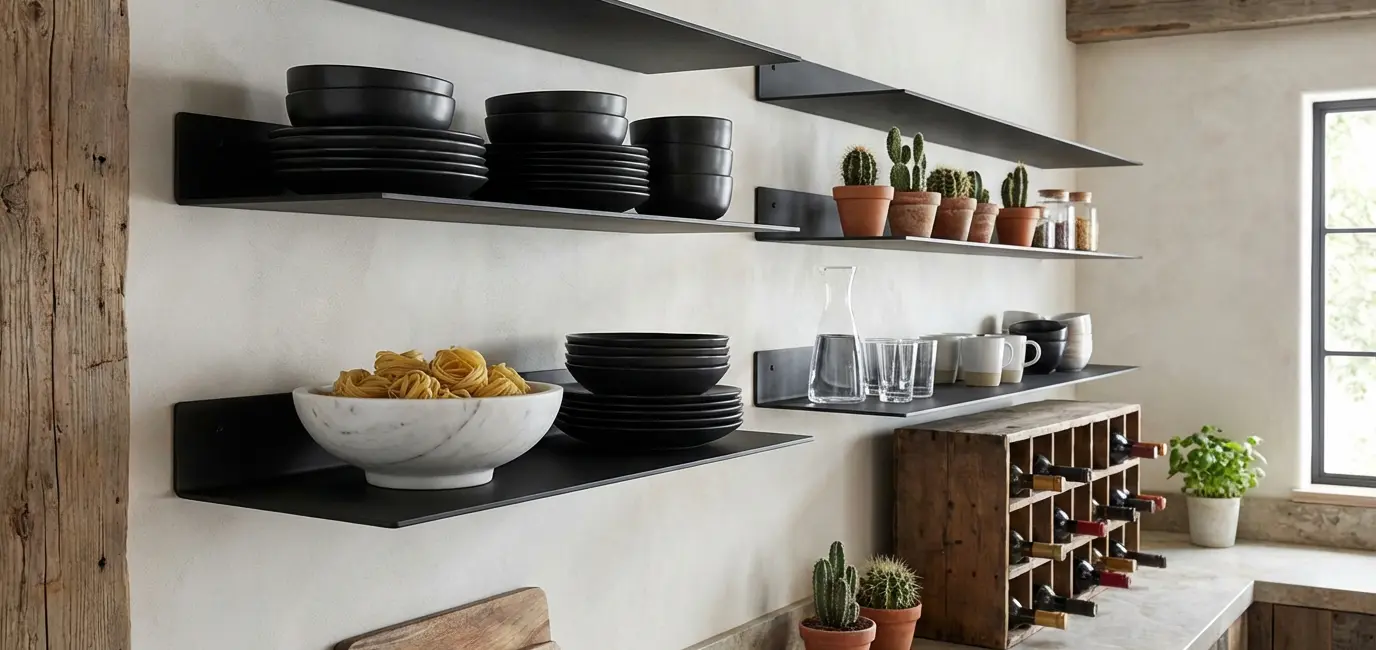
In a small kitchen, open kitchen shelving can either make the space feel larger and more breathing — or visually shrink it further depending on how it is handled. The good news: the same principles that make open kitchen shelving beautiful in any kitchen are amplified in a small one, because every decision has more impact.
Go vertical
In a small kitchen, open kitchen shelving should prioritize vertical reach over horizontal spread. A single tall run of shelves from counter height to ceiling draws the eye upward, makes the ceiling feel higher, and creates storage volume without consuming floor or counter space. Use the top shelves for less-frequently used items (seasonal serving pieces, decorative objects) and keep the eye-level shelves for the most beautiful everyday items.
Stick to a strict two-color rule
Small kitchens cannot absorb visual complexity the way larger kitchens can. For open kitchen shelving in a compact space, limit yourself to two colors maximum: one neutral base (white, cream, warm wood) and one accent (sage, black, terracotta, blush). This extreme cohesion makes the shelves feel curated rather than cramped, and it makes the overall kitchen feel more spacious because the eye reads the whole shelf as one visual unit rather than a collection of competing objects.
Use the shelf underside
The underside of open kitchen shelving is almost always wasted space — and in a small kitchen, it is prime real estate. Mount small S-hooks to hang copper measuring cups, oven mitts, or a collection of mugs. Install a small under-shelf basket for small items. Add LED strip lighting (warm white, 2700K) to the underside of upper shelves to illuminate both the counter below and the shelf contents above — this one addition makes open kitchen shelving in a small kitchen feel genuinely luxurious, like a curated display in a boutique kitchen store.
Treat one shelf as a bar or drinks station
In a small kitchen without a dedicated bar area, one shelf of your open kitchen shelving can do double duty as a drinks station: a carafe or decanter, two or three wine glasses hung inverted from a small stemware rack or placed upright, a small ice bucket, and a bottle or two laid horizontally. This creates a purposeful, visual focal point on the shelf that does not require a separate piece of furniture. For the complete home bar setup, my guide to how to set up a home wine bar covers how to build a full bar station from scratch — and my guide to how to style a bar cart gives you the visual composition principles that translate directly to a shelf-as-bar-station setup.
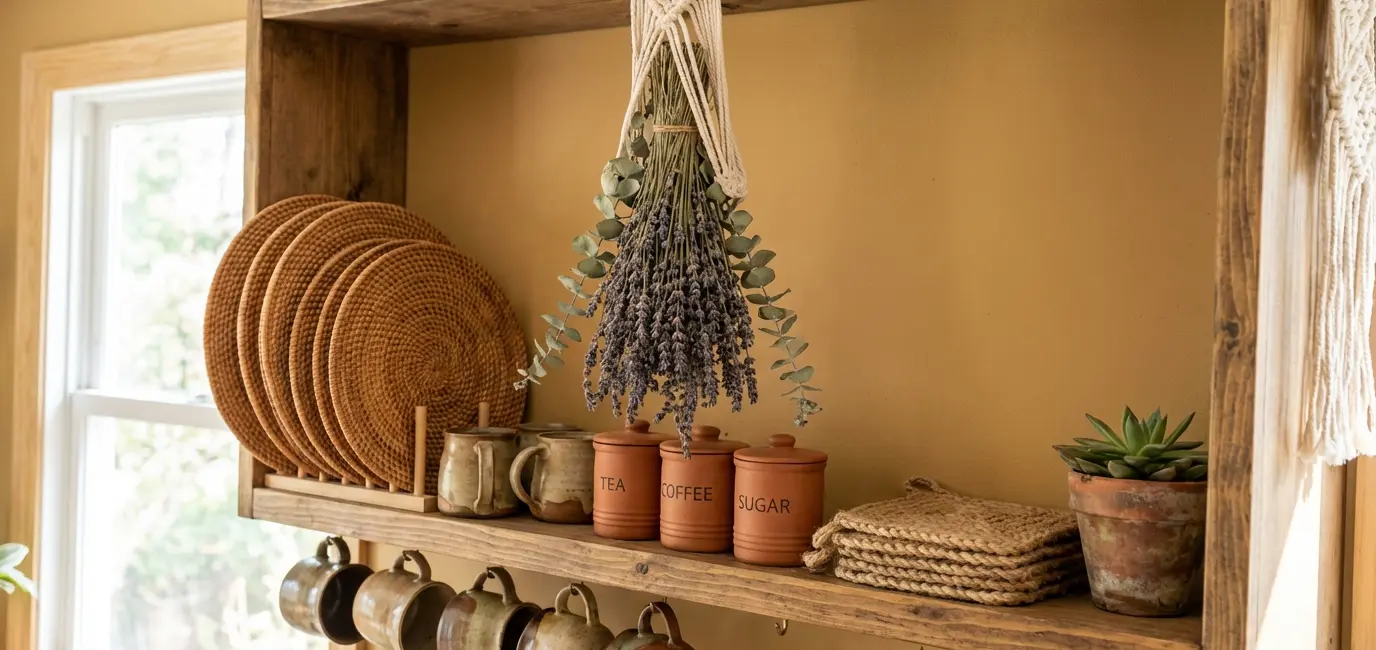
For more approaches to making a small kitchen feel intentional and spacious, many of the principles in my guide to small living room decorating ideas apply directly to small kitchen design — particularly the visual weight, vertical space, and color discipline sections. And if your open kitchen shelving refresh is part of a broader home update, my spring home refresh guide covers the room-by-room approach that makes the whole project feel manageable.
FAQ
Is open kitchen shelving a good idea?
Open kitchen shelving is a great idea if you have a relatively cohesive dish collection, enjoy the visual openness, and are willing to maintain a basic level of tidiness. It works less well if your kitchen items are very mismatched, you dislike dusting, or you prefer the psychological ease of hiding clutter behind closed doors. Neither approach is objectively better — it depends on your lifestyle and aesthetic preference.
What do you put on open kitchen shelves?
The best items for open kitchen shelving are functional objects that are beautiful enough to display: matching dinnerware, glassware, glass storage jars, cookbooks, ceramic cookware, and wooden cutting boards. Add one to two decorative objects per shelf (a plant, a vase with stems, a small framed print) for warmth and personality. Keep plastic packaging, cleaning products, and anything you find ugly in closed storage.
How do I keep open kitchen shelves looking clean?
Wipe down open kitchen shelving surfaces and displayed items every two to three weeks, and do a full reset every two to three months. Items near the stove collect grease faster and need more frequent attention. Glass storage jars benefit from a monthly wipe-down. The best way to keep open kitchen shelving looking clean long-term is to maintain a strict “everything has a home” policy — items that do not belong on the shelves should never land there, even temporarily.
What kind of shelves are best for open kitchen shelving?
Floating shelves in natural wood (walnut, oak, ash, or pine with a warm finish) are the most versatile option for open kitchen shelving — they suit almost every aesthetic from minimalist to farmhouse. Metal shelves (particularly black powder-coated steel or stainless) work well in modern industrial kitchens. Thickness matters: thicker shelves (2 inches or more) look more substantial and architectural; thin shelves can look flimsy on a wall. Floating kitchen shelves on Amazon have excellent options at every price point.
How deep should open kitchen shelves be?
Standard depth for open kitchen shelving is 10-12 inches for most kitchens — deep enough to hold standard dinner plates (typically 10-11 inches in diameter) with a small margin at the front. For a shelf primarily used for glasses and smaller items, 8 inches works well. Avoid going deeper than 12-14 inches for wall-mounted open kitchen shelving — items at the back become inaccessible and dusty, which defeats the purpose.
How do I make open kitchen shelving look expensive?
The fastest ways to make open kitchen shelving look expensive: (1) switch to a cohesive set of matching or near-matching dinnerware in one color; (2) decant dry goods into matching glass jars; (3) add a statement plant (a trailing pothos or a sculptural succulent); (4) install under-shelf lighting; (5) limit each shelf to five items or fewer. Expensive-looking open kitchen shelving is almost always defined by restraint rather than quantity.