This post may contains affiliate links. Read our full disclosure here.
When it comes to expanding your wine horizons, blueberry wine deserves a spotlight moment. For years, I’ve watched friends turn their noses up at anything that wasn’t made from grapes, only to see their eyes light up after that first sip of a quality blueberry wine. This fruity alternative offers a completely different experience from traditional wines — bursting with bold berry flavors while still maintaining that sophisticated wine character we all love.
Blueberry wine explained simply: it’s a delicious fruit wine that combines the familiar structure of wine with the vibrant taste of fresh blueberries. Whether you’re bored with your usual Cabernet or just curious about what else the wine world has to offer, blueberry fruit wine might be exactly the refreshing change you’re looking for. Let’s pop open a bottle and discover what makes this berry-based beverage so special!
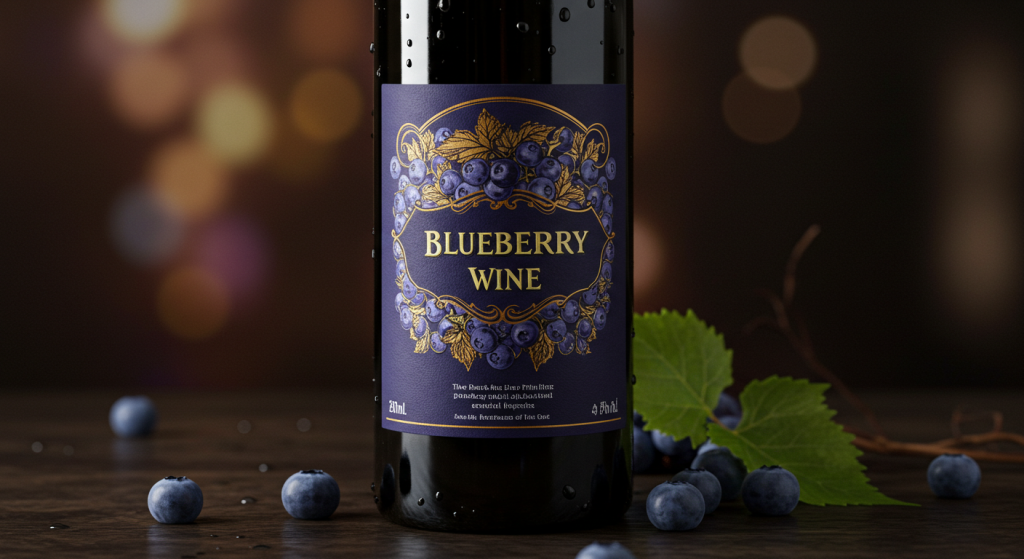
What Is Blueberry Wine?
Unlike traditional wines made from grapes, blueberry wine is created entirely from fermented blueberries. The process mirrors conventional winemaking but swaps grapes for these tiny blue powerhouses. The blueberries get crushed to release their juices, then mixed with sugar and yeast to kick off the fermentation process that transforms fruit sugars into alcohol.
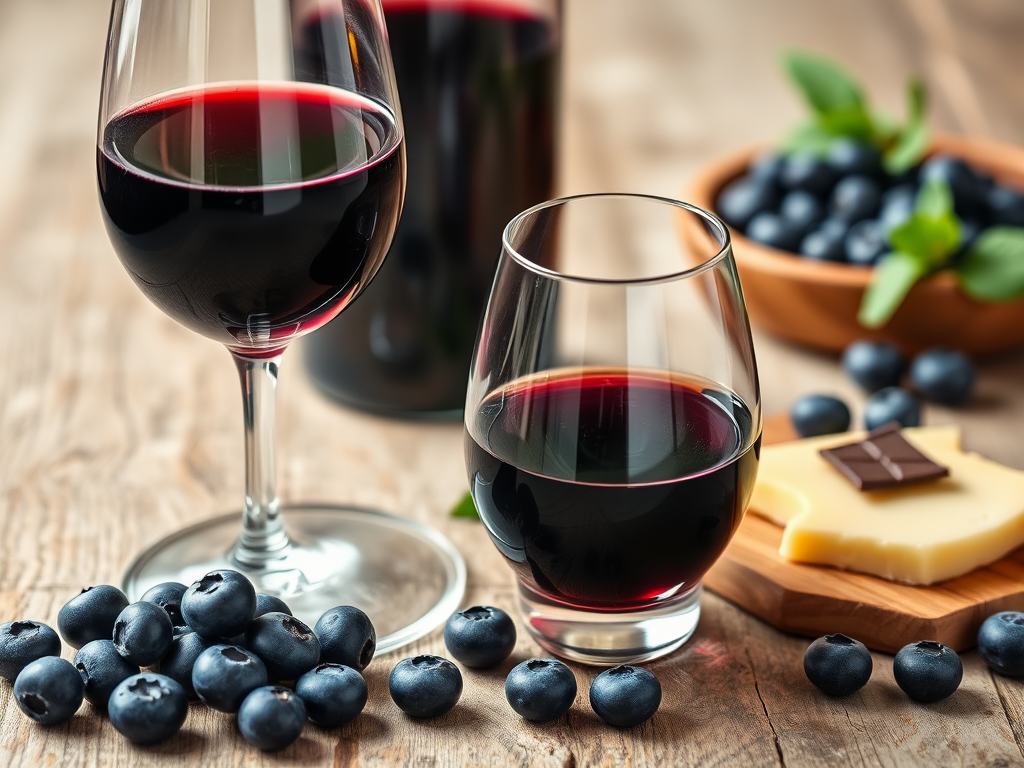
The final product varies widely in sweetness. You’ll find everything from bone-dry blueberry wines that showcase tart, crisp notes to luxuriously sweet versions that work beautifully as blueberry dessert wine. Most bottles fall somewhere in the semi-sweet middle ground, striking a nice balance between fruity sweetness and wine-like structure. The alcohol content typically ranges between 10-12%, putting it right in line with standard grape wines.
What makes blueberry wine stand out is its bold berry character. Unlike grape wines that often have subtle fruit notes, blueberry wine proudly wears its fruity identity. This isn’t a wine pretending to be something it’s not – it’s a celebration of blueberries in liquid form!
What Does Blueberry Wine Taste Like?
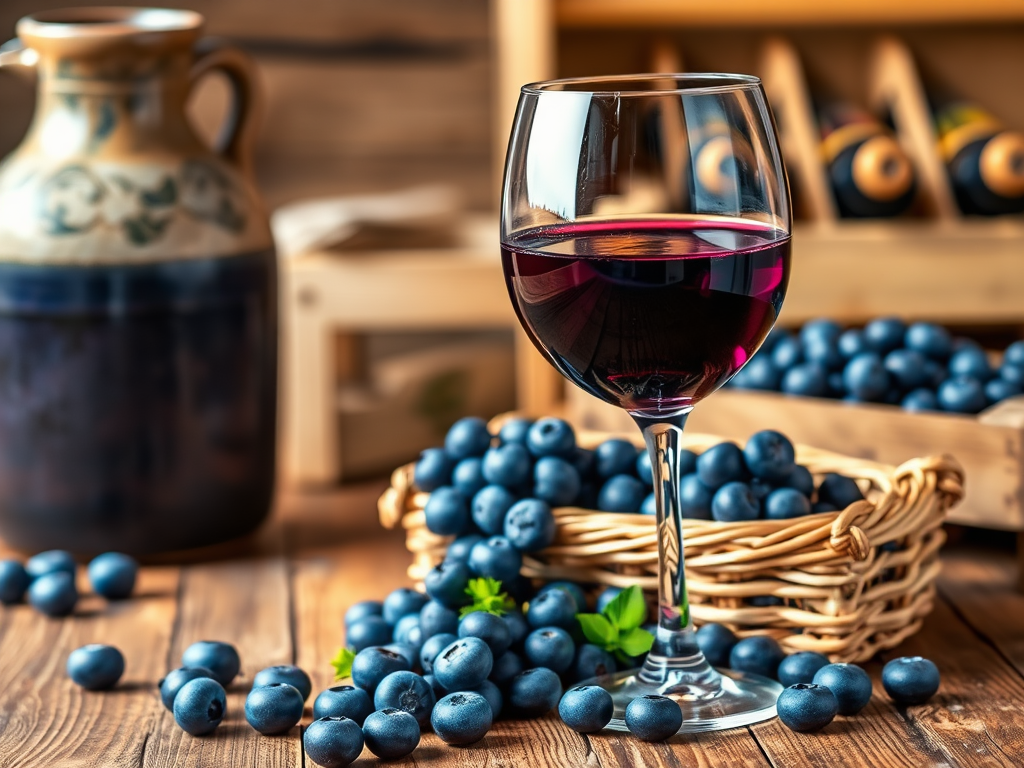
Curious about blueberry wine taste? Imagine the deep, jammy flavor of ripe blueberries transformed into a sophisticated wine experience. The aroma hits you first – fresh blueberries mingled with darker fruit notes and often a hint of earthiness that adds complexity. This isn’t just blueberry juice with alcohol; it’s a crafted wine with depth.

The flavor profile centers around that signature jammy blueberry note, but quality bottles offer much more. You’ll often detect blackberry undertones, plummy richness, and sometimes subtle spice or vanilla hints, especially in versions that have spent time aging in oak. The texture feels medium-bodied, similar to a Merlot but with a character all its own.
Where blueberry wines really differ is in their sweetness spectrum. Dry blueberry wine showcases the fruit’s natural tartness and keeps sugar levels minimal, creating a surprisingly crisp experience. On the flip side, sweet blueberry wine leans into the fruit’s natural sugars for a lush, dessert-like quality that’s perfect for those who prefer sweeter sips.
How to Enjoy Blueberry Wine
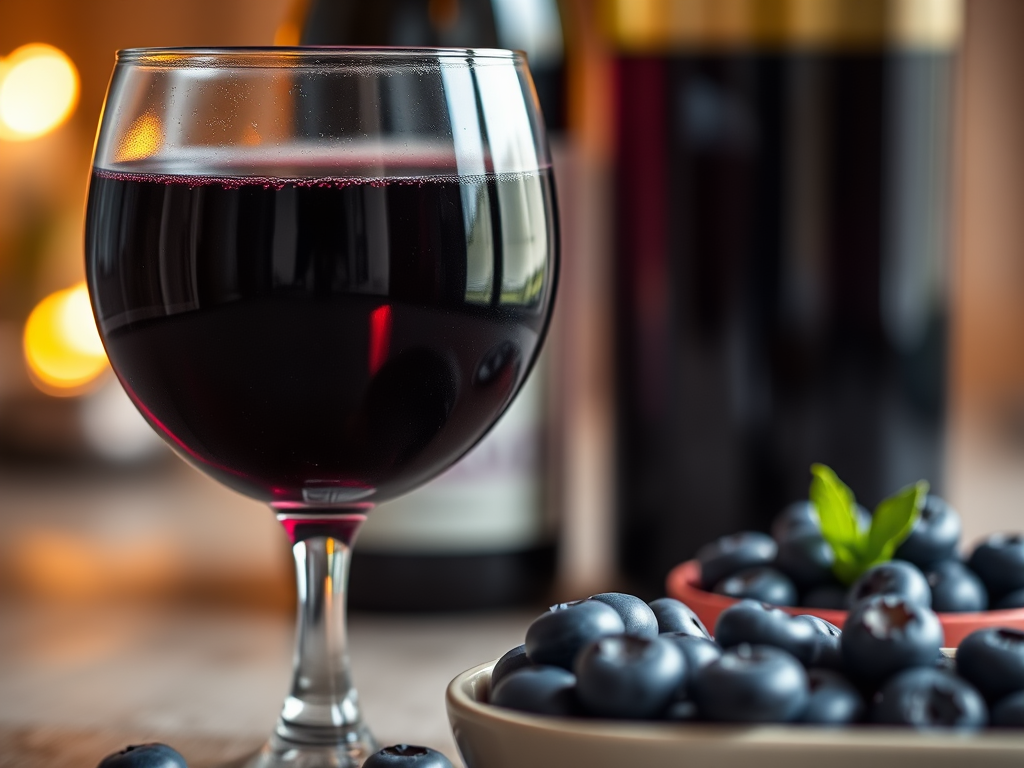
To get the most out of your blueberry wine experience, serving temperature matters more than you might think. For sweeter blueberry wines, serve them slightly chilled around 55°F – this temperature helps temper the sweetness while preserving the fruity character. For drier versions, room temperature or just slightly cooled works best to showcase their more complex notes.


Blueberry wine fits beautifully into so many drinking occasions. It’s a showstopper at holiday gatherings where its rich color and bold flavor make an impression. It also works wonderfully as a casual sipping wine for summer evenings on the porch. For something special, look for sparkling versions that add a festive bubbly twist to the familiar blueberry flavor.
Don’t overthink glassware – a standard wine glass works perfectly. The slightly narrowed rim helps concentrate those amazing berry aromas right where your nose can appreciate them. And while many purists insist on finishing a bottle quickly after opening, blueberry wine often holds up reasonably well for 2-3 days refrigerated with a good bottle stopper.
Blueberry Wine Pairings
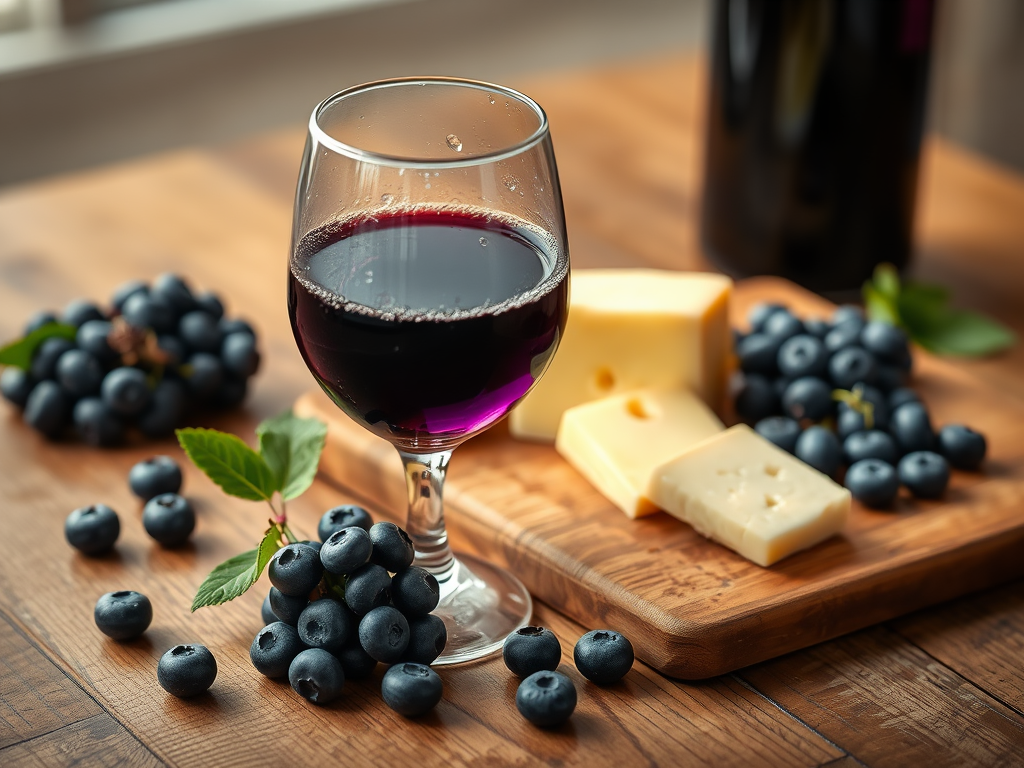
One of the best things about blueberry wine is its surprising versatility with food. The natural acidity and fruit-forward profile make it a fantastic companion for a wide range of dishes. Cheese pairings are a no-brainer – the wine’s acidity cuts through rich, creamy cheeses beautifully. Try it with aged cheddar for a classic pairing, or go for a soft brie or tangy goat cheese for something more adventurous.
For main courses, blueberry wine pairs wonderfully with simple grilled meats. Pork tenderloin with a fruit glaze creates a lovely harmony with the wine’s berry notes. Game meats like duck breast or venison also match exceptionally well with the wine’s fruity depth. Even a holiday turkey dinner gets a boost from a glass of good blueberry wine on the side.
Of course, blueberry wine absolutely shines with dessert pairings. Dark chocolate desserts create a magical combination when matched with a semi-sweet blueberry wine. Berry tarts, cheesecake, or vanilla ice cream also pair beautifully. The key is matching sweetness levels – your dessert shouldn’t be significantly sweeter than your wine, or the wine will taste thin by comparison.
Can You Make Blueberry Wine at Home?
Absolutely! Homemade blueberry wine is one of the most approachable DIY wine projects for beginners. The process follows the same fundamental steps as grape winemaking but with ingredients that are often easier to source. You’ll need fresh or frozen blueberries (about 3-4 pounds per gallon of wine), sugar, wine yeast (not bread yeast), and some basic equipment like fermentation vessels and airlocks.
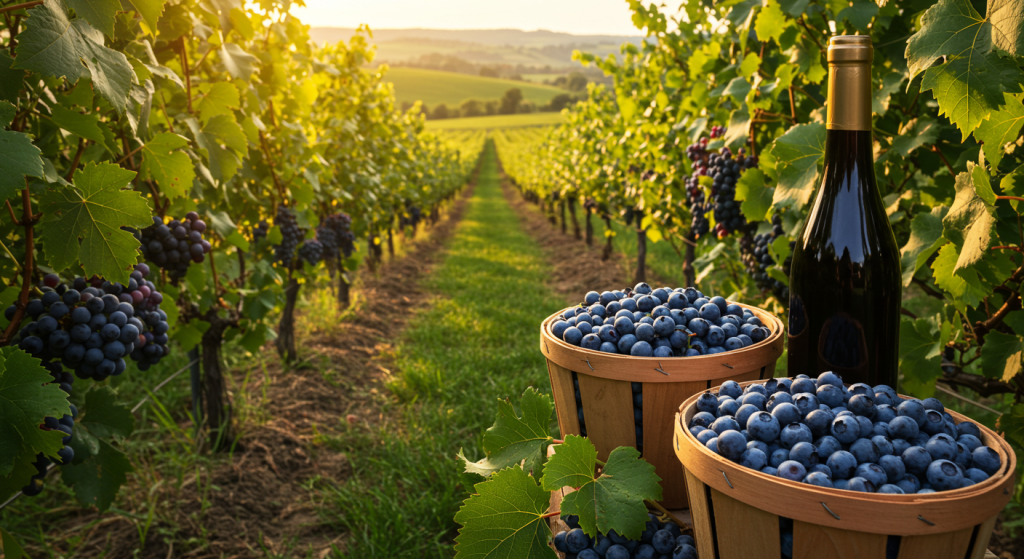
The basic process involves crushing the berries to release their juice, adding a specific amount of sugar to achieve your desired sweetness level, and introducing wine yeast to start fermentation. This mixture then ferments for several weeks, during which the sugar converts to alcohol. After fermentation completes, the young wine gets racked (transferred) off the sediment and aged for clarity and flavor development.
If you’re considering starting a small batch, blueberry wine makes an excellent gateway into home winemaking. Many homebrew shops offer starter kits specifically for fruit wines that include all the necessary equipment and detailed instructions. Just remember that patience is key – the best homemade blueberry wines often improve dramatically after 6-12 months of aging.
Berry Good Reasons to Try Blueberry Wine
Blueberry wine offers a delightful detour from mainstream wines without sacrificing quality or complexity. The next time you’re planning a special dinner or looking to surprise friends with something unique, consider grabbing a bottle of quality blueberry wine. You might discover it becomes a new favorite for certain occasions or food pairings.
Don’t be afraid to experiment with different brands and sweetness levels. Like any wine category, blueberry wines vary tremendously between producers. Some focus on showcasing the pure fruit character while others create more complex, layered experiences. You might even be inspired to seek out other fruit wines during your wine tourism adventures.
Whether you’re sipping a chilled glass on a summer evening, pairing it with a rich chocolate dessert, or sharing a bottle with curious friends, blueberry wine delivers a unique drinking experience that reminds us why exploring beyond traditional grape wines can be so rewarding. Have you tried blueberry wine yet? What unexpected food pairing would you love to try with it? The berry possibilities are endless!