This post may contains affiliate links. Read our full disclosure here.
The best blind wine tasting party ideas for women are the ones that feel like a game, taste like a good evening, and somehow teach everyone something without anyone realizing they were learning. I have hosted more than a dozen of these nights — everything from a casual kitchen-table tasting with four friends to a properly themed evening with printed scorecards, flight boards, and a bracket-style competition that got genuinely competitive — and I can tell you with complete confidence that a blind wine tasting party is the best girls’ night format I have found. It is more interesting than a standard dinner party, more intimate than a bar night, and funnier than almost anything else. Here is everything you need to host one beautifully.
What Is a Blind Wine Tasting Party?
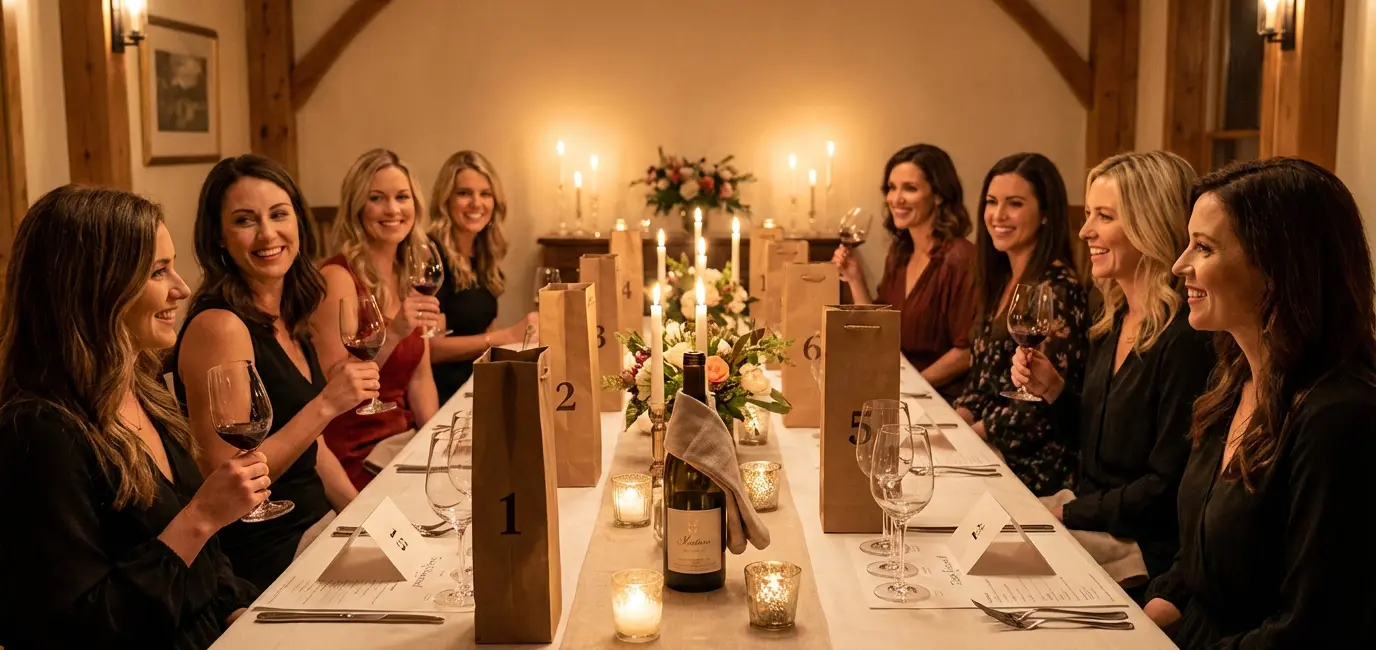
A blind wine tasting party is exactly what it sounds like: guests taste wines without knowing what they are drinking. The bottles are hidden — traditionally wrapped in brown paper bags or covered with foil — and numbered. Guests smell, swirl, and sip each wine, fill out a tasting scorecard with their impressions and guesses, and at the end the host reveals each wine’s identity. The results are almost always surprising, often hilarious, and occasionally humbling.
What makes blind wine tasting party ideas for women specifically so popular is the combination of structure and silliness. Unlike a standard wine night where the bottle just sits on the table and conversation meanders, a blind tasting gives everyone a task. There is a reason to pay attention to what is in your glass, a shared experience to talk about, and a reveal moment that creates a natural conversation peak. Add a competitive scoring element and suddenly your Tuesday girls’ night becomes the highlight of the month.
“The whole point of a blind tasting is that it strips away everything except what’s actually in the glass. Every time I host one, someone is shocked to discover they love a wine they thought they hated — or that their ‘favorite’ ranked dead last. That’s the magic of it.”
The format works for any group size from four to twelve, any budget, and any level of wine knowledge. In fact, mixed-knowledge groups are the most fun — the “wine person” in the group is no more likely to win than anyone else, and that equality is part of what makes the evening feel genuinely inclusive.
How to Set Up a Blind Wine Tasting at Home
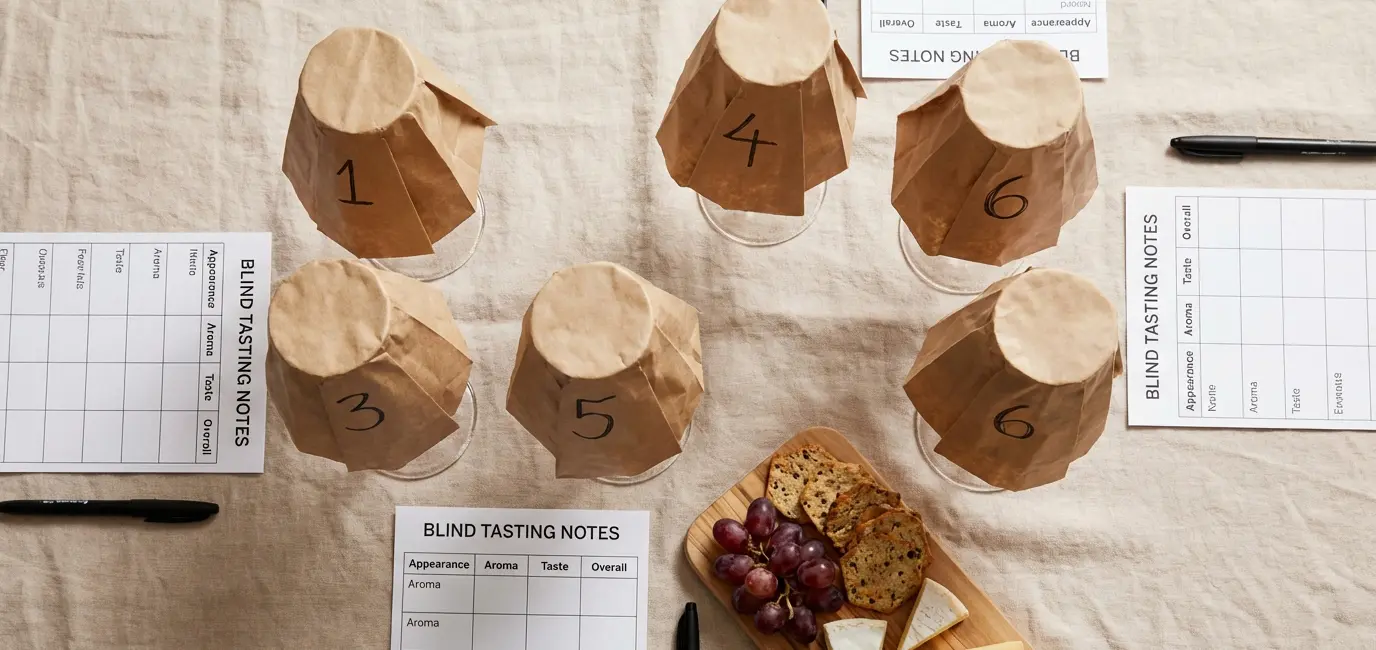
Setting up a blind wine tasting at home takes about 30 minutes and requires almost no special equipment. Here is the complete setup process:
- Choose your wines and hide them. The simplest method: brown paper bags with the bottle inside, folded down at the top, and numbered with a marker. You can also use wine bottle covers (essentially fabric sleeves) for a more polished look. Wine bottle paper bags for blind tasting are inexpensive and reusable. Number each bag clearly from 1 through however many wines you have.
- Set out the glasses. Each guest needs one glass per wine, or one glass they will rinse between tastings. I prefer one glass per wine if you have enough — it allows you to go back and compare. Set glasses in a row in front of each seat, numbered or labeled to match the bottles.
- Prepare scorecards. Print or write out simple scorecards with columns for each wine number and rows for: color, aroma notes, taste notes, guess (grape variety and/or origin), score out of 10. Printable wine tasting scorecards are widely available, or I have a simple template at the bottom of this guide.
- Set up a pouring station. Keep the bottles together at a side table where you — the host — pour. Guests should not handle the bottles until the reveal. This maintains the blind integrity and also means you control the pour sizes (about 2 oz per wine per person for a 6-wine flight).
- Prepare palate cleansers. Water, plain crackers, and a small piece of plain bread at each place. These reset the palate between wines and make the tasting more accurate.
- Brief the group on the format. Before you pour Wine 1, explain the scorecard, the scoring system, and whether guessing the grape or region is part of the game. Five minutes of context at the start prevents confusion during the tasting.
- Do the reveal at the end. After everyone has tasted and scored all wines, go through each bottle one by one. Unwrap it, announce what it is (grape, producer, region, price), and let the results speak for themselves. The price reveal is always the most dramatic moment.
The full guide to hosting a wine tasting at home covers the broader format in detail — including non-blind options and how to scale for larger groups. For a blind wine tasting party specifically, the sequencing above is what I have found works best after many iterations.
Choosing the Wines: The Best Flights for a Blind Tasting
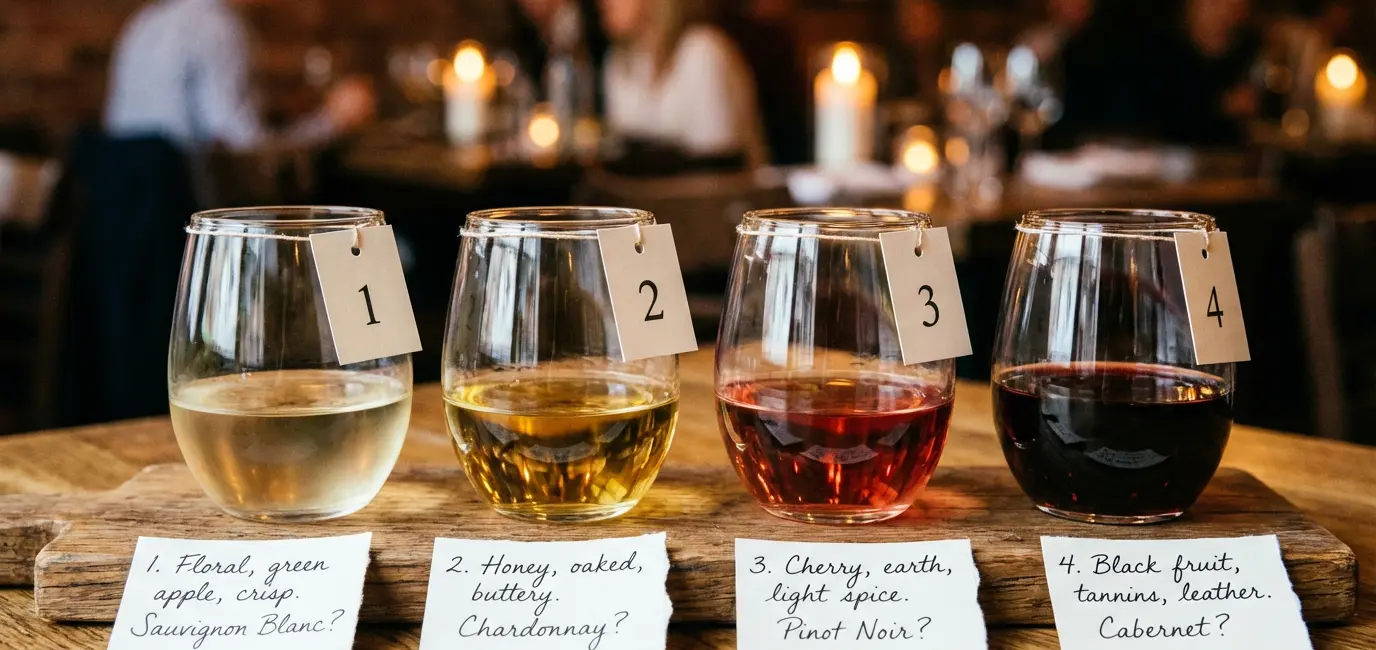
The wines you choose determine how fun the reveal is. The best blind wine tasting party flights have a clear theme, a genuine range within that theme, and at least one surprise. Here are the formats I return to most:
- Same grape, different regions. The classic sommelier format and the most educational. Choose one grape — Pinot Noir, Sauvignon Blanc, Chardonnay, Cabernet Sauvignon — and find 4-6 examples from different countries or regions. Guests taste the same variety expressed through different climates, soils, and winemaking philosophies. The differences are dramatic even to non-wine people. Sauvignon Blanc from New Zealand vs. Loire Valley vs. California is a particularly fun and distinct set.
- Same region, different price points. The democratic crowd-pleaser. Take one region — say, Burgundy, or Napa Valley — and include wines from $12 to $80. Ask guests to rank them by price. Nobody ever gets it right. The $18 bottle frequently outranks the $65 one, which leads to the best conversation of the evening.
- Rosé showdown. A dedicated rosé blind tasting is perfect for spring and summer. Choose 5-6 rosés from different regions — Provence, Spain, California, Italy, Oregon. The color range alone is striking: from the palest Provence blush to a deep Californian salmon. Browse the rosé collection on Wine.com to find options at every price point.
- White vs. red disguised. A bold variation: include both whites and reds in the flight without telling guests. Some whites — a rich oaked Chardonnay, a skin-contact orange wine — can genuinely confuse guests who expect all whites to be light. A well-chosen Pinot Noir can read almost like a full white. This format is best for groups who are game for a true challenge.
- The grocery store challenge. Everyone brings one bottle in a bag, no price limit stated but with the unspoken understanding that everyone is bringing their usual grocery store wine. The host adds one excellent bottle. Guests have to find the good bottle. This format requires zero host curation and is endlessly funny.
- The sweet and savory flight. Pair your flight with a specific food and ask guests to rate how each wine matches the food as well as the wine itself. Cheese is the obvious choice, but a charcuterie pairing or even a chocolate pairing adds a structured food element that extends the evening.
Regardless of which flight format you choose, I recommend having white wine options and red wine options sourced before your event so you have a reliable place to browse and compare. Wine.com’s filters by grape, region, and price make building a cohesive flight straightforward.
Blind Wine Tasting Scorecard and Game Ideas
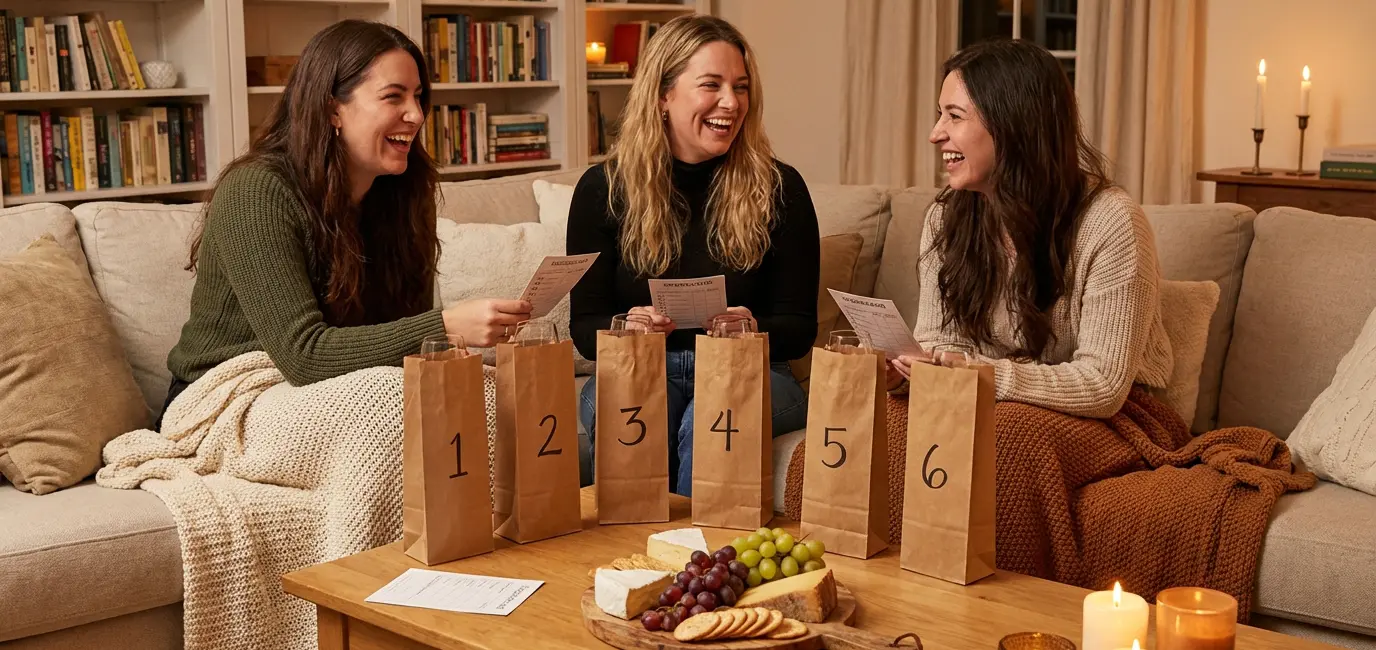
The scorecard is what transforms a tasting into a party. Without a scorecard, guests sip and chat and the evening is pleasant. With a scorecard, there is a task, a leaderboard, and a winner — and everything gets more interesting. Here are the scoring formats I use most:
- The Classic Tasting Scorecard. Columns: Wine #, Color/Appearance, Aroma Notes (list what you smell), Taste Notes (list what you taste), Guess the Grape, Guess the Region, Guess the Price, Score /10. Points are awarded for correct guesses — 1 point for grape, 2 for region, 3 for price within $5. The person with the most points wins. Printed blind tasting scorecards make this turnkey.
- The Ranking Game. Simpler and works better for non-wine groups: guests simply rank the wines from favorite (1) to least favorite (6). The wine with the lowest total score across all guests wins. This format produces clean results and requires no wine knowledge. I often run this alongside a Classic Scorecard so there are two categories to win.
- Price Is Right format. Each guest writes their price guess for each wine. Closest to actual price without going over wins that wine. Total wins across all wines determines the champion. This one is my personal favorite because it creates genuine tension — everyone becomes an amateur sommelier judging “what they paid for it.”
- The Winemaker Challenge (advanced). For groups with more wine knowledge: guess the grape, the vintage year, and the producer or region. Scoring: 1 point for grape, 1 for vintage within 2 years, 2 for region, 3 for correct producer. This format is rewarding for true wine lovers and produces more granular conversation about what’s in the glass.
- Team format. For larger groups (8+), split into teams of 2-3. Teams discuss and agree on answers before writing them down. The team format reduces pressure for guests who feel less confident, creates natural conversation within the team, and means the scoring takes less time.
A note on prizes: you do not need much. I typically give the winner the best bottle from the flight to take home — which only works if you have one clearly excellent bottle in the set. Alternatively, a subscription to a wine club (a wine subscription box from Cratejoy is a genuinely good prize) works well. Or simply the bragging rights, which in my experience is more than enough.
The Food: What to Serve at a Blind Wine Tasting Party
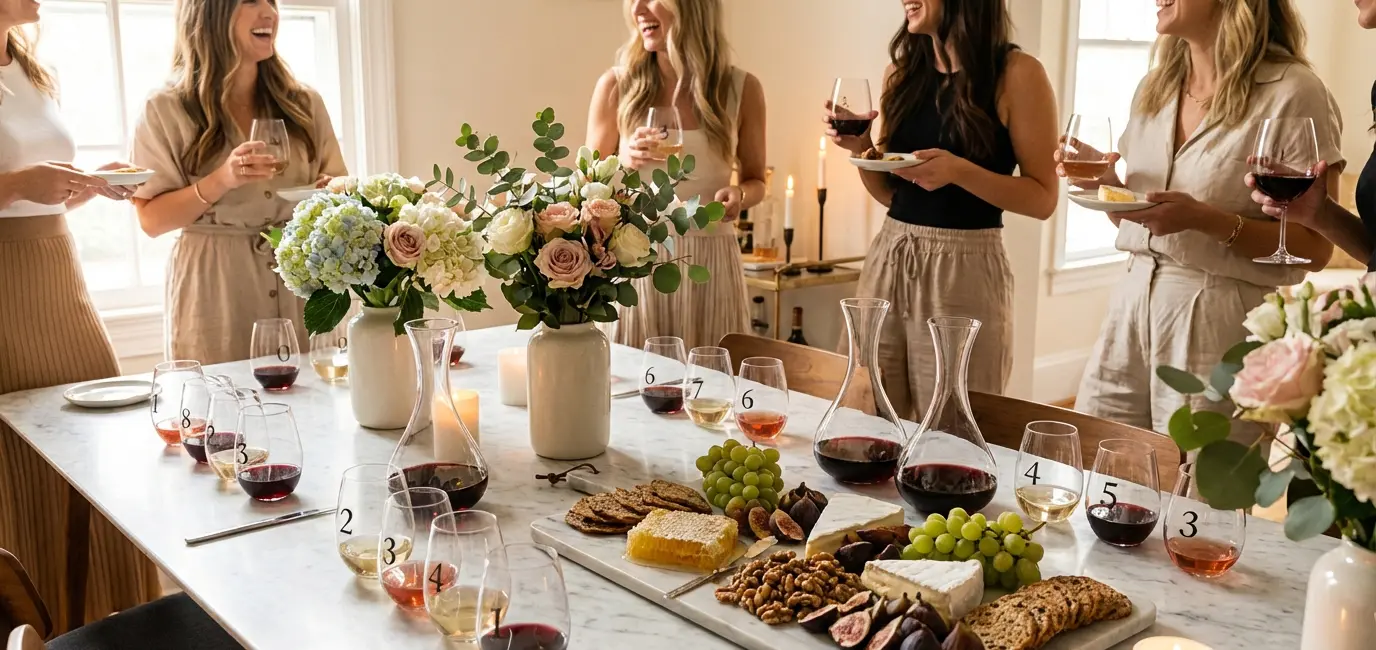
Food at a blind wine tasting party serves a specific function: palate cleansing between wines, sustenance for guests who are drinking (even in small pours, 6 wines adds up), and something to talk about between rounds. The food should be good but not the focus. Here is the spread I default to:
- The core cheese board. One soft cheese (brie or camembert), one semi-firm (manchego or aged cheddar), one hard (parmesan or aged gouda), and one blue (gorgonzola or stilton if your group likes it). This covers all four major cheese textures and gives you pairing conversation across red, white, and rosé. Grapes, honey, fig jam, and walnuts round it out. Keep it simple — the wine is the star.
- Neutral crackers and plain bread. The essential palate cleansers. Plain water crackers, baguette slices, and a small bowl of plain bread. These go between every wine — remind your guests to use them.
- Charcuterie elements. Prosciutto, soppressata, or cornichons add substance and pair well with both reds and whites. Keep it to 2-3 items so the board doesn’t become overwhelming.
- Dark chocolate. One piece of high-quality dark chocolate (70%+ cacao) per guest, served with the last wine of the flight. Dark chocolate is the classic pairing reveal moment for red wines and creates a natural close to the tasting before the reveal.
- What to avoid. Strong flavors that linger and corrupt the palate: garlic, onion, very spicy food, strong herbs. Save these for the dinner that follows the tasting. During the blind tasting itself, the food should amplify the wine experience, not compete with it.
For more entertaining food inspiration, our spring dinner party menu ideas and spring garden party hosting guide both have spreads that pair naturally with a wine-forward evening.
Blind Wine Tasting Party Themes and Variations
Once you have the basic format down, themes are what make a blind wine tasting party for women feel special and distinct from the last one. Here are the theme variations that have worked best in my experience:
- The Travel Tasting. Choose wines from 5-6 countries and make the reveal a geography lesson: pull up a map and mark each wine’s origin as you reveal it. Pair with small bites from each country if you want to go all in. This works especially well for groups who love to travel or are planning trips.
- Decades Night. Choose wines from different vintage years — ideally spanning 10-20 years if budget allows. This requires more investment in older vintages but the conversation about how wine evolves with age is genuinely fascinating and impossible to have any other way.
- The Budget Battle. Set a price cap — $15, $20, $25 — and everyone brings one bottle within budget. The host adds a “wild card” outside budget at the end without revealing it. Guests taste and vote on which bottle is the wild card. This format is budget-friendly and always produces strong opinions.
- Holiday themes. A rosé blind tasting for a spring or summer party, a Beaujolais and Burgundy showdown for a Thanksgiving pre-game, a sparkling wine bracket for New Year’s Eve. The wine category provides the seasonal tie-in without needing additional decoration.
- The Bachelorette Tasting. A blind wine tasting is a genuinely excellent bachelorette activity — more intimate than a bar crawl, more memorable than a spa day, and something the whole group can participate in regardless of age or preference. Add personalized scorecards with the bride’s name and date for a keepsake element.
- The Recurring Tournament. If you host wine nights regularly with the same group, run a season-long tournament: each night’s winner earns a point, and at the end of the season the overall leader hosts the next night on everyone else’s tab. This format creates a social ritual that people genuinely look forward to.
For more girls’ night inspiration — including formats that work when not everyone wants to focus entirely on wine — our girls night in ideas for adults has the full list. And for the full home wine bar setup that makes any recurring wine night easier to host, our home wine bar setup guide covers equipment, storage, and glassware. If your group loves pairing wine with pop culture, our Bravo TV show wine pairings guide and book club wine pairing guide are both excellent blind tasting flight inspiration sources.
Frequently Asked Questions
How many wines should I include in a blind tasting?
Four to six wines is the sweet spot for a blind wine tasting party. Four wines keeps the evening moving quickly and prevents palate fatigue; six gives you enough variety for meaningful comparison and a more satisfying reveal. More than six wines in a single blind flight tends to blur together after the fourth pour, even with palate cleansers.
How much wine do I need per person for a blind tasting party?
Plan on 2 oz per person per wine. For a 6-wine flight with 6 guests, that is 12 oz per bottle — you can get 6 tastings from a standard 750ml bottle. So one bottle per wine in the flight is sufficient for groups up to six. For larger groups, buy two bottles of each wine. Pour conservatively — the point is tasting, not drinking.
Do I need special glasses for a blind wine tasting?
One clean, clear, standard-sized wine glass per wine per person is ideal. It does not need to be expensive — plain stemless glasses work perfectly. The key is that the glass is clear (so guests can assess color) and large enough to swirl without spilling (at least 10 oz capacity). Avoid colored or patterned glasses.
What is the best wine flight theme for beginners?
The same grape, different regions format is the best starting point for mixed-knowledge groups. Choosing one familiar grape — Chardonnay, Sauvignon Blanc, Pinot Noir, or Rosé — keeps the playing field level while still producing dramatic differences between glasses. Everyone can comment on what they taste even without formal wine vocabulary.
How do I keep the bottles secret during the tasting?
Brown paper lunch bags are the simplest solution: slip the bottle in, fold down the top, write the number on the outside with a marker. Cloth wine bags and bottle sleeves work for a more polished presentation. The host should pour all wines in a separate room or behind a barrier so guests do not see the bottle shapes, which can identify the wine type before tasting.
Can you do a blind wine tasting virtually?
Yes — virtual blind wine tastings work well for long-distance friend groups. Each guest orders the same 4-6 wines independently (the host shares a list, everyone receives it and hides it), then joins a video call and tastes simultaneously. The reveal is done on screen. Wine subscription services that ship curated sets make the logistics simpler.
There is something I love deeply about the blind wine tasting party format: it is the rare social event where not knowing something is genuinely an advantage. The guest who has never thought about wine before approaches each glass with the same curiosity as the one who has spent years studying it. Everyone is surprised. Everyone has opinions. Everyone leaves feeling like they learned something without sitting through a lesson. That combination — fun, educational, competitive without stakes, and deeply convivial — is what makes blind wine tasting party ideas for women the format I recommend to every single person who asks me how to host a wine night worth remembering. Plan for two to three hours, keep the food simple, choose a flight with a clear theme, and let the wines do the work. The rest takes care of itself.