This post may contains affiliate links. Read our full disclosure here.
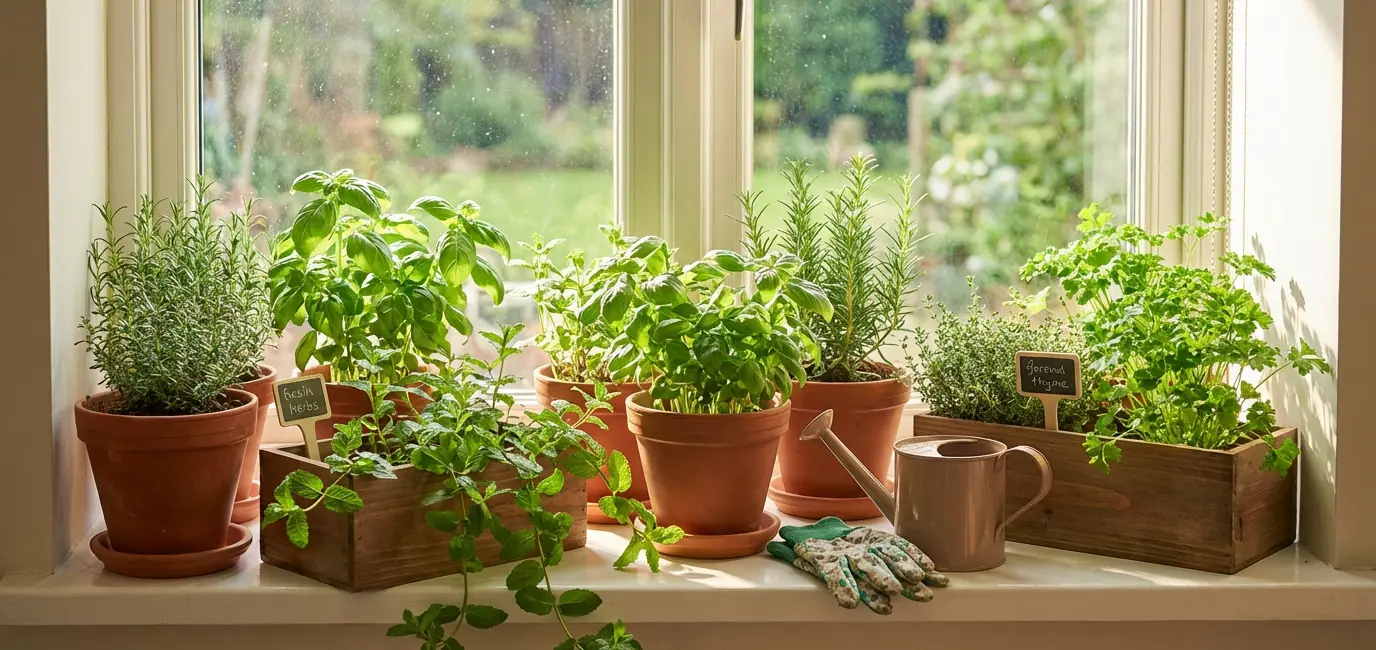
I grew up in a kitchen without fresh herbs. Everything came from jars. Then I discovered that a kitchen windowsill herb garden is the simplest way to change that. A herb garden for beginners doesn’t require a backyard. It doesn’t require a green thumb. A small indoor herb garden on a sunny window, a few small pots, and some seeds or starter plants is all you need to have fresh herbs at your fingertips every time you cook. The difference between dried oregano from a bottle and fresh oregano you grew yourself is staggering. Not just in flavor (though that alone is transformative) but in the way it makes you feel about cooking. Suddenly, you are not just following a recipe. You are growing your own ingredients. You are connecting your kitchen to the garden, even if your garden is six inches wide. This is my complete guide to starting and maintaining a kitchen windowsill herb garden, even if you have never grown anything before.
Why Start a Kitchen Windowsill Herb Garden?
A fresh herb garden transforms your cooking. Dried herbs lose flavor and aroma after six months. Fresh herbs harvested moments before you use them are incomparably more alive. The flavor is brighter. The aroma is cleaner. Food tastes like you actually know what you are doing. Beyond the flavor, growing fresh herbs on a windowsill is one of the cheapest ways to feel like you have a garden. Even apartment dwellers with zero outdoor space can have a herb garden for beginners. You will save money (a $3 herb pot vs. $1.50/week at the grocery store). You will reduce packaging waste. You will have something green and growing in your kitchen. All of this happens on a windowsill. No backyard required. No special equipment required. Just light, water, soil, and seeds.
“Fresh herbs are the easiest way to make ordinary food taste extraordinary.”
Best Herbs to Grow Indoors for Beginners
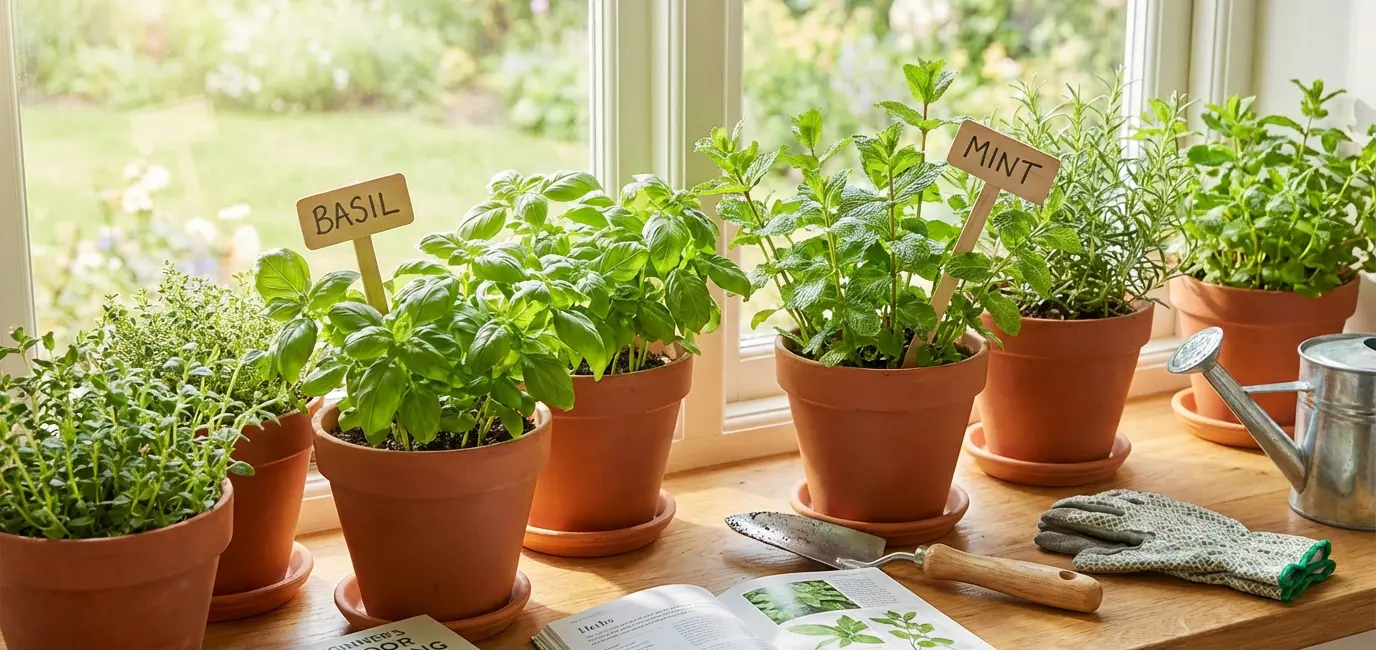
Not all herbs are created equal when it comes to growing fresh herbs indoors. Some need more light than a window can provide. Some are finicky about water. But certain herbs are almost impossible to kill. Start with these for your kitchen windowsill herb garden.
Basil — The Workhorse
Basil is the definition of a beginner herb garden plant. It grows fast. It forgives mistakes. It grows bushier the more you harvest. A single basil plant can supply you with fresh basil for months. Italian, Thai, lemon basil — there are dozens of varieties. Plant basil seeds in spring or early summer and keep the windowsill warm and bright. Basil hates cold. If your windowsill gets below 50°F at night, move it indoors away from drafts.
Mint — The Aggressive Grower
Mint grows so aggressively it nearly qualifies as a weed. This makes it perfect for beginners. You can neglect mint and it will still thrive. It tolerates lower light than basil. It bounces back from overwatering. Spearmint, peppermint, chocolate mint — once you have one type, you will want to grow them all. Keep mint in its own pot because it will overtake every other plant if you let it.
Oregano and Thyme — The Survivors
These Mediterranean herbs are drought-tolerant and happy in lower light. They grow slowly, which means they require less maintenance than basil. Plant them from starter plants (seeds are slow) and let them be. Water only when the soil is dry. These herbs practically grow themselves.
Parsley and Chives — The Reliable Ones
Flat-leaf parsley and chives are leafy, abundant, and tolerant of a wider range of conditions. Parsley takes a few weeks to sprout, but once it does, you have years of parsley. Chives are nearly impossible to kill and regrow within days of harvesting. Both work from seeds or starter plants.
For your first kitchen windowsill herb garden, I recommend starting with basil and mint. They give you the fastest wins and the most forgiving growing experience. Once you are comfortable, add oregano, thyme, chives, and parsley.
Setting Up Your Indoor Herb Garden: Light, Water, and Soil
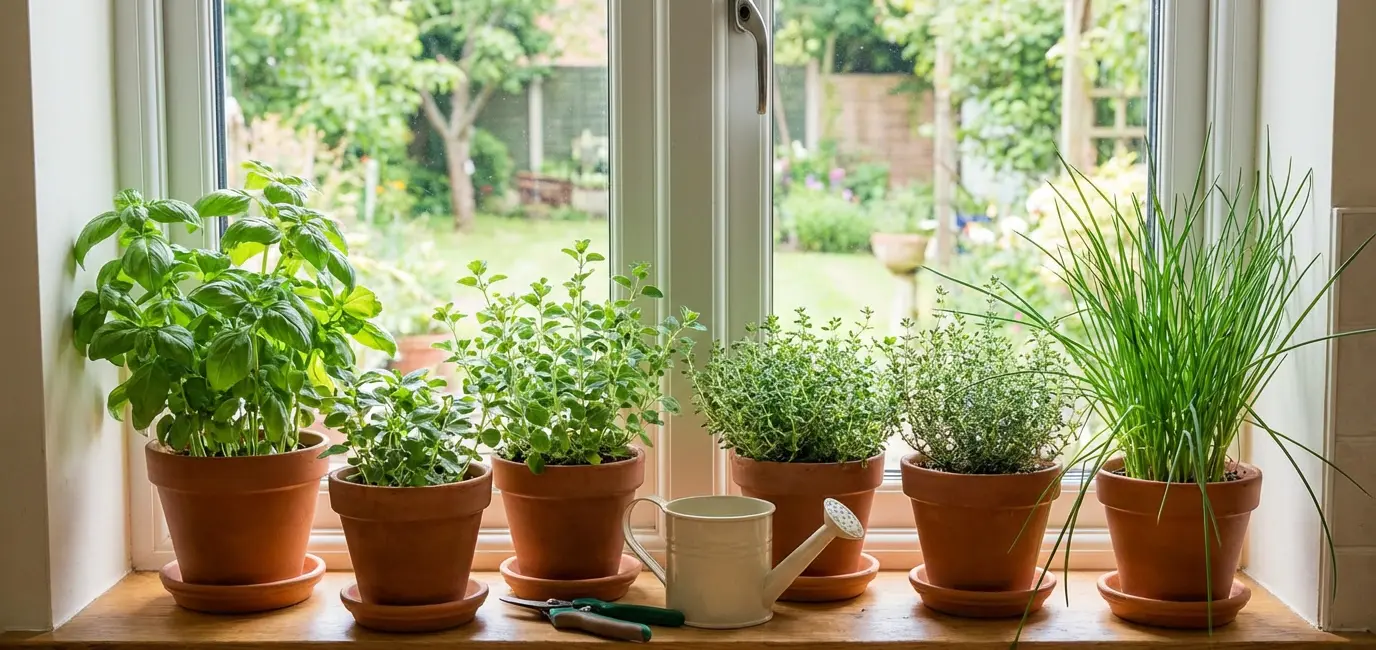
You don’t need much to succeed with a grow fresh herbs indoors setup. You need three things: light, water, and soil. Get these right, and your herb garden for beginners will thrive. Get these wrong, and your herbs will struggle.
Light
Herbs need light. Most herbs need 6–8 hours of direct sunlight per day. A south-facing or west-facing windowsill is ideal. If you have a north-facing or east-facing window, you can still grow herbs there—they will just grow more slowly. The key is: position your pots as close to the window as possible. If your herbs start to look leggy or weak, they are not getting enough light. Move them closer to the window, or consider a small grow light (Amazon has affordable options). A grow light solves the problem of dark windowsills and extends your growing season.
Water
Herbs prefer slightly moist soil, not waterlogged. Most indoor herb garden problems come from overwatering. Check soil moisture before you water. If the top inch of soil is dry, water. If it is still moist, wait. Each herb is slightly different: basil likes more moisture; oregano and thyme like drier soil. As you grow, you will learn the feel of the soil for each plant.
Soil
Use potting soil, not garden soil. Potting soil is lighter and drains better, which is what container herbs need. Fill your pots three-quarters full, add your seed or starter plant, then fill to the rim. Water gently. If you are buying starter plants from a nursery, transplant them into slightly larger pots (a 4-inch pot is perfect for basil or mint; a 6-inch pot works for larger plants like oregano). Buy small terracotta pots on Amazon, high-quality potting soil, and herb seeds, and you are ready to start growing fresh herbs on your windowsill.
Harvesting Your Fresh Herbs for Cooking and Entertaining
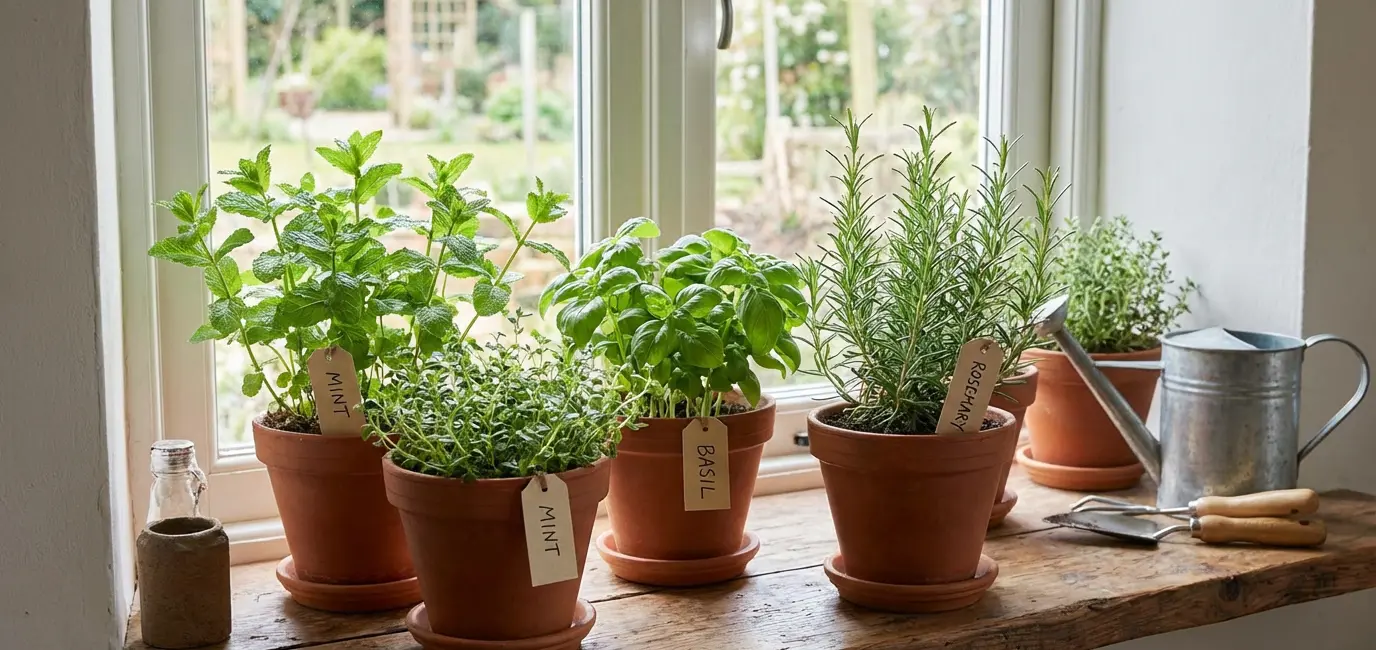
Harvesting is the best part. This is when your kitchen windowsill herb garden becomes an actual ingredient for your food. The good news: harvesting promotes growth. The more you pick, the bushier your plants get. You cannot over-harvest basil. You can definitely under-harvest. Clip the top leaves and branches, and your basil will branch out and fill in below.
When to Harvest
For most herbs, wait until the plant has at least 6 leaves before you start harvesting. This gives the plant enough strength to recover and keep growing. After that, harvest whenever you need fresh herbs for cooking.
How to Harvest
Pinch leaves off with your fingers, or use scissors. For bushy herbs like basil, pinch off the top stem and the top 2–3 sets of leaves. This encourages branching. For herbs like parsley or chives, you can cut individual leaves or entire stems. The plant will regenerate.
Using Your Harvest
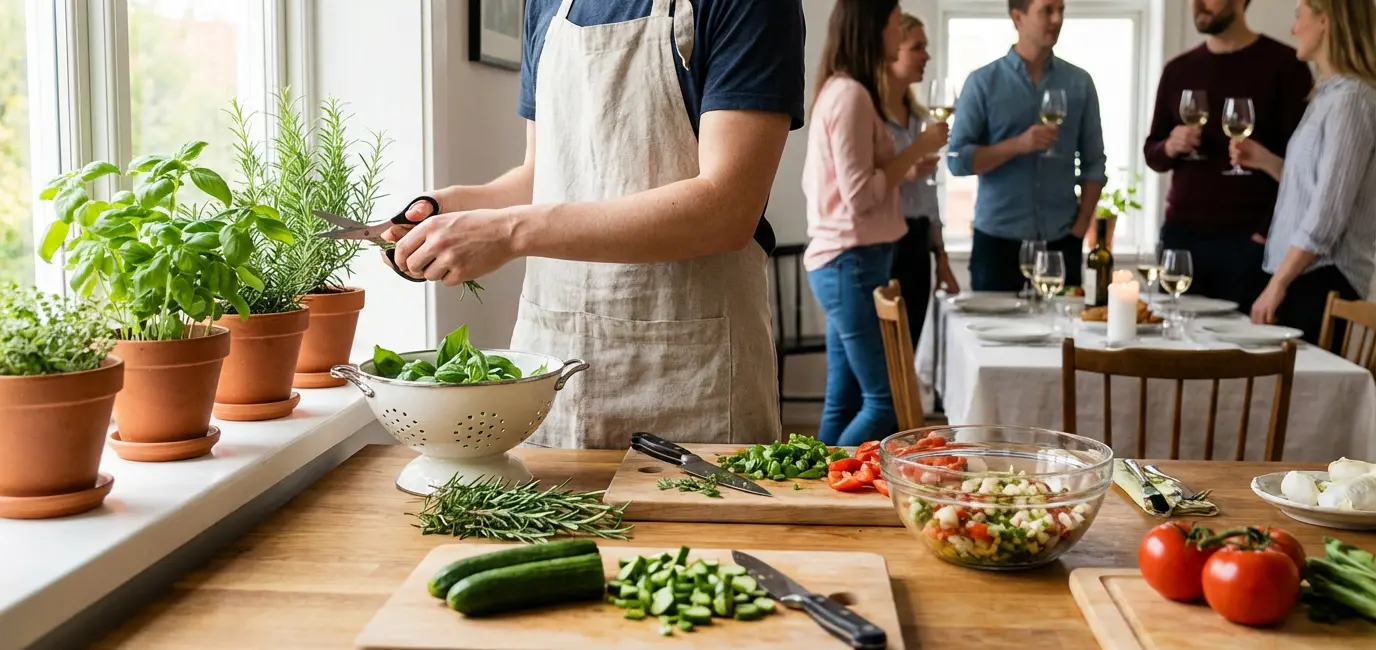
Fresh herbs are best used immediately. But if you have extras, rinse and dry them, then store in the fridge in a damp paper towel inside a plastic bag. They will last about a week. Use fresh herbs in salads, pasta, soups, cocktails, wine pairings, entertaining, and everywhere you would use dried herbs, but with twice the flavor.
Troubleshooting Your Indoor Herb Garden
Even with perfect setup, herb gardens can run into problems. Here is how to fix the most common ones.
Leggy, Weak Growth
Your plants are stretching and reaching for light. This means insufficient light. Move the pot closer to the window or add a small grow light. Leggy plants can recover if you give them more light.
Yellow Leaves
Yellow leaves usually mean overwatering or drainage problems. Let the soil dry out slightly between waterings. Make sure every pot has drainage. If leaves are yellow and stem is soft, root rot has set in. It may be too late to save this plant. The good news: herbs are cheap to replace, and you have learned something for your next attempt.
Wilting Leaves Despite Moist Soil
This indicates root rot. Let the soil dry out for a few days. If the plant does not recover, it may be too late. Remove it and start fresh.
Brown Leaf Tips
Brown tips usually mean low humidity or inconsistent watering. Mist the plant occasionally with water (not in direct sun). Maintain more consistent soil moisture. This is cosmetic and will not kill the plant.
Pests
Indoor herbs are less likely to attract pests, but spider mites and whiteflies can happen. If you spot tiny bugs, spray the leaves with water or diluted neem oil. Indoor herbs are generally pest-free compared to outdoor plants. Do not let problems discourage you. Most kitchen windowsill herb garden issues are fixable. The plants are resilient. And if one plant fails, you have learned what not to do next time.
Frequently Asked Questions About Indoor Herb Gardens
Can I grow herbs from seeds or should I buy starter plants?
Both work. Seeds are cheaper but take longer and require more patience (herbs like parsley can take 2–3 weeks to sprout). Starter plants are faster — you are harvesting within weeks. For your first herb garden for beginners, I recommend starter plants. Once you are comfortable, experiment with seeds. Herb seed kits from Amazon are reliable and affordable.
What if I don’t have a sunny windowsill?
A grow light solves this problem. Inexpensive LED grow lights are available on Amazon and cost $20–$50. Position the light 6 inches above the plants and run it 12–14 hours per day. Your indoor herb garden will thrive even in a north-facing window or far from natural light.
How long will my herbs last?
Basil and other annuals will last one growing season (spring through fall). Mediterranean herbs like oregano and thyme can last years if you maintain them. Mint is nearly immortal. When basil starts to decline in late fall, start a new pot for next spring. Rotate your kitchen windowsill herb garden seasonally.
Can I grow herbs in low-light conditions?
Mint, parsley, and chives tolerate lower light (4–5 hours) better than basil or oregano. But all herbs prefer bright light. If you have a choice, choose the brightest window. If you don’t, a grow light is a small investment that pays dividends.
What is the best pot size for a kitchen windowsill herb garden?
A 4-inch pot works for basil, mint, and chives when they are young. A 6-inch pot accommodates larger plants or as plants mature. Use pots with drainage holes. Terracotta is traditional and breathable, but plastic pots work too. Terracotta pots are inexpensive on Amazon and come in sets.
Starting a kitchen windowsill herb garden is one of the simplest ways to connect your food to growing things. It is cheap. It is forgiving. It transforms the way your food tastes. In spring, plant basil and mint. Watch them grow. Use them in your cooking. Share them with friends. By next winter, you will not remember what it was like to cook without fresh herbs at hand. This is how a herb garden for beginners becomes part of your life.