This post may contains affiliate links. Read our full disclosure here.
The perfume layering guide you actually need isn’t found in a department store — it’s something you build over time, one beautiful accident at a time. Perfume layering is the art of wearing two or more fragrances simultaneously to create a unique scent that’s entirely your own, and once you understand the basics, it completely changes how you think about fragrance. I became obsessed with perfume layering after realizing that the most interesting women I knew never smelled exactly like their bottle — they smelled like themselves.
“Fragrance is the last thing you put on and the first thing people remember. Learning to layer is how you stop wearing a perfume and start wearing a signature.” — Sophia Gibson
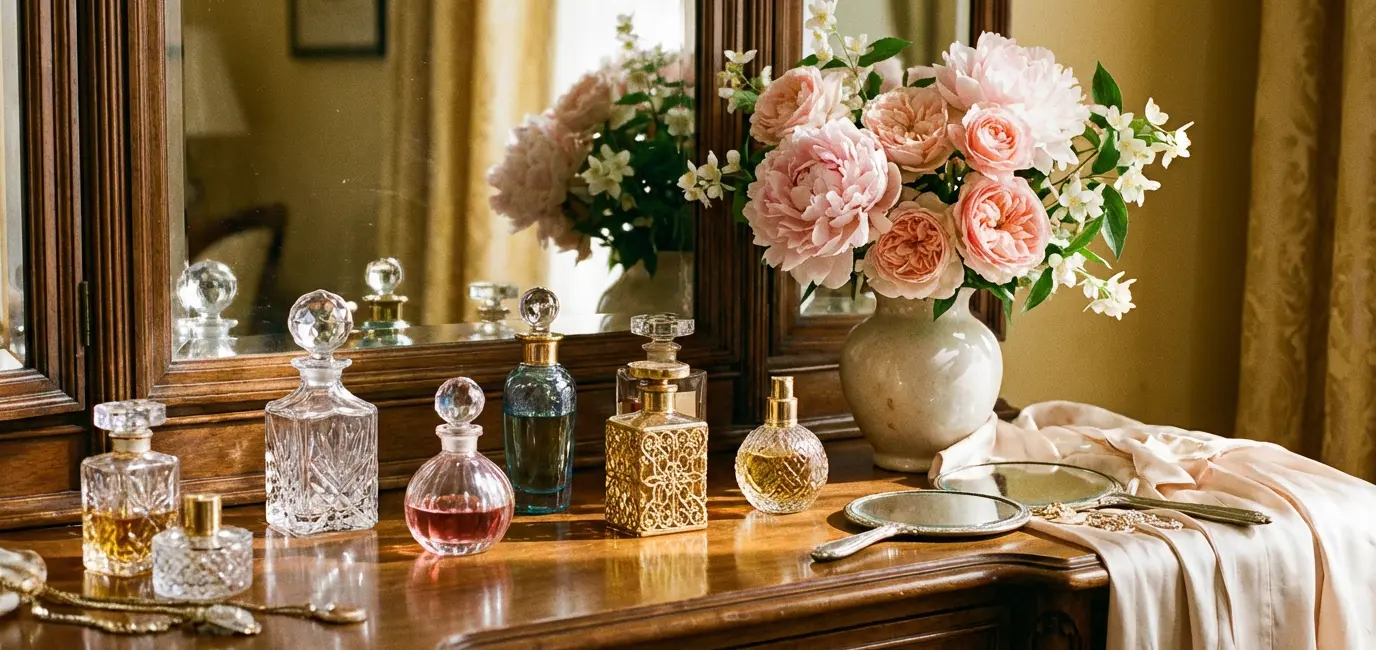
What Is Perfume Layering?
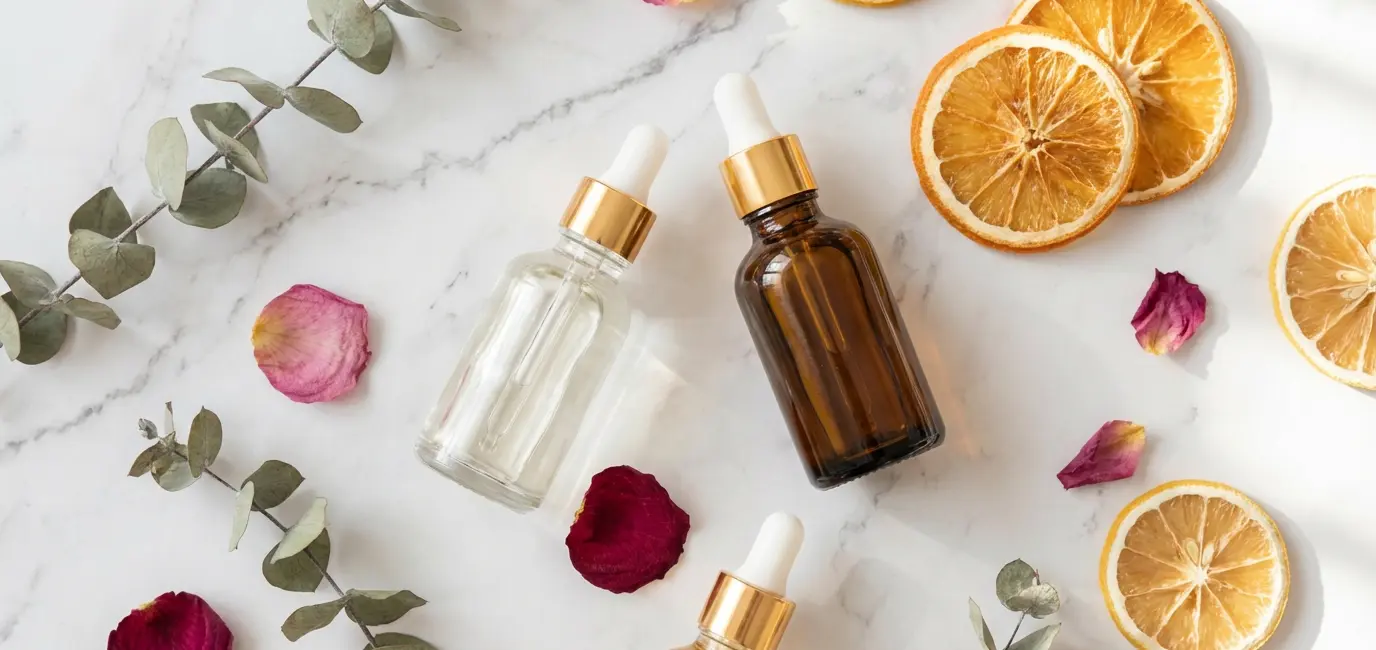
Perfume layering is the practice of applying two or more fragrances to the skin (or clothing) at the same time to create a blended, complex scent that neither fragrance could achieve alone. The result is something genuinely personal — a combination that becomes your signature, not a smell that thousands of other people are wearing straight out of the same bottle.
Middle Eastern and South Asian fragrance traditions have been doing this for centuries. Oud with rose, musk with jasmine, amber with oud — layering was never considered unusual. Western fragrance culture, on the other hand, has long promoted the “one fragrance” approach, largely because fragrance houses want you buying complete bottles, not mixing them. But that’s changing. The rise of fragrance communities on TikTok, Reddit’s r/fragrance, and platforms like Fragrantica has brought perfume layering into the mainstream, and suddenly everyone wants to know how to do it well.
The short answer: you can start today, with bottles you already own. The longer answer — the one that turns accidental into intentional — is what this guide is for.
If you’re building out your self-care ritual alongside your fragrance wardrobe, I’d also recommend reading my guides on how to create a spa day at home and morning routine ideas for women — fragrance plays a much bigger role in both than most people realize.
Understanding Fragrance Notes: The Foundation of Layering
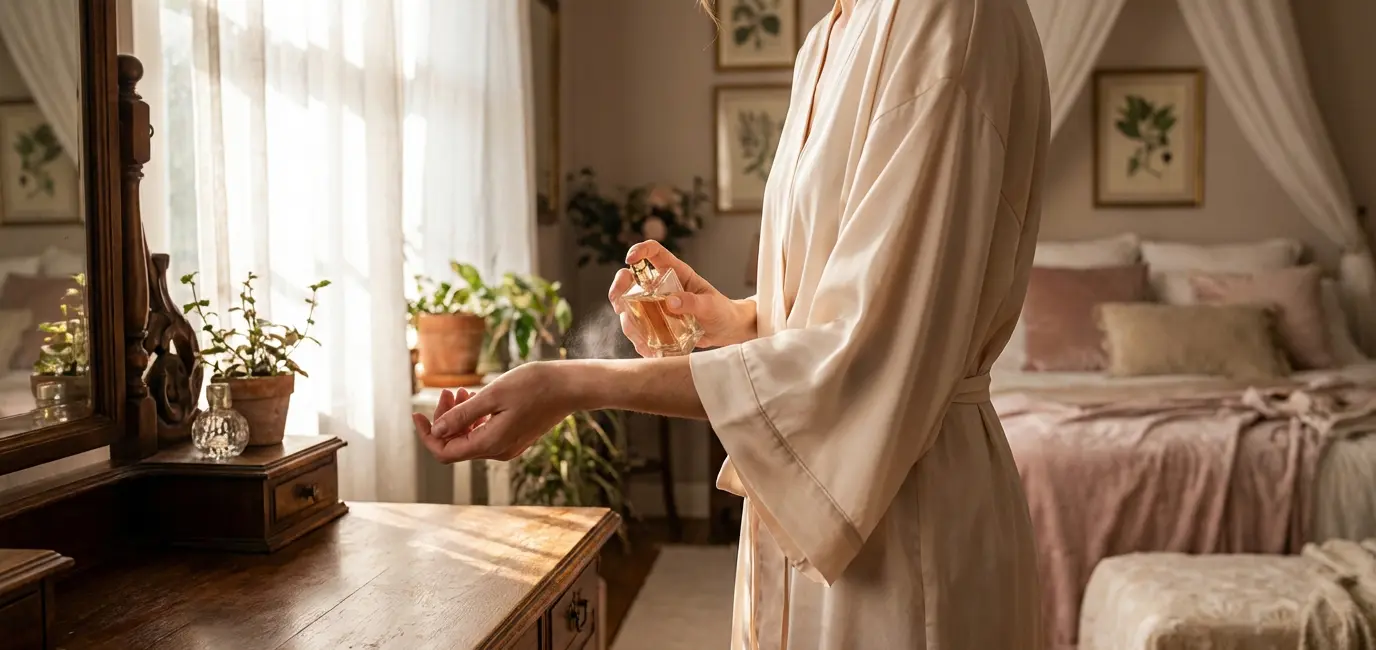
Before you can master perfume layering, you need to understand how individual fragrances are structured. Every perfume is built on a three-tier note pyramid, and knowing where each of your fragrances sits in that pyramid tells you a lot about how it will behave when layered.
Top Notes
Top notes are what you smell in the first 15–30 minutes after application. They’re bright, fresh, and fleeting: citrus (bergamot, lemon, grapefruit), green notes (basil, violet leaf, cut grass), and light herbs. Top notes create the first impression but they evaporate quickly, which is why perfume layering with top-note-heavy fragrances requires applying them last — they’ll be the first thing to disappear.
Heart Notes (Middle Notes)
Heart notes emerge after the top notes fade, typically 30 minutes to 2 hours in, and they define the character of the fragrance. Florals live here — rose, jasmine, peony, iris, ylang-ylang. So do spices like cinnamon, nutmeg, and cardamom. Heart notes are where perfume layering gets interesting, because two different floral hearts can interact in unexpected and often beautiful ways.
Base Notes
Base notes are the foundation — the deep, rich, lasting scents that anchor everything above them. Vanilla, sandalwood, musk, amber, patchouli, vetiver, tonka bean, oakmoss. Base notes last the longest (often 4–8 hours) and they’re the reason your perfume smells different in the afternoon than it did at 9am. When layering, a strong base note fragrance applied first creates a foundation for lighter fragrances to sit on top of.
The classic layering approach: apply your base-heavy fragrance first, let it settle for 30 seconds, then apply your floral or citrus fragrance on top. The deeper scent anchors, the lighter scent floats, and the interaction between them is your unique result.
The Perfume Layering Rules That Actually Work
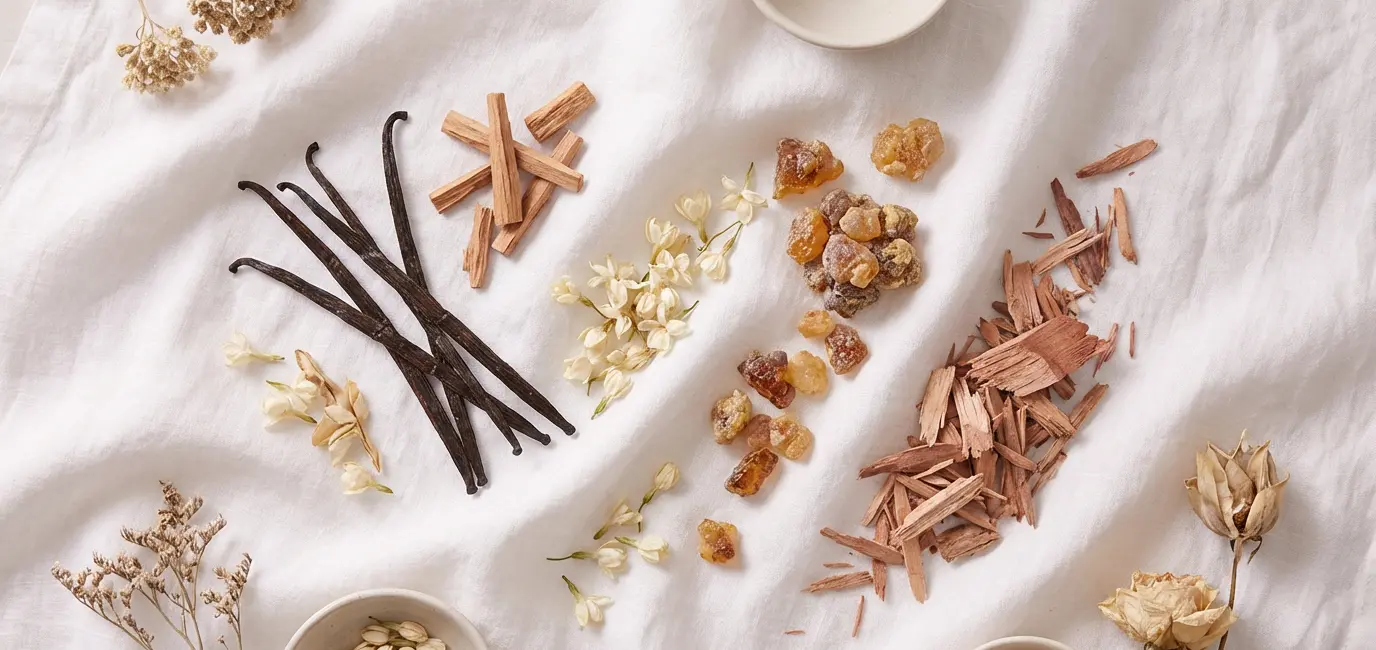
I’ve experimented with perfume layering for years, and I’ve landed on a handful of rules that consistently produce beautiful results — and a few that save you from expensive mistakes.
- Layer complementary, not identical scent families. Two fresh citrus fragrances layered together don’t create complexity — they just make louder citrus. The magic happens at the intersection: floral over musk, citrus over wood, spice over vanilla.
- Apply in order from heaviest to lightest. Heavy base notes first (oud, sandalwood, amber, musk), then florals, then any fresh or citrus top note fragrance last. This gives each layer a chance to dry down and bloom before the next arrives.
- Less is more, especially at first. Two sprays total — one of each — is a better starting point than four. Layered fragrances amplify each other. What smells right at one spray each can become overwhelming at two each.
- Apply to the same spots. Wrists, inner elbows, base of throat, behind the knees. Layering works when the fragrances merge on your skin — spraying one on your wrist and one on your neck means they never fully interact.
- Test on skin, not paper. Fragrance strips are useful for single scent testing but completely useless for layering. Your skin chemistry changes how both fragrances develop. Spray, wait 20 minutes, then evaluate.
- Some combinations smell beautiful immediately; some need 30 minutes. The initial blast after a spray is often the roughest moment. Many layering combinations that seem slightly odd in the first 10 minutes become extraordinary once the top notes fade and the heart merges begin.
“Perfume layering isn’t about expensive bottles or rare ingredients. It’s about understanding what you’re working with. I’ve created combinations worth remembering using a $14 body mist and a mid-range EDP. The art is in the knowing, not the spending.” — Sophia Gibson
How to Layer Perfume by Scent Family
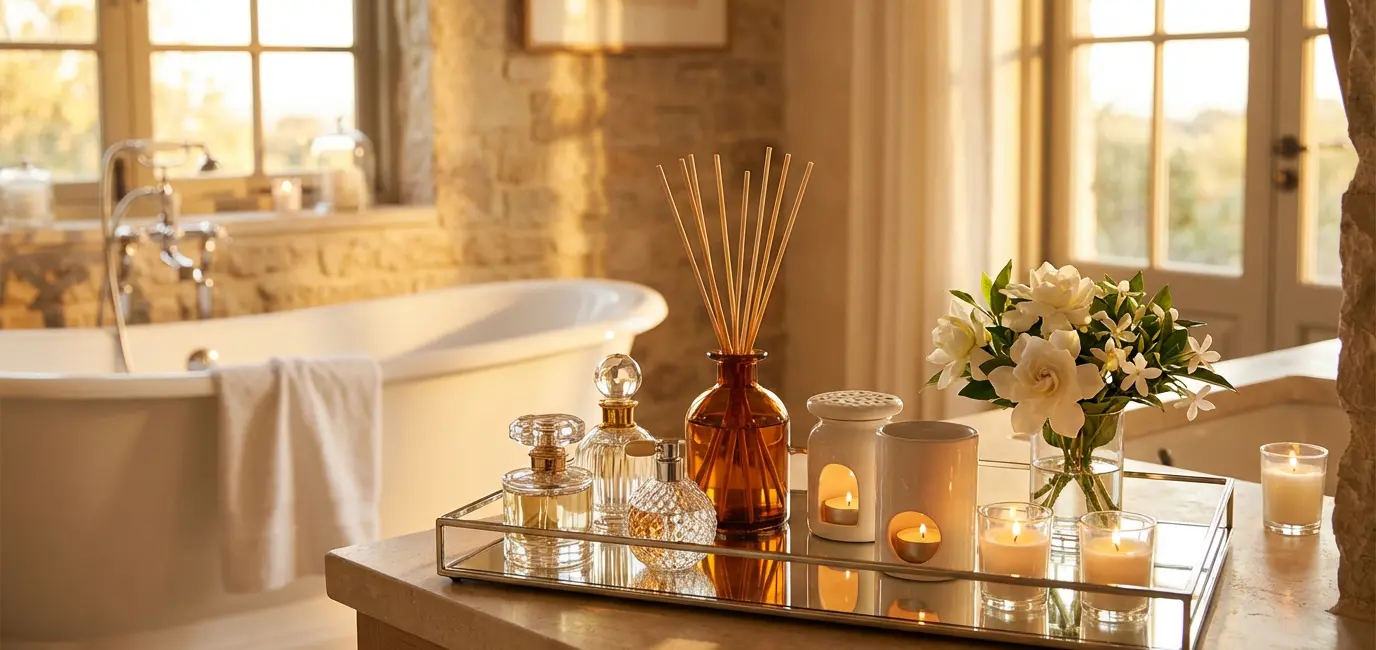
The easiest way to approach perfume layering for beginners is to think in scent families rather than individual fragrances. Here are the most reliable pairings:
Floral + Woody/Musky
This is the most forgiving and universally flattering pairing in perfume layering. A soft rose or peony EDP layered over a sandalwood or white musk base produces a warm, feminine, skin-like scent that’s both sophisticated and wearable. Try any rose soliflore (single-note rose fragrance) over a clean sandalwood or cashmeran base. If you have a musk-forward fragrance that feels “thin” on its own, this combination gives it incredible depth.
Citrus/Fresh + Warm Oriental
This is my personal obsession. A bright bergamot or lemon cologne sprayed over a warm amber or tonka vanilla fragrance creates something almost alchemical — sun and warmth at the same time, like a beautiful summer evening. The fresh top notes prevent the oriental from going too heavy or syrupy, and the warm base prevents the citrus from going flat. Think: anything in the citrus-ozonic family over something in the gourmand-amber family.
Floral + Aquatic/Marine
This combination works beautifully for spring and summer. An aquatic or salty-marine fragrance (like a sea spray or driftwood scent) paired with a peony or white floral gives you that specific feeling of fresh ocean air through an open window where someone’s cut flowers are sitting on the sill. It’s effortless, clean, and deeply evocative. Perfect perfume layering for warm weather.
Vanilla/Gourmand + Floral
If you love sweet fragrances but want them to read as sophisticated rather than sugary, layering a gourmand (vanilla, caramel, praline) with a single prominent floral — particularly iris, violet, or rose — cuts the sweetness and adds elegance. This is the combination that makes people lean in and ask what you’re wearing. It smells expensive in a way that neither fragrance quite achieves alone.
Oud/Incense + Floral
This is the Middle Eastern tradition at its finest, and it consistently produces the most complex, individual-smelling results. A heavy, resinous oud or incense fragrance as a base, with a bright rose, jasmine, or orange blossom layered on top. The contrast is extraordinary. Don’t be intimidated by oud — modern mainstream oud fragrances are much more approachable than the raw material, and a small amount as a base goes a very long way. The FragranceNet women’s fragrance collection has a wide range of oud-based and floral options for building combinations at excellent prices.
My Favorite Perfume Layering Combinations

These are perfume layering combinations I’ve personally worn and loved. I’m sharing them as starting points, not formulas — your skin chemistry will make each of these smell different on you than on me. That’s the point.
- The Cozy Afternoon: A vanilla-cashmere body mist (bottom layer) + a soft white floral EDP (top layer). Warm, enveloping, slightly sweet without being cloying. This is my fall/winter indoor combination.
- The Effortless Spring Day: A clean musky base (Narciso Rodriguez For Her or similar) + a light pink pepper or peony fragrance on top. Fresh but warm. Spring in a bottle — or rather, in two.
- The Date Night: A deep amber oriental base (1 spray, wrists only) + a jasmine-centric floral (1 spray, throat). It develops into something remarkable over 30 minutes. Complex, warm, distinctly feminine without being predictable.
- The Boardroom: A light vetiver or cedar woody fragrance (base) + a bright bergamot-iris fragrance (top). Confident without being aggressive. Polished without being forgettable.
- The Weekend Morning: A clean cotton-linen spray (body mist or pillow spray) + a soft neroli or grapefruit fragrance. Like you just stepped out of clean sheets into a citrus grove. Effortless and completely irresistible.
If you’re building your perfume layering wardrobe from scratch, I’d start with a high-quality unscented or lightly-scented body lotion as your canvas. Fragrance clings to moisturized skin dramatically better than dry skin, which means your layers last longer and merge more beautifully. The FragranceNet gift sets section is a wonderful place to find fragrance duos and discovery sets that are specifically designed to complement each other. If you prefer to build your own kit with layering-friendly components, Amazon has a wide range of perfume layering sets from both mainstream and niche fragrance brands.
How to Build Your Perfume Layering Wardrobe
You don’t need a collection of 30 bottles to practice perfume layering well. You need a strategic few. Here’s how I’d build a perfume layering starter wardrobe from the ground up:
- One solid musk or skin scent. This is your most versatile layering partner. A clean, skin-close musk fragrance works under almost everything — floral, citrus, oriental, woody. It’s the neutral canvas that makes other fragrances bloom. Look for anything described as “clean musk,” “skin musk,” “white musk,” or “skin scent.”
- One warm base: amber, sandalwood, or vanilla. This is your depth layer. On its own it might be too sweet or too simple, but it elevates everything placed on top of it. An inexpensive vanilla body spray works just as well here as a luxury sandalwood EDP.
- One bright, fresh top: citrus or green floral. Bergamot, neroli, lemon, grapefruit, green tomato leaf, violet leaf. This is your lift layer — the thing that prevents heavy combinations from feeling stuffy. A good one from FragranceNet or Amazon will cost you very little and change everything.
- One romantic heart: rose, jasmine, or peony. This is your signature modifier. A rose-centric fragrance layered with your musk base is already a sophisticated combination. Add your citrus top note and you have three layers. That’s a real signature.
- One wild card: oud, iris, incense, or smoke. Once you’re comfortable with the first four, your wild card is what makes perfume layering endlessly interesting. Oud is the most dramatic option. Iris is the most elegant. Incense is the most meditative. Choose based on who you want to be on a given day.
Building a perfume layering wardrobe fits naturally into a broader self-care and home aesthetic practice. If you’re developing your personal style alongside your scent, you might love my guide to the old money aesthetic lifestyle — fragrance choices are a central part of that look and feel. The best scented candles for the home guide also pairs well here: your home’s ambient scent and your personal fragrance should complement each other, not fight. And if you’re looking to integrate perfume layering into a spring self-care routine, the ritual of choosing your combination in the morning can become one of the most grounding parts of your day.
For girls’ night in ideas with a fragrance theme, a perfume layering workshop makes an incredible activity — everyone brings two bottles, you spend an hour swapping and combining, and you leave with new combination ideas you never would have found alone. It’s genuinely one of the most unexpectedly fun ways to spend an evening at home.
If you’re also working on a capsule wardrobe, applying the same intentionality to your fragrance choices — fewer, better, deliberately chosen — makes your whole personal presentation feel more cohesive and considered.
Frequently Asked Questions About Perfume Layering
Can I layer any two perfumes together?
Technically yes, but some combinations work better than others. The safest pairings are complementary scent families: floral + musky, citrus + woody, vanilla + floral. Avoid layering two very similar fragrances from the same family — two heavy orientals will just be overwhelming, not complex. Start with one soft/clean and one warm/deep and go from there.
Does perfume layering make the scent last longer?
Often yes. When you apply a heavy base note fragrance (sandalwood, musk, amber) first, it creates a foundation that helps lighter fragrances cling to your skin longer. The combination often outlasts what either fragrance would achieve alone. Applying over moisturized skin helps significantly too.
Is perfume layering expensive?
Not at all. Some of the best perfume layering results come from mixing a high-quality EDP with an inexpensive body mist or lotion. You don’t need to buy luxury for both layers. In fact, mixing price points is one of the best strategies — use an affordable musk or vanilla body spray as your base and layer a more special fragrance on top. FragranceNet has a wide selection of layering-friendly fragrances at significant discounts from retail pricing, which makes building a perfume layering wardrobe much more accessible.
How many fragrances can I layer at once?
Two is the sweet spot for most people, especially beginners. Three is possible but requires real intent — you need a clear base, a clear heart, and a clear top note that all point in a coherent aromatic direction. Four layers almost never work. More layers means more chances for one note to clash with another, and the result is usually muddled rather than complex. Master the two-fragrance combination first. Once that feels effortless, try a third.