This post may contains affiliate links. Read our full disclosure here.
A proper spa day at home is one of the most genuinely restorative things you can do for yourself — and it costs a fraction of what you would spend at an actual spa. I have been doing dedicated spa days at home for years, and what I have learned is that the difference between a forgettable bubble bath and a truly luxurious at-home spa experience comes down to intentionality: the atmosphere you create, the order of treatments you follow, and the small details that signal to your nervous system that this time is genuinely for rest. This is my complete guide to planning a spa day at home that actually delivers — better skin, real relaxation, and that particular kind of restored feeling you usually only get after spending $300 at a day spa.
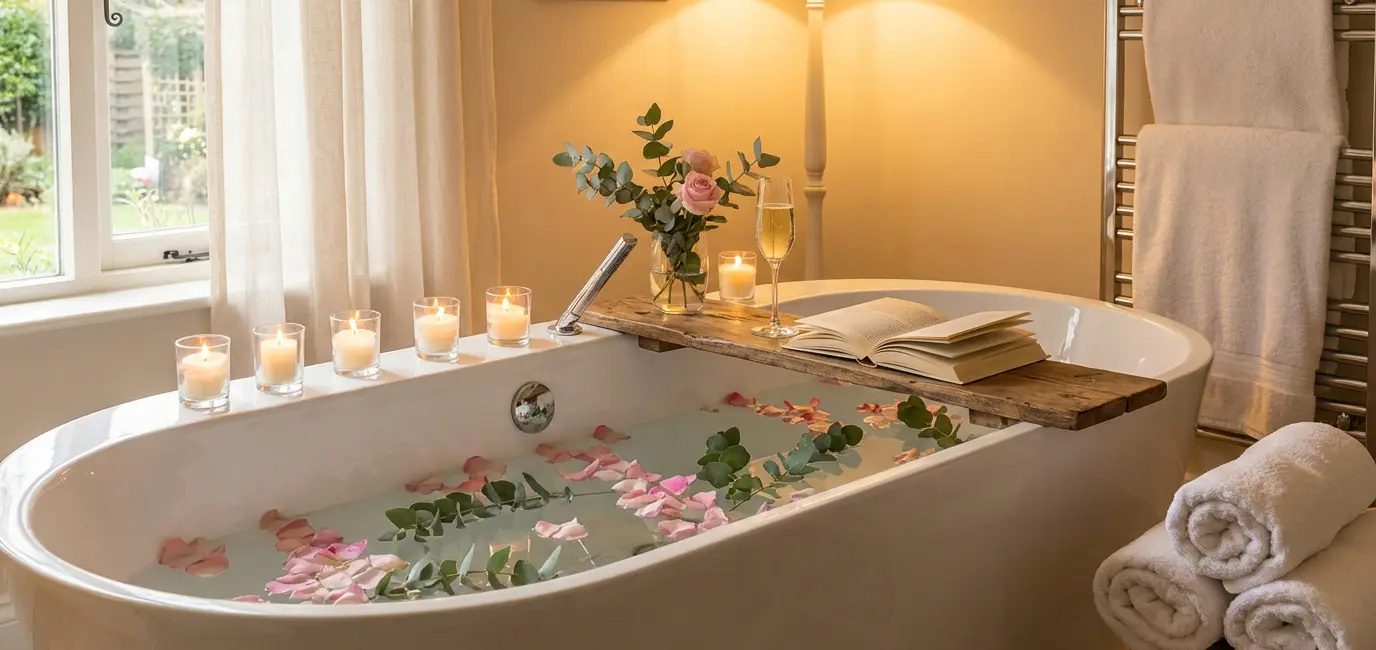
Why a Spa Day at Home Hits Different Than an Actual Spa
I know what you might be thinking: a spa day at home is just a bath with nicer products. But there is something that a proper at-home spa day does that a professional spa often cannot — it lets you fully surrender to your own pace. No schedule, no appointments, no hushed awkwardness about whether you should tip. You move from treatment to treatment when you are ready, linger in the bath as long as you want, and pair everything with exactly the music, candles, and glass of wine that you personally find restorative.
There is also the cumulative effect to consider. A professional spa facial is wonderful, but it happens once every few months. A consistent spa day at home practice — even once or twice a month — builds real results in your skin and your stress levels in a way that occasional professional treatments cannot. Your skin remembers regularity. So does your nervous system.
“The most luxurious thing you can give yourself is uninterrupted time. A spa day at home is just a beautiful excuse to take it.”
The key is to treat your spa day at home as an actual event rather than something you fall into when you happen to have a free afternoon. Set the date, gather your products in advance, and commit to the full experience. That intentionality is what turns a pleasant bath into a genuinely restorative day.
If you are looking for more ways to create genuine rest and restoration at home, the principles behind a great spa day at home overlap significantly with what goes into making your home feel like a luxury hotel and with the self-care approach I cover in my spring self-care routine guide.
Setting the Scene: How to Create a Spa Atmosphere at Home
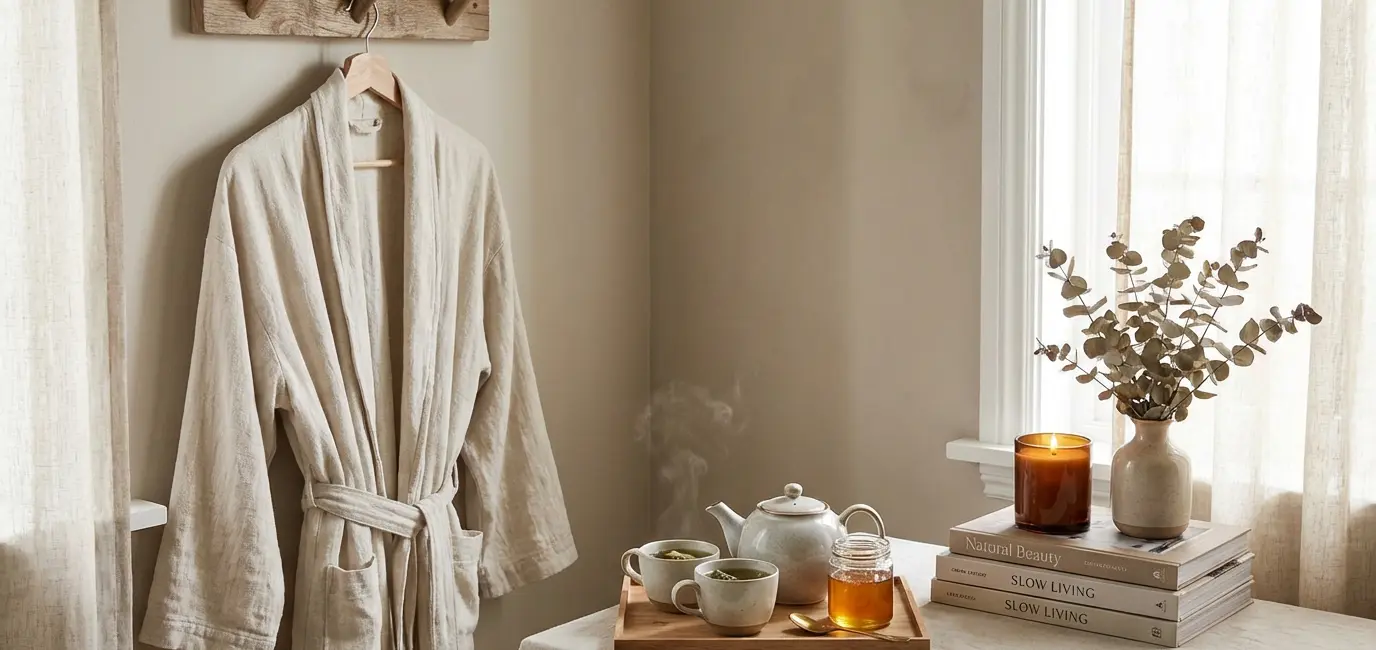
The atmosphere is not a nice-to-have on a spa day at home — it is the whole thing. Your environment directly affects whether your nervous system actually downshifts into rest mode or stays on low-grade alert. Here is what I do to create a genuinely spa-like atmosphere at home:
- Scent first. Scent is the fastest pathway to a shifted mental state. Eucalyptus, lavender, bergamot, and sandalwood are the classic spa scents for a reason: they are all proven to lower cortisol and support a parasympathetic (rest) state. I use a combination of high-quality scented candles and essential oil diffusers in the bathroom and bedroom. The goal is a layered, not overwhelming, scent environment. Spa candle sets in eucalyptus and lavender are one of the best $20-30 investments for your at-home spa setup.
- Sound. Create a dedicated playlist before your spa day at home begins and let it run throughout the day. Binaural beats, spa piano, lo-fi ambient, or Tibetan singing bowls — whatever your personal version of auditory decompression is. The key is that it plays continuously rather than requiring you to choose something every 20 minutes.
- Temperature and light. Warm the bathroom 10-15 minutes before your bath. Use only candles or warm-toned lamp light rather than overhead lighting — fluorescent or cool-white light actively disrupts relaxation by mimicking daylight signals. If your bathroom has a window, open it slightly for fresh air during the day.
- Prepare your robe and towels. One of the underrated pleasures of a professional spa is the warm, fluffy robe waiting for you. Recreate this at home: tumble-dry your towels and robe right before your bath so they are warm when you step out. A quality plush spa robe is one of the most-used wellness purchases you can make, and Lunya’s robes in particular are the kind of thing you will reach for every single time.
- Phones away. This is non-negotiable for a real spa day at home. Put your phone on do not disturb, physically place it in another room or face-down on a surface you cannot see from your bath or bed. The mental load of potential notifications — even when muted — keeps your nervous system on mild alert. The spa experience you are trying to recreate is one of genuine disconnection, and that requires actually disconnecting.
- Gather everything first. Before you begin any treatment, gather every product, tool, and accessory you will need for the full day and place them on a tray or in a small basket. Nothing breaks the atmosphere of a spa day at home faster than having to rummage through a cabinet in the middle of a face mask looking for toner.
The Complete At-Home Spa Skincare Routine
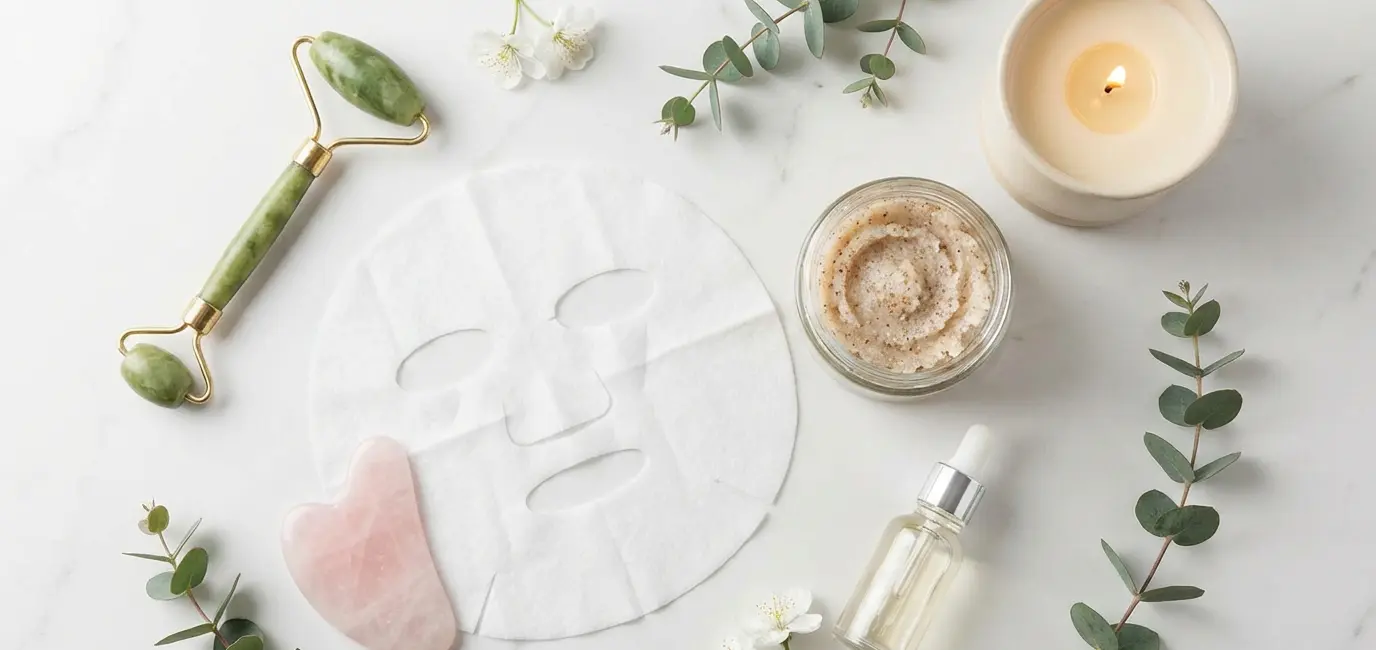
Skincare is the treatment category where a spa day at home can genuinely rival professional results — especially if you are consistent. The difference between a daily skincare routine and a spa day at home skincare session is time and layering: you do treatments in the right order, you let each step fully absorb, and you include steps you normally skip because you are in a hurry. Here is the sequence I follow:
- Double cleanse. Start with an oil or balm cleanser to dissolve SPF and makeup, followed by a gentle foam or gel cleanser for a fresh base. This two-step approach is standard at professional spas and genuinely makes a difference in how well subsequent treatments absorb. It takes 4 extra minutes and the results are visible.
- Steam. After cleansing, spend 5-10 minutes over a bowl of hot water with a towel over your head, or use a facial steamer. Steaming opens pores, hydrates the skin surface, and primes your face for the next step: exfoliation and masking. This is the step most people skip at home and the one that makes the most difference to how a mask performs.
- Exfoliation. Use a chemical exfoliant (AHA like lactic acid, or BHA like salicylic acid) rather than a physical scrub, which can cause micro-tears. Apply, wait the recommended time (usually 5-10 minutes), then rinse. Your skin should feel noticeably smoother immediately.
- Face mask. Choose your mask based on your skin’s current needs: clay for oiliness or congestion, hydrating sheet mask for dehydration, enzyme mask for brightening. For a spa day at home, I recommend a clay mask followed by a sheet mask — the clay does the active work and the sheet mask seals in hydration afterward. Clay face mask sets that include a brush and multiple formulas give you options for different zones.
- Gua sha and jade rolling. These tools have actual research behind them: gua sha promotes lymphatic drainage, reduces puffiness, and improves circulation in the face. Used after serum application, they increase product absorption and give an immediate lifting and sculpting effect. A gua sha and jade roller set is one of the best $15-30 purchases for your at-home spa skincare kit.
- Serum and moisturizer layering. After masking, apply your treatment serum (vitamin C, niacinamide, retinol — depending on your skin goals), wait 30 seconds, then layer your moisturizer. On a spa day at home, finish with a face oil over your moisturizer for an extra occlusive layer that locks everything in.
- Eye and lip treatment. These two areas are always dehydrated and always undertreated. Apply an eye mask patch and a thick, occlusive lip mask simultaneously while the rest of your face absorbs your moisturizer. This 10-minute multi-mask approach is a professional spa staple that is completely achievable at home.
For perfume and fragrance recommendations to complement your spa day at home skincare ritual, FragranceNet has a wide selection of spa-adjacent scents — white tea, green tea, amber, and jasmine notes that translate beautifully from skincare into fragrance layering.
The Perfect Spa Day at Home Bath Ritual
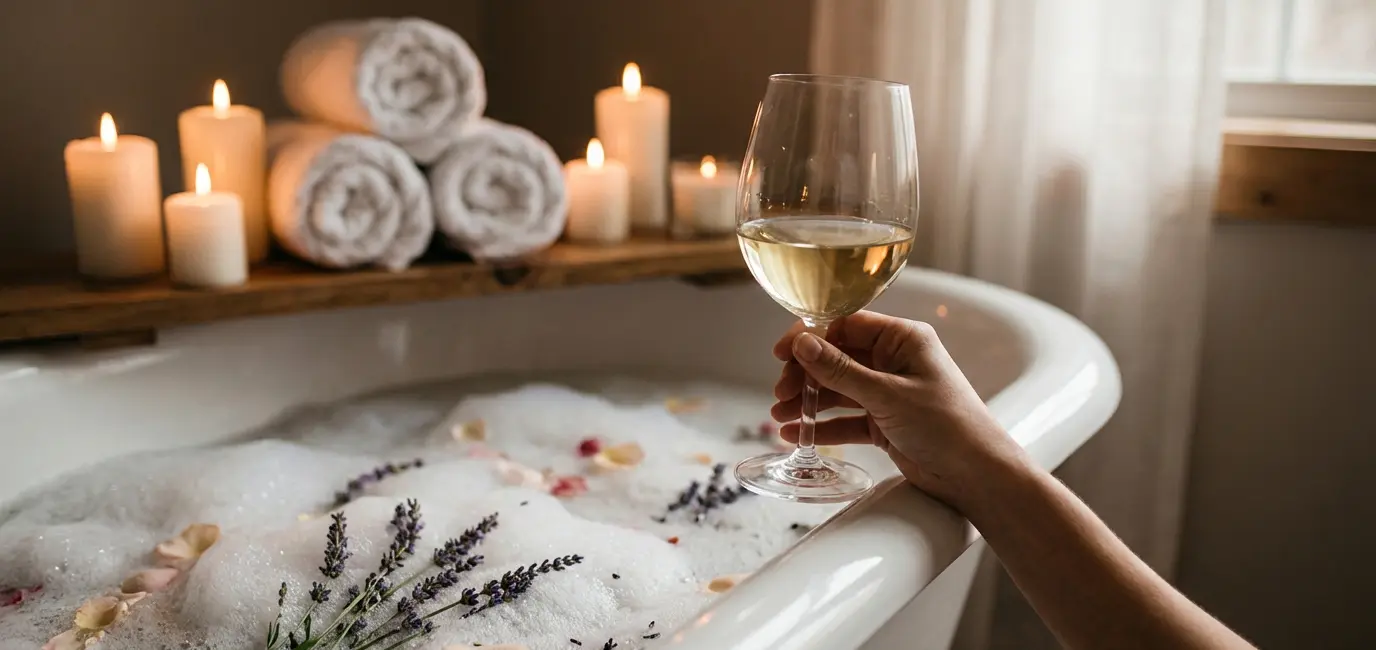
The bath is the centerpiece of most spa days at home, and it deserves more than running hot water and reaching for whatever bubble bath is on the shelf. Here is how I approach the at-home spa bath as a full treatment rather than just a soak:
- The temperature. The ideal bath temperature for a truly therapeutic soak is 100-104°F — warm enough to relax muscles and open pores, not so hot that it spikes your heart rate or depletes skin moisture. Contrary to popular assumption, very hot baths are not more relaxing; they are more stimulating. A warm-but-not-scalding bath sustains a longer, more deeply relaxing soak.
- Bath salts and soaks. Epsom salt (magnesium sulfate) is the workhorse of the therapeutic bath: it reduces muscle soreness, supports magnesium absorption through the skin, and creates a soft, silky water texture. Add 2 cups to a full bath along with a few drops of lavender or eucalyptus essential oil. Lavender Epsom salt bath soaks are the single most effective and affordable upgrade to your spa day at home bath ritual.
- Botanicals and florals. Fresh eucalyptus sprigs, dried rose petals, or fresh lavender bundles floating in the bath add scent, visual beauty, and a genuine spa-quality feel. Tie fresh eucalyptus to the shower head for steam-activated scent if you prefer a shower to a bath.
- The bath tray. A wooden bathtub caddy tray transforms the experience entirely. On mine: a glass of wine or sparkling water with citrus, a small candle, a book or my phone playing music (strictly in airplane mode), and a face cloth. The tray creates a mini vignette within the bath that makes the whole thing feel intentional and indulgent.
- Duration. 20-30 minutes is the ideal soak duration. Less than 15 minutes does not give your muscles enough time to genuinely release. More than 45 minutes can over-hydrate and soften skin in a way that actually increases dryness post-bath. Use a timer if you tend to lose track.
- Post-bath sealing. The window immediately after a bath is the most important moment for body hydration. Pat skin dry (do not rub) and apply body oil or lotion while skin is still slightly damp. Damp skin absorbs moisturizer significantly better than completely dry skin — this is not spa mythology, it is basic skin physiology.
Wine is a natural and genuinely lovely companion to the bath portion of a spa day at home. A chilled glass of white Burgundy or a light rosé is my personal preference. If you want to expand the wine evening into a proper home wine tasting or a blind tasting party after your solo spa day, both of those guides have everything you need to turn the evening into a full event.
Body Care: The Treatments That Actually Make a Difference
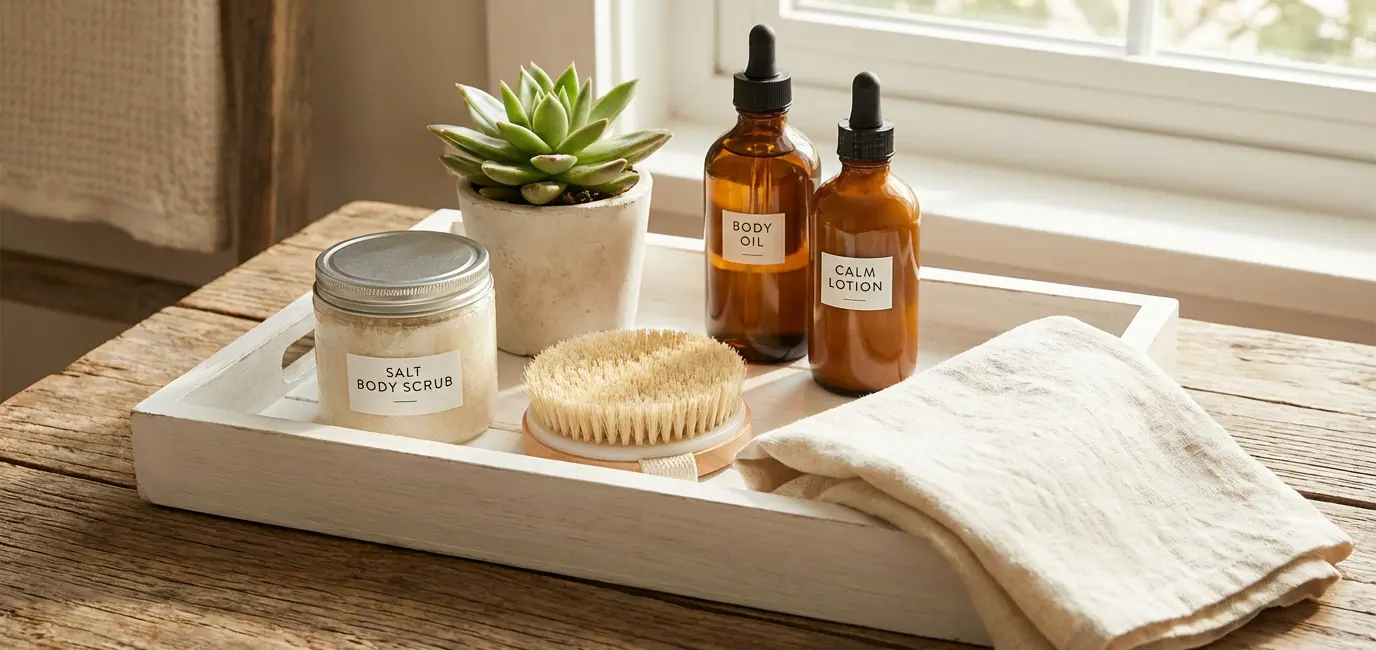
Body care is the most skipped category of spa day at home treatments and also the one with some of the most immediately visible and tactile results. Here are the body treatments I prioritize on a full at-home spa day:
- Body scrub. Start with a full-body scrub before your bath, in the shower or dry. Sugar scrubs are gentler and more moisturizing than salt scrubs (sugar dissolves rather than scratching). Coffee scrubs are excellent for circulation and temporary cellulite reduction. Apply in circular motions, working from feet up toward the heart. Sugar body scrub kits with a dry brush and loofah give you a complete exfoliation setup for under $30.
- Dry brushing. Done before a shower or bath, dry brushing stimulates lymphatic flow, improves circulation, and removes dead skin more effectively than any scrub. Use a firm natural-bristle brush and brush in long strokes toward your heart. The skin redness that follows is normal and is a sign of increased circulation. Daily dry brushing is one of the more underrated wellness habits; it takes 3 minutes and the cumulative skin-smoothing effect after 2-3 weeks is significant.
- Body mask. Less common than face masks but genuinely effective: a full-body clay or yogurt mask applied before the bath draws impurities and softens skin. It sounds elaborate but takes about 10 minutes to apply and rinse and leaves skin noticeably smoother.
- Hair masking. Apply a deep conditioning mask to dry or damp hair before your bath and let it sit throughout your soak. The steam from the bath helps the mask penetrate more deeply. Rinse out when you shower after your bath. This is the easiest way to add a hair treatment without adding significant time to your spa day at home schedule.
- Hand and foot care. Soak feet in warm water with Epsom salts and a few drops of peppermint oil for 10-15 minutes, then use a pumice stone, apply a thick foot cream, and put on cotton socks to seal it in. Do the same for hands: soak briefly, push back cuticles gently, apply a rich hand cream, and wear lightweight cotton gloves if you have them. Hands and feet are the most overlooked areas of body care and the ones that age most visibly when neglected.
- Body oil finishing ritual. After all treatments, take 5 minutes to apply body oil with slow, intentional massage strokes. This is not just moisturizing — it is the physical practice of being present in your body after a day of care. Choose a body oil with a scent that makes you feel genuinely good: jasmine and sandalwood, neroli and bergamot, vanilla and amber. Lunya makes excellent body care products alongside their sleepwear that fit the luxury-at-home aesthetic perfectly.
What to Eat, Drink, and Watch on Your Spa Day at Home
A spa day at home is a full sensory experience, and what you consume during it matters as much as what you put on your skin. Here is how I plan the eating, drinking, and watching portions of my at-home spa day:
- Eating spa-adjacent. The classic spa lunch is not a coincidence: light, fresh, and mostly plant-based foods support the detox and restoration theme of the day. Think a Buddha bowl with roasted vegetables and tahini, a large salad with good olive oil, avocado toast with microgreens, or a charcuterie-style spread with fruit, good cheese, and olives. I avoid heavy, starchy meals during a spa day at home because they trigger the digestive process that works against genuine relaxation. Eat lightly, eat colorfully, and eat slowly.
- Hydration. You will lose more fluid than usual through sweating in the bath and sauna (if you use one). Drink more water than you think you need, starting in the morning before treatments begin. I keep a large glass of water with cucumber or citrus slices within reach throughout the day. Herbal teas — chamomile, peppermint, nettle, tulsi — also support the detox and relaxation goals of the day and make a beautiful addition to the atmosphere when served in a nice mug or glass teapot.
- Wine, thoughtfully. Wine on a spa day at home is a genuinely lovely experience when approached the right way. One glass of a wine you truly enjoy — chilled white Burgundy or Chablis during the bath, a glass of rosé during a face mask, a light Pinot Noir during an evening wind-down — adds to the sensory pleasure without working against your skin or sleep. More than one or two glasses on a spa day at home starts to have the opposite effect: it dehydrates skin, disrupts sleep architecture, and works against the calm you spent the whole day building. Savor it rather than using it as a volume activity.
- What to watch. A spa day at home is the perfect context for the shows and films you enjoy but never make time for: comfort rewatches, something visually beautiful, or a documentary that does not require high engagement. My personal list includes anything from the Great British Bake Off universe, design and architecture documentaries, and quiet cinematic films I have seen enough times that I can drift in and out. If you need a wine-adjacent companion, a girls’ night in format with a Bravo marathon or a comfort show is the perfect follow-on to your solo spa day.
- The morning after plan. One thing I have started doing that extends the benefits of a spa day at home significantly: plan a gentle, intentional morning the next day. No rushing, no early commitments if possible. The restoration you built during your at-home spa day consolidates during sleep and the following morning, and protecting that time makes the whole investment more effective.
For more ways to create a genuinely luxurious atmosphere at home without a professional budget, the luxury hotel at home guide and the best scented candles guide are the best starting points. If you want to turn your spa day at home into a shared experience, the girls’ night in ideas guide has a full hosting framework that works beautifully as a group spa day. And if your evening winds down into a wine-centered close, the styled bar cart guide and the spring bedroom refresh ideas help you create the full sanctuary environment that makes the whole experience feel complete.
Frequently Asked Questions
What do you need for a spa day at home?
The essentials for a spa day at home are: a quality bath soak (Epsom salts, bath oils, or a botanical soak), a face mask, an exfoliator (physical or chemical), a body scrub or dry brush, good candles or a diffuser for scent, a bathtub caddy tray, soft towels and a robe, and a playlist. Beyond that, add gua sha tools, hair mask, and foot care products to build out a more complete at-home spa day experience.
How long should a spa day at home last?
A complete spa day at home takes 4-6 hours if you include all treatment categories: skincare, bath, body care, hair, and rest. A more condensed version — face mask, bath, and body oil — takes about 2 hours and still delivers real results. The key is to give each treatment its full recommended time rather than rushing through.
What should I do first on a spa day at home?
Start with skincare before the bath: cleanse, steam, exfoliate, and apply your face mask. Then move to the bath, which rinses the mask and provides the body-care soaking step. After the bath, apply body oil while skin is still damp, then do hair care if needed. End with rest — lying down without screens for even 20-30 minutes after treatments consolidates the relaxation benefits significantly.
Is wine good to drink during a spa day at home?
One glass of wine — especially a chilled white, rosé, or light sparkling wine — is a lovely companion to a spa day at home and adds to the sensory pleasure without meaningfully impacting skin health. More than two glasses starts to work against the goals of the day: alcohol is dehydrating, disrupts sleep quality, and has a mild inflammatory effect on skin. One well-chosen glass is the sweet spot.
How often should I do a spa day at home?
Once a month is the minimum to see cumulative benefits in skin texture and stress levels. Every two weeks is ideal if your schedule allows. Even a condensed version — face mask and bath — done twice a month builds noticeably better results than an occasional full day every few months. Regularity matters more than duration.
How do I make my bathroom feel like a spa?
The four highest-impact changes are: scented candles or a diffuser (lavender, eucalyptus, bergamot), warm ambient lighting instead of overhead lights, fluffy warmed towels and a quality robe, and a bathtub caddy tray with a few curated items. These changes cost under $100 total and transform the sensory experience of the space immediately.
A great spa day at home is less about which products you use and more about the intention you bring to the time. Block the day, gather your supplies, create the atmosphere, follow the treatment sequence, and — this is the one I have had to remind myself of the most — actually rest at the end. The treatments work during recovery, not just during application. Give your spa day at home a proper closing hour of genuine stillness and you will feel the difference the next morning in a way that no single product or treatment can replicate on its own. That restored, clear-eyed morning after feeling? That is what you are building toward.