This post may contains affiliate links. Read our full disclosure here.
Think your favorite cult wine label is just a pretty face? Think again. Every curve, angle, and silhouette in vessel design carries centuries of secrets—from Georgian qvevri clay giants to sleek Napa Valley glass sculptures.
Long before hashtag-worthy decanters, ancient winemakers buried elephant-sized clay jars underground. These weren’t just storage solutions—they were flavor alchemists. The qvevri’s porous walls? A Georgian grandma’s hack for creating orange wines with earthy punch.
UP TO 50% OFF SITEWIDE
Fast-forward to today’s design revolution. Modern creators riff on medieval motifs using 3D-printed prototypes, while color palettes swipe right on Pantone trends. That curvaceous burgundy container on your shelf? It’s basically the architectural lovechild of a 14th-century monk and Zaha Hadid.
This guide cracks open the vault on liquid time capsules. We’ll decode how Phoenician traders influenced your rosé’s waistline and why certain silhouettes make sommeliers swoon. From terracotta’s comeback tour to space-age double-walled glass, prepare for a globe-trotting pour through culture, craft, and pure design drama.
Introduction to the Ever-Evolving World of Wine Bottles
That chic decanter on your bar cart? It’s got more backstory than a Netflix docu-series. This guide strips away the label gloss to reveal how civilizations shaped liquid art—one curve at a time.
Purpose and Overview of the Ultimate Guide
Consider this your backstage pass to liquid archaeology. We’re cracking open 8,000 years of design DNA—from Mesopotamian clay coils to Milan Fashion Week-worthy glassware. Why does that matter? Because every slope and shoulder whispers secrets about terroir, trade routes, and TikTok-era aesthetics.
| Era | Design Breakthrough | Cultural Catalyst |
|---|---|---|
| Ancient | Amphorae handles | Mediterranean trade |
| Medieval | Punted bases | Monastic brewing |
| Modern | UV-filter glass | Instagrammable dining |
Connecting Wine Culture with Bottle Design
Your favorite rosé’s hourglass figure isn’t accidental. Like vinyl grooves affecting sound quality, a vessel’s architecture changes how vino ages and breathes. French curves guard against sediment, while German flutes prevent oxidation—each silhouette a love letter to its homeland.
Twenty-first century creators now treat containers like wearable tech. Double-walled insulation? That’s the Yeti cooler of somm circles. Recycled glass hues? Pantone’s 2024 Color of the Year nods to eco-conscious sipping.
Wine Bottle Shapes and Their Historical Origins
What do Egyptian pharaohs and Georgian grandmas have in common? A knack for clay-based fermentation tech. Before hashtag-friendly decanters ruled Instagram, civilizations engineered vessels that doubled as flavor labs—where geometry met microbiology.
Ancient Storage Methods: Amphorae and Kvevri
Picture this: 6,000-year-old TikTokers trading beeswax-lined jars like limited-edition Stanley cups. Egyptian amphorae—with their torpedo-shaped bases—weren’t just pretty pottery. The pointed design let sediment settle like espresso grounds, while narrow necks minimized oxygen’s meddling. Across the Black Sea, Georgians buried kvevri the size of compact cars, letting clay’s porous texture work its slow-mo magic on amber-hued vino.
The Shift from Clay to Glass
Then came the glow-up nobody saw coming. When Venetian glassblowers resurrected Roman techniques, they basically invented the iPhone of storage—sleek, transparent, and endlessly customizable. But the real MVP? Cork. This spongy superhero allowed precise oxygen control, turning clunky jugs into slender showstoppers that could lounge sideways like runway models.
Early glass versions played it safe—thick-walled and practical. But by the 1600s, they’d morphed into recognizable silhouettes, setting the stage for today’s bottle shapes that balance form and function like Alexander McQueen tailoring.
The Birth of Glass: Roman Innovations and Venetian Mastery
Imagine Roman artisans as the Silicon Valley coders of antiquity—disrupting storage tech with fiery breath and molten sand. Their 1st-century BCE glassblowing breakthrough turned vessels into functional art, ditching clunky clay for sleek, stackable containers. Early versions had a greenish tint (nature’s filter), but stability trumped aesthetics—these prototypes could survive bumpy chariot rides across the Empire.
Roman Glassblowing: Ancient Tech Upgrade
Rome’s blown-glass revolution worked like 3D printing for oenophiles. By inflating molten silica into molds, winemakers scored uniform containers with narrow necks—oxygen’s worst nightmare. The punty rod (think ancient blowtorch) let them craft angular shoulders that trapped sediment better than TikTok filters catch bad lighting.
Venetian Cristallo: Glass Espionage 101
Cut to 13th-century Murano—the Area 51 of glass innovation. Local maestros guarded recipes tighter than Kardashian skincare routines. Their cristallo formula? Purified quartz pebbles + fern ash, fired hotter than a Marco Polo meme. The result: crystal-clear vessels that made French royals drop their goblets.
| Technique | Material Innovation | Impact |
|---|---|---|
| Roman glassblowing | Soda-lime-silica mix | Standardized storage shapes |
| Venetian cristallo | Local quartz + plant ash | Luxury export dominance |
These history-shaping moves didn’t just preserve vino—they turned containers into status symbols. Today’s minimalist carafes? Direct descendants of that Mediterranean glow-up, proving good design never goes out of style.
Evolution Through the Centuries: From the 17th to 19th Century
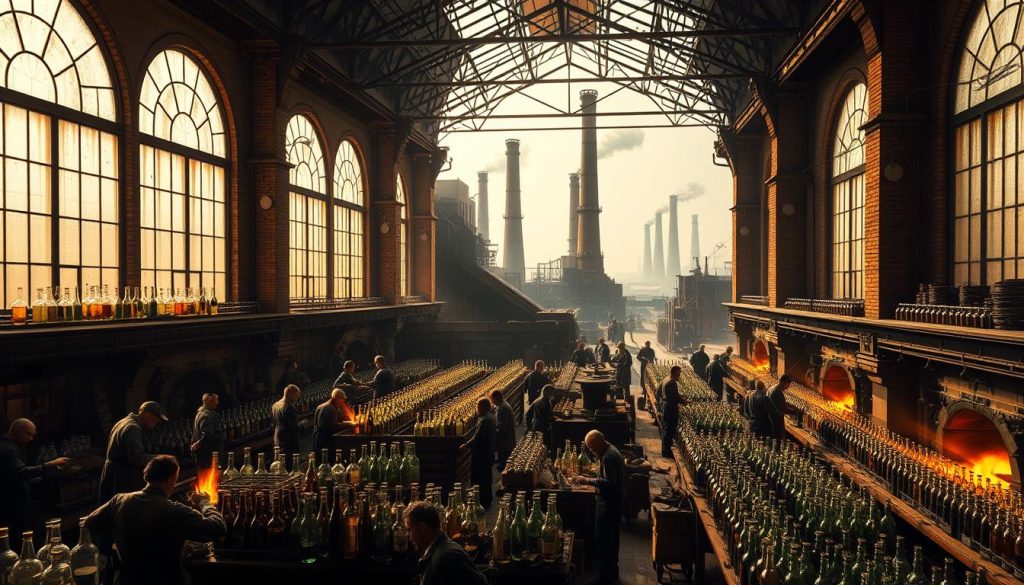
Coal dust and molten silica became the unlikely power couple of the 1800s. Factories belching smoke rewrote the rules of liquid storage, swapping artisanal craftsmanship for scalable precision. This era’s innovations still shape how we uncork history today.
Industrial Changes and the Role of Coal
Coal-fired furnaces turned glasshouses into roaring beasts. The switch from wood to carbon fuel cranked temperatures higher than a steampunk locomotive. Darker, thicker containers emerged—nature’s first UV blockers protecting precious cargo from lightstrike.
Glassmakers gained superpowers. They could now produce uniform standard bottles at scale, ditching the wonky asymmetry of hand-blown relics. The 750ml format became the Tesla of storage, its dimensions perfected by glassblowers’ lung capacity.
Establishing the Standard Bottle Shape
The 19th century gifted us the blueprint for modern perfection. Shorter necks minimized oxidation risks, while punted bottoms added structural muscle. These weren’t just containers—they were engineered ecosystems for aging liquid gold.
| Era | Innovation | Legacy |
|---|---|---|
| 17th Century | Wood-fired furnaces | Irregular shapes |
| 19th Century | Coal-powered production | Standardized 750ml format |
Regional styles began crystallizing during this period. Bordeaux’s high shoulders weren’t just chic—they trapped sediment like a bouncer at a velvet rope. Each design tweak whispered secrets about the drink inside, creating a visual language sommeliers still decode.
Modern Wine Bottle Designs and Their Marketing Impact
That Insta-worthy decanter isn’t just photogenic—it’s a Trojan horse of consumer psychology. Today’s liquid luxury containers balance industrial pragmatism with runway-ready aesthetics, turning shelf displays into dopamine triggers.
Standardization and the 750ml Bottle
The 19th century’s coal-powered factories birthed the universal soldier of vino logistics. Standard 750ml vessels became the shipping container of booze—stackable, shippable, and Instagram-grid perfect. This industrial hack slashed breakage rates by 40% while creating billboard-ready real estate for labels.
| Era | Innovation | Consumer Impact |
|---|---|---|
| Pre-1800s | Hand-blown asymmetry | Regional exclusivity |
| Post-1850s | Mass-produced uniformity | Global brand recognition |
Labels, Branding, and Consumer Perception
Château Mouton Rothschild didn’t just slap Picasso art on their labels—they weaponized them. Modern branding turns glass into canvases, where minimalist typography whispers “premium” louder than influencer unboxings. Thick bases and punts? Not just for show—they’re pressure vaults for sparkling varieties, engineered to contain 90 PSI without going full Mentos-in-Coke.
Augmented reality labels now let bottles talk. Scan 19 Crimes’ criminally cool designs, and historical figures literally pitch their backstory. It’s part museum tour, part TikTok stunt—a masterclass in millennial mindshare.
Regional Variations: Bordeaux, Burgundy, and Beyond
Like runway models sporting couture from different eras, glass silhouettes strut their terroir’s DNA. The bordeaux bottle walks in like a structured blazer—sharp shoulders, military posture. Its Burgundian cousin slinks through with a bias-cut gown’s fluidity. These aren’t containers; they’re geographic fingerprints in glass.
Bordeaux Bottles: Sediment and Structure
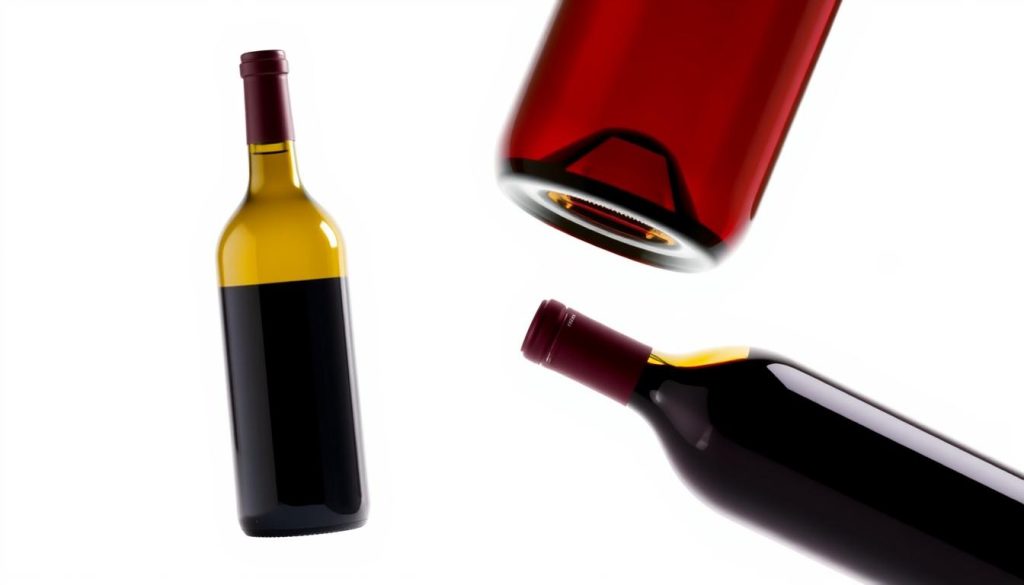
Born in France’s southwest, the bordeaux bottle plays bouncer to unwanted particles. High shoulders trap sediment like velvet ropes at a club—only the smooth Cabernet Sauvignon gets past. That deep punt? Not just for pinky-raising pretension. It creates a sediment collection chamber, letting winemakers pour drama-free.
Dark green glass acts like sunglasses for tannic reds. The design became so iconic, New World regions adopted it for their own Cab blends. It’s the little black dress of liquid architecture—timeless, adaptable, always in style.
Burgundy Bottles: A Signature for Pinot Noir and Chardonnay
Burgundy’s sloped shoulders aren’t just aesthetic flexes. The gentle curve lets oxygen waltz with delicate Pinot Noir, softening tannins like a 24-hour sous-vide. Wider bodies accommodate Burgundian winemakers’ hands during traditional riddling—a dance of rotating bottles to collect lees.
Lightweight glass whispers “approachable,” while the elongated neck showcases Chardonnay’s golden hues. When California vintners bottle their “cult” Pinots, they reach for this silhouette like rappers sampling Marvin Gaye—a nod to OG craftsmanship.
| Feature | Bordeaux | Burgundy |
|---|---|---|
| Shoulders | Angular (90°) | Sloped (45°) |
| Glass Color | Dark Green | Olive Green |
| Grape Match | Cabernet Sauvignon | Pinot Noir |
Design Innovations: The Rise of Contemporary Wine Bottles
Your wine cooler just got a tech upgrade. Today’s modern bottle designs blend NASA-grade engineering with gallery-worthy aesthetics, turning storage into storytelling. Imagine insulation layers smarter than your thermostat and shape bottle concepts that make Picasso’s ceramics look basic.
New Materials and Double-Layered Insulation
Enter the Cooleo—a double-walled titan that keeps bubbly colder than a New York winter. Its vacuum-sealed core works like a Yeti tumbler for sparkling wines, while the outer shell flaunts recycled glass hues matching Pantone’s 2024 “Verdant Moss.” This isn’t just packaging—it’s climate activism you can Instagram.
Designers now treat containers like wearable tech:
- Biodegradable algae-based labels that dissolve in compost
- 3D-printed ceramic sleeves mimicking Georgian qvevri textures
- UV-reactive glass that darkens like transition lenses
Brands leverage these innovations to rewrite liquid archaeology. A Napa startup’s asymmetrical shape bottle—inspired by Zaha Hadid’s architecture—holds 20% more oxygen to accelerate aging. Meanwhile, German engineers crafted a self-chilling design using phase-change materials usually reserved for SpaceX launches.
| Traditional | Modern | Impact |
|---|---|---|
| Single-layer glass | Double-walled insulation | +90min chill retention |
| Paper labels | Augmented reality tags | Interactive tasting notes |
These advancements aren’t just functional flexes—they’re reshaping how regions market their grape juice. That curvaceous Provence rosé vessel? Its ergonomic grip reduces spills by 30%, proving good design pairs well with sobriety.
Cultural Influences and Aesthetic Vibes in Bottle Shapes
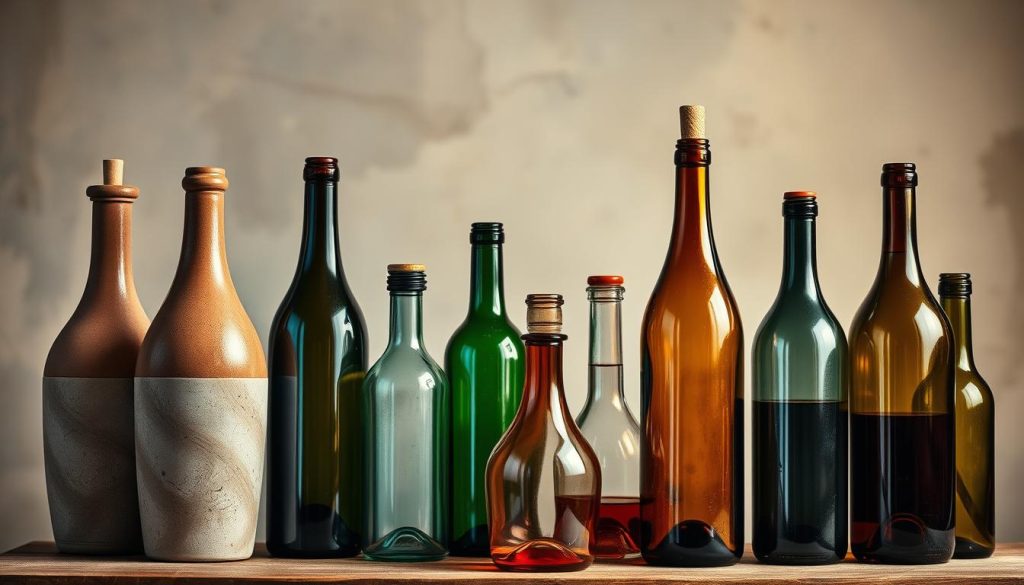
Culture writes its signature in glass and label. From Provençal rosé’s curvy flirtations to German Riesling’s no-nonsense verticality, every contour tells a story. These shapes aren’t accidents—they’re liquid passports stamped with regional pride and maker philosophy.
Regional Traditions and Winemaker Identity
Burgundy’s sloping shoulders aren’t just for show. They cradle sediment like a velvet hammock, whispering, “This pinot noir respects tradition.” Compare that to Bordeaux’s military-posture silhouette—sharp angles guarding cabernet sauvignon like Fort Knox. These designs become visual shorthand: Burgundy = earthy elegance, Bordeaux = structured power.
Modern winemakers riff on these codes. Dom Pérignon’s shield-shaped labels nod to French monastic heritage, while The Prisoner’s Francisco Goya-inspired etching screams “disruptor.” It’s branding as identity politics—every curve a manifesto.
| Region | Design Feature | Cultural Message |
|---|---|---|
| Burgundy | Sloped shoulders | Artisanal heritage |
| Champagne | Thick glass + deep punt | Luxury craftsmanship |
| California | Asymmetrical bodies | Innovation mindset |
The Influence of Art and Custom Designs
Some sparkling wines now rock labels dissolving into compost. Others flaunt 3D-printed textures mimicking ancient clay. Wölffer Estate’s floral motifs scream Hamptons chic, while Doble Alto’s double-base design serves sustainability with a side of drama.
This isn’t just packaging—it’s shelf warfare. That ergonomic grip on your favorite white wine? A 30% spill reduction engineered into sculptural beauty. Brands treat glass like TikTok profiles: every angle optimized for maximum swipe-right appeal.
Storage, Functionality, and the Importance of the Punt
That indentation at your bottle’s base? It’s the Swiss Army knife of liquid architecture. Modern containers balance engineering precision with tactile appeal—a design language whispering secrets about aging potential and regional identity.
Innovative Storage Solutions for Modern Winemaking
The punt’s concave curve isn’t just for pinky posturing. Originally a structural reinforcement for sparkling varieties, this feature now serves triple duty: sediment trap, grip enhancer, and thermal regulator. Thick glass near the base withstands 90 PSI pressure—enough to contain Champagne’s celebratory fizz without explosive consequences.
Contemporary designs riff on ancient wisdom. Georgian qvevri’s tapered bottoms inspired today’s shape bottle innovations that funnel sediment like a barista’s pour-over. The shallow neck? A Phoenician-era hack for reducing oxidation in delicate white wines, now laser-calibrated for precision pouring.
| Historical Feature | Modern Adaptation | Benefit |
|---|---|---|
| Amphora pointed base | Deep punt design | Sediment collection |
| Clay porosity | Double-walled insulation | Temperature control |
| Wide-mouthed jars | Ergonomic neck | Reduced spillage |
Tech-forward vintners now treat storage like climate tech. The Cooleo’s vacuum-sealed core keeps vino chilled longer than a Nordic winter, while UV-filter glass mimics Roman shape bottle prototypes—but with Insta-worthy transparency. These aren’t just containers; they’re time machines preserving liquid narratives.
Uncommon and Outlier Bottle Shapes Explained
Forget cookie-cutter containers—some vessels prefer to tango outside the bottle rack. While type bottle designs dominate shelves, rebels with regional flair still steal scenes. These outliers aren’t just storage; they’re liquid rebellion in glass and straw.
Chianti Fiasco and Other Niche Designs
The Chianti fiasco struts like a ’70s rockstar in its straw jacket. Medieval Tuscan makers swaddled fragile glass in reeds—a practical hack for bumpy oxcart rides. Today? It’s a retro-chic flex, like wearing vinyl at a Spotify party. Despite not being commonly used, its cultural clout rivals the Eiffel Tower’s Instagram presence.
Germany’s Silvaner Bocksbeutel winks at ancient amphorae with its flattened curves. The design cradles Franken region whites like a grandma’s quilt—functional nostalgia meets modern winemaking precision. Meanwhile, Spain’s type bottle Sánchez Romate Jerez flaunts a bulbous base, nodding to sherry’s seafaring past while moonwalking into cocktail bars.
| Design | Region | Secret Superpower |
|---|---|---|
| Fiasco | Tuscany | Shock-absorbing straw armor |
| Bocksbeutel | Franken | Ergonomic grip for pouring |
| Verdicchio | Marche | Double-walled insulation |
Why do these oddballs persist? They’re shelf anarchists challenging commonly used norms. The Verdicchio’s amphora-like curves aren’t just pretty—they protect delicate aromas like a bouncer at a perfume counter. Niche shapes create instant brand recognition, turning wines into cultural souvenirs you can uncork.
Next time you spot a bulbous Portuguese type bottle, remember: it’s not a design fail. It’s a centuries-old middle finger to standardization—proof that liquid stories needn’t fit molds.
Conclusion
Decanters aren’t just vessels—they’re time travelers in your wine rack. Centuries of innovation live in every bottle shape, from amphorae’s earthy curves to sparkling varieties’ pressure-ready silhouettes. Today’s designs whisper ancient secrets through UV-filter glass and ergonomic necks that honor monastic traditions.
Modern winemakers blend archaeology with aerospace tech. That sleek container holding your cabernet? Its DNA traces back to Phoenician traders and Venetian glass spies. Each contour solves riddles of sediment, oxidation, and Instagrammable aesthetics across reds and crisp whites.
Next time you uncork, consider the liquid legacy in your grip. These bottles aren’t mere storage—they’re collaborative art projects between 12th-century alchemists and 21st-century designers. Your shelf doubles as a museum of cultural exchange.
Ready to geek out on winemaking’s unsung heroes? Hunt down straw-wrapped fiascos or Franken region oddities. Every outlier bottle shape hides a rebellion against standardization—and your next great story.
FAQ
Why did ancient winemakers use clay vessels instead of glass?
How did Roman glassblowing change the wine storage game?
Why do Bordeaux bottles look like they’re flexing shoulders?
What’s Burgundy’s vibe with its sloped-shoulder bottles?
Why the dent (punt) at the bottom of bottles?
What’s up with Chianti’s straw-wrapped fiasco bottles?
How did coal shape modern bottle designs?