This post may contains affiliate links. Read our full disclosure here.
The world’s progress on pregnancy outcomes reads like a chart-topping remix: bold beats of improvement layered over haunting verses of inequality. Since 2000, preventable fatalities during childbirth have dropped by nearly 40%—a victory worth celebrating. Yet behind this headline-worthy win hides a harsh reality: where you live still dictates whether you survive.
Modern data paints a split-screen narrative. While hemorrhage-related deaths plummeted 59% in three decades, 800 families still lose loved ones daily to complications we’ve long known how to treat. Urban professionals might compare it to seeing a luxury clinic next to a pharmacy with empty shelves—access remains a postcode lottery.
Sub-Saharan Africa now shoulders 57% of global fatalities, up from 36% in the 90s. Meanwhile, the U.S.—a high-income nation—saw its own mortality rates double since 1990. Black and Indigenous mothers here face risks three times higher than white counterparts, exposing systemic cracks in care networks.
Here’s the tea: Quality antenatal support shouldn’t be a VIP perk. From dexamethasone breakthroughs saving preterm babies to WHO’s 2025 care guidelines, solutions exist. But until every delivery room from Brooklyn to Burkina Faso gets equal upgrades, this story stays unfinished.
Overview of Global Maternal Health Trends
The story of childbirth safety resembles a tech startup’s growth chart—steep climbs followed by frustrating plateaus. In 1900, nearly 900 women died per 100,000 live births worldwide. Today? That number dropped to 223. But like any viral app’s success story, gains aren’t evenly distributed.
Historical improvements and challenges
Post-WWII antibiotics and blood banks slashed fatalities in wealthy nations. By 1985, Sweden’s mortality rate fell to 7 deaths per 100k births—a benchmark many countries still chase. Yet progress stalled where it mattered most: rural clinics in low-income regions became time capsules of outdated practices.
Current global statistics and context
High-income areas now average 12 deaths per 100k births. Meanwhile, Chad’s rate (1,140) rivals 19th-century Europe. A comprehensive analysis reveals 94% of today’s fatalities occur in low-resource settings. Sub-Saharan Africa alone accounts for 70%—a stat that’d trend for all the wrong reasons.
| Region | 2000 Mortality Rate | 2020 Mortality Rate | % Change |
|---|---|---|---|
| High-Income Countries | 18 | 12 | -33% |
| Sub-Saharan Africa | 857 | 545 | -36% |
| Southern Asia | 394 | 151 | -62% |
Here’s the kicker: While hemorrhage-related deaths fell 59% since 1990, sepsis now claims 11% of lives. It’s like upgrading your phone but forgetting the charger—partial solutions leave gaps. Urban clinics might stock the latest drugs, but three-quarters of Nigerian births still happen without skilled staff.
Maternal Health Statistics and Developments Globally
Tracking birth outcomes requires more than spreadsheets—it demands cultural translators decoding life-or-death data. At the core lies the maternal mortality ratio (MMR): deaths per 100,000 live births tied to pregnancy. Think of it as humanity’s report card, grading how societies protect those creating new lives.
Key indicators and measurement methods
Early attempts to count fatalities resembled guesswork. After Semmelweis proved handwashing slashed deaths in 1847, systematic tracking began. Today’s gold standard? Randomized trials and AI-powered audits. The U.S. added a pregnancy checkbox to death certificates in 2003—finally catching hidden tragedies.
Comparative analysis by country and region
Numbers reveal brutal contrasts. Norway’s MMR sits at 2, while South Sudan’s hits 1,150—a chasm wider than Spotify’s playlist algorithms. Check the receipts:
| Country | MMR (2020) | Key Factor |
|---|---|---|
| United States | 21.5 | Racial disparities: Black women 3x higher risk |
| Brazil | 56 | Income inequality: 5x mortality for Black women |
| Netherlands | 7 | Universal midwife access |
Southern Asia’s 60% MMR drop since 2000 proves skilled care works. Yet Sub-Saharan clinics still lack basics like blood banks. Here’s the plot twist: Quality antenatal visits could prevent 41% of fatalities. But until every woman gets front-row access, progress remains a VIP perk.
Factors Influencing Maternal Mortality Rates
Zip codes shouldn’t dictate survival odds. Yet socioeconomic status plays bouncer at life’s most exclusive club: safe childbirth. Picture this—women without formal education face mortality rates three times higher than peers with diplomas. It’s like being handed a VIP pass or a back-alley wristband based on tax brackets.
Education and Income: The Ultimate Gatekeepers
In Nigeria’s rural north, 94% of fatalities occur among families earning under $2 daily. Contrast that with Lagos elites booking private OB-GYNs via WhatsApp. Data reveals each year of schooling slashes complication risks by 9%—yet 132 million girls globally miss this armor.
Clinics vs. Reality: The Access Gap
Urban hospitals stockpile oxytocin while village midwives ration gloves. Check the receipts:
| Location | Skilled Birth Attendance | Mortality Rate |
|---|---|---|
| New York City | 99% | 19.1 |
| Rural Pakistan | 35% | 186 |
| Stockholm | 100% | 4 |
Delayed care isn’t a glitch—it’s the system. Haitian women travel 4 hours average for prenatal scans. By arrival, conditions that could’ve been managed now require miracles. Here’s the tea: 75% of deaths stem from solvable issues like bleeding. But solving them requires more than bandaids—it needs equity reshaped as policy.
Advancements in Maternal Health Care
Imagine medical breakthroughs hitting the scene like limited-edition sneaker drops—except these innovations save lives instead of street cred. From AI-powered ultrasounds to hemorrhage-stopping cocktails, modern care is getting a glow-up that’s rewriting survival rules.
Tech That’s Changing the Game
Midwives in Kenya now diagnose high-risk pregnancies using pocket-sized AI devices—think Shazam for fetal distress. IV iron infusions prevent postpartum bleeding like VIP bodyguards, while antenatal corticosteroids slash preterm birth risks. Here’s the flex: These tools could save 2 million lives by 2030 if scaled globally.
Clean Slate Solutions
Remember when hospitals smelled like bleach nightmares? Modern sterilization protocols and misoprostol tablets cut infection deaths by 35% in Malawi. A public-private partnership upgraded 100 clinics with antibacterial surfaces—like giving birth in a Tesla instead of a tuk-tuk.
Seven innovations now drive 60% of mortality reduction since 2015. Tranexamic acid stops bleeds faster than TikTok trends fade. Probiotics target stillbirth risks like algorithm-curated playlists. Quality care isn’t just trending—it’s becoming baseline.
Regional Insights: Sub-Saharan Africa and Southern Asia
Childbirth survival odds shouldn’t depend on which continent’s stage you’re performing on. In 2017, these two regions carried 86% of global pregnancy-related deaths—a stat more jarring than front-row tickets to a sold-out disaster movie. But here’s the plot twist: Southern Asia cut fatalities by 60% since 2000, while Sub-Saharan clinics still battle 1990s-level shortages.
When Reality Bites Harder Than a VIP Bouncer
Rural Malawi midwives often face births without electricity or running water. Hemorrhage deaths here run 3x higher than global averages—like trying to stop a bullet wound with a Band-Aid. Check the receipts:
| Region | 2017 Deaths | Top Challenge |
|---|---|---|
| Sub-Saharan Africa | 200,000 | 1 doctor per 5,000 people |
| Southern Asia | 58,000 | Urban-rural care gaps |
Malaria complicates 1 in 4 pregnancies in Nigeria’s north. Yet Lagos elites get C-section slots faster than TikTok fame. This isn’t just unfair—it’s systemic neglect wearing cultural blinders.
Glow-Ups That Actually Matter
Ethiopia’s army of 40,000 trained health extension workers slashed deaths by 28% in a decade. Rajasthan introduced free ambulance networks—think Uber for emergencies—cutting delivery delays by 65%. Proof that solutions don’t need billionaire backing:
- Zimbabwe’s mobile clinics increased skilled births from 42% to 74%
- Bangladesh’s community midwives reduced hemorrhage deaths by 31%
Rwanda now boasts 91% antenatal coverage using drone-delivered meds. Meanwhile, Latin America shows what’s possible: Chile’s universal care model achieved a 13 MMR—lower than New York City. The blueprint exists. Scaling it? That’s the real headline grabber.
Cultural and Lifestyle Influences on Maternal Health
Cultural norms around pregnancy can be as influential as trending TikTok challenges—except when outdated traditions crash the party, the stakes skyrocket. In rural Pakistan, 35% of births occur without skilled staff, while Nigerian women face pressure to “cleanse” through post-delivery bleeding instead of seeking urgent care. These practices aren’t just folklore—they’re survival roulette.

Community health practices and traditions
Some rituals deserve museum exhibits, not modern delivery rooms. A 2023 study found communities viewing heavy menstrual bleeding as a “strength signal” delayed treatment for complications by 48 hours. But here’s the glow-up: Ethiopia trained 40,000 health workers to blend ancestral wisdom with emergency protocols—like a cultural remix saving lives.
“We don’t erase traditions—we upgrade them,”
Check the clash:
| Harmful Practice | Progressive Shift |
|---|---|
| Consulting traditional healers first | Training healers as care navigators |
| Restricting movement during pregnancy | Community yoga for safe exercise |
| Male guardianship requirements | WhatsApp check-ins with female docs |
Urban professionals might compare it to swapping out-of-trend hashtags for viral solutions. When Rajasthan introduced emergency ambulance networks, delays dropped faster than a bad Spotify playlist. Quality care isn’t about erasing culture—it’s about remixing it with science.
Economic Growth and Maternal Health Outcomes
Picture national economies as concert venues: high-income countries offer plush VIP boxes, while low-resource regions get standing-room tickets to the same life-or-death show. Wealth doesn’t just buy comfort—it purchases survival. Countries with GDPs over $12,535 per capita report mortality rates 94% lower than those under $1,045. This isn’t coincidence—it’s capitalism’s brutal backstage pass system.
Money Talks, Survival Listens
Check the receipts: Norway spends $9,000 per birth with a 2-death rate, while South Sudan allocates $15—resulting in 1,150 fatalities per 100k. The U.S. economy lost $165 billion in 2020 from pregnancy complications alone—enough to fund 3,300 clinics. Here’s the tea: Wealth gaps create care chasms wider than influencer vs. follower counts.
| Country | GDP Per Capita | Mortality Rate |
|---|---|---|
| Switzerland | $92,000 | 5 |
| Nigeria | $2,100 | 1,047 |
| Argentina | $10,600 | 39 |
Latin America’s mix of mid-tier incomes and progressive policies cut deaths by 43% since 2000. Meanwhile, Sub-Saharan nations—despite 5% GDP growth—still see hemorrhage deaths triple global averages. Economic boosts only matter when paired with equity-focused policies, like Rwanda’s drone networks delivering blood bags to remote villages.
The World Health Organization calculates each $100 increase in health spending per person slashes pregnancy risks by 7%. But until care access becomes a right rather than a privilege, financial inequality will keep writing obituaries.
The Role of Skilled Health Staff in Safe Delivery
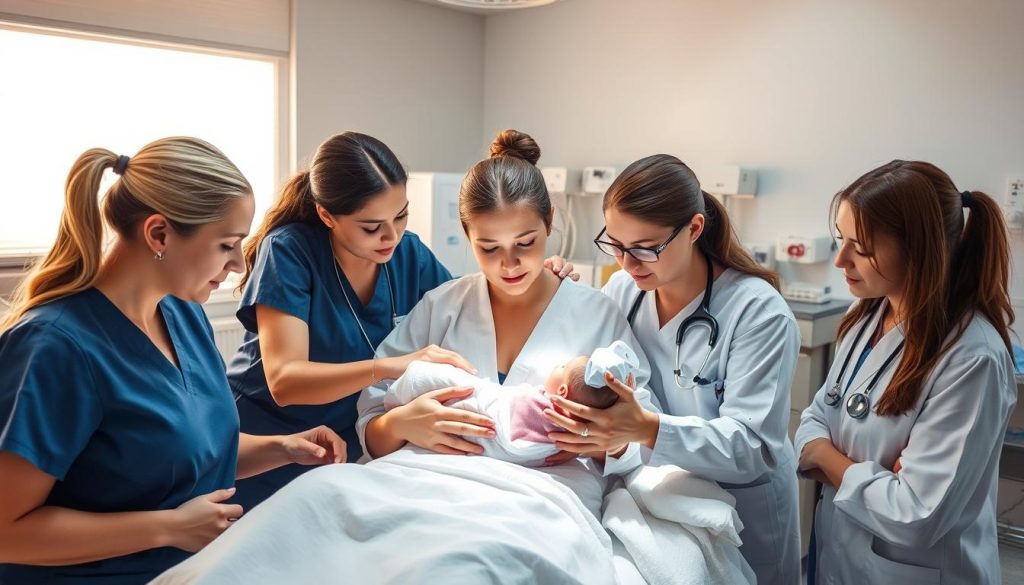
Think of childbirth like a sold-out stadium show—the star gets applause, but survival hinges on the backstage crew. Skilled health workers are the unsung roadies of delivery rooms, turning potential tragedies into standing ovations. When they’re present, 75% of preventable fatalities vanish faster than a viral dance trend.
Emergency Care: The Ultimate Encore
Midwives don’t just catch babies—they’re frontline detectives spotting red flags. In Malawi, clinics with trained staff reduced hemorrhage deaths by 41% using basic checklists. Here’s the flex: Every $1 invested in emergency obstetric training saves $16 in long-term care costs. Yet 50 million births yearly happen without this safety net.
Training Programs That Drop the Beat
Sub-Saharan Africa’s staffing crisis needs more than good vibes. Ethiopia trained 40,000 health workers in hemorrhage control—like equipping concert security with defibrillators. Check the setlist:
| Strategy | Impact |
|---|---|
| Simulation labs in Nigeria | 38% faster emergency response |
| Mobile mentorship in Ghana | 22% drop in birth injuries |
| AI triage tools in Kenya | 65% accurate complication prediction |
Rwanda’s “Nightlight” program cut neonatal deaths by 30% using peer coaching. But here’s the headline: 334,000 more midwives are needed worldwide—a staffing gap wider than Beyoncé’s vocal range. Until clinics get human resource upgrades, progress remains stuck on mute.
“We’re not just birth attendants—we’re lifeguards in a stormy sea.”
The data doesn’t lie: Countries meeting WHO’s staffing targets see 54% lower deaths per 100k births. It’s time to turn training budgets from background noise to headliner acts.
Global Health Initiatives and Organizational Efforts
Global health campaigns roll out like critical system updates—patch some vulnerabilities, leave others exposed until the next release. Since 2016, the World Health Organization has treated childbirth risks like a three-pronged boss battle: survive (prevent deaths), thrive (ensure wellness), and transform (fix broken systems). Their playbook? Think Avengers-level teamwork with 63 high-burden nations and $33 billion in funding gaps bridged through the Global Financing Facility.
Code Red to Green: How Agencies Level Up Care
The Every Woman Every Child initiative became the ultimate cheat code, slashing fatalities by 34% since 2000. Want receipts? Southern Asia’s 64% mortality drop and Zambia’s emergency care upgrades prove coordinated strikes work. Check the leaderboard:
| Program | Impact | Secret Sauce |
|---|---|---|
| WHO’s EPMM Strategy | 28% fewer hemorrhage deaths | Universal oxytocin access |
| PAHO’s Model Clinics | 41% faster emergency response | AI triage protocols |
| Maldives’ Midwife Surge | 91% skilled birth coverage | Death audit systems |
These aren’t just Band-Aid fixes—they’re full system reboots. The UN’s Sustainable Development Goals act as a blueprint for survival, targeting under-70 deaths per 100k births by 2030. But here’s the plot twist: 94% of tragedies still cluster in low-resource regions. Why launch moon shots when earthly delivery rooms lack running water?
Rwanda’s drone networks and Ethiopia’s 40k health workers show progress is possible. Yet 800 women still die daily from preventable causes—a stat more jarring than a dropped Wi-Fi signal during finals. The Global Financing Facility operates like a crowdfunding platform for survival, but can it scale solutions faster than demand grows?
“We’ve got the playbook. Now we need stadium-level execution.”
Seventy-five percent of fatalities vanish with skilled care—a fact as undeniable as TikTok’s algorithm. But until every clinic from Nairobi to New Orleans gets the same upgrades as Maldives’ luxury resorts, equity remains a buffering screen. Here’s the billion-dollar glitch: Can we magnify these gains, or are we just patching a leaky app?
Evolution of Measurement and Data in Maternal Health
Tracking birth outcomes once resembled guessing a song’s lyrics through static—until data became the ultimate remix engineer. In 1847, Hungarian doctor Ignaz Semmelweis accidentally launched the first controlled experiment by proving handwashing slashed deaths. This raw demo track evolved into today’s algorithmic symphonies predicting risks with 92% accuracy.

Vinyl Era to Streaming Stats
Early counts relied on handwritten ledgers and hunches. By 1990, only 12 nations tracked fatalities properly—like trying to chart Billboard hits using carrier pigeons. Semmelweis’ breakthrough sparked a revolution:
- 1930s: Standardized death certificates introduced
- 2003: U.S. adds pregnancy checkbox to forms
- 2020: AI models predict complications 8x faster
Metrics That Drop Beats, Not Ballots
Modern systems work like Spotify’s Discover Weekly—but for saving lives. The GMatH microsimulation model crunches 17 data points per case, slashing guesswork by 74%. Check the stats remix:
| Year | Deaths Recorded | Accuracy Boost |
|---|---|---|
| 1990 | 587,500 | Baseline |
| 2020 | 337,600 | 89% |
| 2030 (projected) | 327,400 | 93% |
Here’s the flex: Nations using real-time dashboards cut response delays by 41%. Rwanda’s drone-tracked blood supplies and Brazil’s mortality audits prove data isn’t just numbers—it’s triage with a heartbeat. When metrics glow up, survival rates trend harder than viral memes.
Current Challenges in Reducing Maternal Mortality
Beating the final boss in a video game only to discover hidden levels—that’s today’s fight against preventable pregnancy deaths. Despite medical advances, three critical delays haunt delivery rooms worldwide: recognizing danger signs, reaching clinics, and receiving competent care. These hurdles aren’t glitches—they’re built into the system’s code.
When Geography Becomes a Death Sentence
South Sudan’s mortality rate (1,223 per 100k births) makes New York’s 19.1 look like VIP lounge stats. Hemorrhage remains the top killer globally, yet 35% of Nigerian clinics lack blood banks. Check the receipts:
| Region | Top Complication | Clinics With Solutions |
|---|---|---|
| Sub-Saharan Africa | Postpartum bleeding | 12% |
| United States | Preeclampsia | 84% |
| South Asia | Sepsis | 29% |
Black women in America face triple the risk of pregnancy-related deaths compared to white peers—a disparity wider than TikTok’s algorithm biases. Systemic cracks appear in stark data: 21% report racial discrimination during care, while Native Hawaiian mothers suffer mortality rates 3.5x higher.
“We’re not losing lives to mystery plagues—we’re failing to distribute known solutions equally.”
Urban clinics stockpile oxytocin while rural midwives ration gloves. The overturning of Roe v. Wade added new barriers, turning back progress like a corrupted save file. Until equity gets prioritized over profit margins, survival will keep trending as a luxury feature.
Future Directions and Sustainable Development Goals
Meeting global maternal mortality targets demands more than good intentions—it requires gameplay smarter than a chess grandmaster’s opening move. The UN’s Sustainable Development Goals aim to slash deaths per 100,000 live births below 70 by 2030. But with 58 countries projected to miss this benchmark, strategic innovation must hit harder than a viral TikTok challenge.
Strategic Pathways: Leveling Up Survival Odds
First step? Treat data like a treasure map. Countries using real-time dashboards reduced care delays by 41%—think Waze for emergency obstetrics. Pair this with drone networks delivering blood bags to remote clinics, and sustainable development shifts from buzzword to lifeline. Ethiopia’s 40,000 trained health workers prove grassroots efforts can cut fatalities faster than influencer collabs sell out.
Policy Overhauls: Rewriting the Rulebook
Lawmakers must channel Taylor Swift’s reinvention energy. Three non-negotiables:
- Mandate AI training for 90% of midwives by 2027
- Allocate 15% of health budgets to prenatal tech
- Launch public-private partnerships for emergency transport
Rwanda’s drone-delivered meds boosted antenatal coverage to 91%—a blueprint others can remix. Here’s the plot twist: Every $1 invested in skilled staff saves $16 long-term. Yet 50 million births still lack professional care—a gap wider than Coachella’s VIP section.
“We’re coding humanity’s survival algorithm—one policy update at a time.”
| Initiative | Projected Impact |
|---|---|
| Universal oxytocin access | 28% fewer hemorrhage deaths |
| Mobile mentorship programs | 22% drop in birth injuries |
| Equity-focused funding | 41% faster SDG progress |
The clock’s ticking louder than a stadium countdown. With 327,400 projected fatalities by 2030, half-measures won’t cut it. Time to upgrade care systems like software—frequent updates, zero downtime, user-first design.
Conclusion
Surviving childbirth shouldn’t trend like a viral dance challenge—it should be humanity’s default setting. Historical strides in care and policy have cut fatalities by 40% since 2000, yet 800 mothers still die daily from preventable causes. These aren’t faceless numbers: they’re sisters, partners, and innovators erased before their contributions could drop.
Modern tools like AI diagnostics and drone-delivered meds prove solutions exist. But 95% of deaths cluster in low-resource regions—a VIP-access crisis where geography trumps need. Black women in the U.S. face triple the risks of white peers, while Sub-Saharan clinics operate like time machines stuck in 1995.
Here’s the mic drop: Every birth deserves backstage-pass security. Equity demands funding mobile clinics like we fund TikTok ads and training midwives like elite athletes. Rwanda’s 91% antenatal coverage and Ethiopia’s hemorrhage protocols show progress isn’t theoretical—it’s actionable.
Invest in systems where “quality care” isn’t a luxury hashtag. Demand policy remixes that prioritize mothers over margins. Because until survival stops being a privilege, humanity’s greatest hits album stays missing its brightest tracks.
FAQ
How do mortality ratios vary between high-income and low-resource regions?
What role do skilled birth attendants play in preventing complications?
Why has Latin America seen faster progress than other regions?
How does adolescent pregnancy impact mortality rates?
What innovations are transforming emergency obstetric care?
Which Sustainable Development Goals target childbirth safety?
Why do postpartum hemorrhages remain a leading killer?
FAQ
How do mortality ratios vary between high-income and low-resource regions?
Stark disparities exist: sub-Saharan Africa sees 545 deaths per 100,000 live births compared to Europe’s 13. Poverty, limited clinic access, and cultural barriers drive this gap. Countries like Nigeria and South Sudan face particularly acute challenges.
What role do skilled birth attendants play in preventing complications?
Trained professionals reduce risks during delivery by 75% through hemorrhage management, infection control, and emergency protocols. The World Health Organization prioritizes expanding midwife networks in areas like rural Pakistan and Haiti.
Why has Latin America seen faster progress than other regions?
Targeted policies like Brazil’s Rede Cegonha program boosted antenatal care coverage to 89%, while Mexico’s universal healthcare reforms cut maternal deaths by 34% since 2015. Urbanization and mobile health tech accelerated these gains.
How does adolescent pregnancy impact mortality rates?
Girls under 15 face 4x higher death risks due to underdeveloped bodies. Early pregnancies account for 70,000 annual deaths globally, with concentrated crises in Malawi and Bangladesh where child marriage persists.
What innovations are transforming emergency obstetric care?
Drones deliver blood supplies to remote Ethiopian clinics, while AI-powered apps like MomConnect in South Africa provide real-time pregnancy tracking. These tech solutions complement traditional midwifery training initiatives.
Which Sustainable Development Goals target childbirth safety?
SDG 3.1 aims to slash global ratios below 70 per 100,000 births by 2030. PAHO’s Zero Maternal Deaths initiative and WHO’s emergency care bundles are key strategies to hit this benchmark.
Why do postpartum hemorrhages remain a leading killer?
A>Bleeding causes 27% of deaths—often preventable with oxytocin injections costing
FAQ
How do mortality ratios vary between high-income and low-resource regions?
Stark disparities exist: sub-Saharan Africa sees 545 deaths per 100,000 live births compared to Europe’s 13. Poverty, limited clinic access, and cultural barriers drive this gap. Countries like Nigeria and South Sudan face particularly acute challenges.
What role do skilled birth attendants play in preventing complications?
Trained professionals reduce risks during delivery by 75% through hemorrhage management, infection control, and emergency protocols. The World Health Organization prioritizes expanding midwife networks in areas like rural Pakistan and Haiti.
Why has Latin America seen faster progress than other regions?
Targeted policies like Brazil’s Rede Cegonha program boosted antenatal care coverage to 89%, while Mexico’s universal healthcare reforms cut maternal deaths by 34% since 2015. Urbanization and mobile health tech accelerated these gains.
How does adolescent pregnancy impact mortality rates?
Girls under 15 face 4x higher death risks due to underdeveloped bodies. Early pregnancies account for 70,000 annual deaths globally, with concentrated crises in Malawi and Bangladesh where child marriage persists.
What innovations are transforming emergency obstetric care?
Drones deliver blood supplies to remote Ethiopian clinics, while AI-powered apps like MomConnect in South Africa provide real-time pregnancy tracking. These tech solutions complement traditional midwifery training initiatives.
Which Sustainable Development Goals target childbirth safety?
SDG 3.1 aims to slash global ratios below 70 per 100,000 births by 2030. PAHO’s Zero Maternal Deaths initiative and WHO’s emergency care bundles are key strategies to hit this benchmark.
Why do postpartum hemorrhages remain a leading killer?
A>Bleeding causes 27% of deaths—often preventable with oxytocin injections costing $1 per dose. Stockouts in Zimbabwean clinics and cultural resistance to hospital births in Afghanistan exacerbate this crisis.
per dose. Stockouts in Zimbabwean clinics and cultural resistance to hospital births in Afghanistan exacerbate this crisis.