This post may contains affiliate links. Read our full disclosure here.
Planning accessible winery visits has become one of my most rewarding experiences in the wine industry. After working with several wineries over the years, I’ve learned that creating memorable wine experiences for mobility-limited guests requires thoughtful preparation and genuine care. The good news is that more wineries are recognizing the importance of accessibility, making it easier than ever to plan inclusive wine adventures that everyone can enjoy.
When my boyfriend’s grandmother wanted to join us for a wine tasting weekend last year, I quickly realized how much planning goes into accessible winery visits. She uses a wheelchair, and I discovered that not all wineries are created equal when it comes to accessibility features. This experience taught me valuable lessons about researching facilities, communicating needs, and ensuring everyone feels welcome during wine tastings.
Understanding Accessibility Requirements for Wine Experiences
Before diving into specific winery research, I always start by understanding the unique needs of my guests. Mobility limitations can vary significantly – some visitors use wheelchairs, others rely on walkers or canes, and some may have invisible disabilities that affect their stamina or balance. During my time working at a boutique winery, I witnessed firsthand how proper accessibility planning can transform a potentially stressful experience into a joyful celebration.
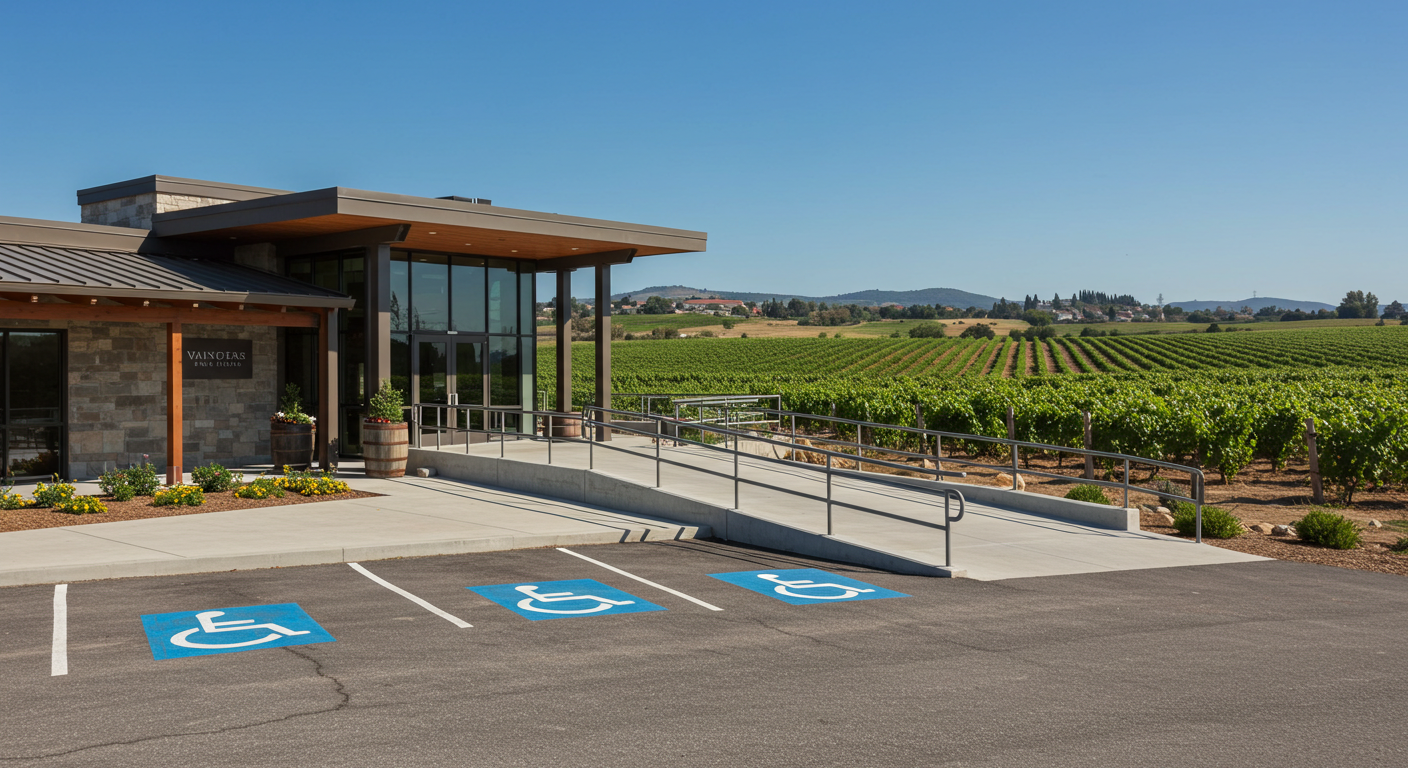
The Americans with Disabilities Act (ADA) provides guidelines for public accommodations, but wineries often have unique challenges due to their historic buildings and outdoor vineyard settings. I’ve found that calling ahead and speaking directly with winery staff yields the most accurate information about their specific accessibility features. Many wineries have made significant improvements in recent years, installing ramps, accessible restrooms, and modified tasting areas.
Key accessibility factors to consider:
- Parking proximity and surface type
- Entrance accessibility (ramps, door widths)
- Restroom facilities and locations
- Tasting room layout and counter heights
- Outdoor pathway conditions
- Seating availability and comfort
Researching Wheelchair-Friendly Wineries
My research process for accessible winery visits starts with online resources, but I never stop there. Winery websites often mention accessibility features, but the details can be vague. I’ve learned to look for specific mentions of ADA compliance, wheelchair accessibility, and mobility accommodations. Social media pages and review sites sometimes include photos that show actual accessibility features better than official websites.
When exploring options for wine tasting in Malibu, I discovered that many coastal wineries have invested heavily in accessibility improvements. The combination of newer construction and tourism focus has led to better universal design principles. However, I always verify current conditions since renovations and seasonal changes can affect accessibility.
Professional wine tourism organizations maintain databases of accessible wineries, and I frequently consult these resources when planning visits. The Wine Institute and regional wine associations often provide detailed accessibility information that goes beyond basic ADA compliance. These resources have helped me identify wineries that truly prioritize inclusive experiences rather than just meeting minimum requirements.
Research strategies that work:
- Contact wineries directly via phone
- Check recent visitor reviews mentioning accessibility
- Look for accessibility certification programs
- Consult disability travel websites and forums
- Verify information with multiple sources
Communicating Accessibility Needs to Wineries
Clear communication has been my secret weapon for successful accessible winery visits. I’ve learned that winery staff appreciate advance notice about accessibility requirements, and most are genuinely eager to accommodate special needs. When I call wineries, I’m specific about the type of mobility equipment being used and any particular concerns about terrain, seating, or facilities.


During one memorable conversation with a Sonoma County winery, the tasting room manager offered to arrange a private tasting in their more accessible event space. This level of personalized service wouldn’t have been possible without honest communication about our group’s needs. Many wineries have flexible arrangements that aren’t advertised but are available upon request.
I always follow up my phone conversations with email confirmations that outline the agreed-upon accommodations. This creates a paper trail and ensures that information is shared with the appropriate staff members who will be working during our visit. Some wineries have specific accessibility coordinators who handle these arrangements and can provide detailed facility information.
Communication tips for success:
- Call during weekday business hours for better staff availability
- Be specific about mobility equipment and space requirements
- Ask about alternative tasting locations if standard areas aren’t suitable
- Confirm parking arrangements and drop-off locations
- Request written confirmation of planned accommodations
Planning Transportation and Logistics
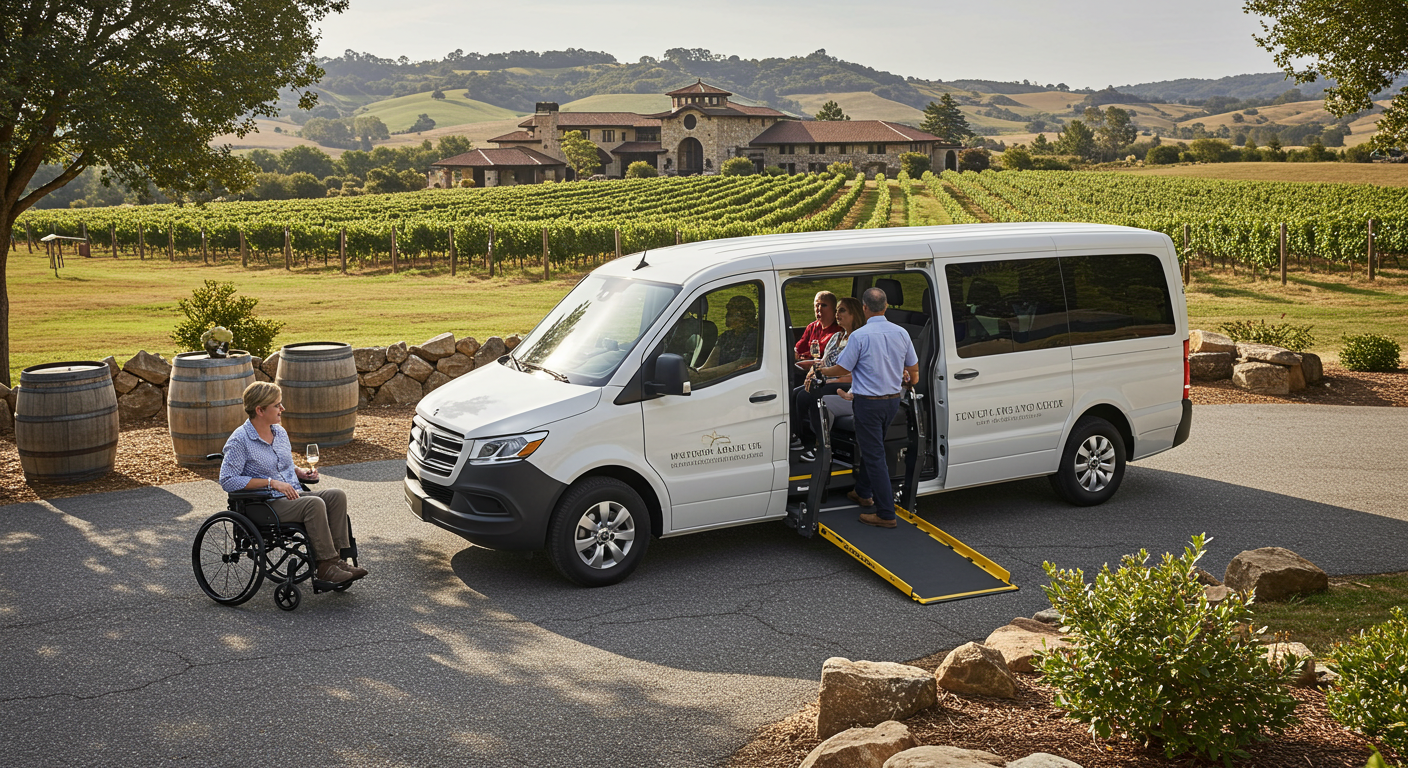
Transportation logistics for accessible winery visits require extra consideration, especially in wine regions where venues are spread across rural areas. I’ve found that rental companies in popular wine destinations often stock accessible vehicles, but advance reservations are essential. Some regions offer specialized wine tour companies that cater specifically to guests with mobility limitations.
When planning our Sonoma Valley wine tasting adventure, I discovered that many tour operators provide accessible vehicles and can customize routes based on mobility needs. These services often cost more than standard tours, but the peace of mind and professional expertise are worth the investment. Professional drivers familiar with accessible venues can navigate challenging terrain and know alternative routes when needed.
I’ve found the Wheelchair Traveling YouTube channel particularly helpful for understanding transportation options in wine regions. Their video about accessing Southern California wine country in a wheelchair provides practical insights that complement my research process.
Ride-sharing services have improved their accessibility options in many wine regions, though availability can be limited in rural areas. I typically arrange backup transportation options and always confirm vehicle accessibility requirements when booking. Some wineries offer shuttle services from nearby hotels or parking areas, which can be particularly helpful for guests with mobility challenges.
Transportation considerations:
- Reserve accessible vehicles well in advance
- Research specialized wine tour companies
- Plan for longer travel times between venues
- Identify accessible parking at each location
- Have backup transportation options ready
Creating Comfortable Tasting Experiences
The actual wine tasting experience should be relaxing and enjoyable for all guests, regardless of mobility limitations. I’ve learned that timing plays a crucial role in accessible winery visits – avoiding peak hours often means more personalized attention and less crowded spaces. Many wineries offer quieter tasting times during weekday mornings or late afternoons when staff can provide more individualized service.
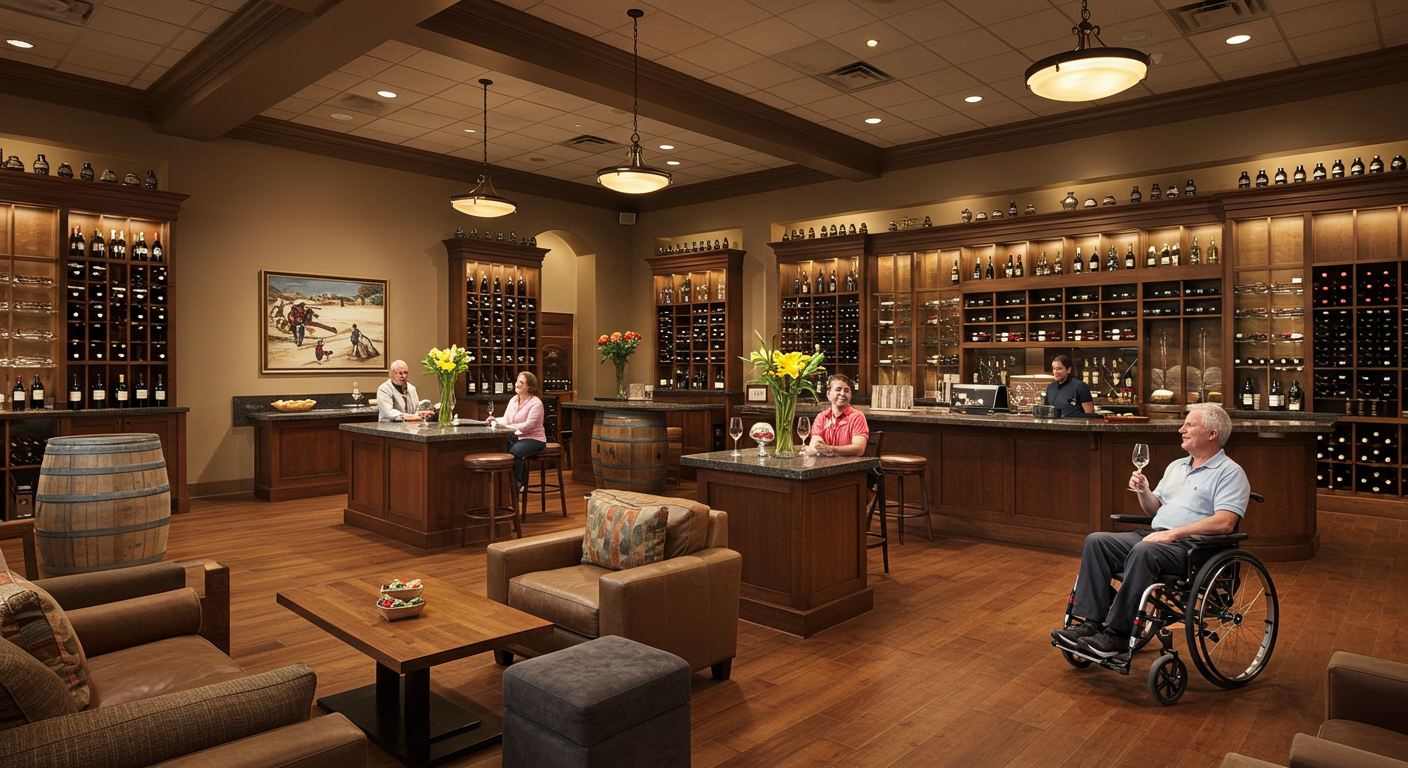
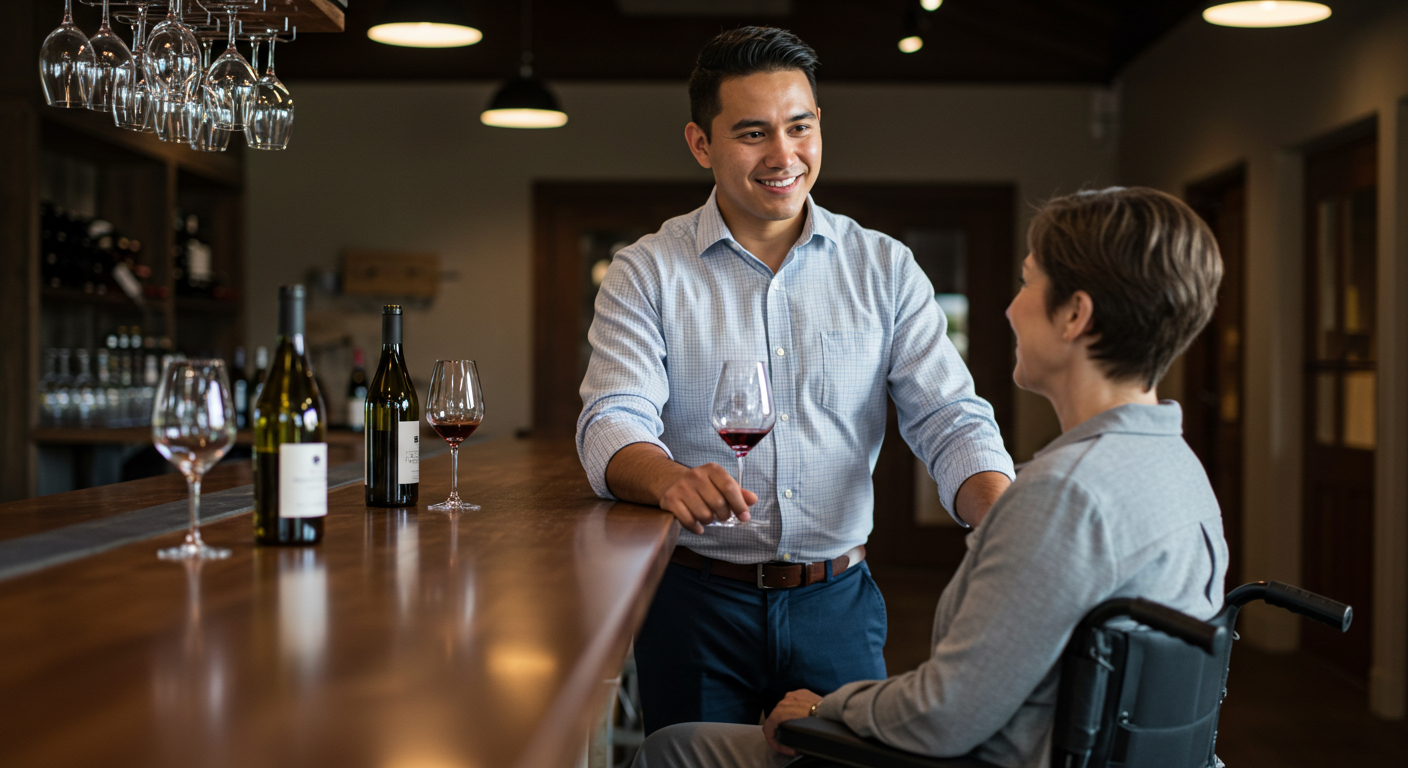
Proper wine tasting techniques remain the same regardless of mobility limitations, but the physical setup may need adjustment. I work with winery staff to ensure comfortable seating arrangements and appropriate table heights for wheelchair users. Some wineries have adjustable tasting bars or can provide portable tables that accommodate different needs.
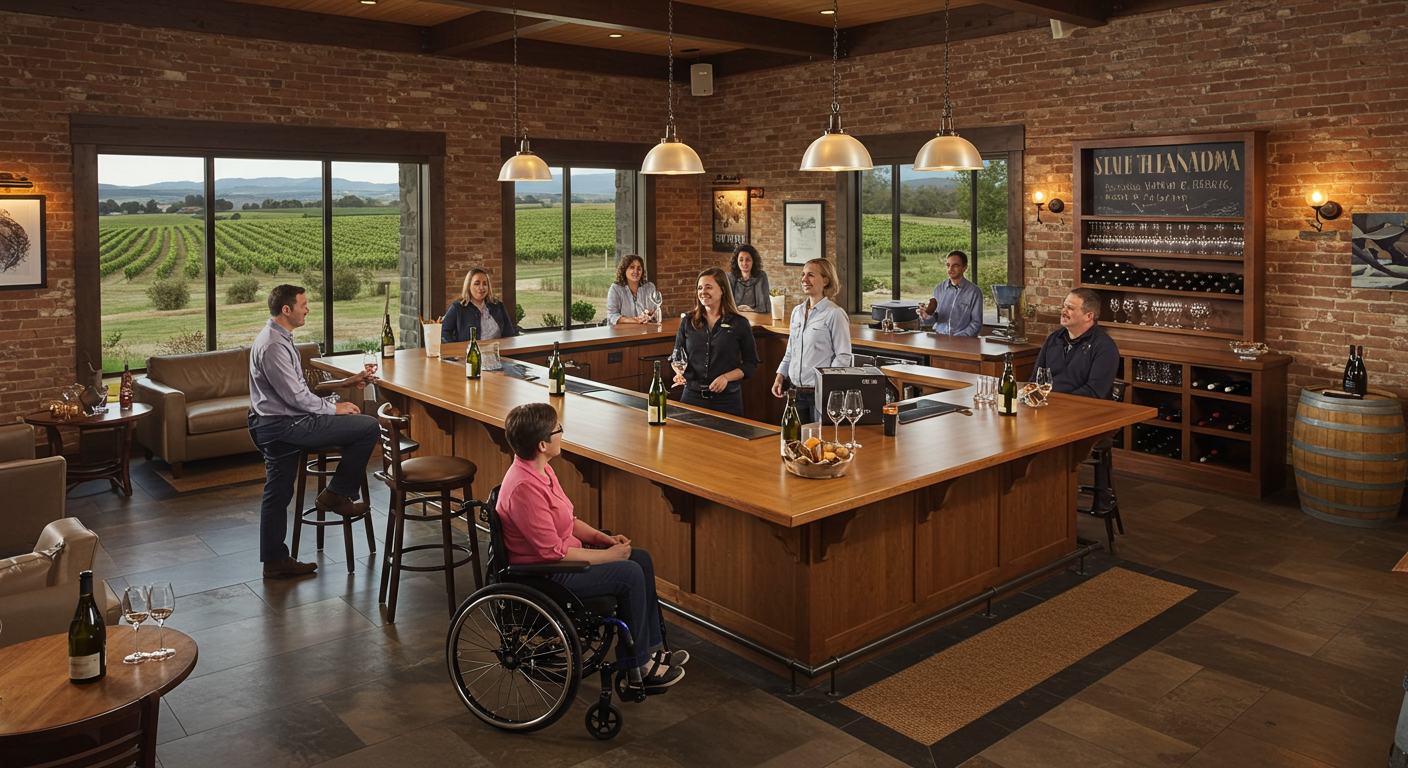
The social aspect of wine tasting is just as important as the wine itself. I’ve found that inclusive group dynamics develop naturally when everyone feels comfortable and accommodated. Encouraging questions about accessibility features and sharing positive experiences helps create a welcoming atmosphere that benefits all guests.
Tasting experience enhancements:
- Request quieter tasting times for better interaction
- Arrange appropriate seating and table configurations
- Discuss wine presentation and pouring preferences
- Plan for rest breaks between tastings
- Consider private or semi-private tasting options
Navigating Vineyard Tours and Outdoor Spaces
Vineyard tours present unique challenges for accessible winery visits, but many wineries have developed creative solutions. During my years in the wine industry, I’ve seen wineries install accessible pathways, provide alternative viewing areas, and offer modified tour experiences that highlight their vineyards without requiring extensive walking on uneven terrain.
Some wineries provide accessible transportation within their properties, such as golf carts or shuttle services that can navigate vineyard roads. When these options aren’t available, I work with vineyard staff to identify the most accessible viewing areas that still provide meaningful insights into the winemaking process. Often, these locations offer some of the best views and photo opportunities.
Weather considerations become more important for accessible vineyard experiences. I always check forecasts and discuss contingency plans with winery staff. Many venues have covered areas or indoor spaces that can serve as alternatives during inclement weather. Some wineries offer virtual vineyard tours using tablets or screens that provide detailed views of their vineyards and production facilities.
The Accessibility is Ability YouTube channel features excellent vineyard accessibility content that helps me understand what to expect during different types of tours. Their wine and vineyard exploration videos provide valuable insights for planning inclusive experiences.
Vineyard accessibility solutions:
- Inquire about accessible pathway options
- Request alternative viewing locations
- Discuss transportation within vineyard properties
- Plan for weather-related contingencies
- Consider virtual or multimedia vineyard experiences
Preparing for Different Mobility Equipment
Different types of mobility equipment require specific considerations during accessible winery visits. Manual wheelchairs, power wheelchairs, walkers, and mobility scooters each have unique space and surface requirements. I’ve learned to discuss these specifics with winery staff to ensure appropriate accommodations are available.
Power wheelchairs and mobility scooters need charging considerations for longer visits. Some wineries can provide charging stations, while others may require portable charging solutions. I always bring backup power sources and plan visit durations based on equipment limitations. Weight restrictions for vintage elevators or certain flooring types sometimes affect planning decisions.
Storage considerations for mobility equipment during tastings can be important, especially in crowded tasting rooms. Many wineries can provide secure storage areas for equipment that isn’t needed during seated tastings. Some venues have designated spaces designed specifically for mobility equipment storage and maneuvering.
Equipment-specific planning:
- Discuss space requirements for different equipment types
- Arrange charging facilities for power equipment
- Plan for equipment storage during tastings
- Consider backup equipment options
- Verify weight and size restrictions
Seasonal Considerations for Accessible Visits
Seasonal factors significantly impact accessible winery visits, and I’ve learned to adjust my planning accordingly. Spring and fall often provide the most comfortable weather conditions, but these peak seasons also mean more crowded venues and higher prices. Winter visits can offer quieter experiences and better staff availability, though weather conditions may limit outdoor activities.

Summer heat presents particular challenges for guests with mobility limitations who may be more sensitive to temperature extremes. I plan for air-conditioned spaces, shorter outdoor exposure times, and frequent hydration breaks. Many wineries have covered outdoor areas or climate-controlled tasting rooms that provide comfort during hot weather.
Harvest season brings unique energy to wineries, but it also means busier staff and potentially less availability for specialized accommodations. I’ve found that scheduling accessible winery visits during shoulder seasons often provides the best balance of weather, availability, and personalized service. Popular wine tourism destinations often have extended seasons with good accessibility options.
Seasonal planning factors:
- Consider weather impacts on mobility equipment
- Plan for temperature-controlled environments
- Adjust visit timing based on seasonal crowds
- Account for seasonal staff availability
- Prepare for weather-related contingencies
Technology and Virtual Options
Technology has opened new possibilities for accessible winery visits, and I’ve embraced these tools to complement physical visits. Many wineries now offer virtual components that can be accessed before, during, or after visits to provide additional context and information. These digital experiences can be particularly valuable for guests who may tire easily or prefer to pace their learning.
Virtual wine tasting experiences have evolved significantly and can serve as excellent supplements to physical visits. Some wineries offer hybrid experiences that combine in-person tastings with virtual vineyard tours or winemaker presentations. These options can reduce physical demands while maintaining educational and social components.
Mobile apps developed by wineries or wine regions often include accessibility information, maps, and navigation tools that help during visits. I encourage guests to download relevant apps before their trips and explore accessibility features that might enhance their experience. Some apps include audio descriptions, visual aids, or communication tools that support different types of disabilities.
The Hunter Valley Tours YouTube channel showcases how technology can enhance accessible wine experiences. Their video about accessible wine tours demonstrates how modern tour operators integrate technology to create inclusive experiences.
Technology integration options:
- Explore virtual tour components
- Download winery and regional apps
- Use accessibility features in mobile devices
- Consider hybrid virtual-physical experiences
- Investigate assistive technology compatibility
Building Relationships with Accessible Wineries
Developing ongoing relationships with accessible wineries has enhanced my ability to plan successful visits for mobility-limited guests. Many winery staff members remember previous visits and can provide updated information about new accessibility features or seasonal considerations. These relationships also help me stay informed about industry improvements and best practices.
I make it a point to provide feedback to wineries about their accessibility accommodations, both positive and constructive. This communication helps them improve their services and demonstrates the value of the mobility-limited guest market. Many wineries have made significant improvements based on guest feedback and suggestions.
Professional networks within the wine industry have been invaluable for sharing accessibility information and recommendations. Understanding proper winery visit etiquette becomes even more important when requesting special accommodations, and maintaining professional relationships helps ensure continued cooperation and improvement.
The Society of Wine Educators offers resources and training programs that help wine professionals better serve guests with disabilities. Their certification programs include modules on accessibility awareness and inclusive service practices that benefit the entire industry.
Relationship building strategies:
- Maintain contact with helpful winery staff
- Provide constructive feedback about accessibility experiences
- Share positive reviews and recommendations
- Participate in accessibility advocacy within the wine industry
- Support wineries that prioritize inclusive experiences
Creating Memorable Experiences for All Guests
The ultimate goal of accessible winery visits is creating memorable experiences that all guests can enjoy together. I’ve learned that successful inclusive wine experiences focus on shared enjoyment rather than highlighting differences or limitations. When accessibility is handled thoughtfully and professionally, it becomes invisible to the experience itself.
Group dynamics play a crucial role in successful accessible winery visits. I work to ensure that mobility accommodations don’t separate guests or create awkward situations. The best experiences happen when everyone feels included and comfortable, regardless of their mobility level. This often requires some advance planning and communication, but the results are worth the effort.
Celebrating special occasions through accessible winery visits has become one of my favorite aspects of wine tourism. Whether it’s anniversaries, birthdays, or family gatherings, inclusive wine experiences create lasting memories that bring people together. The wine industry’s growing commitment to accessibility means these opportunities will continue to expand and improve.
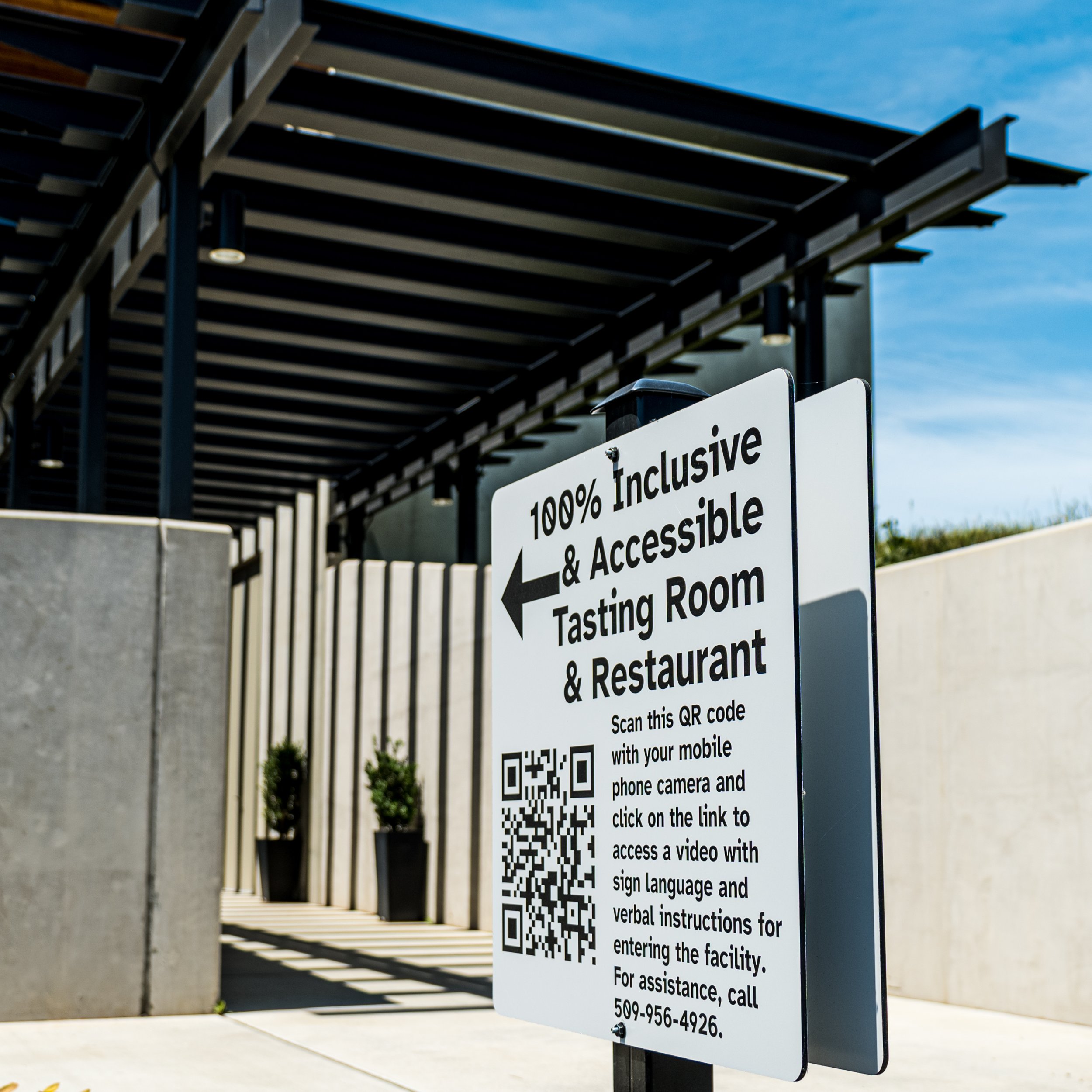
Planning accessible winery visits requires attention to detail, clear communication, and genuine commitment to inclusive experiences. My journey in the wine industry has taught me that accessibility benefits everyone – not just those with mobility limitations. When wineries invest in universal design principles and inclusive practices, they create better experiences for all their guests.
The wine industry’s growing awareness of accessibility needs has led to significant improvements in recent years. More wineries are recognizing that accessible design and inclusive practices represent good business sense as well as social responsibility. This trend gives me hope that accessible winery visits will become increasingly seamless and enjoyable for all guests.
Every successful accessible winery visit contributes to positive change within the industry. By supporting wineries that prioritize accessibility and providing feedback about our experiences, we help create a more inclusive wine tourism landscape. The combination of thoughtful planning, open communication, and industry cooperation continues to expand opportunities for memorable wine experiences that everyone can enjoy.