This post may contains affiliate links. Read our full disclosure here.
I have always believed that how to store wine properly at home is just as important as choosing the wine itself. A bottle of $100 wine stored incorrectly will taste worse than a $20 bottle stored well. The first time I ruined a wine by storing it upright in a warm closet, I learned this lesson the hard way. Light, heat, vibration, and humidity all conspire against wine. But once you understand the basics of wine storage tips, protecting your collection becomes straightforward. Whether you have five bottles or five hundred, the principles remain the same. Today, I am going to walk you through exactly how to store wine properly at home so that every bottle tastes as good as the winemaker intended.
Why Wine Storage Matters
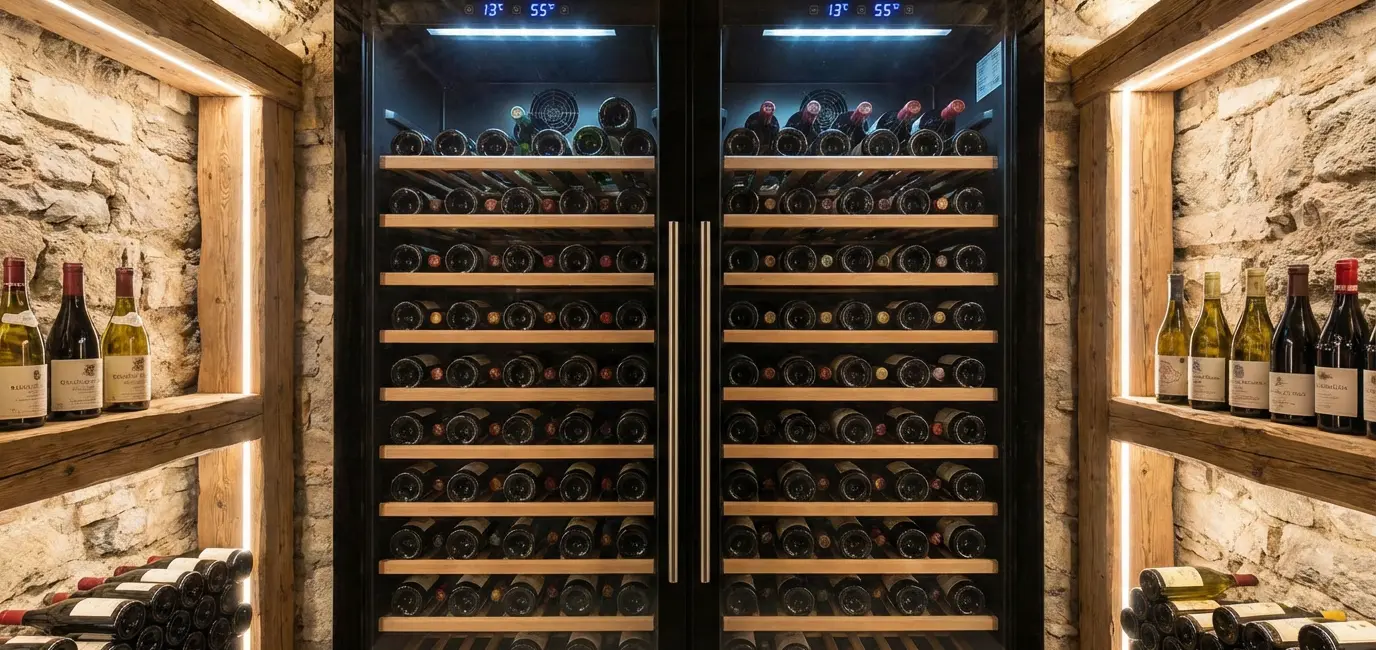
Wine is a living beverage. Even after bottling, the wine continues to evolve. Depending on the wine and how you store it, that evolution can lead to complexity and beauty—or to vinegar and disappointment. How to store wine properly at home is fundamentally about creating the right conditions for that evolution to happen. When you store wine incorrectly, you are accelerating the negative changes and slowing the positive ones. Temperature swings, light exposure, and vibration cause oxidation. Oxidation breaks down the delicate compounds that make wine taste good. After a few weeks or months of bad storage, a fine wine becomes undrinkable.
The good news? Most wines are forgiving. Inexpensive wines meant to be drunk young can tolerate imperfect storage. But if you have spent money on wine you plan to age—or if you simply want every bottle you drink to taste its best—understanding wine storage tips is non-negotiable. Think of wine storage as an investment in the wine you have already bought.
The Ideal Wine Storage Temperature
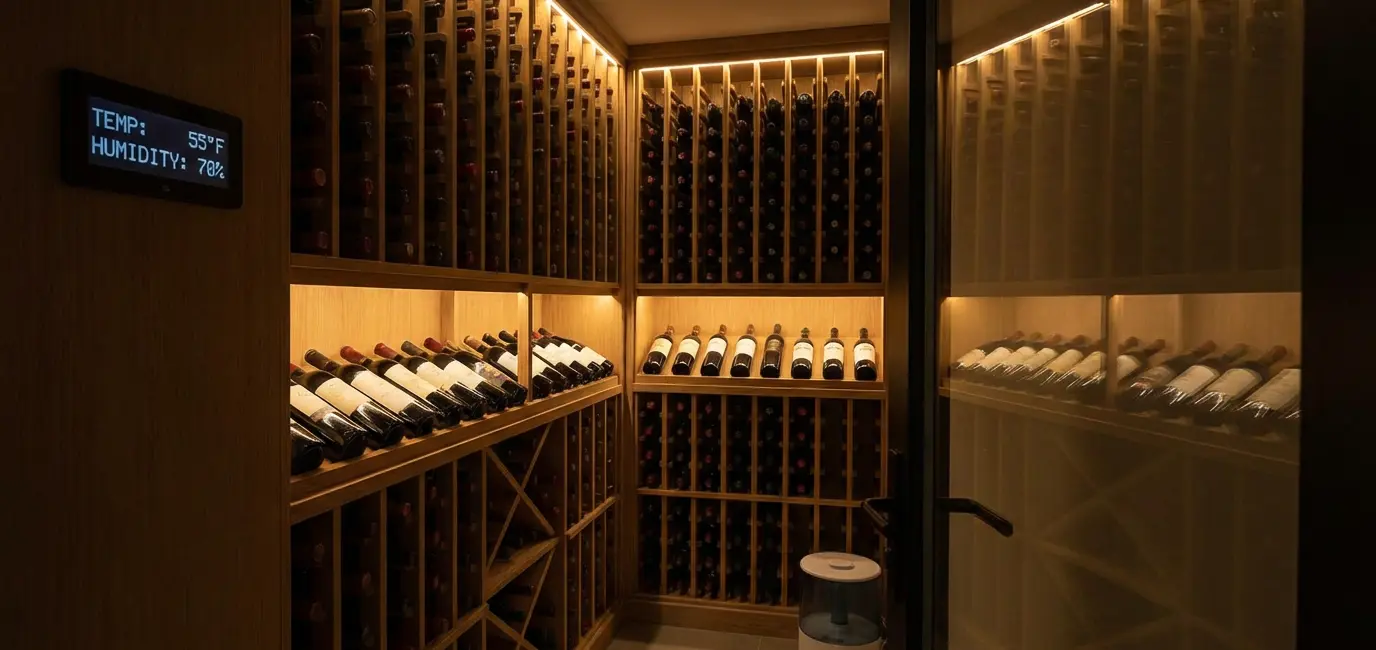
If I had to pick one factor that matters most in how to store wine properly at home, it would be temperature. The ideal wine storage temperature is 45–65 degrees Fahrenheit, with 55°F being the sweet spot. This temperature keeps the wine in a state of slow, graceful evolution. It is cool enough to preserve the wine’s structure and fresh enough to keep it vibrant.
Constant Temperature Is More Important Than Perfect Temperature
Here is the surprising part: a constant 60°F is better than a fluctuating temperature that averages 55°F. Why? Because temperature swings cause the wine to expand and contract inside the bottle. This expansion and contraction can push wine past the cork, exposing more wine to oxygen. Over time, these small leaks add up. A basement that stays at a steady 62°F will preserve wine better than a kitchen that swings between 65°F and 75°F every day.
Keep Wine Away from Heat
Never store wine above 70°F for extended periods. Above 70°F, wine ages prematurely. Tannins soften too quickly, acidity drops, and the fruit flavors flatten. I once left a case of wine in a hot garage during summer and it aged ten years in three months. Store wine away from heat sources: not above the stove, not near a radiator, not in the attic. If you live in a warm climate and cannot maintain a cool storage space naturally, a wine fridge becomes less of a luxury and more of a necessity.
Position Your Wine Bottles Horizontally
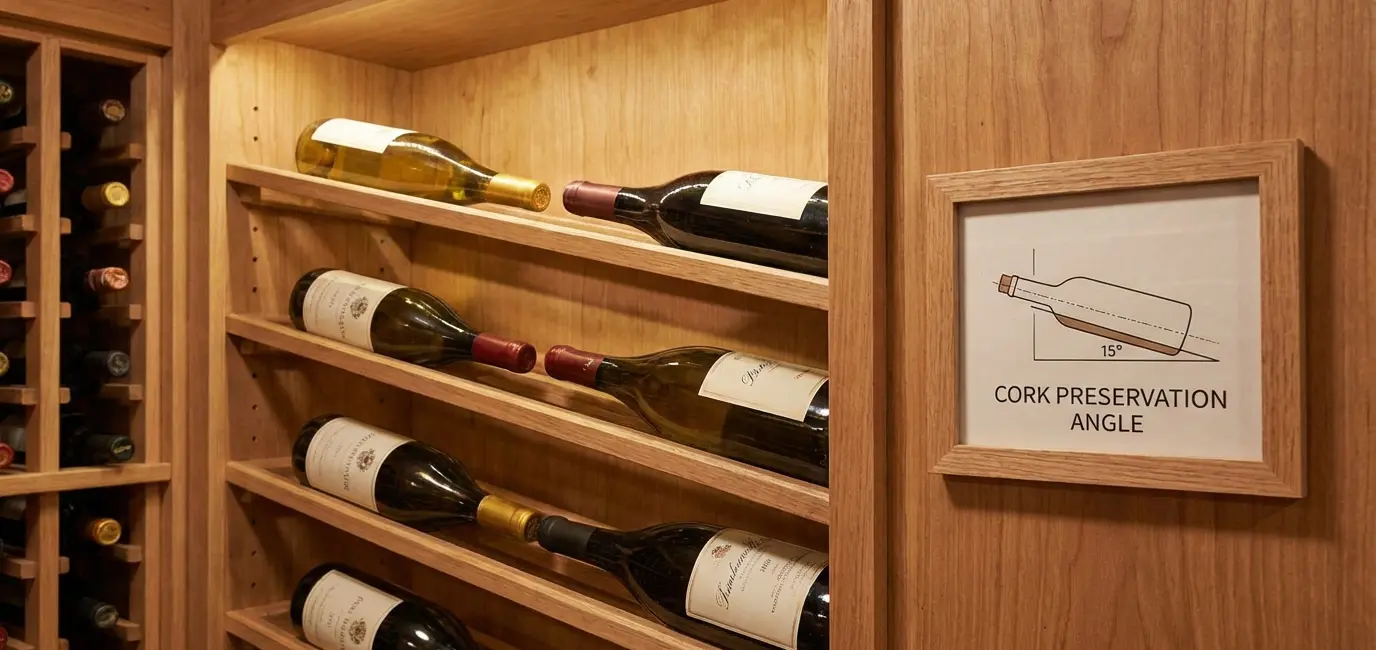
One of the most misunderstood aspects of how to store wine properly at home is bottle position. The rule is simple: store wine horizontally (on its side), not upright. Why? Because the wine needs to stay in contact with the cork. A cork sits at the top of a bottle of wine, and cork is porous. If the cork dries out, it shrinks, air enters the bottle, and the wine oxidizes. Keeping wine horizontal ensures the wine stays in contact with the cork and keeps it moist.
How long does it take for a cork to dry out if a bottle is stored upright? Research varies, but most sources suggest weeks to a few months depending on humidity. For wines meant to be drunk immediately (within a year), upright storage is fine. But for any wine you plan to keep longer than a year, or any wine that cost you real money, store it on its side.
Screw Caps Are Forgiving
The good news for modern wine drinkers: wines sealed with screw caps do not need to be stored horizontally. Screw caps do not dry out the way natural cork does. However, if a wine has a natural cork and you want to store it for more than a year, horizontal storage is the safest bet.
Control Light and UV Exposure
Light is one of wine’s greatest enemies. UV rays break down the compounds in wine, creating what wine professionals call “light-struck” or “skunky” flavors. Green glass bottles filter more UV light than clear glass, which is why fine wines are almost always in green or dark glass. But even green glass is not a perfect shield, so how to store wine properly at home means keeping your collection out of direct sunlight.
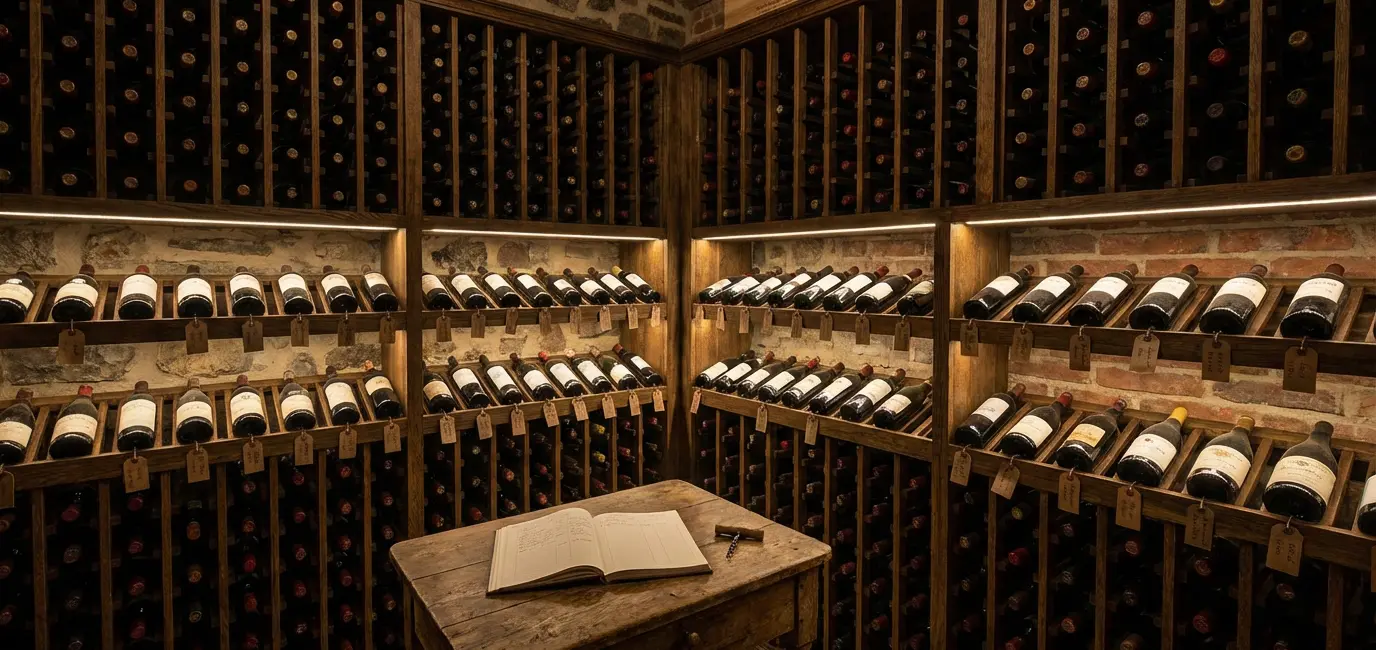
Store wine in a dark place. A closet, a basement, a cabinet, a wine fridge—anything that blocks out direct sunlight. If you want to display wine (say, on a beautiful wine rack in your living room), rotate bottles regularly so no single bottle sits in direct light for too long. Better yet, display empty bottles or bottles you plan to drink this month and store the rest in a dark place.
“Good wine storage is about creating the conditions for a wine to become its best self—not about showing off your collection.”
Humidity Control in Your Wine Storage
Humidity affects wine storage in two ways: it affects the cork, and it affects the label. The ideal humidity for wine storage is 50–80 percent. At this range, corks stay moist without encouraging mold. At humidity levels below 50 percent, corks dry out. Above 80 percent, mold can grow on labels and potentially penetrate corks.
What If Your Storage Space Is Too Humid?
If you are storing wine in a damp basement, the main risk is mold on the labels and potentially on the corks themselves. To protect against this, you can place a small dehumidifier in the storage space or ensure air circulation. Good news: a little mold on a label does not affect the wine inside. The wine is protected by glass and a cork seal. Only if mold somehow penetrates the cork would it affect the actual wine—and this is extremely rare.
What If Your Storage Space Is Too Dry?
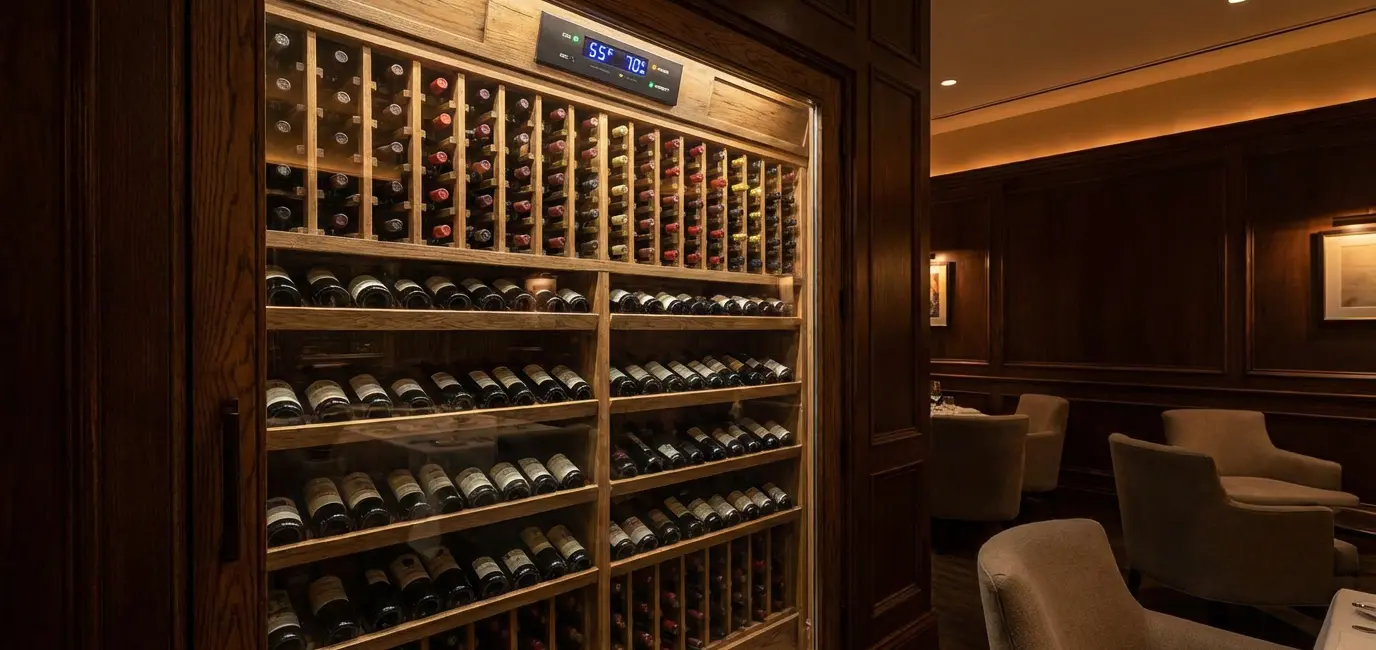
Dry air causes corks to shrink, which lets air in. If you live in a very dry climate and cannot maintain humidity above 50 percent, a wine fridge with humidity control becomes essential for any wine you plan to age.
Wine Storage Solutions for Your Home
Now that you understand the principles behind how to store wine properly at home, let us talk about practical solutions. Not everyone has a cool, dark basement. Here are the main options, ranked from best to most practical.
Wine Cellar (Ideal)
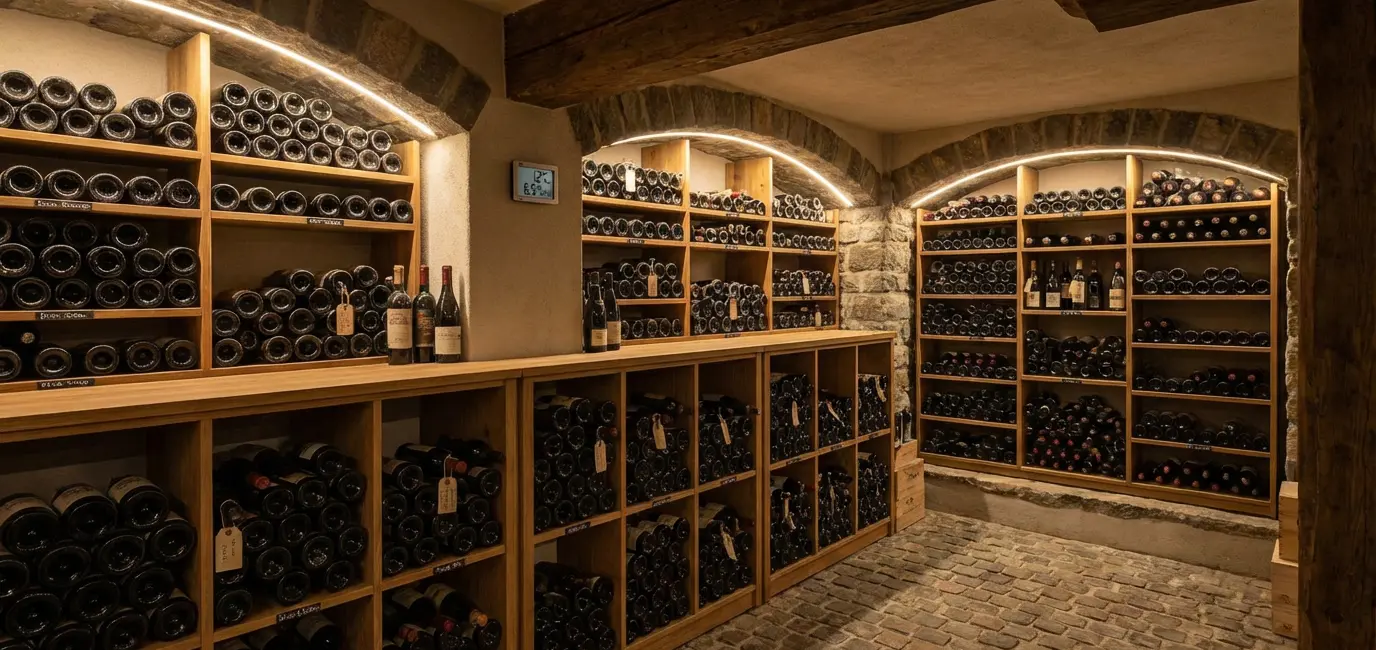
If you have a basement with consistent temperature and darkness, you are in luck. A proper wine cellar is the gold standard for wine storage. You can build custom shelving or invest in a wine rack system. Even an unfinished basement corner can work if the temperature stays consistent and light is minimal.
Wine Fridge or Cooler (Most Practical)
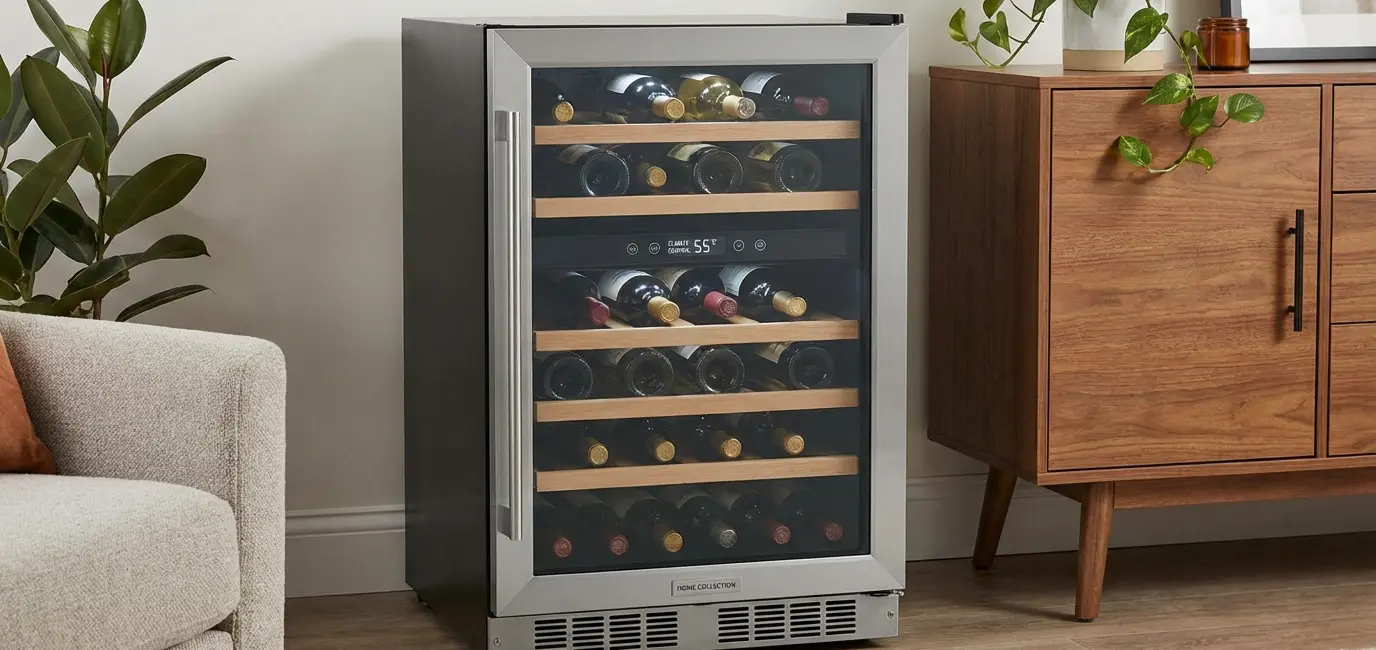
A dedicated wine fridge maintains the perfect temperature (and often humidity) for wine storage. Wine fridges come in all sizes and prices. A small 18-bottle cooler runs about $150–300, while larger models can exceed $1,000. The investment is worth it if you buy wine regularly or plan to age bottles. Wine fridges are one of the best ways to guarantee consistent storage conditions.
Cabinet or Closet (Free Solution)
If you do not have a wine fridge, a dark closet or cabinet works fine. Make sure the temperature stays relatively stable and the light is blocked. Avoid kitchens (heat from appliances), laundry rooms (temperature swings), and attics (heat in summer).
Under-Bed Storage (Emergency Only)
Need temporary storage? Under a bed in a cool, dark bedroom can work. It is not ideal long-term, but for wine you plan to drink within a year, it is perfectly acceptable.
Store Your Wine Right, Drink It Better
Understanding how to store wine properly at home is one of the most underrated skills among wine drinkers. You do not need a fancy wine cellar or expensive fridge to do it well. You just need a cool, dark, stable place. If you are interested in building a home bar where you can serve your well-stored wine, check out our guide to home bar setup ideas. For tips on hosting a wine tasting, or insights into food and wine pairing, we have you covered. And if you are looking to build your wine collection on a budget, start with wines that are meant to be enjoyed young. As you refine your taste and start acquiring bottles to age, your understanding of wine storage tips will pay dividends. Every bottle you keep properly stored is a bottle that tastes exactly as good as the winemaker dreamed.