This post may contains affiliate links. Read our full disclosure here.
A St. Patrick’s Day wine and cheese pairing is one of those entertaining ideas that sounds fancy but is actually one of the easiest, most impressive things you can do for the holiday. Instead of fighting crowds at a bar, you gather a few well-chosen bottles and a beautiful board of cheese, light some green-and-white candles, and suddenly St. Patrick’s Day 2026 has a completely different energy. I’ve been refining my St. Patrick’s Day wine and cheese pairing approach for several years, and this guide covers every combination that has consistently made guests stop mid-bite to ask what they’re eating.
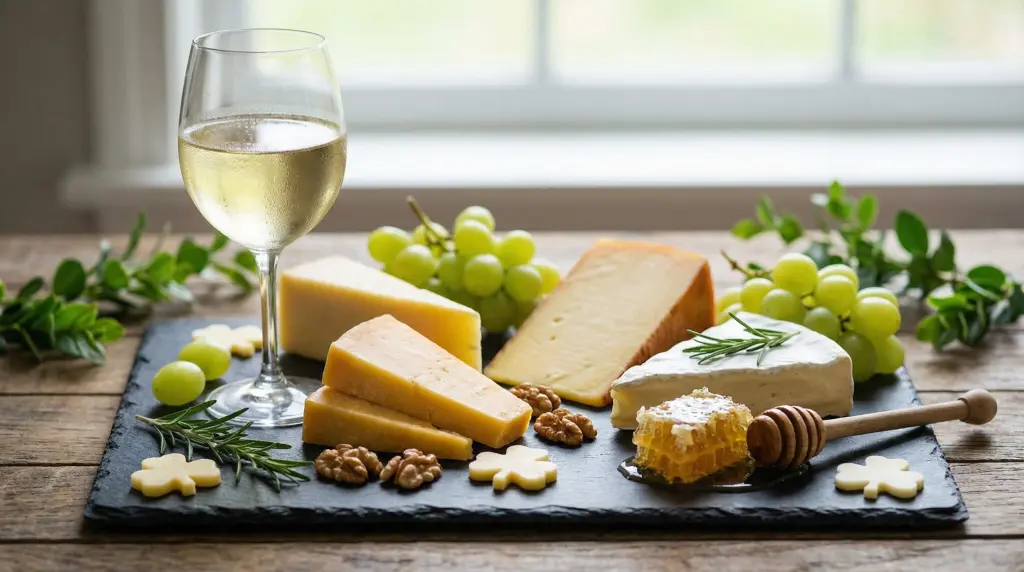
Why a St. Patrick’s Day Wine and Cheese Pairing Beats Green Beer Every Time
The case for a St. Patrick’s Day wine and cheese pairing over the standard bar crawl is easy to make: it’s more relaxed, more delicious, more photogenic, and honestly more Irish. Ireland has a centuries-old tradition of farmhouse cheese production and a growing wine culture — a St. Patrick’s Day wine and cheese pairing is actually more authentic to the spirit of the holiday than dyed beer ever was.
I threw my first St. Patrick’s Day wine and cheese pairing night three years ago for a group of six friends who were all tired of the same March 17th routine. I put together a simple board with three wines and five cheeses, printed little pairing cards for each combo, and the evening turned into one of those nights people still talk about. The St. Patrick’s Day wine and cheese pairing format is also incredibly flexible — it works as a standalone appetizer party, a pre-dinner spread, or the main event for a smaller gathering.
And from a hosting perspective, a St. Patrick’s Day wine and cheese pairing requires almost no cooking. You’re assembling, not cooking. That means more time with your guests and less time in the kitchen — which pairs beautifully with my spring dinner party guide if you want to extend the evening into a full meal.
“Wine and cheese have been the perfect pairing for centuries — and St. Patrick’s Day is the best excuse to explore that tradition with friends.”
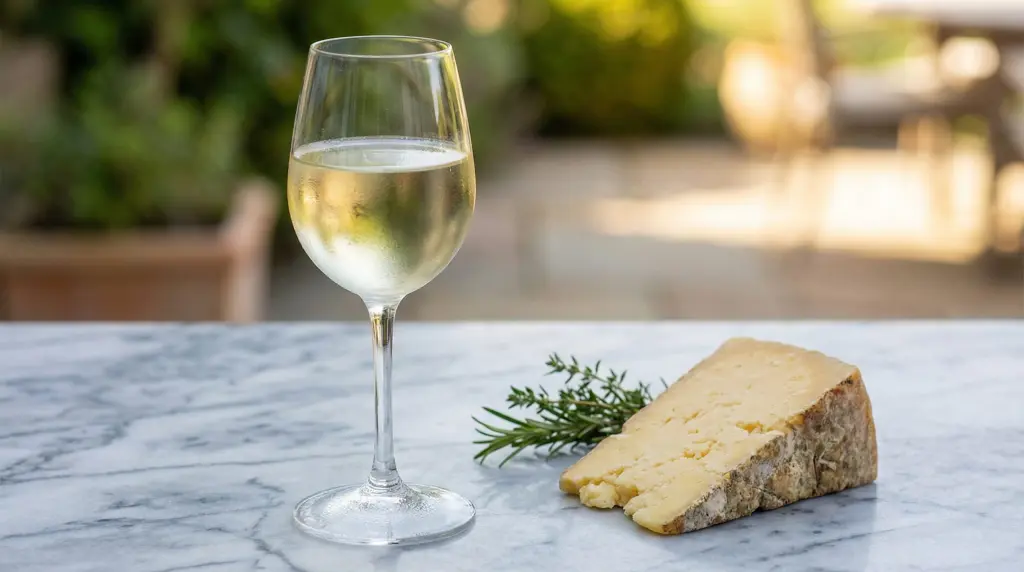
The Best White Wines for St. Patrick’s Day Cheese Pairing
For a St. Patrick’s Day wine and cheese pairing, I lean heavily toward white wines and light-to-medium reds. Here’s my ranked list of the wines that work best — all of which are available through Wine.com with quick shipping.
1. Sauvignon Blanc — This is my top pick for a St. Patrick’s Day wine and cheese pairing. The bright acidity and herbaceous, grassy notes of a good Sauvignon Blanc — especially from New Zealand or the Loire Valley — cut through the richness of aged Irish cheddar beautifully. The green, herbal quality also feels intuitively right for the holiday. Look for something crisp and unoaked.
2. Grüner Veltliner — Austria’s signature grape is criminally underrated for a St. Patrick’s Day wine and cheese pairing. It has a distinctive white pepper note, refreshing acidity, and a minerality that plays wonderfully against both soft fresh cheeses and aged harder styles. If you want to introduce guests to something new at your St. Patrick’s Day wine and cheese pairing, Grüner Veltliner is the move.
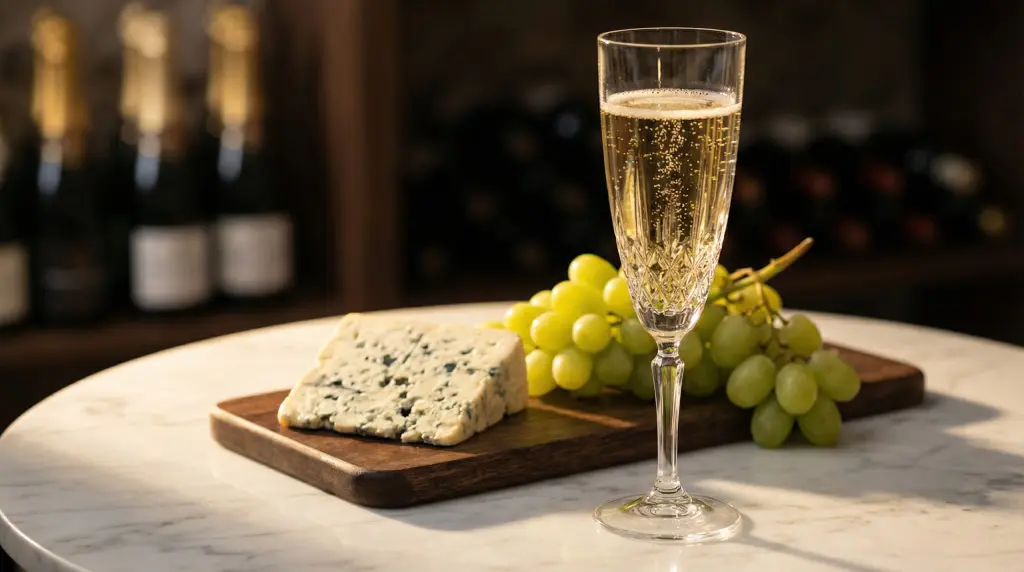
3. Sparkling Wine / Champagne — Bubbles make every cheese better. For a St. Patrick’s Day wine and cheese pairing that wants to feel celebratory, a Brut Champagne, Cava, or even a good Crémant pairs with nearly every cheese on the board. The bubbles cleanse the palate between bites and reset the flavor profile — ideal for a multi-cheese St. Patrick’s Day spread.
4. Pinot Noir — If you want a red in your St. Patrick’s Day wine and cheese pairing, Pinot Noir is the right choice. Its lighter body, bright cherry fruit, and earthy undertones work with aged cheddar and Gouda without overwhelming more delicate cheeses. Avoid heavy reds like Cabernet for this pairing — they can bully the cheese.
5. Dry Rosé — A good Provençal-style dry rosé bridges white and red territory beautifully in a St. Patrick’s Day wine and cheese pairing. It’s particularly lovely alongside soft goat cheeses and fresh chèvre. If you’re curious about what makes a wine “dry,” my guide to dry wine covers it in plain language.
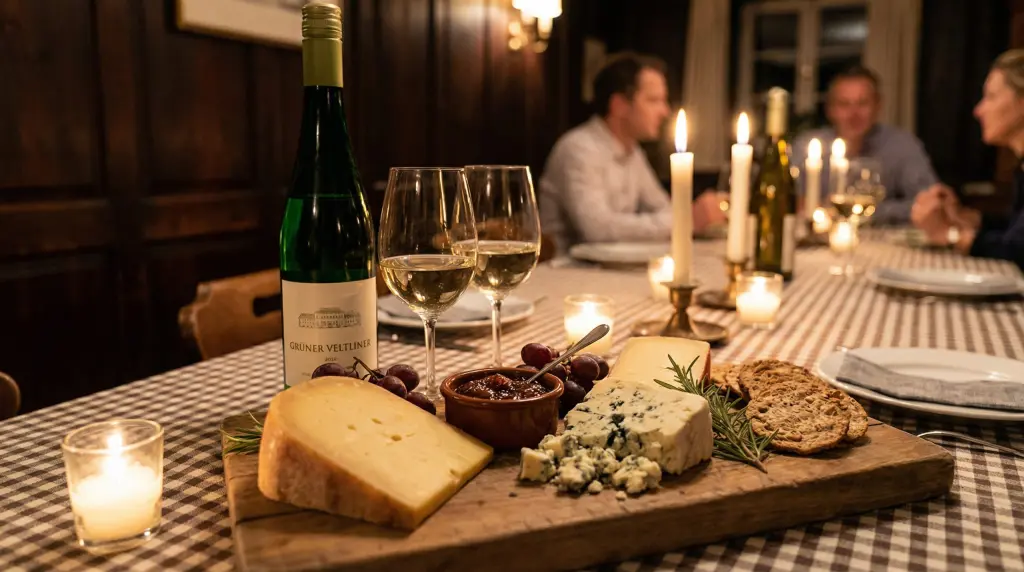
Classic Irish Cheeses Worth Knowing
A great St. Patrick’s Day wine and cheese pairing starts with understanding the cheeses. Ireland produces some genuinely exceptional cheeses, and leaning into Irish varieties gives your St. Patrick’s Day wine and cheese board an authenticity that generic supermarket selections can’t match.
- Aged Irish Cheddar — The cornerstone of any St. Patrick’s Day wine and cheese pairing. Look for Kerrygold Aged Cheddar or Dubliner — both are widely available and have the sharp, crystalline texture that aged cheddar should. The nuttiness and slight sweetness pair beautifully with Sauvignon Blanc and Pinot Noir alike.
- Cashel Blue — Ireland’s most famous blue cheese, made in County Tipperary. Cashel Blue is creamier and less aggressively salty than Stilton or Gorgonzola — it’s an approachable blue that even blue-cheese skeptics often enjoy. In a St. Patrick’s Day wine and cheese pairing, it’s spectacular with sparkling wine or a slightly sweet Riesling.
- Brie or Camembert — While not strictly Irish, a good triple-crème brie adds the creamy, buttery element that every St. Patrick’s Day wine and cheese board needs. It pairs with almost everything and serves as a gateway cheese for guests who aren’t adventurous with stronger varieties.
- Fresh Goat Cheese (Chèvre) — Irish goat cheeses have been gaining recognition in recent years. A fresh, tangy chèvre with a drizzle of honey is one of the most crowd-pleasing elements on any St. Patrick’s Day wine and cheese pairing board — and it pairs perfectly with Sauvignon Blanc.
- Aged Gouda — The caramel sweetness and crunchy tyrosine crystals of an aged Gouda make it endlessly satisfying in a St. Patrick’s Day wine and cheese pairing. It’s especially good with Grüner Veltliner or a light Pinot Noir.
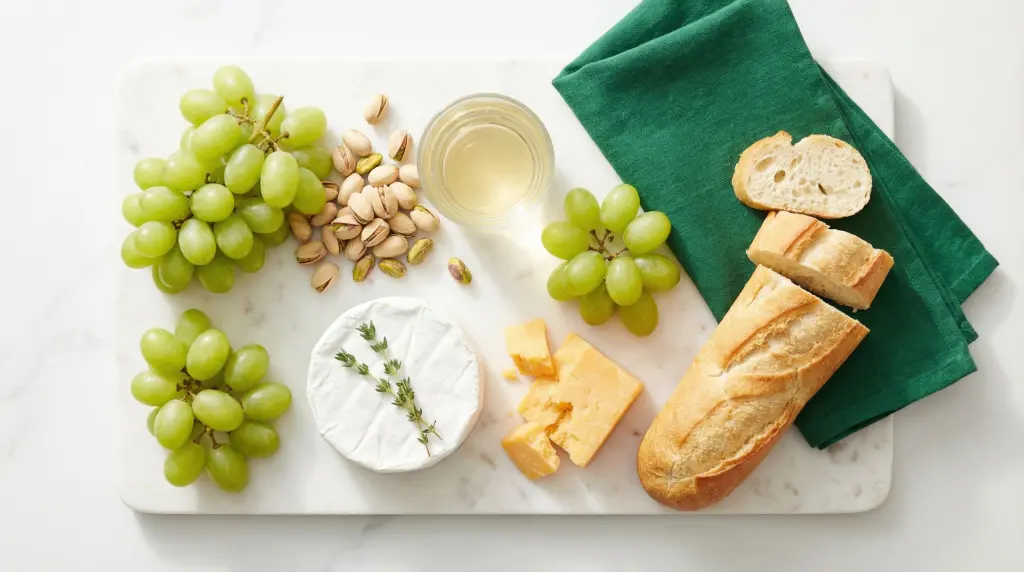
Five Perfect St. Patrick’s Day Wine and Cheese Combinations
These are my five go-to St. Patrick’s Day wine and cheese pairing combinations, tested and refined over multiple holiday gatherings. Each one works on its own or as part of a larger board.
- Sauvignon Blanc + Aged Irish Cheddar: The grassy, citrus-bright Sauvignon Blanc cuts through the sharpness of aged cheddar while the wine’s herbaceous notes echo the savory depth of the cheese. This is the most reliably crowd-pleasing St. Patrick’s Day wine and cheese pairing on this list.
- Grüner Veltliner + Aged Gouda: The white pepper and mineral backbone of Grüner Veltliner meets the caramel sweetness of aged Gouda in a genuinely surprising St. Patrick’s Day wine and cheese combination. The contrast is what makes it work.
- Brut Champagne + Cashel Blue: Bubbles and blue cheese is a classic St. Patrick’s Day wine and cheese pairing principle — the effervescence cuts the salt and creaminess of the blue while the yeasty Champagne notes echo the cheese’s earthiness. For non-Champagne budgets, a good Spanish Cava works beautifully.
- Dry Rosé + Fresh Goat Cheese with Honey: This is the most elegant St. Patrick’s Day wine and cheese pairing on the board. The delicate strawberry and herb notes of a Provençal rosé lift the tangy chèvre while the honey drizzle bridges the two. Serve this one cold for maximum effect.
- Pinot Noir + Triple-Crème Brie: The earthy, cherry-forward Pinot Noir and the rich, buttery brie create a deeply satisfying St. Patrick’s Day wine and cheese pairing. Add a small spoonful of fig jam alongside and this combination becomes genuinely unforgettable.
For organic and biodynamic wine options that pair beautifully in a St. Patrick’s Day wine and cheese pairing — especially the Sauvignon Blanc and rosé pours — Organic Wine Exchange has a wonderful curated selection with something for every palate and budget.
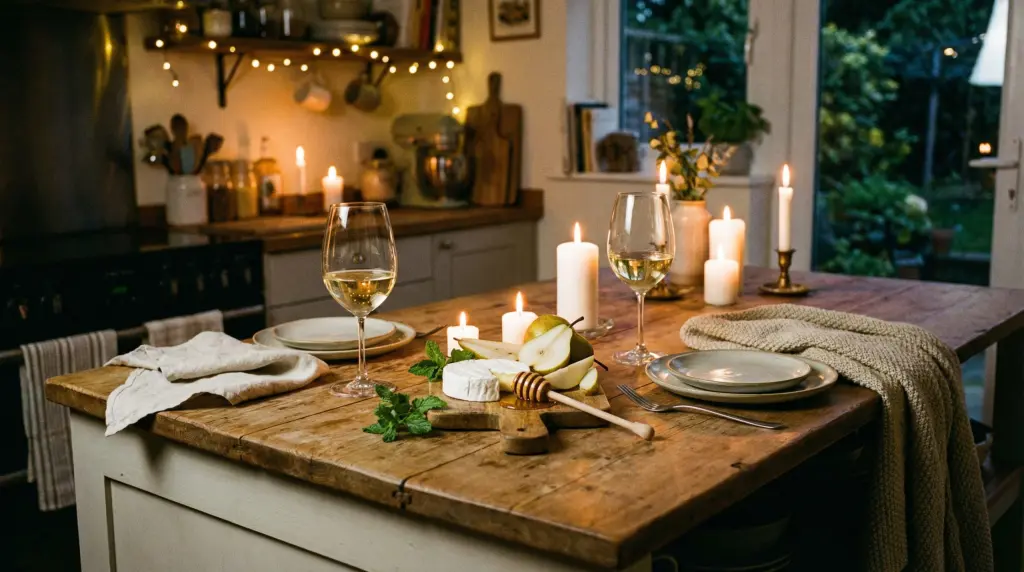
How to Build the St. Patrick’s Day Wine and Cheese Board
A great St. Patrick’s Day wine and cheese pairing needs a great board. The visual presentation matters — this is going on your St. Patrick’s Day table and, let’s be honest, on your Instagram. Here’s exactly how I build mine.
The board itself: A dark slate board or a white marble slab creates the best backdrop for a St. Patrick’s Day wine and cheese pairing — the colors of the cheeses, grapes, and garnishes pop beautifully against both. A large wooden cutting board works well too and has a more rustic feel. Size for 1.5–2 oz of cheese per person per wine.
The layout formula for a St. Patrick’s Day wine and cheese board:
- Place the largest cheeses first — the brie and cheddar anchors. Put them in different corners or quadrants of the board.
- Fill the spaces between with your crackers and sliced baguette. Fan them out from each cheese.
- Add the smaller, softer cheeses (goat cheese log, blue cheese crumbles) in small ramekins or directly on the board.
- Fill remaining gaps with the green accent items: green grapes, sliced green apple, fresh herbs, edamame, or pistachios. The green elements are what make a St. Patrick’s Day wine and cheese board look intentional rather than generic.
- Finish with small bowls of honey, fig jam, and whole-grain mustard tucked into the arrangement.
- Garnish with fresh rosemary or thyme sprigs for the final St. Patrick’s Day wine and cheese board touch.
For fresh florals to complement your St. Patrick’s Day wine and cheese board presentation — a small arrangement of white ranunculus or eucalyptus on the table near the board — Flower.com delivers beautiful seasonal arrangements quickly. The floral element connects your St. Patrick’s Day wine and cheese board to the broader table aesthetic seamlessly.
If you haven’t already styled the rest of your St. Patrick’s Day spread, my St. Patrick’s Day 2026 table setting guide walks through the full green-and-white aesthetic that makes a St. Patrick’s Day wine and cheese pairing evening feel genuinely elevated rather than just festive.
Frequently Asked Questions About St. Patrick’s Day Wine and Cheese Pairing
What is the best wine for a St. Patrick’s Day wine and cheese pairing?
Sauvignon Blanc is the single best starting point for a St. Patrick’s Day wine and cheese pairing. Its herbal, citrus-bright acidity pairs with aged cheddar, goat cheese, and lighter soft cheeses alike — making it the most versatile choice for a multi-cheese board. Grüner Veltliner is the next best choice for guests who want something less common, and Brut sparkling wine is the safest crowd-pleaser across all cheese types in a St. Patrick’s Day wine and cheese pairing.
How much wine and cheese do I need per person?
For a St. Patrick’s Day wine and cheese pairing as the main event, plan for 3–4 oz of cheese per person and a half-bottle of wine per person. For a St. Patrick’s Day wine and cheese pairing as an appetizer before dinner, plan for 1.5–2 oz of cheese per person and one glass of wine per person. Having three wines and four to five cheeses gives every guest a full tasting experience without overwhelming the board.
Should wine be served at room temperature for a St. Patrick’s Day wine and cheese pairing?
White wines and sparkling wines in a St. Patrick’s Day wine and cheese pairing should be served chilled — 45–50°F. Light reds like Pinot Noir are best at cool room temperature, around 60–65°F — slightly cooler than standard “room temperature.” A quick 20-minute chill in the fridge before serving makes a real difference for Pinot Noir in a St. Patrick’s Day wine and cheese pairing.
When should I take cheese out of the refrigerator before serving?
For the best St. Patrick’s Day wine and cheese pairing experience, take your cheeses out of the refrigerator 45–60 minutes before serving. Cold cheese suppresses the aromatic compounds that make the pairing work — a room-temperature aged Irish cheddar tastes dramatically more complex and nutty than a cold one, and soft cheeses like brie need to soften to their ideal creamy texture.
Can I do a St. Patrick’s Day wine and cheese pairing with Irish whiskey instead of wine?
Absolutely — an Irish whiskey and cheese pairing is a wonderful alternative or complement to a St. Patrick’s Day wine and cheese pairing. A smooth blended Irish whiskey like Jameson pairs beautifully with aged Irish cheddar (the caramel and vanilla notes in the whiskey echo the nuttiness in the cheese). A peated single malt is spectacular with Cashel Blue. If you’re going the cocktail route alongside your St. Patrick’s Day wine and cheese pairing, my St. Patrick’s Day cocktail recipes have whiskey-forward options that work beautifully.
A St. Patrick’s Day wine and cheese pairing is one of the most effortless yet impressive ways to celebrate the holiday — all flavor, no green food dye required. Pick up a bottle of Sauvignon Blanc, grab a wedge of Kerrygold Aged Cheddar, and start from there. Once you experience how well these flavors play together, the St. Patrick’s Day wine and cheese pairing will become an annual tradition you look forward to as much as the holiday itself.