This post may contains affiliate links. Read our full disclosure here.
Japanese Interior Design extends far beyond the minimalist aesthetic we often see in magazines. When I first discovered the depth and intention behind this style, it completely changed my approach to creating spaces. Japanese Interior Design isn’t just about clean lines and empty rooms—it’s a centuries-old philosophy that balances emotional connection, natural elements, and functional beauty in ways that modern Western design is only beginning to appreciate.
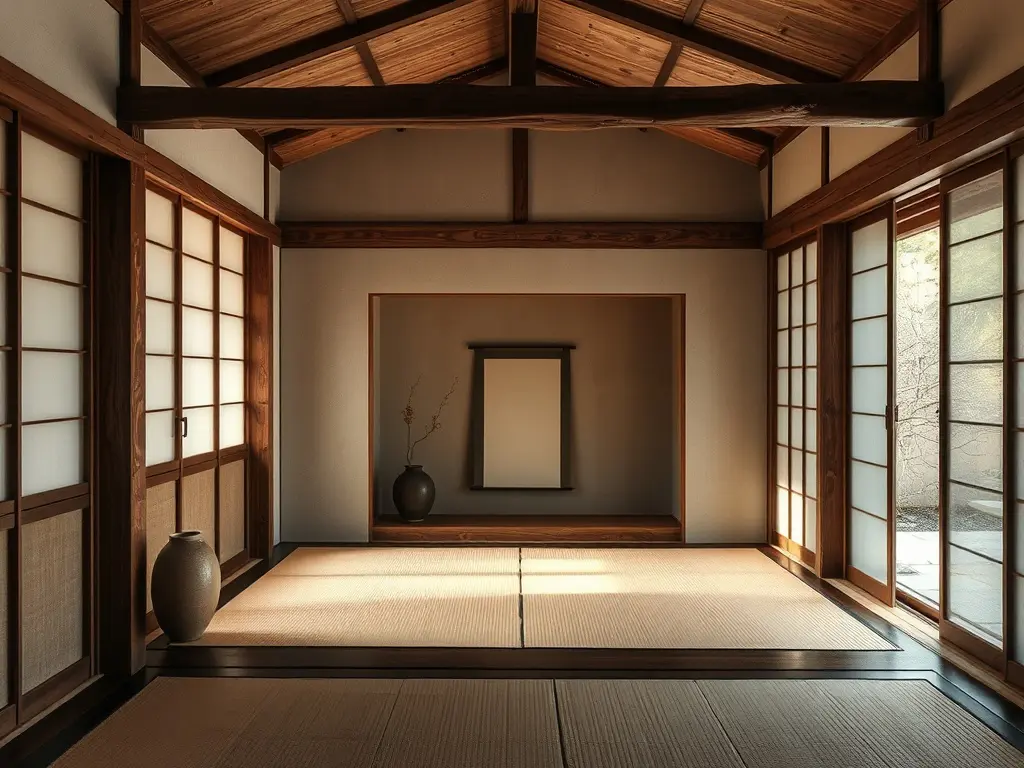
The essence of Japanese Interior Design lies in its ability to create harmony between people and their surroundings. Unlike trends that come and go, these principles have remained relevant for generations because they speak to something fundamental in how we experience our homes. They invite us to slow down, appreciate imperfection, and find meaning in simplicity—something many of us crave in our busy, cluttered lives.
Japanese Interior Design: Beyond Minimalism
This piece explores Japanese interior design as a comprehensive philosophy beyond mere minimalism. It highlights core principles such as wabi-sabi, which celebrates natural imperfection, and the functional beauty of elements like shoji screens for flexible spaces and tatami flooring for comfort and insulation
Wabi-Sabi: Embracing Beautiful Imperfection in Japanese Interior Design
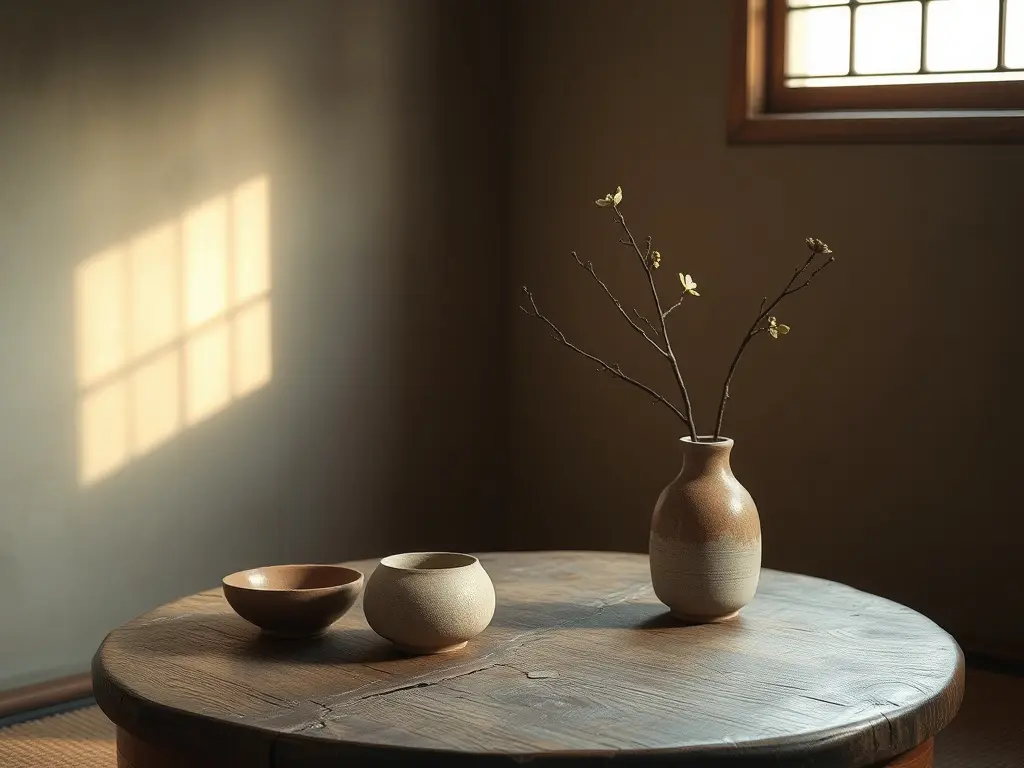
After my trip to Kyoto last year, I couldn’t stop thinking about the weathered wooden beams in the traditional ryokan where I stayed. Unlike Western design that often prizes newness and perfection, wabi-sabi celebrates the marks that time leaves behind. It’s about finding beauty in asymmetry, roughness, and the natural aging process.
This philosophy runs counter to our throwaway culture. In Japanese Interior Design, a cracked tea bowl repaired with gold (kintsugi) becomes more valuable because of—not despite—its history. My friend’s grandmother keeps a collection of worn ceramics that tell the story of family gatherings over decades, each chip and fade representing a moment in time.
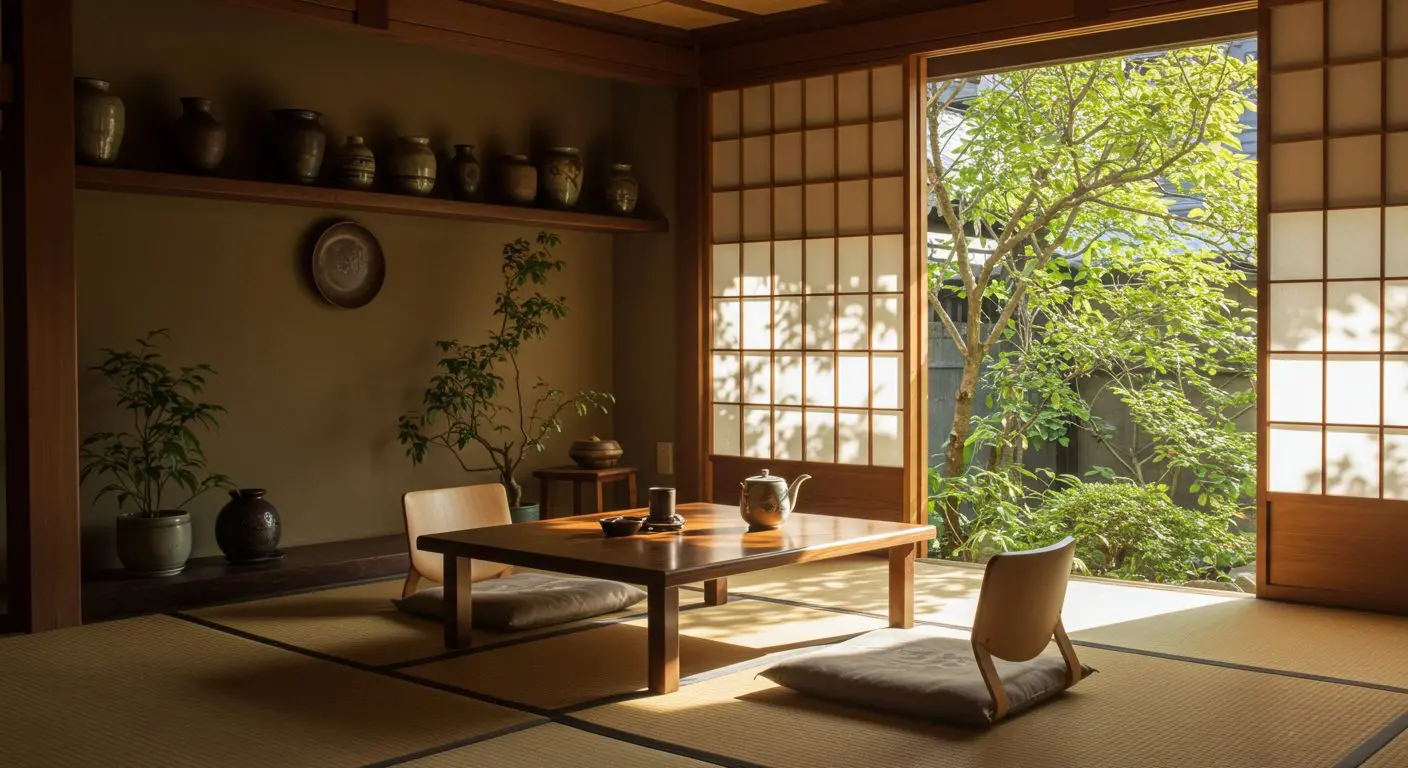
- Key Idea: Natural patina, asymmetry, and aged beauty
- Cultural Meaning: Embodies transience and Zen Buddhist simplicity
- Misconception: Often reduced to “rustic chic” instead of understood as a worldview
In homes embracing wabi-sabi, you’ll find natural materials allowed to weather gracefully—linen that softens with washing, wood that develops rich patinas, and textured surfaces that add depth to the space. It’s not about decorating—it’s about perceiving beauty in a different way.
“Wabi-sabi isn’t about decorating—it’s about perceiving the world through acceptance.”
Shoji Screens: The Art of Flexible Space
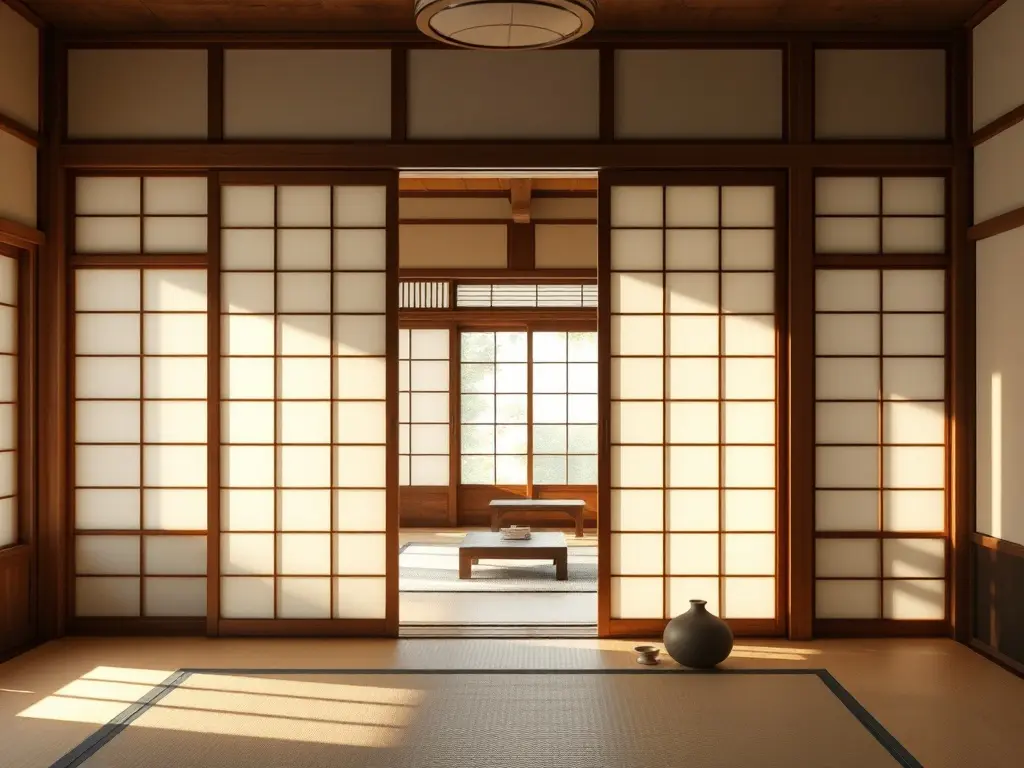
When redesigning my apartment’s layout, I became fascinated with how Japanese Interior Design approaches room division. Shoji screens—those delicate wooden-framed partitions with translucent paper—aren’t just decorative elements, they’re ingenious solutions for flexible living.
Unlike our Western tendency to build permanent walls, shoji screens allow spaces to transform according to needs. The light filtering through creates a gentle ambiance that changes throughout the day, bringing a dynamic quality to rooms that solid walls simply can’t match.
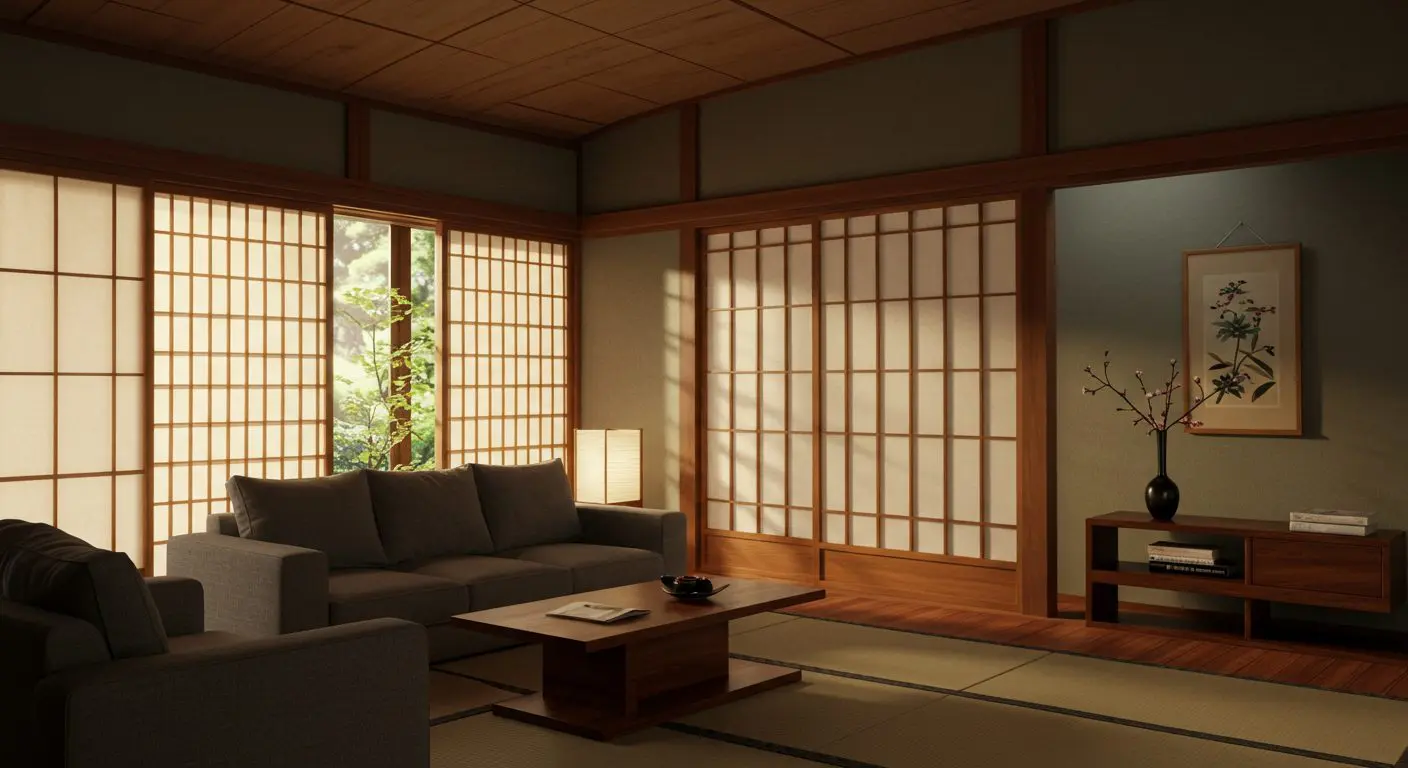
- Visual Cue: Thin wooden lattices with translucent washi paper
- Cultural Use: Create flow, invite light, preserve privacy
- Western View: Often seen as mere decorative elements rather than functional architecture
Modern adaptations include sliding glass panels that maintain the principle while updating the materials. My boyfriend and I installed a shoji-inspired room divider in our open concept space, and the difference in both functionality and atmosphere was remarkable. These design elements carry cultural significance while serving practical needs.
Tatami Flooring: The Foundation of Japanese Living
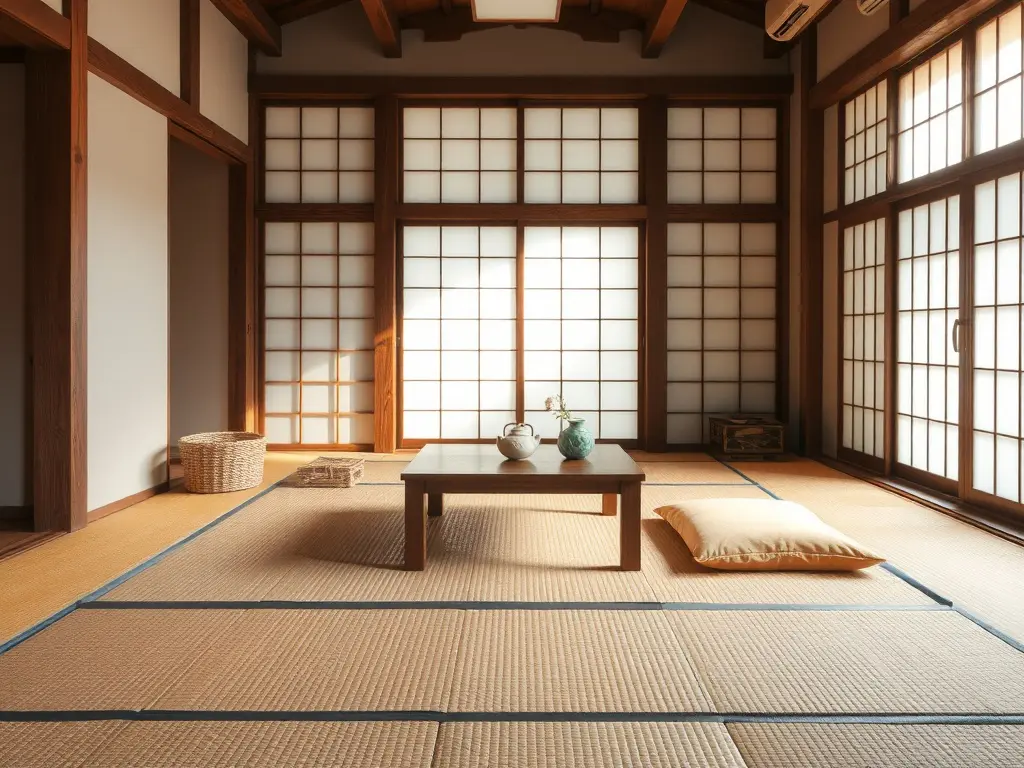
The first time I walked barefoot on authentic tatami, I understood why this flooring has remained central to Japanese Interior Design for centuries. Made from tightly woven rice straw with a soft covering, tatami provides a slightly springy surface that’s surprisingly comfortable underfoot.
Traditional Japanese homes measure rooms by the number of tatami mats they contain—a practice that standardized room sizes long before modern construction. The subtle scent of fresh tatami has a grounding effect that synthetic materials simply can’t replicate.
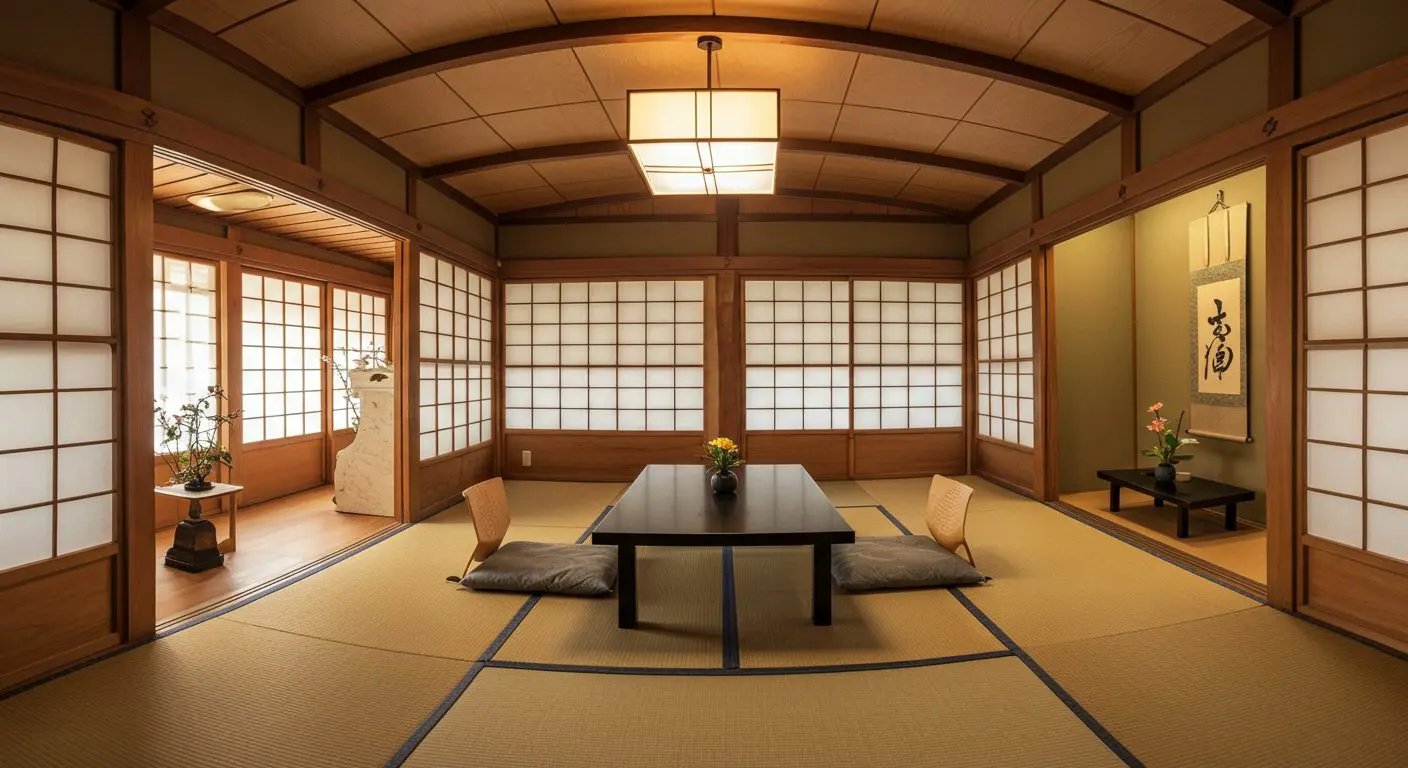
- Material: Rice straw core with soft woven covering
- Cultural Role: Central to ceremonies, sleeping arrangements, and daily life
- Modern Myth: That tatami is incompatible with contemporary furniture or lifestyles
While visiting a Japanese friend’s modern Tokyo apartment, I noticed how she’d incorporated a tatami corner in her otherwise contemporary space—proving these elements can blend beautifully with today’s lifestyle. The natural fiber composition provides excellent insulation and humidity control, making tatami surprisingly practical in various climates.
Engawa: Blurring Boundaries Between Inside and Out
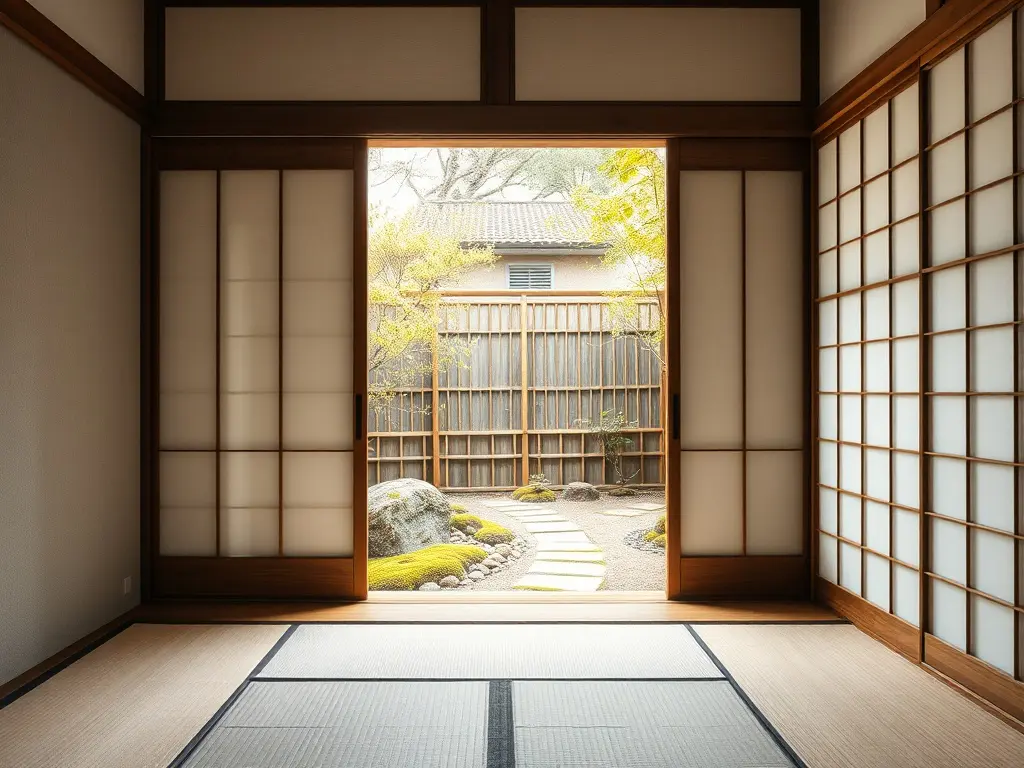
One of the most distinctive features I’ve come to appreciate in Japanese Interior Design is the engawa—a transitional verandah space that creates a breathtaking connection between home and garden. Unlike Western patios designed primarily for outdoor living, the engawa serves as a meditative threshold.
My design professor once explained that this space represents the Japanese philosophy of ma—the meaningful pause between elements. It’s where you might sit with morning tea, watching rain fall on garden stones or observing seasonal changes in perfect stillness.
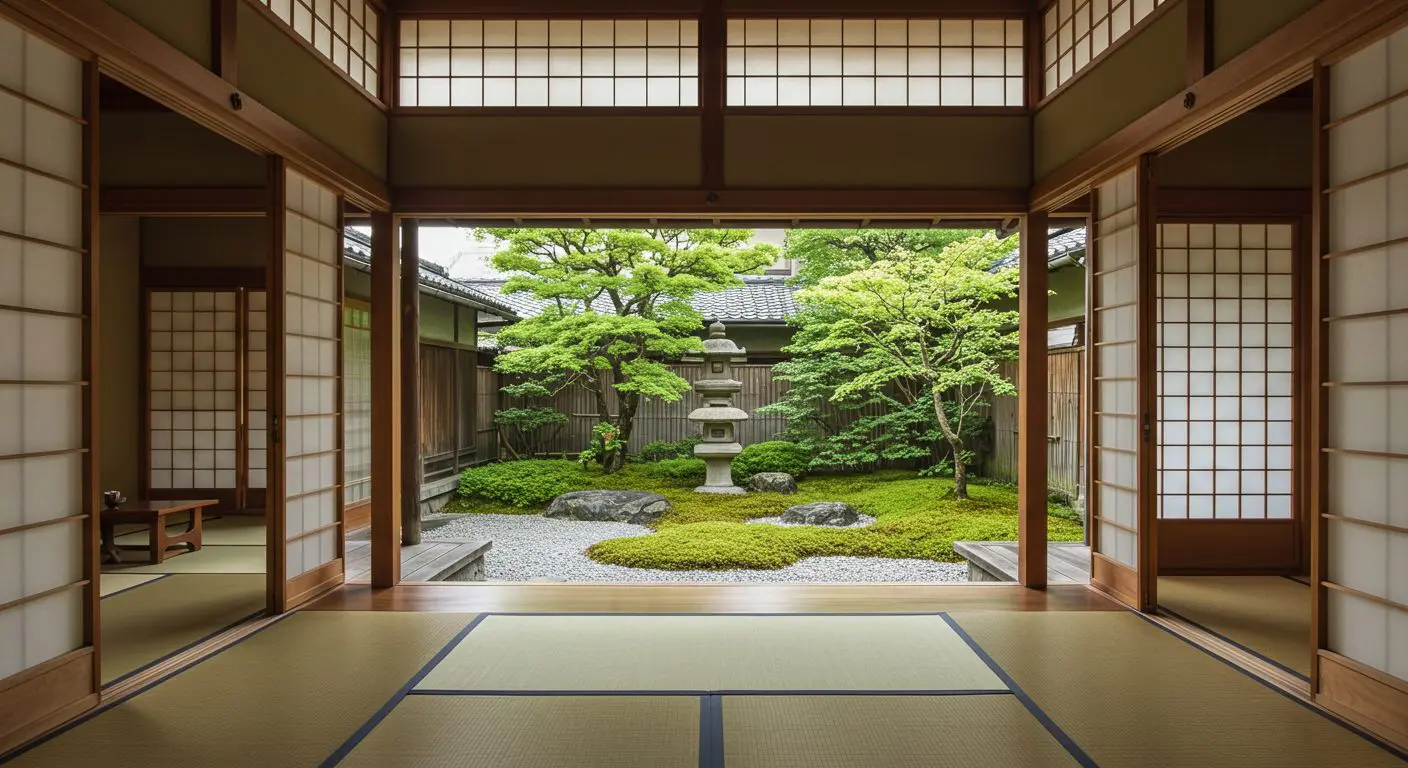
- Definition: Covered perimeter space between interior rooms and garden
- Cultural Relevance: Acts as a contemplative buffer zone between built and natural environments
- Common Misinterpretation: Often confused with a simple deck or porch
In contemporary home styling applications, the engawa concept can be adapted through floor-to-ceiling windows with minimal frames, interior-exterior flooring that flows seamlessly, or covered porches designed for observation rather than entertainment. The key is creating that thoughtful pause between worlds.
Natural Materials in Japanese Interior Design
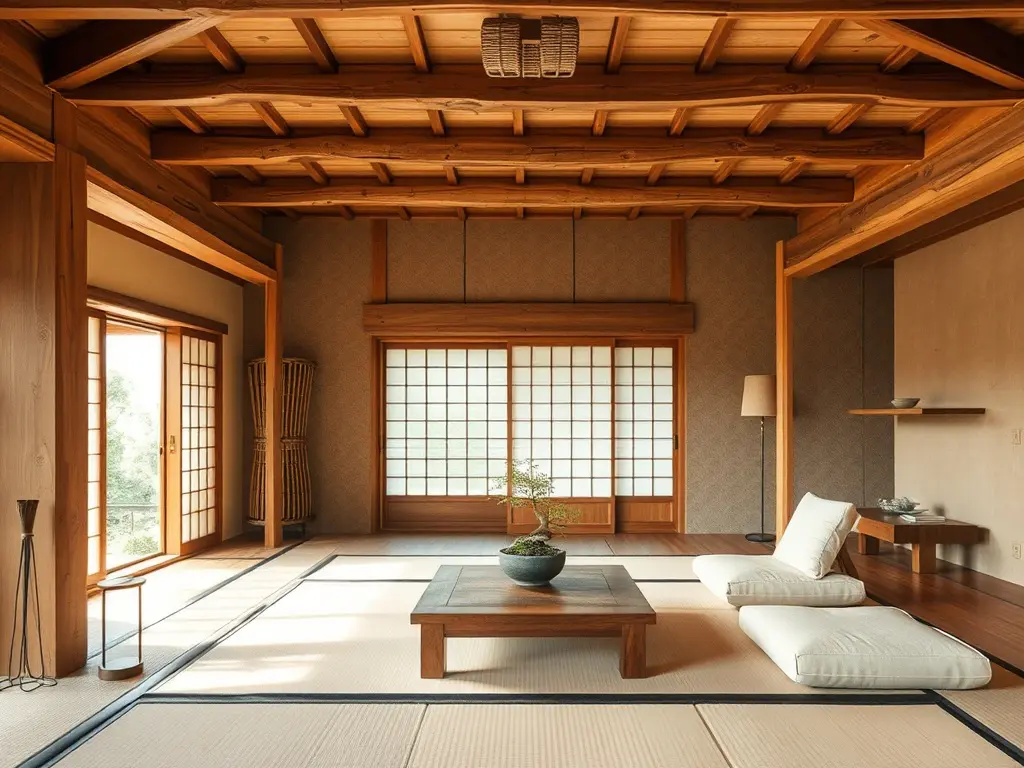
Attending a Japanese craftsmanship exhibition changed my perspective on materials forever. Japanese Interior Design prioritizes honest, unprocessed materials that maintain their connection to nature. The tactile quality of these elements creates spaces that feel alive rather than manufactured.
From hinoki cypress with its lemony scent to the rich depth of cedar, wood forms the backbone of traditional Japanese spaces. Even in modern applications, these materials are chosen for their ability to engage multiple senses—not just how they look but how they feel, smell, and age.
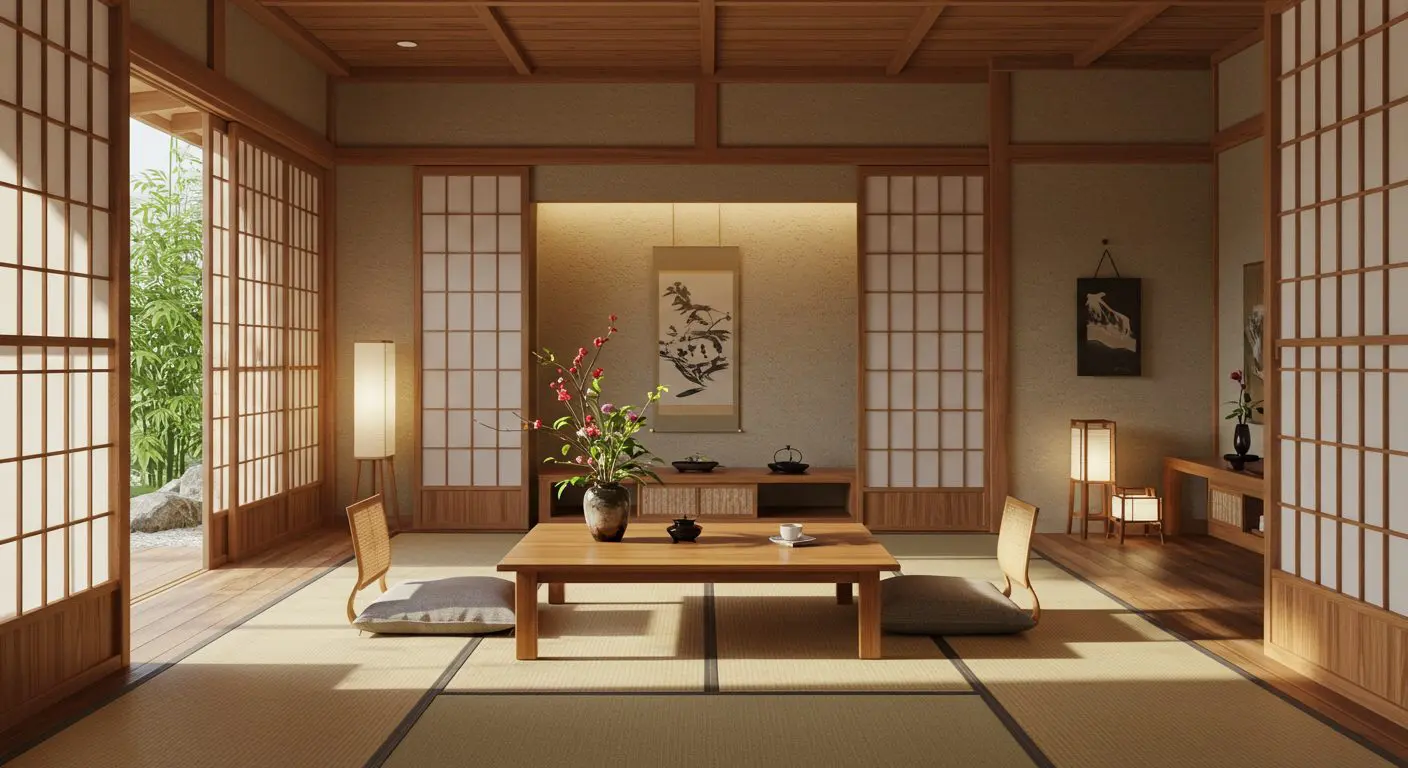
- Palette: Wood (often cedar or hinoki), washi paper, bamboo, stone, clay
- Spiritual Roots: Reflects Shinto reverence for natural elements
- Design Myth: That all Japanese interiors must be pale or monochromatic
| Material | Cultural Significance | Common Use |
|---|---|---|
| Wood | Connection to forests and ancestors | Beams, walls, flooring |
| Bamboo | Resilience, flexibility, rapid growth | Furnishings, decor, blinds |
| Washi Paper | Soft light diffusion, handcrafted tradition | Shoji screens, lamps |
| Clay | Solidity, warmth, connection to earth | Walls, pottery, tea objects |
While helping a friend renovate her kitchen, we incorporated elements of Japanese Interior Design by choosing natural stone countertops with visible variations and unlacquered brass fixtures that will develop a patina over time. These materials create sensory-rich environments that feel both grounding and alive.
The Tokonoma: Sacred Display in Japanese Interior Design
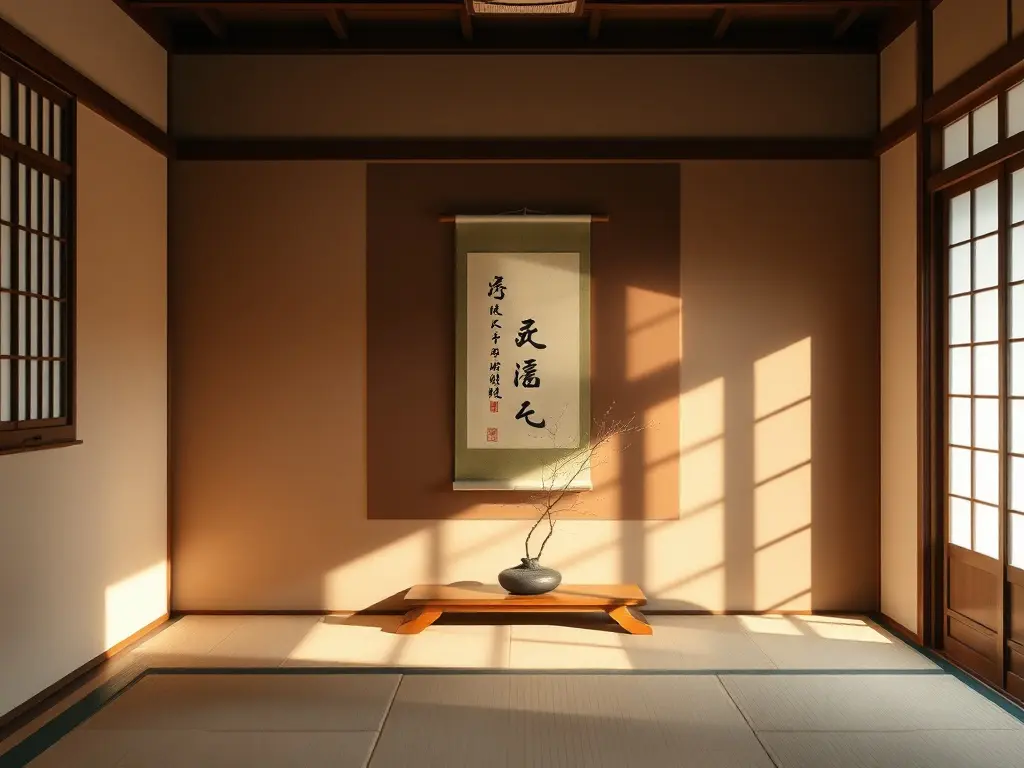
The first time I saw a tokonoma in person, I was struck by its profound simplicity. This recessed alcove space represents perhaps the most philosophical aspect of Japanese Interior Design—the curated display that changes with seasons, occasions, and moods.
Unlike Western display shelves packed with decorative objects, the tokonoma typically contains just three carefully chosen elements: perhaps a hanging scroll, a seasonal flower arrangement (ikebana), and a small sculptural object. This restraint creates a focal point that invites contemplation rather than casual glancing.
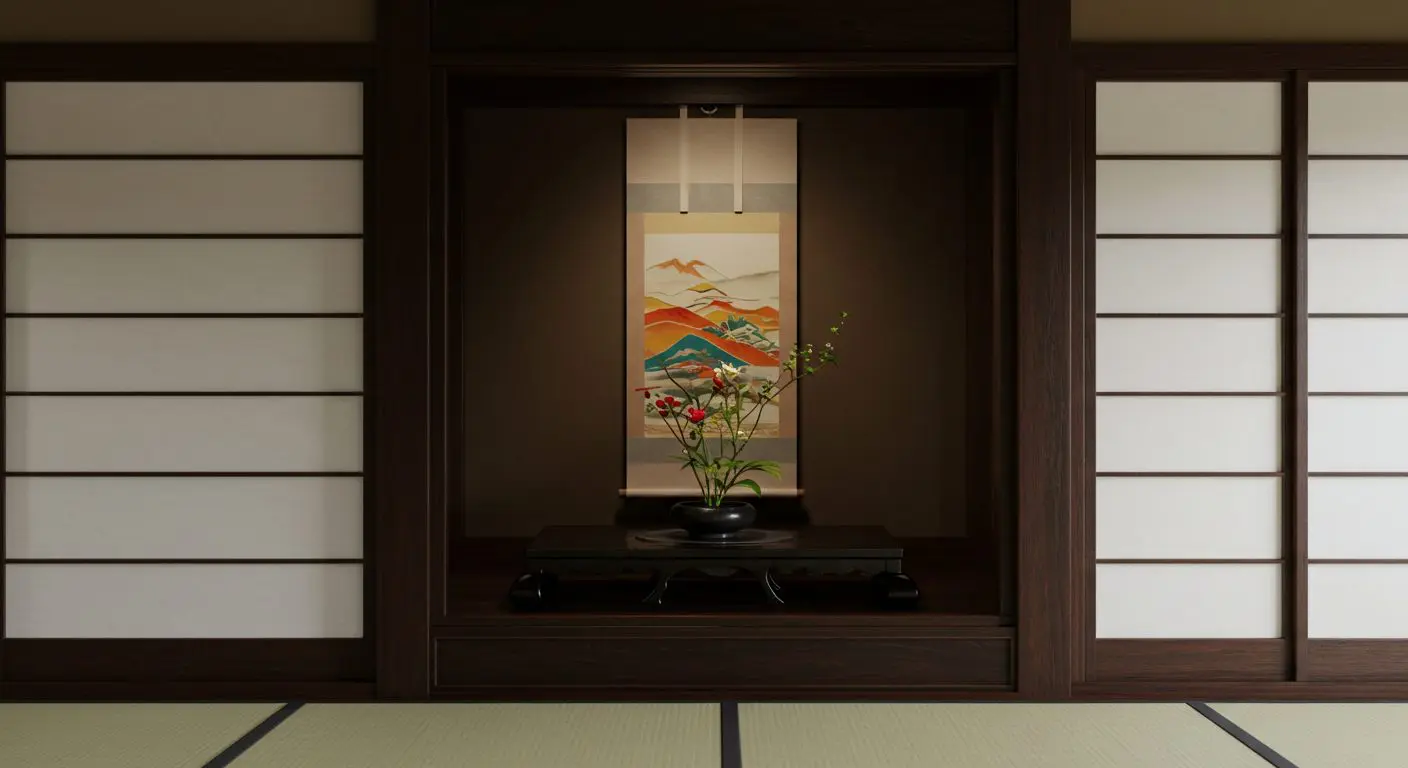
- Feature: Small raised alcove used for minimal, meaningful display
- Symbolism: Shows mindfulness, honors guests, marks seasonal changes
- Design Myth: Often misinterpreted as just another decorative shelf
While most homes won’t have a traditional tokonoma, the principle can be applied by creating a dedicated display area where items are chosen with intention rather than accumulated. A friend created a modern interpretation in her entryway—a simple niche with just one artwork and a branch from her garden, changed monthly to reflect the passing seasons.
Japanese Lighting Philosophy: Subtle and Atmospheric
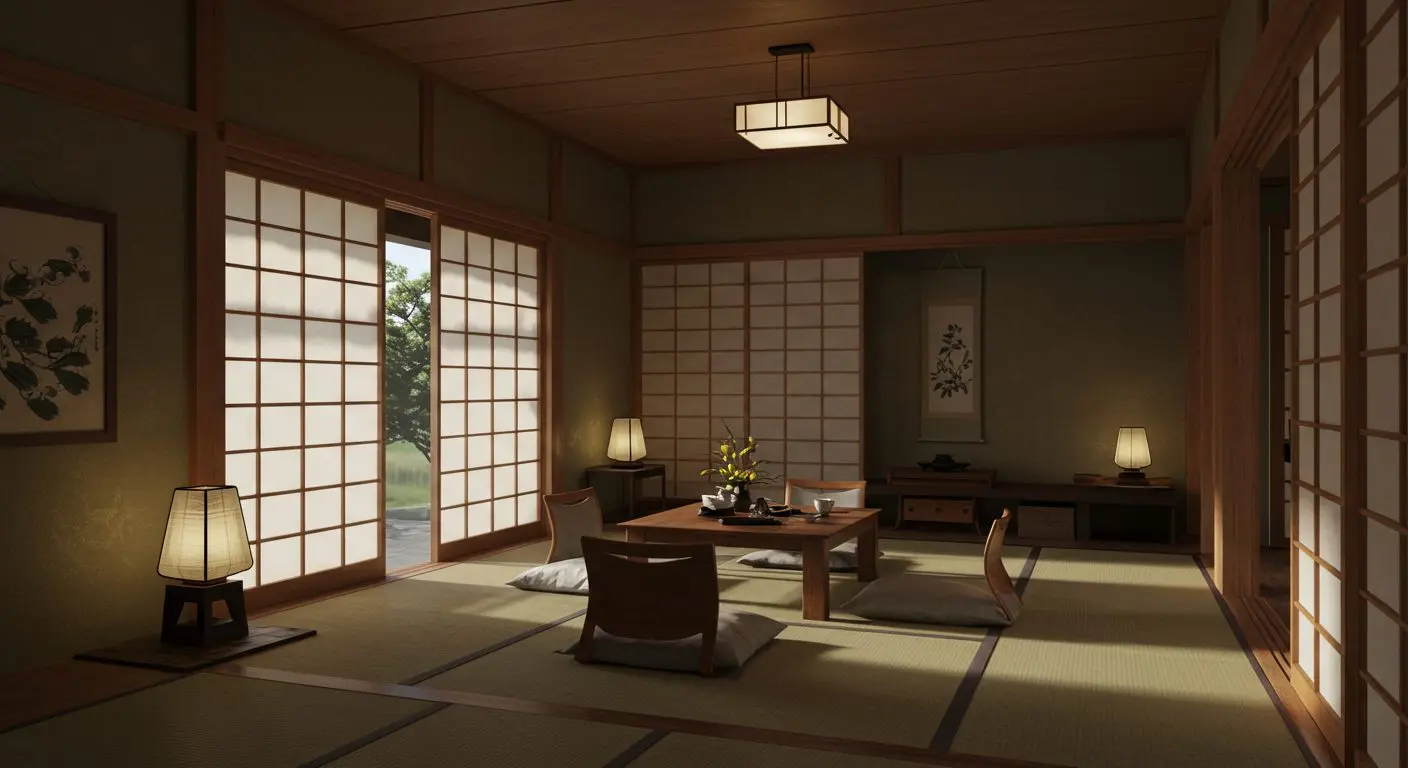
During my stay in a traditional Japanese inn, I was fascinated by how different the lighting felt compared to my bright, uniformly lit apartment. Japanese Interior Design approaches light as a fluid, dynamic element rather than a constant presence.
Instead of bright overhead fixtures, traditional Japanese spaces rely on lower, layered light sources—paper lanterns, candles, and indirect lighting that creates pools of illumination rather than flooding a space. This approach mimics the natural rhythms of dawn and dusk, aligning with our body’s natural responses to light.
- Style: Low, indirect lighting without harsh glare
- Philosophical Parallel: Mimics the gentle transitions of natural light
- Western Issue: Overreliance on bright, central overhead lighting
When redesigning my living room lighting, I incorporated these principles by replacing my bright central fixture with several lower light sources at different heights. The resulting ambiance completely transformed how the space feels in the evening—calmer, more intimate, and somehow more authentic to how humans have experienced interior spaces throughout history.
Modern Applications of Japanese Interior Design
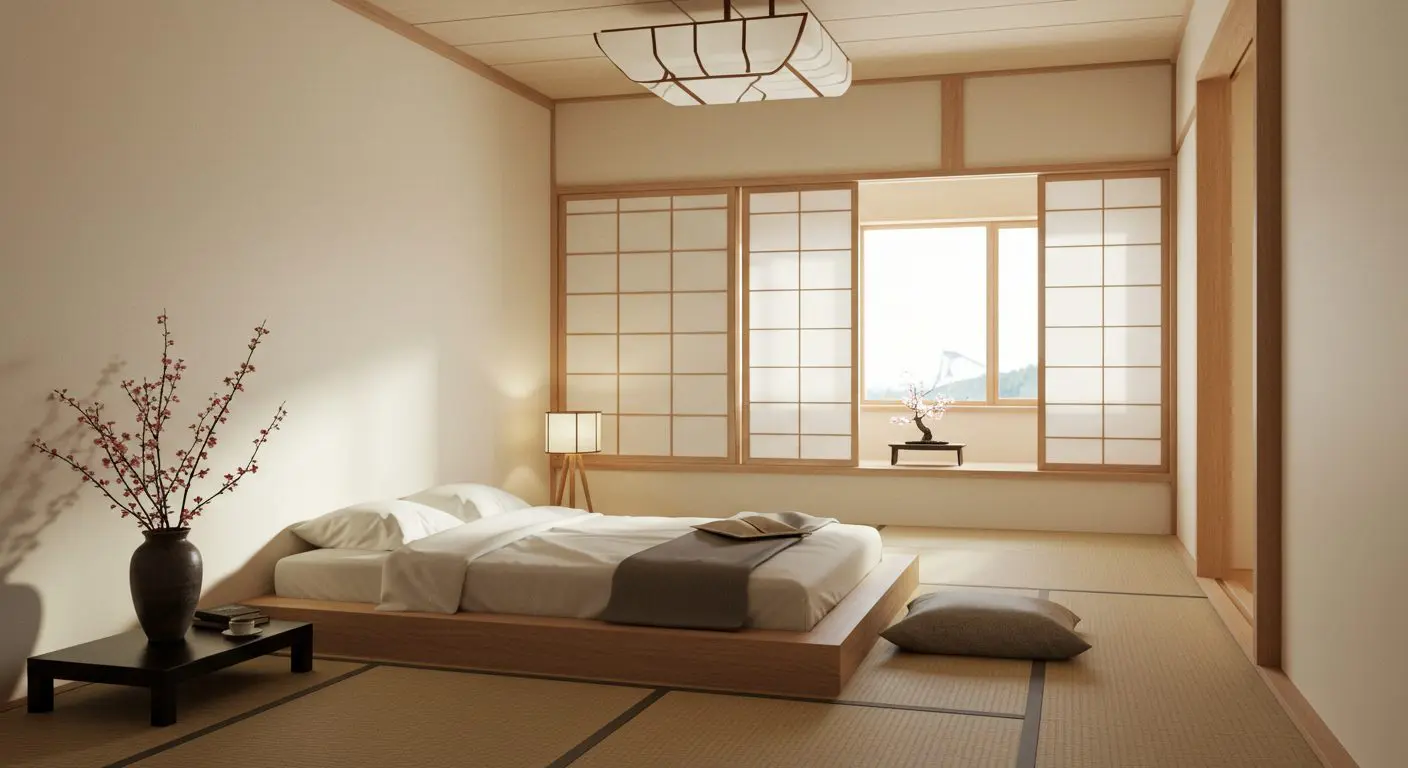
What fascinates me most about Japanese Interior Design today is how seamlessly these ancient principles translate to contemporary living. The philosophy behind this style aligns perfectly with current interests in thoughtful, intentional spaces that support wellbeing rather than just looking stylish.
My colleague recently completed a renovation that beautifully blends Japanese principles with modern needs. She incorporated sliding panels that partition her open-plan apartment when needed, chose natural materials throughout, and designed a small meditation corner inspired by the tokonoma concept—proving these elements work in urban settings.
- Trend: Fusion of Japanese aesthetic with modern, functional design
- Cultural Impact: Inspires thoughtful space planning, hidden storage, visual calm
- Issue: Many adopt only surface aesthetics without understanding underlying principles
What makes Japanese Interior Design relevant in today’s homes isn’t just its visual appeal but its thoughtful approach to how spaces affect our mental state. In a world where we’re constantly bombarded with stimulation, these principles offer a template for creating homes that calm rather than overwhelm.
“A clean space is not the goal. A meaningful space is.”
For deeper exploration of these concepts and how to authentically incorporate them, Japan House London offers excellent exhibitions and resources that respectfully present traditional Japanese design principles in contemporary contexts.
Finding Balance Through Japanese Design Principles
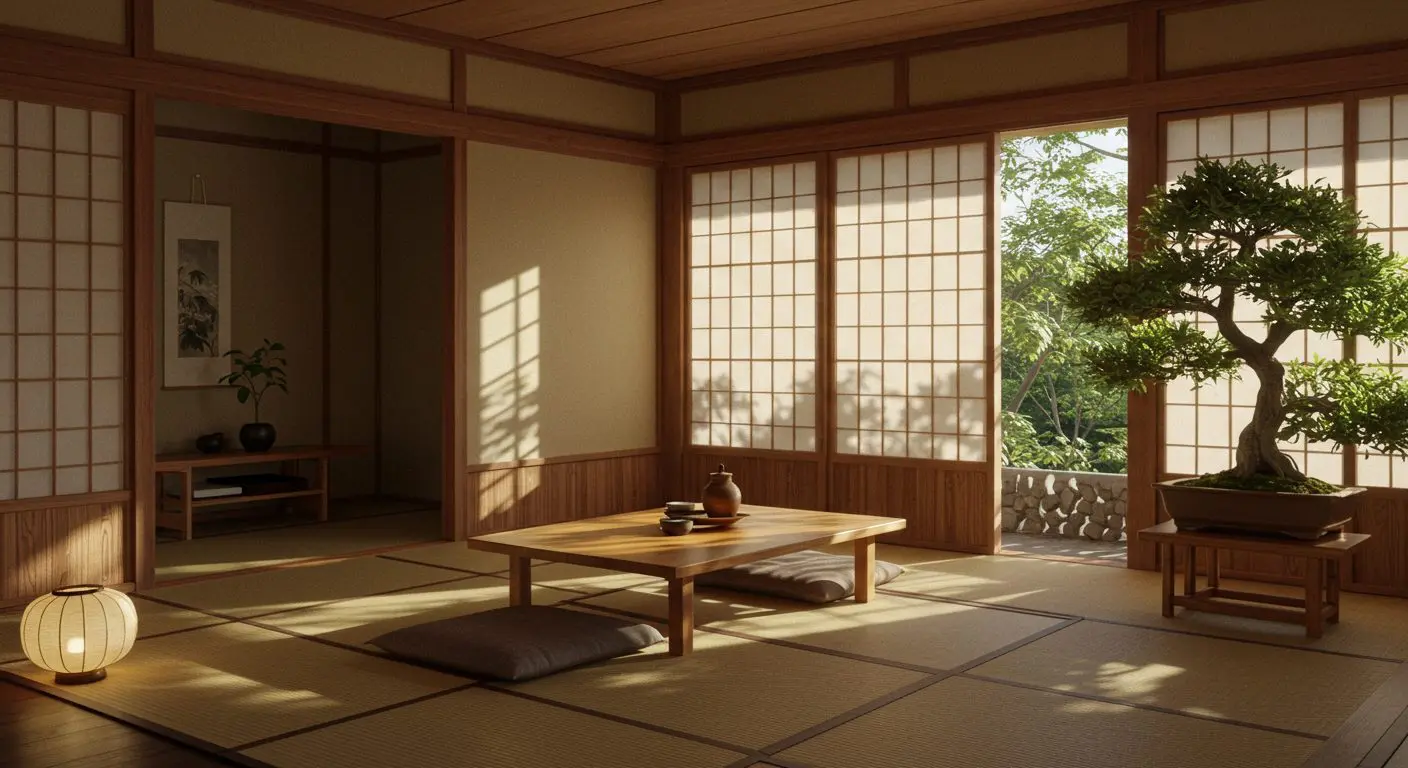
Living with Japanese Interior Design principles has transformed not just how my home looks, but how it feels to exist in these spaces. There’s a profound sense of intentional calm that comes from rooms arranged with purpose, materials chosen for their authentic qualities, and decoration kept minimal but meaningful.
What strikes me most is how these design principles aren’t just aesthetic choices—they’re expressions of a philosophy that values harmony, transience, and natural beauty. In a world that often pushes for more, newer, and flashier, there’s something quietly revolutionary about choosing less, older, and simpler.

Japanese Interior Design offers more than just a stylish home—it provides a template for living more mindfully. By creating spaces that honor natural materials, embrace imperfection, and prioritize tranquility, we can design homes that truly nurture us rather than just impress others. Whether you incorporate a single element like a tokonoma-inspired display or fully embrace principles like wabi-sabi, the result is spaces with soul rather than just style.
The beauty of these principles lies in their adaptability across different homes, budgets, and lifestyles. They remind us that meaningful design isn’t about following trends or spending extravagantly—it’s about creating environments that respect both natural materials and human needs. In a world that often feels chaotic and disconnected, Japanese Interior Design offers a path back to balance, presence, and peace within our most intimate spaces.