This post may contains affiliate links. Read our full disclosure here.
The first time I saw a truly brutalist interior design, I almost flinched. Those stark concrete walls, heavy furniture pieces, and complete absence of fluff felt so dramatically different from the cozy, layered spaces flooding my Instagram feed. But that’s exactly what makes brutalism in interior design so captivating – it doesn’t try to please everyone. Instead, it boldly celebrates raw materials, unapologetic forms, and structural honesty.
Brutalism in interior design has evolved far beyond its architectural roots. While it began as a post-war movement characterized by imposing concrete buildings, today’s brutalist interiors bring that same bold philosophy inside our homes. They strip away unnecessary ornamentation and instead focus on strong silhouettes and authentic materials. For anyone tired of trendy, disposable decor, brutalism offers something refreshingly substantial and enduring.
What Is Brutalism in Interior Design?
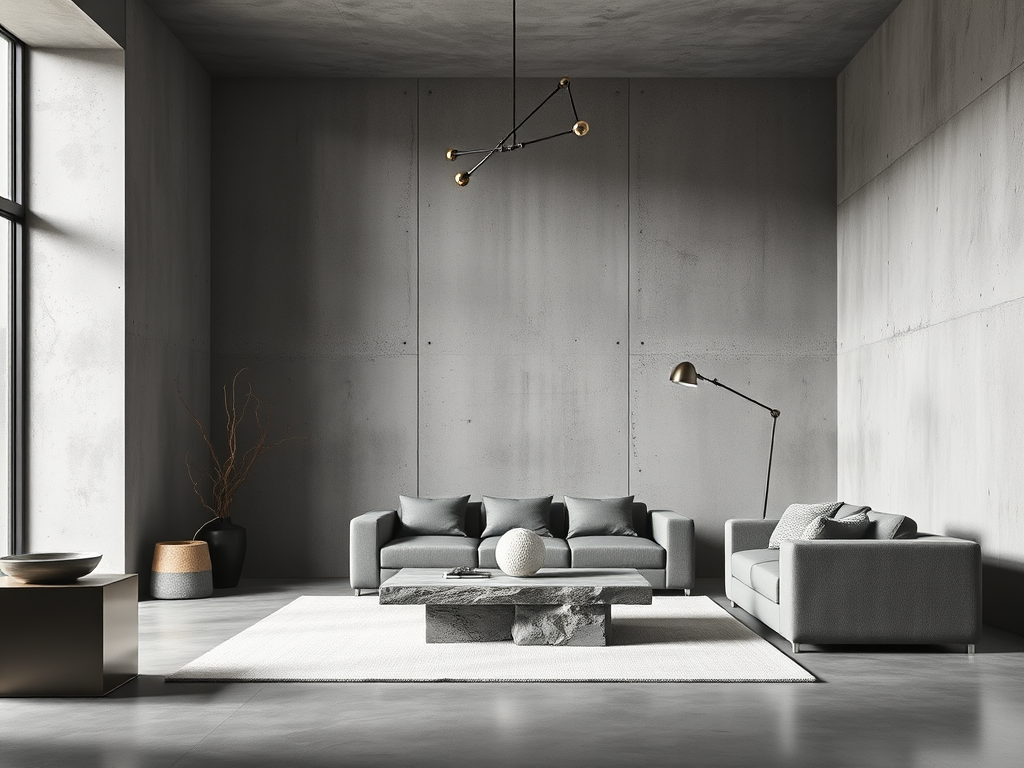
At its essence, brutalism in interior design is a celebration of materials in their purest form. The term comes from the French “béton brut,” meaning “raw concrete” – and that sets the tone for everything this style embodies. Unlike softer interior design styles that might prioritize comfort first, brutalist interiors put honesty and structure at the forefront.
When done right, brutalism in interior design feels intentional rather than cold. It embraces raw concrete, exposed steel, matte black metals, and unpolished stone. Colors stay within a restricted palette of grays, blacks, whites, and desaturated neutrals. Everything feels substantial and grounded, with furniture and fixtures that have real visual weight to them.
What makes brutalism distinct from other minimal styles is its boldness. Nothing about brutalist design whispers – it makes statements through sharp angles, monolithic forms, and contrasting textures. It’s minimalism with muscle, where each element serves a purpose while creating striking visual impact.
Core Elements of Brutalist Interiors
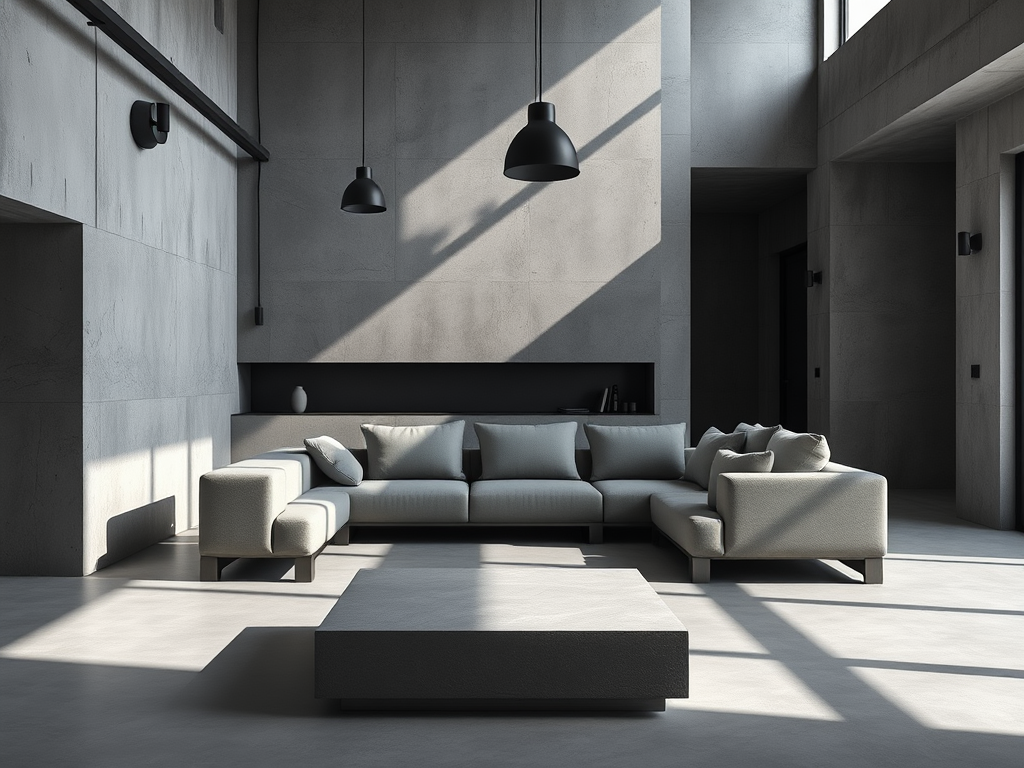
Spotting brutalism in interior design becomes second nature once you know what to look for. These spaces don’t hide their structural elements – they celebrate them. You’ll find exposed concrete surfaces (whether actual concrete or convincing faux finishes) taking center stage as both walls and floors. These aren’t softened with excessive treatments – their natural imperfections become part of their appeal.
Metal elements in brutalist spaces tend toward industrial finishes – blackened steel, brushed aluminum, and oxidized copper. What you won’t find are polished brass or gold accents that might soften the visual impact. Every material choice in brutalism in interior design reinforces the style’s unyielding strength.
The silhouettes throughout brutalist interiors follow clean, geometric lines that create clear visual boundaries. Furniture pieces often look sculptural – more like art installations than merely functional objects. This creates spaces that feel curated and gallery-like rather than conventionally homey.
Key elements to look for:
- Concrete surfaces (walls, floors, countertops)
- Exposed structural elements (beams, pipes, ducts)
- Sharp, geometric furniture with blocky profiles
- Monochromatic or desaturated color schemes
- Minimal decorative elements and clutter-free surfaces
- Dramatic lighting that creates strong shadows
Brutalism vs Industrial Style: Spotting the Difference
People often confuse brutalism in interior design with industrial style, and it’s easy to see why. Both embrace raw materials and structural elements, but their approaches and emotional impact differ significantly. Industrial spaces typically incorporate warmth through aged elements – think reclaimed wood, vintage factory fixtures, and weathered brick. They tell stories about history and repurposing.
Brutalism, by contrast, avoids nostalgia. It’s forward-looking and fresh, concerned with form and impact rather than historical references. Where industrial spaces might soften their edges with plants and warm lighting, brutalist interiors maintain their stark, powerful presence without apology. The difference is similar to comparing a restored factory loft to a contemporary interior design gallery.
When comparing materials, brutalism favors concrete, glass, and metal in their most honest forms. Industrial style typically incorporates more variety: exposed brick, distressed wood, and vintage-inspired elements alongside metal. Brutalism’s color palette stays restricted and cool-toned, while industrial spaces often incorporate warmer neutrals and occasional rust tones.
| Feature | Brutalist Style | Industrial Style |
|---|---|---|
| Visual Feel | Bold, monumental, contemporary | Weathered, historical, utilitarian |
| Typical Materials | Concrete, glass, matte metals | Brick, reclaimed wood, iron, aged metals |
| Furniture Style | Sculptural, geometric, statement pieces | Functional, vintage-inspired, mixed era |
| Color Approach | Minimal, grayscale dominant | Neutral with warm undertones |
How to Incorporate Brutalism in Interior Design at Home
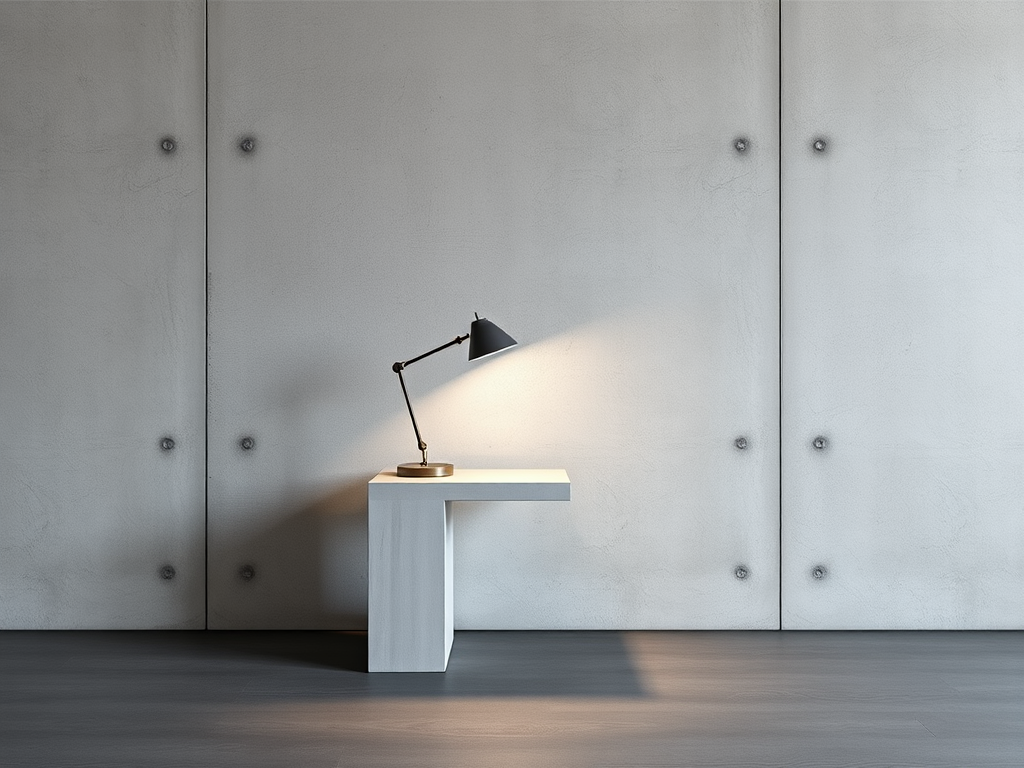
Not everyone can (or wants to) live in a fully brutalist concrete bunker – and that’s completely fine! The beauty of brutalism in interior design is that you can incorporate elements gradually, testing what works for your lifestyle. My apartment journey with brutalist elements started with a single concrete side table and evolved from there as I became more comfortable with the style’s boldness.
One of the simplest starting points is creating a concrete statement wall. Products like concrete-effect paint or textured wallpapers can deliver the brutalist look without major construction. Companies like Portola Paints offer minimalist aesthetic concrete-effect finishes that apply much like regular paint but create convincing texture.
For furniture, look for pieces with strong, geometric silhouettes and materials that reinforce the brutalist vibe. A chunky concrete coffee table or low-profile sofa with sharp angles can anchor a room in brutalist style without overwhelming it. Brands like CB2 and Blu Dot offer accessible brutalist-inspired pieces that won’t break the bank.
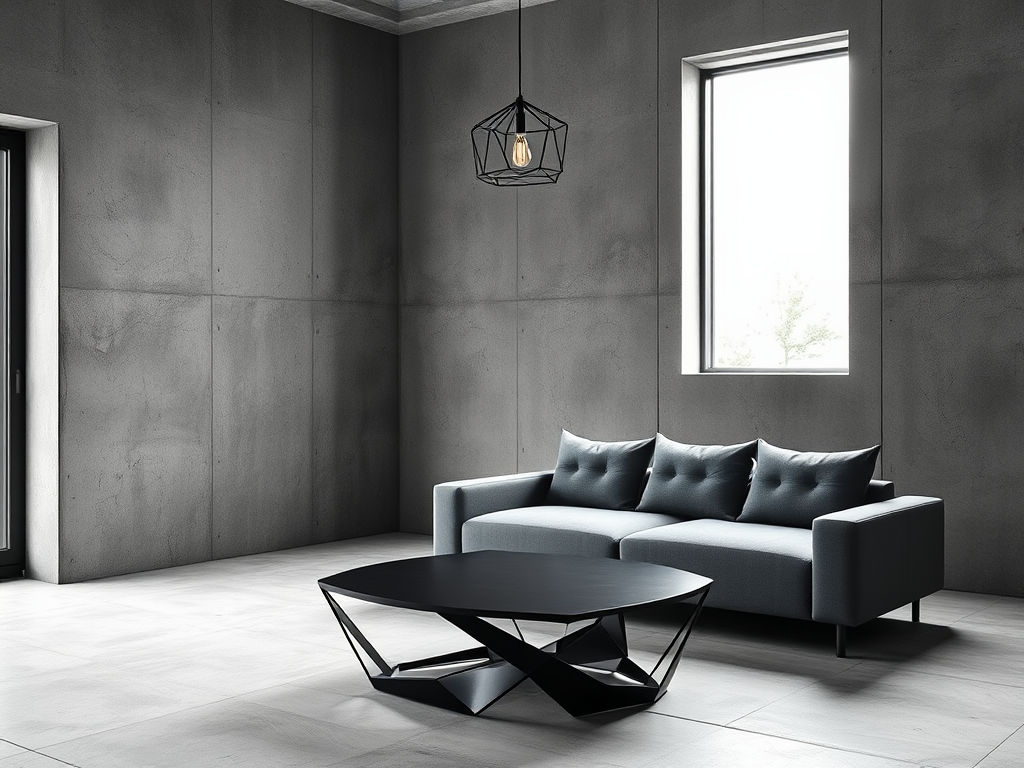
Lighting plays a crucial role in brutalist spaces. Consider fixtures with architectural shapes in matte black metal or raw concrete. Statement pendant lights with geometric forms can transform even the most conventional room into something with brutalist edge. The right lighting creates dramatic shadows that emphasize the textural elements so important to this style.
Brutalist-friendly updates to try:
- Replace conventional picture frames with metal or concrete alternatives
- Swap out decorative bowls for unglazed ceramic pieces with angular forms
- Consider matte black hardware and fixtures throughout the space
- Replace fabric lampshades with metal or concrete pendant lights
- Use large-scale abstract art with strong geometric compositions
Brutalist Color Palettes and Materials That Make an Impact
Creating a successful brutalist interior means working with a deliberately limited color range. This isn’t about creating a rainbow – it’s about finding depth through texture and tone. The foundation of any brutalist color scheme starts with concrete grays, from light ash to deep charcoal. These provide the neutral backdrop against which other elements can stand out.
Beyond gray, brutalism in interior design embraces blacks, whites, and desaturated neutrals like olive drab, dusty brown, or muted navy. The key is keeping everything slightly muted rather than vibrant. This controlled palette lets the materials’ natural characteristics and the space’s architectural elements take center stage without competing color distractions.
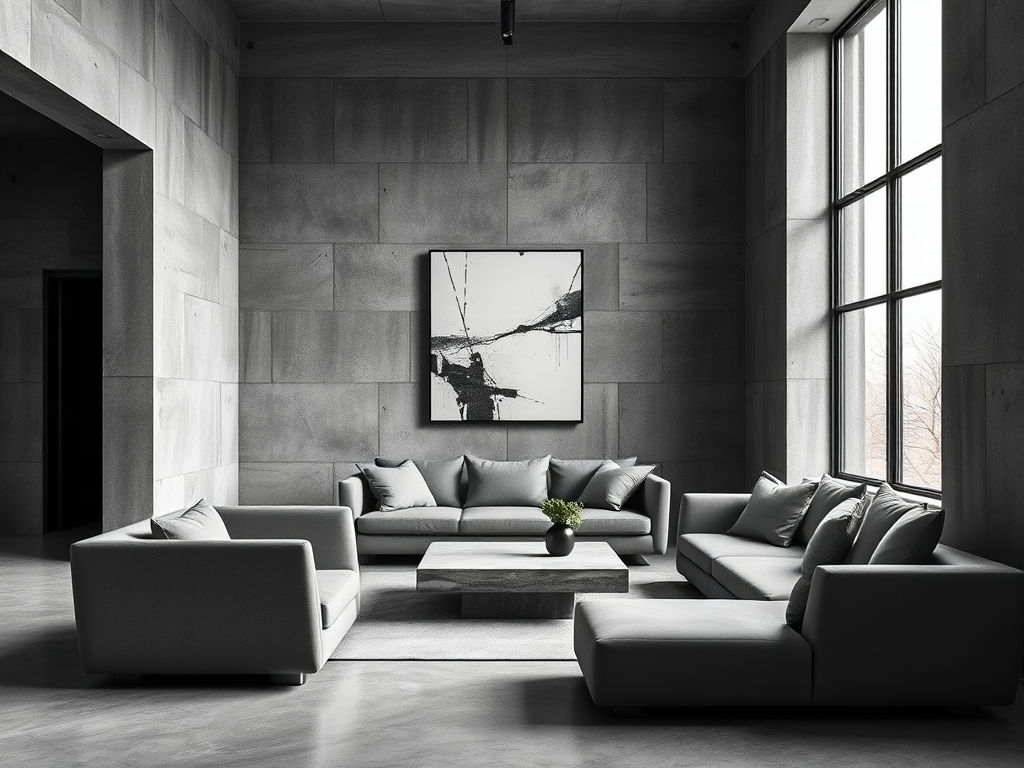
When it comes to materials, brutalism celebrates surfaces that feel substantive and honest. Concrete remains the signature material, whether as actual structural elements or as furniture and decorative objects. Glass provides contrast and lightness, particularly when used in large windows that create dramatic shadows across concrete surfaces throughout the day.
For textiles in brutalist spaces, look to canvas, linen, and wool in solid, neutral colors. The textural interplay between rough concrete walls and a modern design styles simple linen sofa creates exactly the kind of thoughtful contrast that makes brutalism in interior design so compelling. Materials should feel authentic rather than synthetic – natural fibers with visible weaves rather than slick performance fabrics.
Furniture and Decor That Embody Brutalist Style
Finding the right furniture pieces makes all the difference when creating a brutalist-inspired home. Look for sofas and seating with strong architectural profiles – think low-slung platforms, squared-off edges, and minimal cushioning. Opt for neutral upholstery in canvas, leather, or wool rather than patterned fabrics or bright colors.

Tables and storage pieces should have substantial visual weight – chunky concrete coffee tables, monolithic consoles, or blocky shelving units. Materials like blackened steel, raw concrete, and unfinished stone work perfectly. Companies like Menu, Frama, and Destruction in Design specialize in furniture that fits the brutalist aesthetic without feeling cheap or derivative.
Lighting in brutalist interiors should function as sculpture. Look for fixtures with geometric forms in materials like concrete, blackened metal, or matte ceramics. Floor lamps with articulated arms or pendant lights with architectural shapes add both function and form. Brands like Allied Maker and In Common With offer lighting that works beautifully in brutalist spaces.

For wall decor, consider brutalist-inspired metal sculptures, large-scale abstract art with strong geometric elements, or global cultural design styles that share brutalism’s appreciation for raw materials. Photography featuring architectural subjects works particularly well, especially in high-contrast black and white.
Where to find brutalist-inspired pieces:
- Audo – Danish design company with clean-lined furniture and lighting
- CB2 – Accessible retailer with brutalist-inspired accessories and furniture
- Frama – Scandinavian design with brutalist sensibilities
- Etsy – Search “brutalist sculpture” for unique vintage and handmade pieces
The Surprising Comfort of Brutalist Spaces
Despite its reputation for severity, brutalism in interior design can create spaces that feel remarkably peaceful. The absence of visual clutter and unnecessary ornament allows the mind to rest. There’s something refreshingly honest about brutalist spaces – they don’t try to be anything they’re not, and that authenticity creates its own form of comfort.
The key to making brutalism livable is thoughtful contrast. A concrete wall becomes more interesting when paired with a textural wool rug. A chunky stone coffee table feels more inviting when topped with a simple ceramic vessel. Even the most minimal brutalist room needs these moments of softness to feel balanced rather than austere.
Lighting plays a crucial role in making brutalist interiors feel welcoming. Harsh overhead lighting can make concrete and metal feel cold and institutional. Instead, incorporate multiple light sources at different heights – floor lamps, table lamps, and wall sconces that create pools of light and interesting shadows. This layered approach softens the harder edges without compromising the style’s integrity.
What I’ve found most rewarding about incorporating brutalist elements in my own home is how they’ve pushed me to be more intentional about every design choice. When you’re working with such strong visual elements, each addition needs to earn its place. This leads to spaces that feel purposeful and considered rather than randomly assembled – and there’s real comfort in that kind of thoughtfulness.
Brutalism in interior design isn’t for everyone, but that’s exactly what makes it so compelling for those who connect with its bold approach. It asks us to appreciate materials for what they truly are, to find beauty in structure rather than decoration, and to create spaces that feel honest rather than trendy. Whether you incorporate just a few brutalist elements or go all-in with concrete and steel, this powerful design style offers something increasingly rare in our world – authenticity.