This post may contains affiliate links. Read our full disclosure here.
Forget grape varietals—the real magic behind your favorite bottle lies in its wooden cocoon. This isn’t just storage; it’s alchemy. From ancient clay amphorae to today’s toasted staves, the vessels holding fermented juice shape its soul. Think of them as time machines, turning raw fruit into liquid poetry through patience and chemistry.
Modern vintners treat barrels like bespoke suits—tailored to perfection. French wood whispers hints of baking spices and silk-like structure, while American cousins shout caramel-drenched coconut with swagger. But it’s not just about geography. The toasting level alone can flip a wine’s, turning vanilla into smoke with a cooper’s flame.
Save $20 on your First Order of $150+ with Code: SAVER20
Why does this matter? Picture tannins softening like butter in a pan, oxygen sneaking through wood pores to weave complexity. Those “oh, that’s coconut!” moments? Thank lactones. That velvety texture? Blame—or credit—the slow dance between wood compounds and evolving liquid.
This is where science meets street smarts. Winemakers aren’t just growing grapes; they’re curating flavor symphonies one stave at a time. And you’re backstage—no velvet rope required.
Understanding Oak Barrels in Winemaking
Long before hashtags and hyperloops, Roman engineers cracked the code for liquid preservation. Their secret weapon? Oak barrels—the original disruptors of ancient winemaking. What began as pragmatic storage for olive oil and wine became civilization’s first flavor-enhancement tech.
The Historical Journey of Oak Barrels
Roman soldiers didn’t just build roads—they revolutionized beverages. When clay amphorae kept shattering on cobblestones, oak’s flexibility became a game-changer. By the 1600s, Dutch painters immortalized barrels in still-life art, hinting at their newfound status as flavor architects rather than mere containers.
Oak Barrels and Their Role in Aging Wine
Oak’s magic lies in its cellular structure—like nature’s Swiss Army knife. Tiny pores allow micro-oxygenation, softening harsh edges while weaving vanilla and spice notes into the liquid. This slow dance between wood and wine transforms raw acidity into velvet textures.
| Period | Key Development | Impact |
|---|---|---|
| Roman Empire | Oak replaces clay | Durable transport |
| Medieval Europe | Barrel aging tests | Enhanced complexity |
| 21st Century | Precision toasting | Custom aromas |
Today’s vintners treat barrels like rare vinyl—vintage techniques remixed with laser-focused science. The result? Bottles that whisper ancient secrets through modern palates.
How Different Oak Barrel Types Influence Wine Flavor
Imagine oak barrels as flavor DJs—remixing raw grape juice into chart-topping vintages. The secret? Chemistry meets craftsmanship in wood’s cellular structure. Three key players drive this sensory remix: lignin breakdown, controlled fire, and oxygen’s slow waltz.
Wood’s Flavor DNA Unlocked
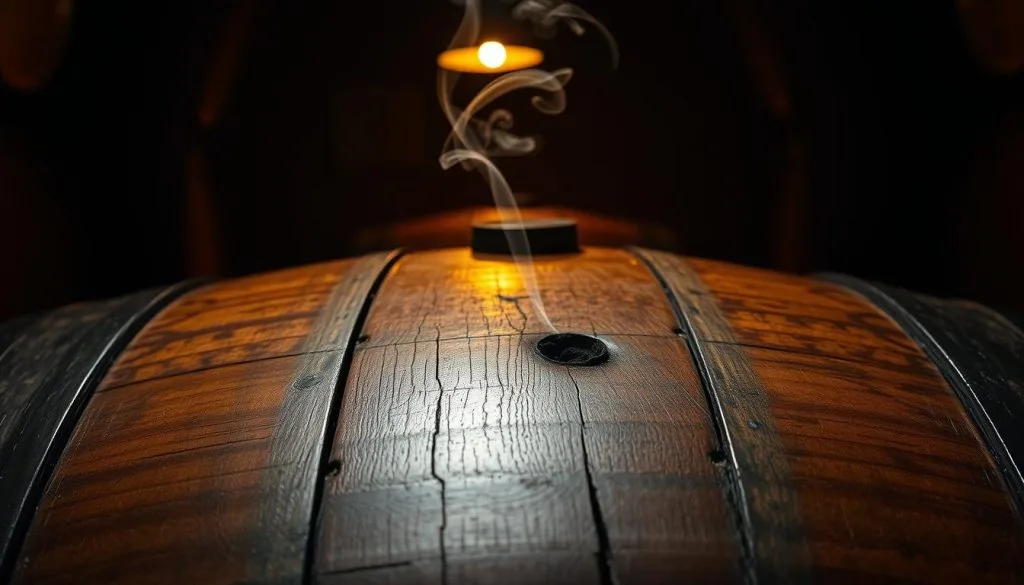
Heat acts like a molecular crowbar during barrel construction. Light toasting teases out vanilla whispers from lignin, while heavier char coaxes smoky bass notes. “It’s wood’s version of caramelization,” explains a Napa cooper. Lactones—those coconut-scented compounds—party harder in American oak, explaining why some bottles taste like tropical vacations.
Fire Levels & Airflow Science
Toasting intensity works like coffee roasting:
- Light: Think cinnamon-spiced chai vibes
- Medium: Baking-sheet warmth (think brioche crusts)
- Heavy: Campfire smokiness with caramel undertones
Wiens Cellars’ experiments prove the impact. Their French oak-aged reserve developed black cherry depth with cardamom hints, while American barrels amplified butterscotch richness. Oxygen’s micro-doses during aging act like a textile softener—transforming jagged tannins into cashmere-like textures.
This isn’t guesswork. Modern winemakers use gas chromatography to track compound release, balancing wood’s gifts with grape potential. The result? Bottled poetry where every sip tells the oak’s origin story.
American Oak vs. French Oak: Distinctions and Effects on Wine
Picture a heavyweight boxer squaring off against a ballet dancer. That’s the sensory showdown between American and French oak. These woods don’t just age wine—they rewrite its liquid personality.
Characteristics of American Oak
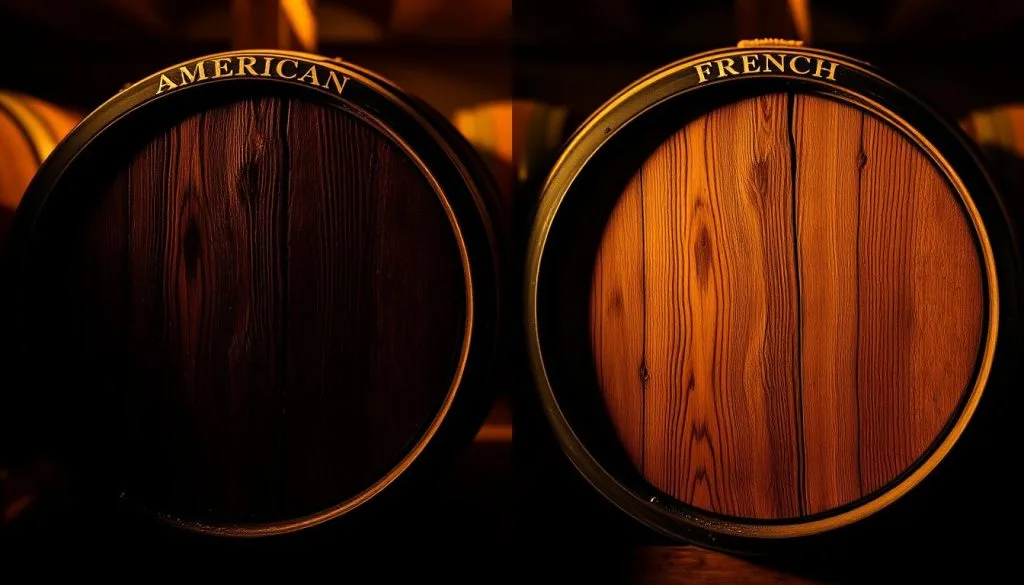
American oak barrels bring swagger. Their wider grain acts like flavor megaphones, pumping out coconut, dill, and butterscotch notes. Herzog Wine Cellars’ 2021 Cabernet Sauvignon test proves it—aged in Missouri oak, the wine erupted with toasted pecan richness, its tannins wrapped in caramelized silk.
Density matters. The wood’s looser structure allows oxygen to hustle through pores, accelerating textural evolution. This makes it ideal for bold reds needing rapid polish. Winemakers joke it’s the “instant ramen” of oak aging—fast impact, maximum flavor.
Unique Traits of French Oak and Their Influence
French oak whispers. Tight growth rings create a dense filter, slowly releasing vanilla and baking spices like a perfume atomizer. In Herzog’s parallel experiment, their French-oaked Cab developed chocolate undertones and structured tannins—think cashmere gloves gripping velvet ropes.
The secret weapon? Ellagic tannins. These smoother compounds integrate seamlessly, adding complexity without rough edges. It’s why Burgundy producers treat French barrels like heirlooms—each stave a silent partner in crafting liquid architecture.
| Aspect | American Oak | French Oak |
|---|---|---|
| Grain Structure | Open, porous | Tight, dense |
| Signature Notes | Coconut, butterscotch | Vanilla, baking spices |
| Tannin Type | Gallic (astringent) | Ellagic (silky) |
Exploring Alternative Woods and Aging Techniques in Winemaking
Think outside the oak box—winemakers are now hacking flavor codes with unexpected materials. From chestnut’s spicy swagger to acacia’s floral finesse, alternative woods rewrite the rules of liquid architecture. This isn’t rebellion; it’s evolution.
Non-Oak Woods: Chestnut, Acacia, and Iberian Oak
Chestnut barrels play rough. Their porous walls turbocharge oxidation, creating bold textures ideal for Italian reds. Acacia? The quiet disruptor. Its neutral profile lets citrus-forward whites shine while accelerating aging through rapid oxygen flow.
Then there’s Iberian oak—the vanilla whisperer. Similar to French cousins but dialing up sweet tones, it’s become Spain’s not-so-secret weapon. “It’s like upgrading from basic cable to 4K streaming,” quips a Rioja producer blending both woods.
| Wood Type | Oxygen Ingress | Signature Notes |
|---|---|---|
| Chestnut | High | Clove, Leather |
| Acacia | Moderate | Honey, Almond |
| Iberian Oak | Low | Vanilla, Cinnamon |
New Versus Used Oak Barrels in Flavor Development
New barrels are flavor grenades—packed with lactones and tannins that scream vanilla and spice. But reuse them? The intensity drops like a mic after a killer verse. Third-use casks offer mere whispers, letting grape personalities dominate.
Pioneers like Didier Dagueneau mix both. Their Pouilly-Fumé ferments in new acacia for floral pop, then ages in neutral oak for subtlety. It’s the vinous equivalent of layering streetwear with tailored blazers—controlled chaos with polish.
| Barrel Age | Flavor Intensity | Best For |
|---|---|---|
| New | High (Vanilla/Smoke) | Bold Reds |
| 2nd Use | Medium (Toast/Nut) | Chardonnay |
| 3rd+ Use | Low (Mineral) | Delicate Whites |
This isn’t your grandma’s cellar. Modern vintners treat wood like a spice rack—blending, toasting, and recycling to craft liquid zeitgeist.
Conclusion
The soul of your favorite vintage isn’t just fermented grapes—it’s a wooden fingerprint. Centuries of craftsmanship collide with biochemistry in every stave, where vanillin and lactones rewrite raw juice into liquid alchemy. Oxygen’s stealthy dance through porous walls turns jagged edges into velvet, while toasting levels script flavor arcs from whisper to roar.
American oak’s coconut swagger and French oak’s spice-rack elegance prove geography shapes taste as much as geology. Yet today’s pioneers push further—chestnut’s leathery growl, acacia’s floral murmur—blurring tradition with mad-scientist innovation. This isn’t storage; it’s curated evolution.
Modern vintners wield barrels like 3D printers for the palate, balancing ancestral wisdom with gas chromatography readouts. The result? Bottled time capsules where tannins soften into cashmere and textures gain architectural depth.
Next time you swirl a glass, taste beyond the grape. Detect the cooper’s fire, the forest’s legacy, the silent partnership between tree and time. Because great wines aren’t made—they’re orchestrated. Ready to decode the wood’s whisper?
FAQ
Why does American oak give wines coconut vibes?
Can French oak make a wine taste like a luxury handbag?
Does barrel toasting level change the flavor game?
Why don’t winemakers just use pine barrels?
Do used barrels make “basic” wines?
How does oxygen exposure affect aging potential?
Can chestnut barrels replace oak for natural wines?